Film Review: Short Cuts (dir by Robert Altman)


Opening with a swarm of helicopters spaying for medflies and ending with an earthquake, 1993’s Short Cuts is a film about life in Los Angeles.

An ensemble piece, it follows several different characters as they go through their own personal dramas.  Some of them are married and some of them are destined to be forever single but they’re all living in varying states of desperation.  Occasionally, the actions of one character will effect the actions of another character in a different story but, for the most part, Short Cuts is a portrait of people who are connected only by the fact that they all live in the same city.  There are 22 principal characters in Short Cuts and each one thinks that they are the star of the story.

Jerry Kaiser (Chris Penn) cleans the pools of rich people while, at home, his wife, Lois (Jennifer Jason Leigh), takes care of their baby and works as a phone sex operator.  Jerry’s best friend is a makeup artist named Bill (Robert Downey, Jr.) who enjoys making his wife, Honey (Lili Taylor), looks like a corpse so that he can take her picture.  One of her photographs is seen by a fisherman (Buck Henry) who has already discovered one actual corpse that weekend.  He and his buddies, Vern (Huey Lewis) and Stuart (Fred Ward), discovered a dead girl floating in a river and didn’t report it until after they were finished fishing.  (The sight of Vern unknowingly pissing on the dead body is one of the strongest in director Robert Altman’s filmography.)

Stuart’s wife, Claire (Anne Archer), is haunted by Stuart’s delay in reporting the dead body.  A chance meeting Dr. Ralph Wyman (Matthew Modine) and his wife, artist Marian (Julianne Moore), leads to an awkward dinner between the two couples.  Claire works as a professional clown and Ralph ends up wearing her clown makeup while his marriage falls apart.

Earlier, Claire was stopped and hit on by a smarmy policeman named Gene Shepard (Tim Robbins), who just happens to be married to Marian’s sister, Sherri (Madeleine Stowe).  Gene is already having an affair with Betty Weathers (Frances McDormand), the wife of a helicopter pilot named Stormy (Peter Gallagher).  When Stormy discovers that Betty has been cheating, he takes a creative revenge on her house.

Doreen Pigott (Lily Tomlin) lives in a trailer park with her alcoholic husband, Earl (Tom Waits).  Driving home from her waitressing job, Doreen hits a young boy.  The boy says he’s okay but when he gets home, he passes out.  His parents, news anchorman Howard Finnegan (Bruce Davison) and his wife, Anne (Andie MacDowell), rush him to the hospital, where his doctor is Ralph Wyman.  As Howard waits for his son to wake up, he has a revealing conversation with his long-estranged father (Jack Lemmon, showing up for one scene and delivering an amazing monologue).  Meanwhile, a baker named Andy (Lyle Lovett) repeatedly calls the Finnegan household, wanting to know when they’re going to pick up their son’s birthday cake.

Based on the short stories of Raymond Carver and directed by Robert Altman, Short Cuts can sometimes feel like a spiritual descendent of Altman’s Nashville.  The difference between this film and Nashville is that Short Cuts doesn’t have the previous film’s satiric bite.  As good as Nashville is, it’s a film that can be rather snarky towards it character and the town in which it is set.  Nashville is used as a metaphor for America coming apart at the seams.  Short Cuts, on the other hand, is a far more humanistic film, featuring characters who are flawed but, with a few very notable exceptions, well-intentioned.  If Nashville seem to be a portrait of a society on the verge of collapse, Short Cuts is a film about how that society ended up surviving.

It’s not a perfect film.  There’s an entire storyline featuring Annie Ross and Lori Singer that I didn’t talk about because I just found it to be annoying to waste much time with.  (The Ross/Singer storyline was the only one not to be based on a Carver short story.)  The conclusion of Chris Penn’s storyline wasn’t quite as shocking as it was obviously meant to be.  But, flaws and all, Altman and Carver’s portrait of humanity does hold our attention and it leaves us thinking about connections made and sometimes lost.  Seen today, Short Cuts is a portrait of life before social media and iPhones and before humanity started living online.  It’s a time capsule of a world that once was.

Lisa Marie Reviews An Oscar Winner: Nomadland (dir by Chloe Zhao)


In 2020’s Nomadland, Frances McDormand stars as Fern.

Fern had a job working in an U.S. Gypsum plant in Nevada but, after years of steady employment, she’s laid off.  Recently widowed and struggling to pay the bills, Fern sells almost everything that she owns and moves into a van.  She travels across the country, taking work where she can find it and hanging out at other camps with self-styled “nomads.”  She meets Bob Wells, the real-life guru of the van-dwelling, nomad lifestyle.  She forms cautious friendships with other people who have decided to spend their lives in their vans, traveling from one location to another.  Some of them are people who have fallen on hard times.  Some of them are just people who don’t want to be tied down.  One thing that becomes clear about Fern is that, while she’s a kind and caring soul, she’s also not one to allow people to get too close to her.  She values her independence.

The film becomes a portrait of people who have been largely forgotten by conventional society but who have created a society of their own.  (Fern may occasionally work at an Amazon warehouse but one gets the feeling that she would never order anything from there herself.)  The film centers on Frances McDormand’s performance as Fern but most of the people that she meets are played by actual nomads.  Director Chloe Zhao directs in documentary fashion, emphasizing the natural beauty of America and the lined but strong faces of people who are determined to live life their own way.

Nomadland can seem like a curious best picture winner.  It’s almost plotless and, at time, the film itself can seem a bit heavy-handed in its portrayal of the nomad lifestyle.  (I value my independence but I doubt that I could handle living in a van.  And, even if I could handle it, I wouldn’t want to.)  Even though it’s only been a few years since Nomadland won its Oscar, it sometimes seems as if it’s become one of the forgotten Best Picture winners.  Some of that is because Nomadland won during the COVID pandemic, at a time when the release a lot of the films that were expected to be big Oscar contenders (like West Side Story and Top Gun: Maverick) were moved back so they could be released in theaters.  While Nomadland did get a limited theatrical release, most people who watched it did so on Hulu.  The 2020 Best Picture nominees were films that probably would not have been nominated in a different year and Nomadland, with its cinema verité style, is far more lowkey than the typical dramatic Oscar winner.  Fairly or not, the film’s reputation has also suffered due to the failure of director Chloe Zhao’s The Eternals.  Nomadland is perhaps now best known as being a part of a cautionary tale about what happens when a director makes an acclaimed film and then gets hired to do a Marvel movie.

(You have to feel bad for Chloe Zhao, who was the second woman to win the Oscar for Best Director but who was given the award as a part of perhaps the worst ceremony in the history of the Oscars.  So determined were the producers to end on the triumphant note of Chadwick Boseman receiving a posthumous Oscar that both Zhao and Nomadland‘s victories were treated as distractions.  And then, of course, Boseman didn’t even win the Oscar.  It was an awkward night all around.)

That said, I can understand why Nomadland was embraced when it was released.  It came out at a time when people were not only scared of getting COVID but also having to deal with the government’s heavy-handed approach to dealing with the pandemic.  Living off the grid and away from society was something that looked very attractive to a lot of people back then.  Future film students may be confused as to why Nomadland was so honored but it was definitely a film of its time.  People forget (or willfully choose to ignore) how crazy things felt during the pandemic.  When Fran told the world to leave her alone, she spoke for many.


Lisa Marie Reviews An Oscar Nominee: Mississippi Burning (dir by Alan Parker)


1988’s Mississippi Burning opens on a lonely Mississippi backroad in 1964.  A car is pulled over by the police.  Inside the car are three young men, one black and two white.  Judging from their nervous expressions and the sound of the people who stopped them and the fact that they’re in Mississippi during the 60s, we can guess what is about to happen to the people in the car.

With the three men, who were civil rights activists who were involved in voter registration efforts, officially considered to be missing, the FBI sends down two agents to find out what happened.  The two agents are Alan Ward (Willem DaFoe) and Rupert Anderson (Gene Hackman).  Ward is a Northerner who does things by the book and who resents having to deal with lax Southern law enforcement.  He is serious-minded and, just in case we need a reminder of how serious he is, he wears bar-rimmed glasses that make him look like the world’s most fearsome IRS agent.  Anderson is from Mississippi.  He’s a talkative good ol’ boy who was a sheriff before he joined the FBI.  “You know what has four eyes but can’t see?” Anderson asks, “Mississippi.”  It’s a tense partnership, as Ward sometimes disapproves of Anderson’s methods and Anderson thinks that Ward doesn’t understand how things work in Mississippi.

From the first minute we meet local law enforcement, we know that they’re the killers.  Just the fact that one of them are played by Brad Dourif is evidence enough.  However, no one in town is willing to say a word against the police or their cronies.  The white citizens are either too intimidated or they agree with what happened to the three civil rights workers.  (The three men are often referred to as being “outside agitators.”)  The black townspeople live in fear of the Klan and have no reason to trust the word of white FBI agents like Ward and Anderson.

Ward and Anderson investigate the case, hoping that they can find some bit of evidence that will prove the guilt of Sheriff Stuckey (Gailard Sartain), Deputy Pell (Brad Dourif), KKK leader Clayton Townley (Stephen Tobolowsky), and maybe even the town’s mayor (R. Lee Ermey).  One advantage that the FBI has is that the murderers are incredibly stupid.  Another is that Deputy Pell’s abused wife (Frances McDormand, giving the film’s best performance) might be persuaded to testify against her husband.

Mississippi Burning is an example of both powerful filmmaking and problematic history.  Like Ridley Scott, director Alan Parker got his start making commercials and he brought the same sensibility to his movies.  He knew what audiences wanted to see and he made sure to give it to them.  Mississippi Burning looks fantastic and is full of memorable performances.  (Both McDormand and Hackman received Oscar nominations).  The action moves quickly and the villains are so hateful that watching them end up getting humiliated really does bring about a sort of emotional release.

At the same time, this is a film about the Civil Rights era that presents the FBI as being the heroes.  And while it’s true that the FBI did investigate the real-life murders that inspired this film, Mississippi Burning leaves out the fact that the FBI was just a rigorous in harassing and wire tapping Martin Luther King as they were in keeping an eye on the leaders of the Klan.  It’s a film about racism in which the heroes are as white as the villains.  Gene Hackman gives a good performance as Rupert Anderson but the film never really delves all that deeply into Anderson’s feelings about racism in the South.  We’re told that he was a sheriff in Mississippi but we never learn much about what type of sheriff Anderson was.  He’s opposed to the Klan but, historically, the same can be said of many segregationists in the 60s, many of whom felt the Klan’s activities brought unwanted federal attention to what was happening in their home states.  By not delving into Anderson’s own history as a member of Mississippi law enforcement or the FBI’s own more problematic history when it comes to the civil rights movement, the film provides viewers with the escape of viewing the bad guys as being aberrations as opposed to being the norm in 1964.  In the end, Mississippi Burning is an effective thriller with strong heroes and hateful villains.  Just don’t watch it for historical accuracy.

Mississippi Burning was nominated for Best Picture but it lost to Rain Man.

Lisa Marie Reviews An Oscar Nominee: Fargo (dir by the Coen Brothers)


Photograph by Erin Nicole

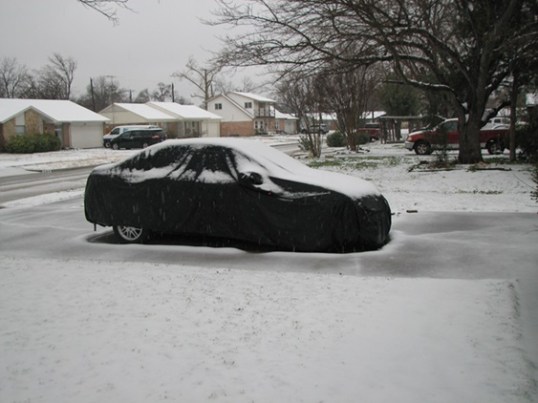
I am currently sitting in my bedroom, wrapped in several blankets and watching the snow fall on the other side of my window.  I love snow, mostly because I live in Texas and therefore, I don’t get to see it that often.  The most snow we’ve gotten down here, at least in my lifetime, was in 2021.  That was when we got hit by that blizzard and had to deal with rolling blackouts for a week straight.  That’s not a good memory but still, I love to watch the snow fall.  Even during that blizzard, I still loved the fact that I could use the snow as a nightlight as I read a Mickey Spillane book and waited for the power to come back on.

Down here in North Texas, snow is exotic.  In other parts of the country, it’s just a part of everyday life.

Like in the Dakotas for instance….

First released in 1996 and directed by the Coen Brothers, Fargo is a film that is full of arresting images.  As soon as you hear (or read) the title, those images and the sounds associated with them immediately pop into your head.  You immediately visualize the desperate car salesman Jerry Lundegaard (William H. Macy) trying to trick a customer into paying extra for the trucoat and insisting that “I’m not getting snippy here!”  You see the film’s two kidnappers, Carl Showalter (Steve Buscemi) and Gaear Grimsud (Peter Stomare), getting on each other’s nerves as they drive from one frozen location to another.  You remember heavily pregnant Marge Gunderson (Frances McDormand) investigating a snowy crime scene and gently correcting another officer’s “police work.”  You flash back to the moment when Mike Yanagita (Steve Park) suddenly breaks down in tears and tells Marge that she’s a super lady.  “And it’s a beautiful day,” Marge says at one point, wondering how so many terrible things could have happened on such a lovely day.  And she’s right.  It was a beautiful day.  It was far too beautiful a day to discover one man stuffing another into a woodchipper.

Myself, I always think of the scene where Carl attempts to find a place to hide a briefcase full of money.  It’s night.  Carl’s been shot in the face but he has the money that he’s gone through so much trouble to collect.  He runs into a field, looking for a place to hide it.  The field is covered in snow.  Every inch of the ground glows a bright white.  Everything looks the same.  But Carl still runs around desperately before picking a place to bury the suitcase.  It doesn’t seem to occur to Carl that there’s no visible landmarks or anything that would ever help him to find the money again.  He’s blinded, by the snow, by the pain of the bullet, and, like most of the characters in this movie, by his own greed.

Of course, Fargo is not a film about people behaving in intelligent ways.  Greed, loneliness, and desperation all lead to people doing some pretty stupid things.  Jerry thinks that the best way to pay off his debts and raise the money for a real estate deal is to arrange for his wife to be kidnapped so his wealthy father-in-law (Harve Presnell) will pay the ransom.  His father-in-law, who obviously despises Jerry and would be happy for him to just go away, is convinced that he’ll be able to both get back his daughter and recover his money.  (If Jerry had just spent a moment really thinking about his plan before going through with it, he would have realized his father-in-law would never just part with his money.)  Carl thinks that it’s a good idea to partner up with the obviously sociopathic Grimsud.  When a cop pulls over Carl and Grimsud’s car, Grimsud ignores the fact that Carl was talking his way out of the ticket and instead kills the policeman and then kills several eyewitnesses.  (“I told you not to stop.”)  Marge figures out what is going on but even she puts her life in danger by investigating a cabin without proper backup.  The characters in Fargo frequently behave in ludicrous ways and almost all of them speak with an exaggerated regional dialect (All together now: “Oh yeah,”) but they also feel incredibly real.  The sad truth of the matter is that there are people as greedy, dumb, and hapless in the world as Jerry.  There are people like Carl and Grimsud.  Even Jerry’s fearsome father-in-law is a very familiar type of character.  People do thing without thinking and inevitably, they make things worse the more overwhelmed they become.  Common sense (not to mention decency) is frequently the last thing that anyone considers.  Fortunately, Marge is believable too.  Marge at times almost seems so gentle and polite (“No, why don’t you sit over there?” she sweetly tells Mike when he attempts to get too close to her.) that the viewer worries about what’s going to happen to her when she gets closer and closer to figuring out what’s going on.  Fortunately, Marge turns out to be much stronger than anyone, even the viewer, expected.  The world of Fargo can be a terrible place but there’s moments of kindness and hope as well.

Fargo is both a comedy and a drama.  The opening title card says that the film is based on a true story, which is a typical Coen Brothers joke.  (The film was loosely inspired by several similar crimes but the story itself is fictional.)  Carter Burwell’s dramatic score is both appropriately grand and also gently satiric.  Jerry does some terrible things but William H. Macy plays him as being so naive and desperate and ultimately overwhelmed that it’s hard not to have a little sympathy for him.  Jerry truly thought it would be so simple to pull off a complicated crime.  (The poor guy can’t even get the ice off of his windshield.)  As played by Steve Buscemi, Carl Showalter talks nonstop and he makes you laugh despite yourself.  His shock at how poorly everything goes is one of the film’s highlights.  It’s a funny film but it’s also a sad one.  I always worry about what’s going to happen to Jerry’s son.  Ultimately, of course, the film belongs to Frances McDormand, who gives a wonderful performance as Marge.  She’s the heart of the film, the one who reminds the viewer that there are good people in the world.

Considering the film’s cultural impact, it’s always somewhat shocking to remember that Fargo did not win the Oscar for Best Picture.  It lost to The English Patient, a film about a homewrecker who helps the Nazis.  Personally, I prefer Fargo.

Fargo (1996, dir by the Coen Brothers, DP: Roger Deakins)

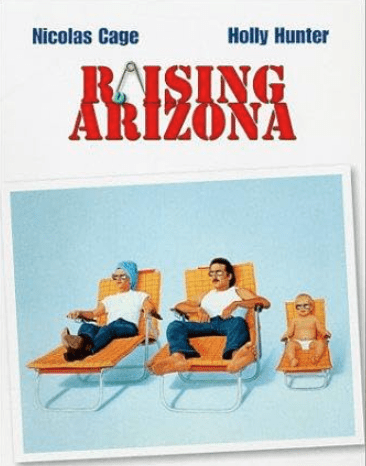
Raising Arizona (Dir Joel & Ethan Coen), Review by Case Wright


Happy Birthday, Nicolas Cage. If you’re an older Millennial or Young Gen X, you saw “Raising Arizona” about 100 times on Showtime and HBO because I believe that it was very inexpensive to license. The film was a hard left turn for the Coen Brothers who had major success with “Blood Simple” – a brutal thriller- that turned all women off to Fat Southern Murderers forever. The Coen thrillers tended to have comedic edge after Raising Arizona, but never just a comedy again- until The Big Lebowski. This film is also responsible for John Goodman. Prior to this film he was in mostly small parts, then after this picture- he became a household name in Roseanne.

Nicolas Cage is a made up name. He is Francis Coppola’s nephew and I can’t fault him for mayonnaising his name because my Italian ancestors did as well. However, I believe that he was trying to hide the Coppola name more than his heritage. Speaking of Italian heritage, try “Groking” “Italian American Jersey Girl” in grok. The lady who appears is beautiful, but doesn’t look like any of my Aunts. I feel that I should advocate for my people- We trend good looking and gave you Pizza Friday! Come on, show some love!

The film’s premise is that H.I. McDonnough (Nicolas Cage) is an ex con who is addicted to robbing the same convenience store again and again and again. This may seem strange, but in another life, I did criminal defense and I had a client who would steal the same jacket from the same store every year. Edwina “Ed” (Holly Hunter) is a cop who processes H.I. again and again. Each time, he flirts with her. His last time as a convict in front of her- her fiancé left her. H.I. realizes that he must go straight to get her love.

After his jail time, he returns as a free man to get his love- “Ed”. It works! They have a great life, but they want a child and yet she can’t conceive. The solution: they will kidnap a baby from the owner of Gallery Furniture! If you were from Texas, you would’ve laughed! They get the kid and are pursued by all sorts of people who want to claim the reward for the kidnapped baby.

This very intricate plot is just the first 30 minutes of the film. It is truly funny. I always felt for these character because good people should have LOTS OF KIDS- as many as possible! They shouldn’t have to pay taxes or anything. This film is special to me for another reason: it is when the Boomers were still young and filled with hope. Now, we are losing them and it hurts. This film is a glimpse of what they were like before the grey and how much they yearned for a good family on their own terms.

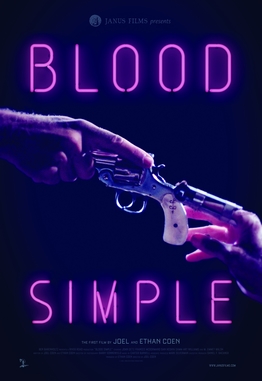
Scene That I Love: M. Emmet Walsh in Blood Simple


The great character actor M. Emmet Walsh passed away yesterday.  He was an actor who had a long career, often playing small but important roles.  1985’s Blood Simple brought Walsh one of his few starring roles and today’s scene that I love comes from that film.

In this scene, M. Emmet Walsh’s sleazy private detective meets with bar owner Dan Hedaya and reveals the result of his investigation into whether or not the bar owner’s wife is cheating on him.  Blood Simple was the directorial debut of the Coen Brothers and featured Frances McDormand in one of her first starring roles.  It also featured M. Emmet Walsh at his best.

Here Are The Independent Spirt Nominations!


The nomination for the Independent Spirit Awards were announced earlier today.

Making a very good showing were Tar, Women Talking, and Everything Everywhere All At Once.  Not showing up at all was Darren Aronofsky’s The Whale, which failed to even pick up a lead performance nomination for Brendan Fraser.  Seeing as how Fraser has been viewed as being the Oscar front runner for a few months now, his lack of a nomination definitely took observers by surprise.

Anyway, here are all the nominees!

FILM CATEGORIES

Best Feature
“Bones and All” (MGM/United Artists Releasing)
“Everything Everywhere All at Once” (A24)
“Our Father, the Devil” (Resolve Media)
“Tár” (Focus Features)
“Women Talking” (MGM/United Artists Releasing)

Best Director
Todd Field – “Tár” (Focus Features)
Kogonada – “After Yang” (A24)
Daniel Kwan, Daniel Scheinert – “Everything Everywhere All at Once” (A24)
Sarah Polley – “Women Talking” (MGM/United Artists Releasing)
Halina Reijn – “Bodies Bodies Bodies” (A24)

Best Lead Performance

Cate Blanchett – “Tár” (Focus Features)
Dale Dickey – “A Love Song” (Bleecker Street)
Mia Goth – “Pearl” (A24)
Regina Hall – “Honk for Jesus. Save Your Soul.” (Focus Features)
Paul Mescal – “Aftersun” (A24)
Aubrey Plaza – “Emily the Criminal” (Roadside Attractions)
Jeremy Pope – “The Inspection” (A24)
Taylor Russell – “Bones and All” (MGM/United Artists Releasing)
Andrea Riseborough – “To Leslie” (Momentum Pictures)
Michelle Yeoh – “Everything Everywhere All at Once” (A24)

Best Supporting Performance

Jamie Lee Curtis – “Everything Everywhere All at Once” (A24)
Brian Tyree Henry – “Causeway” (A24/Apple Original Films)
Nina Hoss – “Tár” (Focus Features)
Brian D’Arcy James – “The Cathedral” (Mubi)
Ke Huy Quan – “Everything Everywhere All at Once” (A24)
Trevante Rhodes – “Bruiser” (Onyx Collective)
Theo Rossi – “Emily the Criminal” (Roadside Attractions)
Mark Rylance – “Bones and All” (MGM/United Artists Releasing)
Jonathan Tucker – “Palm Trees and Power Lines” (Momentum Pictures)
Gabrielle Union – “The Inspection” (A24)

Best Breakthrough Performance
Frankie Corio – “Aftersun” (A24)
Garcija Filipovic – “Murina” (Kino Lorber)
Stephanie Hsu – “Everything Everywhere All at Once” (A24)
Lily McInerny – “Palm Trees and Power Lines” (Momentum Pictures)
Daniel Zolghardi – “Funny Pages” (A24)

Best Screenplay
“After Yang” (A24) – Kogonada
“Catherine Called Birdy” (Amazon Studios) – Lena Dunham
“Everything Everywhere All at Once” (A24) – Daniel Kwan, Daniel Scheinert
“Tár” (Focus Features) – Todd Field
“Women Talking” (MGM/United Artists Releasing) – Sarah Polley

Best First Screenplay
“Bodies Bodies Bodies” (A24) – Sarah DeLappe, Kristen Roupenian
“Emergency” (Amazon Studios) – K.D. Dávila
“Emily the Criminal” (Roadside Attractions) – John Patton Ford
“Fire Island” (Searchlight Pictures) – Joel Kim Booster
“Palm Trees and Power Lines” (Momentum Pictures) – Jamie Dack, Audrey Findlay

Best First Feature
“Aftersun” (A24) – Charlotte Wells (director), Mark Ceryak, Amy Jackson, Barry Jenkins, Adele Romanski (producers)
“Emily the Criminal” (Roadside Attractions) – John Patton Ford (director), Tyler Davidson, Aubrey Plaza, Drew Sykes (producers)
“The Inspection” (A24) – Elegance Bratton (director), Effie T. Brown, Chester Algernal Gordon (producers)
“Murina” (Kino Lorber) – Antoneta Alamat Kusijanović (director), Danijel Pek, Rodrigo Teixeira (producers)
“Palm Trees and Power Lines” (Momentum Pictures) – Jamie Dack (director), Leah Chen Baker (producer)

John Cassavetes Award (Given to the best feature made for under $1,000,000)
“The African Desperate” (Mubi) – Martine Syms (writer, director, producer), Rocket Caleshu (writer, producer), Vic Brooks (producer)
“A Love Song” (Bleecker Street) – Max Walker-Silverman (writer, director, producer), Jesse Hope, Dan Janvey (producers)
“The Cathedral” (Mubi) – Ricky D’Ambrose (writer, director), Graham Swon (producer)
“Holy Emy” (Utopie Films) – Araceli Lemos (writer, director), Giulia Caruso (writer, producer), Mathieu Bompoint, Ki Jin Kim, Konstantinos Vassilaros (producers)
“Something in the Dirt” (XYZ Films) – Justin Benson (writer, director, producer), Aaron Moorhead (director, producer), David Lawson Jr. (producer)

Best Cinematography
“Aftersun” (A24) – Gregory Oke
“Murina” (Kino Lorber) – Hélène Louvart
“Neptune Frost” (Kino Lorber) – Anisia Uzeyman
“Pearl” (A24) – Eliot Rockett
“Tár” (Focus Features) – Florian Hoffmeister

Best Documentary
“A House Made of Splinters” (Madman Entertainment) – Simon Lereng Wilmont (director), Monica Hellström (producer)
“All that Breathes” (HBO) – Shaunak Sen (director, producer), Teddy Leifer, Aman Mann (producers)
“All the Beauty and the Bloodshed” (Neon) – Laura Poitras (director, producer), Howard Gertler, Nan Goldin, Yoni Golijov, John Lyons (producers)
“Midwives” (POV) – Snow Hnin Ei Hlaing (director, producer), Mila Aung-Thwin, Ulla Lehmann, Bob Moore (producers)
“Riotsville, U.S.A.” (IFC Films) – Sierra Pettengill (director), Sara Archambault, Jamila Wignot (producer)

Best Editing
“Aftersun” (A24) – Blair McClendon
“The Cathedral” (Mubi) – Ricky D’Ambrose
“Everything Everywhere All at Once” (A24) – Paul Rogers
“Marcel the Shell with Shoes On” (A24) – Dean Fleischer Camp, Nick Paley
“Tár” (Focus Features) – Monika Willi

Robert Altman Award (Given to one film’s director, casting director and ensemble cast)

“Women Talking” (MGM/United Artists Releasing) – Sarah Polley (director), John Buchan, Jason Knight (casting directors), Shayla Brown, Jessie Buckley, Claire Foy, Kira Guloien, Kate Hallett, Judith Ivey, Rooney Mara, Sheila McCarthy, Frances McDormand, Michelle McLeod, Liv McNeil, Ben Whishaw, August Winter (ensemble cast)

Best International Film
“Corsage” (Austria/Luxembourg/France/Belgium/Italy/England) – dir. Marie Kreutzer
“Joyland” (Pakistan/USA) – dir. Saim Sadiq
“Leonor Will Never Die” (Philippines) – dir. Martika Ramirez Escobar
“Return to Seoul” (South Korea/France/Belgium/Romania) – dir. Davy Chou
“Saint Omer” (France) – dir. Alice Diop

Producers Award (presented by Bulleit Frontier Whiskey  – The Producers Award, now in its 26th year, honors emerging producers who, despite highly limited resources, demonstrate the creativity, tenacity and vision required to produce quality independent films.)
Liz Cardenas
Tory Lenosky
David Grove Churchill Viste

Someone to Watch Award (The Someone to Watch Award, now in its 29th year, recognizes a talented filmmaker of singular vision who has not yet received appropriate recognition)
Adamma Ebo – “Honk for Jesus. Save Your Soul”
Nikyatu Jusu – “Nanny”
Araceli Lemos – “Holy Emy”

“The Truer Than Fiction Award” (The Truer Than Fiction Award, now in its 28th year, is presented to an emerging director of non-fiction features who has not yet received significant recognition)
Isabel Castro – “Mija”
Reid Davenport – “I Didn’t See You There”
Rebeca Huntt – “Beba”

Lisa Marie’s Oscar Predictions For September


Horrorthon, my favorite time of year, starts tomorrow!  However, before we get lost in the scary season, I want to take one last look at awards season!  It’s time for me to update my Oscar nominations.  Fortunately, thanks to all of the recent festival premieres, the Oscar picture is finally starting to look a little bit clearer.  There’s still a lot of question marks out there and, as always, anything can happen.  But, finally, I can say that there’s more to my predictions that just lucky guesses and wishful thinking.

Below, you’ll find my predictions for September!  In order to see how my thinking has evolved over the course of the year, be sure to check out my predictions for February, March, April, May, June, July, and August.

Best Picture

Babylon

The Banshees of Inisherin

Elvis

Everything Everywhere All At Once

The Fabelmans

The Menu

TAR

Till

Top Gun: Maverick

Women Talking

A few thoughts on the (potential) nominees:

Babylon, I will admit, I’m including because of the trailer and the fact that it’s a Damien Chazelle film about Hollywood.  The Academy likes films about itself and one can argue that after what happened when La La Land was nominated, Chazelle is owed at least a little bit of recognition.  Then again, that same argument could have been made for First Man and we know how that turned out.

As for The Menu, I’ve got that in my surprise nominee slot.  There’s almost always at least one potential nominee that’s considered to be a long shot until the nominations are announced.  Now that we have a set number of ten nominees, the chances that one nominee will be a surprise seems even more certain than before.

Top Gun: Maverick, Elvis, and Everything Everywhere All At Once all came out early in the year but they’ve all achieved the box office success necessary to be remembered.

Till seems like the type of film that the Academy will want to acknowledge, especially with the presidential election right around the corner.

The Banshees of Inisherin, The Fabelmans, TAR, and Women Talking were all acclaimed when they made their festival debuts.  Banshees, in particular, went from being a probable also-ran to a surefire contender based on the length of the standing ovation that it received.

Best Director

Chinonye Chukwu for Till

Todd Field for TAR

Martin McDonagh for The Banshees of Insherin

Sarah Polley for Women Talking

Steven Spielberg for The Fabelmans

Best Actor

Austin Butler in Elvis

Tom Cruise in Top Gun: Maverick

Colin Farrell in The Banshees of Insherin

Ralph Fiennes in The Menu

Brendan Fraser in The Whale

Best Actress

Naomi Ackie in I Wanna Dance With Somebody

Cate Blanchett in TAR

Olivia Colman in Empire of Light

Danielle Deadwyler in Till

Michelle Yeoh in Everything Everywhere All At Once

Best Supporting Actor

Brendan Gleeson in The Banshees of Insherin

Tom Hanks in Elvis

Woody Harrelson in Triangle of Sadness

Judd Hirsch in The Fabelmans

Ke Huy Quan in Everything Everywhere All At Once

Best Supporting Actress

Jessie Buckley in Women Talking

Jamie Lee Curtis in Everything Everywhere All At Once

Sally Field in Spoiler Alert

Frances McDormand in Women Talking

Janelle Monae in Glass Onion: A Knives Out Mystery

Lisa Marie’s Oscar Predictions for October


It’s time to take a little break from horror so that I may once against do my list of my monthly Oscar predictions!  I guess some people would consider predicting the Oscars to be a scary thing.  Personally, I have fun doing it, even if my predictions often seem to be for naught.  That said, I did manage to predict that Thomas Vinterberg would be nominated for Best Director last year so take that, haters.

Probably the biggest development this month is that I’ve lost all faith in Spielberg’s West Side Story.  It’s just not getting the type of hype that I would expect from a Spielberg Oscar movie.  In fact, it seems like everyone involved is in kind of a hurry to move on.  So, for now, I’m dropping it from my predictions.  While West Side Story goes, Dune has definitely established itself as a probable nominee.  I think the only problem that Dune will have is the possibility of people saying, “We’ll just nominate the sequel instead.”

I’ve also added C’mon C’mon and Passing to my list of Best Picture nominees.  This is almost totally due to their popularity with the Gothams.  If the other critics groups don’t duplicate the love, they’ll probably get dropped from my predictions come January.

As always, keep in mind that I don’t claim to be an expert.  The picture is a bit clearer but I don’t claim to have any inside information or anything like that.  These are just my guesses, for better or worse.  To see how my thinking has evolved,  check out my predictions for March and April and May and June and July and August and September!

Best Picture

Belfast

C’mon C’mon

CODA

Dune

The Lost Daughter

Nightmare Alley

Passing

The Power of the Dog

Spencer

The Tragedy of MacBeth

Best Director

Kenneth Branagh for Belfast

Jane Campion for The Power of the Dog

Maggie Gyllenhaal for The Lost Daughter

Guillermo del Toro for Nightmare Alley

Denis Villeneuve for Dune

Best Actor

Benedict Cumberbatch in The Power of the Dog

Peter Dinklage in Cyrano

Jude Hill in Belfast

Will Smith in King Richard

Denzel Washington in The Tragedy of MacBeth

Best Actress

Jessica Chastain in The Eyes of Tammy Faye

Olivia Colman in The Lost Daughter

Penelope Cruz in Parallel Lives

Frances McDormand in The Tragedy of MacBeth

Kristen Stewart in Spencer

Best Supporting Actor

Willem DaFoe in Nightmare Alley

Jamie Dornan in Belfast

Ciaran Hinds in Belfast

Jason Isaacs in Mass

Kodi Smit-McPhee in The Power of the Dog

Best Supporting Actress

Jessie Buckley in The Lost Daughter

Dame Judi Dench in Belfast

Ann Dowd in Mass

Kirsten Dunst in The Power of the Dog

Marlee Matlin in CODA

Lisa Marie’s Oscar Predictions for September


Well, it’s the time of the month again.

No, not that time!  That time ended two days ago.  I’m talking about the fact that it’s time for me to once again share my monthly Oscar predictions.  Thanks to the festival circuit, we’ve finally gotten some advance word on the big Oscar contenders that will be coming out over the next few months.

Belfast, as of right now, sounds like the prohibitive favorite to win it all.  At first, it seemed like the reaction to The Power of the Dog was a bit mixed but later reactions were almost overwhelmingly positive.  It sounds like the type of film that will be nominated even if it won’t necessarily win.  Maggie Gyllenhaal’s The Lost Daughter is coming on strong, as is Spencer.  For me, the biggest surprise has been the amount of acclaim that Dune has been getting.  I was a bit dismissive of its Oscar chances earlier this year but now it definitely sounds like it will be in the hunt.

West Side Story has been seen by no one but I continue to list it because it’s a Spielberg film and, with all the musicals that are being released this year and which have subsequently struggled with either critics or audiences or both, it still seems the most likely to pick up a nomination.  I’m a little bit skeptical on whether or not Nightmare Alley is going to be an “Oscar picture” but the trailer was nice to look at so I’m giving it the benefit of the doubt.  House of Gucci is three hours long and full of stars so it’s either going to be an Oscar nominee or a complete bomb.

You may notice a lack of predicted nominations for Licorice Pizza. Licorice Pizza is a film that I fully expect to love but the trailer definitely feels a bit more like Inherent Vice than The Phantom Thread.  I still think that the actors could get nominated but the rumor right now is that Bradley Cooper’s role is actually very small.  That’s why I no longer have him listed as a supporting actor nominee.

Again, keep in mind that I’m not an expert.  The picture is a bit clearer but I don’t claim to have any inside information or anything like that.  These are just my guesses, for better or worse.  To see how my thinking has evolved,  check out my predictions for March and April and May and June and July and August!

Best Picture

Belfast

CODA

Dune

House of Gucci

The Lost Daughter

Nightmare Alley

The Power of the Dog

Spencer

The Tragedy of MacBeth

West Side Story

Best Director

Kenneth Branagh for Belfast

Jane Campion for The Power of the Dog

Guillermo del Toro for Nightmare Alley

Steven Spielberg for West Side Story

Denis Villeneuve for Dune

Best Actor

Clifton Collins, Jr. in Jockey

Benedict Cumberbatch in The Power of the Dog

Peter Dinklage in Cyrano

Will Smith in King Richard

Denzel Washington in The Tragedy of MacBeth

Best Actress

Jessica Chastain in The Eyes of Tammy Faye

Olivia Colman in The Lost Daughter

Penelope Cruz in Parallel Lives

Frances McDormand in The Tragedy of MacBeth

Kristen Stewart in Spencer

Best Supporting Actor

David Alvarez in West Side Story

Willem DaFoe in Nightmare Alley

Ciaran Hinds in Belfast

Jason Isaac in Mass

Kodi Smit-McPhee in The Power of the Dog

Best Supporting Actress

Jessie Buckley in The Lost Daughter

Dame Judi Dench in Belfast

Ann Dowd in Mass

Kirsten Dunst in The Power of the Dog

Marlee Matlin in CODA