Lisa Cleans Out Her DVR: Scorpio (dir by Michael Winner)


(Lisa is currently in the process of cleaning out her DVR!  Having recorded over 150 movies since last January, she understands that this might be an impossible task but she’s going to try anyway!  She recorded the 1973 spy thriller, Scorpio, off of Retroplex way back on January 24th!)

On the surface, Jean Laurier (Alain Delon) would appear to be the perfect man.

He’s handsome.  He looks really good in a suit.  He’s wealthy.  He’s French.  And — get this — he loves cats!  He’s the type of guy who, when he discovers a stray cat in his hotel room, immediately starts to pet it and then gives it a saucer of warm milk.  He and his girlfriend (Gayle Hunnicutt) spend their spare time looking at cats and talking about how cute they are.  At one point, even though he’s just killed a man, Jean pauses when he sees a stray cat watching…

Oh, did I mention that Jean kills people for a living?  Well, he does but I’m sure they’re all bad guys.  Seriously, he’s just so charming (and he really, really loves cats) that you really can’t hold it against him that he’s an independent contract killer.  Add to that, his code name is Scorpio.

I have to admit that the film’s title — Scorpio — is the main reason that I chose to record this movie.  I’m a scorpio myself.  In fact, I’m such a scorpio that if I believed in astrology, I would point to my existence as proof that the stars actually do determine our fate.  Seriously, you don’t want to mess with us scorpios.  We’re scorpions.  We sting.

But anyway, back to the movie.

When Scorpio is busted on a trumped-up narcotics charge (or maybe it was a legitimate narcotics charge, it was kind of hard to keep track), the CIA gives him a choice.  He can either go to prison or he can do a job for them.  Apparently, the CIA believes that Scorpio’s friend and mentor, Cross (Burt Lancaster), is a double agent who has been selling information to the Russians.  They want Cross eliminated.

Scorpio takes the job but it’s not going to be easy.  Cross is a veteran spy.  He has connections all across the world and he’s a ruthless killer, the type who forces a man to swallow a cyanide pill and then says, “You’ve got 30 seconds to live.”  In fact, the only person that Cross seems to care about is his wife (Joanne Linville) but he still doesn’t hesitate to abandon her when he realizes that their house is being watched

Cross taught Scorpio everything that he knows but there’s one lesson that Scorpio is still learning and that is to trust no one.  Is Cross actually a spy or is he being set up?  And, if Cross is being set up, what’s to prevent the same thing from happening to Scorpio?

Scorpio is probably one of the most cynical films that I’ve ever seen.  If Scorpio was a political protest, it would be full of people carrying cardboard signs reading, “Nothing Matters” and “All Is Darkness.”  Remember that annoying as Hell scene in SPECTRE where James Bond got drunk and demanded to know who a rodent was working for?  Well, imagine the disillusionment of that scene stretched out for two hours.

Fortunately, no one in Scorpio is as whiny as Daniel Craig was in SPECTRE.  In many ways, Scorpio is a triumph of old-fashioned movie star charisma.  Burt Lancaster is perfectly cast as the world-weary Cross while Alain Delon makes for a compelling Scorpio.  Both of them are believable killers and the film becomes as much about the competition between Lancaster’s old school Hollywood style of acting and Delon’s more refined (and very French) style of cool as it is about the competition between Scorpio and Cross.

Scorpio‘s a good little spy thriller, more than worth keeping an eye out for.
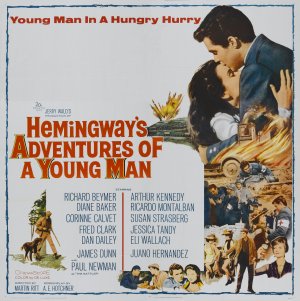
 

Lisa Cleans Out Her DVR: Hemingway’s Adventures Of A Young Man (dir by Martin Ritt)


(Lisa is currently in the process of cleaning out her DVR!  It’s going to take a while.  She recorded this 1962 literary adaptation off of FXM on January 30th!)

Hemingway’s Adventures Of A Young Man is one of those films that you just know was made specifically to win Oscars.  It’s a big prestige production, complete with a historical setting, an epic scope and big, all-star cast.  That most of those stars appear in relatively small roles was undoubtedly meant to evidence of the film’s importance.

“Look!” the film seems to shout at times, “This is such an important film that even Paul Newman was willing to stop by for a day’s work!”

The film is based on ten short stories by Ernest Hemingway and, loosely, A Farewell to Arms.  The stories all dealt with the early life of Nick Adams, who was a literary stand-in for Hemingway.  Since the Nick Adams stories were autobiographical (and, for that matter, so was A Farewell to Arms), the film can also be viewed as biopic.  Richard Beymer (who, a year earlier, had starred in West Side Story and who is currently playing Ben Horne on Twin Peaks) may be playing Nick Adams but the film leaves little doubt that he was actually meant to be playing Ernest Hemingway.

The film opens with Nick hunting with his father, Dr. Harold Adams (Arthur Kennedy).  He is present when his father travels to an Indian camp and helps to deliver a baby.  He respects his father but Nick wants to see the world and the film follows him as he explores America, working odd jobs and meeting colorful characters along the way.  Paul Newman shows up as a punch-drunk boxer and proceeds to overact to such an extent that he reminded me of Eric Roberts appearing in a Lifetime film.  Nick meets rich men, poor men, and everything in between.  He works as a journalist.  He works as a porter.  Eventually, when World War I breaks out, Nick enlists in the Italian army and the film turns into the 100th adaptation of A Farewell to Arms.

And really, I think it would have been an enjoyable film if it had been directed by someone like Otto Preminger, George Stevens, or maybe even Elia Kazan.  These are directors who would have embraced both the pulpy potential of the Nick Adams stories and the soapy melodrama of the war scenes.  A showman like Preminger would have had no fear of going totally and completely over the top and that’s the approach that this material needed.  Instead, Hemingway’s Adventures Of A Young Man was directed, in a painfully earnest style, by Martin Ritt.  Ritt tries to imitate Hemingway’s famously understated style with his understated direction but, cinematically, it’s just not very interesting.  Ritt portrays everything very seriously and very literally and, in the end, his direction is more than a little dull.

Sadly, the same can be said for Richard Beymer’s performance in the lead role.  Beymer comes across as being the nice guy who everyone says you should marry because he’ll be able to get a good and stable job and he’ll probably never go to jail.  Two months ago, when I watched and reviewed Twin Peaks, I really loved Beymer’s performance as Ben Horne.  He just seemed to be having so much fun being bad.  Unfortunately, in Hemingway’s Adventures Of A Young Man, he never seemed to be having any fun at all.  No wonder he temporarily put his film career on hold so that he could fully devote himself to working as a civil rights activist.

In the end, this is a movie that’s a lot more fun to look at than to actually watch.  Visually, the film is frequently quite pretty in an early 1960s prestige movie so sort of way.  And there are some good performances.  Eli Wallach, Ricardo Montalban, Susan Strasberg, Arthur Kennedy — there’s a whole host of performers doing memorable supporting work.  Unfortunately, even with all that in mind, this well-intentioned film largely falls flat.

Dance Scenes That I Love: The Locomotion from Inland Empire


Hello and welcome to martes trece!  

Now, I know that a lot of people will tell you that Friday the 13th is the most unlucky day of the year but actually, in Spain, it is well know that Tuesday the 13th is the day that you have to watch out for.  My grandmother would literally not leave the house on Tuesday the 13th.  Myself, I may leave the house today but I’ll drive very slowly and I’ll watch my step.

Now, personally, I think the best way to deal with an unlucky day is through dance!  So, allow me to bless you with a dance scene that I love.

This is from David Lynch’s 2006 film, Inland Empire.  Inland Empire, which clocks in at 3 hours, is perhaps Lynch’s most unsettling film.  However, it does feature a little dancing, as seen below:

Good luck!

Here’s The First Trailer For Black Panther!


While Wonder Woman (and, by association, the DCEU) is currently riding high, the MCU has several highly anticipated films coming out later this year and in 2018.  One of the most anticipated in Ryan Coogler’s Black Panther.  It stars Chadwick Boseman as the title character and it is scheduled to be released on February 16th, 2018.

The first trailer dropped today.

What do you think?  Am I the only one who wants to visit Wakanda?

Lisa Reviews An Oscar Nominee: The Longest Day (dir by Ken Annakin, Andrew Marton, Bernhard Wicki, Gerd Oswald, and Darryl F. Zanuck)


As my sister has already pointed out, today is the 73rd anniversary of D-Day.  With that in mind, and as a part of my ongoing mission to see and review every single film ever nominated for best picture, I decided to watch the 1962 film, The Longest Day!

The Longest Day is a pain-staking and meticulous recreation of invasion of Normandy, much of it filmed on location.  It was reportedly something of a dream project for the head of the 20th Century Fox, Darryl F. Zanuck.  Zanuck set out to make both the ultimate tribute to the Allied forces and the greatest war movie ever.  Based on a best seller, The Longest Day has five credited screenwriters and three credited directors.  (Ken Annakin was credited with “British and French exteriors,” Andrew Marton did “American exteriors,” and the German scenes were credited to Bernhard Wicki.  Oddly, Gerd Oswald was not credited for his work on the parachuting scenes, even though those were some of the strongest scenes in the film.)  Even though he was not credited as either a screenwriter or a director, it is generally agreed that the film ultimately reflected the vision of Darryl F. Zanuck.  Zanuck not only rewrote the script but he also directed a few scenes as well.  The film had a budget of 7.75 million dollars, which was a huge amount in 1962.  (Until Steven Spielberg’s Schindler’s List, The Longest Day was the most expensive black-and-white film ever made.)  Not only did the film tell an epic story, but it also had an epic length.  Clocking in at 3 hours, The Longest Day was also one of the longest movies to ever be nominated for best picture.

The Longest Day also had an epic cast.  Zanuck assembled an all-star cast for his recreation of D-Day.  If you’re like me and you love watching old movies on TCM, you’ll see a lot of familiar faces go rushing by during the course of The Longest Day.  American generals were played by actors like Robert Mitchum, Robert Ryan, Henry Fonda, and John Wayne.  Peter Lawford, then the brother-in-law of the President of the United States, had a memorable role as the Scottish Lord Lovat, who marched through D-Day to the sounds of bagpipes.  When the Allied troops storm the beach, everyone from Roddy McDowall to Sal Mineo to Robert Wagner to singer Paul Anka can be seen dodging bullets.  Sean Connery pops up, speaking in his Scottish accent and providing comic relief.  When a group of paratroopers parachute into an occupied village, comedian Red Buttons ends up hanging from the steeple of a church.  When Richard Beymer (who is currently playing Ben Horne on Twin Peaks) gets separated from his squad, he stumbles across Richard Burton.  Among those representing the French are Arletty and Christian Marquand.  (Ironically, after World War II, Arletty was convicted of collaborating with the Germans and spent 18 months under house arrest.  Her crime was having a romantic relationship with a German soldier.  It is said that, in response to the charges, Arletty said, “My heart is French but my ass is international.”)  Meanwhile, among the Germans, one can find three future Bond villains: Gert Frobe, Curt Jurgens, and Walter Gotell.

It’s a big film and, to be honest, it’s too big.  It’s hard to keep track of everyone and, even though the battle scenes are probably about an intense as one could get away with in 1962 (though it’s nowhere near as effective as the famous opening of Saving Private Ryan, I still felt bad when Jeffrey Hunter and Eddie Albert were gunned down), their effectiveness is compromised by the film’s all-star approach.  Often times, the action threatens to come to a halt so that everyone can get their close-up.  Unfortunately, most of those famous faces don’t really get much of a chance to make an impression.  Even as the battle rages, you keep getting distracted by questions like, “Was that guy famous or was he just an extra?”

Among the big stars, most of them play to their personas.  John Wayne, for instance, may have been cast as General Benjamin Vandervoort but there’s never any doubt that he’s playing John Wayne.  When he tells his troops to “send them to Hell,” it’s not Vandervoort giving orders.  It’s John Wayne representing America.  Henry Fonda may be identified as being General Theodore Roosevelt II but, ultimately, you react to him because he’s Henry Fonda, a symbol of middle-American decency.  Neither Wayne nor Fonda gives a bad performance but you never forget that you’re watching Fonda and Wayne.

Throughout this huge film, there are bits and pieces that work so well that you wish the film had just concentrated on them as opposed to trying to tell every single story that occurred during D-Day.  I liked Robert Mitchum as a tough but caring general who, in the midst of battle, gives a speech that inspires his troops to keep fighting.  The scenes of Peter Lawford marching with a bagpiper at his side were nicely surreal.  Finally, there’s Richard Beymer, wandering around the French countryside and going through the entire day without firing his gun once.  Beymer gets the best line of the film when he says, “I wonder if we won.”  It’s such a modest line but it’s probably the most powerful line in the film.  I wish The Longest Day had more scenes like that.

The Longest Day was nominated for best picture of 1962 but it lost to an even longer film, Lawrence of Arabia.

What Lisa Watched Last Night #166: Daughter For Sale (dir by Farhad Mann)


Last night, I turned on Lifetime and I watched Daughter for Sale!

Why Was I Watching It?

Well, the main reason was because the film was on Lifetime and I always enjoy live tweeting Lifetime films.  There’s a strong community of Lifetime live tweeters.  We all appreciate Canadian location shooting and unapologetic melodrama.

Add to that, Daughter For Sale is a great title.  When you see that a movie is called Daughter for Sale, you really have no choice but to watch.

What Was It About?

Annalise O’Neil (Emily Rose) is a newly appointed judge.  We know this because 50% of her dialogue consists of her telling people, “I’m a judge.”  She also lives in a house that is almost totally made of glass.  Seriously, it’s all windows and there’s no privacy.

Anyway, when the movie starts, she’s celebrating being a judge by throwing a party at her glass house.  When she tells her teenage daughter, Carly (Emily Tennant), to put on a pink dress and come downstairs to the party, Carly responds by cutting the dress into pieces and then sneaking out of the house.  Somehow, nobody notices her running away, despite the fact that the house is almost all window.

Anyway, Carly wanders around Vancouver for a while and then ends up getting kidnapped by a human trafficking ring that is operated by a pretend do-gooder named John Gallant (Antonio Cupo).  Working with a whiny, leather jacket-wearing detective named Derek (Chris Kalhoon), Annalise searches for her missing daughter.  (Her search basically consists of approaching random people and saying, “I’m a judge.”)  Will Annalise and Whiny Detective Man be able to find Carly before she’s sold to the highest bidder?

What Worked?

Particularly for a Lifetime film, Daughter For Sale looked really good.  The shadowy cinematography created the perfect sense of menace.  The warehouse that Carly was kept in was pure nightmare fuel.  We tend to take production design for granted but the people responsible for the look of Daughter for Sale outdid themselves.

Emily Tennant did a pretty good job as Carly. (Remarkably, despite spending about a month in a dirty old warehouse, Carly’s hair and makeup remained perfect throughout the entire movie.)  Antonio Cupo was properly sleazy as the bad guy.  I enjoyed the way the film contrasted Gallant’s public image with the monstrous reality of who he truly was.

What Did Not Work?

“I’m a judge.”  Yes, we know, Analise!  You don’t have to mention it every two minutes!  You being a judge certainly isn’t going to get your daughter out of that warehouse…

This was one of those films where everyone continually switched from being super competent to being super stupid, depending on what was necessary for the scene.  Analise, in particular, was always either a genius or the most naive jurist in history.  Meanwhile, John Gallant was able to run a halfway house, a charity, and an international sex trafficking ring but he wasn’t smart enough to hide the incriminating evidence in his office.  If you’re going to send a thug to beat up a judge, it might be smart to not allow yourself to then be seen, in public, hanging out with the exact same thug.  Or, at least, that’s the way it would seem to me.

“Oh my God!  Just like me!” Moments

“I’m a judge!”

No, actually, I’m not.  But if I was, I would probably remind everyone every chance I got as well.

Lessons Learned

She’s a judge!

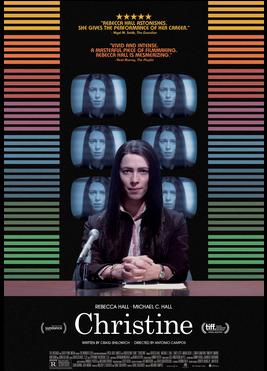
The Things You Find on Netflix: Christine (dir by Antonio Campos)


I really regret that I didn’t get a chance to see Christine when it played here last year.  I wanted to but the movie was only in theaters for a week and then it vanished.

I guess I shouldn’t be too surprised that Christine didn’t become a blockbuster.  I imagine that most potential viewers were turned off by the fact that 1) it wasn’t a remake of the movie about the killer car and 2) it was based on the true story of a reporter who, in 1974, committed suicide on live television.  I imagine that, to many people, the film sounded like it would be indescribably sad.  It certainly sounded that way to me.  That’s why, when the movie opened at the Dallas Angelika, I said, “I’ll see it next week.”  Of course, by the time “next week” rolled around, the movie was gone.

And that’s a shame.  I just watched Christine on Netflix and I discovered that it was one of the best films of 2016.  Yes, it is a sad film but it’s also a frequently fascinating one.  The movie may tell the story of a tragedy but it’s anchored and enlivened by a brilliant performance from Rebecca Hall.  People who love movies, of course, already know that Rebecca Hall is a brilliant actress but, unfortunately, she rarely gets the roles in the films that she deserves.  As of this writing, her most financially successful film was probably The Town and, in that film, she was pretty much wasted in a nothing role.  She is perfectly cast in Christine, perhaps as perfectly cast as any performer could ever hope to be.

Rebecca Hall plays Christine Chubbuck, a reporter who was based in Sarasota, Florida.  In 1974, she started a newscast by announcing, “”In keeping with Channel 40’s policy of bringing you the latest in ‘blood and guts’, and in living color, you are going to see another first—attempted suicide.”  She then drew a gun from a shopping bag that was sitting behind the anchor desk.  As thousands watched, she shot herself in the back of the head.

Along with the gun, the shopping bag had contained the homemade puppets that Christine used whenever she volunteered at the local children’s hospital.  On the anchor desk, among her papers, was a news report that she had written the previous night, announcing that “Local news personality Christine Chubbuck” had shot herself on live television and had been taken to the hospital in critical condition.  Christine, who was reportedly frustrated both personally and professionally, was briefly the number one story in the nation.

One of the more interesting things about the suicide of Christine Chubbuck is that it happened in 1974, long before YouTube, Facebook Live, or Twitter.  Chubbuck’s suicide was only aired once and the footage has subsequently vanished.  If Christine Chubbuck, or anyone else, committed suicide on television today, it would immediately be all over the internet.  We would end up seeing, at the very least, clips of it on an almost daily basis.  Sadly, we would see it so much that we would probably become desensitized to it.  Since Christine Chubbuck’s death was recorded but remains unseen, both she and her suicide have achieved an almost mythical quality.  One can look at the details of Christine Chubbuck’s death and see almost anything that they want.

Christine follows the last few months of Chubbuck’s life.  As played by Rebecca Hall, Christine is confident enough that she can imagine interviewing Richard Nixon but insecure enough to obsess over whether she was nodding too much while the imaginary President gave his imaginary answer.  She lives with her mother (J. Smith-Cameron), a self-described hippie who keeps making references to a breakdown that Christine had in Boston.  When she complains about the pressure that she’s under to sensationalize the news, her boss dismisses her with “You’re a feminist!”  (He says it like an accusation.)  When she gives in and purchases a police scanner so that she can find the stories that the boss is demanding, she ends up spending most of her night listening to two cops brag about “how far” they got with their girlfriends the night before. When she goes to the doctor to complain about chronic stomach pain, she’s told that she has to have an ovary removed and she’ll probably never be able to conceive.  When she thinks that she finally has a date with the man who she’s been crushing on, she is instead dragged to an empty-headed encounter group.  Her group partner has a slick answer for every problem that Christine has until Christine says that she’s thirty and she’s still a virgin.

“Oh,” her partner replies, flummoxed.

In the film, Christine struggles with both depression and, in my opinion, bipolar disorder as well.  Unfortunately, for her mental well-being, she’s a woman in 1974.  The only thing that the world has to offer her are vapid self-affirmation (“I’m okay, you’re okay!  I’m okay, you’re okay!” one co-worker chants at a particularly dramatic moment) and sexist bosses who dismiss what is clearly a manic episode as either “being moody” or “being difficult.”  Speaking as someone who is very sensitive as to how mental health issues are portrayed onscreen, all I can say is that Christine gets it right.

I’m probably making this film sound like the most depressing movie ever made and it’s definitely not a happy film.  I had tears in my eyes by the end of it.  At the same time, it’s also a compulsively watchable character study.  Rebecca Hall gives such a good and brave performance as Christine that you can’t look away, even when you feel like you should.  Rebecca Hall is also ably supported by Michael C. Hall, Tracy Letts, Morgan Spector, Timothy Simons, and Maria Dizzia, who all play her sometimes sympathetic, sometimes annoyed co-workers.

Now, I do think that I should warn anyone from thinking that Christine is a 100% accurate look at Christine Chubbuck’s life and death.  The film left me so moved that I actually did some research and I came across this article from the Washington Post — Christine Chubbuck: 29, Good-Looking, Educated, A Television Personality. Dead. Live and in Color.  After reading the profile, it was easy to see that the film did take some dramatic license.  However, it was also easy to see that Christine gets the essence of the story right.

If, like me, you missed Christine in the theaters, you can now see it on Netflix.  And you should!

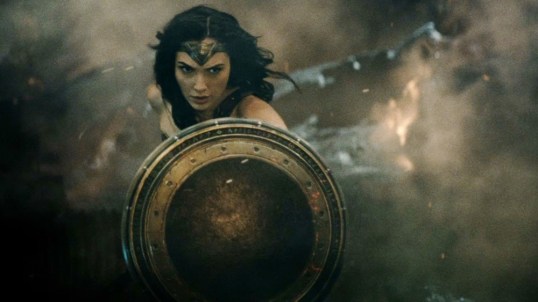
Film Review: Wonder Woman (dir by Patty Jenkins)


Wonder Woman is awesome!

I spent a while trying to think of the best way to begin this review.  There’s a lot to be said about Wonder Woman, as both a film and as a character.  Over the next few weeks, we’re going to be flooded with think pieces.  Is Wonder Woman too feminist or not feminist enough?  Does Wonder Woman herald a new direction for the DC Expanded Universe or is it destined to just be an anomaly among the ruins of crap like Man of Steel and Suicide Squad?  Does it announce the arrival of new star?  Is Wonder Woman pro-war or a plea for peace?  Does Wonder Woman live up to the rapturous early reviews or is it destined to suffer the same fate as the initially acclaimed, later-reviled Ghostbusters reboot?

Those are all legitimate questions.  They’re all worthy of debate and discussion.  And I look forward to reading everyone’s thoughts on blah blah blah blah….

Yes, Wonder Woman is empowering, both as a film and as a character.  It’s amazing to think that, with all the super hero adaptations that have come out over the past ten years, Wonder Woman is the first one to center around a female super hero.

Yes, Wonder Woman does finally prove that DC Expanded Universe can produce a good film, though I do have to say that two of the best things about Wonder Woman is that it had very little to do with any of the other DCEU films and it felt more like an MCU film.  With the period setting (the film takes place during World War I) and it’s weary view of the wars that men fight, Wonder Woman has far more in common with the first Captain America film than it does with Man of Steel.

Yes, Gal Gadot is going to be a huge star and her performance here suggests that she has range beyond action films and comic book melodramas.

Yes, Wonder Woman is a plea for peace but it’s a sincere and honest plea and one that does not ignore the realities of human nature.

And, finally, yes, Wonder Woman deserves those good reviews and I believe it will stand the test of time.

When all is said and done, what really matters is that Wonder Woman is freaking awesome!  The teaming of director Patty Jenkins and star Gal Gadot has resulted in one of the most entertaining and exciting comic book movies of recent times.  Usually, I resent it when an audience breaks into applause at the end of a movie, largely because it makes me feel as if I’m being pressured to make a snap judgment about a movie’s worth before I’ve had time to give it proper thought.  However, this time, when the applause broke out at the Alamo Drafthouse, I happily joined in.

I could be wrong about this but I don’t think Wonder Woman is ever actually called “Wonder Woman” at any point during the film.  If she was, I missed it and I’m sure someone will correct me in the comments.  Instead, she is referred to by her proper name, Diana.  When the film opens (after the obligatory modern-day prologue), Diana is a child living on the island of Themyscira, the home of the legendary Amazons.  Diana is the only child among the Amazons.  The daughter of Queen Hippolyta (Connie Nielsen), Diana dreams of becoming a warrior but her mother refuses to allow it.  When Diana is trained, it’s in secret by her aunt, General Antiope (Robin Wright).  At one point, Antiope tells Diana that if she’s going to be warrior, she’s going to have to be prepared to fight for everything.  No victory, Antiope tells her, will ever come easily.  I nodded at that line and I’m sure every other woman in the audience did so as well.  We understood what Antiope was saying.

In 1918, for the first time in centuries, a man reaches the island.  His name is Steve Trevor (Chris Pine) and he’s an American spy.  No sooner does Steve’s plane crash on the beach then a boat full of Germans arrive.  After a genuinely exciting battle (perhaps the first exciting action scene to appear in any of the DCEU films), Steve reveals that the world is at war.  Suspecting that it is the influence of Ares, the god of war, that is causing people to kill one another, Diana defies her mother’s orders and leaves the island with Steve.  Steve’s goal is to keep the Germans from developing and deploying a lethal gas.  Diana, meanwhile, plans to track down and kill Ares.

While Steve is convinced that, as a result of human nature, wars are inevitable, Diana is resolute in her belief that all the evil in the world can be linked to Ares.  Their conflicting world views give Wonder Woman far more emotional depth and intellectual resonance than any of the other films that have, so far, been a part of the DC Expanded Universe.  By refusing to indulge in portentous hypermasculinity, it avoids becoming a pretentious slog like Man of Steel or Batman v Superman.  By refusing to treat war, death, and violence as a joke, it avoids falling into the soulless trap that imprisoned Suicide Squad.  When Diana runs and leaps into battle, she’s not just fighting for good against evil.  She’s fighting for the soul of humanity.

Some of the action scenes in Wonder Woman are nothing less than amazing.  The scene where Diana crosses the aptly named “No-Man’s Land” is destined to be remembered as a classic moment in comic book cinema.  I don’t want to spoil too much of the film but I will say that you’ll also never forget the way that Diana takes out a German sniper.  It’s an amazing moment, one that is matched by the film’s final battle.  Again, I don’t want to spoil anything so I’ll just say that the film’s finale brought tears to my eyes.

After providing Batman v Superman with its only good moments, Gal Gadot finally gets the film that she deserves and she gives an amazing performance.  As played by Gadot, Diana is confident but never arrogant, occasionally naive but never foolish.  She’s a fighter, one who refuses to surrender even when the rest of the world tells her to go home.  (There’s a rather interesting throw-away line, in which Steven’s secretary says that she’s looking forward to getting to vote in her first election.  Wonder Woman is saving a world that wouldn’t even allow her a voice in selecting the man who are constantly putting it in danger.)  Gal Gadot gives a charismatic and star-making performance.

Also giving a good performance — perhaps a career best if you take Hell or High Water out of the equation — is Chris Pine.  When Pine first appears, he seems to be doing a riff on his too-perfect Prince Charming performance in Into the Woods.  But, as the film progresses, Pine brings unexpected depth to this role.  Special mention should also be made of David Thewlis, who may not have a huge role but who makes the most of his limited screen time.

But, with all that in mind, the most important thing that I can tell you about Wonder Woman is that the film is an absolute blast, a fast-paced and exciting action film that is complimented by strong performances and an unexpectedly poignant subtext.

It’s empowering.

It’s entertaining.

It’s worthy of the applause that filled the Alamo Drafthouse.

In short, it’s absolutely awesome.

See it this weekend.

(Now, Marvel, where’s that Black Widow movie that y’all better be developing?)

Lisa Watches An Oscar Nominee: Separate Tables (dir by Delbert Mann)


As some of you may know, I have been on a mission for a while now.  My goal is to see and review every single film that has been nominated for best picture by the Academy of Motion Picture Arts and Sciences.  (Of course, with the 1928 nominee, The Patriot, being a lost film, that may seem like an impossible mission.  No matter!  For me, nothing is impossible.  What Lisa wants, Lisa gets.)  For that reason, I spent part of last night watching the 1958 best picture nominee, Separate Tables, on TCM.

Separate Tables is one of the more forgotten of the best picture nominees but then again, the 50s were not the greatest decade as far as the Academy was concerned.  Consider some of the other films released in 1958: Big Deal on Madonna Street, High School Confidential, Indiscreet, The Last Hurrah, Machine-Gun Kelly, The Fly, The Blob, The Horror of Dracula, The Revenge of Frankenstein, Some Came Running, Thunder Road, A Touch Of Evil, and Vertigo!  The thing they all have in common is that none of them were nominated for best picture but Separate Tables was.

That’s not to say that Separate Tables was, in any way, a bad film.  Actually, it’s a pretty good film and I’m glad that I watched it.  It’s not bad at all.  However, it is … what’s the right term to use here?  Stately perhaps?  Maybe stagey.  Separate Tables is based on two one-act plays and, though it’s obvious that some effort was made to open up the material, it still feels undeniably stage-bound.  Separate Tables was directed by Delbert Mann, who had previously won an Oscar for his lively direction of Marty.  With Separate Tables, his direction is far less lively.  Watching it, you get the feeling that he was not only straight-jacketed by the theatrical origins of the material but also by the fact that the film was clearly made to win Academy Awards.

So, ignore the direction and pay attention to the performances.  Separate Tables works best as a tribute to good acting.  The film follows the lives of several guests at an English seaside hotel.  Some people are just staying for a few days.  Some people live at the hotel.  John Malcolm (Burt Lancaster) is a moody writer, a recovering alcoholic who is planning on asking the hotel’s manager, the level-headed Pat Cooper (Wendy Hiller), to marry him.  Of course, then his ex-wife, Anne (Rita Hayworth), shows up.  As quickly becomes obvious, John and Anne may hate each other but they also love each other.  Neither one is particularly sympathetic but, in their scenes together, Lancaster and Hayworth do create a fascinating portrait of mutual self-destruction.  Ultimately, you’re left with the impression that both of them are so self-destructive that they belong together, if just to keep from drawing anyone else into their messed up orbit.

And then there’s Major Pollock (David Niven).  David Niven won the Oscar for Best Actor for his role as Major Pollock and he does give an excellent performance.  Major Pollock is one of those roles that often seems to attract comedic actors looking for a chance to prove their dramatic abilities.  When he first appears, he seems to be a bit of a joke but then, as the film progresses, we learn that he’s actually struggling with his own demons.  In the case of Major Pollock, those demons are more hinted at than defined.  As we learn at the start of the film, Pollock was convicted of “harassing” several “young women” at a movie theater.  Separate Tables does not make clear how young or, for that matter, the exact details of the harassment.  Some residents of the hotel want Major Pollock to be kicked out of the hotel.  Some residents say that it is none of their business and that everyone deserves a second chance.  John Malcolm is in the latter group, though he’s more concerned with his ex-wife than with the scandalous Major (who, to no one’s great surprise, isn’t actually a major and whose war stories have all largely been lies).  Also seeking to defend Major Pollock is the shy Sibyl (Deborah Kerr, playing against type).  Sibyl’s mother (Gladys Cooper) is among those most determined to exile Pollock.

And really, the only reason this plotline works is because of the performances of Niven and Kerr.  As written, it’s way too vague about the exact details of what it was that Pollock did.  We’re just told that he was caught “behaving immorally.”  (According to Wikipedia, Pollock was originally written as being gay but, apparently, that was considered to be too controversial for 1958, hence the mention that Pollock’s crime involved “young women.”)  But Niven gives such a soulful and wounded performance that, much like Sibyl, you want to believe the best about him.  You want to give him a second chance, even though you know he’s going to let you down.  As Major Pollock, David Niven uses his trademark charm to paint a portrait of a man who is painfully aware that he has little to offer beyond charm.

At the same time, I was surprised by how little screen time Niven actually had in Separate Tables.  The majority of the film is taken up with Lancaster and Hayworth.  Niven definitely deserved some consideration for best supporting actor but best actor?  Not in the year that saw Orson Welles in Touch of Evil and James Stewart in Vertigo.

Separate Tables is not a great film, at least not in the way that we might wish that a film nominated for best picture would be.  It’s way too stagey and vague.  But, with all that in mind, it’s still wonderfully acted and always watchable.  It may not be great but it is very, very good.

Separate Tables was nominated for best picture but lost to Gigi.

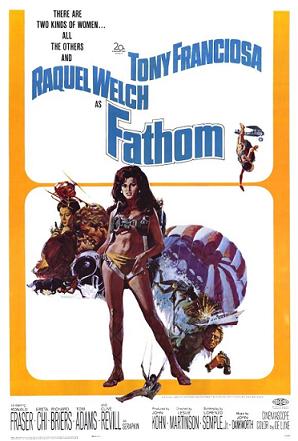
Lisa Cleans Out Her DVR: Fathom (dir by Leslie H. Martinson)


(Lisa is currently in the process of cleaning out her DVR!  It’s going to take her forever but, with the help of Dexedrine and energy drinks, she is determined to get it done!  She recorded 1967’s Fathom off of FXM on April 3rd of this year!)

Fathom is a spy spoof, one that was made the height of the initial James Bond craze.  It’s very much a late 60s film, in everything from the way the film looks to the overly complicated storyline to the film’s cultural attitudes.  This is one of those films that you know was probably considered to be “naughty” when it was released but, seen today, it’s all rather quaint.  There’s no nudity, there’s no cursing, and there’s very little violence.  However, it does feature in Raquel Welch in a lime green bikini and you just know that, when this film came out, there were probably people bemoaning it as the end of civilization.  “What happened to the movies that you could take the entire family too!?” they probably wailed.  That’s the way history works.  What was once daring now seems remarkably innocent.

I watched the film last night but I’d be lying if I said I could follow the plot.  I think that was intentional on the part of the filmmakers.  Fathom satirizes the spy films of the late 60s by taking all of their familiar elements to their logical extreme.  Spy thrillers feature unexpected twists and turns.  Fathom has a new twist every 10 minutes or so.  Spy thrillers feature sudden betrayal and double agents.  With the exception of Raquel Welch, literally no one in Fathom is who they initially claim to be.  It becomes exhausting to try to keep up.  In many ways, Fathom plays out like an old serial.  Every few minutes or so, there’s another cliffhanger.  Oh no, Raquel Welch is on an out-of-control motorboat!  Oh no, the bad guys have got Raquel Welch on an airplane!  Oh no, Raquel Welch is being chased by a bull and she’s wearing a red dress!  ¡Olé!

Raquel plays Fathom Harvill, who works as a dental hygienist except for when she’s touring Europe as a member of the U.S. parachute team.  She’s recruited by some spies to help track down a nuclear triggering mechanism, one that is being hidden somewhere in Spain.  The Scottish secret service just wants her to parachute into a villa owned by a mysterious American named Peter Meriweather (Anthony Franciosa) and plant a recording device.  Things don’t go quite as smoothly as they should and soon, Fathom’s going from one extreme situation to another.

(Even though Peter is supposed to be a suave, James Bond-type, Franciosa gives such an oddly intense performance that it feels like a dry run for his later work in Dario Argento’s Tenebrae.  Interestingly enough, in Argento’s film, Franciosa’s character is named Peter Neal.  Is it possible that Peter Meriweather changed his last name?)

But really, the entire plot is just an excuse to get Raquel into that lime green bikini and she totally owns the moment.  Raquel Welch is one of my favorite of the old film stars because she never apologized for who she was.  She had the body, she was sexy, she knew it, and she used it to her advantage.  Of course, when seen today, it’s disappointing that Fathom spends the entire movie being rescued by men but then again, I imagine that just the idea of a woman being a secret agent was revolutionary in 1967.  Actually allowing her to get out of situations on her own might have made heads explode.  If Fathom were made today, Fathom would at least get one scene where she gets to kick some ass, Angelina Jolie-style.

Anyway, Fathom is an enjoyably silly spy film.  Don’t worry about trying to follow the plot and, instead, just enjoy it as an over-the-top time capsule.  It doesn’t get more 1967 than Fathom.