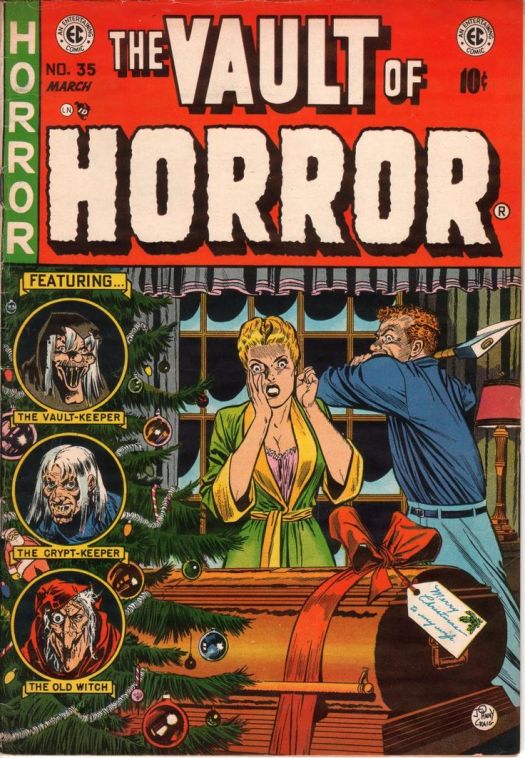
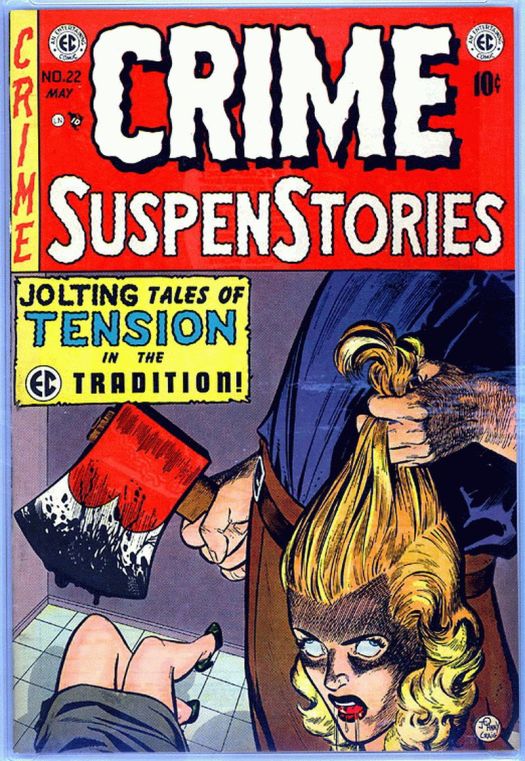
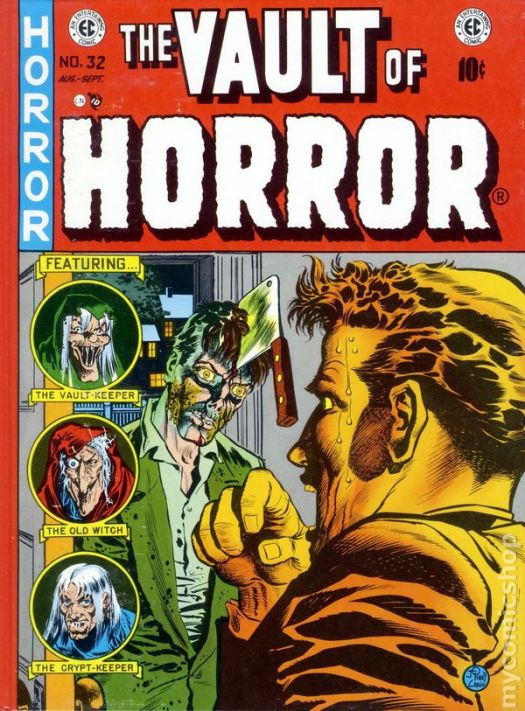
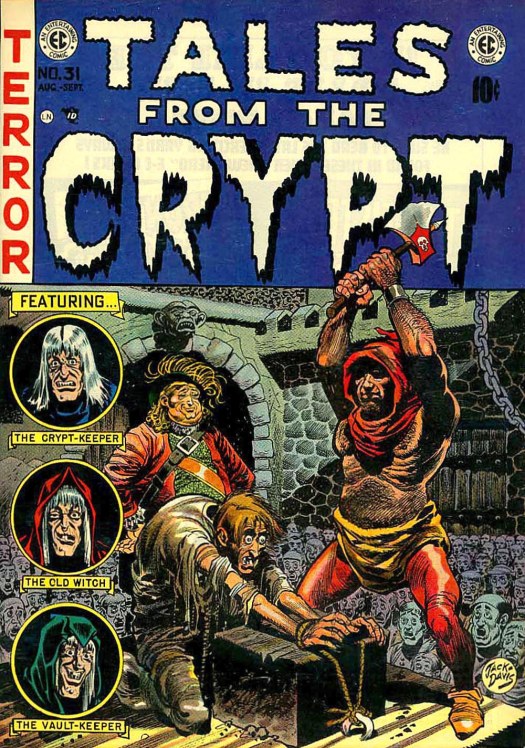
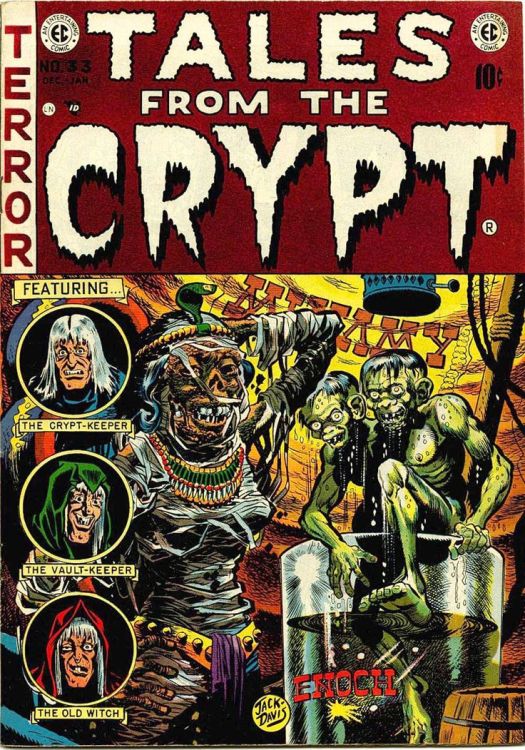
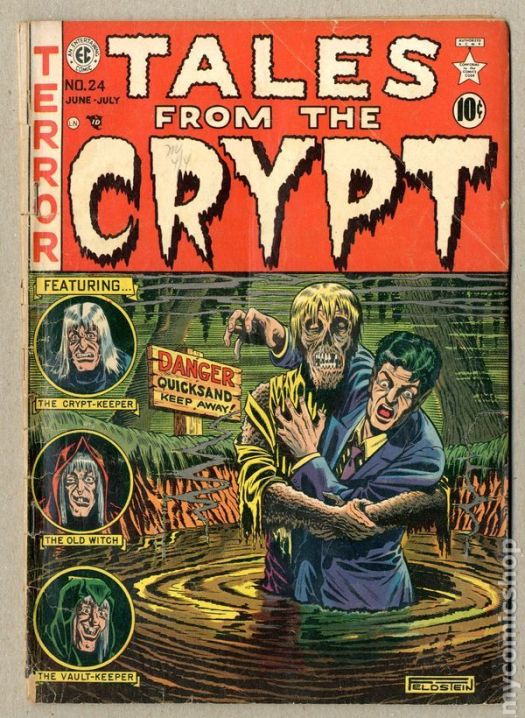
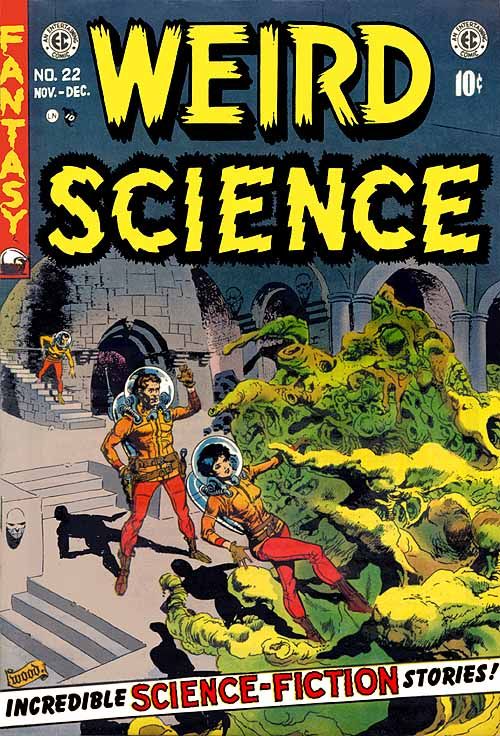
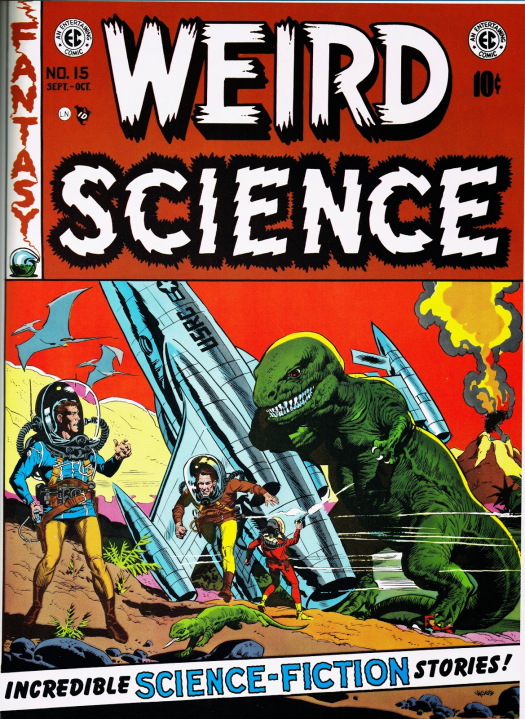
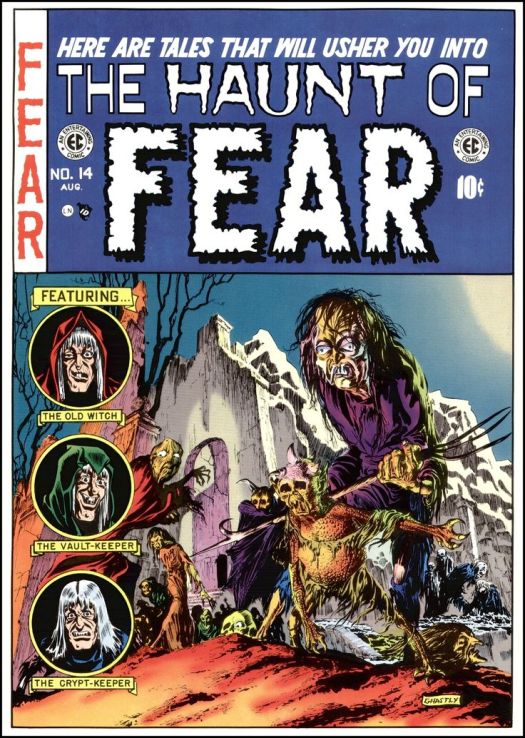
William M. Gaines’ graphic and gruesome line of horror, crime, and science fiction comics helped turn America’s youth into mouth-foaming, homicidal Juvenile Delinquents until they met with a horror of another kind – Dr. Fredric Wertham and the U.S. Congress! These beasts effectively destroyed EC through censorship and propaganda, ending one of graphic arts’ most creative eras. But EC still lives in the hearts and minds of horror fans everywhere, so here’s gallery of ten spine-chilling covers from the Golden Age of EC Comics! Spa Fon!
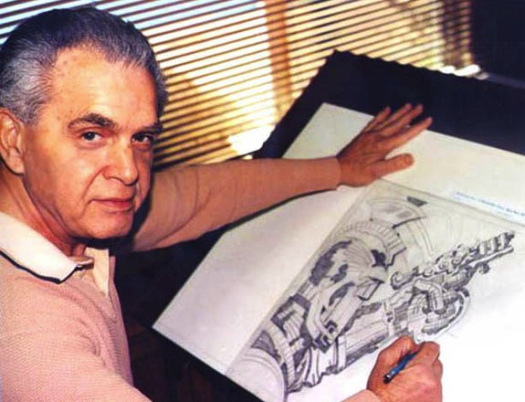
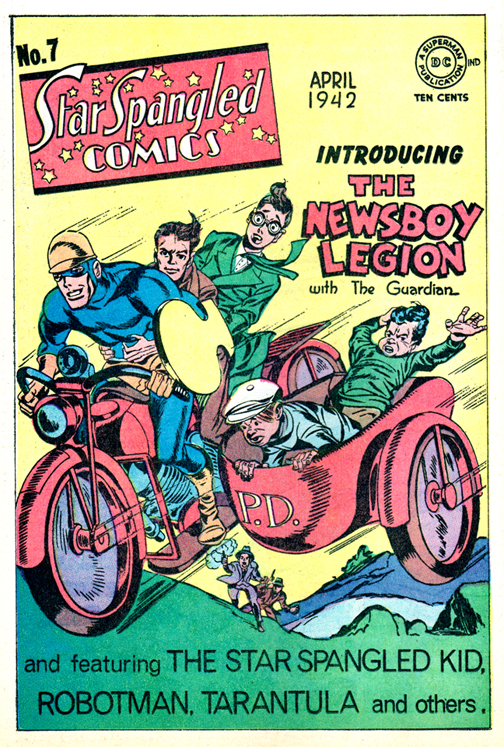
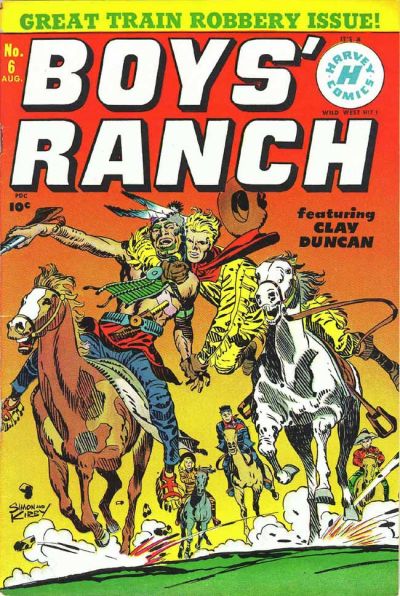
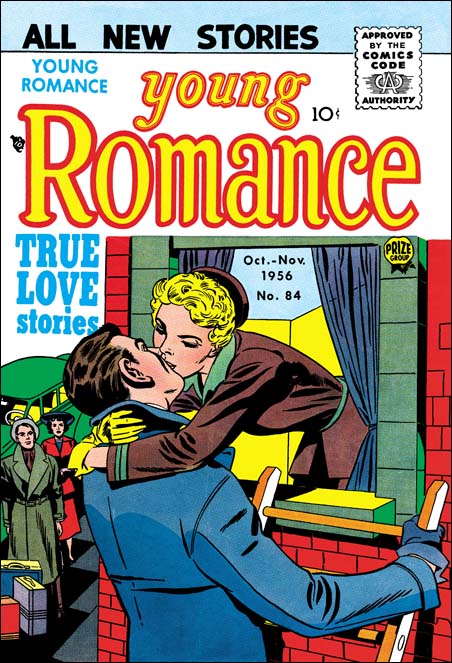
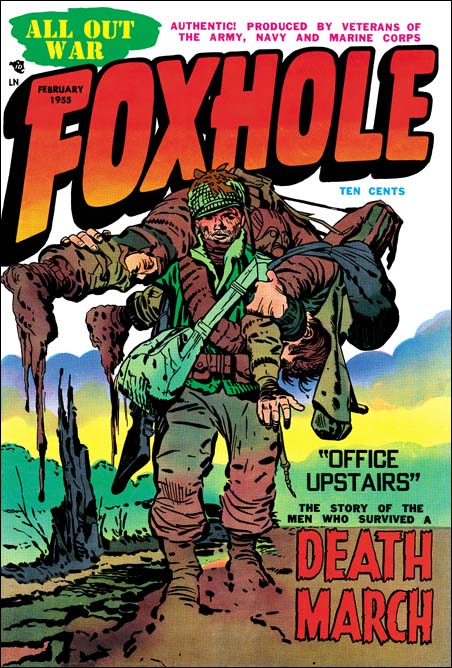
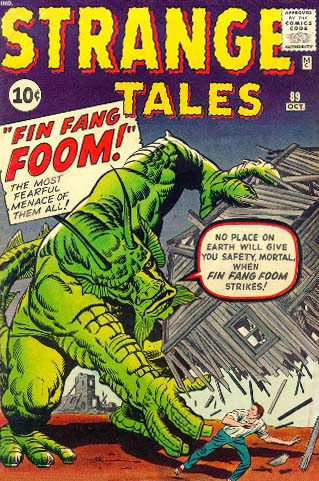
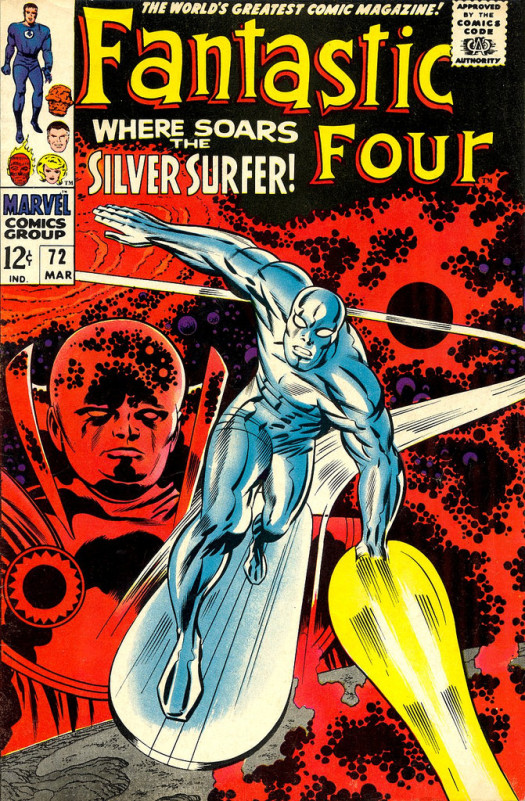
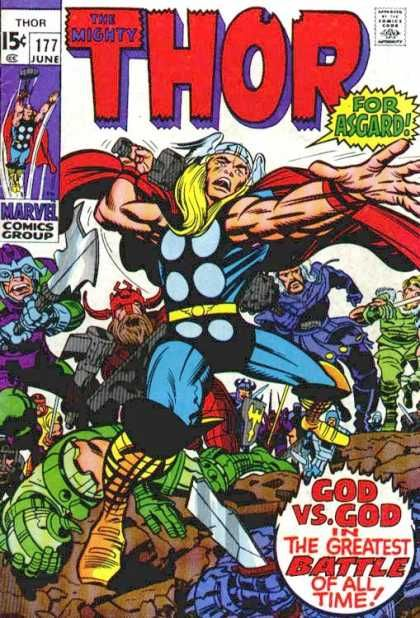
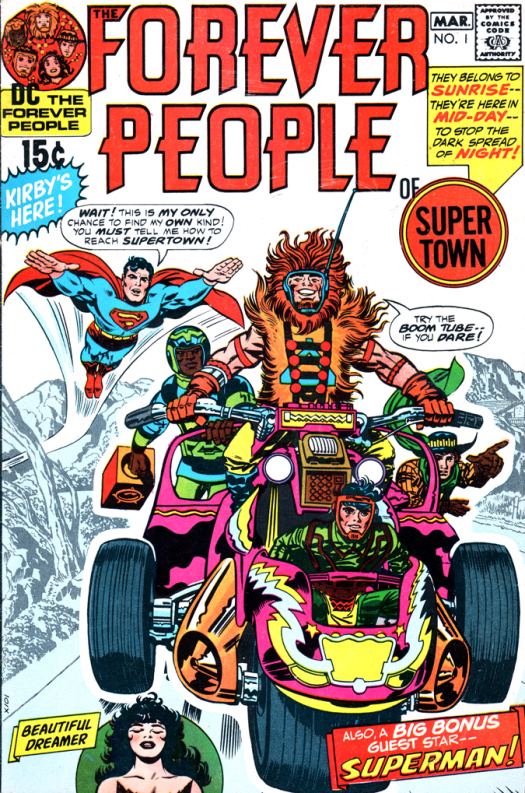
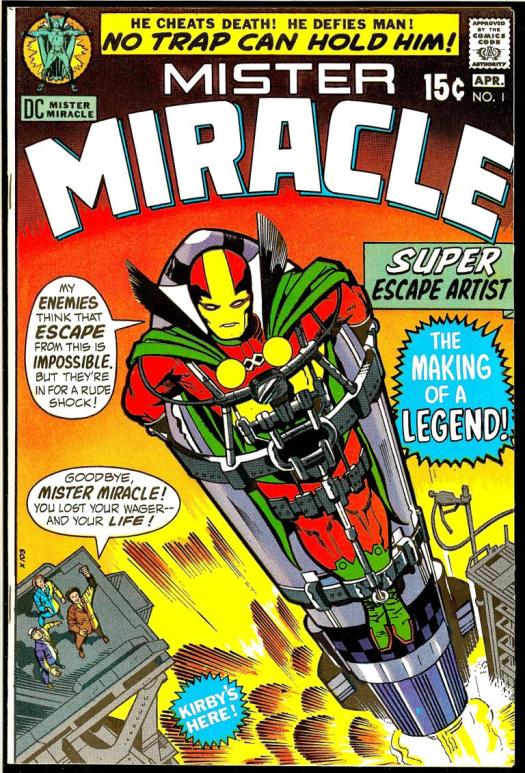
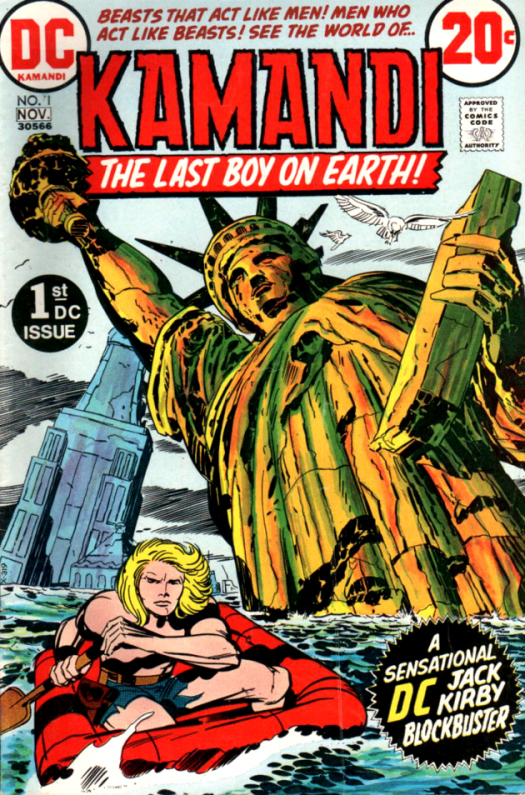
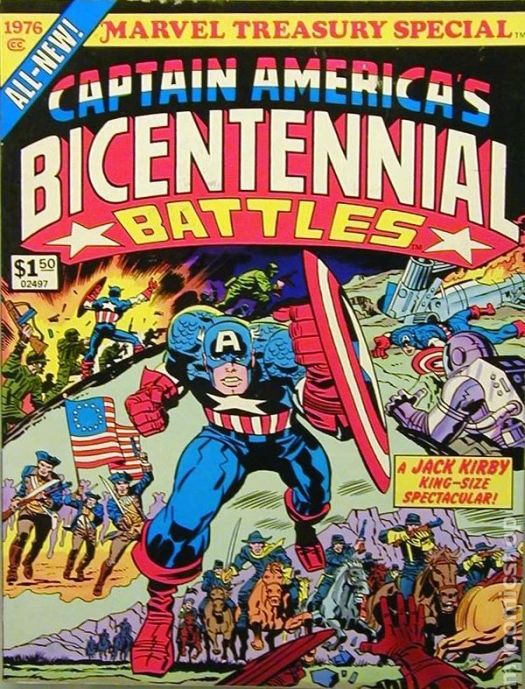
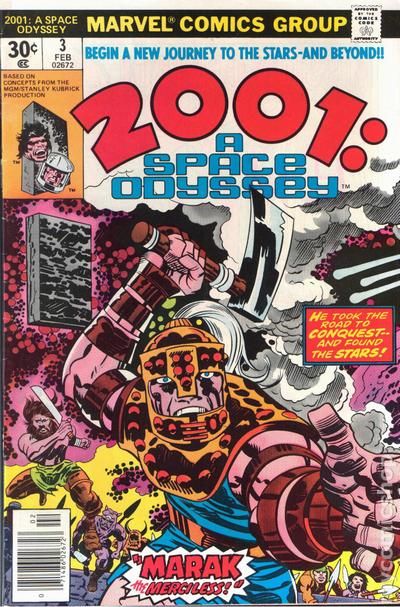
Today marks the centennial anniversary of the undisputed King of Comics, ‘Jolly’ Jack Kirby! This creative genius was responsible for some of the best known (and loved) characters of the 20th Century, and his influence is still felt to this day. Rather than using my meager words, here’s a gallery of comic cover art featuring the amazing talent of Jack ‘King’ Kirby!
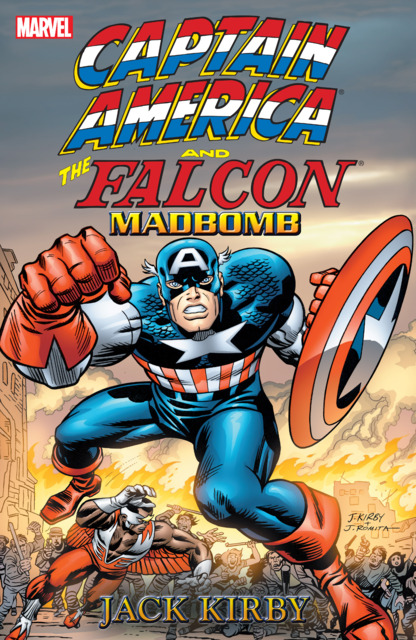
Evil elitists are plotting to transmit mind-controlling madness, turning America’s citizenry into docile sheep to do their bidding! No, I’m not talking about today’s election (though I could be!), it’s the plotline of CAPTAIN AMERICAN AND THE FALCON: MADBOMB, Jack Kirby’s 1975 seven part epic collected in this 2004 graphic novel release. The King was making his return to Marvel after five years working for rival DC, and took over the reigns of his baby Cap’s monthly book as writer/artist/editor.
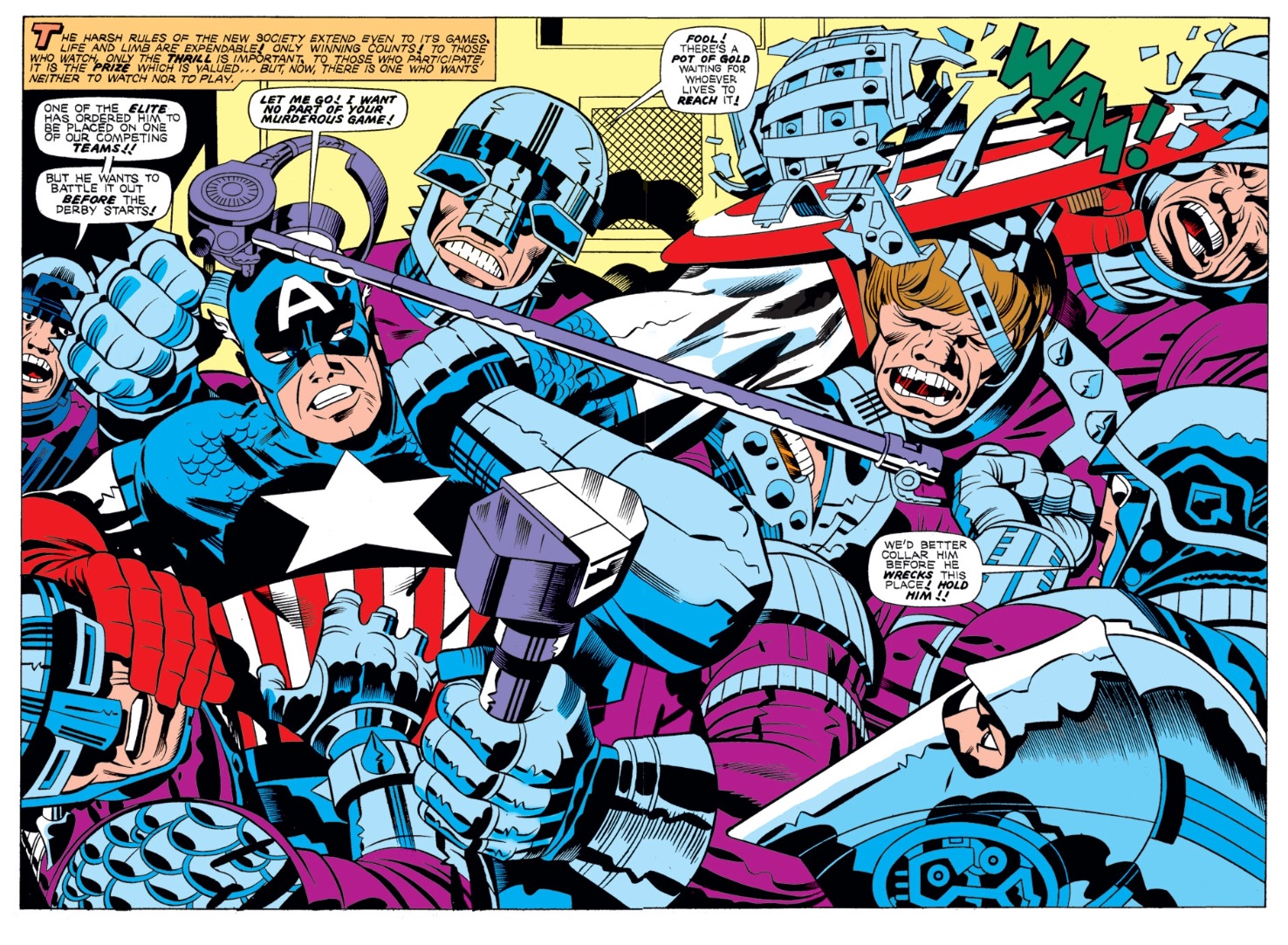
Kirby was never a great writer, but he shines in this tale of an attempted hostile takeover of America by a group of elitists using the Madbomb to control the populace and rule the good ol’ USA. Cap and the Falcon are enlisted by no less than Secretary of State Henry Kissinger to thwart the fiendish plot. King Kirby’s artwork is stunning, embellished by inkers Frank Giacoia and D. Bruce Berry. Kirby gives us…
Last year, at this time, we shared some classic romance comic book covers. Starting in the late 1940s, many comic book companies tried to broaden their audience by publishing romance comic books. These comics told dramatic love stories in which young women had to deal with issues of cheating, divorce, jealousy, heartache, and the search for the one.
By Gene Colan
Because it’s Valentine’s Day, here’s more love and romance.
By Bob Oskner
By Bob Oskner
By Jay Scott Pike
By Nick Cardy
By Nick Cardy
And remember, while you’re searching for love, be careful and don’t accept a ride from the first guy who offers. Or you could end up with a bad reputation like Toni!
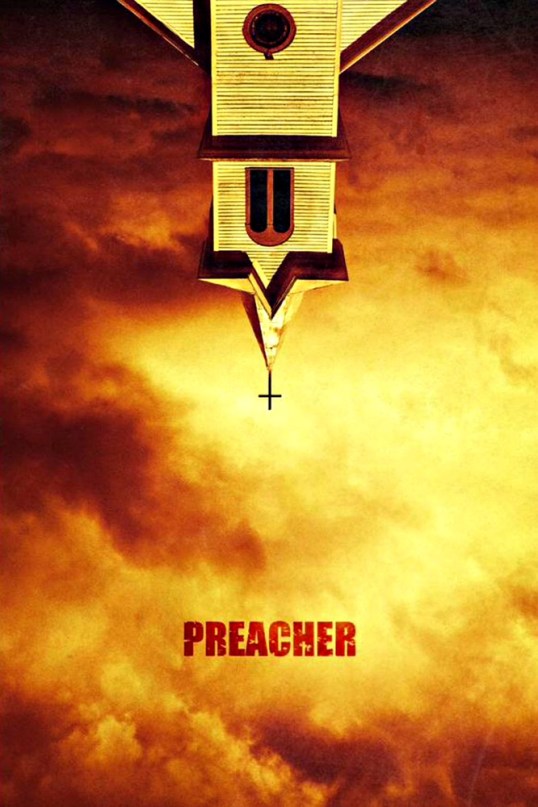
Preacher the comic book that came out in 1995 and became the title that everyone gravitated to to balance out all the superhero titles that were coming out from Marvel, DC, Image and every small publisher in-between. The book was written by Garth Ennis and drawn by Steve Dillon. It was the book that took on the institutions of the Church, government and family in the most irreverent and blasphemous way one could think of at the time.
The book had been talked of within Hollywood since it’s release as one title that producers (seems all of them at one time or another) wanted to adapt for the big-screen. It wasn’t a superhero title so there was no need to worry about trying to adapt tights-wearing heroes and villains. Yet, the book’s subject matter which tended to go into the extreme at times became something that kept the title from being adapted.
After almost two decades of futile attempts to get Preacher up onto the big-screen it took the star-power of one big-screen star (Seth Rogen) to finally get the book adapted, but not on the big-screen, but on the small-screen to become part of AMC’s stable of unique series titles (The Walking Dead, Better Call Saul, Into the Badlands).
So, fans of the books only have until 2016 to wait for their dreams of Preacher finally coming to live-action life and non-readers will finally see what all the hype has been all about.
I usually write about old movies here, but they’re not my only interest. When I was younger, back in the 70s, I collected comic books. I had stacks and stacks of them: Marvel, DC, Charlton, Atlas, undergrounds. Even the oversized Warrens and of course, Mad. Now that I’m slightly older (well, okay maybe more than just slightly), I’ll occasionally pick up a trade paperback that grabs my nostalgic interest. While browsing through the local Barnes & Noble recently, my gaze came upon one that screamed “Buy me now”! That book was WARLOCK BY JIM STARLIN: THE COMPLETE COLLECTION.
Starlin’s cosmic opus starred Adam Warlock, a Christlike space hero, pitted against Thanos of Titan and his quest to posses the Infinity Gems. Adam has the soul gem imbedded in his forehead, an vampiric emerald that steals mortal souls. The story’s themes concern philosophical questions about life and death, chaos and order, gods and madmen. Very heavy stuff. The books weren’t all that popular though, and the series only lasted from 1975 to 1977. Way ahead of its time, Starlin’s Adam Warlock saga has now become considered a classic of the comic world as the years have passed.
Jim Starlin is now recognized as one of the giants of the comic industry. Starlin wrote and drew the series with a deft hand, knowing exactly what he wanted to say and how to get there. He was ably assisted by inker/finishers Steve Leialoha and Joe Rubinstein. They make Starlin’s pencils and layouts pop with cosmic wonder. Tom Orzechowski’s lettering aids tremendously in setting the tone and mood for this galactic epic. The book’s loaded with extras, including a “lost” Warlock tale Starlin conjured up as a fill-in issue. The adventure is fanatastic as a whole, but some favorite chapters of mine are the Steve Ditko inspired “1000 Clowns” (Strange Tales #181), the solo interlude starring Warlock’s degenerate friend Pip the Troll (Warlock #12), and the cataclysmic conclusion from Avenger Annual #7 and Marvel Two-in-One Annual #2.
Marvel Cinematic Universe fans (of which I’m one) are already aware of the power of the (now renamed) Infinity Stones. We’ve seen Thanos appear in the two AVENGERS flicks and GUARDIANS OF THE GALAXY. And where Thanos treads, can Adam Warlock be that far behind?? One can only dream…
Not every comic book film is about superheroes. There’s been quite a bit of comic books adapted to film that has no superheroes, capes and superpowers at all. One such film came out in 1999. It was a film adapted from Chuck Pfarrer’s Dark Horse Comics mini-series titled Virus. This was a comic book that had a unique art-style to it that lent itself well to its scifi and body horror tale.
The film itself skews close enough to the comic book with some minor changes. Instead of a Chinese research vessel where most of the story takes place we find the film set on a derelict Soviet research ship. Even with the changes from comic book to film they both shared one common denominator and that would be the alien lifeform that has decided to systematically kill all humans aboard the ship.
Virus stars Jamie Lee Curtis and Donald Sutherland in two roles they probably wish they took a pass on or asked more money to do. While the film has some imaginative set pieces involving the melding of robotics and scavenged human body parts to create something bigger and homicidal the majority of the film involves pretty much every cast member in one stage or another of hysteria, incredulity and denial. Really, the only person in the whole film who seemed to go through the story with a clear and level head was Cliff Curtis’ seaman Hiko. All this means was that he would be one not to survive to the end of the film.
While the comic book itself was a nice piece of scifi horror storytelling then film stumbles right out of the gate not just because of the terrible acting, but just a dull and boring adaptation of the story. While, as stated earlier, some of the robotic designs were quite good and the use of practical effects made the killer robots something terrible behold, director John Bruno didn’t seem to have any ideas on how to put together an exciting sequence to take advantage of these inventive pieces at his disposal.
Virus was one film that comic book fans who read the mini-series were quite excited to see when it was first announced as a film in production. Stills of gruesome effects work would be admired and just add to the high expectations. What we got instead was a huge pile of a mess that was neither horrific, terrifying or remotely entertaining. Virus is one such film that I wouldn’t even bother catching on TV being shown for free.
“I can’t…GO BACK. Don’t you understand that. I can’t” — Merle Dixon
[some spoilers within]
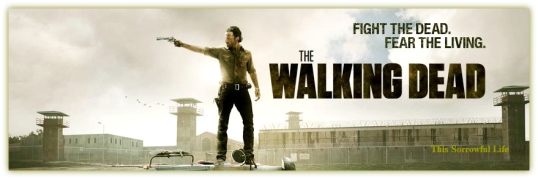
We are now in the penultimate episode before The Walking Dead reaches it’s season finale on March 31. Last week we saw preparations and turmoil inside Woodbury as the Governor has to deal with Andrea finally making the decision to pick Rick and her friends at the prison as her side in the coming conflict. He also has to deal with a potential traitor within his own inner circle. The episode was good in certain aspects, but also did nothing to move the story along. It was an episode that definitely put some viewers into wondering if the season had enough gas to make it to the promised explosive end.
“This Sorrowful Life” switches things over to the prison with Rick having made the decision to sacrifice Michonne to the Governor if it means a chance at avoiding the conflict he knows he and his people has a good chance of losing. He knows the numbers and firepower are against him. While he and his people may be more seasoned and veterans of being on the road killing zombies as a team it won’t be enough against a force that could afford a battle of attrition. It’s a decision that Rick’s inner circle doesn’t agree with (Hershel and Daryl), but they’re willing to support his decision as they have in the past. Rick has kept them alive this long and has earned their trust even if it’s a choice that goes against everything they believe in.
Tonight’s episode is another one that focuses on the choices the survivors in this zombie apocalyptic world have had to make and continue to make to survive another day, week and, the fates willing, another month. It’s also an episode that uses the dark horse in Rick’s group to highlight just how the choices people have made in this new world has changed people and most of it not for the good. I would like to think that tonight’s episode was an exploration of what made Merle Dixon such a character full of contradictions.
Merle Dixon was introduced way over in episode 2 of the first season and he came across as a cartoonish, one-note racist redneck who the audience were suppose to love to hate. But something changed in the time from his last appearance in season 1 and to his reappearance this season. That change wasn’t anything done by the character but how his younger brother, Daryl Dixon, viewed him and how this helped audiences want to learn and know more about a character who seemed to have earned Daryl’s undying trust and love.
We get some side stories in tonight’s episode with Glenn asking Hershel for Maggie’s hand in marriage and then Maggie in turn accepting his offer. We also see Rick finally realizing his error in judgement in trying to use Michonne as a sacrificial offering to the Governor. While this latter was brought on by another hallucinatory episode of him seeing Lori it happens for the briefest of moment. Unfortunately, this change of heart from Rick comes a little too late to stop Merle from going through on the plan to hand over Michonne.
Again we get back to Merle. A character hated by most everyone in the prison outside of his brother (who I believe also harbors somoe fraternal hate for the man even if just a little), but one they want to have on their side even if it means to do the dirty work. Rick knows this which is why he picked him instead of the younger Dixon to fool, capture and bring Michonne to the Governor. Everyone understands that choosing Merle to stay with them was one of necessity and not one born out of the goodness of their own hearts. Even Daryl knows this and even when he tries to convince his older brother to be more amenable towards Rick and the others it comes off as hollow. Daryl knows his brother and trying to change the man now after what he had to go through after season 1 would be a monumental, if not, an impossible task. This is why Merle decision to go on a mission of redemption was such a suprising twist to the episode, if not, the character himself.
It was some great writing by the upcoming season 4’s newest showrunner in Scott M. Gimple in tonight’s episode. We didn’t get a huge dose of exposition from the main leads and the one that we get finally resets the decision Rick made at the end of season 2. The Ricktatorship is now over. It was good and necessary when they were out, alone and desperate after leaving the farm, but now that everyone has learned the skills to survive it was time to rescind the writ of dictator and bring the group back to being a democracy, albeit one that’s now smaller than before.
Gimple also does a great job in making Merle one of the most tragic characters on the show. While Merle may have begun as a cartoonish, racist buffoon he went out a character that we were finally able to understand. He knew his faults and didn’t apologize for them. It was his love for his brother that kept him from going over the edge the way that the Governor has and we see it in his decision to take on Woodbury by himself.
Yet, for all the great writing Gimple did for tonight’s episode (which could be why he was chosen to be the show’s new leader after Mazzara’s exit everything hinged on whether Michael Rooker would be able to put on a performance worthy of tonight’s script. To say that Rooker hit it out of the park would be an understatement. There so much subtle hints in his performance that gave us a peek inside his gruff, outsider attitude towards everyone not named Daryl Dixon. His resigned acceptance at his new role in this new world as the man willing to do the dirty work for others. Be the bad guy so others can remain untainted with having to do the right, but immoral decisions. Rooker kept tonight’s episode from just being another good, but still throwaway until the season finale to one of the best in the show’s life, so far.
It goes to show how much potential this show has to be great. To go beyond it’s horror and grindhouse foundations. We saw it just a few episodes back with the Morgan-centric episode and we saw it even earlier with the episode where Lori redeems herself and exits the show on a high note. When it comes down to it the show shines when it balances all the horror and action with some deep character exploration. It’s a shame that Rooker has to leave the show to make this point, but he did leave it the only way he could and that’s to redeem the character of Merle. To give Merle the chance to choose for himself what he wanted to do and not have others (whether it was the Governor or Rick or even Daryl) dictate what he should or should not be doing. In the end, Merle chose for the love of his baby brother and while the end result would bring heartache and loss to the only person he loved it was his choice and he made it himself.
“This Sorrowful Life” goes down as another major highlight in The Walking Dead and finally lays down the final piece to what looks like an ending that will be another shift in the show’s cast of characters. Whether everyone makes it out alive after the season finale we as the audience will have to wait another week to find out.
Notes
Tonight’s episode, “This Sorrowful Life”, was directed by Greg Nicotero and written by next season’s showrunner Scott M. Gimple.
The episode’s title comes from the 6th volume of the comic book the show is based on. It was also the volume that dealt with the Governor’s final assault on the prison.
I think having Merle become so prominent a character in tonight’s episode should’ve been a clue that his time was numbered.
Tonight’s episode was quite a redemptory one for Merle and once again showed how far gone the Governor has towards the darkside.
Michonne really got Merle to a “T” and he knows it which seem to trigger the decision he made to let her go and attempt a mission to help out Daryl (it always comes down to his baby brother) and the people in the prison.
nice little interlude between Hershel and Glenn and then Glenn and Maggie. It’s one of the few things on this show that doesn’t involve death, violence and zombies and it’s a welcoming respite.
Like the character or not, Merle definitely has found himself the most useful person in this new world. It’s no wonder the Governor kept him on as one he trusted (to a point) and why Hershel and Rick was willing to take him back despite what he did to both Glenn and Maggie.
Just call Merle Dixon the Pied Piper of Zombies.
I think he should’ve taken a bit more time and attracted a bigger herd back to Woodbury.
Merle, even one-handed, sure caused a lot of damage against the Governor’s men. Makes one wonder how much more effective he would’ve been on his one-man mission if he had both hands to work with.
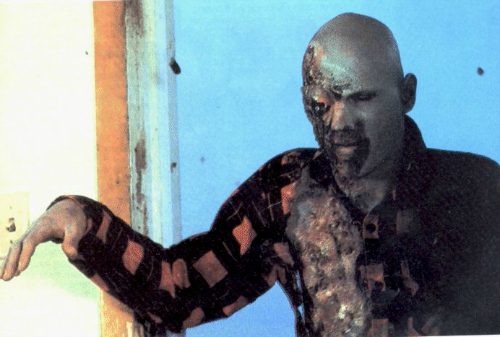
Greg Nicotero puts in another easter egg in tonight’s episode straight from the original Dawn of the Dead with the bald zombie in the red flannel shirt. The zombie approaches Merle while he’s in the car with the music blaring.
Ben, we hardly knew you, but what we did know tells us you were a douchebag like you father Allen. I don’t think many people was going to shed a tear for this character’s demise tonight.
Not just killed by Merle but also became a meal in a scene that was horrific and sad.
The Governor has done gone past the darkside and into something worse.
Fight between Merle and the Governor as brutal as the one between Michonne and the Governor. Just goes to show just how primal fighters get when it comes to taking on someone they hate very much.
I felt a great disturbance in The Walking Dead fandom, as if millions of voices suddenly cried out in anguish.
Another great episode of work from Greg Nicotero (both as director and special effects man) and his FX magicians over at KNB EFX.
Zombie Kill Count of tonight’s episode: 26 onscreen.
“Only one thing fighting for order in the chaos: The men and women of the Hall of Justice. Juries… Executioners… Judges.” — Judge Dredd
In 1995 there was a little sci-fi/action film called Judge Dredd that was one very anticipated film by fans of the title character. Judge Dredd was one of those comic book characters who was beloved by the hardcore comic book fans (and British readers worldwide). When news broke that the character was going to get his own film adaptation there was rejoicing but then the first shoe dropped. Sylvester Stallone will play the title character and worse yet he will have a sidekick in the form of one Rob Schneider. Even with this casting news there was still hope the film will at least do the property justice. I mean how can one fuck up an ultra-violent comic book that was tailor-made to become an action film. Well, let’s just say that the filmmakers involved and everyone from Stallone to Schneider all the way to the veteran Max Von Sydow failed to deliver a bloodsoak look into a dystopian future with a no, nonsense lawman to police the streets of Mega-City One.
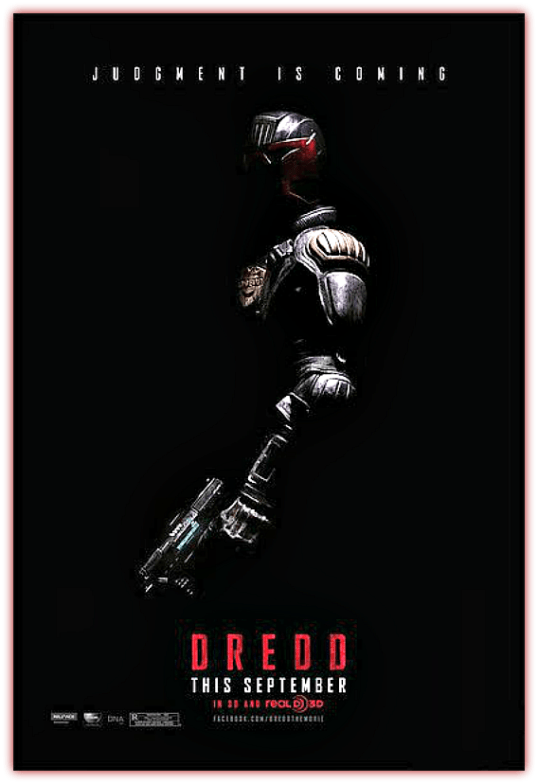
So, it was a surprise when there was an announcement that the character will get another film but a reboot instead of a sequel. It seems everyone who had a stake in the Judge Dredd property wanted to forget the 1995 Stallone version. I couldn’t blame them for this decision. Out goes Stallone in the title role and in his place is Eomer himself, Karl Urban to don the iconic Judge helm. He would have a partner in the form of Judge Anderson (who’s a rookie in this reboot and it’s through her eyes that we get to learn the rules of the Dredd world) as played by Olivia Thirlby. The reboot was to be helmed by British filmmaker Pete Travis using a screenplay by Alex Garland (28 Days Later and Sunshine) and was simply titled Dreddand would be filmed in 3-D.
There was trepidation about the film and rumored on-the-set differences between Pete Travis and Alex Garland marked the reboot as a troubled film at best and a dead-on-arrival at it’s worst. When the film finally made it’s premiere at San Diego Comic-Con 2012 the reaction from attendees who saw the film was a near-unanimous praise for it. The same could be said for the reaction of those who saw it two months later at the Toronto International Film Festival. It was being called a film that was a throwback and homage to the violent action films of the 80’s and early 90’s. This was high praie and one reason I decided to go see it.
I was very glad that I made the decision to see it when it made it’s worldwide release. Dredd 3-D was exactly as those who praised it turned out to be.
The film opens up with a fly-over of Mega-City One (looking like the location shoot of Johannesburg expanded to a 1000x through the judicious use of CGI and matte backgrounds effects) and the world which created the massive hive city of 800 million whose borders stretched from Boston in the north to Washington, D.C. in the south. It’s Karl Urban’s voice as Judge Dredd who we learn all this from right before the film segues into a fast-paced and violent action scene. One that shows just how violent Mega-City One is (people in malls and on the streets who get gunned down by stray fire get collected by automated garbage droids who also clean the pools of blood) and just how good Judge Dredd really is at his job.
Dredd 3-D is a simple story of a veteran cop who must evaluate a rookie whose psychic abilities would make her an invaluable member of the law enforcement group known as the Judges. The story brings these two disparate individuals into a massive apartment complex called The Peach Trees to investigate a triple homicide which brings them into conflict with the film’s villain in the form of Lena Headey as the brutal head of the gang called the Ma-Ma Clan. The film moves from one violent set-piece action to the next as Dredd and Anderson must find a way to escape the lockdowned Peach Trees and take out the Ma-Ma Clan in the process.
Yes, Dredd 3-D was a very good film and despite the story being so barebones that at times it resembled a video game with the way each sequence was a way to move from one floor to the next with the danger getting worst by the floor. It was the simplicity of the story that was also it’s major advantage. We got to know Dredd and Anderson (more of the latter than the former) and their actions throughout the film made for some very good character development. Even the tough, nigh-indestructible Dredd gained a semblance of sympathy for those he was very used to executing on-sight if the law deems it not whether it’s true justice.
Even the use of 3-D in the film was one of the better uses for what many still call a gimmick and a way for theater-owners to charge a higher ticket price for. The film was done in native 3-D and when it was paired with the super slo-mo sequences when characters where under the effects of the reality-altering drug Slo-Mo it literally created scenes of art. I suspect that we might see more films which uses this 3-D slo-mo effect in years to come. It was just that well done.
Now the big question is whether Karl Urban has erased the abomination that was Stallone’s performance in the same role 17 years past. The answer to that question would be a resounding yes. Urban never once takes off the iconic Judge helm and must act through his body language, dialogue delivery and, literally, the lower half of his exposed face. He made for a convincing Judge Dredd and not once did he go against character with one-liners and witty quips to punctuate an action scene. Not to be outdone would be Lena Headey as Madeleine Madrigal (hence Ma-Ma Clan) as the clan boss who was a mixture of reined in violence and psychopathy who was also going through a level of ennui that she made for a great villain. This was a woman who was so feared by the vicious and violent men in her command yet we never doubt that she was still the scariest of the whole bunch. There’s also Olivia Thirlby as the rookie Judge Anderson who brings a semblance of compassion and sympathy to the proceedings yet still able to kickass and take names not just with her psychic abilities but also with the Lawgiver (as the Judge’s firearms were called).
Dredd 3-D doesn’t try to explore the nature of violence that’s inherent in man or some other philosophical bullshit some filmmakers nowadays try to put into their action films. This film just decided to tell the proper Judge Dredd story and knew that ultra-violence would be a necessary component if the story was to remain true to the source material. In the end, the film did it’s job well and, even though it was by accident, it was still able to lend a level of thought-provoking themes and ideas about violence and its use.