4 Shots From 4 Films: How Heavenly!


4 Or More Shots From 4 Or More Films is just what it says it is, 4 shots from 4 of our favorite films. As opposed to the reviews and recaps that we usually post, 4 Shots From 4 Films lets the visuals do the talking!

4 Shots From 4 Heavenly Films

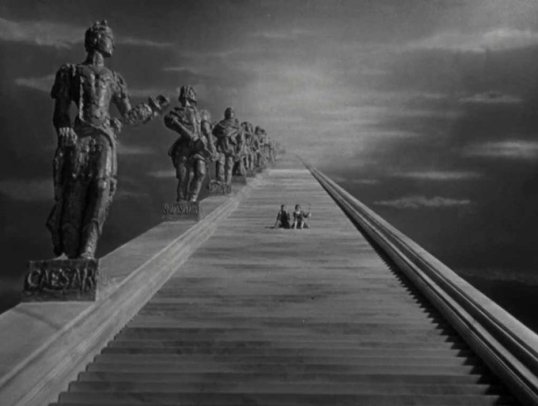
Stairway to Heaven (1946, Dir. by Michael Powell and Emeric Pressburger)

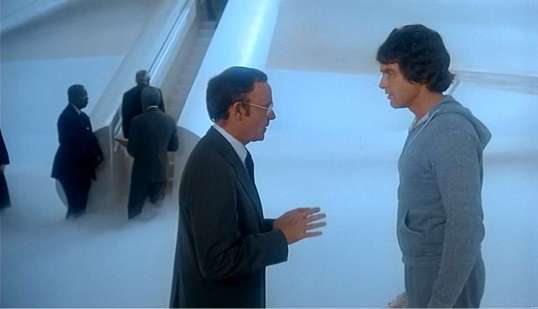
Heaven Can Wait (1978, Dir by Warren Beatty and Buck Henry)

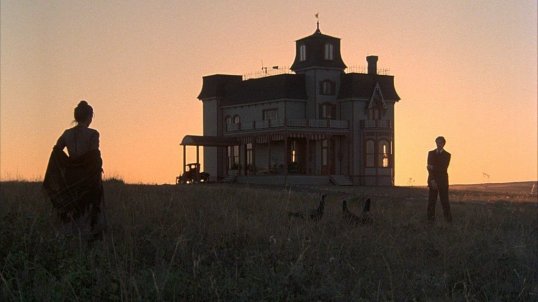
Days of Heaven (1978, Dir. by Terence Malick)

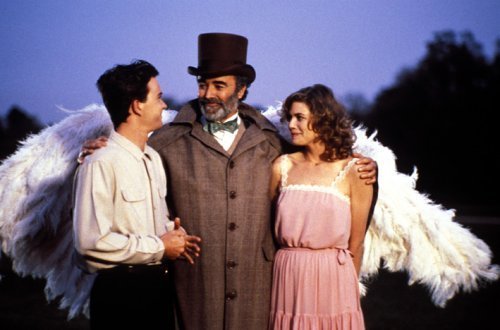
Made In Heaven (1987, Dir. by Alan Rudolph)

Film Review: Short Cuts (dir by Robert Altman)


Opening with a swarm of helicopters spaying for medflies and ending with an earthquake, 1993’s Short Cuts is a film about life in Los Angeles.

An ensemble piece, it follows several different characters as they go through their own personal dramas.  Some of them are married and some of them are destined to be forever single but they’re all living in varying states of desperation.  Occasionally, the actions of one character will effect the actions of another character in a different story but, for the most part, Short Cuts is a portrait of people who are connected only by the fact that they all live in the same city.  There are 22 principal characters in Short Cuts and each one thinks that they are the star of the story.

Jerry Kaiser (Chris Penn) cleans the pools of rich people while, at home, his wife, Lois (Jennifer Jason Leigh), takes care of their baby and works as a phone sex operator.  Jerry’s best friend is a makeup artist named Bill (Robert Downey, Jr.) who enjoys making his wife, Honey (Lili Taylor), looks like a corpse so that he can take her picture.  One of her photographs is seen by a fisherman (Buck Henry) who has already discovered one actual corpse that weekend.  He and his buddies, Vern (Huey Lewis) and Stuart (Fred Ward), discovered a dead girl floating in a river and didn’t report it until after they were finished fishing.  (The sight of Vern unknowingly pissing on the dead body is one of the strongest in director Robert Altman’s filmography.)

Stuart’s wife, Claire (Anne Archer), is haunted by Stuart’s delay in reporting the dead body.  A chance meeting Dr. Ralph Wyman (Matthew Modine) and his wife, artist Marian (Julianne Moore), leads to an awkward dinner between the two couples.  Claire works as a professional clown and Ralph ends up wearing her clown makeup while his marriage falls apart.

Earlier, Claire was stopped and hit on by a smarmy policeman named Gene Shepard (Tim Robbins), who just happens to be married to Marian’s sister, Sherri (Madeleine Stowe).  Gene is already having an affair with Betty Weathers (Frances McDormand), the wife of a helicopter pilot named Stormy (Peter Gallagher).  When Stormy discovers that Betty has been cheating, he takes a creative revenge on her house.

Doreen Pigott (Lily Tomlin) lives in a trailer park with her alcoholic husband, Earl (Tom Waits).  Driving home from her waitressing job, Doreen hits a young boy.  The boy says he’s okay but when he gets home, he passes out.  His parents, news anchorman Howard Finnegan (Bruce Davison) and his wife, Anne (Andie MacDowell), rush him to the hospital, where his doctor is Ralph Wyman.  As Howard waits for his son to wake up, he has a revealing conversation with his long-estranged father (Jack Lemmon, showing up for one scene and delivering an amazing monologue).  Meanwhile, a baker named Andy (Lyle Lovett) repeatedly calls the Finnegan household, wanting to know when they’re going to pick up their son’s birthday cake.

Based on the short stories of Raymond Carver and directed by Robert Altman, Short Cuts can sometimes feel like a spiritual descendent of Altman’s Nashville.  The difference between this film and Nashville is that Short Cuts doesn’t have the previous film’s satiric bite.  As good as Nashville is, it’s a film that can be rather snarky towards it character and the town in which it is set.  Nashville is used as a metaphor for America coming apart at the seams.  Short Cuts, on the other hand, is a far more humanistic film, featuring characters who are flawed but, with a few very notable exceptions, well-intentioned.  If Nashville seem to be a portrait of a society on the verge of collapse, Short Cuts is a film about how that society ended up surviving.

It’s not a perfect film.  There’s an entire storyline featuring Annie Ross and Lori Singer that I didn’t talk about because I just found it to be annoying to waste much time with.  (The Ross/Singer storyline was the only one not to be based on a Carver short story.)  The conclusion of Chris Penn’s storyline wasn’t quite as shocking as it was obviously meant to be.  But, flaws and all, Altman and Carver’s portrait of humanity does hold our attention and it leaves us thinking about connections made and sometimes lost.  Seen today, Short Cuts is a portrait of life before social media and iPhones and before humanity started living online.  It’s a time capsule of a world that once was.

Lisa Marie Reviews An Oscar Winner: The Graduate (dir by Mike Nichols)


Hello darkness, my old friend….

After watching 1967’s The Graduate, I defy anyone to listen to Simon and Garfunkel sing about the darkness without immediately picturing a young-looking Dustin Hoffman (he was 30 when the film was made but he was playing 22) standing on a moving airport walkway with a blank expression on his face.

If you don’t picture that, maybe you’ll picture Dustin Hoffman floating in a pool, wearing dark glasses and barely listening to his parents asking him about graduate school.

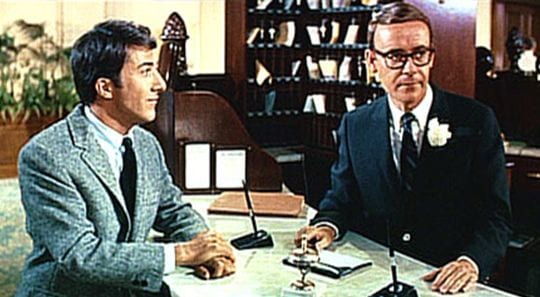
Or maybe you’ll remember him driving his car across the Golden Gate bridge.  Or perhaps sitting at the bottom of his pool with a scuba mask on.  Or maybe you’ll see him awkwardly standing at the desk in the lobby of a fancy hotel, trying to work up the courage to get a room.  Or maybe you’ll just see him and Katharine Ross sitting at the back of that bus with a “what do we do now?” expression on their faces.

(Supposedly, that expression was not planned and was just a result of the shot running longer than expected.)

Ah, The Graduate.  Based on a novel by Charles Webb, Buck Henry’s script remains one of the quotable in history.  “Mrs. Robinson, you’re tying to seduce me …. aren’t you?”  “Plastics.”  “Elaine!”  Myself, I have an odd feeling of affection for the line “Shall I get the cops?  I’ll get the cops.”  Perhaps that’s because the line is delivered by a young and uncredited Richard Dreyfuss, appearing in his second film and adding to the film’s general atmosphere of alienation.

Alienation is the main theme of The Graduate.  As played by Hoffman, Benjamin Braddock feels alienated from everything.  He was a track star.  He was a top student in high school and college.  Now, he’s just a college graduate with no idea what he wants to do with the rest of his life.  One can argue, of course, that Braddock brings a lot of his alienation on himself.  He can be a bit judgmental, even though he’s the one who is having an adulterous affair with Mrs. Robinson (Anne Bancroft) while also falling for Mrs. Robinson’s daughter, Elaine (Katharine Ross).  His parents (William Daniels and Elizabeth Wilson) can be overbearing but it’s possible they have a point.  Is he planning on spending the rest of his life floating in their swimming pool?  Benjamin says that he just needs time to finally relax.  After being pushed and pushed to be the best, he just wants time to do what he wants to do before his life becomes about plastics.  When I first saw this movie, I was totally on Benjamin’s side.  Now, as I’ve gotten older, I’ve started to understand where his parents were coming from.  Still, it’s hard not to feel that Benjamin deserves at least a little bit of time to enjoy himself.  That’s what Mr. Robinson (Murray Hamilton) thinks, at least initially.

Mrs. Robinson is the most interesting character in the film, a force of chaos who lives to disrupt the staid world around her.  She’s bored with her marriage and her conventional but empty lifestyle so she has an affair with Benjamin.  Later, she grows bored with Benjamin and his desire to “just talk” for once and she moves on from him.  Benjamin and Elaine are both likable and you find yourself wishing the best for them but Mrs. Robinson is the character who you really remember.  Mrs. Robinson grew up without losing her sense of rebellion.  One doubts that Benjamin and Elaine are going to do the same.

A portrait of American suburbia and 60s alienation, The Graduate would prove to be one of the most influential social satires ever made.  A box office hit, it was nominated for seven Academy Awards.  It was nominated for Best Picture, Best Director (Mike Nichols), Best Actor (Dustin Hoffman), Best Actress (Anne Bancroft), Best Supporting Actress (Katharine Ross), Best Adapted Screenplay (Buck Henry and Calder Willingham), and Best Cinematography (Robert Surtees).  The Simon and Garfunkel songs that set the film’s mood were, for the most part, not eligible.  (Only Mrs. Robinson was written specifically for the film.)  I would argue that the film deserved to be nominated for its editing as well.  In the end, the film only won one Oscar, for Mike Nichols.  But, regardless of what awards it won or lost, The Graduate‘s legacy lives on.


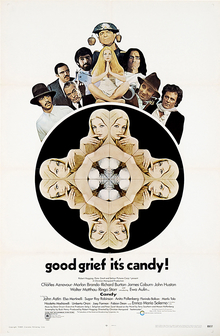
Insomnia File #69: Candy (dir by Christian Marquand)


What’s an Insomnia File? You know how some times you just can’t get any sleep and, at about three in the morning, you’ll find yourself watching whatever you can find on cable or streaming? This feature is all about those insomnia-inspired discoveries!

If you find yourself having trouble getting to sleep tonight, you can always pass the time by watching the 1968 film, Candy.  It’s currently on Tubi.

Based on a satirical novel by Terry Southern and Mason Hoffenberg, Candy follows Candy Christian (Ewa Aulin), a naive teenager from middle America as she has a number of increasingly surreal adventures, the majority of which end with her getting sexually assaulted by one of the film’s special guest stars.  It’s very much a film of the 60s, in that it’s anti-establishment without actually seeming to know who the establishment is.  It opens with a lengthy sequence that appears to be taking place in outer space.  It ends with an extended sequence of Candy walking amongst the film’s cast and a bunch of random hippies.  Director Christian Marquand appears as himself, directing the film.  Yep, this is one of those films where the director and the film crew show up and you’re supposed to be say, “Far out, I didn’t realize I was watching a movie, man.”

The whole thing is a bit of a misfire.  The novel was meant to be smut that satirized smut.  The film isn’t really clever enough to work on any sort of real satirical level.  As was the case with a lot of studio-made “psychedelic” films in the 60s, everything is a bit too obvious and overdone.  Casting the Swedish Ewa Aulin as a character who was meant to represent middle America was just one of the film’s missteps.  Based on The Graduate, Mike Nichols probably could have made a clever film out of Candy.  The French Christian Marquand, a protegee of Roger Vadim’s, can not because he refuses to get out of the film’s way.  It’s all jump cuts, flashy cinematography, and attempts to poke fun at American culture by someone who obviously knew nothing about America beyond the jokes told in Paris.

That said, the main reason that anyone would watch this film would be for the collection of guest stars who all show up and try to take advantage of Candy.  Richard Burton plays an alcoholic poet named MacPhisto and his appearance goes on for far too long.  (Burton, not surprisingly, appears to actually be drunk for the majority of his scenes.)  Ringo Star — yes, Ringo Starr — plays a Mexican gardener who assaults Candy after getting turned on by the sight of MacPhisto humping a mannequin.  When Emmanuel’s sisters try to attack Candy, she and her parents escape on a military plane that is commanded by Walter Matthau.  Landing in New York, Candy’s brain-damaged father (John Astin) is operated on by a brilliant doctor (James Coburn) who later seduces Candy after she faints at a cocktail party.  Candy’s uncle (John Astin, again) also tries to seduce Candy, leading to Candy getting lost in New York, meeting a hunchback (Charles Aznavour), and then eventually ending up with a guru (Marlon Brando).  Candy’s adventures climax with a particularly sick joke that requires a bit more skill to pull off than this film can afford.

If you’re wondering how all of these famous people ended up in this movie, you have Brando to thank (or blame).  Christian Marquand was Brando’s best friend and Marlon even named his son after him.  After Brando agreed to appear in the film, the rest of the actors followed.  Brando, Burton, and Coburn received a share of the film’s profits and Coburn later said that his entire post-1968 lifestyle was pretty much paid for by Candy.  That seems appropriate as, out of all the guest stars, Coburn i the only one who actually gives an interesting performance.  Burton is too drunk, Matthau is too embarrassed, Starr is too amateurish, and Brando is too self-amused to really be interesting in the film.  Coburn, however, seems to be having a blast, playing his doctor as being a medical cult leader.

Candy is very much a film of 1968.  It has some value as a cultural relic.  Ultimately, it’s main interest is as an example of how the studios tried (and failed) to latch onto the counterculture zeitgeist.

Previous Insomnia Files:

  1. Story of Mankind
  2. Stag
  3. Love Is A Gun
  4. Nina Takes A Lover
  5. Black Ice
  6. Frogs For Snakes
  7. Fair Game
  8. From The Hip
  9. Born Killers
  10. Eye For An Eye
  11. Summer Catch
  12. Beyond the Law
  13. Spring Broke
  14. Promise
  15. George Wallace
  16. Kill The Messenger
  17. The Suburbans
  18. Only The Strong
  19. Great Expectations
  20. Casual Sex?
  21. Truth
  22. Insomina
  23. Death Do Us Part
  24. A Star is Born
  25. The Winning Season
  26. Rabbit Run
  27. Remember My Name
  28. The Arrangement
  29. Day of the Animals
  30. Still of The Night
  31. Arsenal
  32. Smooth Talk
  33. The Comedian
  34. The Minus Man
  35. Donnie Brasco
  36. Punchline
  37. Evita
  38. Six: The Mark Unleashed
  39. Disclosure
  40. The Spanish Prisoner
  41. Elektra
  42. Revenge
  43. Legend
  44. Cat Run
  45. The Pyramid
  46. Enter the Ninja
  47. Downhill
  48. Malice
  49. Mystery Date
  50. Zola
  51. Ira & Abby
  52. The Next Karate Kid
  53. A Nightmare on Drug Street
  54. Jud
  55. FTA
  56. Exterminators of the Year 3000
  57. Boris Karloff: The Man Behind The Monster
  58. The Haunting of Helen Walker
  59. True Spirit
  60. Project Kill
  61. Replica
  62. Rollergator
  63. Hillbillys In A Haunted House
  64. Once Upon A Midnight Scary
  65. Girl Lost
  66. Ghosts Can’t Do It
  67. Heist
  68. Mind, Body & Soul

Buck Henry, R.I.P.


I just heard that Buck Henry died tonight of a heart attack.  He was 89 years old.

It’s hard to know where to start with Buck Henry.  He did a little bit of everything.  He started out as a comedian in the 50s, appearing on talk shows and claiming to be G. Clifford Prout, the president of the Society for Indecency to Naked Animals (SINA).  SINA was an organization dedicated to clothing animals in order to prevent their “indecency.”  Buck Henry’s delivery was so deadpan that many people thought he actually was G. Clifford Prout and a some even tried to send him donations to help out his cause.  (The donations were always returned.)

Henry went on to work extensively in both television and film.  He wrote the script for The Graduate and played the helpful hotel clerk.  He co-created Get Smart with Mel Brooks.  With Warren Beatty, he co-directed Heaven Can Wait and received an Oscar nomination.  In Nicolas Roeg’s The Man Who Fell To Earth, he had a rare serious role as the gay patent lawyer who helps alien Thomas Jerome Newton set up his corporation and who ultimately gets tossed out of a window by government agents.

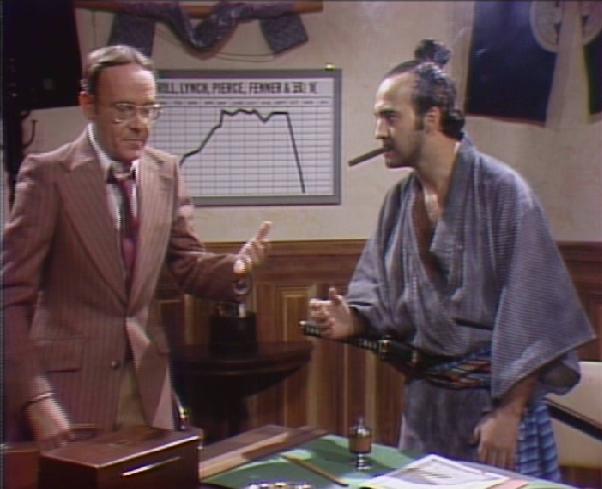
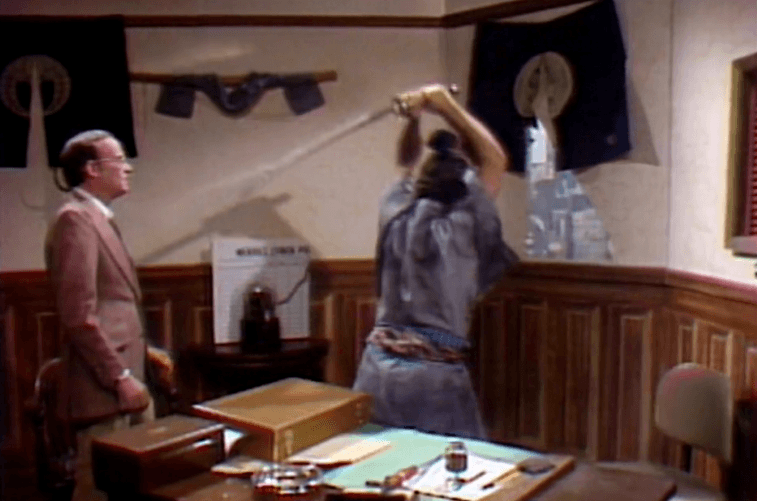
During the first few season of Saturday Night Live, Buck Henry hosted a total of ten times.  By many, he was considered to be an unofficial member of the cast.  He was a frequent foil to John Belushi’s samurai character.  Henry’s button-down persona provided the perfect contrast to Belushi’s frenetic performance.  During the October 30th, 1976 episode, Henry was accidentally struck by Belushi’s katana and he ended up with a deep cut on his forehead.  Henry not only continued the skit but he also hosted the rest of the show with a bandage on his forehead.  All of the other members of the cast put bandages on their foreheads as a show of solidarity.

Buck Henry kept working into the new century, appearing on shows like Will and Grace, The Daily Show, and 30 Rock.  He will be missed.

Buck Henry, R.I.P.


Film Review: To Die For (dir by Gus Van Sant)


The 1995 satire, To Die For, is a very clever film about some seriously stupid people.

Of course, you could debate whether or not Suzanne Stone-Maretto (Nicole Kidman) is actually dumb or not.  Suzanne may not know much about anything that isn’t on TV but she does have a natural understanding for what makes a good story.  She knows exactly the type of story that the public wants to hear and she does a good job of faking all of the right emotions.  As she proves throughout the course of the film, she’s also very good at convincing people to do stuff.  Whether it’s convincing the local television station to put her on the air as a weather person or convincing two teenagers to murder her husband, Suzanne always seems to get what she wants.

Of course, what Suzanne really wants is to be a celebrity.  She wants to be a star.  As she explains it, that’s the greatest thing about America.  Anyone can become a star if they just try hard enough and find the right angle.  If the film were made today, Suzanne would be a social media junkie.  Since the movie was made in 1995, she has to settle for talk shows and murder.

So maybe Suzanne isn’t that dumb but her husband, Larry (Matt Dillon) …. well, if we’re going to be honest, Larry’s more naive than dumb.  He’s the favored son of a big Italian family and it’s obviously never occurred to him that a woman would possibly want something more than just a husband and a lot of children.  He thinks it’s cute that Suzanne’s on TV but he’s also fully convinced that she’s going to eventually settle down and focus on starting a family.  It never occurs to him that his wife would be willing to sacrifice him on her way to stardom.

Of course, if you really want to talk about dumb, just check out the teenagers who Suzanne recruits to kill her husband.  They’ve been appearing in a documentary that Suzanne’s been shooting.  The documentary’s title is “Teens Speak Out,” which is something of an ironic title since none of the teens that Suzanne interviews really has anything to say.  Lydia (Allison Folland) is just happy that the “glamorous” Suzanne is pretending to care about her.  Russell (Casey Affleck) is the type of grinning perv who drops a pen just so he can try to get a peek up Suzanne’s skirt while he’s on the floor retrieving it.  And then there’s Jimmy (Joaquin Phoenix), with his flat voice and his blank stare.  Jimmy is briefly Suzanne’s lover before he ends up in prison for murdering her husband.  It doesn’t take much to convince Jimmy to commit murder, either.  Apparently, all you have to do is dance to Lynard Skynard while it’s raining outside.  Media interviews with Lydia, Jimmy, Suzanne, and Larry’s sister (Ileana Douglas) are sprinkled throughout the film and Jimmy continues to insist that he will always love Suzanne.

As for Suzanne, she’s got stardom to worry about….

Though the subject matter is a bit familiar and the film, made before the age of Twitter and Instagram, is a bit dated, To Die For‘s satire still carries a powerful bite.  One need only watch A&E or the Crime and Investigation network to see that Suzanne was absolutely correct when she decided that killing her husband would make her a star.  If To Die For were made today, you could easily imagine Suzanne leveraging her infamy into an appearance on Dancing With The Stars and maybe Celebrity Big Brother.  At the very least. she could get her own house hunting show on HGTV.  Delivering her often sociopathic dialogue with a perky smile and a positive attitude, Nicole Kidman is absolutely chilling as Suzanne.  Meanwhile, Joaquin Phoenix’s blank stare will continue to haunt you long after the film ends.

And speaking of endings, To Die For has a great one.  You’ll never hear Season of the Witch the same way again!

Confessions of a TV Addict #1: It’s a Bird… It’s a Plane… No, It’s CAPTAIN NICE (NBC-TV 1967)


gary loggins's avatarcracked rear viewer

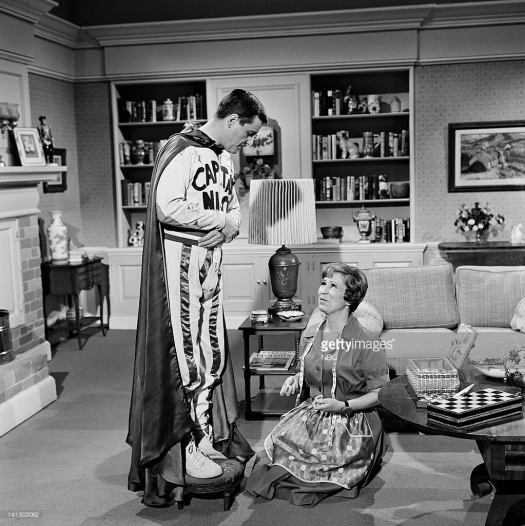
Yes, that’s distinguished actor William Daniels in those long-johns as CAPTAIN NICE, which aired Monday nights on NBC-TV for eight months and fifteen episodes during the height of the superhero camp craze in 1967. Similar in theme to MISTER TERRIFIC on rival CBS, I preferred this one as a kid because of it’s MAD Magazine-level of jokes and gags – which ain’t a bad thing, in my book! The silly superhero series was created by Buck Henry, who also (along with pal Mel Brooks ) was responsible for another campy sitcom, the 60’s spy spoof GET SMART!

Mild -mannered chemist Carter Nash works for the Big Town Police Department, and invents a super-secret super-formula that transforms him into Captain Nice. His domineering mother (Alice Ghostley) sews him up a super-suit and tells him to go out and fight crime like a good boy. Carter’s got all the powers of Superman, except he’s a bit…

View original post 303 more words

A Movie A Day #20: First Family (1980, directed by Buck Henry)


first-familyLike any newly inaugurated President, Manfred Link (Bob Newhart) faces many new challenges.  The biggest challenge, though, is keeping control of his family and his White House staff.  His wife (Madeline Kahn) is an alcoholic.  His 28 year-old daughter (Gilda Radner) is so desperate to finally lose her virginity that she is constantly trying to sneak out of the White House.  General Dumpson (Rip Torn) wants to start a war.  Press Secretary Bunthorne (Richard Benjamin), Ambassador Spender (Harvey Korman), and Presidential Assistant Feebleman (Fred Willard) struggle and often fail to convince everyone that all is well.
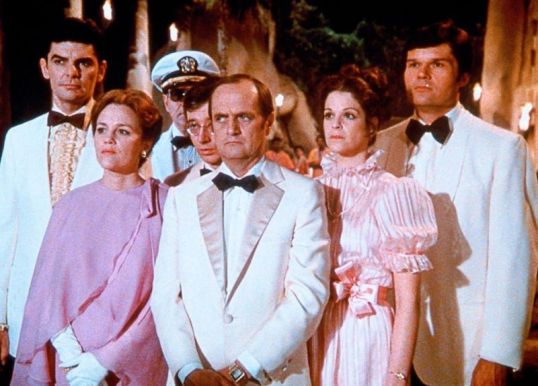
President Link needs to form an alliance with the African country of Upper Gorm, a country that speaks a language that only one man in America, Prof. Alexaner Grade (Austin Pendleton), can understand.  The President of Upper Gorm (John Hancock) orders that the kidnapping of Link’s daughter.  Holding her hostage, he demands that Link send him several white Americans so that the citizens of Upper Gorm can know what it is like to have a minority to oppress.

First Family not only featured a cast of comedy all-stars but it was also directed by one of the funniest men in history, Buck Henry.  So, why isn’t First Family funnier?  There are a few amusing scenes and Newhart can make a pause hilarious but, for the most part, First Family feels like an episode from one of Saturday Night Live‘s lesser seasons.  Reportedly, Henry’s first cut of First Family tested badly and Warner Bros. demanded that certain scenes, including the ending, be reshot.  Perhaps that explains why First Family feels more like a sitcom than a satire conceived by the man who wrote the script for The Graduate and whose off-center perspective made him one of the most popular hosts during Saturday Night Live‘s first five seasons.  Famously, during one SNL hosting gig, Henry’s head was accidentally sliced open by John Belushi’s samurai sword.  Without missing a beat, Henry finished up the sketch and performed the rest of the show with a band-aid prominently displayed on his forehead.  Unfortunately, there’s little sign of that Buck Henry in First Family.

first-family-2