Trailer: Godzilla (Official Main)


Godzilla2014

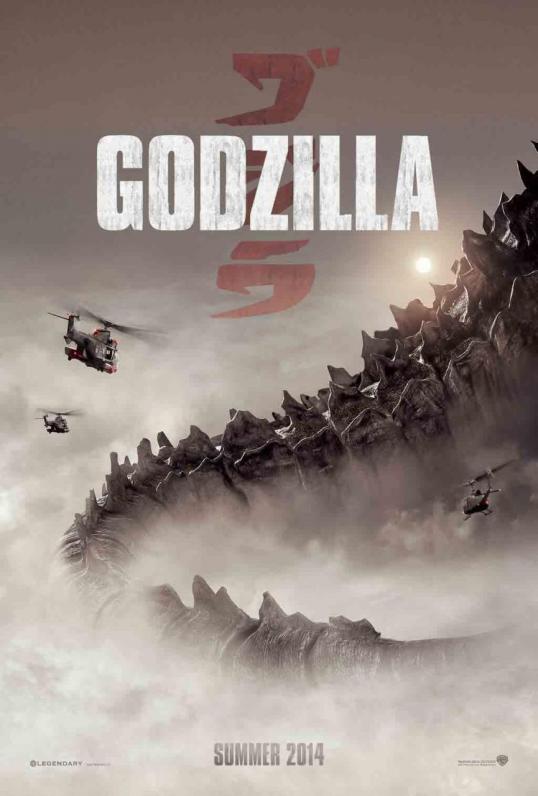
Last summer, we saw the return of the giant monster genre on Western screens with Guillermo Del Toro’s Pacific Rim. This summer we see the return of the King of the Monsters back on the big screen where he belongs.

Gareth Edwards’ Godzilla looks to bring back the King to lay massive destruction on humanity. The trailers haven’t shown whether Godzilla will be the villain of the film or back to fight other monsters. Either as protector or destroyer he will cause much collateral damage on the cities of mankind.

This latest trailer seems to intimate that Edwards’ film will actually be a sequel to the original 1954 film of the same name.

Godzilla will have a May 16. 2014 release date.

Trailer: Godzilla (Teaser)


Godzilla

This past summer saw the return of kaiju to the film vernacular with the release of Guillermo Del Toro’s Pacific Rim. The very same studios which released this film, Warner Bros. Pictures and Legendary Pictures return next summer with a similar film, but this time with the return of the granddaddy of all kaiju: Godzilla.

Godzilla is a reboot of the kaiju franchise with Gareth Edwards trying to make up for the travesty that was Roland Emmerich’s Godzilla of over a decade ago. This time around it looks like (at least from the teaser) that Edwards is going the serious route with this reboot. It helps that he has quite the cast to play around with. This Godzilla will star Bryan Cranston, Elizabeth Olsen, Aaron Taylor-Johnson and Ken Watanabe.

We also get a brief glimpse of Godzilla itself right near the end followed by the iconic monster scream that’s as recognizable as the tweets and twoots of R2-D2.

Godzilla will return to the big-screen on May 16, 2014.

Trash TV Guru : “Breaking Bad” Series Finale


breaking-bad-season-5-episode-16-b

The promotional blurbs on A&E’s cover packaging for the various box set and stand-alone DVD releases of Patrick McGoohan’s classic series The Prisoner refer to it as “television’s first masterpiece,” but let’s be brutally honest here — for a good long time there it probably stood as television’s only “masterpiece.”

Which isn’t to say that there haven’t been some good shows over the years, but start-to-finish, wire-to-wire masterpieces have been pretty tough to come by. I won’t speculate here as to why that’s been with any kind of probing analysis, apart from making the obvious observation that American TV, in particular, has been geared to appeal to the so-called “lowest common denominator” for so long now that frankly most people don’t even expect for there to be anything good on the tube when they turn it on, even with 200-300 channels to choose from. We all just sorta watch it anyway.

I’ll be the first to admit that my two favorite shows of all time — Doctor Who and Twin Peaks — hardly fit the definition of “masterpiece” even though I love ’em dearly. Hell, one of the best things about Who — and I’m referring to old-school Who  here, not the current abomination running around cloaked in its title, which hasn’t held much of any appeal to me since the end of its first return season with Christopher Eccleston in the lead role — is that it’s so damn imaginative and clever and stupid in a fun way and addictively, insanely watchable and re-watchable in spite of its glaring production value weaknesses, often hammy acting, and atrocious dialogue that those so-called “deficiencies” actually become part of its charm. And I’m willing to be that “charm” is one of the things that has engendered such a strong following for various other “fan-driven” series, such as  Joss Whedon’s  Buffy The Vampire Slayer and Angel, both of which have rabid cult followings, to be sure, but neither of which, I think,  even the most zealous Whedon fan (and there’s plenty of competition for that title) would admit, at least in their more honest moments, was anything like a “masterpiece.”

Charm is not something that Breaking Bad ever had much of, though, is it? From the outset, we knew we were being asked to become involved in the life story of a guy who was dying, and furthermore was broke and dying. It’s been a pretty “heavy” show from day one, hasn’t it?

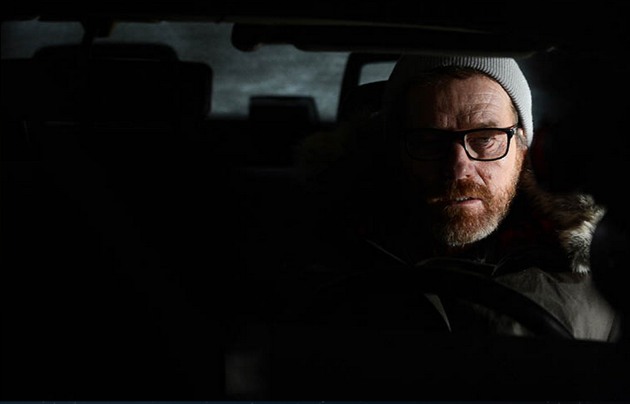
Which isn’t to say that it didn’t have lighter moments interspersed here and there throughout, because of course it did, and in early days it even looked like Dean Norris’ Hank character was never going to amount to much more than bog-standard, albeit well-written, comic relief. But as things progressed, even he became a more multi-dimensional character, and as Bryan Cranston’s Walter White sold out more and more of his soul to purportedly “provide for” his family, a show that started out heavy only became heavier.

And yet — lack of charm and a general “bummer” tone don’t preclude a show from being great, do they? And I would contend that Breaking Bad will be remembered as being more than just great, it will be remembered as — here’s that term again — a masterpiece (the third by my count anyway, in TV history — anyone care to guess what I think the second was? The only hint I’ll give is that it was a relatively recent show).

It was difficult, at times, to be sure. Watching the lives of all these people go to hell in a handbasket even became something of a chore during this final season, particularly the season’s second half following its over-12-month hiatus. Walt was a real bastard, wasn’t he? And that could be downright excruciating to witness. But here’s the thing:

You just never knew what the hell was going to happen next. Series creator Vince Gilligan and his coterie of writers always had another rabbit in their hat, another brightly- colored handkerchief tied to that long string of them coming out of their sleeve. The show never once lost its power to surprise.

Until tonight’s series finale, “Felina,” written and directed by Gilligan himself, which pretty much saw all loose ends tied up more or less exactly as you thought they would be.

I’m sure there might be some hand-wringing among fans that long-suffering characters like Anna Gunn’s Skyler and Aaron Paul’s Jesse weren’t given necessarily “that much to do” in this wrap-up episode — hell, RJ Mitte’s hapless Walter Jr./Flynn didn’t even have a single line of dialogue! Meanwhile, a couple characters we hadn’t seen much of since the second season, Gretchen and Elliot Schwartz, played a pivotal part in Gilligan’s last script.

And yet — everything ended on just the right note for all these people, whether they were given too much to do, too little, or just enough. Events played out more or less in exactly the fashion we expected them, maybe even needed them, to.

And that, finally, may prove to be Breaking Bad’s greatest trick of all : a series that thrived on the element of surprise gave us an entirely predictable conclusion that nonetheless felt exactly right.

Walter White is dead and gone now, and Heisenberg with him. His hat’s off. And so is mine. This series hit it out of the park from the word “go” to the word “stop.” As a slow-burn tale of human tragedy — hell ,of loss of humanity altogether — it stands unequaled. A “happy ending” or “loose, interpretive ending” would have been a huge cop-out. There’s only one way things could have gone here — only one way they were ever going to go.

That’s how they went. And that’s just perfect.

Trailer: World War Z (2nd Official)


WorldWarZ

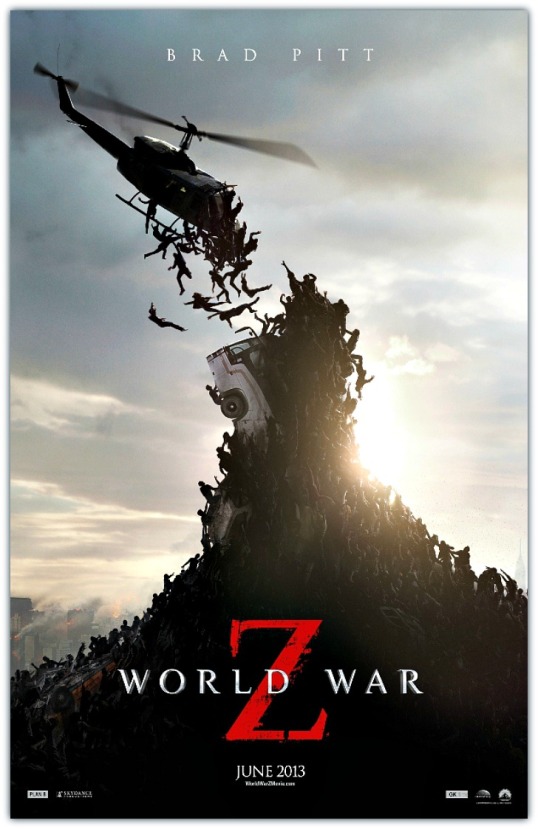
We see the release of a new trailer for this summer’s epic zombie film based on the equally epic novel of the same name by Max Brooks.

World War Z is already the most expensive zombie film ever made with a budget rumored to be between 125-200 million dollars. Some of this has been due to the delays in filming and most of it seems to stem from a massive rewrite of the third act. Damon Lindelof was first hired to rewrite but due to prior commitments the job went to Drew Goddard. Such a rewrite also meant reshoots had to be done which took another seven weeks of shooting.

All in all, World War Z is one troubled film before it even gets to the general public.

Yet, it is also one of the more anticipated films for this summer. Some from fans of the genre who just can’t get enough of zombie films. Some from people wanting to see just what sort of zombie film ends up with a budget around 200 million dollars. From the trailer we’ve seen some of that money seem to have gone on some massive special effects sequences which includes swarming zombies of the Rage-infected kind. Then again we don’t really see the zombies close-up which tend to make them look like swarming ants from afar. Maybe the look of the zombies themselves have been saved for the release of the film.

This latest trailer actually gives a bit more of the plot of the film which puts Brad Pitt’s UN employee character to travel the world in search for the cause of the worldwide zombie pandemic. The speed by which things happen seems to have compressed all the events in the novel into a film of two hours. This, I’m sure will be a major contention with fans of the novel, but it looks like a decision by filmmaker to try and create a single narrative from a novel that was mostly single-hand accounts of the zombie war from survivors who have no connection with each other whatsoever.

We’ll find out in just under 3 months if this film will be a major flop or succeed despite all the stumbling blocks and problems throughout its production.

World War Z is set for a June 21, 2013 release date.

Film Review: Argo (dir. by Ben Affleck)


When I made out my list of my 26 favorite films of 2012, Argo came in at number 19,  I think that Argo is a likable, funny, and frequently exciting film.  Not only does it feature some of Ben Affleck’s best work as a director (though I still think Affleck has yet to top Gone, Baby, Gone) but also some of his best work as an actor.  If The Town left my skeptical about Affleck’s film-making talents, Argo made me a believer again.  That said, while I think that Argo is a good film, I don’t think it’s a great film but that opinion definitely places me in both the minority of filmgoers and, since my sister Erin considers Argo to be the best film of 2012, Bowmans as well.

Based on a true story, Argo takes place in 1979.  The Shah of Iran has been overthrown and the American embassy in Tehran is overrun by Islamic militants.  Over 50 Americans are taken hostage but six embassy workers manage to escape and end up hiding in the home of the Canadian ambassador (Victor Garber).  The U.S. State Department has to find a way to get the six of them out of Iran before the militants discover their existence.

It’s up to CIA agent Tony Mendez (played, of course, by Ben Affleck) to come up with a better plan than attempting to smuggle bicycles into Iran.  Mendez’s scheme is to team up with a Hollywood makeup artist (John Goodman) and a B-movie producer (Alan Arkin) and to convince the Iranian government that he and the 6 embassy workers are actually a film crew and that they’re in Iran not on a rescue-and-escape mission but instead to scout locations for a science fiction film called Argo.

Argo, for the most part, works.  As a director, Affleck manages to deftly juggle both comedy and suspense.  The scenes where Arkin and Goodman teach Affleck how to be a Hollywood phony are frequently hilarious, while the scenes in Iran are effectively tense and claustrophobic.  The film is full of little period details that ring true and I’m still shocked that Argo didn’t receive an Oscar nomination for either Best Costume Design or Best Production Design.  The wide lapels on Ben Affleck’s suits may not have been as flamboyant as the costumes in Les Miserables but, like the costumes in Les Mis, the very sight of them not only transported us to a different time but made that time plausible as well.

As you might expect from an actor-turned-director, Affleck gets good performances from his entire cast.  Goodman and Arkin are both sympathetic as recognizable Hollywood types and Bryan Cranston has a few good scenes as a fellow CIA agent.  While the 6 hostages are all pretty much interchangeable, they are still all well-cast and sympathetic.

That said, when I saw the film, it was hard to escape the feeling that the first half of the film (in which the embassy workers hid out at the Ambassador’s house while Affleck, Arkin, and Goodman worked on promoting their fake film) was dramatically more interesting and compelling than the far more conventional second half.  Once Affleck actually reaches Tehran, Argo becomes a rather predictable, if still well-made and exciting, movie.  Perhaps that’s why, as much as I enjoyed Argo, the film didn’t make as much of an impression of me as a film with a more challenging narrative would have.  Ultimately, Argo tells the true story of people in tremendous danger but the film itself feels very safe.

Argo is one of the most acclaimed films of 2012 and it’s been nominated for 7 Oscars, including Best Picture.  To just about everyone’s surprise, Ben Affleck was not nominated for best director.  While I personally would not have nominated either Argo or Affleck, the fact of the matter is that the reason Argo has received so much acclaim is because of Affleck’s work behind the camera.  Argo is such a director’s film that it’s next to impossible to argue that Argo‘s one of the best films of the year without also arguing that Affleck is one of the best directors of the year.  Hence, Affleck’s lack of a nomination does feel like a definite snub.  Even speaking as someone who was not as enthralled with Argo as much as everyone else, I would still have nominated Affleck long before I wasted a nomination on Benh Zeitlin for relying too much on a hand-held camera while filming Beasts of the Southern Wild.

While the Academy may have snubbed Affleck, the Hollywood Foreign Press Association did not.  Earlier this night, Affleck won the Golden Globe for best director and Argo won best picture.  (Though, I have to say, I find myself wondering if my friend Jason Tarwater was right when he suggested that the notorious starfuckers of the HFPA honored Argo mostly because they wanted to hang out with the film’s co-producer, George Clooney.)  Given the fact that it’s been over 20 years since a film won Best Picture without receiving a nomination for Best Director, Affleck and Clooney might just have to be happy with the universal acclaim.

Trailer: World War Z (Official)


It’s not hyperbole to say that one of the best horror novels to come out in the past 20 years was written by Mel Brook’s son. A son who wrote comedy scripts for Saturday Night Live. Max Brooks before 2003 was relatively unknown to genre fans. This changed post-2003 with the release of his tongue-in-cheek how-to book, The Zombie Survival Guide. It was a book that was slow to succeed in terms of sales but grew in popularity as more and more fans of the zombie genre heard about it and recommended it to like-minded friends. Just like the subject matter Brooks worte about this guide spread in a geometric pattern and more and more people began to know.

In 2006, Brooks released the companion piece to his best-selling guide with the fictional oral history account of the aftermath of a zombie apocalyptic war and how humanity fought back from the brink of extinction. This novel was World War Z and even before one could say “this book could be made into a film…” the film rights to the book became a hot commodity in Hollywood. In the end, Brad Pitt’s Plan B production company won the right to adapt the novel into a feature-length film.

After several years of trying to create a screenplay from the documentary-style and sprawling narrative of the novel the film finally went into production in mid-2011 with a screenplay that took some of the important events from the novel and set the film during the war itself as it unfolded instead of flashbacks as recounted by those who survived. This change has angered fans of the book and their anger and frustration went up another notch when some leaked on-the-set footage showing the zombies as more of the running-style zombies than the slower ones in the novel.

Another stumbling block pushed the film from a holiday 2012 release date to a summer 2013 release as Paramount looked to having World War Z as part of their 2013 summer blockbuster slate of films. This film has had so much issues and problems that it took to Brad Pitt finally agreeing to headline the cast to get the film finally made. So, instead of a film the chronicles the stories of the war’s survivors a decade after the war ended we now have a film that skews more towards a film that’s heavy on action set-pieces and globe-trotting. Someone on IGN.com has called World War Z (after seeing the attached official trailer) as 2012 with zombies. The first official trailer does seem to make it look like that.

As a fan of the novel I’m saddened by the changes, but I will say that the trailer does make this film look very epic. I’m more than willing to watch this film (who am I kidding I will watch this film and probably more than once or twice.) and look at it as the filmmakers’ own take on the novel. I mean if it turns out to be great on it’s own then hooray. If it sucks then I still have my novel to go back to. Plus, this is the first zombie film that will show the pandemic in global settings and proportions. This will be the first time we get to see this on film and not just on the written page.

My own review of the novel gives an idea just how different the film will be from the source material.

Trailer source: Joblo Movie Network

My 2012 Emmy Nominations


So, for the past few days, I’ve been happily hopping around my section of the Shattered Lens Bunker and do you know why? 

Because it’s awards season, that’s why!  With the conclusion of the 2011-2012 TV season, Emmy ballots have been mailed and votes are being cast and, come July, we’ll know which shows and performers have been nominated for the 2012 Emmys. 

Before that happens, however, I would like to play a little game called “What if Lisa Was Solely Responsible For Picking the Nominees.”  Here’s how it works — I looked over and studied the complete list of the shows and performances that have been submitted this year for Emmy consideration.  And then, from that list, I picked my personal nominees.

(A complete list of every show and performer that’s been submitted for Emmy consideration can be found here.)

Below are my personal nominations in the major Emmy categories.  Again, note that these are not necessarily the shows and performers that I believe will be nominated.  Instead, these are the shows and performers that I would nominate if I was solely responsible for picking the nominees.

A complete list of my nominations in every single Emmy category can be found here.  (And yes, there’s a lot of Lifetime on the list.  There’s also a lot of Community.)

Best Comedy Series

Bored to Death (HBO)

Community (NBC)

Girls (HBO)

It’s Always Sunny In Philadelphia (FX)

Parks and Recreation (NBC)

Raising Hope (Fox)

Veep (HBO)

Best Drama Series

Boardwalk Empire (HBO)

Breaking Bad (AMC)

The Client List (Lifetime)

Downton Abbey (PBS)

Game of Thrones (HBO)

Homeland (Showtime)

Pan Am (ABC)

Ringer (The CW)

True Blood (HBO)

The Walking Dead (AMC)

Outstanding Miniseries or Movie

Blue-Eyed Butcher (Lifetime)

Cyberbully (ABC Family)

Drew Peterson: Untouchable (Lifetime)

Five (Lifetime)

Girl Fight (Lifetime)

Hatfields & McCoys (History Channel)

The Hour (BBC America)

Of Two Minds (Lifetime)

Outstanding Variety Series

Conan (TBS)

Fashion Police (E)

Key and Peele (Comedy Central)

The Soup (E)

Tosh .O (Comedy Central)

Outstanding Variety Special

Betty White’s 90th Birthday Party (NBC)

Celtic Women: Believe (PBS)

The Comedy Central Roast of Charlie Sheen (Comedy Central)

TV Land Awards (TV Land)

Wendy Liebman: Taller on TV (Showtime)

Outstanding Nonfiction Special

Bobby Fischer Against The World (HBO)

Catholicism: Amazed and Afraid (PBS)

Crime After Crime (OWN)

God Is The Bigger Elvis (HBO)

6 Days To Air: The Making of South Park (Comedy Central)

Outstanding Nonfiction Series

America in Primetime (PBS)

American Masters (PBS)

America’s Most Wanted (Lifetime)

Beyond Scared Straight (A&E)

Inside Story (Biography)

Outstanding Reality Program

Antiques Roadshow (PBS)

Dance Moms (Lifetime)

Kitchen Nightmares (Fox)

Scouted (E)

Storage Wars (A&E)

Outstanding Reality-Competition Program

The Amazing Race (CBS)

The Bachelor (ABC)

Big Brother (CBS)

The Celebrity Apprentice (NBC)

Hell’s Kitchen (Fox)

Project Runway (Lifetime)

So You Think You Can Dance (Fox)

Survivor (CBS)

Outstanding Lead Actor In A Comedy Series

Larry David in Curb Your Enthusiasm (HBO)

Johnny Galecki in The Big Bang Theory (CBS)

Danny McBride in Eastbound and Down (HBO)

Joel McHale in Community (NBC)

Lucas Neff in Raising Hope (Fox)

Jason Schwartzman in Bored To Death (HBO)

Outstanding Lead Actor In A Drama

Steve Buscemi in Boardwalk Empire (HBO)

Bryan Cranston in Breaking Bad (AMC)

Jeffrey Donavon in Burn Notice (USA)

Damian Lewis in Homeland (Showtime)

Andrew Lincoln in The Walking Dead (AMC)

Timothy Olyphant in Justified (FX)

Outstanding Lead Actor In A Miniseries or Movie

Idris Elba in Luther (BBC America)

Rob Lowe in Drew Peterson: Untouchable (Lifetime)

Steven Weber in Duke (Hallmark Movie Channel)

Dominic West in The Hour (BBC America)

Ben Whishaw in The Hour (BBC America)

Outstanding Lead Actress In A Comedy

Zooey Deschanel in New Girl (Fox)

Lena Dunham in Girls (HBO)

Tina Fey in 30 Rock  (NBC)

Julia Louis Dreyfuss in Veep (HBO)

Mary-Louis Parker in Weeds (Showtime)

Martha Plimpton in Raising Hope (Fox)

Outstanding Lead Actress in a Drama

Claire Danes in Homeland (Showtime)

Sarah Michelle Gellar in Ringer (The CW)

Jennifer Love Hewitt in The Client List (Lifetime)

Julianna Margulies in The Good Wife (CBS)

Elizabeth McGovern in Downton Abbey (PBS)

Anna Paquin in True Blood (HBO)

Outstanding Lead Actress In A Miniseries or Movie

Kristin Davis in Of Two Minds (Lifetime)

Anne Heche in Girl Fight (Lifetime)

Rose McGowan in The Pastor’s Wife (Lifetime)

Emily Osment in Cyberbully (ABC Family)

Sara Paxton in Blue Eyed Butcher (Lifetime)

Outstanding Supporting Actor In A Comedy Series

Charlie Day in It’s Always Sunny in Philadelphia (FX)

Danny DeVito in It’s Always Sunny In Philadelphia (FX)

Donald Glover in Community (NBC)

Nick Offerman in Parks and Recreation (NBC)

Danny Pudi in Community (NBC)

Matt Walsh in Veep (HBO)

Outstanding Supporting Actor In A Drama

Bruce Campbell in Burn Notice (USA)

Peter Dinklage in Game of Thrones (HBO)

Giancarlo Espositto in Breaking Bad (AMC)

Michael Pitt in Boardwalk Empire (HBO)

Michael Shannon in Boardwalk Empire (HBO)

Alexander Skarsgard in True Blood (HBO)

Outstanding Supporting Actor In A Miniseries or Movie

Powers Boothe in Hatfields and McCoys (History Channel)

Justin Bruening in Blue-Eyed Butcher (Lifetime)

Mark-Paul Gosselaar in Hide (TNT)

Sir Roger Moore in A Princess For Christmas (Hallmark Movie Channel)

Tony Shalhoub in Five (Lifetime)

Outstanding Supporting Actress In A Comedy

Alison Brie in Community (NBC)

Kristen Chenoweth in GCB (ABC)

Anna Chlumsky in Veep (HBO)

Gillian Jacobs in Community (NBC)

Cloris Leachman in Raising Hope (Fox)

Aubrey Plaza in Parks and Recreation (NBC)

Outstanding Supporting Actress in Drama

Christine Baranski in The Good Wife (CBS)

Kristen Bauer Von Straten in True Blood (HBO)

Kelly MacDonald in Boardwalk Empire (HBO)

Christina Ricci in Pan Am (ABC)

Sophia Turner in Game of Thrones (HBO)

Deborah Ann Woll in True Blood (HBO)

Supporting Actress In A Miniseries or Movie

Tammy Blanchard in Of Two Minds (Lifetime)

Kaley Cuoco in Drew Peterson: Untouchable (Lifetime)

Lisa Edelstein in Blue-Eyed Butcher (Lifetime)

Jessica Lange in American Horror Story (FX)

Jena Malone in Hatfields and McCoy (History Channel)

Trailer: Total Recall (Official)


Paul Verhoeven’s 1990 scifi classic, Total Recall, remains one of Arnold Schwarzenneger’s better films. The film was an adaptation of the Philip K. Dick novellete, We Can Remember It for You Wholesale, and in 2012 it will once again go up on the big-screen as a Len Wiseman remake.

Wiseman’s film looks to take the basic premise of Dick’s novellete and some of the changes made for the Verhoeven production. What looks to have been changed in this upcoming remake is the absence of Mars as the backdrop for the character Douglas Quaid who believes he is actually a secret agent working to free Mars from the tyrannical rule of one Cohagen. This time around the setting is instead a dystopian future Earth where the planet has been split into two super-factions the rule planet. There’s Euroamerica which combines the North American and European Union into one sovereign entity and it’s rival in New Shanghai which puts together the economic powerhouses of China and the nations of South East Asia.

It is in this new backdrop that Colin Farrell’s Quaid must run from the forces of Cohaagen (played by Bryan Cranston) and help the freedom fighters trying to change things for the better. The trailer itself shows less of the cheesy look of the Verhoeven film and instead goes for a much slicker art design that some people have called the Mass Effect-look. I must admit that the fully-armored forces chasing after Quaid look like Blue Suns mercenaries from that BioWare scifi rpg.

I will say that the trailer does a great job in referencing similar scenes and sequences from the original Verhoeven film while adding in new touches to give the film it’s very own unique look. For one of this summer season’s last films before fall season begins this one looks like a must-see.

Total Recall is set for an August 3, 2012 release date.

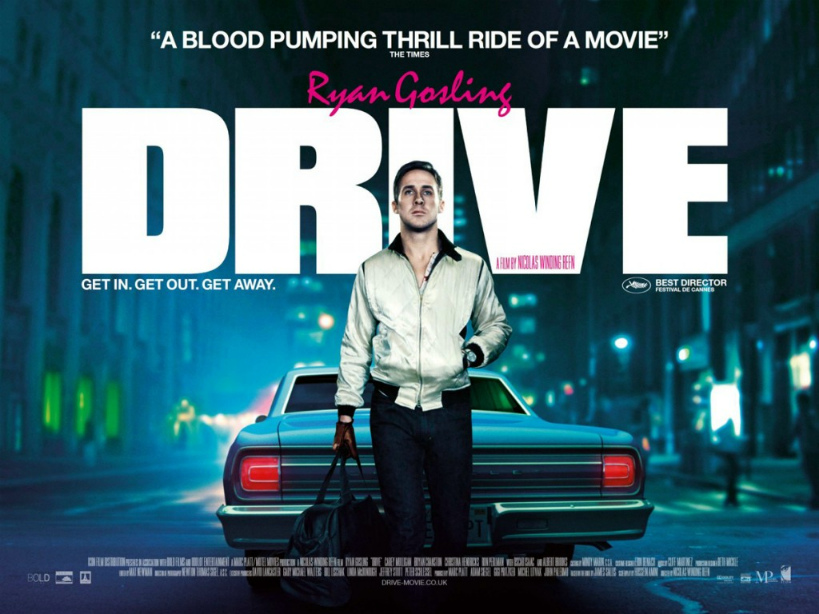
Review: Drive (dir. by Nicolas Winding Refn)


Danish filmmaker Nicolas Winding Refn has made just a handful of films with most staying under the radar of most of the general film-going public. He first caught the attention of indie film fans with his Pusher Trilogy over in Denmark, but he really caught the attention of these fans with his explosive collaboration with Tom Hardy on the Bronson biopic. He would follow that film with the violent existentialist Viking film Valhalla Rising. It would take another major collaboration with another rising star in Ryan Gosling for Winding Refn to finally have his major breakout film which has caught the attention of not just the indie film fans and cineaste crowd, but the general public at-large.

Drive was first screened over at this year’s 2011 Cannes Film Festival where it premiered “in competition” for the Palme d’Or. While the film didn’t win the top prize for best film at Cannes it didn’t garner Nicolas Winding Refn “Best Director” award and his work on this film more than merits such an accolade. The film would begin to screen at other major film festivals before landing at the Toronto International Film Festival before making it’s major public release in North America. Everywhere the film went the consensus reaction to the film has ranged from positive to calls for the film as one of 2011’s best.

So, it would seem most everyone has been quite positive with their reaction to Refn’s Drive. Is this film just another indie arthouse title which the elitist film fans have begun to hype up to levels that would border on cosmic? Or is this film actually as good as it has been talked up to be by such film fans and those of the general public who have seen it? I think the answer lies somewhere in-between.

Drive has been called an action-drama to crime-thriller to film noir and even an existentialist meditation of the film variety. Some have even called it a modern urban fairy tale from the many traditional tropes and themes inherent in fairy tales. The film actually seems to defy genre labels as it’s all those and even more. Nicolas Winding Refn has made a film with so much variety in its cinematic DNA from other classic films and storytelling styles that watching the film once is not enough to find them all.

The film makes a strong statement with it’s introduction of the character who remains nameless but could be called “The Driver” or “The Kid”. Ryan Gosling’s performance in this opening sequence will set the foundation for his character from beginning to end. His driver role is not much for chit-chat and unnecessary talking with those who have hired him to be their expert getaway driver. He’s meticulous with his equipment and intractable when it comes to the rules he has set down for his clients. He would be theirs for the five minutes they need him to drive them away from their criminal acts. Whatever they do before or after those five minutes doesn’t matter to him and he sticks to this rule explicitly. Another rule which he lays down is that he will not be carrying a firearm. These rules have had some audiences bring to mind Jason Statham’s Transporter character and they would not be totally wrong to say so. What Gosling’s driver has over Statham’s is the air of realism to the role. It’s a realism that borders on hyper-reality as the film moves on to it’s climactic conclusion, but real nonetheless. Gosling’s “driver” will not do extensive and elaborate fighting skills the way Statham’s would.

The film would move from it’s powerful introduction and into a much more calm and somewhat serene section as the nameless driver gradually gets to know his next door neighbor in the form of Irene as played by Carey Mulligan. Their relationship will form the core of the film’s narrative and it’s the driver’s growing affection not just for Irene but her young son that would dictate some of the decisions he would make right up to the end of the film. It’s a relationship built not on extensive dialogue banter but mostly on meaningful glances and silent understanding between two characters who seem to have found a kindred kinship between them. It’s this growing relationship between the two and Irene’s son which almost look like a familial unit forming until the return of Irene’s incarcerated and newly-released husband Standard. This is a character played by Oscar Isaac as a man desperate to take full advantage of his last chance at normalcy and redemption, but ultimately doomed to fail.

Standard doesn’t just become the only wrench in the happy life Gosling’s character seems to want to have with Irene and her son. Into the picture also happens to come in is his mentor and business partner Shannon (Bryan Cranston doing a great job as the good-natured, but opportunistic fool character many Shakespearean tragedies always seem to have) and Shannon’s even seedier acquaintances in Hollywood mogul-turned-mob boss Bernie Rose (Albert Brooks in a chilling performance) and his more boisterous, but not as smart partner in Nino (Ron Perlman).

The film seems to settle on the low gears for the first hour of the film, but it’s during a botched robbery attempt where the driver becomes embroiled in that Drive finally moves into the high gears and stays there until the very end. Refn’s decision to use the first hour to round out and build the characters in this film definitely pays off in the end. The audience becomes quite clear as to who the players are and what motivates them to do what they do the rest of the film. Even the most secondary and tertiary roles in this film has a part to play. Even Christina Hendricks in the role of a low-level moll to a gang of criminals gets to have her time to shine if just briefly.

Once the narrative shifts from character study to an almost Cronenbergian exercise in violence and brutality does the film finally able to hook in the last few audiences who may have still been iffy about Drive. Not to say that the final 45-minutes of the film was a non-stop action film, but it does move at a consistently higher gear pace than the first hour. We see the driver having to show to the audience that he’s not just an expert wheelman for Hollywood (stunt driver by day) and the criminal underground (getaway driver by night). It serves the film well that Gosling’s character has the barest minimum of lines of dialogue. We see all we need to know about this character through his behavior that brings to mind roles played by such past luminaries as Steve McQueen and Clint Eastwood.

Most likely it would be in the second half of the film that should satisfy the action junkies. While the action scenes are not of the Michael Bay-type they do show that Refn has a fine grasp of what makes an action scene thrilling. Whether the scene calls for some of the most well-done car chase on film since Frankenheimer showed everyone how to properly do it in Ronin or scenes of sudden brutal violence which calls to mind similar scenes from Cronenberg’s last two films (A History of Violence and Eastern Promises). Both types of action were done efficiently with little to no glamour to gloss over things. The burst of violence actually adds to the mystique of Gosling’s “Man With No Name” role. One particular scene in the apartment elevator where Gosling, Mulligan and a goon sent by the mob makes for one of the best scenes in the film and of 2011.

As much as these scenes of action and violence will be the ones to get the most attention from the general film-going public in the end it’s the excellent screenplay by Hossein Amini of the James Sallis’ novel of the same name which really holds everything together in conjunction with some top-notch performances from everyone involved. The film makes or breaks itself on Gosling’s performance as the driver and he delivers on all cylinders. His performance was quite reminiscent of past performances such as James Caan as Frank in Michael Mann’s Thief, Steve McQueen also as Frank in Bullitt, but in my opinion Gosling’s work in this film brings to mind young Clint Eastwood as “The Man With No Name” in Sergio Leone’s spaghetti western trilogy. Both characters were the type to let their actions speak for them and were both full of quiet confidence not to mention restrained violence which would erupt when needed.

Much has been said about Albert Brooks’ turn as the mob boss Bernie Rose. how the role was quite the 180-degrees from people’s perception of the actor who usually did comedic roles. I say that Albert Brooks always had a dark side to his comedic talent. I mean he was and is megamaniacal villain Hank Scorpio from The Simpsons. In all seriousness, Brooks’ as the mob boss was the other pillar which held all the other performances focused. In fact, Gosling’s character and Brook’s Bernie Rose could almost be considered mirror-images of each other. They were characters who had found their place in the world and the role they would play and didn’t struggle against it. Everyone else in the film struggled against their lot in life. It was also these characters who had the bulk of the film’s dialogue.

Drive has been hyped (for some overhyped) since it first premiered at this year’s Cannes Film Festival, but it’s one of those rare films which has more than earned and surpassed the hype which has preceded it’s general release to the general public. It’s a film which bucks traditional genre labels by combining the themes, ideas and foundations from many different film and storytelling genres. For fans of action there’s enough thrilling action to sate them. For those who are fans of film noir this film definitely carries within it the DNA set down by the film noir of the 40’s, 50’s and 60’s. For some who wish to watch a film which explore existential themes then Refn’s film has that too. In the end, Drive manages to be a film which caters to so many different audiences without ever pandering to them or dumbing the story down. It’s a film made by a filmmaker who continues to impress and who has made his best film to date.

Drive is a film that is not for everyone, but it’s also a film that everyone should see and experience at least once. It is also one of the year’s best films and, so far, my top film of 2011.

Drive Review


This review is not one filled with spoilers but I’d just warn that one can better understand the points I’m trying to make if they have seen the film. Obviously everything I say below is my own opinion and interpretations of the film and many will disagree. I’m writing this second review because in order to sustain my recent obsession with Nicolas Winding Refn’s latest film ‘Drive’, I have been reading a lot of interviews with the director so that I could both  better understand the motivation and ideas surrounding its creation as well as to better appreciate its style and themes so that I can add that onto my already huge admiration and love for the film to better articulate how I felt and express why I think it is the second best film of the year, the first being ‘The Tree of Life’ which was the only other I have seen in 2011 that has caused me to do a second write up like this one and although ‘Drive’ might not be as “deep”, I do believe it is much more complex than some make it out to be and a second viewing caused me to think about it none stop and there are just something’s I need to say.

Since this past weekend when I did see it that second time, the thing that I have come to understand that really caused me to view the entire film in a much different perspective was that my very simple explanation in my other review of it being some sort of character study in the vein of ‘The American’ mixed with ‘Taxi Driver’, though in some ways true, does not even begin to acknowledge the fact that what ‘Drive’ really is, and what Refn decided to create, is a film with a fairy tale archetype guided by an old fable whose themes of love, nature, brutality and heroism shed a new light on the character’s romance and exploits, as well as makes the stories ending that much more emotional.

Refn considers this idea of it being a fairytale to be true, and has said it multiple times, because that is ultimately what he wanted to create. In his words ‘Drive’ is a fairytale set in Los Angeles, whose characters are larger than life figures representing “pure emotion” as he put it; which explains why the love is so pure and the violence is so brutal and there is rarely a middle ground, they are exaggerations of real emotions to add to its fantastical tone.

The first half is the serene and pure story of the innocent young maiden lost in the woods who falls for a “Knight in shining armor”. When evil appears and violates their world of purity and love and threatens the young maiden’s wellbeing, they must be punished by the Knight which brings out a much darker side to the story, in the vein of the Grimm fairytales. The young maiden of course being Irene (Carey Mulligan), a single mother raising her son alone while her husband is in prison. The Knight she falls for has no name but is referred to as simply the Driver (Ryan Gosling). A quiet and mysterious man who is a mechanic and stuntmen by day and a getaway driver by night. He is lonely and most enjoys being out on the road, but easily falls for the beautiful Irene and her son, who offer a chance to be human and evoke emotions he rarely feels. This simple story of love is interrupted when Standard (Oscar Isaac), Irene’s husband, reappears. Not only does he cause a divide but his past resurfaces which has connections to two dangerous gangsters (Albert Brooks, Ron Perlman). In order to do whatever he can to protect Irene and her son, the Driver offers his services to Standard for a heist. It ultimately goes horribly wrong and the two gangsters look to cover it all up by getting rid of all involved, which includes the Driver and Irene.

From here that much darker side appears as the Driver is forced to fight back and protect the things he cares about. This half of the story is guided by the fable of “The Scorpion and the Frog”, about a scorpion who asks a frog to carry him across a river. The frog is afraid to do so because he does not want to be stung but the scorpion tells him that if he were to sting the frog they’d both drown, so the frog agrees. Halfway across the scorpion does in fact sting the frog dooming them both and when the frog asks why he did so the scorpion replies that it is in his nature. The idea being for some creatures their behavior is irrepressible and so cannot be controlled no matter what the consequences. For the scorpion his nature was to sting, he does things instinctively and without much thought. When in a situation where this instinctive nature must come to the surface, when cornered or in this case when those people the Driver cares for are threatened, he reverts to that aggressive scorpion nature and stings, hard and violent no matter the consequence which in this case means losing himself or the ones he cares for.

The elevator scene is really that tipping point where the stinger comes out and not surprisingly one of the best scenes in the entire film. It is when he puts his human emotion and love aside in order to fully protect Irene. After he kisses her goodbye he knows he is about to reveal his true nature. After viciously killing the man who had put him into that corner he looks at Irene and knows it is over which is his ‘great sacrifice’, letting the one he loves go in order to protect her, and what makes him a true hero. The elevator door closes and the two are separated for good. He must now do whatever he can to distance himself and all this evil from Irene and her son.

What is interesting about the idea of the Driver as being a hero is the sort of duel personalities he evokes. One could say he is human by day, working a normal job, shopping and falling in love but a “hero” by night, though not helping the right people. When the story really becomes interesting is when he has to blend the two personas to become something more which is why Refn and Gosling have described it as their ‘superhero’ film. He is a man with the capacity to be a “real hero” and it is only when he can bring his human emotion to that more aggressive and skillful side that he does become this sort of superhero-like character. Obviously it is difficult for him. It isn’t a smooth transition and at times he has trouble controlling it, which comes through as he shakes as his anger and adrenaline builds when talking to Nino on the phone and of course when he brutality stomps the life out of one of Nino’s hitmen in the elevator scene mentioned earlier. This is that scorpion nature coming through, this aggressive nature is the key to his power, and why it is most fitting that his ‘custom’ is a jacket with a scorpion logo on the back.

Though his actions seem necessary he still does not want to lose his ‘human’ side and puts on the mask towards the end because he must fully embrace this more aggressive side to get the job done, to quell his emotions and settle the battle raging between both persona’s and essentially become a lifeless and aggressive vessel with one objective. This way he can do what needs to be done, evoke a bit of fear from his target, but cover up and shield his human persona and not completely lose himself. Throughout this he becomes someone we empathizes with, even if his methods seem to be so extreme. The outcome to it all, although somewhat ambiguous, is a fitting and emotional conclusion where some people do in fact live happily ever after.

What makes this all work so effectively is the fact that ‘Drive’ is a film in which things don’t need to be spoken to be said. One where characters express more through silence, short but poignant dialogue and the interactions they have together. Refn brilliantly creates a dreamlike and contemplative exploration of the serene and the hyper violent set within a fairytale like story that happens to be a slow burning character study of the ‘scorpion’ where everything is just below the surface and it all builds up, through a series of quiet and calm moments, only to erupt into brutal violence. Nothing is handed to you, there is no blatant exposition, you don’t always know what is going on in a characters head and it helps create a level of tension and actually requires one to think. This isn’t some sort of mindless action thriller, it’s much more contemplative and complex than one would expect. He polishes it all off with a retro varnish evoking a different time, helping to set it apart from reality and add to its moody atmosphere, but still keeping it grounded enough to feel real and have that emotional punch. Add onto that all of that the fantastic performances: Ryan Gosling’s brilliantly effective and charismatic performance as the Driver, Carey Mulligans charming and sweet portrayal of Irene, Ron Perlman’s brutish and aggressive Nino, Albert Brooks as the ruthless but understandable Bernie, Bryan Cranston as the downtrodden but humorous Shannon, Oscar Isaac as Irene’s husband who needs help to avoid his past; and what you are left with is a masterful, beautiful and complex film. It truly is a modern day fairytale, perfect in every way, and a film that I couldn’t help but fall in love with.