Retro Television Review: Miami Vice 2.4 “Out Where The Buses Don’t Run”


Welcome to Retro Television Reviews, a feature where we review some of our favorite and least favorite shows of the past!  On Mondays, I will be reviewing Miami Vice, which ran on NBC from 1984 to 1989.  The entire show is currently streaming on Tubi!

This week, we learn the cost of working Vice.

Episode 2.4 “Out Where The Buses Don’t Run”

(Dir by Jim Johnston, originally aired on October 18th, 1985)

This is it.  This is the episode that is regularly cited as being one of the best, if not the best, episodes that Miami Vice ever aired.  Out Where The Buses Don’t Run takes a look at the psychological costs of spending one’s life obsessing on crime and justice.  What starts out as a comedy turns into the bleakest episode of the show so far.

Things get off to a great start, with Crockett and Tubbs pursuing a drug dealer on the beach.  While The Who’s Baba O’Riley plays on the soundtrack, the dealer roller skates down a sidewalk and a preacher (played by Little Richard) sends his young congregation out to collect money.  As Crockett and Tubbs wait for their chance to arrest the dealer, someone watches them from a nearby window and takes pictures.  Crockett asks Tubbs if he ever gets the feeling that he’s being watched.

The man taking the pictures turns out to be Hank Weldon (Bruce McGill), a former Vice cop who quit the force six years prior when a case that he had spent three years making fell apart and a drug lord was set free on a technicality.  The drug lord vanished after the case against him was thrown out and it’s assumed that he was murdered by his associates.  Hank, however, insists that the drug lord is still alive and he’s returned to Miami.  He wants Crockett and Tubbs to help him finally catch the criminal that evaded him all those years before.

A quick check with Weldon’s former partner, Marty Lang (David Strathairn), reveals that Weldon left the force after he had a nervous breakdown and he’s spent the past few years in a mental facility.  The loud and flamboyant Weldon is obviously still unstable but Crockett and Tubbs cannot shake the feeling that he might know what he’s talking about.

And, as is revealed at this end of this episode, they’re right …. kind of.  Weldon does know where the missing drug lord is.  The drug lord is walled up in an abandoned building.  He’s been there since 1979.  At the end of episode, with Tubbs, Crockett, Castillo, and Lang watching, Weldon tears down the wall and reveals the decayed skeleton of the drug lord.  Weldon announces that he murdered him and walled him up.  Lang then reveals that he helped.

“He was my partner,” Lang says, “Understand?”

Crockett understands and the audience understands as well.  When Weldon’s obsession drove him crazy, Lang was the only one to whom he could turn.  And Lang, being his partner, was the only one who understood how he felt.  Lang may have been a cop but his number one loyalty was to his partner, just as Crockett’s number one loyalty will always be to Tubbs.

As played by Bruce McGill, Hank Weldon goes from being a cheerful eccentric to a bitter and paranoid lunatic to, finally, a man who can no longer stand to hide what he’s done.  It’s an excellent performance that keeps the audience guessing.  He may be a murderer and he’s obviously still unstable but your heart can’t help but break for him.  The combination of Jim Johnston’s moody direction, a perfect collection of songs on the soundtrack, and the performances of Bruce McGill and David Strathairn really do come together to make this an excellent episode.  In the end, it’s hard not to feel that Crockett and Tubbs are both one step away from becoming Weldon and Lang themselves.
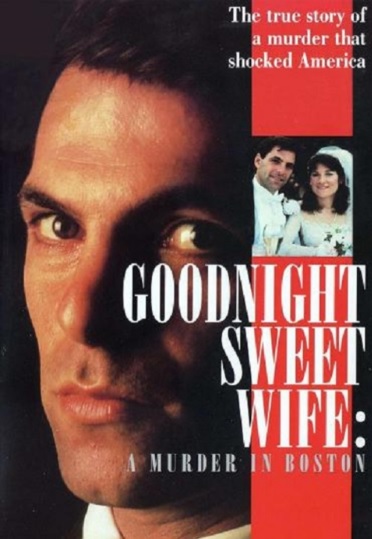
October True Crime: Goodnight Sweet Wife: A Murder In Boston (dir by Jerrold Freedman)


1990’s Goodnight Sweet Wife opens with a frantic 9-11 call.

A man named Charles Stuart (Ken Olin) calls the Boston Police Department and says that he and his pregnant wife have just been shot.  He says that he got lost while trying to drive home and that a black man got in the car, made Charles drive to a remote location, robbed Charles and his wife, and then shot them.  When the police finally manage to track Charles down, he’s nearly dead as a result of having been shot in the stomach.  Carol was shot in the head and is pronounced dead shortly after arriving at the hospital.  Her baby, named Christopher, is delivered via C-section but dies a few days later.

The city of Boston is outraged as the crime makes national news.  The story that thousands hear is that Charles Stuart, a hard-working and financially successful man who has never had any trouble with the police, took one wrong turn, ended up in a “bad” neighborhood, and lost his wife and his son as a result.  As Charles recovers in the hospital, the police make capturing his assailant their number one priority and soon, black men are being stopped and frisked in the streets.

With the entire world mourning the loss of Carol and Christopher Stuart, there are only a few people in Boston who are willing to take a careful look at Charles’s story.  There are quite a few inconsistencies in Charles’s story, not the least of which was his claim that he was shot in a nearly deserted area of town when the neighborhood is actually one of Boston’s busiest.  Some start to suspect that Charles killed his wife and then shot himself to make it look like a robbery and the fact that Charles nearly died from his wound is not proof that Charles was actually the victim but instead just a sign that Charles didn’t know where to shoot himself in order to not nearly die.  However, even with all of the inconsistencies in Charles’s story, the police still announce that they’ve arrested a man for the crime.  Charles even identifies the suspect, William Bennett, as being the murderer.

Of course, as is revealed in flashbacks, Charles Stuart is a murderer and he’s not a particularly clever one.  He’s the type of murderer who openly talked to people about how he was considering committing a murder.  He’s the type who roped his own brother into helping him fake the robbery.  Far from being the successful professional that he presented himself as being, Charles was mediocre broker who depended on his wife’s salary to finance his lifestyle.  With Carol pregnant and planning on quitting her job to be a full-time mother, Charles decided to kill her for the insurance and he also figured that he would be able to get away with it as long as he blamed the crime on a black man.

Tragically, it turned out that Charles Stuart was almost right.  In both the movie and in real life, Charles Stuart was believed because he didn’t look like what most people thought a criminal looked like.  He was a young, handsome, middle class white guy and because he couldn’t face the prospect of having to cut back financially, he killed his wife and his son and he nearly put an innocent black man in prison.  The film does a good job of depicting the consequences of both Stuart’s crime and the rush to judgment on the part of the police.  Ken Olin plays Charles Stuart as being outwardly friendly but empty on the inside, a cold sociopath who is incapable of truly caring about anyone but himself.  In real life, Stuart chose to jump into the Mystic River rather than face the consequences of his actions.  Stuart’s brother, who helped Charles fake the robbery and later turned Charles into the police, died in a homeless shelter 30 years later.  Carol’s family set up a scholarship fund in her name to aid students in Mission Hill, the neighborhood where Charles claimed he had been hijacked.  One of the scholarship’s first recipients was the daughter of William Bennett.

Film Review: My Cousin Vinny (dir by Jonathan Lynn)


In the 1992 film, My Cousin Vinny, two college students from New York City, Bill Gambini (Ralph Macchio) and Stan Rothstein (Mitchell Whitfield), make the mistake of driving through Alabama.  The two students stop off at a convenience store.  When the clerk is subsequently shot dead during a robbery, Bill and Stan are arrested for the crime.  The viewers know they’re innocent.  Bill and Stan know they’re innocent.  But the entire state of Alabama seems to be determined to send Bill and Stan to prison for life.

Fortunately, Bill’s cousin, Vinny (Joe Pesci, star of Half Nelson), is a lawyer.  Unfortunately, he just recently passed the bar exam and he has yet to actually try a case.  Still, Vinny and his fiancée, Mona Lisa Vito (Marisa Tomei), come down to Alabama.  Vinny takes the case, lying to the judge (Fred Gwynne) about his qualification as a trial attorney.  Vinny is momentarily impressed when the prosecutor (Lane Smith) shares with him all of the files about the case.  “It’s called disclosure, dickhead!” Lisa snaps at him, revealing that she actually has more common sense than Vinny.  That becomes increasingly important as Vinny tries to keep Bill and Stan from spending the rest of their lives in prison.

To be honest, considering how much I complain about stereotypical portrayals of the South, I really shouldn’t like My Cousin Vinny as much as I do.  Almost every character in the film is a stereotype to some extent or another, from the farmers and rednecks who take the witness stand to Fred Gwynne’s no-nonsense judge who rules that Vinny is in contempt of court because he’s wearing a leather jacket.  Fortunately, though, the Southern stereotypes don’t bother me because both Vinny and Lisa are New York stereotypes.  Just as the judge and the townspeople seem to confirm every prejudice that someone like Vinny would have against the South, Vinny seems to be the epitome of everything that people in the South dislike about the North.  When Vinny first shows up on the scene, he’s loud and brash and obnoxious.  But, as the film progresses, Vinny reveals himself to not only be a better attorney than anyone was expecting but he also calms down and adjusts to the more relaxed pace of life in the country.  Just as Vinny reveals himself to be not as bad as everyone originally assumed, both the Judge and the prosecutor are also allowed to reveal some hidden depths.  Neither one is the cardboard authority figure that viewers might expect.  The Judge does sincerely want justice to be done and the prosecutor sincerely wants to keep the county safe, even if he is prosecuting two innocent men.  Just as Vinny learns not to be too quick to judge them, they learn not to be too quick to judge Vinny.  The end message is that everyone is innocent until proven guilty and deserves a fair hearing, whether in a court of law or just in the courts of public and private opinion.  It’s not a bad message.  In fact, it’s one that more than a few people could still stand to learn today.

Of course, the best thing about the film is Marisa Tomei, who not brings a lot of energy to the film but whose hair is amazing and whose clothes are to die for.  Tomei won an Oscar for her performance in My Cousin Vinny, a victory that was so controversial that there were unfounded rumors that presenter Jack Palance had read the wrong name by mistake.  (As we all learned a few years ago when Warren Beatty and Faye Dunaway actually did read the wrong winner, the accountants aren’t going to let anyone get away with that.)  Watching the film last night, it was obvious to me that Tomei deserved that Oscar because Lisa is the heart of the film.  Pesci, Gwynne, and Lane Smith are all give good performances but, without Marisa Tomei’s performance, My Cousin Vinny would ultimately just be another culture clash comedy.  A lesser actress would have just played Lisa as being a stereotype.  But Tomei turned Lisa into the most believable and sincere character in the film.  While Lisa won the case, Tomei saved the movie.

(And needless to say, I’m a fan of any movie that features a Lisa saving the day.)

My Cousin Vinny holds up as an enjoyable film.  Watch it the next time you’re losing faith in humanity.

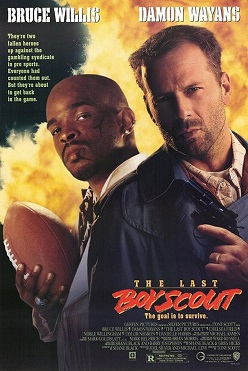
Holiday Film Review: The Last Boy Scout (dir by Tony Scott)


My God, what a violent holiday season!

Like the majority of the films that have been written and/or directed by Shane Black, The Last Boy Scout takes place in December.  It’s not quite as Christmas-y as some of Black’s other films.  I think that I may have spotted a few decorations in the background of some of the scenes.  And there’s a scene where private investigator Joe Hallenbeck (Bruce Willis) discovers that his daughter (played by a very young Danielle Harris) has been drawing pictures of “Satan Claus.”  Otherwise, there’s not a lot of Christmas to be found in this December-set film and perhaps that’s for the best.  Seriously, this movie is violent!  Not even the comedic relief characters are safe from getting a bullet to the head.  This is a film that actually begins with a football player shooting three other players during a game and then saying, “Ain’t life a bitch,” before shooting himself in the head.

The film’s plot isn’t always easy to follow.  Joe is a private investigator who drinks too much and whose partner has just been blown up in front of his house.  (His partner was also sleeping with Joe’s wife so guess who is now a suspect!)  Joe is also hired to act as a bodyguard for a stripper named Cory (Halle Berry).  Cory is dating Jimmy Dix (Damon Wayans), a former quarterback who used to be Joe’s hero.  Then Jimmy got kicked out of the league for gambling and Joe stopped watching football.  Cory says that she has a tape recording that will get Joe back into the NFL.  But then, Cory is brutally gunned down in the middle of the street and the tape is accidentally destroyed by Joe’s crappy tape player.  It’s time for Jimmy and Joe to team up, trade one liners, and uncover the conspiracy.

It all links back to the efforts of football team owner Shelley Marcuse (Noble Willingham) to legalize gambling.  Senator Calvin Baynard (Chelcie Ross) is standing in Marcuse’s way because Marcuse didn’t offer him a big enough bribe.  Marcuse is planning to assassinate the senator and he’s going to frame Joe for the crime because, in an amazing coincidence, Joe used to be a secret service agent until he caught Senator Baynard torturing a sex worker.  Of course, the actual assassination will be carried out by Marcuse’s chief henchman, Milo (Taylor Negron, who is absolutely chilling in the role).  Milo rarely shows emotion and always refers to everyone by their formal name.  (Joe is called Joseph.  Jimmy is called James.)  Milo is also a total sociopath, one who will shoot anyone in the head without a second thought.

Shane Black, who is a genius regardless of what I may think of this particular film, has said that he wrote The Last Boy Scout after he broke up with a longtime girlfriend and he was suffering from depression.  Disillusionment hangs over almost every frame of the movie.  Joe did the right thing and lost his career.  Jimmy lost his family on the same night that he played the best game of his career.  The Senator is opposed to Marcuse’s scheme solely because he’s not getting enough of a cut.  Marcuse is a respected businessman who thinks little of killing strangers.  Jimmy and Joe are heroes not because they’re particularly good but because everyone else around them is just so bad.  This is also very much a movie about guys doing guy things.  I watched it with my brother-in-law and I have to say that I think he got a bit more out of the film than I did.  Then again, I also think my sister Megan also got more out of it than I did so maybe I just wasn’t in the mood to watch so many people get shot in the head.  It happens.

The Last Boy Scout was directed by Tony Scott so, no matter what else you might want to say about it, the movie looks great.  Willis seems a bit bored with the film and Wayans sometimes struggles with the more dramatic moments.  In many ways, the film feels like a precursor to Shane Black’s The New Guys, though Willis and Wayans never have the same chemistry as Russell Crowe and Ryan Gosling did in that underrated film.  However, The Last Boy Scout’s action moves quickly and the screen is always full of neon lights.  It’s a well-made action movie though, unlike Lethal Weapon, Die Hard, and The Nice Guys, it’s not one that really sticks around in your head after the end credits roll.  Personally, I think it needed a little more holiday spirit.

Reacher S1 Ep4 “In a Tree”, (Dir. Christine Moore) Review by Case Wright


I hope that you missed me! I have been knee-deep in differential equations and a back injury, but like Reacher, I’m continuing on- It got picked up! Also, I have been reading the first book and I can confirm that this show is very true to the book. I think that’s why I like it so much- it’s throwback to the mini-series of the 80’s, 90’s, and 00’s- Shogun, North and South, Jesse Stone, and The Stand. These were book adaptions that strove to be true to the source material. Today, we are used to craptacular adaptations like “It” an ok film, but had nothing to do with the source material and openly rejected it.

Reacher episodes, like the mini-series of yore, continue from the moment the last episode ends, but unlike the mini-series of yesteryear they use different directors for each episode. Luckily, they pick old hands at familiar with the action/mystery genre. This episode is directed by Christine Moore – if it’s an action packed mystery show- she has directed it. Period. She can direct the Hell out of a fight scene.

Reacher is rummaging through the assassin vehicle and putting everyone in the truck who he killed. To fit them all in, he breaks their dead legs. YEECH! Keep in mind, this is not just a mystery for Reacher- it’s a revenge story. They killed his brother- his only family and he would kill the whole town if they were all in on it.

They find Joe’s car and there’s a great bit of dark comedy when Reacher jokes to Finley how he killed two more people and they’re in the car a few feet from them. There’s a total understanding that the rules have been broken. Society itself died in Margrave. They are the only law and vengeance is the only punishment, which explains why the backdrop of Iraq is always present. Yes, Reacher has terrible PTSD, but Margrave typifies Iraq after the fall.

After Iraq fell, events happened that should not have. I was not there, but things happened just the same. Society is a mile long and an inch deep. We are always one sustained power blackout from tribal conflict and feudalism. Reacher reveals to Roscoe that he caught three pedophiles abusing local boys. He gave them a choice to turn themselves in or answer to him. They chose Reacher and he executed them. She rapidly gets on board with dumping bodies at the airport parking garage. Wow. COLD BLOODED!

Roscoe and Reacher check into an airport Hotel and get a call from Joe’s former partner, but she doesn’t even give them a hint as to what the investigation is about. She will meet them at the airport, but I got to write that it was WEIRD that she didn’t give a hint about what his brother was investigating. Shortly after the call, the building sexual tension between Roscoe and Reacher releases in a fairly long scene.

Meanwhile, the mayor pulls Finley off of investigating the case and threatens his career. Reacher and Roscoe find the motel where Joe was staying and get his his hidden notes. Reacher and Roscoe get pursued by killers….again. When they are all together to meet Joe’s former partner at the airport, they see her, and then she vanishes. Reacher searches for her and finds her bleeding out. Back to square one.

*Spoilers* Reacher, S1 Ep3, “Spoonful”, Review By Case Wright, (Dir: Stephen Surjik)


We need to create a list of people in this show who don’t want to kill Jack Reacher. I can think of three people… Oscar, Roscoe, and maybe….Jasper. Jasper could snap. How many times can you dig testicles out of a dead man’s stomach before you go homicidal… twice… three times?! Not many more (see below).

Jasper desperately groping for his mental Happy Place.

We learn from BRIEF exposition that Jack’s estranged brother Joe was in the Secret Service and high up boss: Director of special investigations – anti-counterfeiting. Somehow Margrave is involved in counterfeiting?! What’s special about Reacher is that at its heart it’s a Whodunnit. It’s a mystery with so much action, but it’s a mystery show like if Sherlock Holmes traded in his opium for LOTS of freeweights. Jasper identifies the latest murder victim as a trucker who worked for Kliner. This trucker got into a jam and got a high priced lawyer somehow to get him out of it.

They develop a plan: Oscar will search a crooked prison guard’s home and Reacher goes to the lawyer posing as a prospective client. Both end with severe beatings. Oscar gets beaten and arrested by redneck cops who mistake him for a burglar and Reacher just plain beats up the lawyer until he gives up information. Obviously, they are planning on taking this case to court.

The next plan is to confront KIiner at his office. Why? This did not make sense, but it enabled Oscar to show some more emotions. With their hand tipped, EVERYONE has to go into quasi-hiding. This town really sucks. Roscoe has a run-in with the world’s most obvious sociopath- KJ- Kliner’s horrible kid. KJ tries to drive a wedge in Roscoe and Reacher’s relationship by accusing him of being a war criminal. We all hate KJ. Oscar goes to Atlanta to find some intel on Hubble the accountant. Hubble stopped coming to the Atlanta office for work a year ago. What was he doing? Well, money laundering. So…. Ok, I guess Oscar just really wanted to hangout in Atlanta. Yes, there’s a lot going on.

Reacher goes back to crooked prison guard’s bar to find him. He doesn’t, but he does get to beat the Hell out of several people. The crooked prison guard skipped town. Once again, Reacher is tailed by two South American Hitmen who try really really hard to kill him, but Reacher beats them to the punch and shoots them dead. Reacher discovers the crooked prison guard is dead in their trunk. I really need to get a body count on this show; we have to be edging into Total Recall territory.

This is a fun episode and it really forces all the heroes to understand that there will be no arrests. This is the wild west and it’s murder and vengeance every single day.

Reacher, S1 Ep2, “First Dance”, Review by Case Wright (Dir. Sam Hill), Teleplay- Scott Sullivan


The cold opens in this show are awesome; the end of the last episode feeds right into the opening of the following episode. It is literally a long movie. Reacher needs to follow up his next lead with Paul’s wife (Kristen Kreuk) and sneaks around the house and finds a vegetation clue- Really. Reacher is Sherlock Holmes/Shane/Batman. This small clue leads him to where his brother’s killer lied in wait. I know that I’m throwing a lot at you, but you have to understand that this show does not let up- There is no exhaling. You are like Reacher; you can’t stop. Then, he beats A LOT of people who try to mess with him. Why? Just why? Messing with Reacher…. ohhhh… bad idea. Side note: he’s got a soft spot for animals. I can relate to this man… so well, except he’s a bit taller.

The people killing off these Margrave residents are rough; I didn’t know you could mix crucifixion and castration, but here we are. I need a counter-clicker like they have a sporting events to keep track of all of the murders.

The writer and director establish that the town officials are as crooked as a mountain road. The killers see Charlie, Paul’s wife, as a loose end so she has to run her for her life with her children and go into hiding. Venezuelan special forces are trying to kill Reacher…and well everyone who connected to this unknown criminal enterprise.

Side note: Reacher never wears a shirt. I’m assuming it’s because of an allergy fabric sensitivity.

Roscoe is assigned to keep tabs on Reacher and it leads to dancing and partial nudity. I know that reads as contrived, but it did seem to work. There is real chemistry between Reacher and Roscoe. Sam Hill, the director, is not just great setting up tension, but he knows how to pace a story. However, they all seem to be anti-shirt. You see more shirt-wearing at a pool.

The episode ends with Roscoe seeing that her house was raided and she is targeted by the killers as well. Who isn’t marked for death?! How do they even get the mail in this town?

I thoroughly enjoyed this episode. Watch this show!

Reacher shirt allergy sufferer.

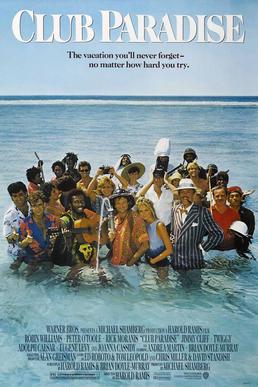
Club Paradise (1986, directed by Harold Ramis)


I think I was nine or ten years old when I first saw Club Paradise on HBO.  I remember thinking it was pretty funny.

I recently rewatched Club Paradise and I discovered that ten year old me had terrible taste in movies.

Robin Williams plays Jack Moniker, a Chicago fireman who gets blown out of a building while rescuing a dog.  Living off of his disability payments, he retires to the island of St. Nicholas, which is basically Jamaica but with less weed.  Jack and reggae musician Ernest Reed (Jimmy Cliff) open up their own Club Med-style resort, Club Paradise.  Jack doesn’t know much about the resort business but he does know how to put together a good brochure.  Almost the entire cast of SCTV shows up at Club Paradise, looking for a tropical vacation.  Things quickly go wrong because Jack doesn’t know how to run a resort and there’s also an evil developer (played by Brian Doyle-Murray) who wants Club Paradise to fail so that he can get the land.

Club Paradise has got a huge and impressive cast, the majority of whom probably signed on because they were looking forward to a paid Caribbean vacation.  Peter O’Toole plays the British-appointed governor of St. Nicholas.  Twiggy plays Jack’s girlfriend.  Joanna Cassidy plays a reporter and Adolph Caesar is cast in the role of St. Nicolas’s corrupt prime minister.  Because the film was directed by Harold Ramis, it is full of Ramis’s co-stars from SCTV.  Andrea Martin tries to get her husband to enjoy the islands as much as she’s enjoying them.  Joe Flaherty is the crazed pilot who flies people to the resort.  Rick Moranis and Eugene Levy play two nerdy friends who are both named Barry and who are only interested in scoring weed, getting laid, and working on their tan.  Rick Moranis and Eugene Levy playing nerds?  It’s a shock, I know.

There’s enough funny people in Club Paradise to ensure that there are a few isolated laughs.  Not surprisingly, the movie comes to life whenever Moranis and Levy are onscreen.  (If I had to guess, I imagine they were the reason why ten year-old me liked this movie so much.)  Needless to say, Jimmy Cliff also provides a killer soundtrack.  But Club Paradise ultimately doesn’t work because the script is too disjointed and it feels more like an uneven collection of skits than an actual film.  It’s impossible to tell whether we’re supposed to think of Club Paradise as being the worst resort ever or if we’re supposed to be worried that the bad guys will shut it down.  For a movie like this, you need a strong central presence to hold things together.  Unfortunately, Robin Williams’s style of comedy is too aggressive for the role of Jack.  The role was originally written for Bill Murray and it shows.  Most of Jack’s lines sound like things you would expect Bill Murray to say in his trademark laid back fashion and it is easy to imagine Murray redeeming some of Club Paradise‘s weaker scenes simply by attitude alone.  Instead, Robin Williams is so frantic that you never buy he could be happy living a laid back life on a Caribbean island.  As played by Williams, Jack often comes across as being unreasonably angry at everyone staying at Club Paradise and it’s hard to care whether or not he manages to save his resort or not.

Club Paradise was a bomb at the box office.  Harry Shearer, who was originally credited with working on the screenplay, hated the movie so much that he requested his name be removed from the credits.  (Instead, credit is given to Edward Roboto.)  As a result of the film’s failure, it would be 7 years before Harold Ramis would get to direct another movie.  Fortunately, that movie was Groundhog Day and this time, Ramis was able to get Bill Murray.

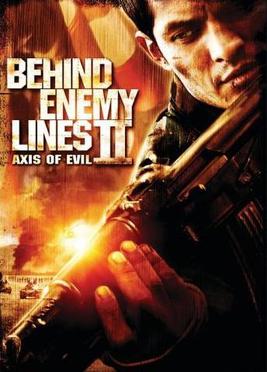
Behind Enemy Lines II: Axis of Evil (2006, directed by James Dodson)


After an intelligence satellite reveals that the North Koreans have built a nuclear missile that can hit anywhere in the world and that they’re currently pointing the missile right at the United States, the President (Peter Coyote) orders a team of Navy SEALs to parachute into North Korea and take out the missile site.  At the last minute, the mission is canceled but two SEALs have already jumped out of the airplane and two more follow because a SEAL leaves no man behind.

While the world sits on the brink of war, the stranded SEALs attempt to reach the missile site and knock it out of commission.  Unfortunately, two of the SEALs get killed by the North Koreans and the two survivors end up getting captured and are forced to undergo extreme torture.  With time running out, the president authorizes a military strike on the missile site, a move that could plunge the world into a nuclear war.  It’s now up to Lt. James (Nicholas Gonzalez) and Master Chief Callaghan (Matt Bushell) to escape from the North Koreans and complete their mission before the stealth bombers show up and do their thing.

Behind Enemy Lines II: Axis of Evil has nothing to do with the previous Behind Enemy Lines film, beyond featuring a Naval officer stranded in enemy territory.  Behind Enemy Lines II: Axis of Evil is one of those films that should be simple and easy to follow but it’s so frantically directed and edited that it’s actually difficult to understand what’s going on from scene to scene.  This isn’t a case where, as in Black Hawk Down, the film is deliberately confusing in order to show what it would be like to be under enemy fire.  Instead, Behind Enemy Lines II feels as if it was edited by someone who was getting paid per jump cut.  It becomes difficult to keep track of who is shooting at who and the overuse of the shaky handheld camera effect didn’t help.  Also, for some reason, there are some fantasy sequences that feel as if they belong in a different movie.

The scenes in Washington D.C., where the President and his advisers debate whether or not to plunge the world into war, are marginally better.  Peter Coyote has the right amount of moral authority to play the president and the great Glenn Morshower (you may remember him as Aaron of the Secret Service on 24) plays the admiral who suggests that maybe it would be a good idea not to hastily destroy the world.  Because this movie was made in 2006, the actress playing the Secretary of State is a dead ringer for Condoleezza Rice.

Behind Enemy Lines II is not a good movie but it made enough money to get a sequel, which I’ll review tomorrow.


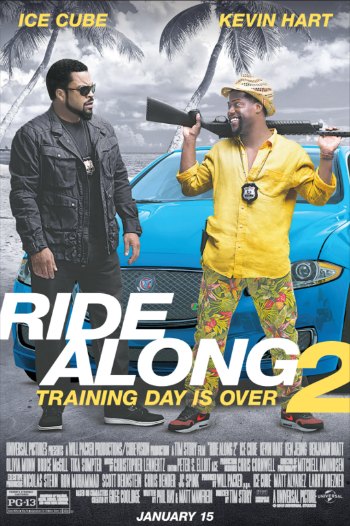
Cleaning Out The DVR Yet Again #22: Ride Along 2 (dir by Tim Story)


(Lisa recently discovered that she only has about 8 hours of space left on her DVR!  It turns out that she’s been recording movies from July and she just hasn’t gotten around to watching and reviewing them yet.  So, once again, Lisa is cleaning out her DVR!  She is going to try to watch and review 52 movies by the end of Sunday, December 4th!  Will she make it?  Keep checking the site to find out!)

ride_along_2_poster

A friend of mine recently posted this on Facebook: “Name your vagina by using the last movie you watched!”  While everyone else was able to answer with “The Nightmare Before Christmas,” “Christmas Vacation,” and “Zombeavers,” I was forced to answer “Ride Along 2,” because I watched it last night.  If only I had held off on watching Ride Along 2, I could have answered Moana.

Oh well…

ANYWAY — I recorded Ride Along 2 off of HBO on November 11th.  The main reason that I recorded it was because, at the time, I was panicking over the fact that the year is nearly over and there’s still a lot of 2016 releases that I haven’t seen.  You know me.  I’m a cinema completist and I like to see everything.  As a result, I’ve been recording every single 2016 movie that I come across on cable, even if the film in question is one that I really didn’t have much interest in actually watching.

Like this one for instance…

Ride Along 2 is the latest entry in the ever-growing Ken Jeong Gets Kidnapped genre of action comedies.  At some point in the future, film historians will wonder why Ken Jeong was always either getting abducted or arrested in violent comedies.  I imagine that they’ll devote most of their time to studying The Hangover films and Community but they’ll still find some time to consider Ride Along 2.

In Ride Along 2, Ken Jeong is abducted by two Atlanta detectives who have come to Miami to investigate his boss, murderous drug lord Antonio Pope (Benjamin Bratt).  The two detectives are James Payton (Ice Cube) and his future brother-in-law, Ben Barber (Kevin Hart).  Of course, it’s really not important that one of them is named Payton or that the other one is named Ben.  Ultimately, they are Ice Cube and Kevin Hart.  Payton is tough and no-nonsense.  Ben is short and outspoken and given to histrionics.  Needless to say, the plot is mostly just an excuse for Kevin Hart to get on Ice Cube’s nerves.

And it’s all pretty predictable.  There’s really nothing in Ride Along 2 that you haven’t already seen in a hundred other action comedies, including the first Ride Along.  So, how much you enjoy this film is going to depend on how much you like Ice Cube, Kevin Hart, and Ken Jeong.  (And I guess it might help if you’re a Benjamin Bratt fan as well.  Are there Benjamin Bratt fans?)  And, I will say this.  Nobody glowers with quite the skill of Ice Cube.  Ken Jeong may play the same role a hundred times but he knows what he’s doing.  And Kevin Hart is actually a good actor, even if his films rarely give him a chance to show the full depth of his ability.

Ride Along 2 is predictable and kinda forgettable.  It didn’t do much for me.  But, at the same time, it’s thoroughly nonpretentious and totally inoffensive.

I still think Moana is a better name, though…