Brad reviews CURLY SUE (1991), starring James Belushi and Kelly Lynch!


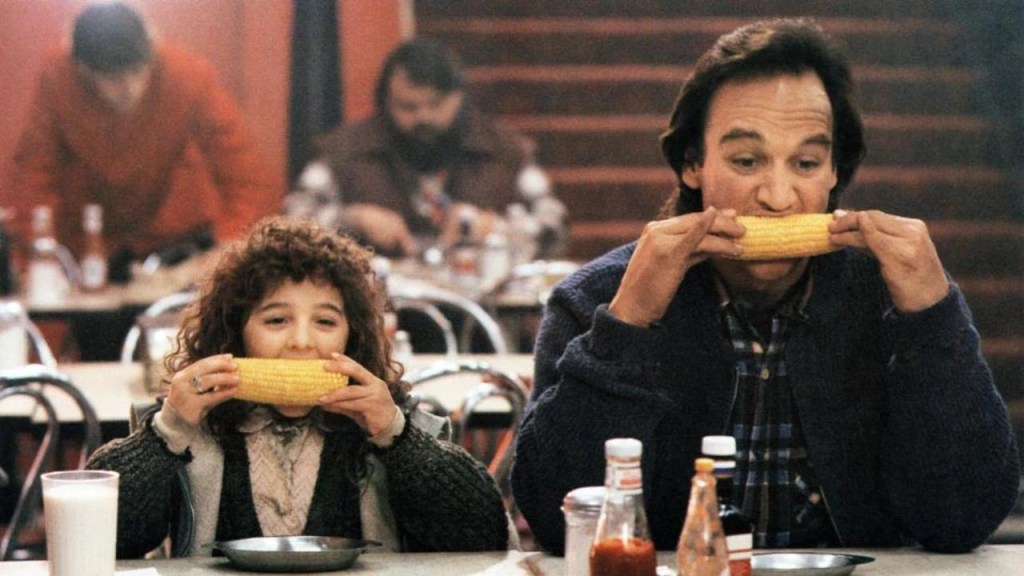
Bill Dancer (James Belushi), a homeless drifter and small-time con artist, and his 9 year old companion Curly Sue (Alisan Porter), survive by running somewhat harmless scams against rich people. While traveling through Chicago they target Grey Ellison (Kelly Lynch), a rich, career-focused divorce attorney, tricking her into thinking that she ran over Bill with her Mercedes. Normally the pair are just after a free meal and maybe a little cash, but Bill doesn’t have the heart to take too much from Grey since she’s so darn pretty. Through a variety of circumstances, she actually does run over Bill the next day. This time she brings him and Curly Sue up to her fancy apartment so he can recover, despite the objections from her snobby boyfriend Walker (John Getz). As the three get to know each other, Grey forms an especially close connection with Curly Sue, and learns that Bill isn’t her actual dad, even though he’s raised her since she was a baby. Knowing that Grey can give Curly Sue a better life than he can, Bill thinks about leaving. But can he ever leave the girl he sees as a daughter? And can Grey discover a compassion for others and the maternal instinct that she’s been missing? 

As is often the case with movies I choose to write about, I had a sense of nostalgic warmth while watching CURLY SUE this morning for the first time in three decades. I saw CURLY SUE at the movie theater with my high school girlfriend in the fall of 1991. I remember enjoying the film and even buying it on VHS as a gift for my mom because I knew she would like it. In the years before she could record her Hallmark movies on her DVR, Mom watched that VHS tape many times. 

Quite different from his classic teen comedies, CURLY SUE, which is the final film directed by John Hughes, can only be described as unapologetically sentimental. Sure the movie is formulaic and pure syrup, but I still enjoy it anyway. This heartwarming fairy tale will make you believe that an unconventional, loving family can emerge from the most unexpected of circumstances. It will suggest that there are some things more important than any amount of money can buy. It will make you laugh out loud at times, and yes, it will even bring a tear to your eye as some of the more emotional scenes play out. CURLY SUE wants to manipulate its audience’s emotions, and it will happen if you just go with it. On the down side, if you catch this film in the wrong kind of mood, or if you’re feeling especially cynical, that magic will disappear and you probably won’t enjoy the movie at all. 

As for the performances, as a fan of James Belushi, I like him as the gruff but likable Bill. I also enjoy Kelly Lynch as the she evolves from a person married to her work to someone who starts to care deeply about the people around her. Probably the most important performance in the film comes from Alisan Porter as Curly Sue. If you don’t find her cute and adorable, then you’ll probably have a hard time watching the movie. I personally found her to be quite precious so that was not a problem for me. Once again, the movie version of early 90’s Chicago as our setting is something I enjoy as well. 

Overall, CURLY SUE is not in the same league as Hughes’ best work like PLANES, TRAINS AND AUTOMOBILES, and there will be many who downright dislike the schmaltzy nature of the film. However, if you’re in a nostalgic mood for an earnest, early ‘90s heart-tugger, this movie might just hit the spot.
Retro Television Review: Baywatch: Panic At Malibu Pier


Welcome to Retro Television Reviews, a feature where we review some of our favorite and least favorite shows of the past!  On Saturdays, I will be reviewing Baywatch, which ran on NBC and then in syndication from 1989 to 2001.  The entire show can be purchased on Tubi.

Today, I start a new series of reviews.  Since I already did Baywatch Nights, it just made sense to go ahead and do Baywatch.  All together, this show ran for 11 and a movie so it should only take 241 weeks to finish up the series….

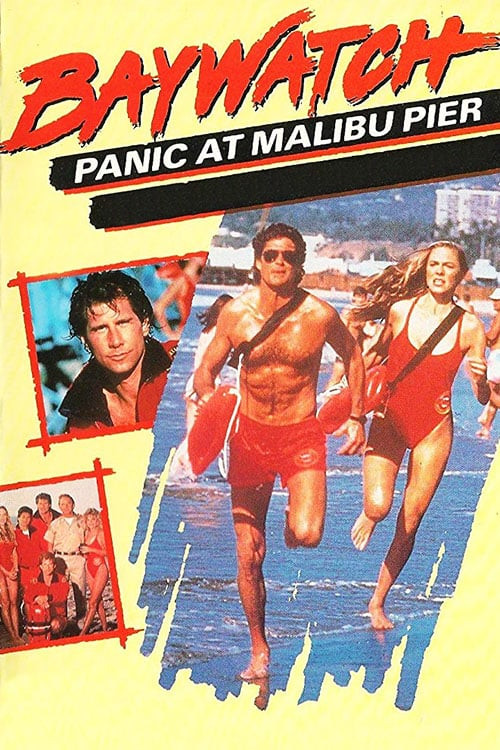
“Baywatch: Panic At Malibu Pier”

(Dir by Richard Compton, originally aired on April 29th, 1989)

It’s not easy being a lifeguard.

That would seem to be the main theme running through Panic at Malibu Pier, the two-hour movie that also served as a pilot for Baywatch.  Consider the drama:

Mitch Buchanan (David Hasselhoff) loves the beach and he loves getting in the water but it’s cost him his marriage and now, his ex-wife (Wendie Malick) is suing for sole custody of their young son, Hobie (Brandon Call).  Hobie doesn’t like going to school.  He doesn’t understand why he can’t just spend all day on the beach like his father.  Mitch, meanwhile, has been promoted to lieutenant of Baywatch and he’s now no longer supposed to do rescues.  He’s just supposed to supervise the other lifeguard.  His boss, Captain Thorpe (Monte Markham), is very insistent on that.  Mitch explains that he doesn’t even like wearing socks.  Ewwww.  You have to wear socks, Mitch!

Eddie Kramer (Billy Warlock) is a rookie lifeguard.  He finished at the top of his class but he’s also a tough kid from Philadelphia who grew up in the foster system.  Shauni (Erika Eleniak) is another rookie lifeguard who freezes up when she has to provide CPR to a drowned girl.  Her mentor, Jill (Shawn Weatherly), tells Shauni that it happens to every lifeguard.  I bet it’s never happened to Mitch.  Shauni seems to have a crush on Eddie and Eddie seems to be driven to prove himself.  Eddie has guts because he wears a Philadelphia t-shirt in California.

Al Gibson (Richard Jaeckel) is the veteran lifeguard who is reaching retirement age and who dies at the end of the episode and gets a big lifeguard funeral on the beach.

Trevor (Peter Phelps) is the Australian lifeguard who calls everyone “mate.”

Finally, Craig Pomeroy (Parker Stevenson) is the attorney who prefers to spend his time in his lifeguard tower.  Even when he should be at the office and working for his clients, Craig just hangs out at his tower.  He saves the life of a disturbed teenager named Laurie (Madchen Amick).  Laurie subsequently becomes obsessed with him.  When the married Craig tells her to stay out of his lifeguard tower and stop taking off all of her clothes, she accuses Craig of assaulting her.  Later, she tries to murder Craig’s wife (Gina Hecht).  This all could have been avoided if Craig had just gone to his office like he was supposed to.

This pilot film for Baywatch has everything that the show would make famous — stiff line deliveries from the supporting cast, red swimsuits, David Hasselhoff’s earnestly goofy sincerity, slow motion, and plenty of musical montages.  Amongst the guest cast, Madchen Amick stands out at the obsessive Laurie, showing an ability for handling melodrama that would be put to good use on Twin Peaks.  Take a drink every time Mitch says, “Rescue can,” and see how long you can go before passing out.  Unlike a lot of pilots that don’t really resemble the eventual show, Panic at Malibu Pier is unmistakably Baywatch.

And, watching it, you can see why the show eventually became a success.  The beach scenery is nice.  The men are athletic, the women are pretty, and the slow motion is cool the first time you see it.  Of course, the most important thing about the pilot — and the show itself — is that it doesn’t require a good deal of attention.  It’s one of those things where you can step away from the screen for a few minutes and then come back without having worry about having missed anything important.

Panic at Malibu Pier was a ratings hit.  Baywatch followed.  We’ll get into that next week.

Commando (1985, directed by Mark L. Lester)


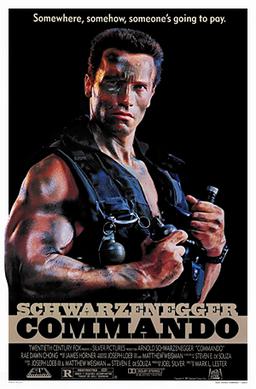
John Matrix (Arnold Schwarzenegger) is a former colonel in the U.S. Amy Special Forces.  He was one of the best at what he did but he’s now retired from all that and lives in the mountains of California with his young daughter, Jenny (Alyssa Milano).  When Capt Bennett (Vernon Wells), Martix’s former comrade-in-arms, kidnaps Jenny, Matrix is told that he has 11 hours to assassinate the leader of the country of Val Verde so that General Arius (Dan Hedaya) can launch a coup.  Knowing that the bad guys are planning on killing both him and Jenny no matter what he does, Matrix instead takes out Arius’s men as he makes his way to where Jenny is being held captive.

Commando is one of my favorite Schwarzenegger films.  It has some of the best one-liners (“I like you, Sully, I kill you last,”), some of the best character actors (Sully is played by David Patrick Kelly), and also one of Schwarzenegger’s best performances.  In Commando, Schwarzenegger shows that he’s willing to poke fun at himself, which was something that set him apart from many of the action heroes of the 80s.  (Stallone eventually learned how to poke fun at himself but it took a very long time.)  At his California home, Matrix chops down and carries a tree without breaking a sweat.  During a chase through a mall, Matrix easily lifts up a phone booth.  Matrix may be trying to save the life of his daughter but he still takes the time to come up with one-liners and fall in love with flight attendant Cindy (Rae Dawn Chong).  Commando is essentially just a big comic book brought to life and Schwarzenegger understands that and gives a very knowing, self-aware performance.  Director Mark Lester wastes no time getting to the action and the result is one of the most entertaining action films of the 80s.

Believe it or not, Commando was originally envisioned as being a Gene Simmons picture.  When the KISS frontman turned down the film, the script was rewritten for Arnold Schwarzenegger.  Schwarzenegger made this film after The Terminator and it was another box office success.  As for Gene Simmons, he would have to wait for Runaway to make his action debut.

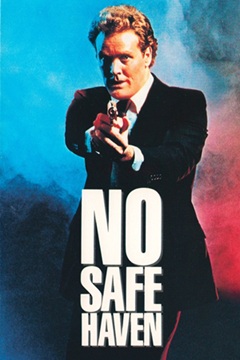
No Safe Haven (1987, directed by Ronnie Rondell Jr.)


A group of drug dealers try to pressure football player Buddy Harris (Tom Campitelli) into throwing the big game.  Buddy fakes an injury to get out of playing so the dealers murder not only Buddy but also his mother and his younger brother.  Big mistake!  Buddy’s older brother, Clete (Wings Hauser), is a CIA agent who is working as a listener in Honduras.  Clete returns home and, with the help of an arms dealer (Robert Tessier, playing a good guy for change), Clete hunts down and kills everyone who killed his family.  Clete not only gets revenge for his family but he also heads down to Bolivia to show the syndicate that, for them, there is no safe haven!

This is one of the ultimate Wings Hauser films, one that he both wrote and starred in.  When Clete seeks revenge, he doesn’t mess around.  One gunman gets set on fire while standing on his balcony.  (He can either burn to death on the balcony or he can jump to a quicker death below.  Either way, Clete’s going to take a lot of pictures)  Wings chases the villains down with speedboats and helicopters and he does it all with a slight smirk that suggests he’s not only getting revenge but he’s also having the time of his life.  This is Wings Hauser at his most demented and he’s playing the hero!  Luckily, the villains are even crazier than Wings.  I have to make a special mention of Branscombe Richmond, laughing and yelling and killing in a way that you would never expect if you only knew him from Renegade.

This is Wings Hauser at his best, in a movie that’s mean, violent, and never less than compelling.  Clete kills a lot of people but it’s okay because, to quote True Lies, they were all bad.  Wings throws himself into the role with his trademark intensity and shows why no one’s safe from Clete Harris.  I’m going to miss Wings Hauser.  Only he could have played Clete Harris.  Only he could have made No Safe Haven the B-action classic of 1987.

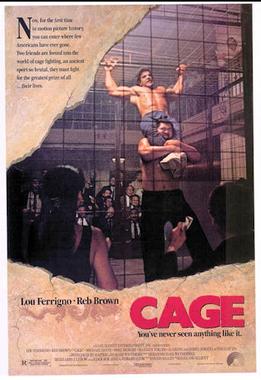
Cage (1989, directed by Lang Elliott)


As with so many stories, it all starts with Vietnam.

In 1969, soldier Billy Thomas (Lou Ferrigno) heroically saves the life of his captain, Scott Monroe (Reb Brown).  Unfortunately, while their helicopter is taking off, Billy takes a bullet to the head.  While he survives the wound, he is left with the mind of a child.  Scott dedicates his life to taking care of Billy and, after the war, they open a bar together.  However, mobster Tony Baccola (Michael Dante) feels that Billy would be the perfect contestant for a series of fight-to-death cage matches that have been set up by Chinese gangster Tin Lum Yin (James Shigeta).  In desperate need of money, Tony kidnaps Billy and forces him to fight, telling him that it’s what Scott needs him to do.  Billy doesn’t want to fight and, when he first enters the cage, he says, “Hi, how are you?” and tries to shake his opponent’s hand.  But when his opponents try to hit Billy, he has no choice but to defend himself.  It’s up to Scott to rescue his friend.

The plot of this movie is pretty dumb but I’m not embarrassed to say that the film itself won me over.  The fights were decent but the main reason why the movie works is because of Lou Ferrigno and Reb Brown, who made their friendship and their bond feel very real.  Ferrigno was especially good in this film.  How can you not root for a guy who just wants to be everyone’s friend and who, even after his twelfth cage match, still gets upset over having to hit people?

A pure B-movie all the way, Cage also features familiar faces like Branscombe Richmond, Al Leong, and Danny Trejo.  Most of the critics may not have liked it but Ferrigno has described Cage as being his his favorite film performance and I agree.

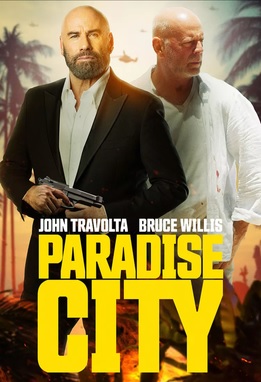
Film Review: Paradise City (dir by Chuck Russell)


Ian Swan (Bruce Willis) is a famed bounty hunter who has spent the last ten years of his life pursuing an escaped fugitive who is wanted for the cold-blooded murder of four FBI men.  Swan has tracked his prey to Hawaii but, when he’s shot and falls into the ocean, Swan is presumed dead.  Swan’s long-estranged son, Ryan (Blake Jenner), comes to Hawaii to try to track down the man who killed his father.  He meets up with Ian’s former partner, Robbie Cole (Stephen Dorff), and also the only cop on the island who cares about justice, Savannah (Praya Lundberg).  Reluctantly, Cole works with Ryan and discovers that Ian’s shooting is somehow connected to a shady businessman named Arlene Buckley (John Travolta).  A real estate developer, Buckley is working hard to elect a man named Kane (Branscombe Richmond) to the U.S. Senate.  Buckley’s plan also involves taking control of a part of the Island that the natives call Paradise City.  Got all that?

2022’s Paradise City has been advertised as being a John Travolta/Bruce Willis film but make no mistake.  Neither Travolta nor Willis get much screen time, though they both make an impression in the limited time that they do have.  Stephen Dorff manages to steal every scene in which he appears, playing Robbie as a well-meaning guy who can’t help but be kind of a screw-up.  That said, Dorff really isn’t in that much of the film either.  Instead, the main star of the film is Blake Jenner.  Jenner has the blandly affable screen presence of a low-key frat boy.  That worked for him when he was in films like Richard Linklater’s Everybody Wants Some!! but it’s not exactly ideal for an action star.  Whereas the best action stars feel as if they’re always ready for a fight, Jenner comes across as the guy who would be trusted to order the keg for the next party.

Instead of taking charge of the screen, Jenner finds himself overshadowed by the gorgeous Hawaiian scenery.  Hawaii is the true star of Paradise City and, even when the film itself doesn’t make a whole lot of sense, Hawaii itself is always amazing to look at.  In many ways, Paradise City feels like an extra-violent episode of Baywatch Hawaii.  (The film’s Baywatch aesthetic is confirmed when Savannah wears a bikini to a crime scene.)  Just as with that show, the beaches and the jungles and the waterfalls and the oceans are all so stunning that it’s tempting to give the film a pass on the fact that the plot never makes much sense and any genuine emotional stakes are pretty much non-existent.

Unfortunately, it’s impossible to ignore the plot because, for a low-budget B-movie, Paradise City takes itself way too seriously.  It’s one thing for Ryan to be estranged from his father.  It’s another thing for the film to feature flashbacks to Ryan’s childhood, in which we discover firsthand that Ian never understood Ryan.  It’s also one thing to make Buckley a family man.  It’s another thing try to create a clumsy parallel between the way that Buckley is raising his son and the way that Ian raised Ryan.  As opposed to films like Gasoline Alley or the Detective Knight films, Paradise City seems to be trying too hard to be something that it isn’t.  Instead of just embracing its pulpy style and trying to entertain, the film is determined to tug at the audience’s heartstrings and make a statement about evil land developers.  The film forgets that, sometimes, just being entertaining is the best thing that a film can be.

This was one of the last films that Bruce Willis made before it was announced that he would be retiring from acting.  Watching the film, it’s easy to tell that a stand-in was used for most of Willis’s action scenes.  When Willis delivers the majority of his lines, it’s hard not to miss the wiseguy energy that used to be his trademark.  That said, when Willis is acting opposite Travolta and Dorff, he shows a bit of his old spark.  The two scenes in which he confronts John Travolta are the best in the film.  For a few minutes, he seems like the Bruce Willis who we all remember and it’s hard not to get a bit emotional watching two talented (if often underappreciated) actors acting opposite each other for what will probably be the last time.

Paradise City is not a particularly memorable film and the overly complicated plot is next to impossible to follow but I am happy that the cast and the crew got to hang out in Hawaii for a bit.  It’s a lovely place to visit.

Cinemax Friday: Hard Vice (1994, directed by Joey Travolta)


Who doesn’t love some Hard Vice?

Someone’s killing businessman in Las Vegas and it’s up to the vice squad to figure out who.  Captain Bronski (James Gammon) knows that his cops are going to need some help so he brings in a detective named Joe (Sam J. Jones).  Joe is a tough-talking, hard-drinking modern day cowboy who even owns a hat.  He doesn’t think that women should be investigating major crimes and that brings him into conflict with his new partners, especially Andrea (Shannon Tweed).

Despite not being happy about having to work together, Joe and Andrea put aside their differences long enough to investigate the murders and fall in love.  They discover that all of the men used the same escort service.  Could the murderer be a pimp named Tony (Branscombe Richmond, who played Bobby Sixkiller on Renegade) or could it be a renegade prostitute (played by Rebecca FerattI) who is called Christy in the movie but who is listed as being named Allison in the end credits?  Or could it be someone closer to the vice squad?

Hard Vice is a typical late night Cinemax crime movie, heavy on the neon and the synthesized music but light on unexpected plot twists.  There are still a few things about the movie that set it apart from other movies of the era.  First off, this movie features a man armed only with a handgun managing to blow up a helicopter.  Secondly, even though the film is set in the 90s, the vice squad is stuck using bulky computers from the 80s and the scene where they use the computer to look up information on the victims has to be seen to be believed.  Finally, any movie that brings Shannon Tweed and Rebecca Feratti together is worthy of a little appreciation.  Toss in Sam J. Jones and James Gammon sounding like he’s been smoking six packs of cigarettes a day and you’ve got a film that’s almost worth watching.

Hard Vice was directed by Joey Travolta, who is best known for being John’s younger brother.  This was the first film he ever directed and, checking with the imdb, I was surprised to discover that he’s directed a lot more since.  Joey’s direction in Hard Vice isn’t that bad, though Las Vegas is one of those cities where it’s probably impossible not to come up with an interesting shot or two if you’re filming there.  Travolta tosses in a few flash forwards to make sure that we know we’re watching a real film and not just your run-of-the-mill neo-noir.  They don’t add much to the plot but when you’re trying to establish your auteur credentials, I guess you do what you have to do.

A Movie A Day #33: Two-Minute Warning (1976, directed by Larry Peerce)


mpw-8771

For the longest time, I thought that Two-Minute Warning was a movie about a gang of art thieves who attempt to pull off a heist by hiring a sniper to shoot at empty seats at the Super Bowl.  As planned by a master criminal known as The Professor (Rossano Brazzi), the sniper will cause a riot and the police will be too busy trying to restore order to notice the robbery being committed at an art gallery that happens to be right next to the stadium.

I believed that because that was the version of Two-Minute Warning that would sometimes show up on television.  Whenever I saw the movie, I always through it was a strange plan, one that had too many obvious flaws for any halfway competent criminal mastermind to ignore them.  What if the sniper was captured before he got a chance to start shooting?  What if a riot didn’t break out?  The sniper spent the movie aiming at empty seats but, considering how many people were in the stadium, it was likely that he would accidentally shoot someone.  Were the paintings really worth the risk of a murder charge?

Even stranger was that Two-Minute Warning was not only a heist film but it was also a 1970s disaster film.  Spread out throughout the stadium were familiar character actors like Jack Klugman, John Cassevetes, David Janssen, Martin Balsam, Gena Rowlands, Walter Pidgeon, and Beau Bridges.  It seemed strange that, once the shots were fired and Brazzi’s men broke into the gallery, all of those familiar faces vanished.  When it comes to disaster movies, it is an ironclad rule that at least one B-list celebrity has to die.  It seemed strange that Two-Minute Warning, with all those characters, would feature a sniper shooting at only empty seats.  For that matter, why would there be empty seats at the Super Bowl?

That wasn’t the strangest thing about Two-Minute Warning, though.  The strangest thing was that Charlton Heston was in the film, playing a police captain.  In most of his scenes, he had dark hair.  But, in the scenes in which he talked about the art gallery, Heston’s hair was suddenly light brown.

Recently, I watched Two-Minute Warning on DVD and I was shocked to discover that the movie on the DVD had very little in common with the movie that I had seen on TV.  For instance, the television version started with the crooks discussing their plan to rob the gallery.  The DVD version opened with the sniper shooting at a couple in the park.  In the DVD version, there was no art heist.   The sniper had no motive and no personality.  He was just a random nut who opened fire on the Super Bowl.  And,  in the DVD version, he did not shoot at empty seats.  Several of the characters who survived in the version that I saw on TV did not survive in the version that I saw on DVD.

What happened?

The theatrical version of Two-Minute Warning was exactly what I saw on the DVD.  A nameless sniper opens fire and kills several people at the Super Bowl.  In 1978, when NBC purchased the television broadcast rights for Two-Minute Warning, they worried that it was too violent and too disturbing.  There was concern that, if the film was broadcast as it originally was, people would actually think there was a risk of some nut with a gun opening fire at a crowded event.  (In 1978, that was apparently considered to be implausible.)  So, 40 minutes of new footage was shot.  Charlton Heston even returned to film three new scenes, which explains his changing hair color.  The new version of Two-Minute Warning not only gave the sniper a motive (albeit one that did not make much sense) but it also took out all of the violent death scenes.

Having seen both versions of Two-Minute Warning, neither one is very good, though the theatrical version is at least more suspenseful than the television version.  (It turns out that it was better to give the sniper no motive than to saddle him with a completely implausible one.)  But, even in the theatrical version, the potential victims are too one-dimensional to really care about.  Ultimately, the most interesting thing about Two-Minute Warning is that, at one time, an art heist was considered more plausible than a mass shooting.

tmw

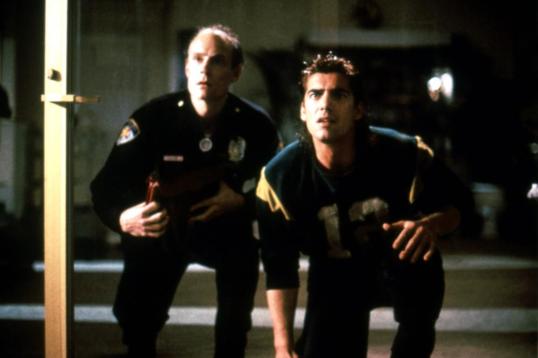
A Movie A Day #26: The Taking of Beverly Hills (1991, directed by Sidney J. Furie)


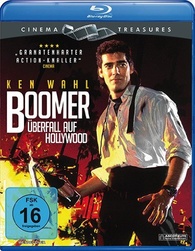
After a toxic chemical spill, Beverly Hills is evacuated.  While its citizens wait in a hotel, their mansions and valuables are guarded by the police and agents of the EPA.  Or so they think.  It turns out that the chemical spill was faked and that both the police and the government agents are in on it.  While the town’s deserted, they’re going to rob everyone blind.  The scheme’s mastermind is Bat Masterson (Robert Davi), the owner of L.A. Rams.  What Masterson doesn’t realize is that one citizen of Beverly Hills stayed behind, his own quarterback, Boomer Hayes (Ken Wahl).  Teaming up with Ed Kelvin (Matt Frewer), the last honest cop in town, Boomer sets out to protect Beverly Hills.

It’s just a dumb as it sounds.  In fact, of the many Die Hard ripoffs that came out in the late 80s and the early 90s, The Taking of Beverly Hills is probably the dumbest, which also makes it one of the most entertaining.  Boomer, who has an impressive mullet, can only speak in football analogies, constantly assuring Ed that it’s only the first down and that they can turn things around after halftime.  When Boomer gets serious, he says, “It’s time to play offense.”  One of the stranger things about The Taking of Beverly Hills is that, unlike working class hero John McClane, Boomer is not an outsider.  He’s in Beverly Hills because he’s rich.  The Taking of Beverly Hills is basically about one rich guy trying to keep another rich guy from robbing a bunch of other rich people.  It’s Die Hard if Hart Bochner had been the hero instead of Bruce Willis.

Keep an eye out for Lee Ving, lead singer of Fear, playing one of the corrupt cops and an uncredited Pamela Anderson cast as a cheerleader.  And keep your ears open for songs like Epic by Faith No More because their presence on the soundtrack (and the associated rights issue) is the reason was this stupidly entertaining movie will probably never get a DVD/Blu-ray release in the United States.

It has been released in Germany, where it was retitled Boomer after the lead character.

It has been released in Germany, where it was retitled Boomer after the lead character.