Brad reviews SMOKE SIGNALS (1998), starring Adam Beach!


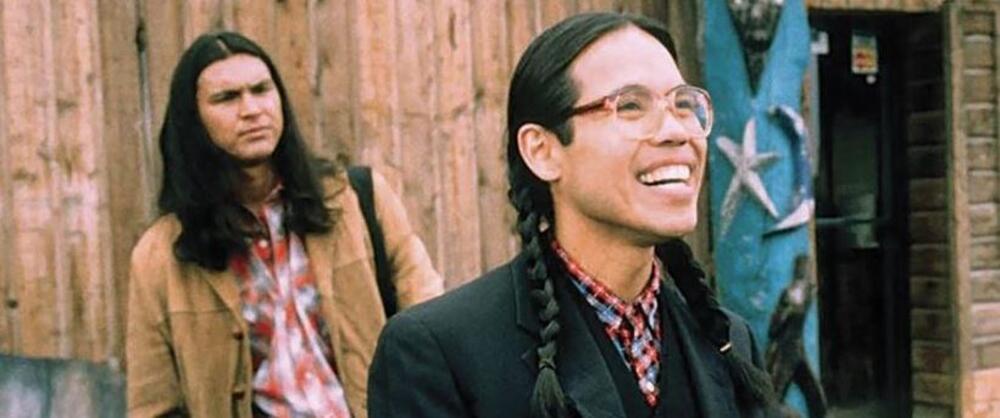
There’s a scene early in SMOKE SIGNALS where Victor Joseph, played by Adam Beach, tries to teach Thomas Builds-the-Fire (Evan Adams) how to be a real Indian. He ends the scene with “This ain’t Dances-with-Salmon you know?!” It’s a funny exchange, but it also clues the audience in on the fact that this isn’t going to be your typical Hollywood movie about Indians. Directed by Chris Eyre and written by Sherman Alexie, it’s the first feature-length film written, directed, and produced by Native Americans to reach a wide audience both in the United States and beyond. As such, we get a story that feels fresh while tackling a variety of difficult subjects with humor and optimism.

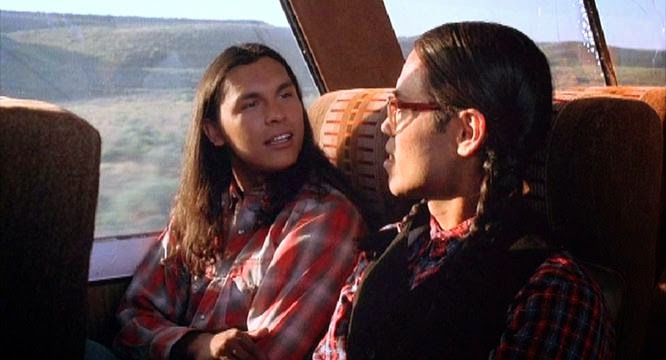
The story focuses on Victor as he travels from the Coeur d’Alene Indian Reservation in Idaho to Phoenix, Arizona to retrieve his father’s possessions after learning that he’s passed away. His father abandoned him and his mother when he was just a boy, and he’s clearly been scarred by the situation. Along for the ride, mainly because he can afford to pay their bus fare, is Thomas Builds-the-Fire, his nerdy and talkative friend. From this point, the film becomes a road trip, and we follow along as they make it to Arizona and back. While there is funny stuff along the way, the movie is mostly interested in observing Victor as he comes to terms with the trauma and pain left behind when his dad went away.

I’ve always liked Adam Beach, and he’s very good here as Victor. His character spends a lot of the movie angry at the world, but from time to time, he’ll flash this big, wonderful smile. It’s a nice inside-out performance as he seems to be simmering on the inside and just trying not to explode. And then there’s Evan Adams, whose Thomas is awkward and optimistic, and who loves to tell big stories about Victor’s dad. For example, they have this awesome exchange where Thomas tells Victor that his dad looks like Charles Bronson. As Bronson’s biggest fan, I can tell you that Victor’s dad, played by Gary Farmer, looks nothing like Charles Bronson. The scene has a nice punchline as Thomas tells him that he doesn’t mean the Charles Bronson from the first DEATH WISH, but more like the Charles Bronson of DEATH WISH 5! The movie has several unexpected scenes like this, and the genuine chemistry between these two guys is what makes the movie work for me. I believe it when their characters begin to understand and appreciate each other, and it’s their emotional connection that gives the film some staying power even after the credits roll.
There are some additional performances that I enjoyed. I mentioned Gary Farmer, who plays Victor’s dad. His Arnold Joseph is not the most sympathetic character in the world, as he chooses to run away from a guilt that he can never deal with. Somehow, by the end, we have some understanding of his actions. And then there’s Irene Bedard as Suzy Song, the young lady who befriends Victor’s dad and calls his mom when he passes away. Best known for being the voice of Pocahontas in the Disney animated classic, she conveys kindness and compassion in her relatively small role. Tantoo Cardinal is good as Victor’s mom, and Tom Skerritt even shows up in a cameo as a police chief in Arizona. Sherman Alexie’s screenplay, based on his book “The Lone Ranger and Tonto Fistfight in Heaven,” is simple, yet full of depth, and it’s brought to life by an excellent cast.        

Even though SMOKE SIGNALS was made almost thirty years ago, it’s still a very relevant film to this day. It’s funny, it tackles difficult subjects that are universal to all of us, and it’s told from a Native American perspective that we seldom see. In other words, it feels like we’re dealing with real people, not the romantic caricatures or noble victims that Hollywood still tries to push on us in movies about Indians. It’s not a flashy film in any way, and that’s okay. It’s one of those movies that understands its characters and trusts the audience enough to just hang out and observe them. Anchored by an excellent performance from Adam Beach, it’s a perfect example of how movies can be a lot better when Hollywood gets out of the way and let’s genuine, talented people tell their stories.  

I watched SMOKE SIGNALS on the Paramount Plus streaming service.
Brad reviews COLD WAR II (2016), with Chow Yun-Fat, Aaron Kwok & Tony Leung Ka-fai!


As soon as I finished watching COLD WAR (2012), I went to the fridge, grabbed myself a refreshing beverage and immediately started up COLD WAR II (2016). The original film ends on a cliffhanger, so I was excited to see what happens next!

COLD WAR II opens right after the events of the first film, resolves its pressing cliffhanger in the first 20 minutes, and then doubles down on the intrigue and political power plays that defined the original. I don’t want to give away too much of the plot, so as not to take away some of the fun surprises. I will say that most sequels go bigger by doubling body counts or explosions, but in this film the conspiracies just get a lot deeper, and the political manipulations start reaching for much broader power. I still found the situations to be interesting thanks to the intense atmosphere of the film and the strong performances of the cast.   

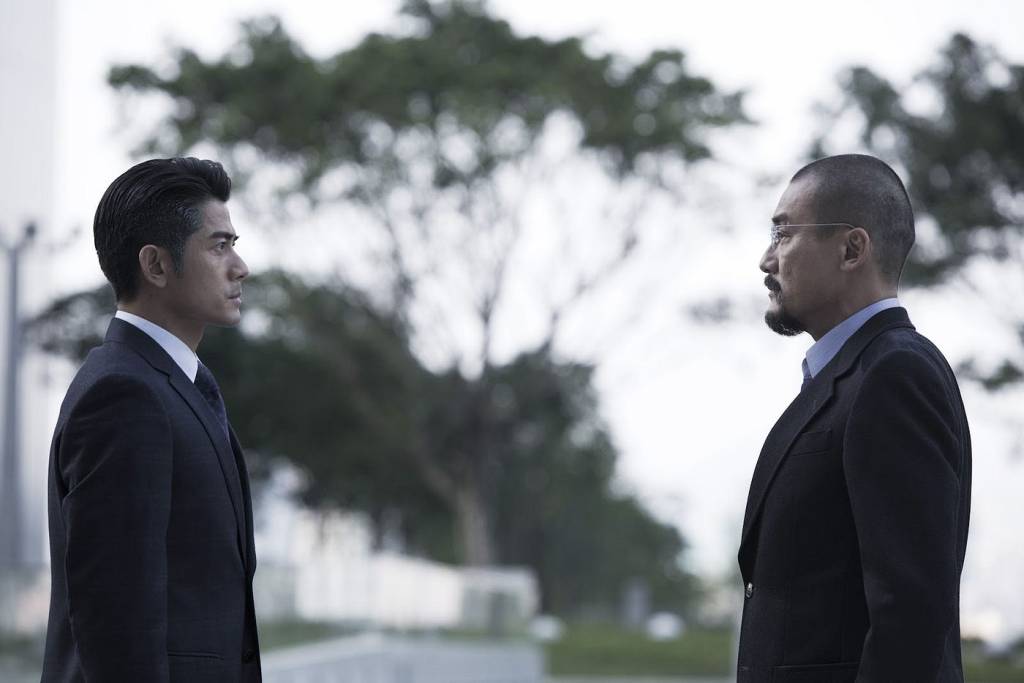
In the roles of Sean Lau and M.B. Lee, Aaron Kwok and Tony Leung Ka-fai continue to excel, but circumstances quickly erode some of the goodwill that was created between their characters at the end of the first film. This temporarily creates the risk that this follow-up could end up feeling like a retread of their heated rivalry in part 1. Higher, even more personal stakes helped alleviate some of that concern.

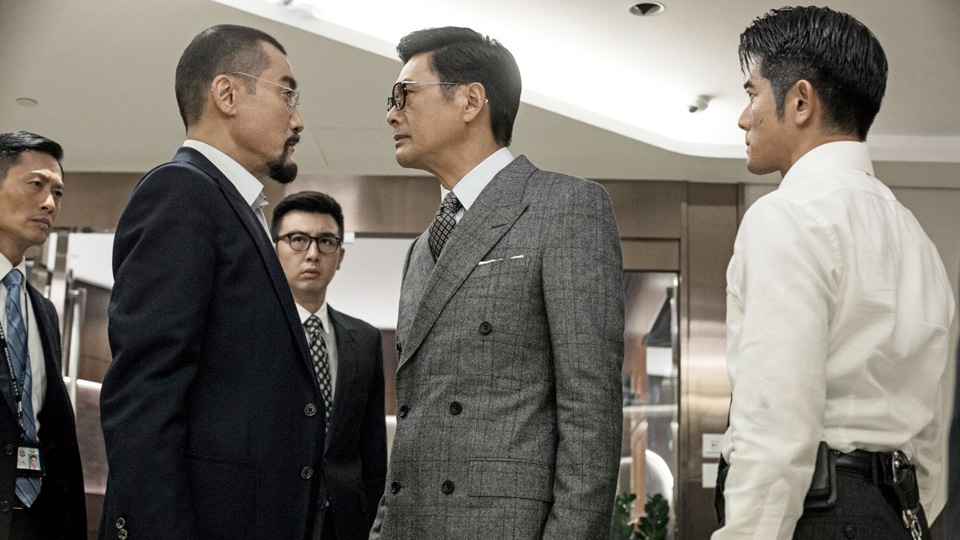
The best thing that happens for COLD WAR II is the addition of Chow Yun-fat to the cast in the important supporting role of Oswald Kan. Kan is a former judge and brilliant legal mind who leads a special committee investigating the fallout from the events of the first film. The middle section of the film features a series of scenes with Chow in intense confrontations with both Tony Leung and Aaron Kwok. It’s especially fun seeing Chow mix it up with Tony as their careers go way back to working with each other in classics like PRISON ON FIRE (1987) and A BETTER TOMORROW III (1989). These scenes freshen up the material, but they also connect us emotionally to Hong Kong cinema of the golden years through one of its biggest, most honorable stars. Chow gives the film a moral center as Oswald Kan seems free from the ethical compromises that our other main characters are having to make. It’s an impressive and charismatic turn from Hong Kong’s all-time greatest leading man.

Just as in the first film, there aren’t a lot of action scenes, but the ones we have are bigger and even more impressive. There’s an action sequence in a tunnel about an hour into the film that blew me away with its execution and intensity. Its resolution also surprised me, which is not always easy to do. Still, this incredible scene serves the plot well, providing clear and obvious motivation for the actions of each of the main characters throughout the remainder of the film.

COLD WAR II follows the motto of most sequels to box office smashes… “Go big or go home!” While the plot becomes even more complicated this time around, the continued excellence in the performances, especially with the addition of Chow Yun-Fat, helps to provide the solid emotional payoffs needed to keep the series moving forward. With the excellent action set pieces also adding to the fun, the filmmakers have managed to create a sequel that I rate just as high as the original. Now, bring on COLD WAR 1994!

COLD WAR II is currently streaming on Amazon Prime, Tubi, PlutoTV, Plex, and the Roku Channel!

Brad reviews COLD WAR (2012), starring Aaron Kwok & Tony Leung Ka-fai!


As I continue revisiting various movies that feature Chow Yun-Fat during his birthday month of May, I decided I would revisit his work in the COLD WAR franchise, specifically COLD WAR II from 2016. The problem is that I hadn’t watched COLD WAR (2012) since it was released on Blu ray well over a decade ago, so I couldn’t remember much about it. And when you consider that another sequel, COLD WAR 1994 (2026), was released to boffo box office in China just last week, now seemed like a perfect time for another viewing of the original.

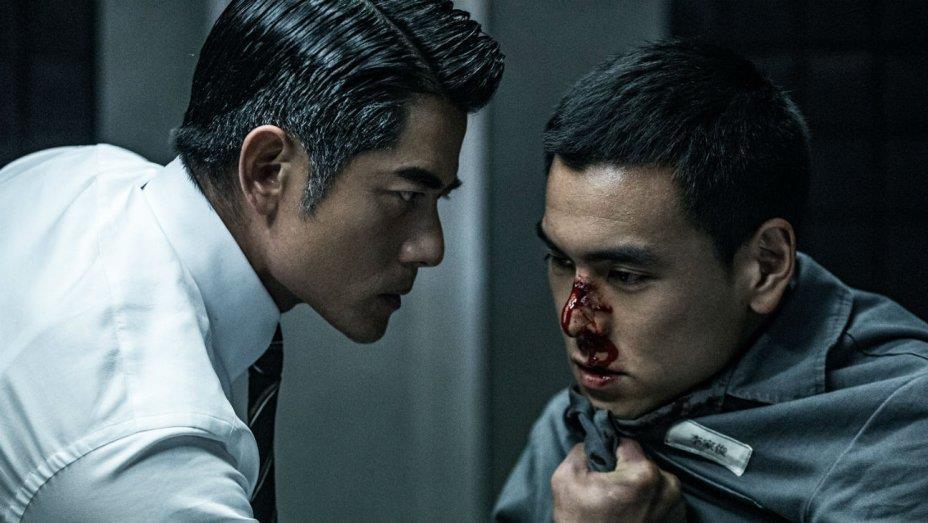
Set in Hong Kong, Asia’s “safest big city,” COLD WAR begins with the disappearance of a police emergency response van, as well as all five officers on board. We soon meet deputy commissioners Sean Lau (Aaron Kwok) and M.B. Lee (Tony Leung Ka-fai) who have vastly different ideas of how the situation should be handled. Lau wants to take a calm, measured, and analytical approach that prioritizes public safety, while Lee wants to take a bulldozer to the city and stop at nothing to find the officers and punish those responsible. Admittedly, Lee’s motivation is clouded by the fact that his only son Joe (Eddie Peng) is one of the missing officers. This setup kicks off a battle between dedicated cops, ambitious politicians, and motivated terrorists in a world where saying the wrong thing could cost you your career. Depending on which side you’re on, it could even cost you your life.

Aaron Kwok and Tony Leung Ka-fai are excellent as the rival deputy commissioners trying to manage the crisis while also outmaneuvering each other. Kwok plays the colder and more procedural Sean Lau, who sparingly shows the cracks in his armor. It’s a nicely controlled performance by Kwok, making the scenes where we see his humanity that much stronger. Leung’s M.B. Lee is more old-school, driven by instincts and results. His intense performance provides life to the film, and he was rewarded for his work with that year’s Hong Kong Film Award for Best Actor.

The primary intrigue of the film is provided by the tense meetings and phone calls between these men and their teams, as well as the political fallout of those standoffs. It’s strange for a Hong Kong crime film, but the actual retrieval of the missing cops comes across as secondary, and it still works. First time directors Sunny Luk and Longman Leung really like their dialogue scenes and trust the audience enough to let these moments carry the suspense for large chunks of time. Imagine that happening in a Hollywood action film?!!

Even with all the dialogue and posturing, the action scenes in COLD WAR are exciting when they do come. There’s a freeway shootout where we get to see that agent Lau has some incredible shooting and survival skills to go along with stoic demeanor. The final action sequences hit hard, featuring a step up in the graphic violence in comparison to what we’d seen up to that point in the film. The players and the stakes had been firmly established, so when violence does erupt, I was invested in its outcome, whether it be good or bad.

COLD WAR gets an easy recommendation from me. I thought it was well acted and well directed, with enough meaningful action to remind me why I like Hong Kong movies in the first place. It was also fun to see so many familiar faces in important roles, including cameos from the likes of Andy Lau and Michael Wong. A word of warning though, you will need to pay attention to the film if you want to enjoy it. So much of the fun comes from the tension created by the situations and the dialogue, so this is not a viewing experience designed to co-exist with a lot of other distractions.

Brad reviews CITY ON FIRE (1987), starring Chow Yun-Fat, and directed by Ringo Lam!


Ringo Lam’s CITY ON FIRE is one of the first movies starring Chow Yun-Fat that I really wanted to see after I had made my way through the John Woo films. Chow worked with Ringo on a total of 5 films from 1987 – 1992, and they’re a gold mine. I have previously reviewed PRISON ON FIRE and FULL CONTACT, so I decided now was a good time to take a fresh look at this one.  

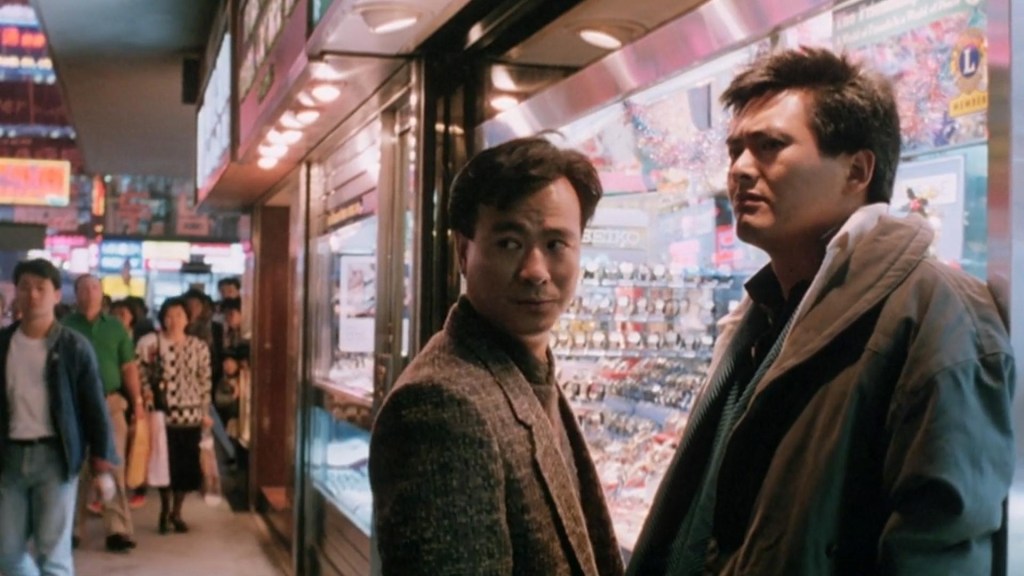
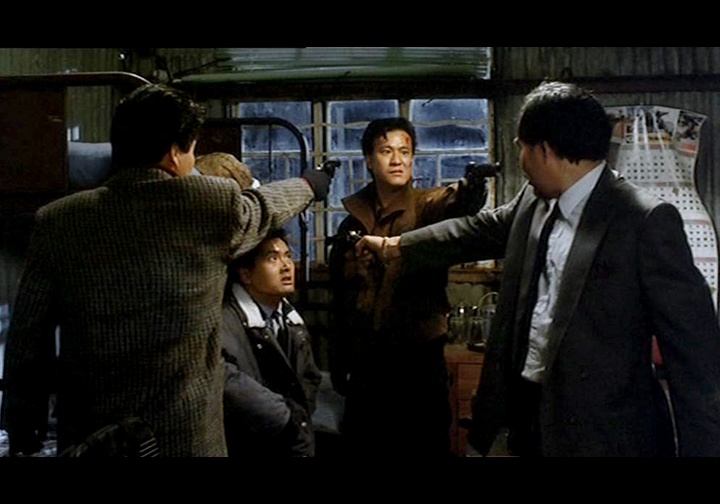
Opening with an awesomely 80’s, neon-drenched saxophone solo from Teddy Robin Kwan, CITY ON FIRE tells the story of undercover cop Ko Chow (Chow Yun-Fat). He’s practically forced by his handler on the force, Inspector Lau (Sun Yueh), to infiltrate a violent gang of jewel thieves. The problem is that he has a history of getting in way too deep, so deep that he forgets where the job ends and his real life begins. It happens again when he’s able to get close to the leader of the thieves, Fu, played by his KILLER co-star, Danny Lee. When the gang hits a jewelry store with Chow in tow, and with the cops on their trail, everything goes to hell. Some store employees are killed, some gang members are taken out, and Chow even takes one in the gut. As the survivors meet back up at the warehouse, it becomes clear that there’s a mole in their midst, even though not everyone wants to admit it.

Does that premise sound familiar to you? If you’re a big fan of Quentin Tarantino and RESERVOIR DOGS, you can’t help but recognize how strongly his film was influenced by CITY ON FIRE. The influence is clear, especially in the broad strokes of the plotline and at the famous finale, but these are two very different crime films in execution, and they’re both excellent in their own ways.

In the late 80’s, some of the best action and crime films in the world were being made in Hong Kong. So many of the films had a reckless energy, which seems to be especially evident in director Lam’s works. In contrast to John Woo’s stylish action scenes, Lam’s scenes aren’t polished. They’re more grounded, they’re chaotic, and they’re not “cool” at all. For example, the film opens with an undercover named Chan Kam-Wah (Elvis Tsui) being called out and murdered in the middle of a busy market. Stabbed multiple times with a big butcher knife while desperately fighting for his life, the scene plays out in a realistic, clumsy, and very bloody way. In other words, it’s painful to watch without a slow-mo tracking shot in sight. We know immediately that no one is safe, and there’s a palpable tension as the undercover cop / criminal drama plays out that really works for the film.

Chow Yun-fat is fantastic, with his performance winning him his 2nd consecutive Hong Kong Film Award for Best Actor. He’s not the impossibly cool heroic bloodshed hero of the prior year’s A BETTER TOMORROW. Rather, while he’s charming in certain early scenes with his girlfriend Hung (Carrie Ng), when he starts his new assignment, you can see that he’s completely exhausted with his life as an undercover cop, a life that seems to have broken him emotionally. You can almost feel an impending doom with his character that lingers over the film, turning it into something different than your average cops and robbers story. In the other major lead of the film, Danny Lee is so good as the leader of the gang of jewel thieves, Fu. He’s very professional, and once he’s accepted Chow into their ranks, he’s very friendly and personable to him. In these moments, you can see how the two men could bond. But Fu’s also shown that he will kill anyone who gets in his way, so you know it’s inevitable that the two will collide head-on at the end. When it comes, it hits hard.

I highly recommend CITY ON FIRE to any person who enjoys gritty crime films. The action is brutal, the lead performances are excellent, and the drama of the story will leave you emotionally drained as the end credits roll. I can see why it would have had a major impact on a lover of Hong Kong cinema like a young Tarantino!

CITY ON FIRE is currently streaming on Prime Video, PlutoTV, Tubi, and Plex.

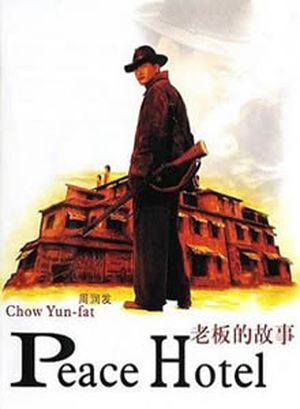
Brad reviews PEACE HOTEL (1995), starring Chow Yun-Fat!


Just like November is Charles Bronson month in my house, May is Chow Yun-Fat month. My favorite living actor, Chow made so many good movies during his Hong Kong heyday, he made a few good movies here in America, and he’s still working to this day! This year I plan on revisiting some of his lesser known films and sharing my thoughts on them with you. I don’t know how many reviews I’ll have time to write, but I’m certainly looking forward to the movies! To kick off the month, I decided to revisit PEACE HOTEL, which was the last Hong Kong film that Chow starred in prior to making his English language debut with THE REPLACEMENT KILLERS in 1998.

PEACE HOTEL is a Chinese “western,” which is certainly different for Chow Yun-Fat who made his name by playing heroic gangsters and badass cops. Even though it’s not a movie I revisit often, its uniqueness in his filmography is something I enjoy when the right mood hits. The story setup, which is credited to Chow, is classic. Chow plays the notorious “killer,” a reformed man who has set up a remote “hotel” where violence is never allowed, no matter who you are or who’s after you. When a desperate woman shows up at the hotel, with a horde of outlaws right behind her, the rules are tested. The outlaws set up shop just outside the gates of the hotel and give the residents a few days to get out, or they’re all going to die. Considering they’ll have to go through the killer, things are certainly going to get interesting. 

Fans of westerns and samurai films will recognize many of the story elements, but I’d have to say that this movie is less about originality and more about establishing a mythic mood. Director Wai Ka-Fai plays up the legend of the killer, so there’s a lot of setup to get through. This does require some patience for those used to the star’s wall to wall action-fests with director John Woo. Let’s just say the action is used sparingly, but when it comes, it’s good stuff. 

Chow Yun-Fat carries the film effortlessly. His charisma, toughness and charm is fully on display whether he’s horsing around with a small child, romancing the beautiful Cecilia Yip, or dispatching throngs of bad guys with his blade. The role certainly isn’t flashy, but he’s just so cool. Nobody can portray a noble killer as well as Chow Yun-Fat.

PEACE HOTEL is currently playing on Tubi. When I first saw the film back in the 90’s, I remember a sequence where Chow Yun-Fat slides down a ladder while mowing down bad guys with a machine gun. That sequence is not included in the cut playing on Tubi, which is a little disappointing for me. Still, the film has so much going in its favor, that I still give it an easy recommendation. It may not be balls-to-the-wall action like THE KILLER, FULL CONTACT or HARD BOILED, but I’ll definitely be reaching for PEACE HOTEL again someday when I’m in the mood for something different than your typical action film. 

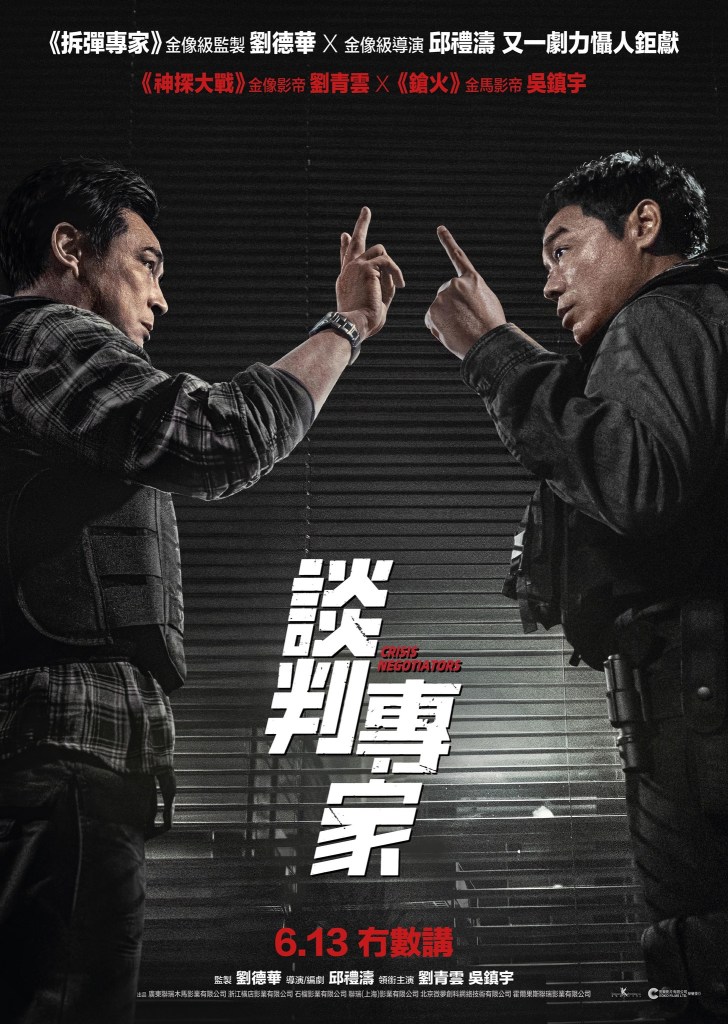
Brad reviews CRISIS NEGOTIATORS (2024), starring Lau Ching-Wan & Francis Ng!


My wife loves Hallmark movies and a handful of other movies that she tends to want to watch over and over again. That list of movies includes DIE HARD, VOLCANO, STRIKING DISTANCE and THE NEGOTIATOR. Every time we go to the family cabin for a weekend getaway, she insists that I pack our DVD of THE NEGOTIATOR to watch at some point over the weekend. It’s fair to say I’ve watched the film at least 10 times over the last 10 years or so, and I really do enjoy it. Did you know that filmmakers in Hong Kong remade THE NEGOTIATOR back in 2024 under the title of CRISIS NEGOTIATORS? It’s produced by superstar Andy Lau, who does a cameo. It’s directed by Herman Yau, who’s directed such successful and diverse films as THE UNTOLD STORY and the SHOCK WAVE franchise. It stars two of the best Hong Kong actors of the last 3 decades in Lau Ching-Wan & Francis Ng. Of course I had to see it!

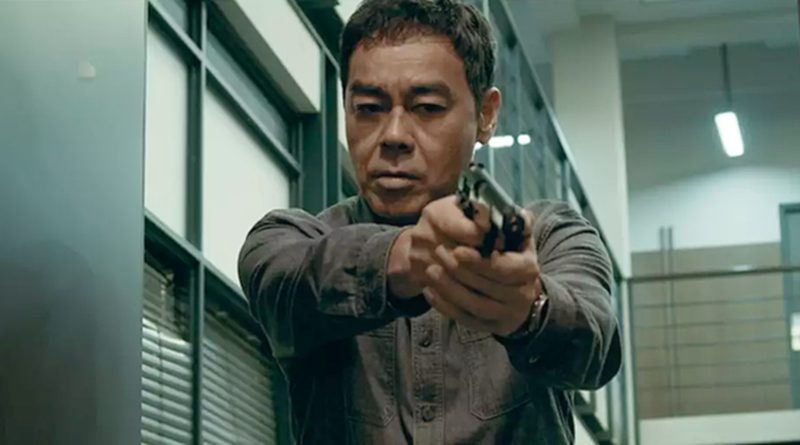
If you’ve seen the original film, there aren’t a lot of surprises in CRISIS NEGOTIATORS. Lau Ching-Wan plays Man Wai, an expert police negotiator. After celebrating his latest birthday, he gets a message to meet a friend and co-worker whose investigation into thefts from the “Police Welfare Fund” seems to implicate fellow members of the police force. When he shows up at the meeting, his friend has been murdered and the cops are soon on the scene. Arrested and determined to prove his innocence, Man Wai escapes custody and makes his way to the Internal Investigations Unit. He takes his own set of hostages, one of which may be involved in taking money from the Police Welfare Funds. He has an interesting request… I’ll only talk to Tse Ka Chun (Francis Ng). Chun, a former police negotiator who left the force to become a social worker, is soon on the scene. As Man interrogates the hostages and talks to Chun, it becomes apparent that he’s been set up. But will he live long enough to expose the real killers?! 

As a huge fan of Hong Kong cinema, and after having seen THE NEGOTIATOR so many times, I thought it would be fun to compare the two films and look for things that stand out in the Hong Kong version. CRISIS NEGOTIATORS opens with a particularly interesting sequence where an unstable couple armed with knives takes the workers of a family services center hostage. It seems that their young son has been forcibly removed from their home and they want him back. Man Wai (Lau Ching-Wan) and Chun (Francis Ng) work together to try to resolve the situation. What makes this opening unique is that the actor playing the unstable man is Andy Lau, a true superstar of Hong Cinema and entertainment in general (he’s one of the 4 “Heavenly Kings of Cantopop). Lau is one of the producers of the film, so it makes sense he threw a little of his star power in front of the camera, even if the cameo is the exact opposite of many of his roles. In English language terms, it would be like Brad Pitt or Leonardo DiCaprio being in the opening scene of THE NEGOTIATOR. 

Another difference in the two films that I really appreciate is the character of Tse Ka Chun, played so well by veteran Hong Kong star Francis Ng. As good as Kevin Spacey is in THE NEGOTIATOR, I really appreciate the tweaks made for the Hong Kong version to Chun. In this version, Chun reluctantly comes back to help the police in this specific situation. He has dedicated his life to helping the poor and unfortunate souls who have found themselves on the lowest rungs of Hong Kong society. In other words, he’s just a really good guy. There are a couple of sequences where he interacts with this poor beggar of an old granny that makes my heart swell as he treats her with kindness and dignity while others do not. It also provides a hilarious payoff at the film’s conclusion. 

Lau Ching-Wan is great in the central role of Cheuk Man Wai. A 4-time winner (and 18 time nominee) of the Hong Kong Film Award for Best Actor, Lau is simply one of the best actors working in Chinese language cinema. While I don’t give him an edge over Samuel Jackson’s intense performance in the original film, Lau brings his talent to bear in the role and doesn’t miss a beat. Other performances that stand out to me are provided by veterans like Michael Miu as a corrupt superior officer and Kent Cheng as the older cop in charge of everything. Cheng’s character and performance isn’t anything special, but I just enjoy seeing him on screen. One character who can’t be replaced in the original movie is the smarmy Internal Affairs officer played by the late, great J.T. Walsh. Walsh was truly a one-of-a-kind talent, and I don’t think anyone else can do what he did so well. Veteran Hong Kong actor Michael Chow gives a solid turn as the corrupt II agent here, but it’s just too much of an uphill climb. Man Wai’s hostages are pretty good as well, but can’t really compete with the memorable work by Siobhan Fallon Hogan and Paul Giamatti in the original. 

CRISIS NEGOTIATORS would have no chance to work if it didn’t capture some of the intensity of the original film, and I think it was largely successful in that endeavor. Director Herman Yau does a fine job, and I did find myself really getting into the film as the pressure ratcheted up on the main characters. With that being said, outside of a couple of changes, the film sticks pretty close to the original so fans will definitely be in very familiar territory. 

The primary purpose for making CRISIS NEGOTIATORS was to take the excellent story of THE NEGOTIATOR into the lucrative Chinese language market. It had a respectable box office return in the summer of 2024, bringing in around $22 million in mainland China and around $11 million HK dollars in Hong Kong. With good, but not great numbers, the film mostly fulfills its purpose. At the end of the day, CRISIS NEGOTIATORS won’t replace THE NEGOTIATOR on my watch list, but I still enjoyed it very much. I appreciate the cinema and stars of other parts of the world, and this remake was time well spent!

CRISIS NEGOTIATORS is currently streaming on Tubi. 

Did y’all know that Charles Bronson once duked it out with Roy Rogers?!!


How many of y’all can say that you’ve met Dale Evans, the wife of Roy Rogers?! I can. She was in Perryville, Arkansas to watch one of my fellow high school students play basketball. I don’t remember if he was her grandson, nephew or what exactly the relationship was, but she was there, and I went and introduced myself to her. This would have been in the early 90’s and she was around 80 years old or so. She was so sweet to me, and I’ve always appreciated that I got to meet her. 

Today I decided to watch the episode of “The Roy Rogers Show, Season 2, Episode 8, THE KNOCKOUT,” where Charles Bronson is the special guest star. In the episode, Roy notices strangers digging on an isolated section of his land. When he investigates, he discovers that the handlers for prizefighter Willie “Killer” Conley (Bronson) have set up a training camp for the champ. However, Roy begins to suspect that quite a bit more than training is going on there. Before long the fists and bullets are flying as Roy and Dale take down the bad guys. Bronson’s character may be called Killer Conley, but he is a decent guy who’s gotten himself in too deep with the bad guys, and he ends up joining the good guys when the rubber meets the road at the end. That made me happy. With that said, Bronson and Rogers punched it out multiple times before everything worked out well in the end! 

This was my first ever viewing of The Roy Rogers Show. From what I understand, it’s a pretty standard entry in a series that consistently displays a simple story with clear morals and a dependable resolution. However, when you consider that this episode was one of the early TV appearances of Charles Bronson, billed as Charles Buchinsky at the time, it emerges as a piece of cinematic history. A couple of decades later Bronson would be the biggest male movie star in the world. At this point for me, it’s nostalgia at its finest! 

The Roy Rogers Show is currently streaming on Tubi.

Happy 63rd Birthday to Jet Li!


Back in the late 90’s, I remember seeing the trailer for LETHAL WEAPON 4 that shouted out Jet Li. As a person who was just starting to get into Hong Kong cinema, I thought he was absolutely incredible and the best thing about the movie. I was soon watching all of his Hong Kong films and having a ball! The American market loved Jet Li, and used him often in movies like ROMEO MUST DIE and THE EXPENDABLES franchise, but he never reached the quality of his best Hong Kong films like ONCE UPON A TIME IN CHINA and FONG SAI-YUK. 

Happy Birthday, Jet! You’re one of the all time greats!

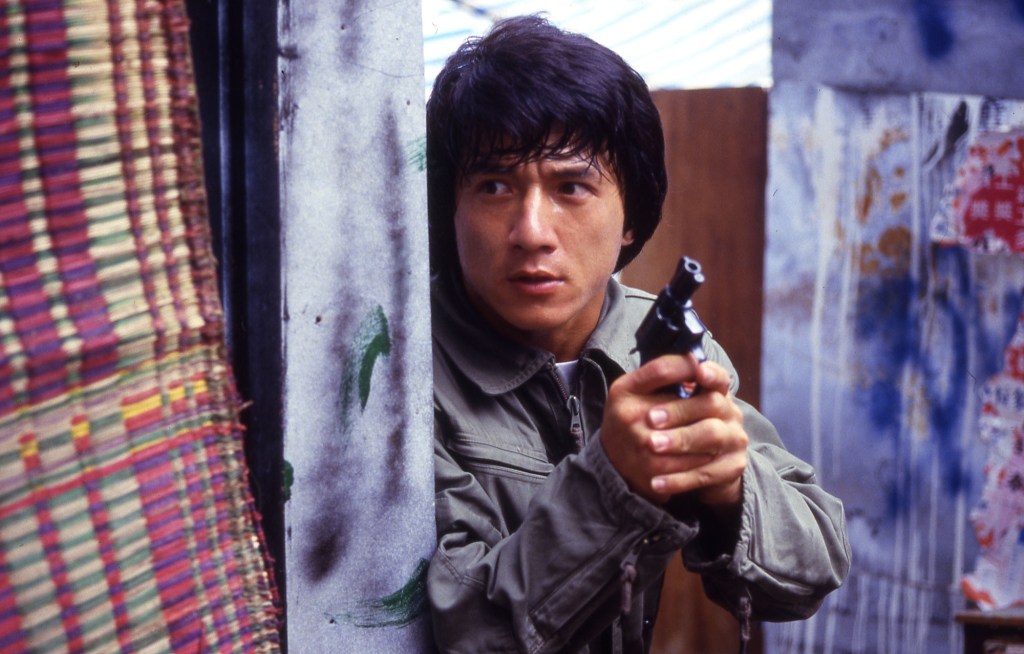
Brad revisits the Hong Kong classic POLICE STORY (1985), starring Jackie Chan!


I knew who Jackie Chan was well before I discovered Hong Kong cinema in the early 90’s through the works of John Woo and Chow Yun-Fat. I had seen him in the CANNONBALL RUN movies, including part 2 in the movie theater, and I recognized the VHS for THE PROTECTOR (1985) at my local video store, but I had no idea just how amazing he was as a filmmaker and performer until I became obsessed with Hong Kong’s local film industry in the mid-90’s. As I read about the incredible work that Chan had done or was doing in books like “Hong Kong Babylon,” I made notes on all of his movies that I wanted to see. Of course, the original POLICE STORY was at the top of the list. 

In POLICE STORY, Chan plays Hong Kong cop Chan Ka-Kui. In the film’s opening scene, he takes part in a sting operation to bring down Chu (Yuen Chor), one of Hong’s major drug kingpins. After the plan goes awry, we get an incredible action sequence where cars crash through a shantytown, bullets fly, cops piss themselves, Chan hangs off of a bus with the handle of an umbrella, runs down a mountain, arrests the drug lord, and we’re just getting started! 

From that amazing opening, Chan is assigned to protect the key witness, Salina (the gorgeous Brigitte Lin), whose testimony is key to bringing Chu down. This doesn’t go well. Between corruption in the police force, false accusations, and Chan’s tenuous relationship with his girlfriend May (Maggie Cheung), the ensuing chaos seems to indicate that Chu is going to get off on the drug charges and Chan just may end up dead.

But let’s be honest, the plot is just a reason to get to the action. And once you’ve seen a few of Jackie Chan’s Hong Kong movies, you just settle in for a loose story, lots of goofy humor (that doesn’t always work), and some of the most insane stunt work you’ll ever see. POLICE STORY is a perfect example of that formula, and quite honestly, it’s one of the great action films. The stunts feel and look dangerous. The final sequence, set in a shopping mall, is some of the best action I’ve ever seen in a movie. I sat there with my mouth open and shaking my head as great stunt after grunt stunt takes place. I can’t help but wonder how many people got injured doing those scenes as glass shatters, bodies fly, and Chan puts himself through hell for the sake of the scene. It can’t be described… it needs to be experienced.

And yet, for all the amazing action, I can relate to Jackie Chan. He messes up. He gets hurt. He argues with his girlfriend. I’ve done all of these things, and I love it when he gets his stuff together and uses his unique set of skills to save the day!

As awesome as POLICE STORY is, viewers need to be aware of the serious tonal shifts that take place in the Hong Kong cinema of the 80’s. It can be a little jarring if you’re not used to it, as the movie goes from slapstick comedy to brutal action to melodrama, sometimes within the same scene. In some ways, that’s part of the charm, but these films can feel very strange for the uninitiated.

At the end of the day POLICE STORY isn’t perfect, but it is Jackie Chan at his best… fearless, inventive, and committed to giving the audience their money’s worth. If you’re interested in the unique and dangerous films that Chan made at this physical peak, this is as good as it gets.

POLICE STORY is currently streaming on HBOMAX.

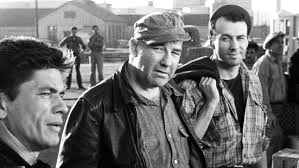
Brad takes on THE MOB (1951), starring Broderick Crawford!


In my quest to see every movie and TV show that Charles Bronson ever appeared in, I finally decided to take on THE MOB this morning. I’ve held off for years because this early, uncredited role as a dockworker only gives Bronson a couple of lines. He looks like a natural fixture on the docks, but his screen time only adds up to a minute or two in total.

With Bronson being little more than some temporary dockside scenery, I settled in for a story about Johnny Damico (Broderick Crawford), a tough, no-nonsense cop who’s doing some rainy night ring-shopping for his girlfriend when a man is killed just outside the store. He bungles up the whole situation, and the killer gets away. It turns out the killing was a mob hit and soon Damico is going undercover as Tim Flynn from New Orleans so he can infiltrate and bust the organized crime ring operating on the waterfront. 

Broderick Crawford is so good in this role. His Damico / Flynn has a cynical sense of humor that I enjoyed. He thinks fast, he’s rough around the edges, and he even gets to slap some bad guys around a time or two. He’s one of those characters whose mouth should probably get him in more trouble. Well, now that I think about it, his mouth does almost get him killed a couple of times. Crawford and Bronson would work again together a few years later in the prison film BIG HOUSE USA (1955). 

With Crawford’s performance anchoring the movie, Director Robert Parrish delivers a tight, efficient and entertaining crime story that clocks in at just under an hour and a half. One of the things that made the film enjoyable for me is the interesting and recognizable supporting cast of actors who pop up throughout the film. I’ve already mentioned Bronson, but actors like Ernest Borgnine, Neville Brand and Frank DeKova all show up to torment our undercover cop at various points throughout the film. It’s always fun for me to see a cast full of familiar faces! 

At the end of the day, I enjoyed THE MOB. It doesn’t try to be anything more than a good crime film, and with Broderick Crawford’s excellent performance, it does its job well.