The TSL Horror Grindhouse: The Phantom of the Opera (dir by Dwight H. Little)


1989’s The Phantom of the Opera opens in what was then-modern day Manhattan.

Christine Day (Jill Schoelen) is a young opera singer who is searching for the perfect audition piece.  Her friend, Meg (Molly Shannon), suggests that she use an obscure opera piece called Don Juan Triumphant.  The opera was written by Erik Destler, a mysterious composer who was accused of murdering several opera singers in the 1800s.  That morbid fact only makes Christine all the more convinced that she should use the piece in her audition and you know what?  I would probably feel the same way.  If nothing else, it would certainly appeal to my subversive side.

Even after Christine imagines seeing blood seeping off the pages of the opera, she remains committed to auditioning with it.  Unfortunately, at the audition, a sandbag falls on her head.  She’s knocked unconscious and, when she wakes up, she finds herself in 1885 London.  She’s an understudy for a diva named La Carlotta (Sharon Lawrence).  Carlotta has skill and technique but her singing lacks emotion.  She hits each note perfectly but she brings no deeper meaning to her performances.  Christine may lack Carlotta’s polish but she sings with emotion.  For that reason, Carlotta is jealous of Christine.  Meanwhile, Erik Destler (Robert Englund), who lives in the sewers of London’s opera house and who wears a mask over his disfigured face, feels that Christine is the only one who can do his work justice and he’s willing to go to any length to make sure that she’s the one who performs on stage.

At the time he made The Phantom of the Opera, Robert Englund was still regularly playing Freddy Krueger.  The film’s version of Erik Destler does owe a bit to Krueger.  Erik is as ruthless as Freddy, he’s good with a quip, he’s just as willing to kill, and, needless to say, he also has a face that will haunt your nightmares.  That said, Erik is also a creative artist, which is something that Freddy never was.  If Freddy was motivated by revenge, Erik is motivated by a desire to see his work come to life the way that he’s always imagined it.  Erik murders to help Christine (regardless of whether or not Chrsitine actually wants the help) whereas Freddy killed because he enjoyed it.  Englund gives a good performance as Erik, occasionally playing the role with the type of broadness that is to expected from a B-horror film but also still offering hints of the artist that Erik once was.  Englund is well-matched with Jill Schoelen, who brings a likable energy to Christine.

Produced by Menahem Golan and Harry Alan Towers, The Phantom of the Opera is an entertaining B-movie, one that is obviously not meant to be taken too seriously.  Director Dwight H. Little keeps the action moving at a steady pace, the sets and the costumes are to die for, the kills are unapologetically bloody, and the film even manages to put an interesting twist on the whole “it was all dream!” thing.  The Phantom of the Opera is an enjoyably macabre showcase for two of the best horror performers of the 80s and 90s, Jill Schoelen and Robert Englund.
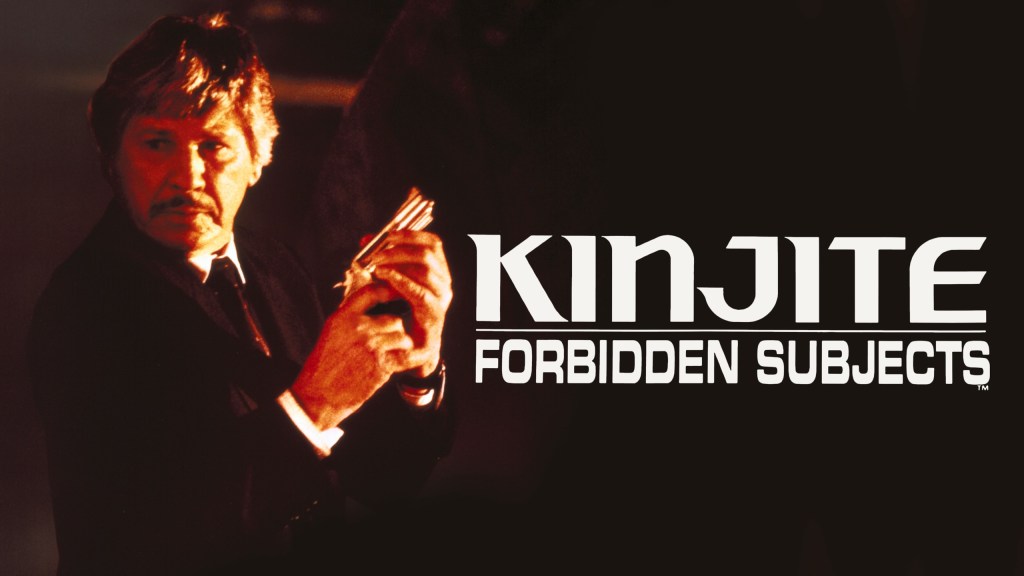
 

Brad reviews KINJITE: FORBIDDEN SUBJECTS (1989), starring Charles Bronson!


Back when I was a teenager, I would always get the entertainment section out of my dad’s Sunday paper so I could check out the movie listings. I was mainly looking for information about my favorite movie star, Charles Bronson. Nowadays, we know about new movies months, even years, in advance, but back then I would learn about them from the entertainment section of dad’s paper. One Sunday in early 1989, when I was 15 years old, I saw an advertisement for a new Bronson film called KINJITE: FORBIDDEN SUBJECTS. It was the first time I had ever heard of it. I knew I wasn’t going to get to see it at the movies because it was only playing in Little Rock, but I was excited anyway because it would be on its way to video soon!

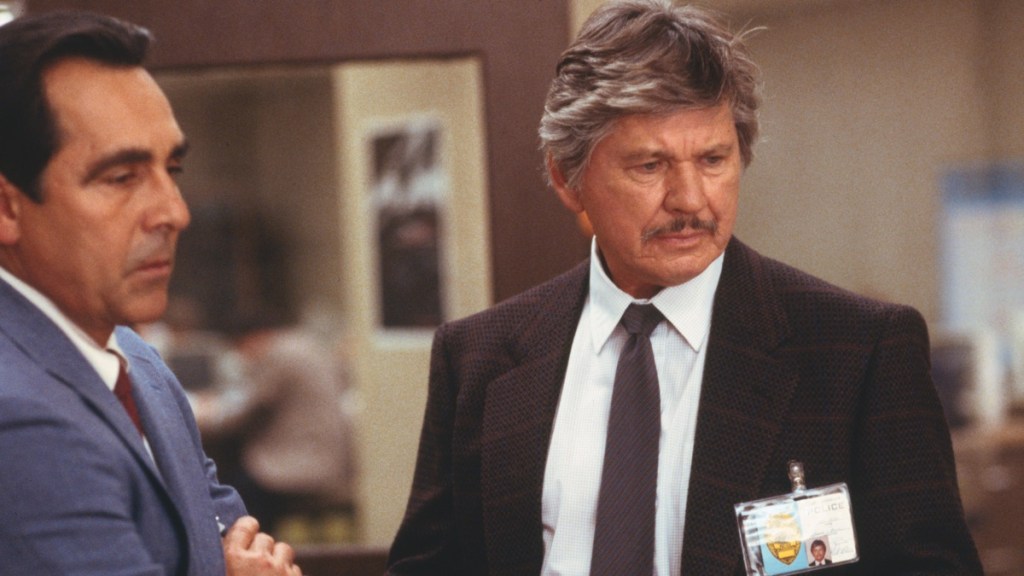
In the film, Bronson plays police Lieutenant Crowe. Along with his partner Eddie Rios (Perry Lopez), he deals with the sleaziest criminals in Los Angeles on a daily basis and it’s starting to take a toll on his personal life. He’s currently invested in bringing down an underage prostitution ring led by Duke (Juan Fernandez) and Lavonne (Sy Richardson). When Japanese businessman Hiroshi Hada’s (James Pax) young daughter is kidnapped by Duke, Crowe decides he must do everything in his power to get her back to her family.

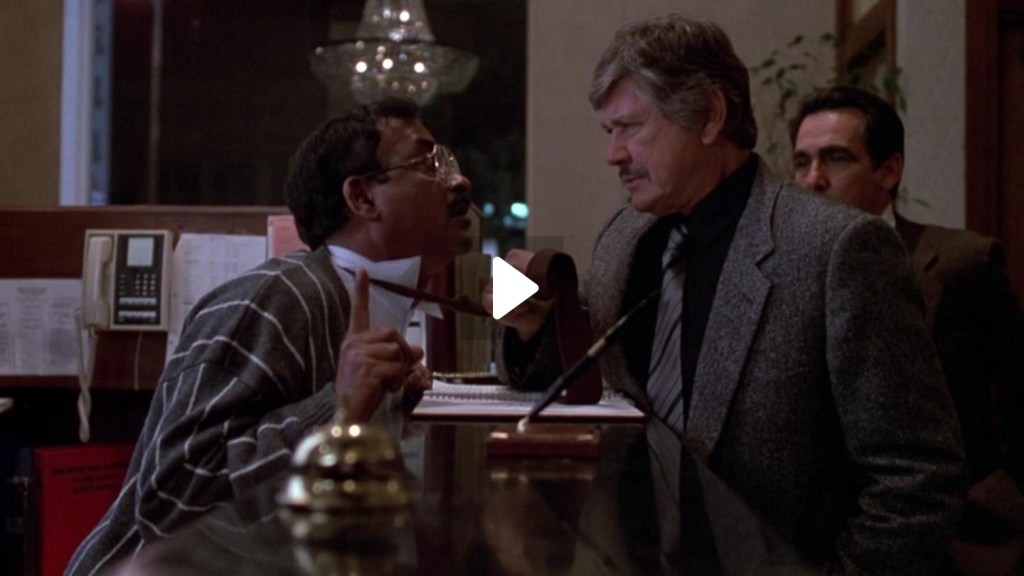
KINJITE reunites Bronson with director J. Lee Thompson for the ninth and final time, bringing to an end what I think is one of the more underrated actor-director partnerships of the action genre. Bronson had first worked with Thompson on the fun mystery film ST. IVES at the peak of his 70’s career. By 1989, Bronson was in his late sixties and understandably slowing down on the action front, but he still possessed that unmistakable presence on screen. He’s more invested in his performance as the prejudicial Lt. Crowe than he’s usually given credit for. There’s one specific scene where he goes off on a group of Japanese businessmen and women who are holding up traffic in front of a large hotel. It’s one of Bronson’s strongest scenes of the 1980’s as he yells various traffic code violations, and obscenities, at the surprised guests. It’s a bad moment for his character, but a well-acted moment for Bronson.

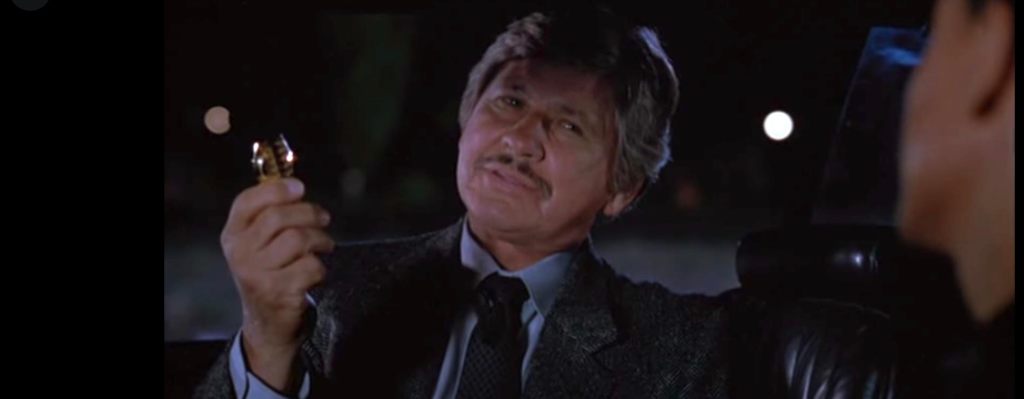
None of Bronson’s ‘80’s action films were based on stories about sunshine and roses, but the subject matter of KINJITE is particularly dark and ugly. Themes of child exploitation, human trafficking, sexual violence, and prejudice are all given screen time in a world that’s so corrupt that only someone as committed as Lt. Crowe is even capable of taking on the evil that’s presented here. Crowe is not necessarily a good man, and his sense of justice goes completely overboard at times. For example, in one scene where he catches a pervert preparing to commit an assortment of depraved sexual acts on a young prostitute (played by Nicole Eggert), Crowe says “I’m going to show you what it feels like to be one of these girls,” and we, along with his partner, hear the screams off-screen as he honors his word. In another scene, he makes the pimp Duke eat a giant Rolex watch, which prompts the trafficker to say, “I’m gonna die…” None too concerned about Duke’s health, Crowe casually tells him, “No you won’t, but you will have to stick your head between your legs to tell the time.” This is not a well-adjusted human being, but with all the evil acts being committed around him, you still can’t help but root for the guy.

The supporting cast around Bronson is quite good. Juan Fernandez is a standout as the despicable pimp, Duke. There’s something about Fernandez that just makes him great as a bad guy, as he had proved a few years earlier in the Oliver Stone film SALVADOR. His character here has this odd energy about him that oozes evil. Veteran character actor Perry Lopez, who had worked with Bronson going all the way back to the 1954 western DRUM BEAT, provides the aging icon a solid partner who helps smooth out his character’s roughest edges. Their scenes together are very strong because they feel like two weary detectives and old friends trying to deal with a world they’re both sick of.

While I think Bronson provides a good performance and that Thompson provides solid direction, I wouldn’t rank KINJITE among the star’s best 80’s films. It tries to juggle a lot of difficult themes and wants to comment on cultural differences, built-in prejudices, and sexual deviance, and it also wants to deliver the kind of action that audiences expected from Bronson’s Cannon films. It’s a well-made film, but the results aren’t completely effective because it can’t find the right balance between the serious dramatic themes and the expected action heroics. In the end, the events depicted on screen are too disturbing for the film to qualify as fun, escapist entertainment, but they’re not handled with enough depth for the film to make any sort of serious statement. The film ends up making you pretty darn uncomfortable, so I don’t revisit it as often as I do other Bronson / Thompson collaborations like 10 TO MIDNIGHT and MURPHY’S LAW.  

Based on the dark subject matter I’ve described above, I can’t give KINJITE: FORBIDDEN SUBJECTS an unreserved recommendation like I do so many other Bronson films. But as the final collaboration between Bronson and J. Lee Thompson, it does carry a certain historical significance. And for fans interested in seeing the darker side of Bronson’s film career, it remains a memorable, and unsettling, final chapter in one of action cinema’s most enduring partnerships.

#MondayMuggers presents KINJITE: FORBIDDEN SUBJECTS (1989) starring Charles Bronson!


Every Monday night at 9:00 Central Time, my wife Sierra and I host a “Live Movie Tweet” event on X using the hashtag #MondayMuggers. We rotate movie picks each week, and our tastes are quite different. Tonight, Monday February 10th, we’re watching KINJITE: FORBIDDEN SUBJECTS starring Charles Bronson!

Back when I was a teenager, I would always get the entertainment section out of dad’s Sunday paper so I could check out the movie listings and see if there was a new movie I wanted to see. I would also look for information about my favorite movie star, Charles Bronson. Nowadays, we know about new movies months, even years, in advance, but back then I would first learn about them from the entertainment section of dad’s paper. I remember one Sunday in early 1989, seeing an advertisement for a new Charles Bronson film called KINJITE: FORBIDDEN SUBJECTS. It was the first time I had ever heard of the film. I knew I wasn’t going to get to see it at the movies because it was only playing in Little Rock, and it was rated R, but I was excited anyway because I knew it would be on its way to video pretty soon! 

In KINJITE: FORBIDDEN SUBJECTS, Charles Bronson plays police lieutenant Crowe. He deals with the sleaziest criminals in Los Angeles on a daily basis and it’s starting to take a toll on his personal life. He’s currently personally invested in bringing down an underage prostitution ring led by Duke (Juan Fernandez) and Lavonne (Sy Richardson). When a Japanese businessman’s young daughter is kidnapped by Duke, Crowe decides he must do everything in his power to get her back to her family. 

Here is some interesting trivia about the film:

  1. Beginning with DEATH WISH II (1982) Charles Bronson made 8 films for the infamous Cannon Group. KINJITE: FORBIDDEN SUBJECTS was the last of those films. The others are 10 TO MIDNIGHT (1983), DEATH WISH 3 (1985), MURPHY’S LAW (1986), ASSASSINATION (1987), DEATH WISH 4: THE CRACKDOWN (1987), and MESSENGER OF DEATH (1988). 
  2. Director J. Lee Thompson directed Charles Bronson in 9 different films, with KINJITE: FORBIDDEN SUBJECTS being the final film he ever directed. Charles Bronson loved working with the same directors once he got comfortable with them. Thompson, who directed classics like THE GUNS OF NAVARONE (1961) and CAPE FEAR (1962), always made sure Bronson’s low budget Cannon films were filmed in a competent and professional manner. 
  3. Nicole Eggert plays a teen prostitute in this film and Amy Hathaway plays Charles Bronson’s daughter. Both were appearing in popular sitcoms at the time. Eggert was starring in CHARLES IN CHARGE and Hathaway was in MY TWO DADS. 
  4. The bad guy in the film is played by Juan Fernandez. He’s played some great villains in his day. Actor James Woods told me this about Juan, “The irony is that Juan Fernandez is one of the nicest actors I’ve ever worked with, and yet one of the most truly frightening villains. His work in SALVADOR was superb. A lovely, talented man.” 
  5. Perry Lopez, who plays Bronson’s partner in the film had worked with Bronson twice before. He appeared with Bronson in the excellent 1954 western DRUM BEAT, and also in 1987’s DEATH WISH 4: THE CRACKDOWN. 

So join us tonight to for #MondayMuggers and watch KINJITE: FORBIDDEN SUBJECTS! It’s on Amazon Prime.

I’ve included the trailer below:

The Fantastic Four (1994, directed by Oley Sassone)


It’s not that bad.

Produced by Roger Corman and made for a budget of only a million dollars, the very first film version of The Fantastic Four is best known for having never been released.  Stan Lee always claimed that the film was never meant to be released and that it was only made so that German producer Bernd Eichinger could hold onto the rights for the characters.  Eichinger has always said that he wanted to release the flm and it was Avi Arad, the future founder of Marvel Studios, who asked him not to because he felt a low-budget B-movie would damage the Marvel brand.  Arad has said that Eichinger is telling the truth and considering the reception that Albert Pyun’s Captain America received, I can understand why Arad was concerned.

Though the film was never officially released, bootleg copies are out there.  I’ve seen the movie a few times and I watched it again last night.  Watching it, I was reminded that The Fantastic Four is not as bad as people say.

It’s an origin story.  Reed Richards (Alex Hyde-White) flies into space with his girlfriend Sue (Rebecca Staab), her annoying kid brother Johnny (Jay Underwood), and Reed’s best friend Ben (Michael Bailey Smith).  Cosmic comet rays lead to them developing super powers.  Reed can stretch.  Johnny can burst into flame.  Sue can turn invisible.  Ben turns into a creature with orange, rocky skin.  On Earth, they battle both the evil Doctor Doom (Joseph Culp) and the Jeweler (Ian Trigger) for possession of a powerful diamond.

The low budget is obvious and the script isn’t great, with the Jeweler being a truly unimpressive villain.  (Unlike Doctor Doom, the Jeweler was created specifically for this movie.)  But the movie still has more genuine heart than the future big-budget Fantastic Four films. Alex Hyde-White plays Reed as being brilliant but self-absorbed.  Sue is a thankless role but Rebecca Staab does her best.  Jay Underwood is annoying as Johnny but Johnny was annoying in the comic books as well.  This version of The Fantastic Four is the only movie, so far, to capture and stay true to the spirit of the characters.

This is especially true when it comes Michael Bailey Smith’s performance as Ben Grimm.  More than either Jamie Bell or Michael Chiklis, Smith realistically portrays Ben’s bitterness over knowing that he will never be able to return to his former life.  Of all the film versions of the Fantastic Four, this is the only one that adequately captures both the look and the personality of The Thing.  He become a real person and not just an actor in a rubber suit.  This movie is also the only one, so far, to really do a decent job of portraying Dr. Doom’s megalomania.  It’s interesting that the film that Marvel didn’t want released is the one that stays true to the original comic book.

The Fantastic Four will be joining the MCU in 2025.  Ironically, considering that Marvel Comics started with the Fantastic Four, they’ll be among the last of the major characters to get an MCU film.  There’s hope that the new Fantastic Four will reverse the MCU’s declining fortunes.  I’ve been skeptical ever since I heard the Silver Surfer was going to be played by Julia Garner but hopefully, I’ll be wrong.  Galactus is one of the great Marvel villains and I hope the new Fantastic Four will do him justice.  When people are watching the massively hyped, big budget, CGI-heavy version of The Fantastic Four, I hope at least some will remember the low-budget version that could barely afford a single special effect and I hope they’ll remember that it wasn’t that bad.