The Western Wound: Horror, History, and the Haunting of Frontier Mythology


“You want to shoot me, go ahead. It won’t matter. I’ve seen things you wouldn’t believe.” — The Stranger

The Western Wound: Horror, History, and the Haunting of Frontier Mythology

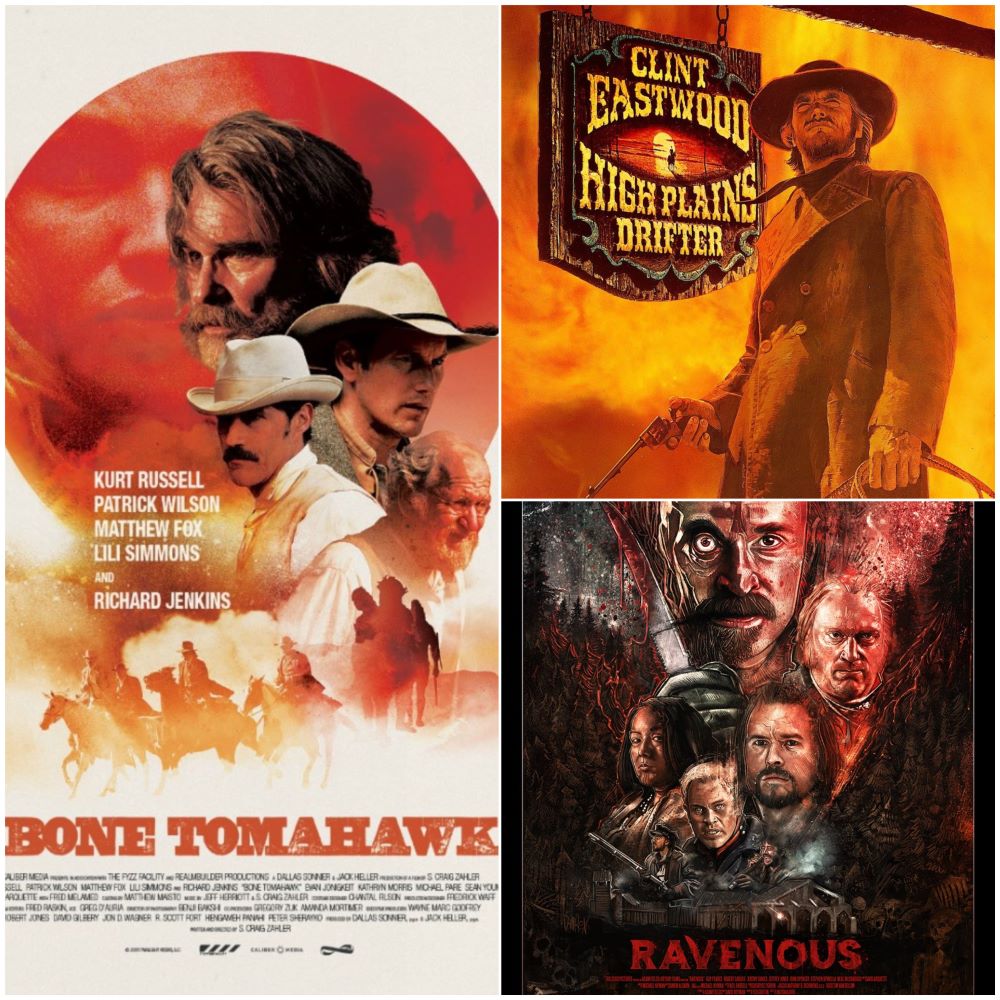
Horror profoundly shapes, distorts, and reframes the American Western, complicating familiar narratives of lawmen and outlaws with the uncanny specter of trauma, dread, and evil. Few films demonstrate this transformation more powerfully than Ravenous (1999), Bone Tomahawk (2015), and High Plains Drifter (1973). These three Westerns push beyond genre conventions, leveraging horror’s capacity to unsettle, destabilize, and haunt—creating experiences that are as philosophically provocative as they are viscerally unsettling. Rather than merely incorporating horror aesthetics into a Western setting, each film employs horror as a core thematic device to interrogate violence, community, morality, and the dark legacies of frontier expansion.

The Haunted Frontier: Atmosphere and the Specter of Evil

High Plains Drifter’s isolation in the arid Nevada desert is more than a physical setting; it externalizes the moral barrenness and guilt festering within the town of Lago. The oscillation between relentless sunlight and dense fog creates a hallucinatory space where natural laws are suspended, and supernatural retribution manifests. Central water imagery—the fog rolling off the lake, the lake itself—serves as a liminal zone, symbolizing the boundary between life and death, past and present, justice and vengeance. The Stranger’s spectral emergence from the desert heat haze hints at his otherworldly nature, turning the town’s landscape into a haunted battleground where redemption is elusive and suffering endemic.

Ravenous’s setting in the snowy Sierra Nevada mountains during the Mexican-American War imbues its horror with claustrophobic dread. Fort Spencer’s remoteness in the face of towering, hostile peaks and unrelenting winter transforms the natural environment into a gothic prison. This wilderness is both physical and psychological, oppressive in its vastness and merciless in its cold. The film uses this setting to amplify the existential terror wrought by cannibalism, suggesting an inescapable cycle of consumption where survival becomes monstrous. Deep shadows, filtered natural lighting, and long quiet scenes evoke dread as much as extreme violence.

In Bone Tomahawk, the stark, sunbaked deserts and towering rock formations of the American Southwest form an ominous landscape embodying ancient and unknowable horror. The frontier town is a fragile outpost at civilization’s edge, surrounded by a wild, menacing wilderness. The deep canyons serve as metaphorical gateways to past atrocities, echoing the silent histories of indigenous trauma and colonial violence. The oppressive silence and vastness underscore humanity’s diminutiveness and vulnerability, while the jagged terrain symbolizes the harshness of both nature and history’s brutal forces.

Monstrous Transformation: The Horror Within

The Stranger in High Plains Drifter manifests the blurring boundaries between justice and vengeance, heroism and monstrosity. His actions—including an unsettling rape scene—force a confrontation with the darkest aspects of human nature, showing how violence corrupts even those who claim righteousness. His ghostly status and ruthless methodology suggest he is a representation of collective guilt made tangible, punishing the town’s sins with otherworldly finality. The film invites viewers to question whether vengeance restores balance or merely perpetuates horror.

In Ravenous, cannibalism literalizes the primal urge to consume not only flesh but identity and sanity, transforming survivors into monsters. The character Ives, charismatic and terrifying, embodies this transformation, seducing others into a vortical descent of brutality. The film’s psychological horror arises from the contagion of hunger and madness, the breakdown of social and moral order amid desolation. It probes existential questions about survival, morality, and the dissolution of self.

Bone Tomahawk depicts transformation through the confrontation with an ancient, savage tribe whose brutality transcends ordinary human evil. The characters’ exposure to this primordial terror strips away civilized facades, forcing characters and viewers to acknowledge the latent barbarity within humanity. The film’s horror is both external—in the violent acts of the tribe—and internal—in the psychological unravelling of the rescue party. This duality highlights the wilderness as both physical terrain and psychic landscape of primal fear.

The Community and the Failures of Civilization

The communal failure in High Plains Drifter reveals how collective cowardice and betrayal corrupt society. Lago’s townsfolk enable the marshal’s murder and face the Stranger’s supernatural justice as a consequence. Their moral bankruptcy transforms the town into a cursed locus of horror, symbolizing how collective sin corrupts the social fabric and invites ruin.

Ravenous portrays community breakdown within the remote outpost, where isolation breeds paranoia, selfishness, and violence. The collapse of trust and order mirrors the broader failure of frontier society to contain human baseness under extreme conditions, suggesting society itself is a fragile construct vulnerable to collapse.

In Bone Tomahawk, the fragile rescue party embodies the precariousness of social cohesion facing profound evil. Their doomed mission stresses how thin the veneer of civilization is, shattering under pressure from ancient horrors. The film critiques assumptions of order and control, emphasizing the ease with which human society can crumble.

Violence, Justice, and the Ethical Horror

Violence in High Plains Drifter is unending, spectral, and morally ambiguous. The Stranger’s vengeance refuses neat closure, illustrating cycles of violence that leave deeper scars rather than justice. The film redefines violent retribution as torment, destabilizing conventional heroic narratives.

Ravenous entwines violence with survival horror and existential dread. The ritualistic cannibalism is a metaphor for moral and spiritual corrosion, forcing characters and audiences to face the horrors wrought by the primal fight for survival at civilization’s edge.

Bone Tomahawk presents violence as slow, ritualistic, and ancient—an elemental force indifferent to human ethics. Its stark, realistic depiction immerses viewers in fear and helplessness, rejecting conventional catharsis and highlighting the terror of primal brutality.

Subtext and Symbolism: Horror as the Depths of Humanity

High Plains Drifter blends ghostly and surreal imagery to explore unresolved sin and cultural guilt. The Stranger is both avenger and specter of collective trauma, with symbolic elements—such as the red-painted town and unmarked graves—that deepen the meditation on punishment and desolation.

Ravenous uses cannibalism and wilderness as symbols of consumption and destruction intrinsic to frontier expansion. Horror here reflects existential struggles with survival, cultural annihilation, and moral ambiguity, set against an environment of engulfing nature and history.

Bone Tomahawk evokes frontier horror as a metaphor for repressed histories and cultural erasure. The savage tribe symbolizes ancestral trauma, while the desolate landscapes underscore the lingering presence of buried horrors that haunt the Western imagination.

The Western Genre as a Wound Haunted by Horror

RavenousBone Tomahawk, and High Plains Drifter deepen the Western genre’s reckoning with violence, morality, and civilization’s fragility. Ravenous allegorizes hunger and expansion’s destructive appetite through cannibalism, revealing survival’s costs to identity and culture. Bone Tomahawk exposes historical violence and trauma encoded in landscape and myth, demonstrating Western justice’s limits. High Plains Drifter dramatizes unresolved guilt and vengeance through spectral retribution, challenging sanitized Western heroism.

The films’ central horrors—the Stranger’s merciless vengeance, the cannibal’s transformative hunger, and the doomed rescue mission into darkness—serve as meditations on violence, communal complicity, and the absence of redemption. They unmask the American West and America itself as terrains haunted by deep, unresolved sins and moral ambiguity. In marrying supernatural and psychological horror, these films offer a complex, layered critique of frontier myth, turning the Western from a tale of conquest into a haunted narrative of trauma, survival, and moral reckoning.

Supernatural vs Psychological Readings

High Plains Drifter uniquely embodies ambiguity between supernatural revenge and psychological torment. The Stranger’s ghostlike qualities and resurrection to avenge his murder firmly anchor a supernatural interpretation. His eerie manifestations—such as the bullwhip’s sound triggering vivid nightmares and his mysterious appearance from the desert heat—signal a spectral force beyond human comprehension. Yet, on a psychological level, the Stranger can be viewed as the materialization of the town’s collective guilt and suppressed trauma. This duality enriches the narrative, allowing viewers to interpret the horror as either literal supernatural vengeance or a psycho-spiritual reckoning of internal moral collapse.

Ravenous blurs supernatural and psychological horror by mixing the tangible terror of cannibalism with metaphysical dread. The figure of Ives carries almost mythic qualities—his charismatic yet monstrous presence suggests an otherworldly evil, a contagion consuming the souls of men. The mountain wilderness functions as a liminal space transcending reality, where madness and primal urges surface. This ambiguity invites readings of the horror as both external supernatural curse and internal psychological disintegration, reflecting survival’s dehumanizing cost amidst isolation and guilt.

Bone Tomahawk grounds itself mostly in realistic terror but invokes mythic supernatural threads through the savage tribe’s almost fantastical menace. Their brutal, ritualized violence carries residues of ancestral curses and primal fears that exceed mere human malevolence. The film explores psychological horror through the characters’ terror and helplessness confronting an unknowable evil, making the wilderness and tribe a metaphor for the abyss of human and historical trauma. Thus, horror emerges as both a tangible threat and a psychological abyss threatening identity and sanity.

This interplay of supernatural and psychological horror amplifies these films’ thematic depth. By refusing to confine horror to one domain, they portray the Western frontier as a space haunted simultaneously by ghosts—whether spiritual, historical, or personal—and inner demons manifesting as guilt, fear, and madness.

Ultimately, horror in these Westerns is not merely a matter of frightening events but a profound engagement with unsettled histories and psyches. This dynamic makes their terror resonate long after the screen fades to black, marking the Western as a genre haunted not only by outlaws and the wilderness but by the specters within us all.

Horror profoundly alters the Western genre’s narrative, revealing it as a cultural wound, a landscape haunted by the ghosts of its own violent history and moral contradictions. By challenging sanitized myths and exposing the fragility beneath civilization’s veneer, RavenousBone Tomahawk, and High Plains Drifter not only frighten but provoke deep reflection on the legacies of violence and the nature of justice itself—capturing the horror at the heart of the American story.


Horror Review: Bone Tomahawk (dir. by S. Craig Zahler)


“What is sacred to a bunch of goddamned savages ain’t no concern of the civilized man! We got permission!” — Buddy

Bone Tomahawk (2015) begins in quiet dread. A still horizon, the whisper of wind across rock, a hint of bone under the dust—the American frontier looms like an unfinished thought. This silence sets the tone for S. Craig Zahler’s remarkable debut, a film that wears the form of a Western only to strip it down to nerve and marrow. It’s a story of decency under siege, of men pushing past the last borders of civilization and discovering that what lies beyond is not the unknown, but the origin of everything they thought they’d overcome.

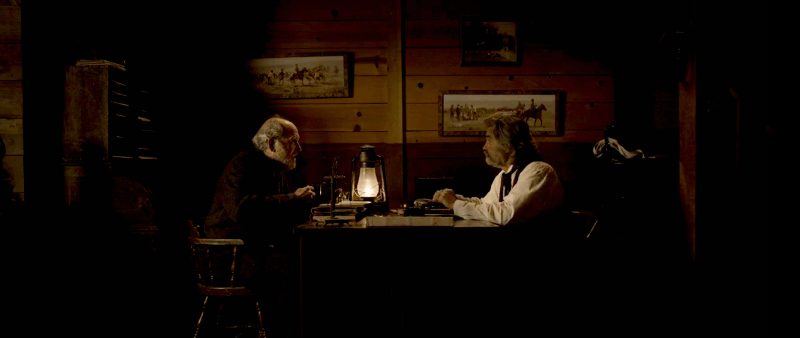
At first glance, the premise seems familiar. When several townspeople vanish from the small settlement of Bright Hope, Sheriff Franklin Hunt (Kurt Russell) leads a rescue expedition into the desert. Riding with him are three others: the injured but determined Arthur O’Dwyer (Patrick Wilson), whose wife has been taken; his tender-hearted deputy, Chicory (Richard Jenkins), whose chatter and old-fashioned kindness soften the film’s bleak austerity; and the self-assured gunman John Brooder (Matthew Fox), a man equal parts gallant and cruel. Together, they represent the moral cross-section of a civilization still trying to define itself—duty, love, loyalty, arrogance.

Their journey outward becomes one of inward descent. Zahler’s script unfolds at a deliberate pace, steeped in stillness and exhaustion. The first half moves like ritual—meandering conversations, humor worn thin by weariness, the small comforts of campfire fellowship flickering against the vast emptiness around them. It’s here that Bone Tomahawk begins its slow transformation. What starts as a rescue Western gradually becomes something deeper and older. By stripping away the romance of exploration, Zahler reveals the frontier not as a space of discovery, but as a place of reckoning—a mirror of the instincts civilization pretends to have tamed.

The film’s most haunting element is its portrayal of the so-called “troglodytes,” the mysterious group believed to be responsible for the kidnappings. They are less a tribe than an incarnation of the wilderness itself—nameless, wordless, and utterly beyond cultural translation. Covered in ash, communicating through the eerie hum of bone instruments embedded in their throats, they seem less human than ancestral, as though the land itself had dragged them upward from its own depths. Zahler refuses to frame them anthropologically or politically; instead, they represent the primal truth the American frontier sought to bury under its myths of order and progress.

Western films, for more than a century, have mythologized the wilderness as an external force—something to conquer. But the “troglodytes” in Bone Tomahawk feel like the soil’s memory of what came before conquest: the savage necessity that built the very myths used to conceal it. They are the frontier’s unspoken ancestry—what remains after all the churches, taverns, and codes of decency are stripped away. Civilization needs them to remain hidden in the canyons, out of sight and unspoken, because their existence contradicts everything the polite narrative of the Old West stands for. They are what progress denies but cannot erase.

Zahler’s restraint strengthens this allegory. He shoots the desert not as backdrop but as evidence—a geographical wound extending beyond the horizon. The wilderness looks stunning but predatory, its stillness full of threat. Even when the posse’s odyssey is free of immediate danger, there’s the growing sense of being consumed: by the sun, by exhaustion, by the quiet knowledge that the world they’re riding into has no use for their notions of law and virtue. Civilization, here, is a pocket of light surrounded by something much older and hungrier.

That hunger, the need to conquer and consume, connects Bone Tomahawk to its spiritual predecessor, Antonia Bird’s Ravenous (1999). Bird’s film transformed the Donner Party’s historical ghosts into an allegory of Manifest Destiny, equating cannibalism with American expansion—the act of devouring land, life, and self under the guise of progress. Zahler continues that lineage with deliberate starkness. For him, violence in the frontier isn’t just literal; it’s foundational, the unacknowledged currency of civilization. Where Ravenous expressed its critique with mordant humor, Bone Tomahawk speaks in solemn tones, observing how every civilized act—the enforcement of law, the defense of home—rests upon the refusal to see what was consumed to create it.

The “troglodytes” embody that refusal incarnate. They are not villains in the traditional sense; Zahler grants them no ideology or explanation, only the primal fact of their survival. In doing so, he flips the Western’s moral equation: the barbarians at the edge of civilization are not invaders, but reminders of its origins. They are ghosts of the violence that founded the frontier, the unspoken proof that the West was never as far from savagery as it claimed. To look upon them is to glimpse the beginning—the raw, lawless reality America buried beneath the idea of itself.

Kurt Russell, magnificent in his restraint, anchors this tension. His Sheriff Hunt evokes a fading kind of decency: measured, fair, and unwavering even in futility. Russell plays him not as a Western hero but as a man committed to honor in a world that no longer rewards it. His calm authority softens only around those he loves and hardens in the face of what he doesn’t understand. In that measured decency lies the film’s aching question: what happens when morality meets something that does not recognize it?

Patrick Wilson’s O’Dwyer embodies faith’s physical agony—a man driven by devotion, limping through a landscape that punishes his determination. Richard Jenkins provides heart and subtle tragedy; his rambling, almost comical musings on aging and loneliness become the story’s moral texture, the sound of humanity scraping against extinction. And Matthew Fox, in his most precise performance, gives voice to the arrogance of the civilized killer—a man who fashions violence as virtue, believing his elegance excuses his cruelty.

Together, the four men form a living cross-section of the West’s moral mythos. Their journey exposes how fragile those ideals become once separated from the safety of town limits. They embody the dream of order confronting the truth of chaos—and the cost of looking too long into the void beyond it.

Zahler’s filmmaking is remarkably self-assured for a debut, and what stands out most is his willingness to trust stillness. There is no manipulated rhythm, no swelling score to guide emotion. The soundscape is shaped by wind, hoofbeats, crackling fires, and quiet voices rattled by exhaustion. The silence itself becomes a spiritual presence, pressing down on the travelers until conversation feels like resistance. Each scene builds tension not through action, but through waiting—the dread of what remains unseen, what civilization has pretended not to hear.

The violence, when it erupts, is unforgettable. Zahler does not linger voyeuristically, yet the weight of what happens lands with moral precision. The horror feels earned—an eruption of the primal into the civilized. Its purpose is not to shock, but to remind: the line between the men of Bright Hope and the people they fear is thinner than they want to believe. The frontier, as Zahler presents it, is not an untouched wilderness but the graveyard of an ongoing denial—the myth of progress stacked atop the bones of the devoured.

In that way, Bone Tomahawk moves beyond the idea of genre blending. It is not merely a “horror Western,” but a meditation on how those two sensibilities spring from the same source. Both depend on the confrontation between safety and the unknown, belief and disbelief. Both are rituals of fear, structured to reassure yet always at risk of unveiling the truth. Zahler’s greatest achievement is the way he strips away that reassurance. By the film’s final stretch, the promises of civilization—hope, faith, righteousness—have been exposed as fragile constructions built atop an ancient void.

And yet, through all its darkness, Zahler allows a flicker of grace. The film’s humanity endures in small gestures: a conversation interrupted by laughter, a hand extended in kindness, the stubborn persistence of dignity in impossible circumstances. Bone Tomahawk never preaches or offers catharsis, but it does something harder—it bears witness. It shows men maintaining decency not because it protects them, but because it defines them. In that endurance lies the film’s quiet heartbeat.

Like Ravenous before it, Bone Tomahawk reimagines cannibalism and frontier brutality not as aberrations, but as mirrors reflecting a truth about the American project: that every step westward demanded erasure, and that what was erased refuses to stay buried. The “troglodytes” linger not only in the canyons but within the culture that feared them—proof that civilization’s polish has always covered the rough, enduring shape of appetite.

By the end, what remains is not revelation or redemption, but silence—the kind that comes after myth collapses. Zahler’s film leaves its characters and viewers alike to confront the space where civilization ends and something older begins. The desert remains untouched, vast and timeless, holding the secret at the center of all Western stories: that progress has always been haunted by the primitive, that the world we built never left the wilderness—it merely disguised it.

Measured, brutal, and strangely tender, Bone Tomahawk stands as both a reclamation and an undoing of the Western myth. It listens to the echoes of the Old West and answers them not with triumph, but with reckoning. In its dust and silence lies a truth older than law or legend: civilization may light its fires, but there will always be something in the dark watching, waiting—the part of us it never truly left behind.

Austin Loves Carol!


mara_blanchett_carol

The Austin Film Critics Association announced their nominations earlier today and guess what?  They really, really like Carol!

Love you, Austin!

(I don’t know if I love Carol but seriously, Austin’s the best!)

Best Film:
Anomalisa
Carol
Mad Max: Fury Road
Spotlight
Trumbo

Best Director:
Todd Haynes, Carol
Tom McCarthy, Spotlight
Adam McKay, The Big Short
George Miller, Mad Max: Fury Road
Quentin Tarantino, The Hateful Eight

Best Actor:
Bryan Cranston, Trumbo
Leonardo DiCaprio, The Revenant
Michael Fassbender, Steve Jobs
Michael B. Jordan, Creed
Jacob Tremblay, Room

Best Actress:
Cate Blanchett, Carol
Brie Larson, Room
Rooney Mara, Carol
Saoirse Ronan, Brooklyn
Charlize Theron, Mad Max: Fury Road

Best Supporting Actor:
Benicio Del Toro, Sicario
Idris Elba, Beasts of No Nation
Oscar Isaac, Ex Machina
Michael Shannon, 99 Homes
Sylvester Stallone, Creed

Best Supporting Actress:
Elizabeth Banks, Love & Mercy
Jennifer Jason Leigh, The Hateful Eight
Kristen Stewart, Clouds of Sils Maria
Alicia Vikander, Ex Machina
Kate Winslet, Steve Jobs

Best Original Screenplay:
Pete Docter, Meg LeFauve, Josh Cooley, Inside Out
Alex Garland, Ex Machina
Taylor Sheridan, Sicario
Josh Singer & Tom McCarthy, Spotlight
Quentin Tarantino, The Hateful Eight

Best Adapted Screenplay:
Emma Donoghue, Room
Charlie Kaufman, Anomalisa
Phyllis Nagy, Carol
Charles Randolph and Adam McKay, The Big Short
Aaron Sorkin, Steve Jobs

Best Cinematography:
Roger Deakins, Sicario
Edward Lachman, Carol
Emmanuel Lubezki, The Revenant
Robert Richardson, The Hateful Eight
John Seale, Mad Max: Fury Road

Best Score:
Carter Burwell, Carol
Michael Giacchino, Inside Out
Tom Holkenborg (as Junkie XL), Max Max: Fury Road
Ennio Morricone, The Hateful Eight
Rich Vreeland (as Disasterpeace), It Follows

Best Foreign-Language Film:
Mustang
Phoenix
Son of Saul
The Tribe
Victoria

Best Documentary:
Amy
Best of Enemies
Cartel Land
The Look of Silence
Where to Invade Next

Best Animated Film:
Anomalisa
The Good Dinosaur
Inside Out
The Peanuts Movie
Shaun the Sheep Movie

Best First Film:
Bone Tomahawk
The Diary of a Teenage Girl
Ex Machina
Mustang
Son of Saul

The Robert R. “Bobby” McCurdy Memorial Breakthrough Artist Award:
Abraham Attah, Beasts of No Nation
Amy Schumer, Trainwreck
Mya Taylor, Tangerine
Jacob Tremblay, Room
Alicia Vikander, Ex-Machina

Best Austin Film:
Arlo and Julie (dir: Steve Mims)
A Brave Heart: The Lizzie Velasquez Story (dir: Sara Hirsh Bordo)
Kumiko, the Treasure Hunter (dir: David Zellner)
Peace Officer (dir: Brad Barber, Scott Christopherson)
Two Step (dir: Alex R. Johnson)

And here are the Phoenix Film Critics Nominations!


And finally, to wrap up today’s excursion into awards season, here are the Phoenix Film Critics Nominations!  As soon as you look over these nominations and see if your favorite film made the list, be sure to go back and read Patrick’s review of Santa and the Ice Cream Bunny and Jedadiah Leland’s review of Star Wars Episode 1: The Phantom Menace!

BEST PICTURE

Ex Machina
Mad Max: Fury Road
The Martian
Room
Spotlight
BEST COMEDY FILM

The Big Short
Dope
Joy
Spy
Trainwreck

BEST SCIENCE FICTION FILM

Avengers: Age of Ultron
Ex Machina
Mad Max: Fury Road
The Martian

BEST MYSTERY OR THRILLER FILM

Bridge of Spies
Sicario
Spotlight

BEST ANIMATED FILM

Anomalisa
Inside Out

The Peanuts Movie
Shaun the Sheep

BEST INTERNATIONAL FILM

The Assassin
White God
Youth

BEST DOCUMENTARY

Amy
Best of Enemies
Cartel Land
He Named My Malala
Listen to Me Marlon

BEST HORROR FILM

Bone Tomahawk
Crimson Peak
It Follows
Unfriended

BEST MUSICAL

Amy
Pitch Perfect 2
Straight Outta Compton

BEST ACTOR

Michael Caine, Youth
Bryan Cranston, Trumbo
Matt Damon, The Martian
Leonardo DiCaprio, The Revenant
Michael Fassbender, Steve Jobs

BEST ACTRESS

Cate Blanchett, Carol
Marion Cotillard, Macbeth
Jennifer Lawrence, Joy
Brie Larson, Room
Saoirse Ronan, Brooklyn

BEST SUPPORTING ACTOR

Tom Hardy, The Revenant
Richard Jenkins, Bone Tomahawk
Michael Keaton, Spotlight
Mark Rylance, Bridge of Spies
Michael Shannon, 99 Homes
Sylvester Stallone, Creed
Jacob Tremblay, Room

BEST SUPPORTING ACTRESS

Jennifer Jason Leigh, The Hateful Eight
Alicia Vikander, The Danish Girl
Alicia Vikander, Ex Machina
Kate Winslet, Steve Jobs

BEST DIRECTOR

Alex Garland, Ex Machina
Alejandro Inarritu, The Revenant
Tom McCarthy, Spotlight
George Miller, Mad Max: Fury Road
Ridley Scott, The Martian
Quentin Tarantino, The Hateful Eight

BEST SCREENPLAY

Matt Charman, Ethan Coen, Joel Coen, Bridge of Spies
Alex Garland, Ex Machina
Tom McCarthy, Josh Singer, Spotlight
Charles Randolph, Adam McKay, The Big Short
Aaron Sorkin, Steve Jobs

BEST SCORE

Tom Holkenborg aka Junkie XL, Mad Max: Fury Road
Jóhann Jóhannsson, Sicario
Ennio Morricone, The Hateful Eight
Thomas Newman, Bridge of Spies

Here Are The 2015 Independent Spirit Nominations!


mara_blanchett_carol

Here are the 2015 Independent Spirit Nominations!  That’s right — Oscar season is officially here!  Soon, we will reach the point where every day, another group will be announcing their picks for the best of 2015 and the Oscar race will start to become a lot less cloudy.  Until then, we can look at the Independent Spirit Nominations and try to figure out what they all mean in the big scheme of things.

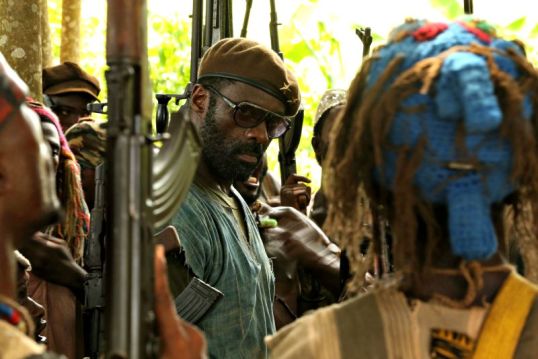
The two big indie best picture contenders — Carol and Spotlight — were nominated for multiple awards.  That’s to be expected.  If any film is going to benefit from the Spirit nominations, it will probably be Anomalisawhich is starting to look more and more like it might be a dark horse to score a best picture nominations.  As well, the Spirit nominations may serve to remind Academy members that Beasts of No Nation is one of the best films of the year.

Anyway, without further ado, here are the Spirit nominations!

Best Feature

Anomalisa
Beasts of No Nation
Carol
Spotlight
Tangerine

Best Director

Sean Baker, Tangerine
Cary Joji Fukunaga, Beasts of No Nation
Todd Haynes, Carol
Charlie Kaufman & Duke Johnson, Anomalisa
Tom McCarthy, Spotlight
David Robert Mitchell, It Follows

Best Screenplay

Charlie Kaufman, Anomalisa
Donald Margulies, The End of the Tour
Phyllis Nagy, Carol
Tom McCarthy & Josh Singer, Spotlight
S. Craig Zahler, Bone Tomahawk

Best First Feature

The Diary of a Teenage Girl
James White
Manos Sucias
Mediterranea
Songs My Brothers Taught Me

Best First Screenplay

Jesse Andrews, Me and Earl and the Dying Girl
Jonas Carpignano, Mediterranea
Emma Donoghue, Room
Marielle Heller, The Diary of a Teenage Girl
John Magary, Russell Harbaugh, Myna Joseph, The Mend

Best Male Lead

Christopher Abbott, James White
Abraham Attah, Beasts of No Nation
Ben Mendelsohn, Mississippi Grind
Jason Segel, The End of the Tour
Koudous Seihon, Mediterranea

Best Female Lead

Cate Blanchett, Carol
Brie Larson, Room
Rooney Mara, Carol
Bel Powley, The Diary of A Teenage Girl
Kitana Kiki Rodriguez, Tangerine

Best Supporting Male

Kevin Corrigan, Results
Paul Dano, Love & Mercy
Idris Elba, Beasts of No Nation
Richard Jenkins, Bone Tomahawk
Michael Shannon, 99 Homes

Best Supporting Female

Robin Bartlett, H.
Marin Ireland, Glass Chin
Jennifer Jason Leigh, Anomalisa
Cynthia Nixon, James White
Mya Taylor, Tangerine

Best Documentary

(T)error
Best of Enemies
Heart of a Dog
The Look of Silence
Meru
The Russian Woodpecker

Best International Film

A Pigeon Sat on a Branch Reflecting on Existence

Embrace of the Serpent
Girlhood
Mustang
Son of Saul

Best Cinematography

Beasts of No Nation
Carol
It Follows
Meadlowland
Songs My Brothers Taught Me

Best Editing

Heaven Knows What
It Follows
Manos Sucias

Room

Spotlight

John Cassavetes Award (Best Feature Under $500,000)

Advantageous
Christmas, Again
Heaven Knows What
Krisha
Out of My Hand

Robert Altman Award (Best Ensemble)

Spotlight

Kiehl’s Someone to Watch Award

Chloe Zhao
Felix Thompson
Robert Machoian & Rodrigo Ojeda-Beck

Piaget Producers Award 

Darren Dean
Mel Eslyn
Rebecca Green and Laura D. Smith

BeastsofNoNation

4 Shots From 4 Films: Goodnight Mommy, Bone Tomahawk, Let Us Prey, Starry Eyes


The month of October is winding down and I still have a stack of horror films to watch. To say I’ve been lagging behind on my horror-related entertainment would be an understatement. Yet, I’ve still been able to catch several horror films that tells me that all the doom and gloom that the current state of horror is running out of ideas.

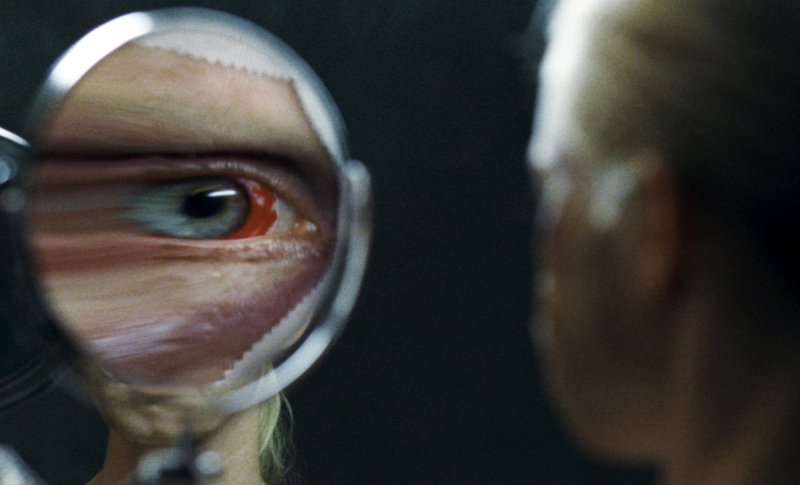
The four shots chosen from four horror films I’ve witnessed this month run the gamut of Cronenbergian body-horror mashed together with some Bentley Little-style narrative, a disturbing little family horror piece from Austria, a siege horror with major Biblical overtones right up to that rare sighting of a great horror western.

4 SHOTS FROM 4 FILMS

Goodnight Mommy (dir. by Veronika Franz and Severin Fiala)

Goodnight Mommy (dir. by Veronika Franz and Severin Fiala)

Bone Tomahawk (dir. by S. Craig Zahler)

Bone Tomahawk (dir. by S. Craig Zahler)

Let Us Prey (dir. by Brian O'Malley)

Let Us Prey (dir. by Brian O’Malley)

Starry Eyes

Starry Eyes (dir. by Kevin Kölsch and Dennis Widmyer)

Horror Trailer: Bone Tomahawk


Bone Tomahawk

We never have enough horror set in the Old West. It’s a setting that should be rife with infinite possibilities for some very scary storytelling.

When we do get Old West horror they tend to be direct-to-video and low-budget affairs. Now don’t get me wrong low-budget horror sometimes are some of the most effective. The closer it gets to it’s grindhouse roots the better. Then again some do end up being a pile of turds that end up getting relegated in the dollar bin at supermarkets.

My hope is that the latest Old West horror starring Kurt Russell will be the former and not the latter.

Bone Tomahawk made it’s premiere at this year’s Fantastic Fest and from all intents and purpose had a very positive reception to it’s genre mash-up of cowboys vs cannibals. Now what better way to follow-up The Green Inferno but with another cannibal fare set in the dusty plains and canyons of the Old West.