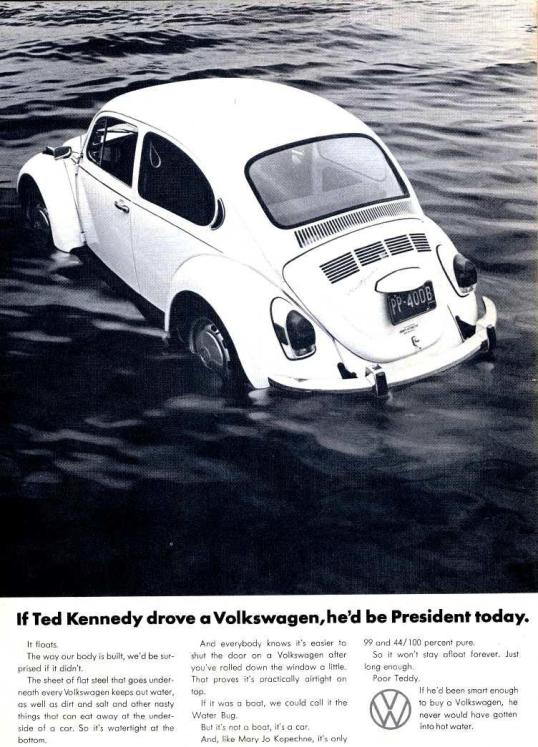
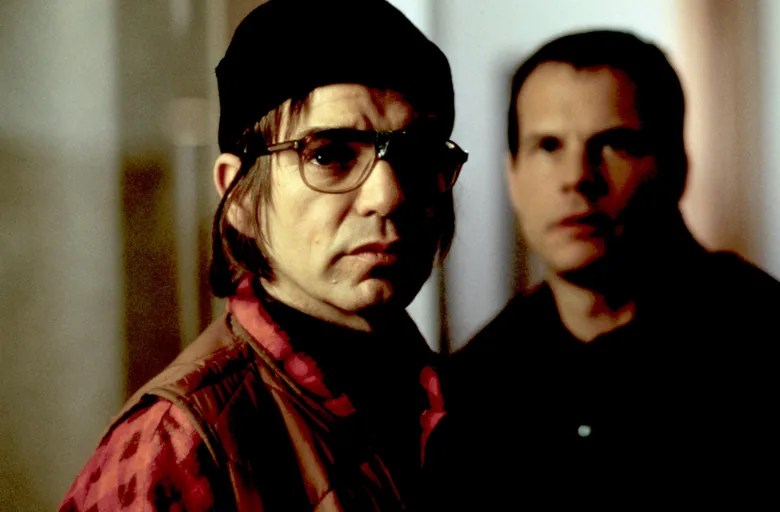
Sam Raimi directed A SIMPLE PLAN, a movie about two brothers and a friend who find a crashed plane on a nature reserve that just happens to have a bag of cash containing $4.4 million. What starts out as the potential answer to all of their problems turns out the biggest problem they’ll ever have to deal with.
Bill Paxton, Billy Bob Thornton & Brent Briscoe play the guys who find the money and come up with a plan to keep it. As you can imagine, it all goes to hell, with one thing leading to another thing that leads to another thing, and none of it good. The performances in this film are uniformly excellent, with Thornton as the standout. He completely disappears into his character and received an Oscar nomination for his work. It’s a great film, but it’s not exactly a fun film as we watch these characters’ lives turn into a slowly unfolding bus wreck. I watched it recently for the first time since I saw it in the theaters in 1998. Although I highly recommend it, I’m probably good for another couple of decades.
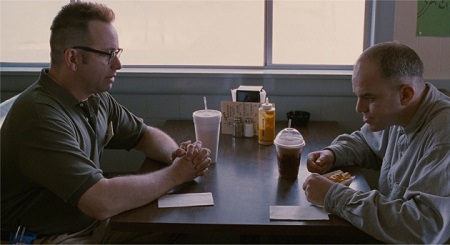
This scene with Paxton and Thornton is pretty sad and a pretty strong indicator of why money ultimately can never bring true happiness.
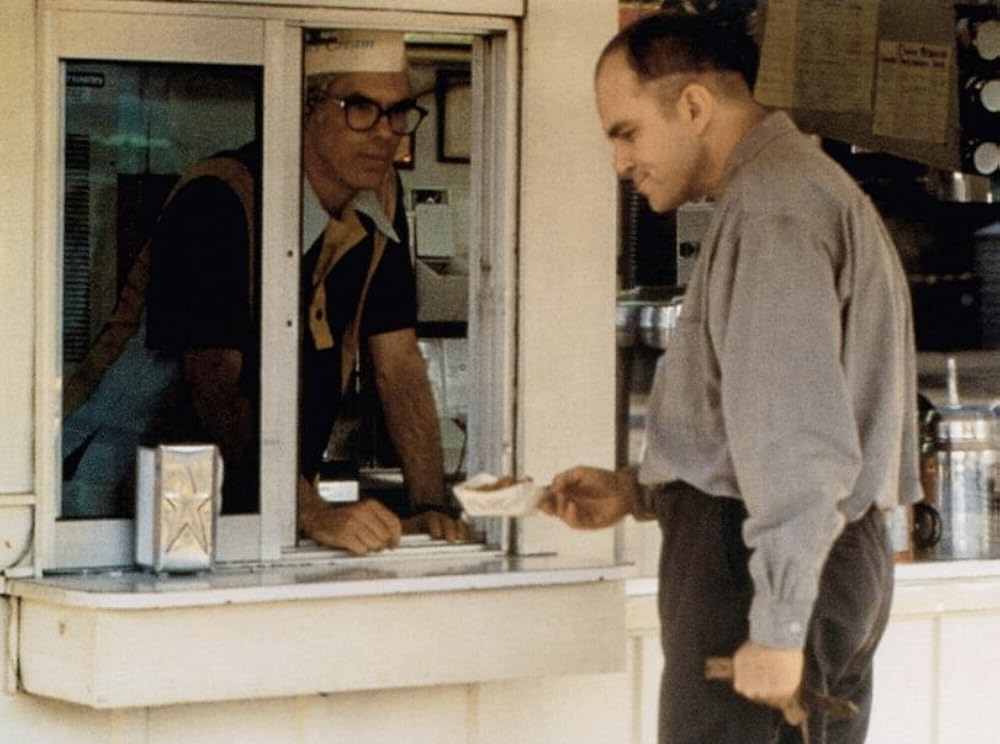
Way back in 1995, Jim Jarmusch gave Billy Bob Thornton a part in his film DEAD MAN. Well the next year, Billy Bob Thornton directed his own movie, SLING BLADE. He asked Jarmusch if he would do a small part in his movie. The resulting scene would be one of my favorites in the entire film. I still mention “French fried potaters” to this day, especially the “big ‘uns!” And I just love the fact that Jarmusch was right here in Benton, Arkansas.
The Frosty Cream is a McDonald’s now, but I love seeing the area how it was 30 years ago! Watch and enjoy!
I love watching movies that are filmed in my home state of Arkansas. We’ve had our share of big stars show up in the Natural State. Burt Reynolds, Billy Bob Thornton, Bill Paxton, Robert De Niro, Dennis Quaid, Matthew McConaughey, Tom Cruise and Andy Griffith have all filmed really good movies here. Martin Scorsese directed one of his very first movies in southern Arkansas. It’s going to be fun revisiting some of my favorite Arkansas movies and sharing them with you!
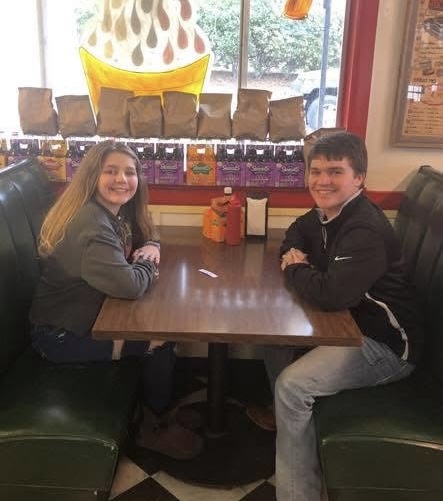
I live out in the country in Saline County, Arkansas. Back in 1996, Billy Bob Thornton wrote, directed and starred in a little film made right here called SLING BLADE (1996). It’s one of my favorite movies. Here’s a picture of our son and daughter sitting at the same table at Garry’s Drive-In Diner where Billy Bob Thornton and John Ritter sat in the movie.
Thornton stars as Karl Childers, a developmentally disabled man who was abused as a child by his parents and the other children in the community. At the age of 12, he murdered his mom and her teenage lover Jessie Dixon with a sling blade. After 30 years in the mental hospital, the state decides he’s no longer dangerous, so they give him his stack of books and send him on his way. Karl has no clue of how to get on with his life, but the administrator of the hospital (James Hampton) helps him get a job as a small engine mechanic in his hometown. Hanging out at the laundromat one day, Karl meets a boy named Frank (Lucas Black) and helps him carry his bags of clothes back to his house. The two become friends and start hanging out a lot together. Frank introduces Karl to his mom, Linda (Natalie Canerday), and her gay best friend and boss, Vaughan (John Ritter). Karl also meets Linda’s abusive and alcoholic boyfriend, Doyle (Dwight Yoakam). Karl grows to love Frank and Linda. When he witnesses a drunk Doyle’s abusive and threatening behavior towards Frank and Linda one night, Karl starts thinking that Doyle may really hurt his friends someday. He decides he’s going to make sure that can never happen.
First and foremost, I love SLING BLADE because of Billy Bob Thornton’s performance as Karl Childers. He had been developing the character of Karl for many years before the movie was made. He loved pulling “Karl” out when he was just hanging out and goofing around with his friends. He based his character on bits and pieces of so many different people in his life. As a native Arkansan, many of the words he says and the way he says them reminds me of different people I’ve known over the years. His opening monologue where he describes the murders of his mother and the young Jessie Dixon is a masterpiece in and of itself. Thornton created a truly unique character, and that’s extremely rare these days. It’s a performance for the ages and continues to inspire terrible imitations to this day!
The remainder of the cast in SLING BLADE is so good and natural. Lucas Black is phenomenal as Frank. Billy Bob Thornton has been asked how he got such a great performance from the then 12-year-old boy from Alabama. He says he didn’t get that performance; that’s just the kind of actor Lucas Black is. The relationship between Karl and Frank is the key to the film working, and Black is perfect. Natalie Canerday is excellent as Frank’s mom, Linda. She’s from Russellville, Arkansas, so her accent is authentic, and she just blends perfectly into the film. John Ritter provides a very solid supporting performance as Linda’s gay friend who cares deeply for her and Frank. Thornton was part of the cast of Ritter’s early 90’s sitcom with Markie Post called HEARTS AFIRE. He actually wrote this screenplay while working on the show. The two were great friends off camera and Ritter actually worried that he wouldn’t be able to give a serious performance opposite Thornton’s portrayal of Karl. And then there’s country music superstar Dwight Yoakam as the abusive bully Doyle Hargraves. He’s simply great in the film. He doesn’t just portray Doyle as a monster either. There are many people in this world like Doyle Hargraves, and Yoakam is able to capture that. Director Jim Jarmusch has a memorable cameo in the film. He sells Karl his “french fried potaters.” And the great Robert Duvall even makes a short appearance in the film as Karl’s dad. Duvall was over in the Memphis area filming his own movie A FAMILY THING, which was written by Thornton. He just made the 2 hour drive over for the day and filmed his scene.
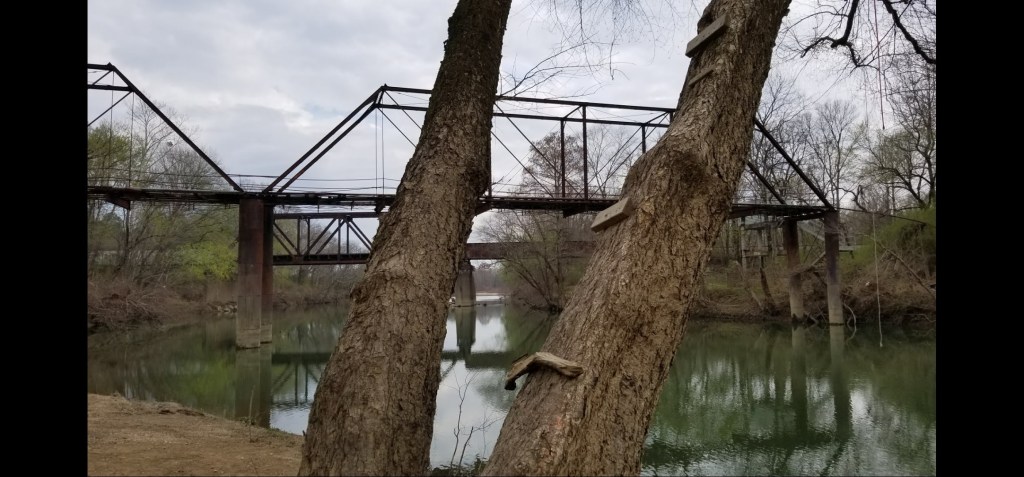
Every scene filmed in SLING BLADE is filmed here in Benton and Saline County. The opening and closing scenes between Thornton and actor J.T. Walsh at the “nervous hospital” were filmed at the old Benton Services Center, which is now a psychiatric nursing home just outside of Benton. I’ve driven by the location of the home where Linda and Frank lived. I drive by the laundromat where Karl meets Frank every time I go eat at Garry’s Sling Blade Drive-in. I’ve driven out to the bridge over the Saline River that is prominently featured in the film (see picture below). Heck, I even went to college at the University of Central Arkansas with one of the young ladies who interview Karl at the beginning of the film. I love this movie, and I’m so proud that it was filmed in my backyard.
SLING BLADE is an incredible film with a truly unique character at its center. The film is at times funny, heartbreaking, violent, slow, awkward, dramatic, and thrilling. It’s a resounding success for Billy Bob Thornton as a director, actor, and writer, even winning him an Oscar for his screenplay. I give this film my highest recommendation.
I’ve included the trailer for SLING BLADE below:
Past reviews in the #ArkansasMovies series include:
Just for the hell of it, I went on a little Robert Duvall marathon for his birthday on January 5th. I started the marathon off with his superior western with Kevin Costner, OPEN RANGE (2003). Next up was Duvall’s excellent crime film with Joe Don Baker and Robert Ryan, THE OUTFIT (1973). Duvall was in badass mode in this one. Based on one of Richard Stark’s “Parker” books, this was my first time to watch the film and damn, it was excellent. After that, I watched the bleak THE ROAD (2009), starring Viggo Mortensen, where Duvall just had a small part. It was a downer. I finished off the marathon late in the evening with A FAMILY THING (1996). I remember when this movie came out in the 1990’s because it was co-written by Billy Bob Thornton. Thornton was still a year away from his massive success with the movie SLING BLADE, but I knew him from his writing and co-starring in the superior crime film ONE FALSE MOVE (1991), as well as his small role in TOMBSTONE (1993). As an Arkansan, I knew Thornton was from Arkansas so I had taken a particular interest in him. But I was only 22 years old when A FAMILY THING was released, and a movie about a couple of old guys resolving family issues didn’t seem that appealing to me. As a guy into his 50’s, the entire concept seems more interesting to me now, so I gave it a spin for the first time to close out the marathon.
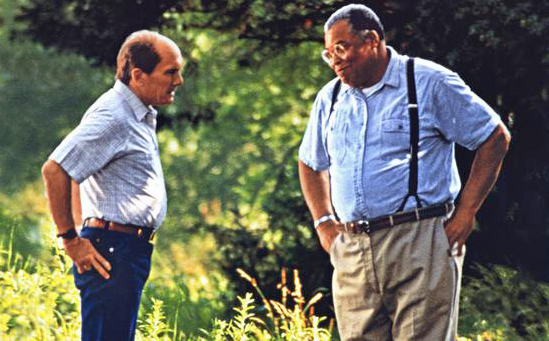
The story opens up in rural Arkansas with Earl Pilcher Jr. (Robert Duvall) getting the shock of his life when his beloved mother writes a final letter to him and instructs her local pastor to deliver it a few days after her death. The letter tells Earl that his biological mother was a black woman named Willa Mae who died in childbirth. It seems that Earl’s dad had gotten Willa Mae pregnant, and since he came out white, his “mother” was able to raise him as her own without having to tell him the truth. The letter also tells him that he has a half-brother named Ray Murdock (James Earl Jones) living in Chicago. It’s her dying wish that he meet Ray and get to know him as family. Pissed at his dad, and wanting to honor his mom, Earl heads to Chicago to meet Ray. Earl knows that Ray is a cop so he’s able to track him down. They immediately don’t like each other, but through a variety of circumstances, Earl ends up staying at Ray’s house for a couple of days. While there, he meets Ray’s wise, old Aunt T., Willa Mae’s sister (Irma P. Hall) and his sullen son Virgil (Michael Beach). Will the two men continue to push each other away, or will they eventually find the family connection that exists under all that messy past?
I was surprised how deeply I was affected by A FAMILY THING. I’d be lying if I said I didn’t get teary-eyed a couple of times. The movie may use issues of adultery and racism to get the ball rolling, but more than anything else, it seems to understand that life is messy and that people are messy. We’ll disappoint ourselves, we’ll disappoint other people, and other people will disappoint us. There’s a reason that many people find their love in dogs and cats instead of people, because real relationships can be tough. The truth about my own life is that I could not have appreciated this film in 1996 at only 22 years of age. I was too naive. That’s no longer the case in 2025, and I can now truly relate to this story of two men who share a painful history, find common ground, and decide it’s worth moving forward together because family really does matter.
A movie like A FAMILY THING has no chance of working without a great cast, and this movie is a thespian jackpot. Robert Duvall is spot on perfect as the good ole guy from Arkansas, with a little bit of a racism engrained down deep into his soul, who now has to deal with the fact that he is half black. The scene where he confronts his dad about the lies that had been told to him all his life is as good as it gets. James Earl Jones matches Duvall in the even trickier role as the man who has always known about his “white” half brother Earl. This man has buried his hatred away for Earl’s father for decades, who he blames for the death of his own mother, and now has to deal with those feelings being dredged back up to the surface when Earl shows up in Chicago. Jones perfectly balances his character’s desire to keep the past in the past, with his decency as a man who doesn’t want to just throw Earl out on the street. He eventually softens towards him no matter how much bitterness he has for Earl’s dad. And neither Duvall or Jones even give the best performance in the film. That honor goes to Irma P. Hall as the blind, but extremely perceptive Aunt T. She sees through all of their bullshit, as she states to each of them on different occasions, and encourages them to get to know each other because they’re family. As they play games of racism and bitterness, she reminds them they are brothers no matter the color of their skin. It’s the performance of a lifetime and was at least worthy of an Oscar nomination in my opinion.
Overall, A FAMILY THING may compress the amount of time and potential therapy it would take to resolve the type of family history presented here, but it does find a certain truth in the power of relationships. Earl and Ray don’t have to recognize the fact that they are brothers. As a matter of fact their lives are just fine without each other. But it’s their willingness to embrace the messy truth and find a way to connect with each other that makes the movie meaningful to me!
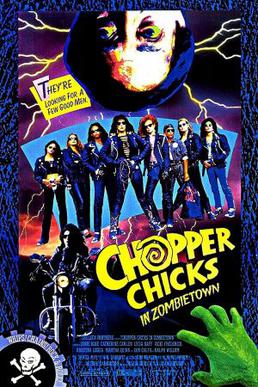
An all-women motorcycle gang called the Cycle Sluts roars through the desert. Why are they called the Cycle Sluts? As their leader puts it, they know what people are going to call them so they’re reclaiming the term for themselves. Nobody tells the Cycle Sluts what to do and nobody but the Cycle Sluts decides or defines who the Cycle Sluts are. They’re rebels and they’re singers, making music and fighting the patriarchy as they make their way through the dusty corners of America. Go, Cycle Sluts, go!
When the Cycle Sluts drive into the small desert town of Zariah, the residents are not happy to see them. Zariah is a peaceful and boring town and the citizens would like to keep it that way. The citizens are happy having a town where there’s only a few buildings, next to no businesses, and only a few residents. It’s a town where not much happens and everyone can live in peace, far away from all the evil temptations of the big city and corrupt civilization. However, the town becomes a lot less peaceful when the local mortician starts to bring the dead back to life. Soon, zombies are wandering through the desert on their way back to their former home and only the Cycle Sluts and a bus full of stranded blind kids can save the town!
That slight plot description probably tells you all you really need to know to get a feel for what type of film 1989’s Chopper Chicks in Zombietown is. It was released by Troma, which means that the humor is crude, the zombie attacks are bloody, and the film’s aesthetic is undeniably cheap. That said, the film itself is enjoyable when taken on its own dumb terms. The action moves quickly, the members of the cast perform their silly roles with an admirable amount of dedication, and the whole thing ends with a message of peace and equality. The townspeople learn how to be tolerant and the Cycle Sluts learn how to trust other people. It’s about as dumb as a movie about about bikers fighting zombies can be but it’s a surprisingly fun movie. It’s hard not to cheer a little when the Cycle Sluts and the towns people and the blind kids finally set aside their differences and do what has to be done. They even manage to save the life of a baby and anyone who has seen any other Troma films knows how rare that can be. In its way, Chopper Chicks in Zombietown serves as a reminded that not every Troma film is as bleak as Combat Shock or Beware! Children at Play. The Cycle Sluts do a good job and so does the film.
Speaking of doing a good job, keep an eye out for Billy Bob Thornton, making an early appearance as the unfortunate boyfriend of one of the residents of Zariah. Billy Bob seems to be having fun with this early job and his appearance here serves as a reminder that everyone started somewhere.
4 Or More Shots From 4 Or More Films is just what it says it is, 4 shots from 4 of our favorite films. As opposed to the reviews and recaps that we usually post, 4 Shots From 4 Films lets the visuals do the talking!
Today, we say goodbye to the man who was the great American novelist of his time. The shots below are all taken from films based on the work of Cormac McCarthy.
4 Shots From 4 Films
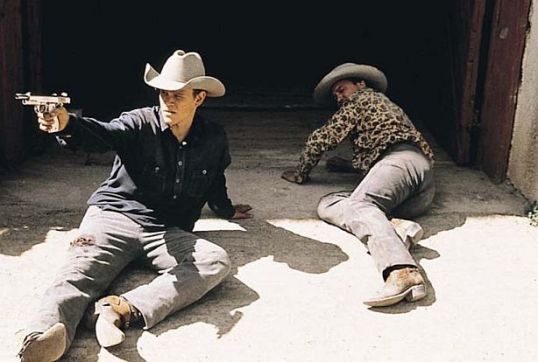
All The Pretty Horses (2000, dir by Billy Bob Thornton, DP: Barry Markowitz)
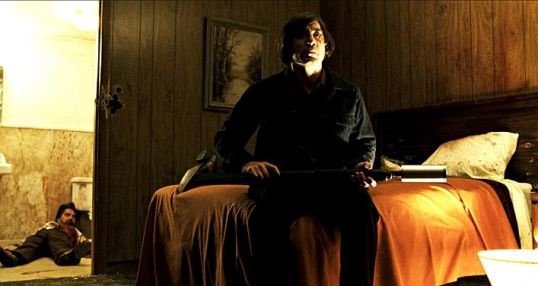
No Country For Old Men (2007, dir by Joel and Ethan Coen, DP: Roger Deakins)
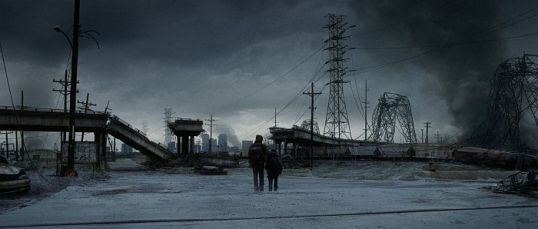
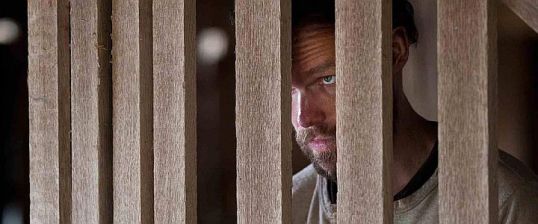
The Road (2009, dir by John Hillcoat, DP: Javier Aguirresarobe)
Child of God (2013, dir by James Franco, DP: Christina Varos)
A man known as the Driver (played by Dwayne Johnson) is released from prison, having served time for taking part in a bank robbery. As soon as he gets his freedom, the Driver is jumping in a fast car, driving across Nevada and California, and killing everyone who he believes set him up and murdered his half-brother. The Driver has even made out list of the people on whom he needs to get revenge. Among those on the Driver’s list are a nightclub bouncer, a snuff film producer, an traveling evangelist, and one name that the Driver has not bothered to write down.
As the Driver conducts his killing spree, he is pursued by two other men who each have their own reason for wanting to find him. The Cop (Billy Bob Thornton) is close to retirement and has a heroin addiction. The Killer (Oliver Jackson-Cohen) is a hit man who views murder as a personal challenge and who plans to marry his girlfriend (Maggie Grace) as soon as he takes care of the Driver.
Today, we take Dwayne Johnson’s superstardom for granted so it’s interesting to go back and watch a movie like Faster, which was made when Johnson was still best known as a wrestler and there were still doubts about whether or not he had the screen presence to carry an entire film on his own. Though Johnson’s character is the main character and it’s his single-minded quest for revenge that propels the plot, the film spends as much time with the Cop and the Killer as it does with the Driver. The Driver doesn’t get much dialogue. Instead, the majority of the Driver’s scenes emphasize Johnson’s physical presence, casting him as the unstoppable hand of fate. Johnson doesn’t really get to show what he can do as an actor until nearly halfway through the film, when the Driver has an emotional meeting with his mother. Johnson acquits himself well in the scene but it’s still obvious that the film was made before people realized that Dwayne Johnson really could act.
Seen today, Faster is a relentless and exciting B-movie. It’s fast-paced and, even if it doesn’t give Johnson a chance to say much, it’s smart enough to surround him with memorable character actors like Billy Bob Thornton, Tom Berenger, Adewale Akinnuoye-Agbaje, and Carla Gugino. Even without a lot of dialogue, Dwayne Johnson is such an imposing figure and has so much screen presence that he dominates the film in a way that it’s hard to believe that there were ever any doubts about whether or not he could be a film star. Faster holds up well, as both an action movie and star-making vehicle for Dwayne Johnson.
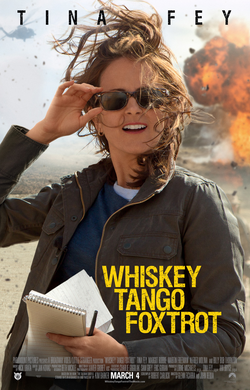
Some day, someone will get around to making the ultimate Tina Fey movie, which will basically just be 4 and a half hours of people talking about how much they love Tina Fey while Tina makes silly faces in the background. Until that day comes, viewers will just have to settle for Whiskey Tango Foxtrot.
In Whiskey Tango Foxtrot, Tina Fey plays Tina Fey playing real-life journalist, Kim Baker. When the film starts, Kim accepts an assignment as a war correspondent in Afghanistan. Though she starts out as neurotic and intimidated, Kim soon steps up and emerges as a passionate and committed journalist, one who is dedicated to revealing the truth — both good and bad — about what’s happening in Afghanistan. Helping her along the way is a BBC reporter, Tanya Vanderpool (Margot Robbie) and a Scottish photographer named Iain (Martin Freeman). Iain and Kim may be attracted to one another but Kim has a boyfriend (Josh Charles) back in New York. How long do you think it takes for Kim to catch her boyfriend cheating via Skype?
Whiskey Tango Foxtrot is one of those movies that you just know was made to be an Oscar contender. Not only does it deal with a big important subject but it stars a popular performer in a change-of-pace role. Except, of course, it’s not really that much of a change-of-pace. Tina Fey’s a good actress but you never forget that you’re watching Tina Fey. You never think to yourself, “Kim is caught in the middle of a firefight” or “Kim is getting addicted to the rush of being a war zone.” Instead, you think, “Any minute now, Tina Fey’s going to start shooting a gun and it’s going to be funny because she’s Tina Fey.” Towards the end of the film, when a U.S. soldier who has lost his legs tells Kim to never stop trying to tell the people the truth about what’s happening in Afghanistan, you don’t think, “Don’t give up, Kim!” Instead you think, “Wow — so that soldier lost his legs so that Tina Fey could have an Oscar moment.”
If I haven’t already made it clear, Whiskey Tango Foxtrot is an extremely uneven film, one that never seems to be sure if it wants to be a relationship comedy, a media satire, or a serious look at the realities of war. The film works best when it concentrates on the friendship between Tanya and Kim and it’s nice to see a film about two women who are colleagues and friends. When Tanya first showed up, I was worried that the film would devolve into one of those “Women can’t work together” diatribes or that Tanya would immediately be set up as some sort of mean girl rival for Iain. Instead, the film explores how women support each other through even the most difficult of circumstances. But then there’s other scenes that just don’t work as well, like the scenes with Alfred Molina as an Afghan politician who has a crush on Kim.
Whiskey Tango Foxtrot has its moment but ultimately its too uneven to be of much consequence.
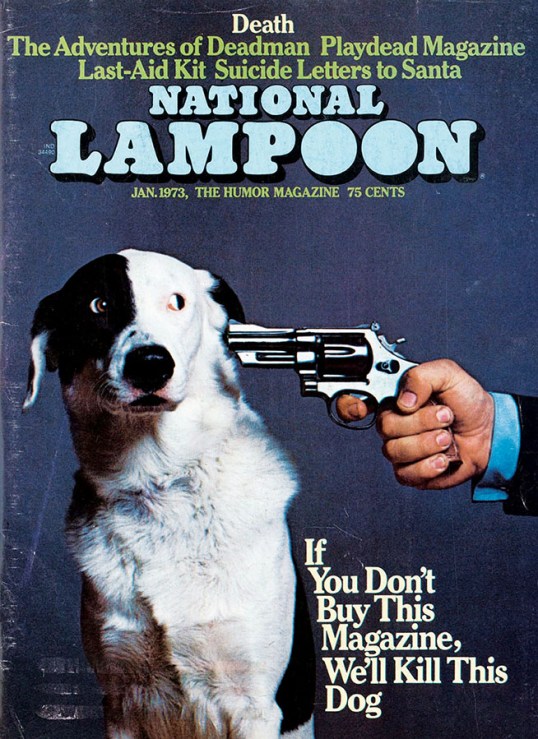
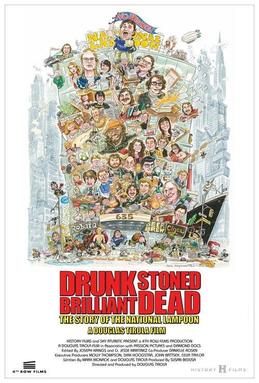
The documentary Drunk Stoned Brilliant Dead pays tribute to National Lampoon. Founded in 1970, National Lampoon was published for 28 years and, at the height of its popularity, its sensibility redefined American comedy. When it came to National Lampoon, nothing was sacred and nothing was off-limits. The success of National Lampoon led to a stage show called Lemmings and The National Lampoon Radio Hour, which featured everyone from John Belushi and Bill Murray to Chevy Chase and Harold Ramis. Michael O’Donoghue, famed for his impersonations of celebrities having needless inserted into their eyes, went from writing for the Lampoon to serving as Saturday Night Live‘s first head writer. National Lampoon’s Animal House, Vacation, and Caddyshack are three of the most influential film comedies ever made. Everyone from P.J. O’Rourke to John Hughes to The Simpsons‘ Al Jean got their start at National Lampoon.
As influential as it was, National Lampoon is a magazine that would not be able to exist today’s world. Just looking at the cover of most issues of National Lampoon would reduce today’s special little snowflakes to the point of hysteria. In Drunk Stoned Brilliant Dead, National Lampoon‘s publisher claims that the Lampoon ultimately ceased publication because the religious right threatened to boycott any company that advertised in the magazine. Today, it would be the “safe space” crowd complaining that the magazine did not come with proper trigger warnings. Lena Dunham would look at one issue and go into a rage spiral. Salon would publish a hundred hand-wringing think pieces about how National Lampoon was the worst thing since Ted Cruz. Colleges would ban it and religious groups would still burn it. National Lampoon was a magazine that went out of its way to be offensive to both the left and the right but, as editor-in-chief Tony Hendra puts it, the job of satire is to make those in power feel uncomfortable. By poking fun at everything and challenging its readers, National Lampoon exposed the absurdity behind both the country’s prejudices and some of its most sacred beliefs.
Drunk Stoned Brilliant Dead follows the National Lampoon from its founding to its ignominious end. Along with interviews with Lampoon alumni, it also features archival footage of both Lemmings and The Radio Show, providing glimpses of Christopher Guest, Bill Murray, John Belushi, Gilda Radner, and Harold Ramis before they became famous. There are also interviews with celebrity admirers of the Lampoon who talk about how the magazine inspired their own work. It makes sense that Judd Apatow was interviewed and Kevin Bacon made his screen debut in Animal House but what was Billy Bob Thornton doing there?
Unfortunately, drunk, stoned, brilliant, and dead describes some of the most important and talented figures in the Lampoon‘s history. The documentary especially focuses on Doug Kenney, the Lampoon’s co-founder. Everyone interviewed agrees that Kenney was a comedic genius who was also often emotionally troubled and who would vanish for months on end. After the initial critical failure of Caddyshack, Kenney disappeared in Hawaii. His body was later discovered at the bottom of the cliff. Did Kenney jump or did he slip or, as director John Landis suggests, was he murdered by a drug dealer? Nobody seems to know but Kenney’s ghost haunts the documentary. This collection of very funny people get very serious when it comes time to talk about Kenney’s death. Even Chevy Chase briefly redeems himself after years of bad publicity when he gets choked up.
Drunk Stoned Brilliant Dead is tribute to both a magazine and a bygone era. See it before it gets banned.
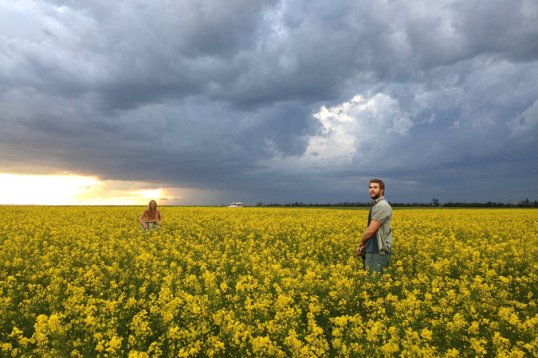
The image at the top of this post is taken from the film Cut Bank and features Teresa Palmer and Liam Hemsworth. It’s a striking picture, isn’t it? If there’s anything positive that can be said about Cut Bank, it’s that it’s a visually striking film. Some of the film’s images compare favorably with the work of the Coen Brothers in No Country For Old Men and Fargo.
(Perhaps not surprisingly, the film’s director, Matt Shakman, previously directed two episodes of the Fargo tv series.)
Of course, it’s not just the film’s visual style that will remind you of the Coens. The plot is full of Coen DNA as well and that’s a bit of a problem. The thing that sets the Coen Brothers apart from other directors is that only they seem to understand how to best pull off their unique brand of ironic quirkiness. It’s difficult to think of any other director who could have done A Serious Man,Burn After Reading, or any other Coen film. It’s telling that whenever other directors have attempted to film a Coen Brothers script — whether it was Angelina Jolie with Unbroken or Steven Spielberg with Bridge of Spies — the resulting film has almost always been overwhelmingly earnest. (If you try, you can imagine a Coen-directed version of Bridge of Spies, one with Josh Brolin in the Tom Hanks role, Steve Buscemi as Rudolph Abel, and maybe Bruce Campbell as a CIA agent.) The Coen style is one that has inspired many a director but ultimately, it seems to be something that only the Coens themselves are truly capable of pulling off.
(Though Ridley Scott came close with the underrated The Counselor…)
Plotwise, Cut Bank has everything that you would normally expect to find in a Coen Brothers film. For instance, it takes place in Cut Bank, Montana and, much as in Fargo and No Country For Old Men, a good deal of time is devoted to detailing the oddness of life in the middle of nowhere. Also, much as in Fargo and No Country For Old Men, the entire film revolves around an overly complicated crime gone wrong.
Dwayne McLaren (Liam Hemsworth) has spent his entire life in the Montana town of Cut Bank and is looking for a way to get enough money to move out to California with his beauty pageant-obsessed girlfriend, Cassandra (Teresa Palmer). Dwayne learns that the U.S. Postal Service will pay a reward to anyone who provides information about the death of a postal worker. One day, while filming one of Cassandra’s pageant audition videos, Dwayne accidentally films both the shooting of mailman Georgie Wits (Bruce Dern) and the theft of his mail truck.
Wow, what luck!
Sheriff Vogel (John Malkovich) throws up as soon as he hears about the murder. After all, he’s never had to investigate one before. Town weirdo Derby Milton (Michael Stuhlbarg) is upset that the stolen mail truck contained a parcel that he was waiting for. Meanwhile, Big Stan (Billy Bob Thornton), who happens to be both Cassandra’s father and Dwayne’s boss, seems to be suspicious about how Dwayne just happened to be in the field at the same time that Georgie was getting killed…
Dwayne’s efforts to collect his reward are stymied by the fact that postal inspector Joe Barrett (Oliver Platt) doesn’t want to hand over any money until Georgie’s body has been found. Unfortunately, it’s going to be difficult for anyone to find Georgie’s body because Georgie is still alive! That’s right — Georgie’s been working with Dwayne the whole time…
Meanwhile, it turns out that Derby is not someone you want to mess with. In fact, he’s just as efficient a killing machine as Javier Bardem in No Country For Old Men. And Derby is determined to retrieve his parcel…
Cut Bank got an extremely limited release in April of this year and it didn’t get much attention. To a certain extent, I can understand why. It’s a film that has its moments but ultimately, it’s never as good as you want it to be. The best thing about the film is that it features a lot of eccentric actors doing their thing. Any film that allows Bruce Dern to interact with Michael Stuhlbarg deserves some credit. Unfortunately, Dwayne and Cassandra are not particularly interesting characters and Hemsworth and Palmer give rather one-dimensional performances. Since you don’t care about them, you don’t really care if Dwayne’s scheme is going to work out. William H. Macy may have been a despicable loser in Fargo but you could still understand what led to him coming up with his phony plan and you felt a strange mix of sympathy and revulsion as everything spiraled out of his control. The same can be said of Josh Brolin in No Country For Old Men. Dwayne, however, just comes across like someone who came up with a needlessly complicated plan for no good reason.
In 2013, the script for Cut Bank was included as a part of the Black List, an annual list of the “best” unproduced scripts in Hollywood. What’s odd is that, for all the hype that goes along with being listed, Black List scripts rarely seem to work as actual films. Oh sure, there’s been a few exceptions. American Hustle was on the Black List, for instance. But a typical Black List film usually turns out to be something more along the lines of The Beaver or Broken City. Watching Cut Bank, I could see why the script generated excitement. The story is full of twists and all of the characters are odd enough that I’m sure readers had a lot of fun imagining which beloved character actor could fill each role. Unfortunately — as so often happens with Black List films — the direction does not live up to the writing. Yes, the plot is twisty and there’s a lot of odd moments but the film never escapes the long shadow of the films that influenced it.



 The documentary Drunk Stoned Brilliant Dead pays tribute to National Lampoon. Founded in 1970, National Lampoon was published for 28 years and, at the height of its popularity, its sensibility redefined American comedy. When it came to National Lampoon, nothing was sacred and nothing was off-limits. The success of National Lampoon led to a stage show called Lemmings and The National Lampoon Radio Hour, which featured everyone from John Belushi and Bill Murray to Chevy Chase and Harold Ramis. Michael O’Donoghue, famed for his impersonations of celebrities having needless inserted into their eyes, went from writing for the Lampoon to serving as Saturday Night Live‘s first head writer. National Lampoon’s Animal House, Vacation, and Caddyshack are three of the most influential film comedies ever made. Everyone from P.J. O’Rourke to John Hughes to The Simpsons‘ Al Jean got their start at National Lampoon.