It’s always good fun until someone gets pushed down a flight of stairs.
That’s a lesson for us all.
Enjoy!
It’s always good fun until someone gets pushed down a flight of stairs.
That’s a lesson for us all.
Enjoy!
Welcome to Late Night Retro Television Reviews, a feature where we review some of our favorite and least favorite shows of the past! On Sunday, I will be reviewing the Canadian series, Degrassi: The Next Generation, which aired from 2001 to 2015! The series can be streamed on YouTube and Tubi.
This week, we have a very special episode of everyone’s favorite Canadian show. Degrassi goes there!
Episode 2.16 “Message In A Bottle”
(Dir by Bruce McDonald, originally aired on August 1st, 2003)
The school’s basketball team is finally doing well and Jimmy decides to throw a party at his apartment to celebrate. (As usual, Jimmy’s parents are out of town.) Paige is having a spa weekend so she doesn’t come. Ellie is too busy pretending to be Marco’s girlfriend to come. J.T. and Toby? Forget it. This is so not their scene that they’re not even in this episode!
Ashley come to the party with Terri. If nothing else, this reminds us that Terri is still a character on the show and she hasn’t suffered any school-ending brain damage at the hands of Rick Murray …. not yet, at least. Jimmy is excited to Ashley. However, romance will have to wait because Sean shows up drunk and accidentally breaks a liquor bottle. Jimmy throws a fit. That’s not a surprise. Jimmy’s always upset about something.
For that matter, so is Sean. Sean, however, has more reasons to be upset than Jimmy. His parents are drunks. His older brother, Tracker, cannot hold down a job, despite having a supercool name like Tracker. In this episode, Emma tells Spike and Snake that Sean will be joining them for dinner without bothering to ask Sean beforehand. Sean actually handles the first part of the dinner fairly well. But then, during the second half of the dinner, he sneaks some alcohol and becomes convinced that Spike is talking down to him. Myself, I’m more concerned about the fact that they ate a sushi dinner despite the fact that Spike is pregnant.
Emma comes to Jimmy’s party, looking for Sean after Sean storms out of dinner. Emma assumes that it’s all her mom’s fault but Sean admits that he’s been drinking and he overreacted. Sean is stunned when Emma calls her mom for a ride home. Sean can’t imagine living with a parent who isn’t abusive. That’s actually really, really sad. Daniel Clark always did a great job as Sean and that’s certainly the case here. Clark elevates this episode above being a typical anti-drinking episode. I appreciated that the episode didn’t judge Sean and that it didn’t lecture him. It’s as if the show understood that Sean felt bad enough without having every other character go off on him. At least during the early seasons, that’s one thing that set Degrassi apart from other high school shows.
The episode ends with forgiveness, which was sweet. Sean thinks Emma is going to dump him. Emma tells him that everyone makes mistakes. And that’s true! This was a good episode.
I spent most of this week working on a writing project so I didn’t watch much. But, for those curious, here’s what I did watch!
Films I Watched:
Live Tweets:
4 Scenes From 4 Films:
Scenes I Love:
Songs of the Day:
Music Videos of the Day:
Artwork of the Day:
Links From Last Week:
News From Last Week:
Links From The Site:
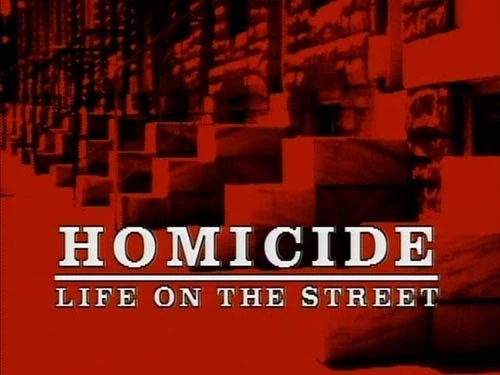
Welcome to Retro Television Reviews, a feature where we review some of our favorite and least favorite shows of the past! On Sundays, I will be reviewing Homicide: Life On The Street, which aired from 1993 to 1999, on NBC! It can be viewed on Peacock.
Pembleton’s back!
Episode 5.9 “Control”
(Dir by Jean de Segonzac, originally aired on December 6th, 1996)
A drug dealer named Reggie Copeland has been murdered and word on the street is that the killing was set up by Junior Bunk (Mekhi Phifer), who just happens to be the nephew of drug lord Luther Mahoney (Erik Todd Dellums). When Lewis and Detective Stivers (Toni Lewis) arrest Junior, he immediately starts crying.
That certainly makes Lewis happy. He’s obsessed with taking down Mahoney. Junior gives the detectives the name of the man who he hired, on Luther’s behalf, to assassinate Copeland. Munch and Lewis take a trip to the worst city on Earth (Philadelphia, if you had to ask) and arrest the gunman. Even Ed Danvers thinks that they’re finally on the verge of nailing Luther….
Luther, it turns out, has got friends everywhere. Even while sitting in a holding cell, he is able to find out the name of the hotel where the police are hiding Junior. When the cops order room service, Junior makes sure that a baggie with two gold stars is included in Junior’s sandwich. (All of Luther’s heroin comes in baggies with two stars.) Junior realizes that Luther knows exactly where he is. Junior refuses to testify and recants his previous confession. And Luther … Luther goes free again!
Kellerman would be upset, except for the fact that he’s still under suspension. (They’re really dragging this story out, aren’t they?) Kellerman is in such a bad mood that he even kicks Brodie off of his house boat for being too happy. However, at the end of the episode, Dr. Cox shows up at Kellerman’s houseboat. I’m going to guess that she’ll be allowed to stay on the boat.
However, the main event of this episode is that Pembleton is working his first case since his stroke. A woman has been found dead in her home, stabbed twenty times. Meanwhile, her two young sons were both shot execution style. Bayliss may be the primary but Pembleton is determined to take charge. Pembleton thinks that the murderer was the woman’s boyfriend, a sleazy musician named Jimmy Sutter (Andrew DeAngelo). Bayliss thinks that the murderer was the woman’s rigid ex-husbad, Lt. Commander Alex Clifton (Michael Gaston).
From the start, it’s pretty obvious that Clifton’s the murderer. He’s too cold and unemotional when he is told about the murderers. He’s very tightly wound. The fact that the woman was killed in a fury but her children were killed “cleanly and efficiently,” (as Pembleton put it) indicated to me that the murderer was driven by rage against the mother but, in his twisted way, he felt he was sparing the children an even worse fate. Clifton is obviously the killer and Pembleton, to his credit, eventually comes to realize it.
Unfortunately, the case nearly falls apart in the Box. Pembleton and Bayliss have lost their rhythm as partners. Bayliss gets frustrated when Pembleton suddenly starts asking Clifton about the blood pressure medicine he takes. “Do you get any side effects?” Pembleton asks. Outside of the interrogation room, Bayliss admits that he’s scared Pembleton is going to “stroke out” and die. “Everyone dies!” Pembleton says.
Finally, Bayliss and Pembleton make it work. They turn up the heart in the Box and when Clifton takes off his jacket and very carefully folds it, Bayliss presumes to sit down on the jacket. Clifton keeps taking the jacket back and refolding it. Bayliss spills water on the jacket. Clifton finally loses it, yelling and admitting that he killed his ex-wife and his two sons.
Wow, this was a good episode. Michael Gaston give a chillingly believable performance as Clifton. Erik Todd Dellums was, as usual, magnetically evil as Luther. Best of all, it was good to see Kyle Secor and Andre Braugher working a case together. Pembleton is back and it’s about time!

As soon as I finished watching COLD WAR (2012), I went to the fridge, grabbed myself a refreshing beverage and immediately started up COLD WAR II (2016). The original film ends on a cliffhanger, so I was excited to see what happens next!
COLD WAR II opens right after the events of the first film, resolves its pressing cliffhanger in the first 20 minutes, and then doubles down on the intrigue and political power plays that defined the original. I don’t want to give away too much of the plot, so as not to take away some of the fun surprises. I will say that most sequels go bigger by doubling body counts or explosions, but in this film the conspiracies just get a lot deeper, and the political manipulations start reaching for much broader power. I still found the situations to be interesting thanks to the intense atmosphere of the film and the strong performances of the cast.
In the roles of Sean Lau and M.B. Lee, Aaron Kwok and Tony Leung Ka-fai continue to excel, but circumstances quickly erode some of the goodwill that was created between their characters at the end of the first film. This temporarily creates the risk that this follow-up could end up feeling like a retread of their heated rivalry in part 1. Higher, even more personal stakes helped alleviate some of that concern.
The best thing that happens for COLD WAR II is the addition of Chow Yun-fat to the cast in the important supporting role of Oswald Kan. Kan is a former judge and brilliant legal mind who leads a special committee investigating the fallout from the events of the first film. The middle section of the film features a series of scenes with Chow in intense confrontations with both Tony Leung and Aaron Kwok. It’s especially fun seeing Chow mix it up with Tony as their careers go way back to working with each other in classics like PRISON ON FIRE (1987) and A BETTER TOMORROW III (1989). These scenes freshen up the material, but they also connect us emotionally to Hong Kong cinema of the golden years through one of its biggest, most honorable stars. Chow gives the film a moral center as Oswald Kan seems free from the ethical compromises that our other main characters are having to make. It’s an impressive and charismatic turn from Hong Kong’s all-time greatest leading man.

Just as in the first film, there aren’t a lot of action scenes, but the ones we have are bigger and even more impressive. There’s an action sequence in a tunnel about an hour into the film that blew me away with its execution and intensity. Its resolution also surprised me, which is not always easy to do. Still, this incredible scene serves the plot well, providing clear and obvious motivation for the actions of each of the main characters throughout the remainder of the film.
COLD WAR II follows the motto of most sequels to box office smashes… “Go big or go home!” While the plot becomes even more complicated this time around, the continued excellence in the performances, especially with the addition of Chow Yun-Fat, helps to provide the solid emotional payoffs needed to keep the series moving forward. With the excellent action set pieces also adding to the fun, the filmmakers have managed to create a sequel that I rate just as high as the original. Now, bring on COLD WAR 1994!
COLD WAR II is currently streaming on Amazon Prime, Tubi, PlutoTV, Plex, and the Roku Channel!

Girl by Kevin J. Taylor: Taboo Erotica That’s Pure ’90s Id
As a collector of comics of all kinds during the ’90s and early aughts, Girl was one of those titles relegated to the adult section of the comic book store—I can attest that many teens eyed that area with reverence and anticipation for the guilty pleasures awaiting them. Most would be disappointed with the stuff on those shelves, but Taylor’s comic series was not one of them; for good or ill, it drew people in like a magnet. The comic gained a wider audience when released by NBM Publishing in 1999, but comic fans knew of this series much earlier when it had been self-published by Taylor during the early ’90s.
It stars “Girl,” this busty dancer-turned-witch who kicks off the fun at the Cloven Hoof occult shop and her gig at the Kat Kat club, where her moves accidentally unleash horny hellspawn. Across its run, the project is made up of two volumes of the mainline Girl title and several spin-offs and related books, including Rule of Darkness, Co-Ed Diaries, Body Heat, Kama Sutra, and others, which together expanded the series into a larger adult-comics universe. Across these volumes, it’s all lust-fueled peril, and yeah, this review’s diving into why some see it as liberating pulp heaven while others call it a hot mess of outdated tropes.
Girl’s deal is simple but addictive: she’s slinging spells and poles, calling up demons for kinky romps that go sideways fast. Early books like the debut hit hard with quick chaos, then you get Body Heat packing erection-themed shorts, Rule of Darkness going full occult gloom, and the Second Coming trilogy ramping up to orgy-apocalypses. It’s got that Tales from the Crypt meets Penthouse vibe—grimy city nights bleeding into fiery underworld hookups—keeping things pulpy without pretending to be deep lore.
On the “artistic freedom” side, Taylor just lets it rip, with Prince emerging as a huge influence on the character designs—the artist himself channels a deep fascination with the musician, using his sleek likeness and glam swagger as the base for many male characters, while Girl struts as an avid Prince fan herself. Girl’s no victim; she starts the pacts, outsmarts devils, and owns her body like a boss, which felt super rebellious back when comics were getting all sanitized. The black-and-white art? Killer—curvy shadows, dynamic spreads of tentacle tangles and mid-air ecstasy that scream Frazetta pin-ups with a naughty twist. The series was mostly in black-and-white art in the first 10-15 years but soon transitioned to full color in the 2000s. Fans ate it up as a no-holds-barred fantasy zone, where exaggerated boobs and bad puns (“demonically delicious!”) were just part of the campy fun, echoing Heavy Metal‘s glory days.
But flip the coin, and it’s not just leaning into what critics see as perpetuating racial and sexual stereotypes—it’s also pushing the sort of extreme pornography that had American suburbia up in arms, with the series causing further controversy due to its treatment of organized religion which only fed the outrage from that crowd. The sexual stuff cranks stripper tropes to eleven, with Girl and sidekicks like Jill (Part-Time Lover) as walking wet dreams, consent blurring in demon romps that mix peril with nonstop explicit action.
Demons often play the exotic, hulking “other” with dark skins and primal urges chasing pale flesh, hitting cringey colonial fetish notes alongside graphic tentacle play and orgies that made PTA moms freak—think full-frontal infernal excess way beyond tame T&A, all while mocking holy symbols, clergy, and sacred rituals in ways that had church groups seeing red. Not outright hateful, but that combo of lazy shorthand, boundary-smashing smut, and anti-religious jabs made it feel regressive instead of edgy, sparking real backlash in the buttoned-up ’90s heartland.
Taylor’s visuals carry the load, no doubt. Rule of Darkness nails shadowy ritual vibes with flames licking curves, Body Heat‘s shorts flex his anatomy game without going full cartoon, and Second Coming ties it into bigger stakes. Monochrome keeps it intimate and gritty, though the hyper-proportions can tip into caricature, and repetition sets in by later volumes like Body Heat 2.
Girl stands as a vivid ’90s time capsule, capturing an era of unrestrained excess before cultural sensitivities tightened. Advocates for artistic freedom argue that its stereotypes and provocative content serve as exaggerated satire, offering an unfiltered outlet for taboo fantasies; critics counter that it reinforces harmful tropes while thrusting shocking imagery into the face of mainstream discomfort. Taylor’s independent spirit is evident throughout, influencing contemporary erotic webcomics, though the series ultimately compels readers to weigh its bold expression against its problematic elements.
The series itself, which began as a backroom, self-published adult comic and then gained a wider audience during the late ’90s and early aughts, has returned to its early roots as Taylor has resumed self-publishing via online crowdfunding. Pros: raw, unfiltered energy and drool-worthy art. Cons: shallow plots, iffy ethics, and those dated vibes. Girl is guilty-pleasure nitro—dive in if you’re game, but don’t say I didn’t warn ya about the demons.
Previous Guilty Pleasures
This is the song that gave it’s title to one of the best films ever made.
My my, hey hey
Rock and roll is here to stay
It’s better to burn out
Than to fade away
My my, hey hey.
Out of the blue
and into the black
They give you this,
but you pay for that
And once you’re gone,
you can never come back
When you’re out of the blue
and into the black.
The king is gone
but he’s not forgotten
This is the story
of a Johnny Rotten
It’s better to burn out
than it is to rust
The king is gone
but he’s not forgotten.
Hey hey, my my
Rock and roll can never die
There’s more to the picture
Than meets the eye.
Hey hey, my my.
Songwriters: Neil Young and Jeff Blackburn
4 Shots From 4 Films is just what it says it is, 4 shots from 4 of our favorite films. As opposed to the reviews and recaps that we usually post, 4 Shots From 4 Films lets the visuals do the talking!
Today, the Shattered Lens wishes a happy birthday to Scottish director, David MacKenzie! It’s time for….
4 Shots From 4 David MacKenzie Films

Happy Mother’s Day! Today, we celebrate all of the moms who are still here and also the the legacy of all of the strong women who have passed on but whose memory we will always cherish and whose legacy we will always carry. This painting always reminds me and Lisa of our mom. We are incredibly blessed to be her daughters.