Filmed over the course of one night on Fremont Street in Las Vegas, the music video for I Still Haven’t Found What I’m Looking For accomplished two things. First, it showcased the members of U2 at their most approachable and likable. (There was a brief moment time when you could use those two words when talking about U2, as strange as it may seem today.)
Secondly, it did wonders to improve the image of Las Vegas as a city. Instead of focusing on people gambling away their life savings, I Still Haven’t Found What I’m Looking For portrayed Vegas as a friendly and diverse city where, if you go out on the right night, you might even run into one of the biggest bands in the world. According to civic leader Pat Christensen in a 2002 interview with the Las Vegas Review Journal, “”The whole perception of Vegas changed with that video. Now all the big names come here, some of them five, six times a year.”
As usual, in this video, the focus is on Bono and the Edge. Larry Mullen, Jr. and Adam Clayton are both present but it would be easy to mistake them for being a part of the crowd that gathers to watch The Edge play his guitar. Perhaps that is why, at the end of the video, Adam appears to just wander away from the shoot and get in a waiting taxi cab.
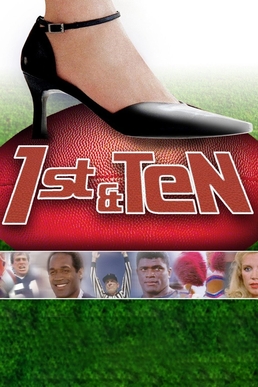
Welcome to Late Night Retro Television Reviews, a feature where we review some of our favorite and least favorite shows of the past! On Wednesdays, I will be reviewing 1st and Ten, which aired in syndication from 1984 to 1991. The entire series is streaming on Tubi.
This week, OJ Simpson is stalked by an abhorrent admirer!
Episode 5.3 “Fale Start”
(Dir by Stan Lathan, originally aired on October 25th, 1989)
Johnny Gunn, the new quarterback, is injured while leading the Bulls to victory in their latest game. Westwood, who has an unexplained dislike for Gunn, convinces the drugged quarterback to sign away his power of attorney and then has Gunn undergo a risky surgery. When Gunn realizes what has happened, he goes to the construction site of Westwood’s new house and knocks a few things over. The lesson? When your quarterback has just finished spending several years in prison for manslaughter, don’t upset him.
Dr. Death is stunned to discover that the highest bidder in the “Win a Day With Dr. Death” auction was not Heather Locklear but instead Carlyle Trent (Vince Edwards), a motorcycle-riding millionaire who happens to be gay. (Trent was obviously based on publisher Malcolm Forbes Sr.) Trent thinks that Dr. Death might be gay too. Oh, the hilarity, I guess. Actually, this storyline wasn’t as homophobic as one might expect from 1st & Ten. One of cool things about Dr. Death is that, despite his fearsome image, he’s usually the most open-minded and least prejudiced of all of the Bulls.
Finally, TD Parker (OJ Simpson) finds himself being stalked by a woman named Lisa (Laura Alavarez). Hey, that’s my name! Anyway, what starts as a one night stand ends with OJ having to talk Lisa out of shooting him and Kristy. Wow, OJ Simpson getting stalked by a homicidal maniac. Who would have guessed?
This episode tried to cram three big storylines into just 24 minute and, as a result, everything ended up feeling a bit half-baked. Last season, for all of its flaws, did seem to have a definite destination in mind, The Bulls were finally going to win the Championship Game. This season, on the other hand, has been all over the place.
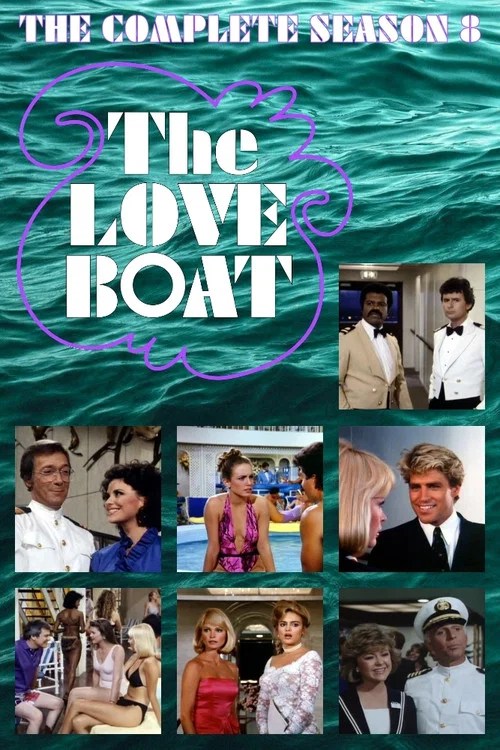
Welcome to Retro Television Reviews, a feature where we review some of our favorite and least favorite shows of the past! On Wednesdays, I will be reviewing the original Love Boat, which aired on ABC from 1977 to 1986! The series can be streamed on Paramount Plus!
Is your mind on a new romance? Are you ready to set sail for adventure?
Episode 8.11 “My Mother, My Chaperone/The Present/The Death and Life of Sir Albert Demerest/Welcome Aboard”
(Dir by Richard Kinon, originally aired on November 24th, 1984)
Your Love Boat crew is sailing to London!
This is another one of those two-hour episodes that was shot on location. I always enjoy these episodes, even if they are mostly just extended travelogues. This one actually has a few good storylines to go along with the scenes of the crew walking around London and France.
For instance, Marc Singer plays John Neary, Judy’s ex-husband who boards the cruise in an attempt to win her back. This was the first storyline to really feature Judy as someone other than just the perky replacement for Julie. We saw how happy she was at the prospect of getting together with John but we also saw how John consumed her life to the extent that she started screwing up at work. When John suggested that Judy’s job really wasn’t that important to begin with, we saw why their marriage failed in the first place. This was the first episode in which Judy really felt like a member of the group.
Colleen Dewhurst played Maud Correll (Colleen Dewhurst), a former actress who is sailing to London with her son, Byron (Peter Barton). On the cruise, Maud tells Byron that his father is actually the distinguished actor, Sir Albert Demerest (Trevor Howard). In London, Maud and Sir Albert meet and, in a wonderfully acted scene, Sir Albert says he isn’t sure that he wants to meet the son that he previously didn’t know he had. “It’s been 20, 21 years,” Sir Albert says, “it’s too late.” Still, Byron wants to be an actor and he visits Sir Albert at work. Albert is filming a commercial and he keeps flubbing his lines. At first, Byron is upset that his father would sell out his talents but eventually, he comes to understand that, sometimes, an actor doesn’t have a choice. The bills have to be paid.
This story was surprisingly good. Dewhurst, Howard, and Barton all gave heartfelt performances. Howard was obviously not in the best of health when he appeared on The Love Boat but his fragile appearance only adds to the poignance of the story.
Speaking of good performances, the great German actress Lili Palmer plays novelist Lily Marlowe. Lily is a cynic about love and she’s concerned when she sees that her virginal daughter, Samantha (Anna-Alicia), is falling for Roger Wembly (Morgan Stewart). And when Samantha runs into Roger’s wife in London, it appears that Lily is right. However, Roger then takes over Speakers’ Corner and gives a speech about how much he loves Samantha and how he and his wife are getting divorced. He wins over both Samantha and Lily. While the story might have been a standard Love Boat melodrama (and how convenient was that divorce?), the scenes of Lily, Samantha, and Roger in London were nice to look at. (Rainy, misty London was lovely.) And the use of Speakers’ Corner was a reminder of what the UK used to be.
Finally, Kathy Ross (Loretta Swit) decides to test the fidelity of her husband, Leonard (Dennis Holahan), by hiring a prostitute to seduce him. The prostitute, Monika (Catherine Oxenberg), hopes to get her hands on Leonard’s money by lying and breaking up his marriage with Kathy. But, after seeing how terrible Leonard feels after Kathy leaves him, Monika has a change of heart and tells the truth. This was the weakest of the episode’s stories but Catherine Oxenberg did have a few funny lines.
All in all, this was a great cruise! London brought out the best of The Love Boat.
“You were never there for me, were you, Mother? You expected Mike and Carol Brady to raise me! I’m the bastard son of Claire Huxtable! I am a lost Cunningham! I learned the facts of life from watching The Facts of Life!” — Chip
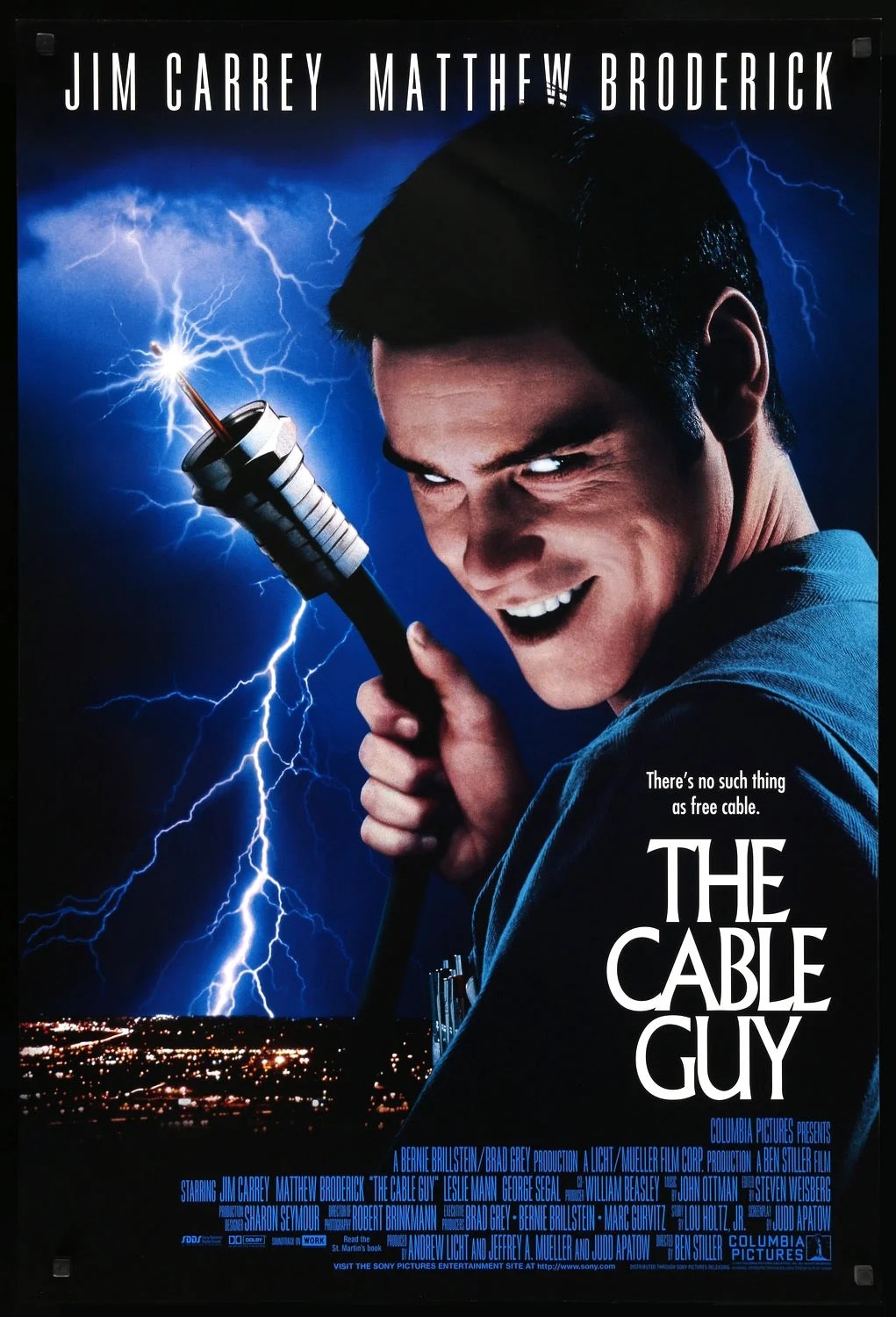
Few 1990s studio comedies are as awkwardly fascinating—or as misunderstood on arrival—as The Cable Guy. Directed by Ben Stiller and built around one of Jim Carrey’s most deliberately uncomfortable performances, it arrived at a strange point in Carrey’s career: he had become a massive box-office draw through films such as Ace Ventura: Pet Detective, The Mask, Dumb and Dumber, Batman Forever, and Ace Ventura: When Nature Calls. Audiences associated him with rubber-faced chaos, exuberant catchphrases, and a kind of manic but fundamentally likable comic energy. The Cable Guy offers something much colder. Carrey is still loud, physical, and wildly committed, but the movie twists those familiar traits into a portrait of loneliness, obsession, and emotional menace. It is a dark comedy about a man who has absorbed television culture so completely that he cannot form a normal human relationship without treating it like an episode of a sitcom.
That basic idea remains clever and surprisingly ahead of its time. Carrey plays Chip Douglas, a cable installer who enters the life of Steven Kovacs, played by Matthew Broderick, after Steven moves into a new apartment following a breakup with his girlfriend Robin, played by Leslie Mann. Steven wants cable television installed; Chip wants a best friend. What begins as awkward friendliness becomes invasive dependence, as Chip worms his way into Steven’s social circle, his professional life, and eventually his relationship with Robin. Chip is not simply a pest or an eccentric service worker. He is a lonely, emotionally stunted man whose references to television, movies, commercials, and game shows have become his entire vocabulary for intimacy.
The most interesting thing about The Cable Guy is that it understands television as both comfort and damage. Chip’s childhood was clearly shaped by neglect, with television functioning as his guardian, teacher, and surrogate parent. The movie makes this point broadly, sometimes too broadly, but it also gives the character a sad logic. Chip does not understand friendship as mutual connection; he understands it as a package deal. You meet someone, quote the same shows, hang out constantly, become inseparable, and live out the happy ending promised by popular entertainment. When Steven resists that fantasy, Chip does not know how to process rejection. His behavior turns increasingly controlling and vindictive because, in his mind, Steven has violated the rules of the relationship genre they are supposed to be playing.
In that respect, the film was well ahead of its time. In 1996, the idea of television becoming an all-encompassing babysitter for a generation of children was recognizable, but it still played largely as exaggerated satire. Chip represents the extreme result of a childhood where adults failed to provide stability, affection, supervision, and basic emotional guidance, leaving television to fill every role instead. He learned how to talk, how to joke, how to flirt, how to fight, and how to imagine friendship from whatever appeared on the screen. The tragedy is that media gave him endless information and endless imitation, but no real understanding of boundaries, empathy, or reciprocity.
That concern feels much less hypothetical today. Television did not disappear; it expanded into streaming libraries, on-demand movies, YouTube, social media feeds, online games, short-form video, and the constantly available internet. More children now grow up surrounded by screens that are not confined to a living-room television set or a few scheduled hours of programming. The old guardrails of limited channels, parental supervision around a shared TV, and the simple fact that a show ended at a certain time have weakened or, in many homes, disappeared altogether. The Cable Guy obviously does not predict every aspect of the internet age, but it does anticipate the emotional danger of allowing media to become a substitute for parenting, companionship, and healthy social development.
The film is careful enough to suggest that media alone did not create Chip. He is the product of abandonment first and television second. That distinction matters, because the movie is not arguing that children who watch too much television will inevitably become unstable stalkers. Rather, it suggests that screens can become especially powerful when they are used to fill an emotional void that should be addressed by family, community, and genuine relationships. Chip’s many references are funny at first because they are recognizable, but they become sadder as the movie reveals that he is not simply quoting pop culture for fun. He is quoting it because he has little else to draw from.
That makes the film more ambitious than its reputation as “the weird Jim Carrey movie” might suggest. The screenplay, by Lou Holtz Jr., has fun with media saturation, consumer culture, male insecurity, and the way people use technology to avoid direct emotional communication. The title itself now feels almost quaint, because cable installation hardly seems threatening in an age of smartphones, streaming services, social media surveillance, and algorithmic recommendation systems. Yet Chip’s obsession has only become more recognizable. He is essentially a proto-internet stalker, a man who treats access as entitlement. Because he can enter Steven’s home to connect his television service, he assumes he deserves access to Steven’s private life. The film exaggerates that premise for comic effect, but the underlying discomfort has aged well.
At the same time, The Cable Guy has a major problem, and it is inseparable from the reason the film exists: Jim Carrey. Casting Carrey was a commercial gamble meant to make a very dark premise accessible to a mainstream audience. In theory, it is an inspired decision. His brand of elastic, outsized comedy gives Chip a strange unpredictability; you never know whether he is going to make a ridiculous movie reference, belt out a sentimental song, physically humiliate himself, or suddenly become frightening. Carrey’s comic instincts make Chip memorable in a way that a more restrained actor likely would not have been. His version of the character is like an abandoned cartoon character who has somehow wandered into a real person’s life.
But the same performance often works against the movie. Carrey’s penchant for excessive facial expressions, exaggerated voices, and physical escalation overwhelms the subtler and more unsettling possibilities in the script. The film wants to be a satirical dark comedy, but it repeatedly gives itself over to big Jim Carrey bits. Some are undeniably funny, especially because Carrey commits to them with fearless energy, but they can make Chip feel less like a damaged human being and more like a delivery system for gags. The movie keeps shifting between “this man is dangerously unstable” and “look at Jim Carrey doing something weird,” and that unevenness prevents it from fully landing as either a truly disturbing character piece or a consistently hilarious farce.
The medieval-themed restaurant sequence is probably the clearest example of both the movie’s strengths and weaknesses. When Chip and Steven engage in an extended jousting and sword-fighting routine at Medieval Times, it is funny because it transforms a casual social outing into a ridiculous, testosterone-heavy spectacle. It also exposes the warped nature of their friendship: Chip is trying to force Steven into a grand, cinematic bonding ritual. Yet the scene is so broad and so committed to the escalating stunt comedy that it can feel detached from the film’s more interesting emotional undercurrents. It is memorable, certainly, but it is also the kind of scene that makes it easy to see why contemporary audiences may have expected another straightforward Carrey comedy rather than a satire with genuine bitterness beneath the jokes.
Broderick is important here because he provides the film’s necessary straight-man perspective. Steven is not a particularly dynamic protagonist, and that is partly the point. He is an ordinary, mildly selfish guy trying to rebuild his life after a breakup, which makes Chip’s intrusion feel even more invasive. Still, Broderick’s deliberately subdued performance can make Steven seem passive compared with the hurricane of Carrey’s performance. The movie needs Steven to be bland enough for Chip to project his fantasies onto him, but that choice also leaves the film with an imbalance: Chip is by far the most vivid person on screen, even when the story is asking us to see him as a nightmare.
Leslie Mann brings warmth and patience to Robin, while Jack Black, in an early supporting role as Steven’s friend Rick, adds a welcome jolt of weird energy without taking over the movie. The supporting cast understands the heightened tone, but Stiller’s direction occasionally pushes the material toward sketch-comedy exaggeration. That is not always a flaw; The Cable Guy is frequently inventive in its visual jokes, its television parodies, and its depictions of Chip turning every situation into a warped pop-culture performance. Still, the film is at its best when Stiller lets the strangeness breathe rather than constantly underlining it.
The movie’s lackluster initial reception makes sense in context. Audiences had been trained to see Carrey as a wildly energetic hero of broad studio comedies, not as a creepy, needy antagonist whose jokes often curdle into discomfort. The promotional challenge was enormous: sell The Cable Guy as a Jim Carrey movie, and viewers might expect another crowd-pleasing laugh machine; sell it honestly as a dark satire about loneliness and media dependency, and it becomes a much harder commercial proposition. Many viewers at the time seemed to reject it not because it lacked ideas, but because it did not give them the version of Jim Carrey they thought they were buying a ticket to see.
In the years since, however, the film has developed a deservedly large cult following. Distance has helped. Modern audiences are more accustomed to comedians making darker career turns, and the themes of mediated identity, parasocial attachment, isolation, and invasive access now feel much more relevant than they did in the mid-1990s. Carrey’s performance, once seen by many as abrasive or miscalculated, can now be appreciated as a risky attempt to weaponize his own comic persona. Chip is funny precisely because he is desperate to be liked, but he is also disturbing because his idea of being liked involves total possession.
The Cable Guy is not a perfect dark comedy. Its tone wobbles, its protagonist can feel underwritten, and Carrey’s larger-than-life antics sometimes obscure the sharper satire hiding underneath. Yet those flaws are also part of what makes it fascinating. It is a studio movie willing to be unpleasant, odd, and commercially confusing at the height of a superstar’s popularity. Rather than simply giving Jim Carrey another vehicle for his most familiar tricks, it turns those tricks into symptoms of a damaged man’s inability to connect. The result is uneven, but it is far more interesting than a safer 1996 Jim Carrey comedy would have been—and its cult status feels earned.
4 Shots From 4 Films is just what it says it is, 4 shots from 4 of our favorite films. As opposed to the reviews and recaps that we usually post, 4 Shots From 4 Films lets the visuals do the talking!
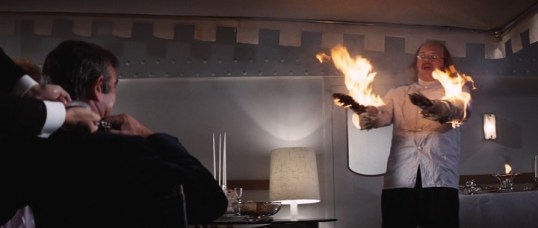
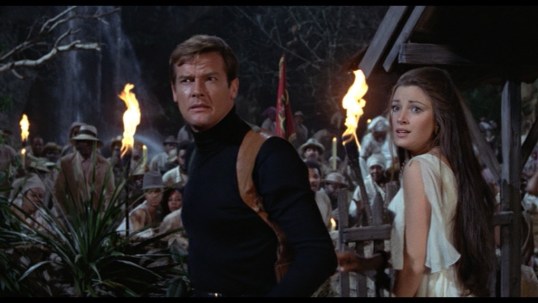
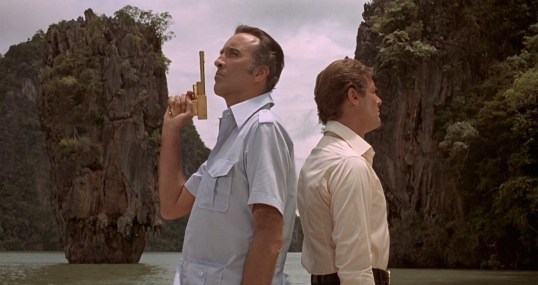
104 years ago today, the British director Guy Hamilton was born. Though Hamilton rarely seems to get as much credit as Terence Young, he was one of the most important of the early James Bond directors. With Goldfinger, he set the template the many subsequent Bond films would follow: an over-the-top villain, nonstop action, and one liners. (“No, Mr. Bond, I expect you to die.” Not to mention, “I must be dreaming.”) Hamilton went on to direct Sean Connery’s final Bond outing and he also directed the first twofilms to star Roger Moore as 007, all three of which are rather underrated in my opinion. Guy Hamilton’s Bond films reminded us that James Bond’s cinematic adventures work best when they’re fun to watch, which is something that I think the modern Bond films would be well-served to consider.
In honor of Guy Hamilton’s contributions to my favorite film franchise, here are….
4 Shots From 4 Films
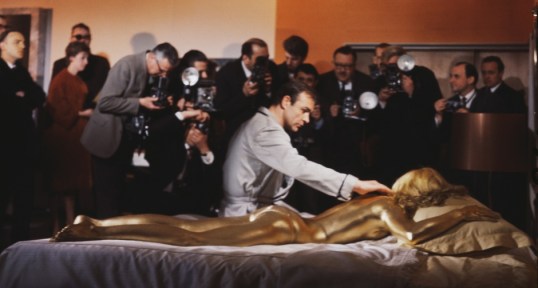
Goldfinger (1964, dir by Guy Hamilton)
Diamonds are Forever (1971, dir by Guy Hamilton)
Live and Let Die (1973, dir by Guy Hamilton)
The Man With The Golden Gun (1974, dir by Guy Hamilton)
Today, this song is probably best remembered for its prominent use in Boogie Nights and for one frequently misheard lyric. Many people still continue to believe that Springfield sings, “I wish I was Jessie’s girl,” instead of “I wish I had Jessie’s girl.”
This simple video was directed by Rick Springfield himself. The song was Springfield’s second top 20 hit, the first being the now-forgotten Speak To The Sky. At the time that this song and video came out, Springfield was better known for appearing on General Hospital. Though he had started out as a singer, when Springfield’s musical career temporarily stalled, he followed the advice of his then-girlfriend, Linda Blair (yes, that Linda Blair), and pursued an acting career.
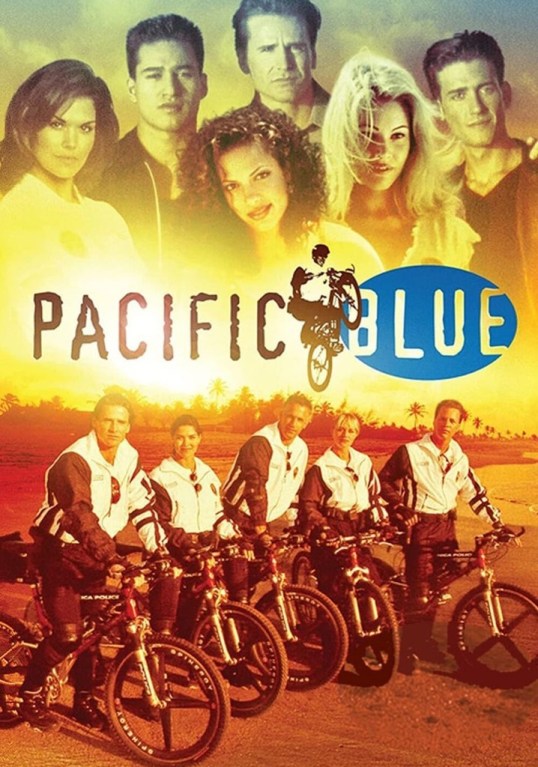
Welcome to Late Night Retro Television Reviews, a feature where we review some of our favorite and least favorite shows of the past! On Tuesdays, I will be reviewing Pacific Blue, a cop show that aired from 1996 to 2000 on the USA Network! It’s currently streaming everywhere, though I’m watching it on Tubi.
This week’s episode is stupid even for Pacific Blue.
Episode 4.19 “Near Death”
(Dir by Gary Winter, originally aired on April 4th, 1999)
Before I say anything else about this episode, allow me to say this: Ugh.
Okay, so check this out. A group of home invaders, led by Claire (Monica Louwerens) and her husband Milo (Matt Borlenghi), are in a van, fleeing from their latest robbery. TC, Chris, Cory, and Bobby are all chasing after them on their bikes. The van takes a sharp turn, the passenger-side door flies open, and Claire falls out. TC swerves to avoid Claire and is thrown straight into an electrical junction box. TC gets electrocuted.
Cory, Chris, and Bobby all arrive and immediately run over to TC. TC isn’t breathing. There’s no heartbeat. Cory and Bobby perform CPR. TC, meanwhile, is having a near-death experience, which means that we get a montage of old clips. They manage to bring TC back to life, but no one bothers to check on Claire. Claire ends up in a coma and subsequently dies at the hospital. Milo blames the cops for ignoring his wife while all of them gathered around TC.
…and Milo is absolutely right. Don’t get me wrong. It makes sense that Cory, Bobby, and especially Chris would be worried about TC. But it doesn’t change the fact that they basically just left another gravely injured person on the street while they gathered around TC. This is not the first time that something like this happened on Pacific Blue, and it’s yet another example of our heroes being rather selfish people.
Later, Cory announces to all the other bicycle cops that their first priority is to track down Milo and his gang because “this one is personal.” In other words, don’t worry about any of the other crimes that might be happening in Santa Monica because those crimes don’t directly involve any of the show’s stars. As is often the case with this show, it’s never really explained why the case apparently only belongs to the bicycle patrol. We don’t see any burglary detectives investigating the home invasions or anything like that. I guess the bike patrol has jurisdiction over everything.
As for TC, he reacts to his near-death experience by becoming more philosophical. He’s determined to always tell the truth. Over the course of the episode, he insults all four of the rookies: Granger, Cruz, Jamie, and Monica. Later, once TC starts to return to normal, he apologizes to Granger, Cruz, and Jamie but smirks when Monica asks if TC has anything he wants to say to her. “Nope,” he says. It’s kind of weird how this show wants its audience to hate Monica despite the fact that Monica is usually the only one of the cops who can be depended upon to do her job.
This episode really annoyed me. There was just something really annoying about a show about bicycle cops attempting to impart some sort of philosophical message about life. Did no one consider that TC is nowhere near a deep enough character to be believable as someone who worries about the larger questions of existence? Did no one consider that Jim Davidson’s limited range made him exactly the wrong actor for this type of story? In the past, TC was always dull but reliable. In this episode, he’s condescending. Since Chris and Cory were already condescending and have been for several seasons, TC joining them pushed this episode to new heights of unearned smugness.
This was an annoying episode. At least no one went undercover.