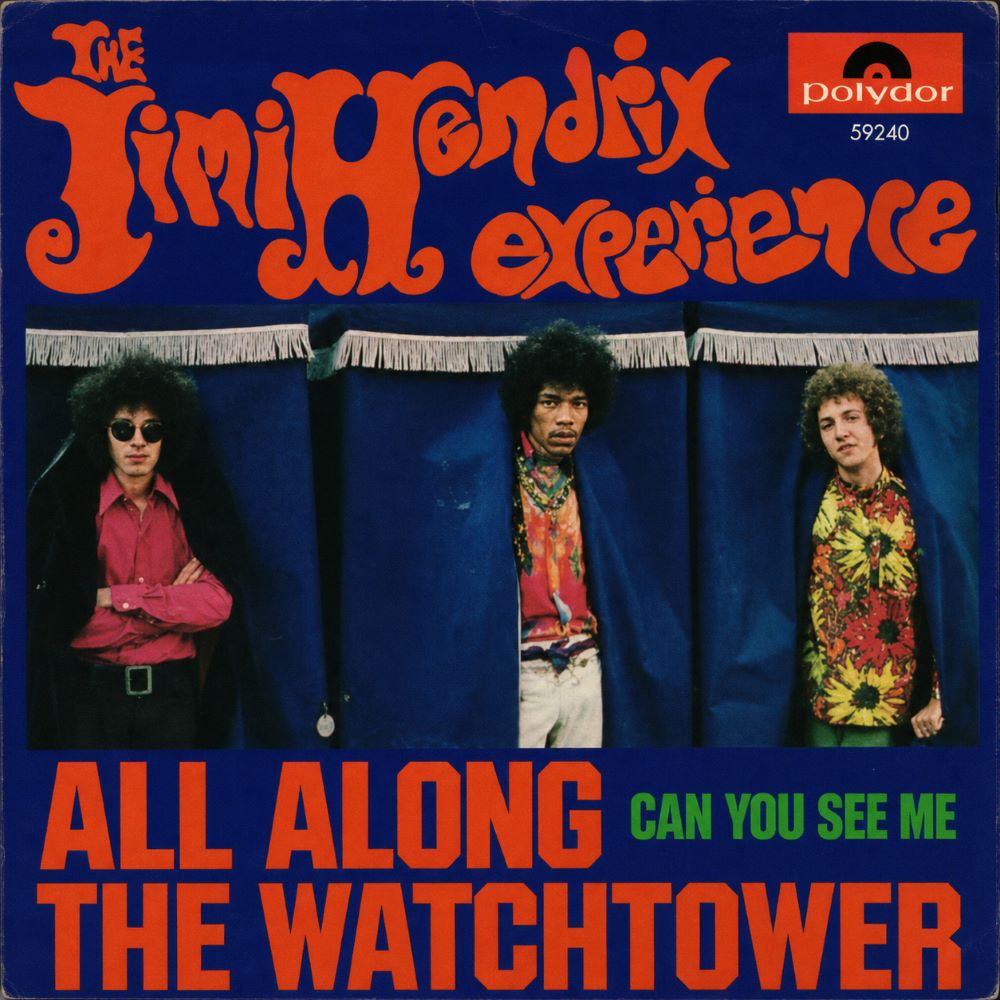
If you’ve never really sat down with All Along the Watchtower, you’re missing out on one of those songs that just grabs you from the first few seconds. It’s got this tense, almost mysterious vibe right away, like something big is about to go down. And yeah, quick heads-up—this is actually a cover of a Bob Dylan song, but Hendrix completely transforms it into something way more electric, intense, and, honestly, iconic.
What really separates Hendrix’s version is how much more dynamic it feels compared to Dylan’s original. Dylan keeps it more stripped-down and acoustically grounded, which gives it that raw, almost haunting quality. Hendrix, on the other hand, builds this layered, immersive soundscape that feels bigger and more urgent. Even their vocal styles reflect that difference—both are rooted in blues, but Dylan leans into a delivery that feels closer to Robert Johnson, kind of dry and narrative-driven, while Hendrix brings a smoother, more fluid presence that echoes someone like Muddy Waters.
And then you hit the guitar work, which is really the heart of the whole thing. Hendrix doesn’t just give you one standout solo—he drops two. The first kicks in around the 0:55 mark, and it’s sharp, punchy, and sets the tone with that signature bite. Then he comes back again around 1:45 with another lead that feels even more expressive and fluid, like he’s pushing things further emotionally. Both solos feel purposeful, not just thrown in to show off—they actually drive All Along the Watchtower forward.
By the time the song wraps up, it leaves you with that “wait, play that again” feeling. It’s short, tight, and insanely replayable. Even if you’re not usually into older rock, this is one of those tracks that cuts through all that—it just sounds cool. Definitely worth throwing on with headphones and really soaking it in.
All Along the Watchtower
“There must be some kind of way out of here”
Said the joker to the thief
“There’s too much confusion
I can’t get no relief
Businessmen they drink my wine
Plowmen dig my earth
None will level on the line
Nobody offered his word”
Hey!
(Guitar Solo 1 @0:55)
“No reason to get excited”
The thief, he kindly spoke
“There are many here among us
Who feel that life is but a joke
But, uh, but you and I, we’ve been through that
And this is not our fate
So let us stop talkin’ falsely now
The hour’s getting late
Hey!
(Guitar Solo 2 @1:45)
Hey!
All along the watchtower
Princes kept the view
While all the women came and went
Barefoot servants too
Well, uh, outside in the cold distance
A wildcat did growl
Two riders were approaching
And the wind began to howl
Hey!
All along the watchtower
All along the watchtower
Great Guitar Solos Series
- Master of Puppets (by Metallica)
- Free Bird (by Lynyrd Skynyrd)
- Hotel California (by The Eagles)
- Stairway to Heaven (by Led Zeppelin)
- Texas Flood (by Stevie Ray Vaughan)
- Comfortably Numb (by Pink Floyd)
- Powerslave (by Iron Maiden)
- Fade to Black (by Metallica)
- Bohemian Rhapsody (by Queen)
- Sweet Child o’ Mine (Guns N’ Roses)
- Mr. Crowley (by Ozzy Osbourne)
- Rainbow in the Dark (by Dio)
- Róisín Dubh (by Thin Lizzy)
- Rock You Like A Hurricane (by Scorpions)
- Whipping Post (by Allman Brothers Band)
- Carry On Wayward Son (by Kansas)
- War Pigs (by Black Sabbath)
- Since I’ve Been Loving You (by Led Zeppelin)
- Satch Boogie (by Joe Satriani)
- Rambin’ Man (by The Allman Brothers Band)
- Sympathy for the Devil (by The Rolling Stones)
- Little Wing (by Jimi Hendrix)
- While My Guitar Gently Weeps (by the Beatles)
- The Rocker (by Thin Lizzy)
- Bulls on Parade (by Rage Against the Machine)
- Eruption (by Van Halen)
- Killer Queen (by Queen)
- Something (by The Beatles)
- Maggot Brain (by Funkadelic)
- Cliffs of Dover (by Eric Johnson)
- Black Magic Woman (by Carlos Santana)
- Layla (by Derek & The Dominoes)
- Dazed and Confused (by Led Zeppelin)
- Blue Sky (by The Allman Brothers Band)
- Southern Man (by Neil Young)
- Know Your Enemy (by Rage Against the Machine)
- Highway Star (by Deep Purple)
- Sharp Dressed Man (by ZZ Top)
- Black Hole Sun (by Soundgarden)
- Aqualung (by Jethro Tull)
- Scuttle Buttin’ (by Stevie Ray Vaughan)