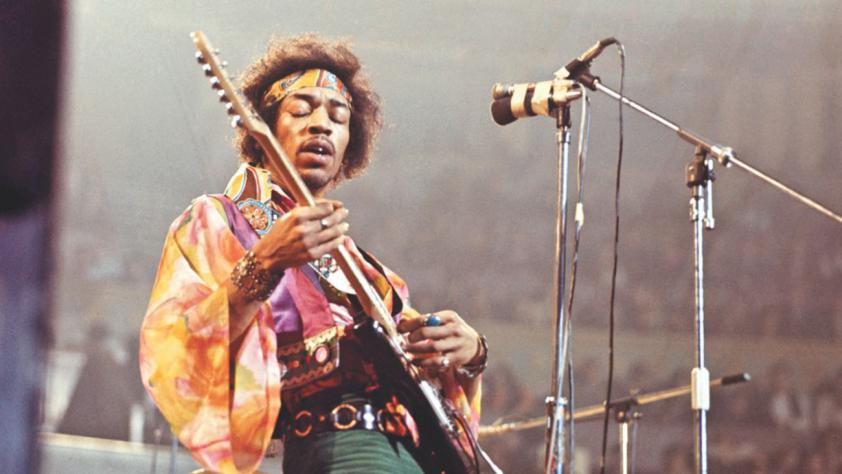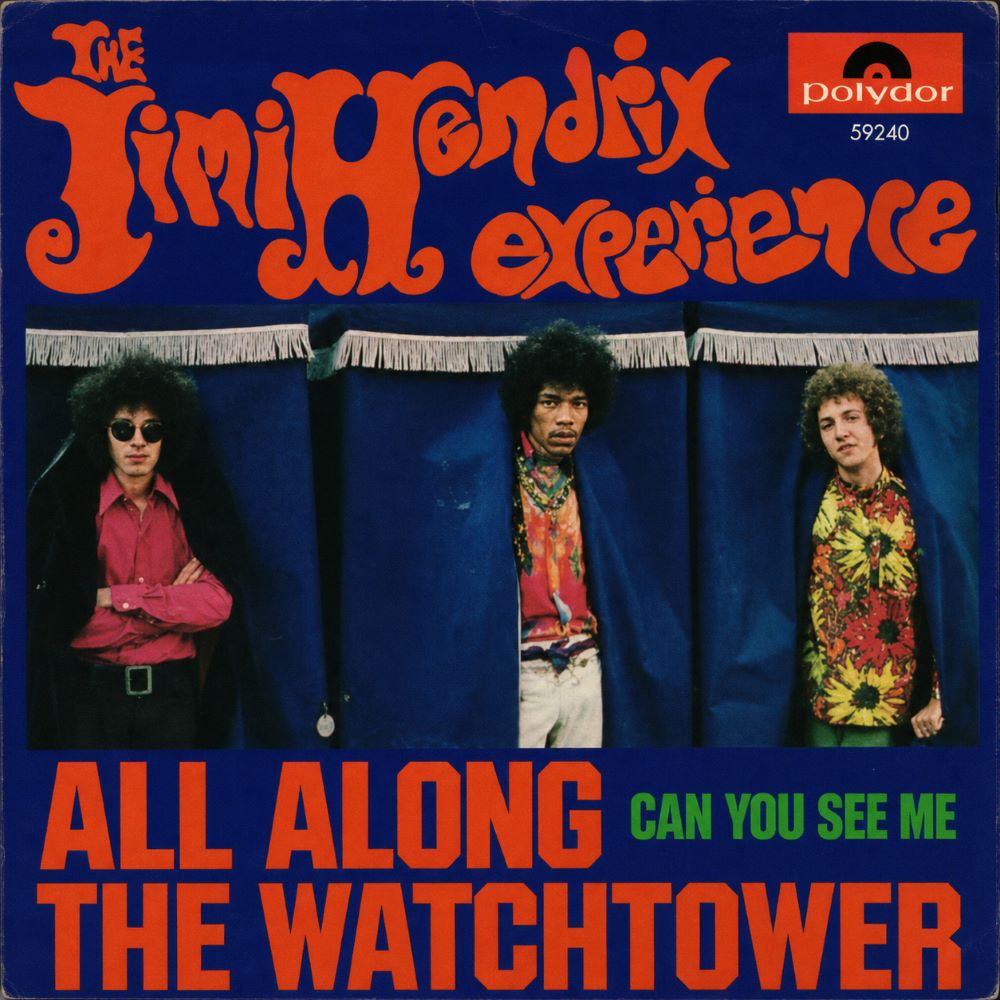
Song of the Day: All Along the Watchtower (by Jimi Hendrix)


If you’ve never really sat down with All Along the Watchtower, you’re missing out on one of those songs that just grabs you from the first few seconds. It’s got this tense, almost mysterious vibe right away, like something big is about to go down. And yeah, quick heads-up—this is actually a cover of a Bob Dylan song, but Hendrix completely transforms it into something way more electric, intense, and, honestly, iconic.

What really separates Hendrix’s version is how much more dynamic it feels compared to Dylan’s original. Dylan keeps it more stripped-down and acoustically grounded, which gives it that raw, almost haunting quality. Hendrix, on the other hand, builds this layered, immersive soundscape that feels bigger and more urgent. Even their vocal styles reflect that difference—both are rooted in blues, but Dylan leans into a delivery that feels closer to Robert Johnson, kind of dry and narrative-driven, while Hendrix brings a smoother, more fluid presence that echoes someone like Muddy Waters.

And then you hit the guitar work, which is really the heart of the whole thing. Hendrix doesn’t just give you one standout solo—he drops two. The first kicks in around the 0:55 mark, and it’s sharp, punchy, and sets the tone with that signature bite. Then he comes back again around 1:45 with another lead that feels even more expressive and fluid, like he’s pushing things further emotionally. Both solos feel purposeful, not just thrown in to show off—they actually drive All Along the Watchtower forward.

By the time the song wraps up, it leaves you with that “wait, play that again” feeling. It’s short, tight, and insanely replayable. Even if you’re not usually into older rock, this is one of those tracks that cuts through all that—it just sounds cool. Definitely worth throwing on with headphones and really soaking it in.

All Along the Watchtower

“There must be some kind of way out of here”
Said the joker to the thief
“There’s too much confusion
I can’t get no relief
Businessmen they drink my wine
Plowmen dig my earth
None will level on the line
Nobody offered his word”
Hey!

(Guitar Solo 1 @0:55)

“No reason to get excited”
The thief, he kindly spoke
“There are many here among us
Who feel that life is but a joke
But, uh, but you and I, we’ve been through that
And this is not our fate
So let us stop talkin’ falsely now
The hour’s getting late
Hey!

(Guitar Solo 2 @1:45)

Hey!

All along the watchtower
Princes kept the view
While all the women came and went
Barefoot servants too
Well, uh, outside in the cold distance
A wildcat did growl
Two riders were approaching
And the wind began to howl
Hey!

All along the watchtower

Great Guitar Solos Series

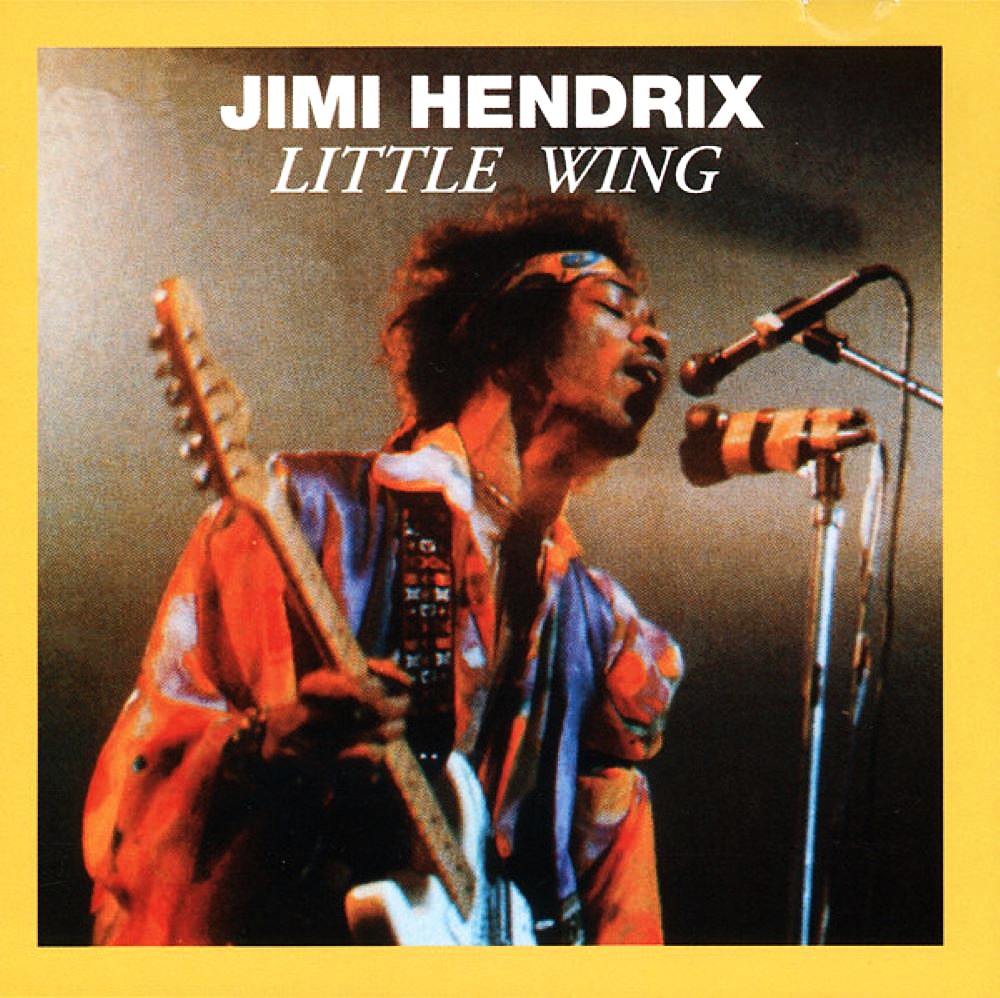
Song of the Day: Little Wing (by Jimi Hendix)


Jimi Hendrix was arguably one of the greatest musicians of the 20th Century. Some may dispute that label and maybe pigeonhole him as one of the greatest rock musician, but his impact on the musical landscape goes beyond just rock music, but all of music no matter the genre or style.

He was that one singular musician, just like any prodigy, who came along and burned bright for a short period of time before being snuffed out by the very gift and genius for creativity he became known for. There has been other musicians who have attained legend status since Jimi Hendrix’s untimely death on September 18, 1970, but even they would say that they still couldn’t comprehend what Hendrix was able to do with an electric guitar and in the short time he had in the limelight.

Jimi Hendrix’s “Little Wing” is a microcosm of why musicians and rock historians almost look at Hendrix’s work with nigh-mythical status. The song, released on December 1, 1967, begins with Hendrix’s much slower chord progression accompanied by the haunting use of the glockenspiel that then leads to Hendrix’s vocals and drums. It is around the 1:45 minute mark when the song follows through on its vocals with one of the most precise and a nominee for greatest guitar solo of all-time.

The song itself is not very long, but even in the its two-and-a-half minute running time “Little Wing” achieves what most musicians could only dream of and that is a song that continues to inspire and bewilder (the song has been covered and studied countless times, but no could ever agree how Hendrix did his magic on the song).

Little Wing

Well, she’s walking through the clouds
With a circus mind that’s running wild
Butterflies and zebras and moonbeams
And her fairy tales
That’s all she ever thinks about
Riding with the wind
When I’m sad, she comes to me
With a thousand smiles, she gives to me free
“It’s alright” she says, “It’s alright”
Take anything you want from me, take anything
Anything
Fly on, little wing

[guitar solo]

Great Guitar Solos Series

Rockin’ in the Film World #9: JIMI HENDRIX: ELECTRIC CHURCH (2015)


gary loggins's avatarcracked rear viewer

jimi1

Back in March, I attended the “Experience Hendrix” live show, featuring guitar gods Kenny Wayne Sheppard, Buddy Guy, Zakk Wylde, Dweezil Zappa, Jonny Lang, and others jamming to the music of Jimi Hendrix. But as they say “Ain’t nothin’ like the real thing, baby”, and the documentary JIMI HENDRIX: ELECTRIC CHURCH is a full-on aural assault chronicling Hendrix’ 1970 performance at the Atlanta Pop Festival.

Director John McDermott begins the film with some famous talking heads (Paul McCartney, Steve Winwood, Susan Teschi, Metallica’s Kirk Hammett, Rolling Stone writer Anthony DeCurtis), as well as residents of the tiny town of Byron, where the festival was actually held (and they seem to be having a ball reminiscing!). There are clips of Hendrix on THE DICK CAVETT SHOW and of segregationist Georgia Gov. Lester Maddox (who hates them damn hippies!).

jimi2

Then it’s showtime, as Jimi and his band dive into classics like “Fire”. “All Along the Watchtower”…

View original post 186 more words

Jimi Hendrix Plays The Star-Spangled Banner!


On August 18, 1969, Jimi Hendrix performed the greatest version of The Star Spangled Banner on record.  Jimi, who has been awake for three days when he performed his version of the National Anthem, later said, “We’re all Americans … it was like ‘Go America!’… We play it the way the air is in America today. The air is slightly static, see”

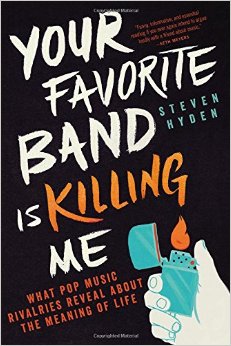
Airport Reading: Your Favorite Band Is Killing Me by Steven Hyden


51y-hABo2ML._SY344_BO1,204,203,200_Today, I have flown from Baltimore to Chicago and, after a three-hour layover at O’Hare, from Chicago to Atlanta.  Now I have to wait two hours until I board a plane to Dallas.  Luckily, I have a good book to read.
Steven Hyden’s Your Favorite Band Is Killing Me takes a look at some famous pop music rivalries and what they may or may not reveal about the meaning of life.  Hyden examines 19 different rivalries, everyone from Oasis vs. Blur to Neil Young vs. Lynard Skynard to the Smashing Pumpkins vs. Pavement, Beatles vs. the Rolling Stones and, naturally, Roger Waters vs. everyone else in Pink Floyd.  And, of course, he also writes about Biggie vs. Tupac because, as he puts it, that’s the only rivalry that he “was required by law to write about in this book.”

The best chapter, in my opinion, is Hyden’s look at the rivalry between Jimi Hendrix’s legacy and Eric Clapton’s continued existence.  He asks a very important question: If Hendrix had lived and was currently living the life of Eric Clapton, would we still consider Jimi to be the greatest guitar God of all time?  A close second to the Hendrix/Clapton chapter is Hyden’s look at the rivalry between Nirvana and Pearl Jam.  Hyden makes a convincing argument that not only did Kurt Cobain never really grow to like Pearl Jam but that Bruce Springsteen really does not like Chris Christie that much either.

Steven Hyden’s an opinionated guy and, reading the book, I have disagreed with him almost as much as I’ve agreed.  But he is also a very good writer and he definitely knows his music.  Your Favorite Band Is Killing Me has made this day of airports and flying bearable.  I highly recommend it!

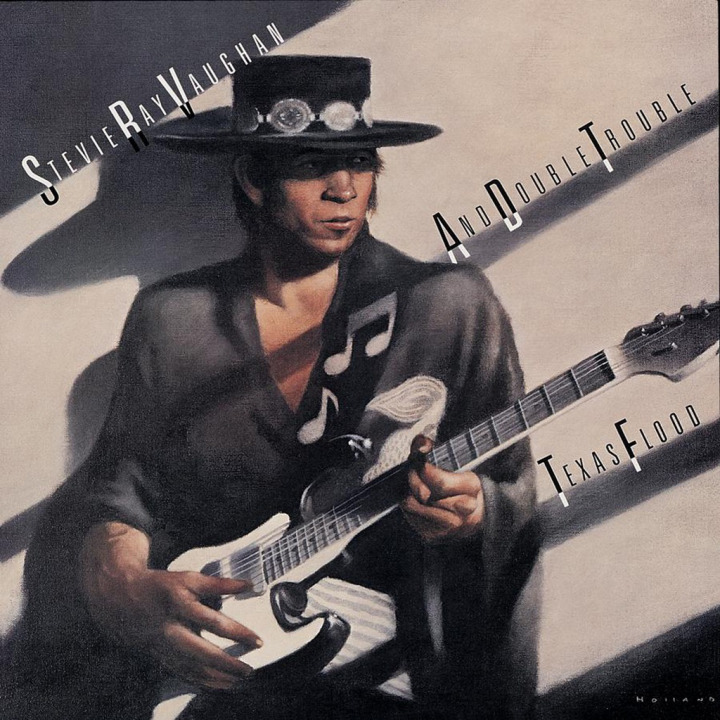
Song of the Day: Texas Flood (by Stevie Ray Vaughan)


stevie_ray_vaughan_texas_flood

It’s nearly impossible to put together any “greatest guitar solos of all time” list without including today’s entry in our Song of the Day series.

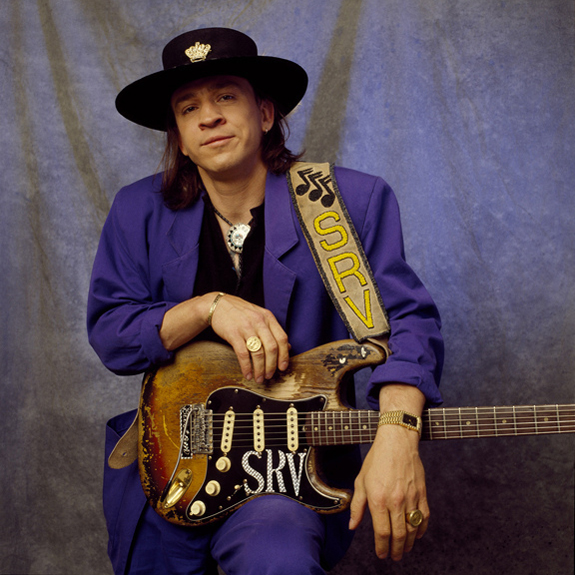
Stevie Ray Vaughan was a once-in-a-generation talent, taken far too soon. After years of grinding as a session guitarist for various bands and artists, he finally broke through to the stardom he always deserved. His playing echoed the giants who came before him—Jimi Hendrix, Albert King, Muddy Waters—while carving out a voice that was unmistakably his own. He didn’t just bridge rock and blues; he ruled both.

He also holds a personal distinction for me: he was the first artist of any kind who made me weep after I learned of his passing. I found out while I was away on a school retreat as a high school senior, and the news hit with a kind of weight that only true musical connection can carry.

“Texas Flood” captures SRV at his absolute peak. The main guitar solo erupts around the 2:30 mark, where Vaughan stretches the song into a slow-burning, emotionally charged showcase of phrasing, tone, and control. It’s less about speed and more about feel—every bend and vibrato lands with purpose. No matter how many players try to replicate what he achieved with a Fender Stratocaster, Vaughan remains untouchable—the undisputed king.

Texas Flood

Well theres floodin down in texas….all of the telephone lines are down
And Ive been tryin to call my baby….lord and I cant get a single sound

Well dark clouds are rollin in….man Im standin out in the rain
Yeah flood water keep a rollin….man its about to drive poor me insane

Well Im leavin you baby….lord and Im goin back home to stay
Well back home I know floods and tornados….baby the sun shines every day

Great Guitar Solos Series

27 Days of Old School: #25 “Voodoo Child” (by Stevie Ray Vaughan)


Stevie Ray Vaughn

“Well, I’m standing next to a mountain, chop it down with the edge of my hand”

To close out the night we have Stevie Ray Vaughan at #25 with his excellent cover of the classic Hendrix track, “Voodoo Chile (Slight Return)”.

The blues wasn’t a genre of music that I had much experience growing up during the 80’s. It was during a senior retreat that I was introduced to one of the blues rising stars during that era of my life. He was Stevie Ray Vaughan and I only got to know him after he had already passed into legend after he died in a helicopter crash.

Since then I’ve become not just a major listener of blues and blues rock music, but I would say I’ve become a connoisseur.

While I’ve since listened to Jimi Hendrix’s original of the song and consider it the best version, I will always have a special place in my musical library for the one and only SRV.

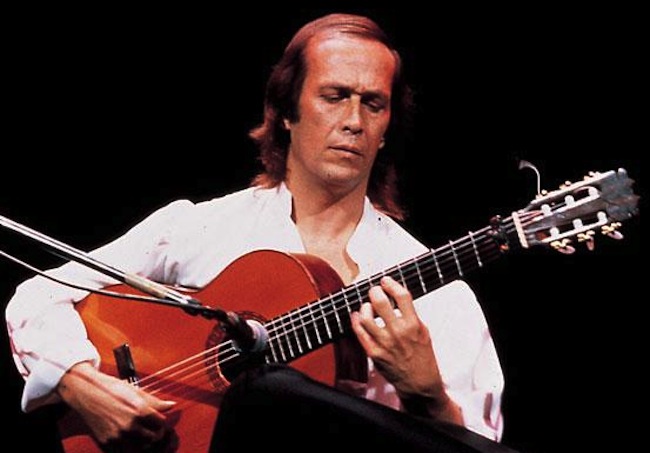
Song of the Day: Entre Dos Aguas (by Paco de Lucia – R.I.P)


paco-de-lucia

One of the great guitarists ever passed away (some would say he’s one of the greatest, if not the best there ever was) in the last 24 hours.

Paco de Lucia has passed on into legend as one of history’s greatest guitarist. He joins such fellow luminaries as Django Reinhardt, Jimi Hendrix, Andres Segovia, Stevie Ray Vaughan and Robert Johnson to just name a few now playing their guitars in the next life.

Paco came from a family of flamenco singers and guitarists. His musical upbringing was molded by his father Antonio Sanchez. He would take classic flamenco guitar playing and incorporate other musical genres such as jazz, classical and bossa nova. While flamenco traditionalists heaped criticisms at Paco de Lucia for incorporating the many different styles of guitar playing with flamenco the movement to create a new flamenco sound which still adhered to classic flamenco playing but with some added new sound to appeal to a new generation that was beginning to listen to a variety of musical styles.

While many young people would scratch their heads as to who this Spaniard was to be considered one of the greatest guitarist of all-time (I would remind such individuals that not all guitarists were playing rock or metal), I would suggest they listen to his most popular song and just marvel at the talent and legend that was Paco de Lucia.

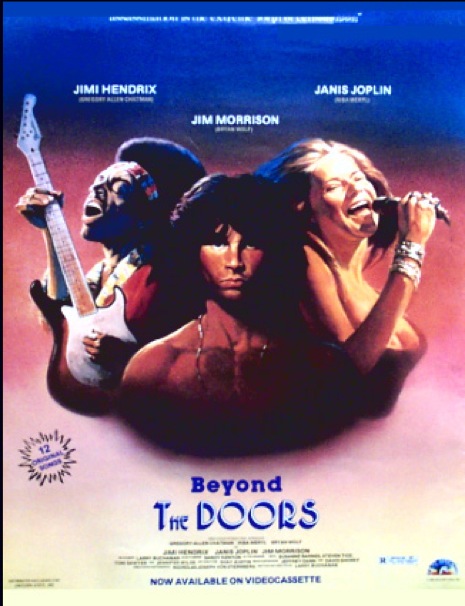
44 Days of Paranoia #7: Beyond the Doors (dir by Larry Buchanan)


beyondthedoorsomrfrfgrg

While I was researching The Trial of Lee Harvey Oswald last week, I came across another film directed by Larry Buchanan.  Beyond the Doors (also known as Down On Us) sounded like one of those truly odd films that I simply had to see for myself.  Fortunately, it turned out that this rare and hard-to-find movie was available (in 13 parts!) on YouTube.

First released in either 1983 or 1984 (sources vary), Beyond the Doors tells the story of a FBI agent who, as the film begins, is out hunting with two friends who proceed to gun him down.  Staring down at the agent’s dead body, one of the assassins sneers, “Rock and Roll is dead.  Long live Rock and Roll.”  The agent’s son then goes through his father’s files and discovers that, during the late 1960s and early 70s, his father was responsible for murdering “the three pied pipers of rock and roll” — Jimi Hendrix, Janis Joplin, and Jim Morrison.  The film then enters into flashback mode and we discover both why the U.S. government was determined to kill Hendrix, Joplin, and Morrison and how exactly they attempted to do it.

What can I say about Beyond the Doors?  If The Trial of Lee Harvey Oswald seemed oddly respectable for a Larry Buchanan film, Beyond the Doors reminds us of why Larry Buchanan remains a cult figure for bad film lovers.  Everything that Buchanan is known for is present in this film: unknown actors playing real-life characters, melodramatic dialogue, one set continually redecorated to look like a dozen different rooms, and plenty of conspiracy theories.   As is typical of a Larry Buchanan film, it was shot with a lot of ambition but next to no money or actual talent.  Hendrix, Morrison, and Joplin are played by lookalikes who give performances that don’t so much resemble their real-life counterparts as much as they seem to literally be Wikipedia entries brought to life.  Hendrix worries that he’s sold out to the man, Joplin questions what fame’s all about, and Morrison makes pretentious observations.  Buchanan couldn’t actually afford the rights to any songs from Joplin, Hendrix, or the Doors so instead, the soundtrack is full of music that’s designed to sound as if it could have been written by one of the “three pied pipers of rock and roll” even though it wasn’t.  (And yes, the end result is just as silly as it sounds.)  In short, Beyond the Doors is one of those films (much like Tommy Wiseau’s The Room) that is so amazingly bad and misguided that it becomes perversely fascinating.

In short, it’s a film that, like me, you simply have to see for yourself.