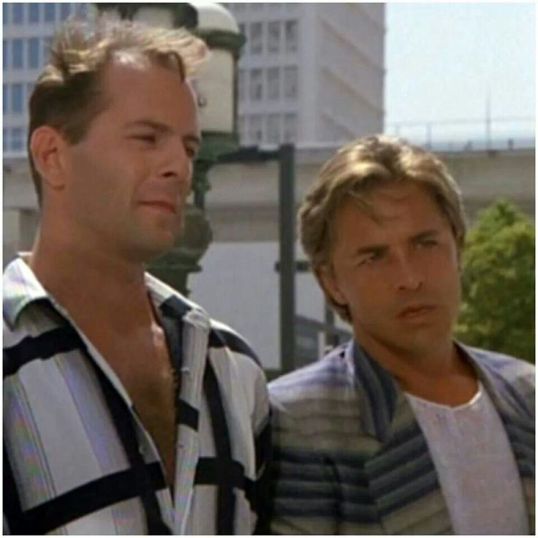
Welcome to Retro Television Reviews, a feature where we review some of our favorite and least favorite shows of the past! On Mondays, I will be reviewing Miami Vice, which ran on NBC from 1984 to 1989. The entire show is currently streaming on Tubi!
This week, Crockett and Tubbs gain an informant!
Episode 1.4 “Cool Runnin'”
(Dir by Lee H. Katzin, originally aired on October 5th, 1984)
One of the main themes of Miami Vice was that, no matter how many drug lords that Crockett and Tubbs got off the streets, there was always someone in the wings waiting to replace them. The drug trade was (and is) big business and there was always someone willing to step into the vacuum that was left by the downfall of any of the major players. For all of their efforts, Crockett and Tubbs were essentially fighting a war on drugs that could not be won.
Cool Runnin’ features an early example of this. With Calderone having fled Miami for Colombia, he’s been replaced by Desmond Maxwell (Afemo Omilami), a Jamaican who is willing to murder just about anyone who gets in his way. When he’s first seen, he and the members of his gang are gunning down a group of rival drug dealers in a mall parking lot. Later, Desmond kills one undercover cop and seriously wounds another.
Another major theme in Miami Vice is that Crockett (and, to a lesser extent, Tubbs) are willing to put others at risk to take down their targets. The majority of this episode deals with Nugart Neville ‘Noogie’ Lamont (Charlie Barnett), a talkative thief and speed freak who is recruited, somewhat against his will, to be an informant. When Crockett and Tubbs discover that Noogie served time with Desmond, they use Noogie to set up a meeting with Desmond. When Crockett tells Desmond that he wants to buy from him and that he’ll be waiting for him at Noogie’s apartment, Tubbs points out that Crockett is putting Noogie’s life in danger without even bothering to tell Noogie beforehand.
(Crockett, it should be noted, isn’t thinking straight for most of this episode because his wife has filed for divorce and wants to take his son to Georgia.)
At first, it appears that Noogie is going to get a reprieve when a calls comes in that the man who killed the undercover cops has been arrested. It doesn’t take long for Crockett (and the audience) to figure out that the man who has been arrested is not Jamaican (instead, he’s Haitian) and that he’s been beaten by the racist cop who arrested him.
Instead, the killers are now at Noogie’s apartment, where they are waiting for Crockett and Tubbs to show up so that they can kill both the cops and their informant. It all leads to final shoot-out, one that is shown almost entirely in slow motion and which is surprisingly effective.
This was a good episode about the human cost of getting involved as law enforcement, whether as a cop or a criminal. While Desmond Maxwell was not a particularly nuanced character, he was appropriately intimidating and the audience never had any doubt that he would coldly kill anyone who he viewed as being a threat. (One of the more haunting moments of the episode features the Vice Squad listening to the tape of shooting in which Desmond gunned down two detectives.)
The episode was largely dominated by Charlie Barnett’s performance as Noogie. Barnett was a stand-up comedian who first came to prominence performing in Central Park. He was nearly cast on SaturdayNight Live until it was discovered that he struggled with reading. Barnett was replaced, at the last minute, by another New York comedian, Eddie Murphy. As Noogie. Barnett never stops moving, talking, and performing. It’s actually exhausting just watching him. But, as the episode proceeds, Barnett starts to calm down and, by the end of it, the audience is actually happy that he wasn’t killed in the shoot-out.
Unfortunately, next week, a major character will be killed in a shootout. Who? Find out next Monday!
Welcome to Late Night Retro Television Reviews, a feature where we review some of our favorite and least favorite shows of the past! On Sunday, I will be reviewing the Canadian series, Degrassi Junior High, which aired on CBC and PBS from 1987 to 1989! The series can be streamed on YouTube!
As much as I love Degrassi, I have to admit that I’ve never really sat down and watched the two shows that launched the entire franchise, Degrassi Junior High and Degrassi High. I figured why not give it a shot now?
Episode 1.1 “Kiss Me, Steph”
(Dir by Kit Hood, originally aired on January 18th, 1987)
Welcome to Toronto! It’s time for a new school year at Degrassi Junior High!
As I watched the first episode of Degrassi Junior High, the first thing I noticed was just how grainy and depressing everything looked. As opposed to the bright lighting and vibrant colors of Degrassi: The Next Generation, the world of Degrassi Junior High looked overcast and not always inviting. The school itself looked old, as if it had been a while since anyone bothered to paint the walls or even sweep the floors. In short, visually, Degrassi Junior High looked pretty much like a real middle school. The overcast imagery neatly mirrored the way that most people feel when they’re starting the first day of school, especially if it’s a new school.
It’s the first day of school for Arthur Kobalewscuy (Duncan Waugh) and, being short and way too trusting for his own, it doesn’t take long before the school prankster, Joey Jeremiah (Pat Mastroianni), tricks him into getting locked into the janitor’s closet. Poor Arthur but, far more importantly …. JOEY! As any true fan of Degrassi knows, Joey would go on to become one of the most important parts the franchise, both in the original series and a good deal of The Next Generation as well. In the first episode, he’s far a cry from the likable Joey that we all know. Instead, he’s just an obnoxious kid who wears a fedora to school.
Arthur is the younger brother of Stephanie Kaye (Nicole Stoffman), who is the most popular girl in the school. One would think that this would be a good thing for Arthur but Stephanie begins the school day by ordering Arthur not to talk to her because she’s in “grade 8” and he’s only in “grade 7.” Stephanie and Arthur’s parents are divorced, with Stephanie living with her mother and Arthur living with her father. Stephanie is determined to have a new image for Grade 8 and, as soon as she steps into the school, she heads to the bathroom and takes off her boring white blouse and blue skirt to reveal the crop top and tight jeans that she’s wearing underneath. Her best friend, the somewhat dour Voula (Niki Kemey), watches in horror as Stephanie puts on makeup. (I usually waited until I arrived at school to do my makeup as well.)
When Stephanie hears an announcement that student council elections are coming up, she decides to run for President. Voula is happy to serve as Stephanie’s campaign manager until Stephanie starts exchanging kisses for votes. Voula is scandalized that Stephanie isn’t talking about the issues and is running with the slogan, “All The Way With Stephanie Kaye.” Voula warns Stephanie that none of the girls are going to vote for her but Stephanie explains that she only needs the votes of the boys. Of course, the main reason why Voula is upset is because Stephanie is giving all the credit for her successful campaign to Joey instead of her.
(Interestingly enough, one of the first episodes of Degrassi: The Next Generation also featured a student council election and a sister trying to ignore her dorky younger brother.)
While Stephanie is winning over the boys, Arthur finally manages to get a new friend named Yick Yu (Siluck Saysanasy). Yay, everyone needs a friend!
Stephanie wins the election. The announcement is made while Stephanie is in home room where her teacher is none other than Mr. Raditch (Dan Woods), who would later be the first of many principals on Degrassi: The Next Generation. Joey jumps up and hugs Stephanie as the announcement is made. “Mr. Jeremiah!” Mr. Raditch snaps, “Not in my class! Save that behavior for the polls!”
(Fortunately, Mr. Raditch would warm up to Joey by the time that Joey’s stepson was enrolled in the school. But that’s not going to happen for a while….)
Having won the election, Stephanie discovers that she’s actually expected to do a lot of stuff, like give a speech to the PTA. Stephanie begs Voula to write the speech for her but Voula tells Stephanie that she doesn’t want to be her friend anymore. “You’re on your own, Ms. President! You and your new image!”
Oh well. With great power comes great responsibility and all that stuff. Personally, I think Stephanie should just blow off the speech. And really, Voula is being a bit too self-righteous here. I mean, it’s student council. It means nothing! The episode ends with Stephanie swearing that she’s going to be the best president that the school has ever had but it shouldn’t be that difficult since it’s not like the president makes school policy or anything. As Stephanie, once again dressed modestly, leaves the school, she finally acknowledges Arthur as her brother and Arthur offers to write the speech for her.
This was not a bad way to start the franchise and I enjoyed spotting future Degrassi stars like Wheels, Snake, and Spike wandering around the school. This episode did a good job of capturing the silliness of student council elections and also the way every day of high school and middle school can feel like the biggest drama ever. Arthur and Yick are likable in their nerdy way. I related Stephanie. Voula kind of needs to get over herself but we all had a friend like that in school, didn’t we?
Episode 1.2 “The Big Dance”
(Dir by Kit Hood, originally aired on January 25th, 1987)
It’s time for the fall dance!
Voula, who is still unreasonably angry with Stephanie, suggests that they use the dance as a way to raise money for the foster child that the school is sponsoring. Everyone thinks this is a great idea and they think Voula should give a speech while handing over the money at the end of the dance. Unfortunately, Voula’s superprotective father (Paul Brock) refuses to allow Voula to stay out past 9:30. He also freaks out when he sees that Voula is wearing lipstick and suddenly, it makes more sense why she’s so jealous of Stephanie.
As for Stephanie, she asks Wheels (Neil Hope) to take her to dance and — OH MY GOD, IT’S WHEELS! Now, as anyone who knows anything about Degrassi can tell you, Wheels eventually became one of the most important characters on the show. As soon as I saw Joey talking to him, I immediately started to think about the fact that this is the same Wheels who is going eventually lose his parents to a drunk driver, get molested while hitchhiking, develop a drinking problem, and end up going to prison shortly after graduating high school. In this episode, though, he’s just a pleasant-natured friend of Joey’s.
Voula lies to her father about spending the night with a study group and instead, heads to the dance. Meanwhile, Stephanie goes to the house of her friend Lucy Fernandez (Anais Granofsky) so she can change into her school dance clothes. (Fans of Degrassi know that Lucy is destined to end up getting temporarily blinded and crippled as a result of Wheels driving drunk.) Along with the two creepy twins, Heather and Erica (Maureen and Angela Deiseach), Stephanie ends up having way too much to drink at Lucy’s.
The end result is that Stephanie shows up drunk at the school dance and ends up embarrassing herself in front of Wheels while Voula is caught breaking curfew by her father. In typical Degrassi fashion, no one gets a happy ending!
I kind of groaned a little when I saw that this was going to be a Voula episode but actually, the episode did a good job of showing why Voula got so angry at Stephanie. As well, in what would be a Degrassi hallmark, the episode handled the theme of underage drinking with sensitivity as opposed to judgmental melodrama. Yes, Stephanie has too much to drink and ruined her date but the episode understood that, rather than being the end of the world, this is just a part of growing up. On Degrassi Junior High, teenagers were allowed to make mistakes.
Finally, during the dance, I spotted Joey dancing with Caitlin (Stacie Mistysyn), who is of course destined to become the great love of Joey’s life. It was a nice case of (probably inadvertent) foreshadowing.
Welcome to Retro Television Reviews, a feature where we review some of our favorite and least favorite shows of the past! On Sundays, I will be reviewing the made-for-television movies that used to be a primetime mainstay. Today’s film is 1969’s Dragnet 1966! It can be viewed on YouTube!
“This is the city….”
So begins Dragnet, a television movie version of the classic cop show that was the Law & Order of it’s day. Dragnet began as a radio program in 1949 before making it’s way over to television in 1951. Each episode starred (and the majority were directed by) Jack Webb, who played a no-nonsense cop named Joe Friday. Friday narrated every episode, dropping trivia about the history of Los Angeles while also showing viewers how the cops went about catching criminals. Despite what is commonly believed, Joe Friday never said, “Just the facts, ma’m,” but he did investigate each case with the cool determination of a professional who kept his emotions under control. The majority of Dragnet’s episodes were based on actual cases that were worked by the LAPD, hence the opening declaration of, “The story you are about to see is true.”
On television, Dragnet originally ran from 1951 to 1959, during which time Dragnet also became the first television series to be adapted into a feature film. Jack Webb decided to relaunch Dragnet in 1966 and he produced a made-for-television movie that followed Friday and his latest partner, the far more talkative Bill Gannon (Harry Morgan), as they worked multiple cases over the course of one long weekend. The pilot movie did lead to a new show, one that lasted from 1967 to 1970 and which is today fondly remembered for scenes of Friday and Gannon debating the merits of the legal system with hippies. However, for whatever reason, the 1966 pilot movie was not actually aired until 1969.
The made-for-TV movie features Friday and Gannon searching not for LSD dealers and draft dodgers but instead for a crazed photographer (Vic Perrin) who hires women to pose for him and then ties them up and takes their picture right before her murders them. The photographer is based on real-life serial killer Harvey Glatman and Perrin is perfectly creepy in the role. Though Friday never loses his composure, his disgust at the photographer and his crimes is palpable and it adds an extra charge to the scene where, in the middle of a drenching rain storm, Friday tries to sneak up on the trailer where he believes the photographer is holding his latest victim. It’s actually a pretty exciting scene and definitely one that will take by surprise anyone who thinks of the 60s Dragnet as just being a campy exercise in establishment resentment.
Of course, catching a serial killer is not all that Friday and Gannon deal with. It’s a long weekend so Friday and Gannon end up investigating the murder of a French tourist and Friday helps a younger, black detective deal with a racist criminal. (The scene where Friday stands up to the racist was obviously meant to answer those who claimed the LAPD was a racist organization.) At the start of the film, Joe almost gets collared into working security for a visiting Russian diplomat and the Russian’s paranoid security team is contrasted to the level-headed and capable men of the LAPD. Some of these scenes are better than others. The French tourist subplot features some truly risible acting and the scene with the racist is well-intentioned but still feels a bit condescending in its portrayal of the black detective needing Friday to help him deal with the suspect. That said, I did enjoy listening to Bill Gannon talking about his plans for retirement and how working for the LAPD was destroying his teeth. Harry Morgan’s folksy humor was always the perfect counterpart to Jack Webb’s perpetually rational Friday.
Finally, I appreciated that the movie featured a scene with Friday and Gannon went undercover at a lonely hearts club. If you’ve watched the 1960s version of Dragnet, you know that, for all the times that Friday and Gannon went undercover, they never really put much effort into it. I mean, they didn’t ever bother to take off their jackets!
Though I was disappointed by the lack of hippies, Dragnet 1966 was still not only a good police procedural but also a fun time capsule of its era.
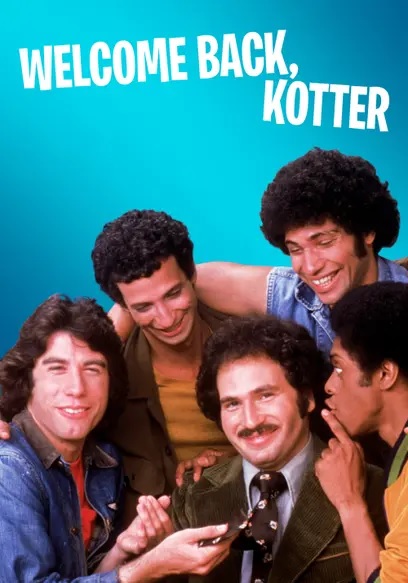
Welcome to Retro Television Reviews, a feature where we review some of our favorite and least favorite shows of the past! On Saturdays, I will be reviewing Welcome Back Kotter, which ran on ABC from 1975 to 1979. The entire show is currently streaming on Tubi!
This week, Epstein smokes and the Sweathogs learn the true meaning of Christmas!
Episode 2.11 “Sweathog Clinic for the Cure of Smoking”
(Dir by Bob LaHendro, originally aired on December 16th, 1976)
Gabe tells Julie a joke about his uncle, a doctor who used to trick his patients into sticking their tongue out and staring out his office window as a way to anger the people on the other side of the street.
At school, Horshack is stunned to see Epstein lighting up a cigarette in the boys room. (Epstein hides his cigarettes in the paper towel dispenser.) Horshack says that he is shocked and he points out that smoking is against the school rules. (Since when do Sweathogs care about the school rules?) Epstein responds by blowing smoke in Horshack’s face. Then, Gabe and Woodman step into the restroom and Epstein desperately flushes his cigarette but not before everyone sees him exhaling a cloud of smoke.
Woodman takes Epstein to the office of the perpetually unseen Principal Lazarus. Woodman tells Gabe that he can’t wait to see how Epstein gets punished but it turns out that Epstein is the only person at the school who Lazarus likes. Disillusioned at the lack of punishment for Epstein, Woodman announces that he’s moving to Scarsdale and goes into his office. Epstein, meanwhile, promises both Gabe and Barbarino (who just happens to be in the front office for some reason) that he’ll quit smoking.
However, the next day, Gabe again catches Epstein in the boys room, smoking. Epstein confesses that he can’t quit smoking. Gabe tells a story about how, when he was 12, he was addicted to potato knishes. Gabe explains that his knish habit led him to moving onto harder junk food, like Twinkies. In order to break his habit, Gabe says he went cold turkey.
“Cold turkey!?” Epstein says.
“That’s right. For five days, I ate nothing but cold turkey!”
Gabe says that he and the Sweathogs will help Epstein break his smoking habit through aversion therapy.
“Oh yeah,” Barbarino nods, “Perversion therapy. We’ll torture Juan until he quits smoking.”
The next day, Gabe, Epstein, Woodman, and the Sweathogs gather in Gabe’s classroom to make Epstein “unlearn” smoking. After talking about his own struggle to quit smoking, Woodman leaves the classroom. It’s probably for the best because one can imagine how Woodman would have reacted to Juan smoking a cigarette while Barbarino and Freddie walked in place on a red carpet in an attempt to generate enough static electricity to shock Epstein every time that he took a puff.
When shock therapy proves ineffective (for some reason, Gabe is the one who keeps getting shocked), Horshack comes into the classroom, dressed like a doctor. While twirling his stethoscope, Horshack asks Epstein about his sex life because “I thought it would be fun to hear about.” Gabe suggests that Horshack not ask anyone about their sex life until “you get one yourself.” Freddie then says, “Hi, there,” and pretends to be someone who has been smoking for four years and can now only say a few words without coughing. Gabe then forces Epstein to smell a cup full of soggy cigarettes. They then force Epstein to smoke three cigarettes at once.
“Doesn’t taste so good, does it, Mr. Puff!?” Gabe shouts.
Epstein gives up cigarettes but, seven days later, he shows up at school with a pipe. Gabe says that he’s disappointed in Epstein but then Epstein points out that Gabe is eating a knish. Gabe agrees to give up knishes if Epstein gives up smoking. Epstein agrees and he and Gabe dramatically toss all of the tobacco and knishes into the trash. It turns out that Gabe had a knish hidden in every corner of the classroom.
Back at the apartment, a knish-free Gabe tells Julie about his uncle, who was a famous frontiersman.
This episode worked because it centered not on a guest star or a gimmick but instead on the Sweathogs acting like their usual goofy selves. The second season has, so far, been a bit more uneven than the first but the chemistry between Robert Hegyes, Lawrence Hilton-Jacobs, Ron Pallilo, and John Travolta continues to be, along with John Sylvester White’s delightfully unhinged turn as Woodman, the show’s greatest strength.
Episode 2.12 “Hark, The Sweatking”
(Dir by Bob LaHendro, originally aired on December 23rd, 1976)
Gabe tells Julie about his uncle, who got drunk at the zoo. “They don’t sell liquor at the zoo,” Julie replies.
It’s Christmas in Brooklyn! Horshack is hoping that he’ll finally get a Marie Osmond doll from Santa. The other Sweathogs are more interested in Angie (Michael V. Gazzo, who played Frankie Pentangelli in The Godfather Part II), the homeless man who is hanging out in the school’s courtyard and who claims that he was once a corporate executive. Gabe reveals that Angie has been coming by the school ever since Gabe was a student at Buchanan himself. After Gabe hears the Sweathogs making fun of Angie, he decides to invite Angie to come speak to the class.
“What’s he going to teach us?” Epstein asks, “Advanced vagrancy?”
Before Angie can start his speech, Woodman steps in the room and refers to Angie as being “our Christmas hobo.” Gabe says that Woodman probably goes around from house-to-house on Christmas Eve and tells all the kids that there’s no Santa Claus.
“Someone has to do it,” Woodman says and, as always, John Sylvester White totally nails the line. One of the underrated joys of this show is watching Woodman go progressively more and more insane.
Angie finally tells his story, explaining that he was a butcher with a wife and a family but he gambled away all of his money. One night, coming home broke, Angie discovered that his wife and his kids had left. Wiping away the tears, Angie leaves the classroom.
Feeling guilty, the Sweathogs want to do something for Angie. Freddie suggests putting Angie on their “shop-lifting lists.” Horshack makes a slightly more legal suggestion, saying that they should pool the money that they were going to use to buy each other gifts and instead, do something for Angie.
What do they do for Angie? Barbarino gets him some fresh clothes. Freddie gives him a haircut while Epstein shaves his beard and mustache. And Gabe invites Angie to come to the Christmas party that Julie and he are throwing at the apartment.
The action cuts to the apartment, where Julie is complaining about having to spend Christmas Eve with Gabe’s students. Julie then gives Gabe the Hanukkah bush that she bought for the holidays while Gabe explains that he has nothing for Julie because he spent all of his money on Angie. Epstein, Freddie, Horshack, and Barbarino show up, complaining that they haven’t seen Angie since helping him out. On cue, Angie shows up at the apartment, once again dressed like he was when the Sweathogs first saw him in the courtyard. Angie thanks the Sweathogs for everything but says that, for now, he’s comfortable living on the streets. Angie leaves and the Sweathogs are angry that they spent all of their money on someone who doesn’t appreciate it. Gabe tells them that the important thing is that they tried to help another human being. And then he reveals that he has presents for all of the Sweathogs. Yay! Merry Christmas!
After everyone leaves and Julie has fallen asleep on the couch, Gabe spots Santa Claus sitting in the kitchen and tells him about his cousin Eileen, who was so skinny that she had to wear snow shoes in the shower.
“Ho ho ho!” Santa replies.
This was a sweet episode, featuring good performances from not just the regulars but also from Michael V. Gazzo. Gabe telling a joke to Santa was adorable and the perfect way to end the episode. I love Christmas shows!
Welcome to Retro Television Reviews, a new feature where we review some of our favorite and least favorite shows of the past! On Fridays, I will be reviewing T. and T., a Canadian show which ran in syndication from 1987 to 1990. The show can be found on Tubi!
This week, Amy’s psycho nephew shows up!
Episode 1.15 “Sophie a La Modem”
(Dir by Stan Olsen, originally aired on April 18th, 1988)
“In this episode,” Mr. T tells us, “Sophie goes AWOL with Amy’s nephew and no one is safe from him …. NO ONE!”
This episode focuses on Sophie (Catherine Disher), who is Amy and T.S.’s administrative assistant. Since my first job out of college was working as an administrative assistant to an attorney, I appreciated that Sophie finally got to be the focus of an episode. Seriously, you can’t have an office without an office manager.
Amy’s nephew (Sunny Besen Thrasher) — who T.S. refers to as being “that little bad kid, Donald!” — is at the courthouse, firing a water gun at the security guard. Amy and T.S. take him to the office, where Sophie is extremely happy because she’s purchased — 80s alert! — a new modem! Donald, who is way too obsessed with guns, fires a rubber dart at Sophie’s computer screen. How big of a brat is Donald? He ever wears a bow-tie, just like the problem child kid. (Remember him?)
T.S. and Amy have to go to court so they’re not at the office when Mrs. Williams (Ruth Springfield) shows up and says that the people to whom she’s rented a house appear to be building something in the basement. Donald tells the woman that Sophie is Amy and somehow, this leads to Sophie and that little bad kid Donald going to investigate on their own.
Back at the office, T.S. and Amy return and discover that Sophie and Donald are gone but they don’t seem to be too worried about it. Instead of wondering where their administrative assistant and the little kid have gone, they talk about the time that Donald put a mouse in T.S.’s cookie jar. “He’s a bad kid,” T.S. growls.
At the house, Amy and Donald meet the two tenants, Gord (Ron Gabriel) and his slow-witted associate, Benny (Richard Donat). They also sneak into the basement and discover, as Sophie puts it, “a computer and a modem!” It turns out that Gord and Benny are using the magic powers of the modem to hack into bank databases. Unfortunately, Gord and Benny catch Sophie and that bad kid in the basement. Uh-oh!
Back at the office, T.S. speculates that Donald probably abandoned Sophie somewhere in Toronto and then stole her car. Instead of heading out to try to find the missing child and the administrative assistant, T.S. heads to the gym. I guess T.S. really does not like Donald!
Gord and Benny attempt to lock Sophie, Donald, and their landlady up in a crude cell they’ve constructed in the basement. Fortunately, Donald still has his toy dart gun and, by attaching a string to the dart, Sophie is able to snag the key to the cell. After unlocking and opening the cell door, Sophie turns on the computer and uses the magic powers of the modem to send a message to Amy, letting her know that they are being held prisoner in the basement.
T.S. shows up at the house and bangs on the door. “LET ME IN!” he shouts. When Gord and Benny fail to do so, T.S. kicks the door open. “I SAID LET ME IN!” While Gord begs T.S. not to kill him, Sophie uses the dart gun to shoot a rubber dart at Benny. Gord passes out and T.S. throws Benny through a wall.
Yay! This was an incredibly silly episode but I enjoyed it because Sophie got to live every administrative assistant’s dream. She did a good job and so did this episode. It was fun.
Episode 1.16 “Black and White”
(Dir by Don McCutcheon, originally aired on April 25th, 1988)
“In this episode,” Mr. T. tells us, “Amy and I are caught in the middle when Detective Jones takes the law into his own hands.”
If the previous episode gave Sophie her chance in the spotlight, this episode spotlights Detective Jones (played by Ken James). Since the second episode, Detective Jones has been the detective with whom Amy and Turner always seem to end up interacting. He’s also the detective who arrested for T.S. for the crime that T.S. didn’t commit. Needless to say, their relationship is occasionally awkward but, all things considered, surprisingly friendly.
This episode opens with Detective Jones’s wife (Meredith McRae) coming across two teenage boys breaking into her house and getting knocked unconscious as result. Jones, who is out for revenge, thinks that one of the boys was Tom (Nicholas Shields), who is later arrested for another burglary and whose attorney is — you guessed it! — Amy Taler. It turns out that Tom was one of the two teens that broke into Jones’s house but he was not the one who hit Mrs. Jones. This is all something that Jones finds out after he follows Tom to the surprisingly large warehouse that is owned by Tom’s accomplice, the psychotic Len. Fortunately, T.S. also follows Jones to the warehouse and helps him to subdue Len. Tom is given a suspended sentence and Jones and his wife leave for a Miami vacation.
This is a good example of an episode that suffered due to T. and T. having to cram an hour’s worth of story into a 30-minute time slot. This episode certainly had the potential to be interesting, with Detective Jones turning into a vigilante and T.S. Turner sympathizing with Tom because of their shared background as foster children but, with the shortened running time, the whole thing was juts a bit too rushed to be effective.
Next week: T.S. Turner faces off against two rich kids who think that ruining someone else’s life is just a game!
Welcome to Retro Television Reviews, a feature where we review some of our favorite and least favorite shows of the past! On Thursdays, I will be reviewing South Central, which aired, for 10 episodes, on Fox in 1994. The entire show is currently streaming on YouTube!
This week, South Central comes to an end.
Episode 1.9 “Dog”
(Directed by Stan Lathan, originally aired on May 31st, 1994)
Deion finally gets to be the focus of an episode and it’s seriously, the most depressing 30 minutes ever.
After eight episode of never speaking and never smiling, Deion is briefly happy when a stray dog follows him and Andre home. Deion loves playing with the dog and he even starts to bark just like the dog. Joan, however, is not happy about the idea of having the dog in the house. As she sensibly points out, they don’t know if the dog is sick and dog’s are expensive to keep. Still, when she sees how Deion loves the dog, she says that the dog can stay as long as he doesn’t make a mess in the house. Andre agrees to watch over the dog.
Joan leaves for the Co-op, where Bobby has declared the day to be “Black Dollar Day.” Of course, as soon as Joan does leaves the house, the dog makes a mess on the floor. Neither Andre nor his friend Rashad are willing to clean it up, with Andre is more concerned with calling Nicole and begging her to take him back. Finally, Tasha’s friend Shanelle (Shar Jackson) cleans up the mess because she wants to get together with Andre. However, Andre rejects Shanelle, telling her that she needs to have more respect for herself. (Andre wasn’t too concerned about Shanelle’s self-esteem when she was cleaning up after the dog for him.) Later, Andre and Tasha catch Shanelle and Rashad fooling around in Joan’s bedroom. This leads to multiple fights and the dog getting so agitated that it bites Shanelle.
The end result is Shanelle goes to the hospital, animal control takes away the dog, and Deion is left without his only friend. The next morning, Deion steps out of the house and stands on the sidewalk, barking like a dog.
My God, what a depressing show! But I should also add that it was a remarkable well-acted episode, especially the scene in which Joan explained to Deion that the dog wouldn’t be coming back but that the dog was okay and still cared about him. Seriously, I’m tearing up just writing that and I’m not even dog person.
Let’s move on to the series finale.
Episode 1.10 “Date”
(Directed by W.E. Baker, originally aired on June 7th, 1994)
Joan orders Andre and Rashad to take Tasha to the Ujamaa Hi-Life and pushes Deion onto Sweets so that she can have the house to herself for a night. However, almost as soon as the kids leave, Ray (Ken Page) shows up. (Yay! Ray’s back!) Ray sweetly asks Joan if she would like to have dinner with him. They head out to the local catfish place but they discover that there is a 45-minute waiting time for a table. Except …. OH MY GOD, IT’S ISAIAH! Isaiah (Michael Beach) explains that he is friends with the owner of the restaurant and he always has a table. Isaiah invites Joan (and, by extension, Ray) to have dinner with him.
Needless to say, dinner is a bit awkward, with Ray and Isaiah each mentioning that they own multiple homes and tying to impress Joan. Isaiah is as much of a charming jerk as he was the last time he went out with Joan. Ray, once again, promises to always be there for Joan and Andre despite the fact that Joan is obviously not interested in him. As bad as I do feel for Ray, he should realize by this point that Joan doesn’t share his feelings. You can’t create chemistry where there isn’t any.
Meanwhile, at the Co-Op, Rashad and Andre look for dates (which I guess means that Andre is over Nicole) and Tasha eventually cheers up when she gets to perform on stage.
To be honest, it’s a bit of an underwhelming ending for a show that featured so many powerful episodes. The finale feels far more conventional in its humor than the previous episodes and that probably has something to do with the fact that this was the only episode of South Central to not be directed by Stan Lathan. The finale feels more than a bit off when compared to what came before but, at the same time, it’s nice that the show ended with Tasha finally getting a moment to be the center of attention.
South Central only ran for ten episodes and it’s easy to see why it struggled in the ratings. For a comedy, South Central could be a very dark show. There weren’t a lot of standard happy endings to be found in South Central and even the upbeat finale left viewers feeling that things were only going to get more difficult for the Mosely family. Joan is still going to be working herself to death at Ujamaa. Andre is still going to often be his own worse enemy. And, even after performing in front of the entire community, Tasha is still going to be the one who is always expected to sacrifice to help out around the house. This show was all about the small moments of happiness that can be found even in the most difficult of circumstances. Ultimately, though, those moments can only take you so far.
Next week, just in time for October, we start a new Thursday show and it features a ghost! Are you ready for …. Jennifer Slept Here!?
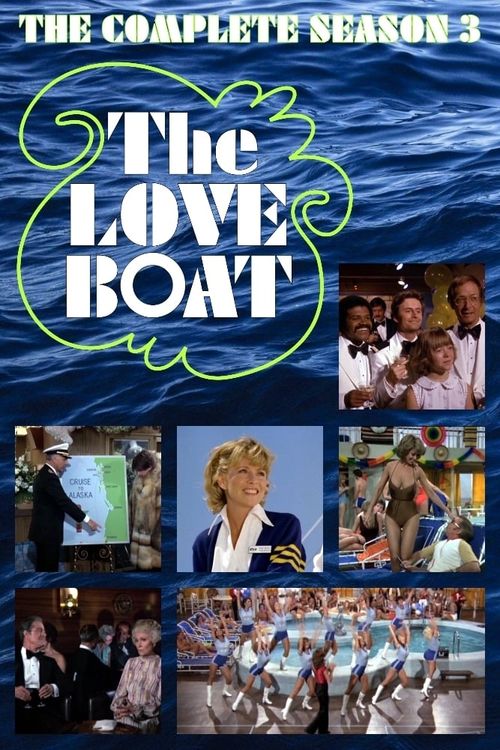
Welcome to Retro Television Reviews, a feature where we review some of our favorite and least favorite shows of the past! On Wednesdays, I will be reviewing the original Love Boat, which aired on ABC from 1977 to 1986! The series can be streamed on Paramount Plus!
It’s time for a Halloween cruise!
Episode 3.8 “Play by Play/Cindy/What’s A Brother For?”
(Dir by James Sheldon and George Tyne, originally aired on October 27th, 1979)
Yes, this episode does feature the Love Boat’s annual Halloween cruise but sadly, it doesn’t do much with the theme. Last season’s Halloween cruise featured Vincent Price as an illusionist. This season, there is a costume ball but it’s mostly just there so that the show can do a take off on Cinderella.
Cindy (Melissa Sue Anderson) is a shy girl who boards the ship with her wicked stepmother (Carolyn Jones) and her two less-than appealing step-sisters (Ronda Bates and Lila Kent). While the stepmother tries to find an eligible bachelor for either one of her biological daughters, Cindy is expected to stay in the cabin and do the laundry. However, Gopher hears Cindy singing Witchcraft and decides that Cindy simply has to sing for “the prince of pop,” Preston Maddox (Frank Sinatra, Jr., who looks like a cross between his father and Jerry Lewis). However, how can Cindy escape from the cabin? Gopher arranges for her to go to the costume ball and he even steals Julia’s Cinderella costume so Cindy can go incognito. Cindy impresses Preston but, when Julie sees that Cindy is wearing her costume, Cindy makes a run for it. She leaves behind one glass slipper and …. well, you know where this is going, right? As everyone disembarks in Los Angeles, Preston has them try to on the slipper. Cindy, however, doesn’t have to try on the slipper to prove her identity. She just has to start singing Witchcraft. By the end of the episode, you’ll wonder if Cindy knows any other songs.
While all that is going on, Bud Pomeroy (Christopher George) and Peggy Rossmore (Lynda Day George) are two sportscasters who work together but actually dislike each other. Peggy thinks Bud is a chauvinist and Bud thinks that Peggy was only hired for her looks. They decide to compete in a series of athletic events to determine who will stay at their station and who will quit. Bud wins at arm wrestling. Peggy wins a 5-mile race around the ship. To determine their third event, Peggy randomly draws a piece of paper from Captain Stubing’s hat and discovers that the next competition will be weight-lifting! When Bud throws his back out, it looks like Cindy is going to win but then Cindy asks Bud to stay and they discover that they actually love each other. Yay! Neither the story nor the characters were that interesting but Christopher George and Lynda Day George were married in real life and they made an attractive couple.
Finally, Tom Benton (Tom Hallick) has devoted his entire life to looking after his brother, Matt (Patrick Wayne), who uses crutches. When Tom meets and falls in love with Kris (Joan Van Ark), Matt realizes that it is time for Tom to move on and find some happiness of his own.
For the most part, this was a typically pleasant episode of The Love Boat but, as a Halloween episode, it was a major disappointment. They should have had some fun with season but, unfortunately, they didn’t. This was like going on a Christmas cruise and not getting any presents.
Welcome to Retro Television Reviews, a feature where we review some of our favorite and least favorite shows of the past! On Tuesdays, I will be reviewing the original Fantasy Island, which ran on ABC from 1977 to 1986. Almost entire show is currently streaming is on Youtube!
Smiles, everyone! Smiles!
Episode 3.16 “Rogues and Riches/Stark Terror”
(Dir by Cliff Bole, originally aired on January 19th, 1980)
Our latest weekend on Fantasy Island is both strange and entertaining!
Attorney Mark Hendicks (John Schuck) comes to the Island with a briefcase full of papers. He’s searching for his former law partner, Pete Gilbert (singer Robert Goulet). Years ago, Pete came to Fantasy Island with a simple fantasy. He wanted to be an 18th century British outlaw. However, Pete had so much fun in the past that he decided that he never wanted to leave. Mark needs to get Pete’s signature on some official forms so that Mark can sell some land that he and Pete bought before Pete’s fateful trip to the Island.
Mr. Roarke explains to Mark what’s going on with Pete and Mark is surprisingly accepting of Roarke’s explanation. Roarke drives Mark out to a bridge. He tells Mark that crossing the bridge will transport Mark to Pete’s fantasy. Mark crosses the bridge and immediately sees Pete being chased by a bunch of British soldiers. Pete is having a grand ol’ time in the 18th century but he’s more than willing to take some time out from plundering so that he can sign the papers so that will allow Mark to become a millionaire once he returns to the present. However, after a dinner scene that is basically lifted shot-for-shot from Tom Jones, Mark falls in love with Margaret Winston (Dolly Read), the wife of sword-wielding Judge Winston (Alan Hale, Jr). Mark is tempted to remain in the past but, in the end, he decides that his place is in the present. Fortunately, it turns out that Margaret was having a fantasy of her own and she and Mark leave the Island together.
While that silly but enjoyable fantasy plays out out, Amy Marson (Melissa Sue Anderson) searches for the solution to a mystery that was so traumatic that it caused her to lose her ability to speak. Amy’s mother (Elinor Donahue) died in front of her and Amy hopes to discover not only who killed her mother but also to recover her ability to speak. This leads to Amy visiting the lighthouse where she grew up and having a reunion with the kindly lighthouse keeper, Joshua Templar (Michael Constantine). Amy’s flashbacks lead her to the solution to the mystery of her mom’s death and also to Joshua’s secret son (David Drucker).
This storyline, much like last week’s battle against Elizabeth Bathory, was enjoyably creepy and it featured good performances from Anderson, Constantine, Donahue, and Drucker. In the best tradition of FantasyIsland, the storyline was both macabre and also rather life-affirming. Fantasy Island was always at its best when it revealed the hidden humanity at the heart of each fantasy. Amy learns the truth of her mother’s death and she regains her ability to speak. Tattoo tells her that she has a beautiful voice. Awwwwww!
Welcome to Retro Television Reviews, a feature where we review some of our favorite and least favorite shows of the past! On Mondays, I will be reviewing Miami Vice, which ran on NBC from 1984 to 1989. The entire show is currently streaming on Tubi!
This week, Crockett and Tubbs drive into the abyss and discover what happens when you lose yourself in vice.
Episode 1.3 “Heart of Darkness”
(Dir by John Llewellyn Moxey, originally aired on September 28th, 1984)
The third episode of Miami Vice appears to be take place at least a month or two after the end of the pilot. Tubbs is not only now a member of the Miami Vice Squad but he and Crockett are now best friends. Gone is all the animosity and mistrust that characterized their initial relationship. Now, Crockett is willing to open up to Tubbs and Tubbs is willing to defend Crockett’s pet alligator, Elvis, when Sonny briefly flies into rage mode and threatens to throw away its favorite blanket.
(Sonny is upset because Elvis, who doesn’t like being left on the boat alone, ate one of Sonny’s records.)
Though Tubbs has been accepted by the Vice Squad, he’s still struggling to adjust to Miami, which is a bit more laid back than New York. Early on, he complains to Lt. Rodriguez about his apartment. Rodriguez just rolls his eyes. Sorry, Tubbs. Only one Miami cop gets to live with an alligator on a houseboat. Everyone else is stuck with a one-bedroom.
Crockett and Tubbs’s current assignment is to penetrate the world of Southern Florida porn kingpin, Walter Kovics (Paul Hecht). Kovics is involved with the Mafia and is suspected of having ordered several murders. When one of his actresses (played by Suzy Amis, making her television debut) is not only murdered but also turns out to be an underage runaway from Kansas, the case becomes personal. Crockett and Tubbs want to take down Kovics but the only way to get to Kovics is through his second-in-command, Artie Rollins. At first glance, Artie seems to be a typical coked up criminal but, upon further investigation, Crockett and Tubbs learn that Artie Rollins is actually Arthur Lawson, an FBI agent who has spent the last few years of his life working undercover. Now, no one is sure if Artie is still working undercover or if he’s truly gone over to the other side. Artie claims that he’s still working to bring down Kovics but when Kovics discovers that Crockett and Tubbs are undercover cops, Artie is the one who is ordered to shoot them. Which side is Artie on? Not even he seems to know for sure.
Artie is played by Ed O’Neill. The future star of Married With Children and Modern Family star was in his mid-thirties when he appeared in Miami Vice and this was one of his earliest television roles. O’Neill gives an unpredictable performance, one that is often frightening and sometimes even a bit poignant. As played by O’Neill, Arthur is a man who has truly lost himself and the character is compelling because Arthur himself doesn’t seem to know what he’s going to do from minute-to-minute. He may want to take down Kovics but he’s also spent so many years in Kovics’s world that he knows he won’t ever be able to adjust to anything else. In the end, Arthur does the right thing but he sacrifices his soul as he does it and his joy at gunning down Kovics is almost as disturbing as the look he had in his eyes when he was previously considering whether to execute Crockett and Tubbs. The show’s final moments find Crockett and Tubbs sitting in a cop bar. Crockett confesses that he saw a lot of himself in Arthur Lawson. Rodriguez approaches them and informs them that, while being debriefed at FBI headquarters, Arthur committed suicide.
This was an interesting episode. The plot was a bit conventional but it was elevated by Ed O’Neill’s performance as the unstable Arthur. (O’Neill kept the viewer guessing, along with Crockett and Tubbs, as to who Arthur really was.) And, of course, just when it seems like everyone’s gotten their happy ending, Rodriguez reminded us that happy endings are never guaranteed. Everything comes with a price. Indeed, that’s one of the major themes of Miami Vice. Arthur sacrificed his identity, his soul, and ultimately his life to see that justice was done but, in the end, someone will quickly replace Kovics and the business of vice will continue with little interruption. Arthur will be largely forgotten and only mentioned as a cautionary tale. Can anyone blame Sonny for wanting to spend all of his time on a boat with an alligator?
Welcome to Retro Television Reviews, a feature where we review some of our favorite and least favorite shows of the past! On Sundays, I will be reviewing the made-for-television movies that used to be a primetime mainstay. Today’s film is 1986’s The George McKenna Story! It can be viewed on Netflix, under the title Hard Lessons!
George Washington High School is a school that has defeated many well-meaning principals. The hallways are full of drugs and gang members. A good deal of the student body never shows up for class. Fights are frequent. The police are a common sight. The majority of the teachers are men like Ben Proctor (Richard Masur), burned-out and content to hide in the teacher’s lounge.
New Orleans-raised George McKenna (Denzel Washington) is the latest principal and, from the minute that he shows up at the school, he seems a bit more confident than the other principals that the school has had. He barely flinches when a raw egg hits his suit. When he hears a fight occurring, he doesn’t hesitate to head down the hall to investigate. McKenna is determined to make George Washington High into a worthwhile institution and that means inspiring both the students and the teachers.
When it comes to films about dedicated educators trying to reform a troubled school, most films tend to take one of two approaches. One approach, the well-intentioned but not always realistic liberal approach, features the teacher or the principal who demands respect but who also treats the good students and teachers with equal respect and who turns around the school through the power of benevolence. The other approach is the one where the principal or teacher grows frustrated and turns into an armed vigilante who forces the students to shut up and learn. Think of The Principal or The Substitute or Class of 1984. The first approach is the one that most teachers claim that they try to follow but I imagine that, for most of them, there’s an element in wish-fulfillment to be found in watching the second approach. In the real world, of course, neither approach is as automatically successful as it is in the movies.
The George McKenna Story was made for television and it’s based on a true story so, not surprisingly, it follows the first approach. Denzel Washington plays McKenna as someone who could probably handle himself in a fight if he ever got into one but, for the most part, the film portrays McKenna as succeeding by treating his students with more empathy and respect that they’ve gotten from anyone else in their lives. Though cranky old Ben Proctor thinks that McKenna’s methods are foolish and that he’s asking the teachers to do too much, McKenna starts to turn the school around. One student, whose father was threatening to make him drop out, ends up getting nearly straight A’s and reciting Shakespeare. Unfortunately, not everyone can be rescued. One student is arrested for murder and taken away by the cops but McKenna is still willing to be there for that student. McKenna doesn’t give up on his students and, unlike that music teacher in The Class of 1984, he doesn’t allow them to fall through a skylight either.
The George McKenna Story is a predictable film. It’s easy to guess which student will be saved by McKenna’s approach and which student will end up getting stabbed in a gang fight and which student will end up in prison. That said, the film definitely benefits from Denzel Washington in the lead role. Washington exudes confidence from the minute that he appears on screen and you’re left with little doubt that if anyone could reform a school simply through good intentions, it would definitely be Denzel Washington.