Horror Film Review: Knock Knock (dir by Eli Roth)


Knock Knock starts out as a satire of vapid male fantasies before then becoming a vapid male fantasy.  It then transforms itself into a satire of vapid torture porn before then becoming vapid torture porn.  And, in the end, your main response will probably be, “Eh, who cares?”

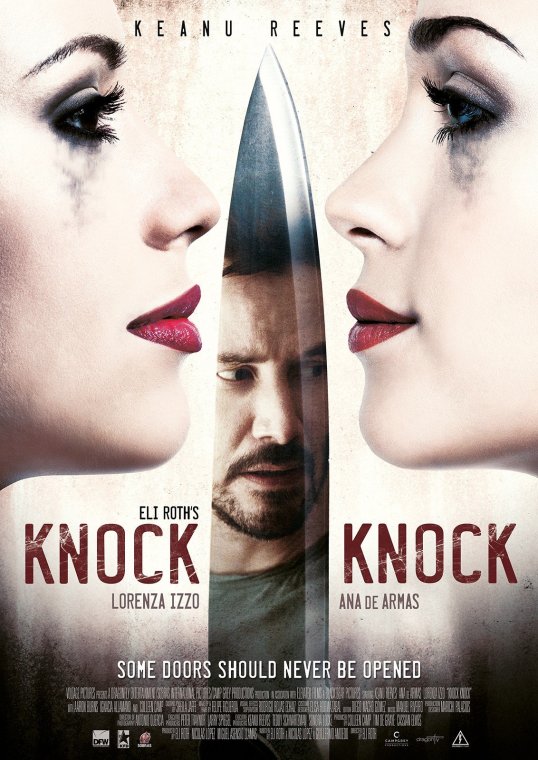
Keanu Reeves plays Evan, an architect who has a nice house, a nice family, and a nice dog.  He also has an injured shoulder, which leads to him staying home while his wife and children spend the weekend at the beach.  Evan is looking forward to having the house to himself, especially when it starts to rain.  I mean, who wants to be at the beach in the middle of storm, right?  That night, Evan is relaxing in his home when he hears someone at the door.

Knock knock.

Two young women, Genesis (Lorenza Izzo) and Bel (Anna de Armas), are standing on his front porch, soaked.  They tell him that they’re looking for the address of a party and that their phone has gotten wet and could they please come inside for just a few minutes and get online and find the correct address?  Evan agrees.  Genesis and Bel enter the house.  They tell him that they’re models.  They tell him about their girlfriends.  They talk about their sex lives and Evan responds with a goofy smile.  They ask if they can take off all their clothes and toss them in a dryer.  Evan agrees.  “Uh, I’ve got some robes,” Evan says and it’s a funny line because Keanu Reeves sounds sincerely bewildered when he says it.

Anyway, you can tell where this leading.  It starts with a threesome and then it ends with the house getting destroyed and people getting buried alive and, to be honest, it gets a little bit boring after a while.  Perhaps if Evan was truly a loathsome character, as opposed to just an awkward Keanu Reeves, there would be some sort of joy in watching Genesis and Bel taunt him while destroying his home and destroying his wife’s artwork but instead it just amount to a bunch of repetitive taunting.  Despite all of their talk about how Evan represents the 1% and how quickly Evan was willing to cheat on his wife and potentially destroy his family, Genesis and Bel don’t come across as being revolutionaries or avenging angels.  Instead, they just seem to be overcaffeinated with no real reason for doing what they’re doing beyond the fact that there wouldn’t be a movie otherwise.

Keanu Reeves gives a strange performance in this film.  At the start of the film, he actually seems like he’s perfectly cast.  When Genesis and Bel first show up at his door, there’s some genuine wit to found in his confused reaction to the two girls.  But then, as the film progresses, Reeves has to start pretending to be desperate and that’s never really been his strong suit.  Perhaps because he’s trying to keep up with the hyper performances of Lorenza Izzo and Anna de Armas, Reeves starts to shout every single line and it just becomes rather humorous before then becoming rather dull.  “STOP IT!  I COULD GO DEAF!”  he shouts when the girls force him to listen to loud music.  Later, when he curses the girls, he sounds like a cartoon character talking about how much he hates Bugs Bunny.  I like Keanu Reeves but he’s just not a very good shouter.

I’ve defended Eli Roth in the past and I imagine that I’ll do so again in the future but it’s best to keep the door closed on Knock Knock.
Horror on the Lens: Robot Monster (dir by Phil Tucker)


Today’s horror film is a true classic of its kind, the 1953 science fiction epic Robot Monster.

Now, I should admit that this is not the first time that I’ve shared Robot Monster in October.  I share it every year and, every year, YouTube seems to pull the video down in November.  That sucks because Robot Monster is one of those weird films that everyone should see.  So, I’m going to share it again.  And, hopefully, YouTube will let the video stay up for a while.

As for what Robot Monster is about…

What happens with the Earth is attacked by aliens?  Well, first off, dinosaurs come back to life.  All of humanity is killed, except for one annoying family.  Finally, the fearsome Ro-Man is sent down to the planet to make sure that it’s ready for colonization.  (Or something like that.  To be honest, Ro-Man’s exact goal remains a bit vague.)

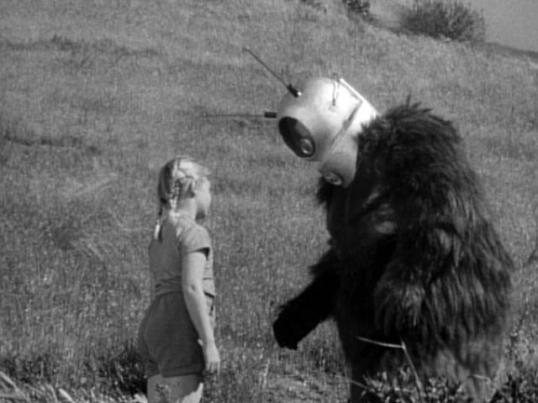
Why is Ro-Man so fearsome?  Well, he lives in a cave for one thing.  He also owns a bubble machine.  And finally, perhaps most horrifically, he’s a gorilla wearing a diver’s helmet.  However, Ro-Man is not just a one-dimensional bad guy.  No, he actually gets to have a monologue about halfway through the film in which he considers the existential issues inherent in being a gorilla wearing a diver’s helmet.

Can humanity defeat Ro-Man?  Will Ro-Man ever get his intergalactic supervisor to appreciate him?  And finally, why are the dinosaurs there?

All of those questions, and more, are cheerfully left unanswered but that’s a large part of this odd, zero-budget film’s considerable charm.  If you’ve never seen it before, you owe it to yourself to set aside an hour and two minutes in order to watch it.

You’ve never see anything like it before.

Enjoy!

Music Video of the Day: We are Water by HEALTH (2010, dir by Eric Wareheim)


This video starts out on a very disturbing note.  Thanks to slasher films, we’re all used to seeing people being chased through the woods by a machete or knife-wielding maniac.  However, by putting this particular maniac in his underwear, this video makes the subtext clear.

But then, just when the video is reaching it’s darkest point, things get empowering thanks to a well-aimed pointed stick.  I can’t tell you how many slasher movies I’ve watched and wondered, “Why don’t you just kick him in the balls when he approaches?”  Well, this video features a lot more than kicking.

And then the wig comes off and you can interpret that however you want.  The most important thing is that the big fat perv got stabbed in the dick.

Enjoy!

(Yes, this video was directed by Eric of Tim and Eric fame.)

Horror on TV: The Veil Episode 5 “The Crystal Ball” (dir by Herbert L. Strock)


On tonight’s episode of The Veil, a writer (Booth Colman) is heartbroken when his lover, Marie (Roxane Berard) leaves him so that she can marry his boss (played by Leo Penn, father of Sean).  To help soften the blow, Marie gives the writer a parting gift, an ornamental crystal ball.  However, it doesn’t turn out to be much of a gift because the only thing that the writer can see in the ball are visions of Marie cheating on her husband!  Boris Karloff both hosts and plays the role of the writer’s uncle.

This is one of the lesser episodes of The Veil but it still has its entertaining moments, largely due to the performances of Roxane Berard and, of course, Boris Karloff.  I guess my main problem with this episode is that it doesn’t so much end as it just stops.  I was waiting for one big twist but …. oh well!  Listen, it’s got Boris Karloff in it and you should always watch as much Karloff as possible in October!

Enjoy!

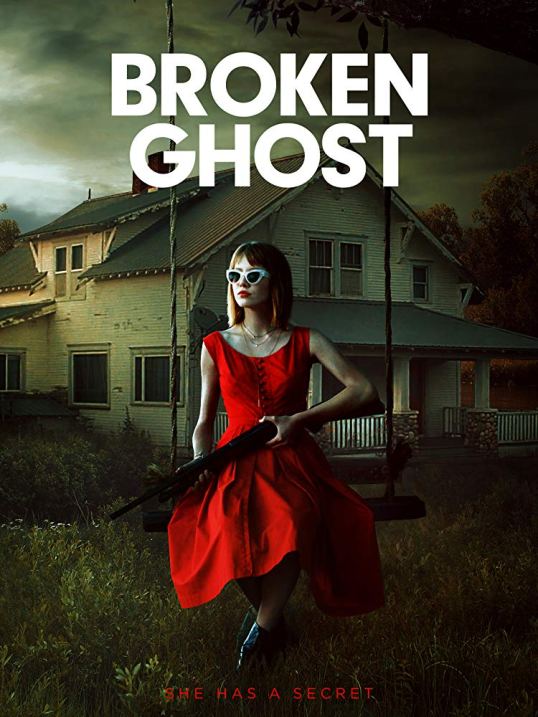
The TSL’s Horror Grindhouse: Broken Ghost (dir by Richard Gray)


Odd film, Broken Ghost.

It opens with two bikers slowly approaching a big house that appears to be sitting out in the middle of nowhere.  They enter the house, we hear gunshots, and then suddenly….

….a new family is moving into the house!  The Day family is full of secrets, some of which we learn about immediately and others of which are only gradually revealed.  Samantha Day (Scottie Thompson) has recently bought the local drug store and is frustrated by the fact that her husband, William (Nick Farnell), is impotent.  William is a moody artist who is struggling to get over an addiction to pornography.  And then there’s their teenage daughter, who insists on being called Imogen (Autry Haydon-Wilson) even though her real name is Grace.  Or maybe she now wants to be Grace and her original name was Imogen.  To be honest, it’s hard to keep track because everyone refers to her by both names throughout the film.  We do know that Samantha occasionally calls her the wrong name because everyone yells at her about it.

Anyway, Imogen is the reason that the Days have moved to a new house.  Apparently, something bad happened at Imogen’s old school and, as a result, she’s changed her name and her hair.  Imogen is an interesting character and Autry Haydon-Wilson does a good job playing her.  Imogen’s moods swing back and forth, between depression and angry, insecurity and defiance.  You’re on her side as soon as you meet her.  Imogen suffers from a severe vision impairment and the film occasionally shows the world through her eyes.  It’s a uniquely threatening place.

As soon as the Days move into their new home, strange things start to happen.  The television turns on at random and it’s usually showing porn.  Imogen starts to hear a voice calling her name.  Samantha finds herself tempted to run off with every strange man that she sees at the local bar.  William, at least, finds himself artistically inspired.  When his wife and his daughter point out to him that the house is obviously haunted and that it might be a good idea to move somewhere else, William replies, “I’m doing my best work!”

It turns out that the house has quite a history, one that goes beyond those two bikers that we saw earlier.  The house was previously owned by another artist, one who murdered his wife and his children.  When William finds the murderer’s artwork, he starts to slip even further into insanity.  Could it be that William is possessed by the murder’s malevolent spirit or is there a twist lurking in the shadows….

Yes, there is a twist.  I won’t spoil it, beyond saying that it was a pretty bad twist and that it didn’t really make any sense.  In fact, it made me want to throw something at the television.  But, oh well.  I guess we should be happy that Broken Ghost tried to do something unexpected.  Still, as a result of the twist, the movie ends on a rather sour note and it’s hard not to feel that one member of the Day household has been excessively punished while another member of the family has basically gotten away with acting like a complete asshole.  And that’s all I’ll say about that.

So, it’s a flawed film that doesn’t really work but there are still some effective moments.  As I said, Imogen’s an interesting character and I almost wish that the film had dropped all of the supernatural mystery stuff and instead just focused on her character and her struggle to move on with her life.  Say what you will about the script but the cinematography is gorgeous and full of atmosphere.  There’s good moments all through Broken Ghost.

It’s just a shame about that ending.

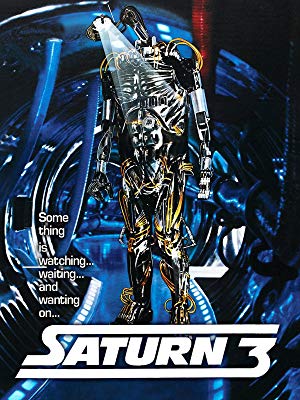
Robot In Lust: Saturn 3 (1980, directed by Stanley Donen)


The time is the future and Earth is so polluted and overcrowded that the survival of humanity is dependent on space stations that are located across the galaxy.  On one of the moons of Saturn, Adam (Kirk Douglas) and Alex (Farrah Fawcett) are researching and developing new ways to grow food.  Alex is young and has never experienced life on Earth.  Adam is in his 60s and says that Earth is the worst place in the universe.  Alex and Adam are not just colleagues but lovers as well.  Inside the tranquil facility, Adam, Alex, and Sally the Dog live a lifestyle that feels more like late 70s California than 21st century Saturn.
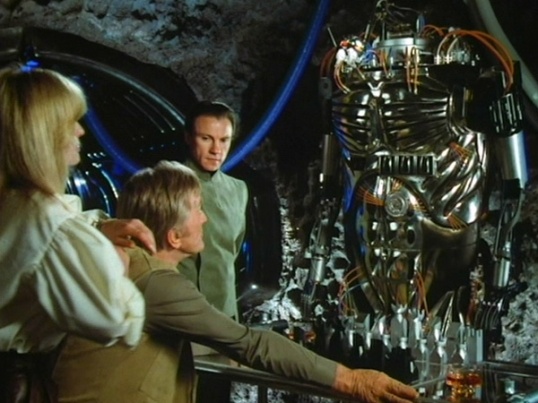

Adam is disturbed when a cargo ship arrives.  The ship is piloted by Captain James (Harvey Keitel, giving the film’s only interesting performance despite having had all of his dialogue dubbed by Roy Dotrice), who immediately takes an unwelcome interest in Alex.  (“You have a great body,” he says, “May I use it?”)  Captain James starts telling Alex stories about life back on Earth and encouraging her to abandon Adam.  Captain James also reveals that he’s accompanied by an 8-foot robot named Hector.  Hector is designed to replace one of the scientists.

If that’s not bad enough, it also turns out that Captain James is not really Captain James but instead, he’s Captain Benson.  Benson was originally assigned to fly the cargo ship but, after a psychological profile deemed him to be psychotic, Benson was replaced by James.  So, Benson killed James by pushing him out of an airlock.  Now, Benson is on Saturn 3 and he’s uploaded both his homicidal impulses and his lust for Alex into Hector’s programming.  Soon, Hector is rampaging through the facility, determined to have Alex for himself.

For an ultimately forgettable film that plays like an Alien rip-off (even though the two films were actually shot at the same time), Saturn 3 has long been infamous for its troubled production.  Martin Amis, who wrote an early draft of the script, even wrote a novel, Money, based on the filming of Saturn 3.  (In the novel, Kirk Douglas is renamed Lorne Guyland and insists on getting naked as much as possible in order to prove that he’s still virile.)  The film was originally meant to be the directorial debut of John Barry, the famed British production designer.  However, Barry departed the film after two weeks, with reports differing on whether he left voluntarily or if he was fired.  The film’s producer, Stanley Donen, took over as director.  Stanley Donen, who also directed legitimate classics like Singin’ In The Rain, Charade, and Two For The Road, confessed to having no affinity for science fiction and it’s obvious from watching his one foray into the genre that he was not exaggerating.

The idea behind Saturn 3, with Hector taking on the personality of it creator, is an intriguing one but the film doesn’t do much with it and the film’s choppy pace indicates that there was extensive executive tinkering both during and after filming.  Harvey Keitel is convincingly strange in his role but Farrah Fawcett is miscast as a scientist and Kirk Douglas does his usual grin and grimace routine, usually while naked.  (It doesn’t seem that Martin Amis had to stretch the truth too far.)  The 8-foot Hector looks impressive until he actually has to chase Fawcett through the facility.  That’s when it becomes obvious that anyone with two functioning legs could easily outrun the lumbering robot.

In space, no one can hear you scream.  But they might hear you laughing at Saturn 3.

Jerusalem’s Lot, Book Review, By Case Wright


JL.jpg

Jerusalem’s Lot is a short story by Stephen King that is a prequel to Salem’s Lot. Salem Lot was reviewed by Lisa! Lisa’s Salem Lot Review is Right Here! REALLY!  I want to make another thing clear: I didn’t read the story this time. I listened to the Audiobook … again. The performance is by John Glover and it’s really like a radio show.  John brings it! It’s a one-man-show with different voices and gravitas.  John Glover is truly a national treasure!!!

The story takes place in Jerusalem’s Lot, Maine in 1850 and is told as a series of journal entries by Charles Boone and few by Boone’s manservant/pal Calvin McCann.  Boone inherits his ancestral home in Chapelwaite, Maine just two miles from the eponymous Jerusalem’s Lot. After he moves in, he starts to hear what he believes are large rats crawling in the walls. It turns out they’re not rats, but ghosts of the damned!  The longer that Boone is in the house, the stronger the ghosts become.  People acting as a doorway to evil is common in Stephen King’s early works.  In “The Shining”, Danny Torrence’s ESP abilities acted as a battery that charged up the ghosts of the Overlook Hotel so that they could interface with our reality.  It was weird that the ghosts wanted to kill Danny; they surmised that his death would give them permanent entry into our world; so, why kill Danny? Wouldn’t Danny’s Death remove the energy production?

As Charles stays, the Ghosts leave him and Calvin maps and notes guiding them to the nearby town of Jerusalem’s Lot.  It is revealed that Jerusalem’s Lot was a town founded by Charles’ distant ancestor John Boone who became a devil worshiping sex pervert.  I used to visit Maine a lot in my younger days and sure there isn’t always a lot to do, but who knew that these Maine residents were only a missed Red Sox game away from creating an inbred demonic sex cult?!  Sex cults are in now check out Lisa’s NXIVM Lifetime movie  HERE!

John’s demonic sex cult set out to manifest a gigantic intergalactic demon worm to the Jerusalem Lot Chapel by reading from an evil book called “Mysteries of the Worm” by Nicolas Sparks, then have red punch, and Bundt cake. They were apparently successful because the town is deserted. Boone discovers that Boone’s descendants act as a doorway for the inbred demonic sex cult to return because blood calls to blood! Bwhahaha.  You can inherit the evil deeds of your ancestors. Oh well, as an Italian, Sorry Celts… Whoopsie.

Charles sets out to destroy the book because he doesn’t want the world to end or have a “Notebook” sequel in circulation.  Does Boone save the day? Buy the audiobook!

Night Shift as a whole is a brilliant collection of short stories from a time when Stephen King had just been able to support himself and his family with his writing.  His stories are leaner and heavily edited, making them a lot of fun to read because there’s no extraneous elements.  I will likely review many more short stories from this book and this period because they are some of his best work.  Happy Horrorthon!

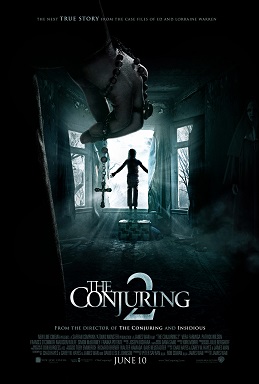
Horror Scenes That I Love: The Painting Comes To Life In The Conjuring 2


Obviously, you don’t have to be from a Catholic background to find this scene from The Conjuring 2 totally creepy but it definitely helps.

I remember watching this scene in the theaters.  As soon as Vera Farimga stepped into that room, I was like, “Uhmm …. see the painting?  Uh, there’s a painting behind you.  You might want to turn around and look at the painting….”

I really liked The Conjuring 2 and the first Conjuring as well.  I even liked the Annabelle films.  But one thing that I’ve always noticed about haunted house films is that nobody ever just turns on the lights.  It always seems to me like so much trouble could be avoided just by turning on the lights in every room and leaving them on.  Scary things only seem to happen in the dark.

Anyway, enough of my rambling!  Here’s today’s scene:

Book Review: The Hell Candidate by Graham Masterton


First off, ignore the fact that the cover for the 1981 first edition of The Hell Candidate credits Thomas Luke as being the author.  This book was written by Graham Masterton and, with its combination of sex, violence, and transgressive political commentary, it’s easily identifiable as being a Masterton novel.  Why was it published under the name Thomas Luke?  Perhaps, at the time it was published, it was felt that the British Graham Masterton wasn’t a well-enough known name in the United States.  Or maybe it was felt that the book would prove to be so controversial that it had to be published under a pseudonym.  Who knows?  All subsequent editions of the book have credited Graham Masterton as being the author so, obviously, it’s no longer controversial (or even outlandish) to suggest that an American politician might be in league with the devil.

The Hell Candidate is told from the point of view of Jack Russo, a PR man who has been hired to work on the presidential campaign of Hunter Peal.  At the start of his campaign, Peal is a calm and rather even-handed candidate, advocating common sense solutions for America’s problems.  Everyone acknowledges that he’s a good man but no one gives him a chance of actually winning his party’s nomination.  That all changes when Peal’s personality suddenly changes, seemingly overnight.  Suddenly, Peal is loud, profane, and angry, a candidate who promises to destroy America’s enemies and make everyone at home rich.  His managers worry that Peal has gone insane and prepare themselves for a disaster on the campaign trail.

Instead, it turns out that the voters really like this new, profane and insane Hunter Peal.  No matter what Peal says or does, the crowds love him and soon, Hunter Peal is moving into the White House.  Is it because the people truly love this aspiring dictator or is it because Hunter Peal made a deal with the devil?

The Hell Candidate is an effective novel, precisely because we know that most politicians would gladly make a deal with the devil if it meant a chance to set up residence in the White House.  Indeed, what was presumably meant to be shocking when this novel was written is rather common place now.  I mean, seriously — profanity on the campaign trail?  Oh my!  Bragging about your ability to destroy your enemies?  Horror!  Cynically abusing the power of the office of the presidency?  OH MY GOD!  What makes the book memorable, though, is its suggestion that the voters don’t necessarily need to be influenced by the devil to vote for a candidate like Hunter Peal.  Instead, the book suggests that a dictator is secretly what most voters desire.

In the end, the book suggests that the Vatican might be able to help us deal with a Satanically-possessed president but who can save the American people from themselves?

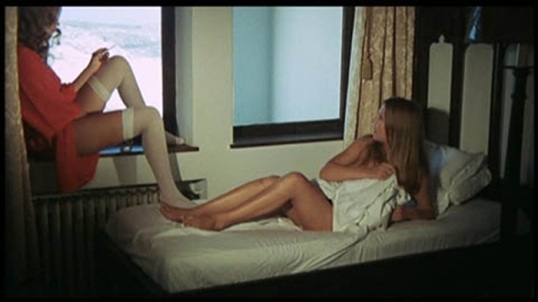
International Horror Review: A Virgin Among The Living Dead (dir by Jess Franco)


This 1973 Spanish-French-Italian production’s title is both its greatest strength and also its greatest weakness.

On the one hand, it’s impossible to forget a title like A Virgin Among the Living Dead.  It’s a title that mixes both horror and sex, which are two things of which audiences simply cannot get enough.  On the other hand, this is a a Jess Franco film and the title — which is so blatant and over-the-top — sounds like it could almost be a parody of Franco’s “unique” style of film-making.  If you were coming up with a fake Franco film, you would probably give it a title that sounded a lot like “A Virgin Among the Living Dead.”  A Virgin In The Castle of Dr. Orloff, perhaps.

Interestingly enough, Franco absolutely hated the film’s title.  It, and quite a few other titles, were slapped onto the film by distributors who were apparently unconcerned with the fact that the film was not meant to be one of Franco’s typical, give-me-my-paycheck exploitation films.  Franco’s title for the film was Night of the Shooting Stars, which is a bit bland but perhaps also a bit more honest.  Incidentally, the film was also released under the titles Christina, Princess of Eroticism and The Erotic Dreams of Christina, which again were titles that Franco disliked.

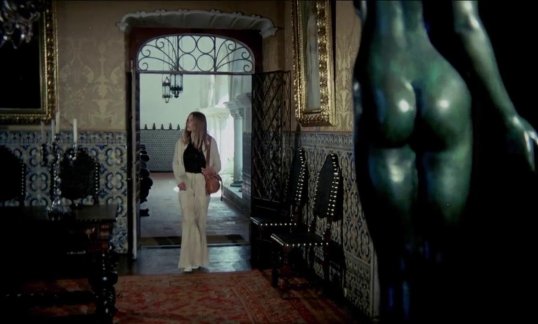
In the version I saw (and, admittedly, there’s several versions floating around), it’s never even stated that the film’s frequently unclothed protagonist, Christina (Christina von Blanc), is a virgin.  When compared to the other decadent members of her family, she certainly is innocent.  For instance, she doesn’t drink blood or engage in strange purification rituals.  When the cheerfully cynical Uncle Howard (Howard Vernon, because this is a Franco film, after all) plays a waltz while another member of the family is dying upstairs, Christina is properly shocked.  But, at no point, is Christina identified as being a virgin.

In fact, Christina is rather uninhibited, nonchalantly greeting strangers (and a rather creepy servant, played by Franco himself) in her underwear, sleeping naked in a room with an unlocked door, and later casually skinny dipping in a nearby swamp.  (When she’s informed that two wide-eyed townspeople were watching her from a nearby hill, she shrugs it off.)  Perhaps she’s meant to be an Eve-like character, unaware of sex or her nudity until she eats from the tree of knowledge.  Am I giving too much credit to Jess Franco?  As is often the case with Franco, it’s hard to say.

As far as the film itself goes …. well, the plot isn’t always easy to follow.  Christina has come to her family’s ancestral home for the reading of her dead father’s will.  Her father hanged himself and, though he’s dead, he keeps showing up.  Christina immediately discovers that the other members of her family are collection of rogues, eccentrics, and blood drinkers.  She also eventually learns that all the members of her family are the living dead and that they’re all worried that Christina will make them leave the estate.  Or are they?  Is Christina just dreaming all of this or is it really happening?  Is the Queen of Night really coming to claim everyone’s soul or is that just a part of Christina’s hallucinations?

A Virgin Among The Living Dead features all of Franco’s usual directorial quirks.  The story rambles.  Franco alternates between scenes of surreal beauty and scenes of almost indifferent framing.  At times, the score is hauntingly ominous and then, at other times, it sounds like it was lifted from a 70s porno.  Christina comes across as being a beautiful blank but Howard Vernon is memorably perverse as Uncle Howard and all the members of the family are amusingly decadent.  For once, though, all these quirks work to the film’s advantage, creating a surreal dreamscape that truly does seem to exist in a land between life and death.  A Virgin Among The Living Dead truly does become a work of pure cinema, one in which the the visuals and the mood become the narrative as opposed to the film’s story itself.

Franco may have hated the title that was slapped on it but this is actually one of his better films.  Unfortunately, how you react to the film will probably depend on which version you see.  There are several floating around, some of which feature hardcore inserts that were filmed by other directors.  There’s another version that features extra zombie footage that was filmed by Jean Rollin.  The Redemption Blu-ray features Franco’s cut of the film, with no hardcore or extra zombie footage.  That said, the scenes that Rollin shot are included as an extra.  Personally, I like Rollin’s zombie footage but, at the same time, I can also see how its inclusion would have destroyed the film’s already deliberate pace.

(And, of course, it goes without saying that I’m opposed to producers inserting extra scenes into any film, especially when that footage wasn’t directed by the original director.)

Anyway, A Virgin Among The Living Dead never reaches the existential heights of Female Vampire but it’s still one of Franco’s “good” films.  Even if he did hate the title….