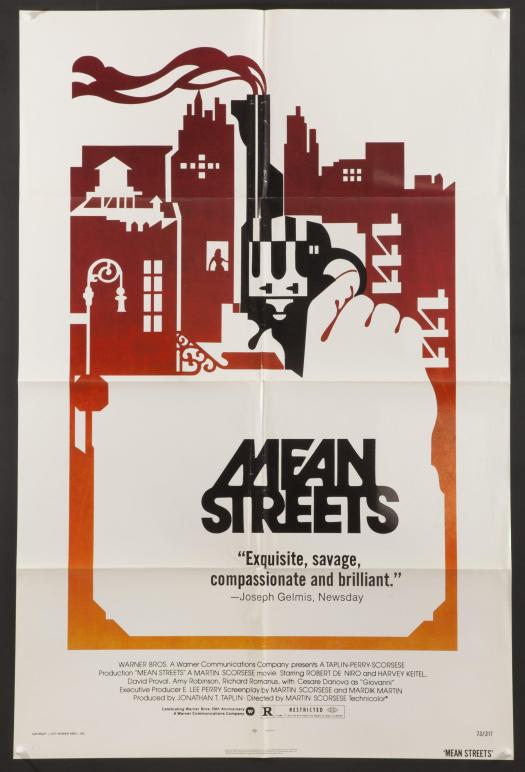
Made Man: Martin Scorsese’s MEAN STREETS (Warner Brothers 1973)


gary loggins's avatarcracked rear viewer

Let’s talk about Martin Scorsese a bit, shall we? The much-lauded, Oscar-winning director/producer/film historian has rightly been recognized as one of out greatest living filmmakers, with classics like TAXI DRIVER, RAGING BULL, GOODFELLAS, GANGS OF NEW YORK, and THE DEPARTED on his resume. Yet Scorsese started small, directing shorts and the low-budget WHO’S THAT KNOCKING AT MY DOOR? as a film student. He got work as an editor (UNHOLY ROLLERS) and assistant director (WOODSTOCK) before directing a feature for Roger Corman called BOXCAR BERTHA, starring Barbara Hershey and David Carradine. When Scorsese and Mardik Martin cowrote a screenplay based on Martin’s experiences growing up in New York’s Little Italy, Corman wanted to produce, but only if the film could be turned into a Blaxploitation movie! Fortunately, Warner Brothers picked it up, and the result was MEAN STREETS, which put Scorsese on the map as a filmmaker to be reckoned with.

View original post 554 more words

All Hail Jan-Michael Vincent: Red Line (1996, directed by John Sjogren)


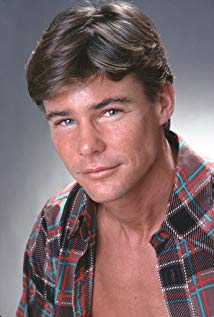
Jan-Michael Vincent, back in the day

When Jan-Michael Vincent died on February 10th, we lost a legend.

For obvious reasons, the life and career of Jan-Michael Vincent is often held up as a cautionary tale.  Vincent went from being a rising star in the 70s to being nearly unemployable in the 90s.  When you watch Vincent in one of his early film, like The Mechanic or Big Wednesday, you see an actor who had both the talent and the looks to be a major star.  He was such a natural and deceptively low-key performer that it is not a surprise that he was twice cast as Robert Mitchum’s son.  He could play everyone from a hippie to a cowboy to a surfer to an assassin.  Unfortunately, once the 80s rolled around, Vincent became better known for his struggles with drugs and alcohol than for his talent.  After a brief but profitable stint starring in Airwolf, Jan-Michael Vincent found himself appearing mostly in straight-to-video action films.  By the mid-90s, he was a mainstay on late night Cinemax.  Even though the films had gotten smaller and his famous good looks had been ravaged by years of hard living, Vincent was still capable of giving a good performance.

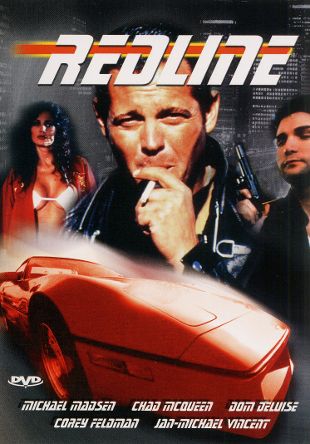
It is impossible to talk about the legend of Jan-Michael Vincent without talking about Red Line.  In this direct-to-video car chase film, Vincent was cast as a gangster named Keller.  When an auto mechanic named Jim (Chad “Son of Steve” McQueen) makes the mistake of taking one of Keller’s cars for a joyride, Keller blackmails Jim into stealing a corvette from a police impound lot.  Red Line was typical of the type of films that Vincent was usually offered in the 90s, an action-filled crime film with a handful of recognizable faces.

It was also a film that Vincent nearly didn’t live to make.  Two days before filming was to begin, Jan-Michael Vincent was nearly killed when he crashed his motorcycle.  Vincent suffered severe facial lacerations and he would later tell Howard Stern that his eye was nearly popped out of his head as a result of the accident.  Vincent was rushed to the hospital and put in intensive care.

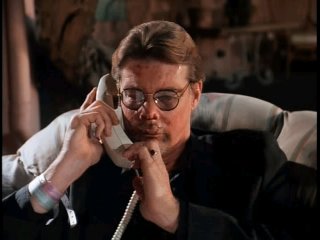
However, Jan-Michael Vincent still had a movie to make.  So, what did he do?  Two days after his accident, he checked himself out of the hospital and, unexpectedly, showed up on set.  With his face noticeable bruised and swollen and with the stitches and sutures still visible, Vincent played the role of Keller.  If you watch carefully, you can even spot his hospital ID, still hanging around his wrist.  The script was hastily rewritten to explain Vincent’s injuries and, though he could barely speak or walk, he still delivered his lines and filmed his scenes.  And goddamn if Jan-Michael Vincent didn’t steal the entire movie.  Even after years of hard-living (not to mention just two days after nearly dying), Jan-Michael Vincent still had it.  Even though he had to whisper his lines and film most of his scenes sitting down, Vincent was still credibly threatening in the role of Keller. He even points out his own injuries, saying, “I’m sick of looking like Frankenstein!”

Jan-Michael Vincent in Red Line

The rest of the cast was made up of an eclectic collection of familiar faces.  Dom DeLuise played Chad McQueen’s boss.  Michael Madsen and Corey Feldman (!) both played rival gangsters while Roxanna Zal played the young woman who becomes McQueen’s partner in crime.  B-movie fans will want to keep an eye out for Julie Strain, Robert Z’Dar, and Chuck Zito.  None of them make as much of an impression as Vincent, though.

Red Line was meant to be an homage to the type of car chase films that Steve McQueen made famous.  Chad McQueen even gets to drive a replica of the car that his father drove in Bullitt.  Some of the chase scenes are exciting but Chad doesn’t have his father’s screen presence and the film never overcomes its low-budget.  Watching the movie is a lot like watching someone else play Grand Theft Auto.  Red Line is a forgettable movie but it will always be remembered as an important chapter in the legend of Jan-Michael Vincent.

Jan-Michael Vincnet, RIP

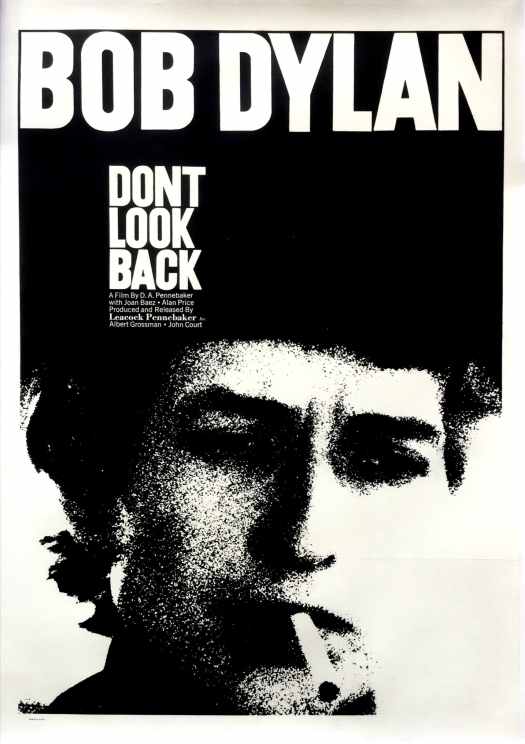
Rockin’ in the Film World #19: Bob Dylan in DON’T LOOK BACK (Leacock Pennebaker Films 1967)


gary loggins's avatarcracked rear viewer

“…some people say that I am a poet… ” 

– Bob Dylan, in the liner notes from the 1965 LP “Bringing It All Back Home”

Bob Dylan has been put under the media microscope, bisected, dissected, and trisected for the past six decades, with everyone and their mother trying to interpret the essence behind the enigma. Documentarian D.A. Pennebaker doesn’t go that route in DON”T LOOK BACK; instead, his cinema verite, free form style adheres to the old adage “show, don’t tell”, as he and his camera crew follow the troubadour on his 1965 tour of Great Britain, culminating in his historic set at the Royal Albert Hall. This would be Dylan’s final tour as a solo performer with guitar and harmonica – the album “Bringing It All Back Home” would soon be released, featuring electric and acoustic sides, and later that year he’d plug in with his band…

View original post 531 more words

Film Review: Leaving Neverland (dir by Dan Reed)


“Is it okay to still listen to the music of Michael Jackson?”

Over the past few days, I’ve seen many different variations of that headline.  The Guardian asked, “Can We Still Listen To Michael Jackson?” From Slate: “Will Michael Jackson songs still play at weddings?  We asked three DJs.”  And, of course, Entertainment Weekly chimed in with: “Can we still listen to Michael Jackson’s music after HBO doc Leaving Neverland?” As far as I know, the Guardian has yet to accuse Entertainment Weekly of headline plagiarism.  That’s how seriously this question is being considered.

Fortunately, for me, it’s not a question that I have to answer.  Michael Jackson’s music has never been an important part of my life.  All of the songs and albums that people rave about — Thriller, Bad, that song about the rat — were all pretty much before my time.  Usually, whenever I have heard any of those so-called classics, my usual reaction has been that 1) they’re ludicrously overproduced and 2) they tend to drag on forever.  (Seriously, there’s no reason to ask Annie if she’s okay that many times.)  Some people grew up with the idea of Michael Jackson being the King of Pop and a musical innovator.  I grew up with the idea of Michael Jackson being a rather frightening eccentric who didn’t appear to have a nose and who wrote songs about how unfair it was that the world wouldn’t accept that he just really, really enjoyed the company of children.  Since neither Jackson nor his music have ever been an important part of my life, it’s rather easy for me to shrug and say, “Sure, let us never hear his music again.”

Still, there are many people debating the question of whether or not it’s time to cancel the legacy of Michael Jackson.  That’s because of Leaving Neverland, a 4-hour documentary that premiered at Sundance and which recently aired on HBO.  Leaving Neverland deals with two men — choreographer Wade Robson and former actor Jimmy Safechuck — who claim that they were both sexually abused by Michael Jackson as children.  Interviewed separately, both Robson and Safechuck tell nearly identical stories about first meeting Jackson, being invited into the sanctuary of Jackson’s Neverland, and eventually being brainwashed, abused, and eventually abandoned by Jackson.  It’s not just that Robson and Safechuck both separately tell the same story.  It’s also that the details will be familiar to anyone who has ever been abused.  The grooming.  The manipulation.  The thrill of sharing a secret eventually giving way to the guilt of feeling that you’re somehow at fault.   And, of course, the combination of fear and denial that both Robson and Safechuck say initially caused them to lie and deny having been abused by Jackson.  Both men talk about how Jackson used their own broken families to control them, suggesting that only he understood what they were going through and that they were only truly safe when they were with him.  Jimmy Safechuck, in particular, speaks in the haunted manner and nervous cadences of a survivor.  Their stories are frequently harrowing and, watching the documentary, one can understand why counselors were on hand for the Sundance showing.

That said, those who have complained that Leaving Neverland is a very one-sided affair do have a point.  (To see what many of Michael Jackson’s supporters have to say about the men and their stories, check out #mjinnocent on twitter.)  Leaving Neverland is very much a product of our current cancel culture.  From the start it clearly chooses a side and, for four hours, it focuses only on that side.  Far more attention is paid to the civil suit that Jackson settled out of court than the criminal trial in which Jackson was acquitted.  Much has been made on twitter about inconsistencies in Safechuck and Robson’s stories.  Yet, are those inconsistencies the result of an intentional attempt to subvert the truth or are they the result of the trauma that the two men suffered at the hands of their abuser?  When I checked in on twitter during the documentary’s airing, it was fascinating to watch as the two camps debated who should be cancelled, Michael Jackson for being accused of pedophilia or Wade Robson for saying that Jackson’s hair felt like a brillo pad.

https://twitter.com/morgandallasx/status/1103422069495250950

Ultimately, Leaving Neverland is a portrait of the power of fame.  One imagines that if a stranger had approached the mothers of Wade Robson and Jimmy Safechuck and said that he wanted to spend a weekend sleeping in the same bed as their sons, the mothers would have a very different response than they did when Michael Jackson did essentially just that.  For all the red flags to be found in Jackson’s public behavior, he was often dismissed as just being an eccentric artist, a harmless Peter Pan-like figure.  (You have to wonder if there was no one in his camp who was willing to say, “Y’know, Michael, maybe you should stop being photographed with little boys for a while.”)  One of the more interesting things about the documentary is to see how quickly Jackson recovered from the 1993 abuse allegations.  The same reporters who very gravely report the allegations about Jackson in ’93 are later seen glibly referring to Jackson as being the “king of pop,” just a few years later.

Leaving Neverland is a powerful documentary but I doubt it will change anyone’s mind.  That’s one of the dangers that comes from picking a side as deliberately and unapologetically as this documentary does.  Your argument may be great but only those who agree with you are going to listen.  Those who support Jackson will see it as being a hit piece.  Those who believe Jackson was guilty will see the documentary as being validation.  Ultimately, whether or not it’s still okay to listen to Michael Jackson’s music is a decision that only you can make for yourself.

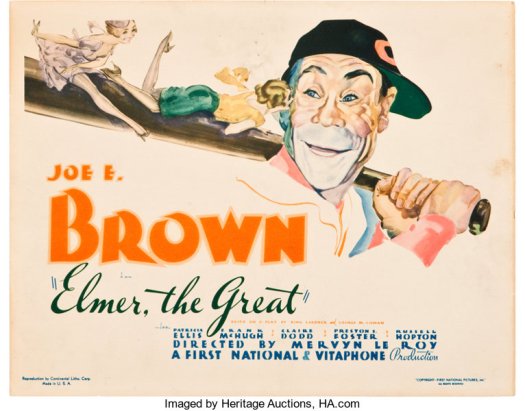
Spring Fever: Joe E. Brown in ELMER THE GREAT (Warner Brothers 1933)


gary loggins's avatarcracked rear viewer

It may be cold and snowy here in New England, but down in sunny Florida, Spring Training has already begun – which means baseball season is on it’s way! The Red Sox are looking good, although they got pounded by the Orioles in the game I watched this afternoon (I’m writing this on a Saturday), but just hearing the crack of the bats has whetted my appetite for the return of America’s National Pastime. So while we wait for Opening Day to arrive, let’s take a look at the 1933 baseball comedy ELMER THE GREAT.

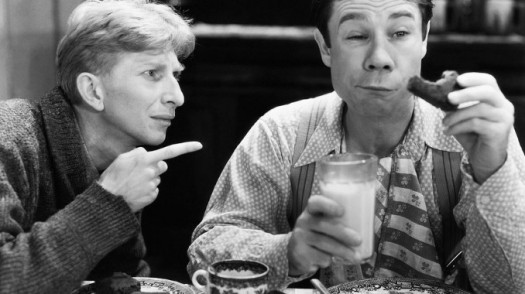
Comedian Joe E. Brown plays yet another amiable country bumpkin, this time Elmer Kane of small town Gentryville, Indiana. Elmer’s  laid back to the point of inertia, except when he’s eating… or on a baseball field! He’s better than Babe Ruth and he knows it, and so do the Chicago Cubs, who’ve bought his contract…

View original post 400 more words

Lifetime Film Review: Saving My Baby (dir by Michael Feifer)


Poor baby Lilly!

She’s only a few weeks old and her life is already all drama all the time!

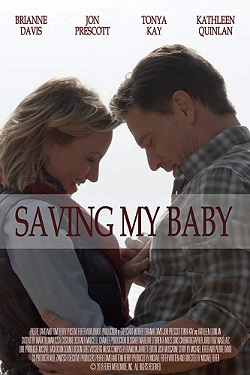
First off, Lilly was born slightly premature, shortly after her mother, Sarah (Brianne Davis), was involved in a serious and suspicious auto accident.  Then, while her mother is still in a coma, her father, Travis (Jon Prescott), decides to take Lilly and run off to Palm Springs with her.  Accompanying Travis is his overprotective mother, Virginia (Kathleen Quinlan) and Jessica (Tonya Kay), who just happens to be the friend who introduced Sarah to Travis in the first place.  Speaking of just being friends, that’s what Travis swears that he and Jessica are but we all know that’s not the case.  We know this because this is a Lifetime film and it’s rare that anyone’s ever just a friend in the world of Lifetime.  Of course, Sarah’s parents and her sister object to Travis taking the baby to Palm Springs but what can they do?  He’s the father.

Of course, eventually, Sarah wakes up and she’s like, “Where’s my baby?”  When she hears that Lilly has been taken to Palm Springs, she quickly calls up Travis and demands to know what’s going on.  Travis assures Sarah that his mother is looking after Lilly and promises that they’ll return the following morning.  Sarah then hears Jessica talking in the background.

“IS JESSICA THERE!?”  Sarah asks.

Travis, not surprisingly, doesn’t have a quick answer for that.

As should already be obvious, there was a lot more to Sarah and Travis’s whirlwind romance than just love.  Unlike the attempted murder, the baby was never a part of the plan.  However, now that Lilly’s been born, Travis definitely wants to keep her.  Jessica, meanwhile, is concerned about how much Sarah and her family are willing to pay for the return of Baby Lilly….

Kidnapped children are pretty much a staple plot point when it comes to Lifetime movies.  That really shouldn’t be surprising.  The most effective Lifetime films are the ones that deal, however melodramatically, with real-life fears and what could be more scary than the thought of losing your baby?  Whereas other mothers in Lifetime kidnapping films at least get to spend some time with their child before the abduction happens, Sarah wakes up to discover that her baby has been taken to another city.  When she desperately asks her sister for information of how the baby looked before she was taken away, it’s a moment of intense emotional honesty.

Saving My Baby is a bit unique among Lifetime kidnapping films in that it actually spend more time with the kidnappers than with the family of the kidnapped.  Don’t get me wrong.  Sarah is a sympathetic character and Brianne Davis does a good job playing her but the film is far more interested in Jessica, Travis, and Virginia.  As played by Jon Pescott, Travis spend most of his screentime wearing the haunted expression of someone who knows that he’s made the biggest mistake of his life.  Not only does he have his wife angry at him but his mother won’t stop telling him that he’s a terrible father and his girlfriend keeps demanding that he get rid of both his mother and his daughter.  Kathleen Quinlan does a great jon, keeping you guessing about Virginia.  You’re never quite sure how much she knows about what Travis and Jessica are planning.  However, the film is totally stolen by Tonya Kay, who is like a force of destructive nature in the role of Jessica.  Jessica may be evil but you can’t help but sympathize with her frustration at times.  I mean, everyone around her is just so incompetent!

Saving My Baby is an entertaining Lifetime kidnapping film.  Wisely, the film eventually moves the action to Las Vegas, which is the perfect location for the movie’s melodrama.  For the film’s finale, Saving My Baby makes good use of the Nevada desert, with the desolation perfectly capturing the feeling of hopelessness that Sarah’s been feeling ever since the disappearance of her daughter.  It all leads to gunfire and tears and hopefully, a lesson learned about letting your no-good son-in-law take your granddaughter to Palm Springs.  We can only hope.

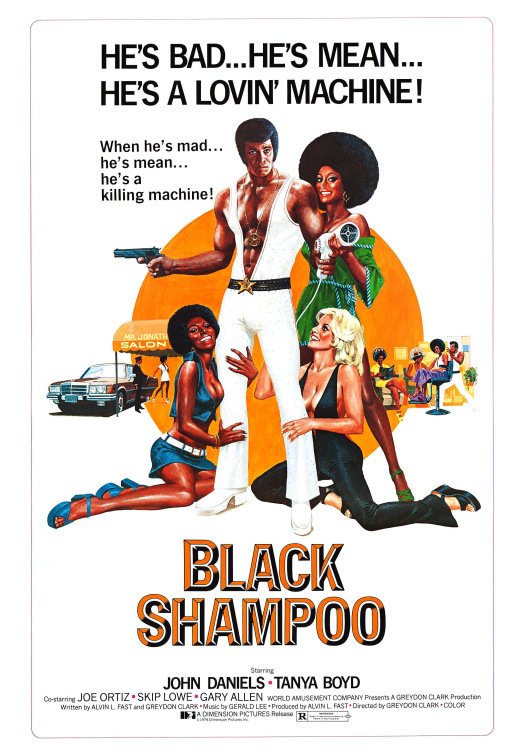
That’s Blaxploitation! 15: BLACK SHAMPOO (Dimension Pictures 1976)


gary loggins's avatarcracked rear viewer


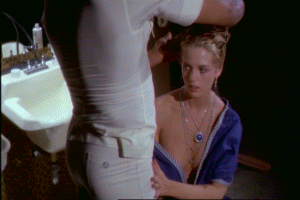
Remember the Warren Beatty film SHAMPOO, about sexual and political attitudes in the Swingin’ 70’s? Well, BLACK SHAMPOO starts off as the Blaxploitation version, as super-stud Mr. Jonathan takes good care of all the follicle and sexual needs of the Horny Housewives of Beverly Hills – then veers sharply down Sleazy Street with lots of smutty scenes of simulated sex, flamingly gay stereotypes, and a violently gory finale! Yep, they truly don’t make ’em like this anymore; the “woke” crowd would never let ’em get away with it (except of course for the rich white bad guy!).

While Jonathan is out satisfying his amorous customers, his receptionist Brenda gets a visit from a trio of thugs representing Mr. Wilson, a greasy drug dealing crook who wants her back in his arms – and bed. The hoods trash Jonathan’s salon and rough up squeaky-voiced gay hairdresser Artie. Brenda goes back to…

View original post 584 more words

Lisa’s Way Too Early Oscar Predictions for February


Well, with the 2018 Oscars finally out of the way, we can now shift our focus to the 2019 race.

As of February, that race is totally cloudy.  The predictions below should be taken with a grain of salt because 1) they’re mostly wild guesses and 2) the Oscar race never starts to become clear until after the summer.  You could probably argue that doing predictions this early in the year is a pointless exercise but here we are!

Best Picture

A Beautiful Day In The Neighborhood

Call of the Wild

Captain Marvel

Harriet

The Irishman

The Last Thing He Wanted

Little Women

Once Upon A Time In Hollywood

The Report

Toy Story 4


Best Director

Greta Gerwig for Little Women

Kassi Lemmons for Harriet

Chris Sanders for Call of the Wild

Martin Scorsese for The Irishman

Quentin Tarantino for Once Upon A Time In Hollywood


Best Actor

Christian Bale in Ford v Ferrari

Robert De Niro in The Irishman

Taron Egerton in Rocketman

Tom Hanks in A Beautiful Day In The Neighborhood

Ian McKellen in The Good Liar


Best Actress

Amy Adams in The Woman In The Window

Cynthia Erivo in Harriet

Saoirse Ronan in Little Women

Emma Thompson in Late Night

Alfre Woodard in Clemency


Best Supporting Actor

Willem DaFoe in The Last Thing He Wanted

Matt Damon in Ford v Ferrari

Harrison Ford in Call of the Wild

Al Pacino in The Irishman

Brad Pitt in Once Upon A Time In Hollywood


Best Supporting Actress

Annette Bening in The Report

Nicole Kidman in The Goldfinch

Janelle Monae in Harriet

Margot Robbie in Once Upon A Time in Hollywood

Meryl Streep in Little Women


After checking out my pointless predictions for February, be sure to check out my even more pointless predictions for January!

Cleaning Out the DVR Pt. 22: Winter Under the Stars


gary loggins's avatarcracked rear viewer

I haven’t done one of these posts in a while, and since my DVR is heading towards max capacity, I’m way overdue! Everyone out there in classic film fan land knows about TCM’s annual “Summer Under the Stars”, right? Well, consider this my Winter version, containing a half-dozen capsule reviews of some Hollywood star-filled films of the past!

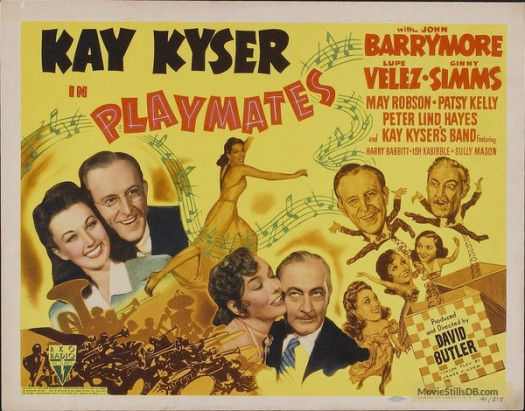
PLAYMATES (RKO 1941; D: David Butler ) – That great thespian John Barrymore’s press agent (Patsy Kelly) schemes with swing band leader Kay Kyser’s press agent (Peter Lind Hayes) to team the two in a Shakespearean  festival! Most critics bemoan the fact that this was Barrymore’s final film, satirizing himself and hamming it up mercilessly, but The Great Profile, though bloated from years of alcohol abuse and hard living, seems to be enjoying himself in this fairly funny but minor screwball comedy with music. Lupe Velez livens things up as Barrymore’s spitfire…

View original post 1,088 more words

Film Review: Murder by Numbers (dir by Barbet Schroeder)


First released in 2002, Murder by Numbers is one of those films that seems to be pop up on Cinemax every couple of months.  It’s not really that good, though it has its fans because if features Sandra Bullock being all self-destructive and one of the film’s villains is played by a young Ryan Gosling.

Ryan Gosling is Richard Haywood, child of privilege.  He’s handsome.  He’s funny.  He’s popular.  He’s spoiled.  He’s often high.  And he’s totally psychotic.  Richard wants to commit the perfect crime and, fortunately, so does his classmate, Justin (Michael Pitt).  Justin is a fiercely intelligent introvert who spends most of his time reading and writing and playing with his computer.  He’s got a crush on Richard’s ex, Lisa (Agnes Buckner).  From the minute that Lisa showed up and started talking to Justin, I was concerned.  I was like, “Is this another movie that’s going to feature someone named Lisa being murdered?  CHERISH ALL OF THE LISAS IN YOUR LIFE, PEOPLE!”

Anyway, Richard and Justin do end up killing a woman, though not Lisa.  They go through a lot of effort to frame the school’s pervy janitor, Ray (Chris Penn), for the crime.  And they nearly succeed, though Detective Cassie Mayweather (Sandra Bullock) is way too smart to fall for their tricks.  Unfortunately, no one believes anything that Cassie says because she has a shady past and a drinking problem.  Even her sympathetic new partner, Sam Kennedy (Ben Chaplin), thinks that it was probably Ray.

Literally everyone on the police force tells Sam that Cassie is unstable and not to be trusted, which leads to an interesting question.  If everyone’s convinced that everything Cassie says is wrong, why does she still have a job?  Why do they still assign her to cases?  It’s like, “We’ve got a murder that we have to solve!  Let’s give it to that detective who we think never gets anything right!”

Sandra Bullock does her best to bring the self-destructive Cassie to life but she kind of runs into the huge problem that she’s Sandra Bullock and she has such a firmly entrenched screen presence that it’s difficult to take her seriously as someone who spend her free time sitting on a houseboat, getting drunk, and obsessing on the past.  You really want her to give a good performance because it’s impossible not to root for Sandra Bulllock but she’s just too miscast.  You keep expecting Matthew McConaughey to show up, playing a bongo drum and trying to cheer her up.

Far more convincing is Ryan Gosling, who plays Richard as the type of guy that we all knew in high school.  You know he’s a jerk.  You know you should stay away from him.  But he’s just so much fun and he has so much money!  Unfortunately, Gosling is so charismatic that Richard quickly becomes the only compelling character in the film.  I mean, if you have the choice between watching Michael Pitt, Ben Chaplin, or Ryan Gosling, who are you going to go with?  You’re supposed to hate Richard and hope that justice catches up with him but instead, you find yourself hoping that he’ll sneak out of the country and spend the rest of his hiding out in South America or something.

So, as a result, the film really doesn’t work.  (It also doesn’t help matters that it’s directed in a rather detached fashion by the king of ennui, Barbet Schroeder.)  But it’s interesting to watch, just for a chance to see a future star in the making.  Gosling steps into a rather underwritten role and basically takes over the entire damn movie.

It’s also worth seeing for the scene in which Sandra Bullock gets attacked by a baboon.  It’s a weird moment and Schroeder screws things up by mixing in a flashback to Cassie’s past but still, it’s a baboon attacking Sandra Bullock.  That’s not something you see every day.