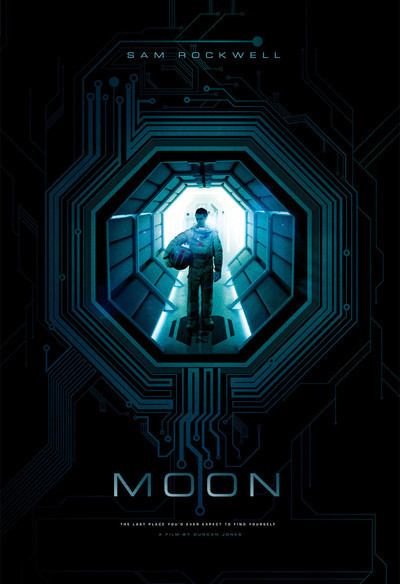
Moon, Review by Case Wright, Happy Horrorthon! *Some Spoilers*


Happy Horrorthon! My midterms are done; so, I have this brief window to be analytical that doesn’t involve Petroleum, Carbon, A piston, or some sort of torque. This film is the kind of horror film that I like that dares to be political. Duncan explores the hidden cost and ineffectiveness of best intentions. You have an intractable problem, but is the solution actually helping and are the people advocating it trustworthy? Moon presents the problem: Global Warming. The solution that is marketed and sold to the world is fusion by strip mining the Moon and sending the fuel back to earth. There are scenes where we see scars on the moon from the strip mining. Are we creating a new problem? Is the solution a net wash? Is the solution financing an evil regime? Why is environmentalism immune to cynicism? The exploitation of an unlimited labor? Have corporations done anything ever to warrant even our limited trust? These are the questions that Duncan forces us to confront with horror.

I know that this sounds ham-fisted, but the political statements are brilliantly subtle. This is not a right-wing political film either; on the contrary, it’s about presenting the moral imperative of considering unintended consequences as we push to solve real problems.

My eyes rolled so hard at the opening though when a corporate ad from Lunar, the mining company, pushed their “Green Energy” solution that I almost turned it off because the last thing I needed post-midterms was someone scolding me for 97 minutes. However, the opening was visually stunning; so, I hung with the film. Also, it starred Sam Rockwell and he’s awesome. This was the directorial debut of Duncan Jones who is immediately identified as David Bowie’s son, but you don’t need to confirm that with Wiki because he looks just like his Dad.

We are in a future where fossil fuels are thing of the past and fusion via strip mining the moon is providing the world with a New Eden; at least, that’s what the totally trustworthy corporation is telling us in it’s slick ad.

(Now, if you want to really end ALL fossil fuels, the solution is to perfect Tesla Coils and wirelessly transmit electricity this would obviate the need for batteries and would power the world constantly. Horrorthon is not just for great commentary; it’s for learning! )

The film is a one-man/two man show….huh…just wait. Sam Bell is a moon worker on a three year contact, maintaining the moon harvesters as they strip mine this essential rock that keeps our axis stable. In this future, the job of astronaut is less Neil Armstrong and more horrible non-union factory job. Sam is dirty, breaking down, beginning to hallucinate, and bored to tears. The live-link to planet earth has not functioned since his arrival and he’s surrounded by nearly completed hobbies like whittling towns from his memories. We are forced to see the horror of a human being in profound loneliness and hopelessness for our needs.

The next plot point has Sam checkinng on a malfunctioning harvester; however, he has a vision of his daughter and he crashes. We see him pass out as he’s being buried alive. Sam wakes to his only companion- a robot with Kevin Spacey’s voice. Important note is that this film was from 2009. Sam’s suspicious that there might be something outside of the ship and the robot appears to be able to talk live with the evil corporate leaders from earth. Sam is determined to investigate outside the ship. After a brief sabotage, Sam is able to investigate the moon harvester. He discovers a busted up copy of himself.

He’s confronted with Lunar’s answer to the high cost of unions, labor complaints, and pay: you don’t negotiate with employees, you grow them. If things go really wrong like two clones meet, you send in goons to kill them, and wake up new disposable people. What’s is so painful is that the corporation gave the clone’s a 3 year lifespan; so, we watch Sam Bell Prime disintegrate slowly in scene after scene, including one where he spits out a molar… yeeeeech. While we see the human toll, we also see the moon missing huge chunks of itself as result of the mining. So, we are committing this horrible evil, but is this clean energy just creating a new and unintended problem? We are so desperate to not think things through that we greenlight an idea to destroy our own moon and credulously accept corporate talking points.

This film was thoughtful and painful. Duncan Jones forces us to think take some time and… THINK. What are we doing? Maybe doing something just to do something isn’t the answer? We are confronted what we don’t want to consider: how did this sausage end up in this package? I’m not seeing any pollution; therefore, it’s not happening. Our society is less owl and more ostrich every day.

Happy Horrorthon!
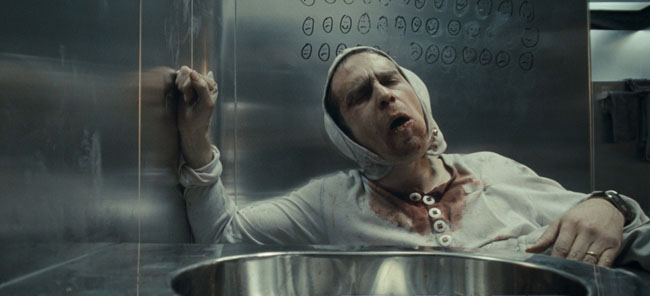
Lisa Marie Reviews An Oscar Nominee: Nightmare Alley (dir by Guillermo del Toro)


In March, CODA won the Oscar for Best Picture.

By May, I think most people had forgotten about it.

I point this out not to be snarky about CODA (which, for the most part, I found to be a well-made and sweet-natured movie) but to just point out that occasionally, the Oscar for Best Picture Of The Year does not go to the nominee that’s necessarily going to be remembered and watched by future generations.  CODA’s victory is not a travesty, regardless of what some members of Film Twitter insisted.  This isn’t like when Green Book won.  It’s just that CODA seems to be destined to be remembered in much the same way that we remember Argo and Spotlight, i.e. a well-made and well-acted film that gets the job done but don’t necessarily stick around in your mind for long after you watch it.

In fact, looking back at all of the 2021 Best Picture nominees, the one that has really stuck with me is Guillermo del Toro’s Nightmare Alley.

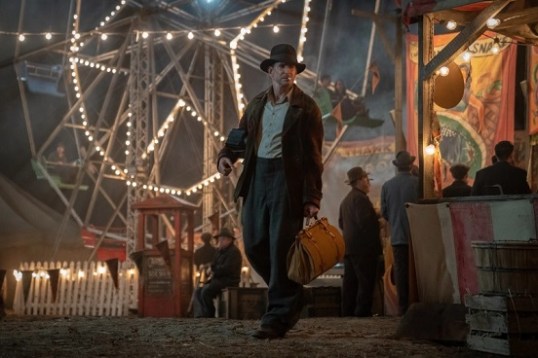
Nightmare Alley tells the story of Stan Carlisle (Bradley Cooper), a drifter who, in 1939, gets a job with a carnival.  Stan is running from his past.  He’s haunted by visions and dreams of a dying old man and a burning farm house.  When we first meet him, he avoids alcohol which is perhaps a good thing as getting drunk at the carnival just makes someone easier to exploit and, ultimately, the carnival is all about exploitation.  The carnival’s owner, Clem (Willem DaFoe), specializes in tricking alcoholics into becoming opium-addicted “geeks,” who bite the heads off of chickens for gawking country audiences.

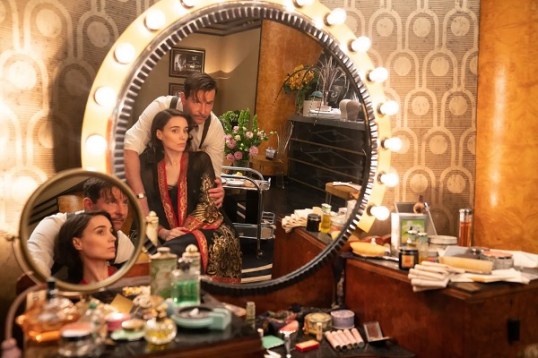
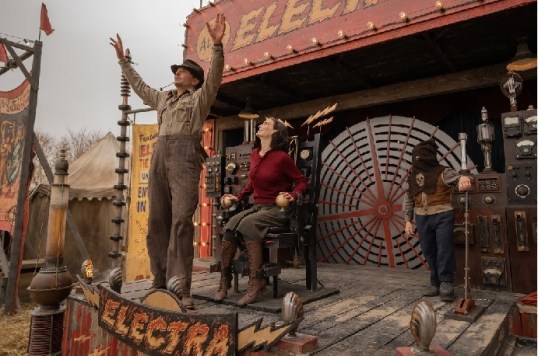
It’s not a glamorous life but it’s one that allows Stan to hide from his past.  He comes under the tutelage of Madame Zeena (Toni Collette) and her husband, Pete (David Straithairn).  They teach him how to give “cold readings,” and Stan proves to be an eager student.  Pete tells Stan to never pretend to be able to speak to the dead and, from the minute that Pete says it, we can tell that Stan is already thinking about how much money he could make by doing just that.  Stan also appears to fall in love with Molly (Rooney Mara), a performer whose act involves a fake electric chair.  When Stan eventually abandons the carnival, Molly goes with him.  When Stan finds success as a fake medium, Molly is his assistant.

Stan becomes quite a success in Buffalo, trading in his shabby clothes and his unshaven appearance for a tuxedo and suave mustache.  With success comes arrogance and Stan soon ignore what Pete told him about pretending to be able to speak to the dead.  When Stan meets a psychologist named Dr. Lillian Rith (Cate Blanchett), he gets involved in a plot to con a judge who is still mourning for his deceased son.  It also leads to Stan meeting a corrupt and murderous businessman (Richard Jenkins).  Ignoring Pete’s lesson sets off a chain of events that leads Stan right back to where he started.

There’s something wonderfully subversive about taking Bradley Cooper, a legitimate movie star who is probably one of the most personable and likable actors working today, and casting him as such a sleazy character.  This isn’t a case, as in American Hustle or even The Hangover movies, where Cooper is playing a goof who gets in over his head.  Instead, Stan is someone who uses his eager manner and his natural charm to cover up the fact that he’s hollow on the inside.  Watching the film, you’re never quite sure as to whether or not Stan truly cares about any of the people who come into his life.  Does he love Molly or is he just using her?  Does he care about his friends from the carnival or is he just manipulating them into acting as a shield to keep out his former life?  When he goes against Pete’s lessons about pretending to speak to the dead, is he motivated by greed or arrogance?  Or does he truly want to believe that he’s somehow become the all-powerful psychic that he pretends to be?  Stan becomes a success because he knows how to con everyone but eventually, he meets someone who is even emptier than he is.  Ultimately, Stan cons himself.  He tricks himself into believing that he’s more clever than he actually is and he ends up facing the fate that he secretly always knew was waiting for him.  Cooper gives an outstanding performance as Stan.  Both he and del Toro cleverly play with what audiences expect when they see Bradley Cooper onscreen.  In the end, the film suggests that not even charm can ward off karma.

Nightmare Alley is work of what Lucio Fulci called “pure cinema,” one in which the imagery and the emotions generated by that imagery is even more important than the story itself.  The sets, whether it’s the carnival or Dr. Ritter’s office or the Buffalo ballroom where Stan cons the wealthy, are large and ornate.  The cinematography is gorgeous.  The supporting performances are arch and witty.  Cate Blanchett’s and Rooney Mara’s costumes are to die for.  Nearly every shot feels as if it could have been lifted from a particularly vivid dream.  Guillermo del Toro’s love of cinema is evident in every frame of Nightmare Alley.  It’s a film that celebrates the grandeur and the power of imagination and also warns about the destructive power of hubris.  Despite the fact that del Toro has gone on the record saying that there’s nothing supernatural about Nightmare Alley, it’s still a wonderful film for the Halloween season.  The costumes are beautiful and the final third of the movie plays like an homage to the classic German expressionistic horror films, with Blanchett playing her role as a mix of Dr. Caligari and a classic noir feeme fatale.  Nightmare Alley is a big, flamboyant, and unforgettable work of pure cinema and, looking back, it’s my favorite film of 2021.

It’s a film that stays with you.

Lisa Marie’s Oscar Predictions For September


Horrorthon, my favorite time of year, starts tomorrow!  However, before we get lost in the scary season, I want to take one last look at awards season!  It’s time for me to update my Oscar nominations.  Fortunately, thanks to all of the recent festival premieres, the Oscar picture is finally starting to look a little bit clearer.  There’s still a lot of question marks out there and, as always, anything can happen.  But, finally, I can say that there’s more to my predictions that just lucky guesses and wishful thinking.

Below, you’ll find my predictions for September!  In order to see how my thinking has evolved over the course of the year, be sure to check out my predictions for February, March, April, May, June, July, and August.

Best Picture

Babylon

The Banshees of Inisherin

Elvis

Everything Everywhere All At Once

The Fabelmans

The Menu

TAR

Till

Top Gun: Maverick

Women Talking

A few thoughts on the (potential) nominees:

Babylon, I will admit, I’m including because of the trailer and the fact that it’s a Damien Chazelle film about Hollywood.  The Academy likes films about itself and one can argue that after what happened when La La Land was nominated, Chazelle is owed at least a little bit of recognition.  Then again, that same argument could have been made for First Man and we know how that turned out.

As for The Menu, I’ve got that in my surprise nominee slot.  There’s almost always at least one potential nominee that’s considered to be a long shot until the nominations are announced.  Now that we have a set number of ten nominees, the chances that one nominee will be a surprise seems even more certain than before.

Top Gun: Maverick, Elvis, and Everything Everywhere All At Once all came out early in the year but they’ve all achieved the box office success necessary to be remembered.

Till seems like the type of film that the Academy will want to acknowledge, especially with the presidential election right around the corner.

The Banshees of Inisherin, The Fabelmans, TAR, and Women Talking were all acclaimed when they made their festival debuts.  Banshees, in particular, went from being a probable also-ran to a surefire contender based on the length of the standing ovation that it received.

Best Director

Chinonye Chukwu for Till

Todd Field for TAR

Martin McDonagh for The Banshees of Insherin

Sarah Polley for Women Talking

Steven Spielberg for The Fabelmans

Best Actor

Austin Butler in Elvis

Tom Cruise in Top Gun: Maverick

Colin Farrell in The Banshees of Insherin

Ralph Fiennes in The Menu

Brendan Fraser in The Whale

Best Actress

Naomi Ackie in I Wanna Dance With Somebody

Cate Blanchett in TAR

Olivia Colman in Empire of Light

Danielle Deadwyler in Till

Michelle Yeoh in Everything Everywhere All At Once

Best Supporting Actor

Brendan Gleeson in The Banshees of Insherin

Tom Hanks in Elvis

Woody Harrelson in Triangle of Sadness

Judd Hirsch in The Fabelmans

Ke Huy Quan in Everything Everywhere All At Once

Best Supporting Actress

Jessie Buckley in Women Talking

Jamie Lee Curtis in Everything Everywhere All At Once

Sally Field in Spoiler Alert

Frances McDormand in Women Talking

Janelle Monae in Glass Onion: A Knives Out Mystery

Death Kiss (2018, directed by Rene Perez)


An unnamed city has been turned into a war zone by gangsters like Tyrell (Richard Tyson).  Men, women, and children are killed in the streets.  Muggers haunt every corner.  Pimps exploit women in dirty trailers.  A right-wing radio host named Dan Forthright (Daniel Baldwin) rants that if the police aren’t going to do their job then it’s up to the citizens to take up arms and take the streets back.

Making that dream a reality is a man known only as the Stranger (Robert Bronzi).  The Stranger walks the streets, wearing a dark suit and carrying a gun.  He has a mustache and a grim expression and he doesn’t say much.  He approaches criminals and he guns them down without hesitation.  If the criminals beg for their lives, the Stranger just shoots them again.  There’s no one that the Stranger hates more than a criminal who preys on the weak and defenseless.  (The Strangers reminds me someone.  As the film’s tagline puts it, “Justice has a familiar face!”)  For years, the Stranger has been sending money to a single mother named Ana (Eva Hamilton).  He goes to her house and they meet when she catches him slipping an envelope full of cash into her mailbox.  The Stranger won’t explain why he’s sending her money but he will take the time to teach her how to use a shotgun.  “For coyotes,” The Stranger says, handing her the weapon.

Death Kiss is one of the many recent, low-budget action films to have starred Robert Bronzi.  Bronzi is a Hungarian actor who owes his entire career to the fact that he bears a passable resemblance to Charles Bronson.  (Bronzi doesn’t speak much in his films but, when he does, his voice is usually dubbed by a Bronson sound alike.)  The problem is that Bronzi only looks like Bronson in long shots.  In a medium shot or a close-up, it becomes obvious that he’s just a middle-aged man who does not seem to be comfortable reciting dialogue and who often looks straight at the camera.

Death Kiss doesn’t have much of a plot.  The Stranger visits Ana, who is not at all worried about a mysterious, gun-toting man showing up at the home that she shares with her young daughter.  The Stranger also tracks down Tyrell.  Along the way, he shoots nearly everyone that he meets.  There are a few one liners but none of them are as good as the “Do you believe in Jesus?” scene from Death Wish II.  Because The Stranger is not allowed to just come out and say that he’s Paul Kersey from the Death Wish films, he’s not allowed to reveal any motivation for his activities.  He just shows up and starts shooting people.  Say what you will about some of the movies that he made during the latter part of his career, the real Bronson would have held out for a better script or at least a bigger budget.  I hope they at least gave Robert Bronzi a nice trailer so that he could put his feet up between scenes.

I Watched The Furnace (2019, dir. by Darrell Roodt)


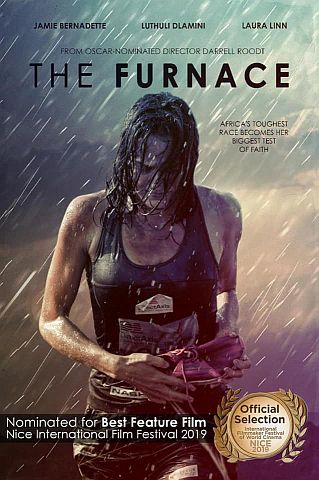
Mary (Jamie Bernadatte) and Matt (Armand Aucamp) are both newlyweds and competitive runners.  For their next event, they are planning on entering the Furnace, an annual race that is held at Africa’s biggest game reserve.  The race takes several days to complete and it is a challenge for even the most elite runners.  The race is called The Furnace because of how hot the temperature gets and how much sweat and hard work it takes to complete the run.  Their plans are ruined when, on Christmas Day!, their car is sideswiped by a truck.  Matt is killed and Mary ends up bitter and on oxygen.  She gives up on ever racing again but, a year later, she meets a man named Coffin (Luthuli Dlamini) who renews her faith in herself.  Under his training, she prepares to finally enter the Furnace.

I really liked The Furnace.  Coffin, who was a doctor in Africa but can only find work as a gravedigger in America, was an interesting character with an fascinating backstory.  Helping Mary run the race race is not only about helping her honor the memory of her late husband but also finding redemption for himself.  Once Mary enters the race, she has to deal with both the heat and the wild animals.  She even gets stung by a scorpion!  She has to do it all on her own while Coffin waits for her at the next rest stop and worries about whether or not he’s accidentally led Mary into a deathtrap.  But, no matter how hard things get, Mary never gives up because The Furnace is not about winning but about having the courage to see things through to the end.  The Furnace is an inspiring movie about people helping each other, never surrendering, and finding the faith to keep going even when everything seems to be lost.

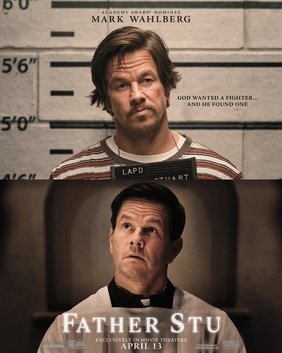
Film Review: Father Stu (dir by Rosalind Ross)


I don’t care what all the other critics said when Father Stu was first released in April.  It’s not that bad.

Now, of course, I should be upfront and mention that I come from a Catholic background.  My father’s side of the family is Irish.  My mother’s side is Italian/Spanish.  Am I saying that you have to have been raised Catholic to appreciate Father Stu?  Not at all.  But it does help.

And when I say that Father Stu is not that bad, what I mean is that’s actually pretty good.

Based on a true story, Father Stu stars Mark Wahlberg as Stuart Long.  When the movie opens, Stu is in a boxing ring, beating up his opponents while taking a lot of punishment himself.  From that opening scene, we learn a few things about Stu.  He’s a fighter.  He’s determined.  He’s willing to take a beating.  And he really doesn’t know when to quit.  We then meet his no-nonsense mother, Kathleen (Jacki Weaver), and his father, Bill (Mel Gibson).  Bill is an alcoholic truck driver, the type who shouts at other drivers and who gets into an argument with a random child about who is the worse driver.

When Stu is informed that he could very well die if he continues to box, he decides that it’s time to pursue another profession.  The 30-something Stu announces to his mother that he’s going to be an actor.  He may not have any training but he has a lot of personality.  Stu’s mother suggests that it might be a little late in life for Stu to pursue a career as a film star but Stu packs up and leaves for Montana for California.

He does manage to land one gig, a commercial for a mop.  But Stu’s acting career never really takes off.  Instead, he gets a job working in a deli.  It’s there that he first spots Carmen (Teresa Ruiz), a Sunday school teacher.  When Carmen tells Stu that she wouldn’t even consider dating a man who was not baptized, Stu begins RCIA at the local parish.  Eventually, he’s baptized into the parish but it’s not until he’s nearly killed in a motorcycle accident and has a vision of Mary that he truly starts to believe.  He also comes to feel that he’s been called to the priesthood, despite the fact that it means ending his relationship with Carmen.  Stu enters the seminary, under the watchful eye of the initially skeptical but eventually supportive Monsignor Kelly (Malcolm McDowell).  However, Stu soon finds himself facing his greatest challenge when he’s diagnosed with inclusion body myositis, a disease that will eventually rob him of his ability to care for himself.

When Father Stu was first released in April, it received a lot of attention for being an R-rated film about faith.  But the fact that the characters frequently (and colorfully) curse is actually one of the best things about Father Stu.  People curse.  Both the religious and the non-religious curse.  Catholics especially curse.  When you find out that you have an incurable disease that’s going to kill you by the time you turn 50, you’re going to curse regardless of how much faith you may or may not have.  Far too many films about religion seem to take place in some strange world where the 50s never ended and people still say, “Darn,” when faced with the world’s problems.  To its credit, Father Stu‘s characters never lose their edge.

Father Stu also received a lot of negative attention for the involvement of Mel Gibson.  That’s understandable but, at the same time, there’s probably no contemporary actor who is more convincing as a self-destructive alcoholic than Mel Gibson.  For better or worse, Gibson brings a certain authenticity to the role and that authenticity is what a film like Father Stu needs.

In the lead role, Mark Wahlberg brings a lot of sincerity to the role of Stu.  When we’re first introduced to Stu, he’s earnest but he’s not particularly smart.  He doesn’t think things through.  He’s the type of guy who will work hard in his job without understanding that it’s still not a good idea to show up at work looking like you’ve spent the weekend fighting people in an alley for loose change.  As a result of Wahlberg’s performance, it’s easy to see why everyone in Stu’s life is skeptical when he announces that he’s going to become a priest.  However, it’s also due to his performance that Stu’s eventual transformation is undeniably moving.  Wahlberg’s rough-edged sincerity keeps the film from becoming overly mawkish after Stu discovers that he’s ill.  He remains a fighter from beginning to end and it’s hard not to want to see him win.

Father Stu is probably the epitome of the type of film that audiences love but critics hate.  But you know what?  Sometimes, the audiences are right and sometimes, critics try way too hard to be cynical.  Father Stu is a touching movie, one that serves as an antidote to the God’s Not Dead-style of movies about religion.  It’s a good movie that, like its protagonist, never stops fighting.

Live Tweet Alert: Join #FridayNightFlix for Uncommon Valor!


As some of our regular readers undoubtedly know, I am involved in a few weekly live tweets on twitter.  I host #FridayNightFlix every Friday, I co-host #ScarySocial on Saturday, and I am one of the five hosts of #MondayActionMovie!  Every week, we get together.  We watch a movie.  We tweet our way through it.

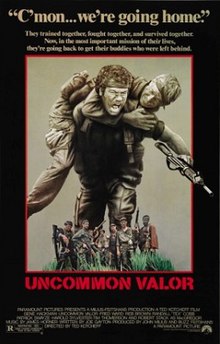
Tonight, at 10 pm et, I will be hosting #FridayNightFlix!  The movie?  1983’s Uncommon Valor!

Gene Hackman, Patrick Swayze, Robert Stack, Tim Thomerson, Reb Brown, Randall “Tex” Cobb, and Fred Ward return to Vietnam to save the POWs who were left behind by the American government.  This action film features a once-in-a-lifetime cast and it even features a bit of dancing from both Tim Thomerson and Tex Cobb!

If you want to join us this Friday, just hop onto twitter, start the movie at 10 pm et, and use the #FridayNightFlix hashtag!  I’ll be there tweeting and I imagine some other members of the TSL Crew will be there as well.  It’s a friendly group and welcoming of newcomers so don’t be shy.

Uncommon Valor is available on Prime!

See you there!

4 Shots From 4 Films: Special Michael Powell Edition


4 (or more) Shots From 4 (or more) Films is just what it says it is, 4 (or more) shots from 4 (or more) of our favorite films. As opposed to the reviews and recaps that we usually post, 4 (or more) Shots From 4 (or more) Films lets the visuals do the talking.

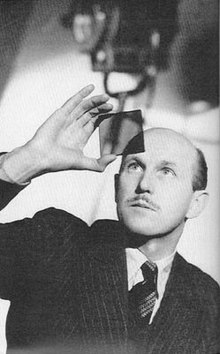
Today, TSL celebrates the 117th anniversary of the birth of Michael Powell, the British visionary who changed the face of cinema, both on his own and through his collaboration with Emeric Pressburger.  It seems appropriate that we pay tribute to Powell on the day before October, as his 1960 film Peeping Tom is considered by many to be the first slasher film.  (It’s not but it’s influence on the genre cannot be overstated.)

In honor of Michael Powell, TSL is proud to present….

4 Shots From 4 Michael Powell Films

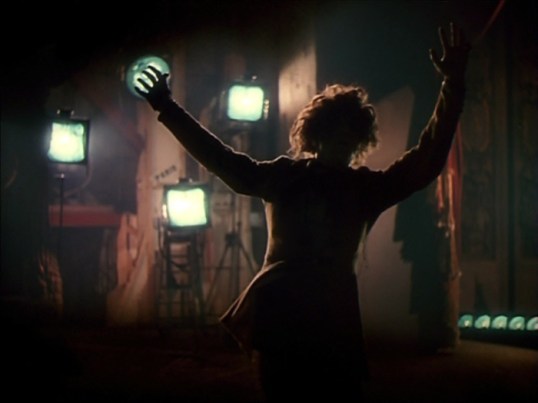
I Know Where I’m Going (1945, dir by Michael Powell and Emeric Pressburger, DP: Erwin Hillier)

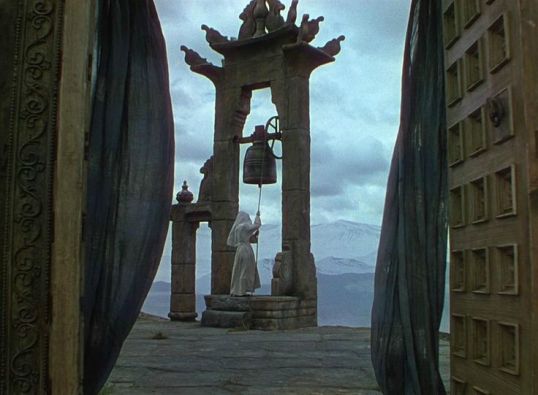
Black Narcissus (1947, dir by Michael Powell and Emeric Pressburger, DP: Jack Cardiff)

The Red Shoes (1948, dir by Michael Powell and Emeric Pressburger, DP: Jack Cardiff)

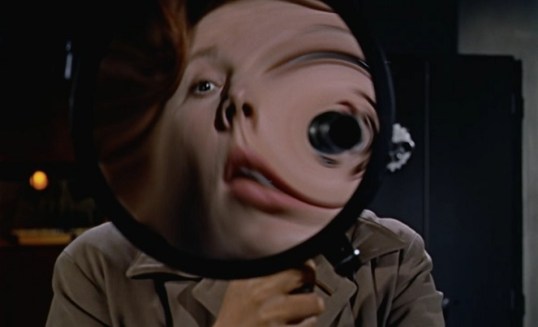
Peeping Tom (1960, dir by Michael Powell, DP: Otto Heller)

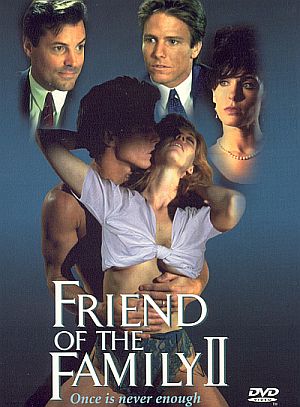
Friend of the Family II a.k.a. Passionate Revenge (1996, directed by Fred Olen Ray)


Alex Madison (Paul Michael Robinson) goes to New Orleans on business and spots the beautiful and sexy Linda (Shauna O’Brien) having a fight with her boyfriend at a local bar.  Alex introduces himself to Lind and offers to pay for her dinner.  Later, directed Fred Olen Ray mixes shots of them making love with shots of Mardi Gras happening right outside the bedroom window.

Linda falls in love with Alex and becomes clingy but Alex has a wife and newborn at home.  When Alex leaves Linda (and breaks up with her via a note) and returns home, Linda is heartbroken.  When Linda’s ex finds out about the affair and shoots himself in the kitchen, Linda is outraged and decides to track Alex and his family down.  When Alex’s wife, Maddy (Jenna Bodnar), announces that she’s ready to go back to work and says that they will have to hire a nanny to look after the baby, Linda applies for the job.  Alex impresses Maddy by holding the baby and, more importantly, she doesn’t mention that she had a weekend affair with Maddy’s husband.  Alex comes home from work and is shocked to discover that Linda not only lives in his house but she’s also now best friends with his wife!  Linda is soon sexually blackmailing Alex while carrying on an affair with Linda’s horndog of a younger brother, Byron (Sid Farley).  Linda wants revenge against all of them.

This is a pretty typical example of the type of films that Cinemax used to air once the sun went down.  (There’s a reason why the network was once nicknamed Skinemax.)  I think anyone who grew up in the 90s has at least a few memories of watching these movies with the sound turned down low enough to not run the risk of waking up the adults in the house.  Fred Olen Ray was one of the main directors of these films and he certainly understood what his audience was expecting and, more often than not, he delivered.

That is certainly the case with Friend of the Family II, which is full of sex, violence, and not much else.  (It is also a sequel in name only so don’t worry about not being able to follow the plot if you haven’t seen the first Friend of the Family.)  As someone who casually cheats on his wife and is then shocked to discover that there are consequences for his actions, Alex is not exactly a likable or sympathetic protagonist but most people watching this movie will be watching Shauna O’Brien, who goes all out in the role of Linda.  Linda is unhinged enough to demand sex from Alex while his wife is sleeping right next to him but also clever enough to worm her way into Alex’s family.  Fortunately, O’Brien is convincing no matter what she’s doing and she also brings some vulnerability to the role so Linda is sympathetic no matter how much she tries to destroy everyone’s live.

Friend of the Family II is currently on Tubi, under the name Passionate Revenge.  It will be best enjoyed by people who have nostalgic memories of late night Cinemax.

Cleaning Out The DVR: Urban Cowboy (dir by James Bridges)


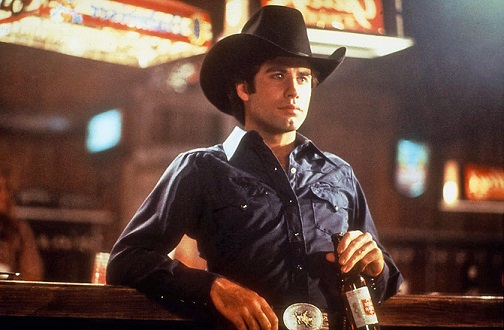
Last night, I watched the 1980 film, Urban Cowboy.  This was a film that had been sitting on my DVR for over a year.  For some reason, I had never actually gotten around to watching it.  There were many times when I started to watch it but I always ended up stopping after a few minutes.  I was never quite sure why as everything that I had heard about the film was positive.  Having finally watched it last night, I think I hesitated because I instinctively knew that John Travolta would look silly wearing a cowboy hat.

And let’s just be honest.  He does.  I mean, Travolta actually gives a fairly good performance in Urban Cowboy.  He plays Bud, a kid from West Texas who moves to Houston so that he can work on an oil rig with his uncle, Bob (Barry Corbin).  At first, he only wants to stay in Houston long enough to raise the money to buy some land back home.  But, he soon falls in love with the Houston nightlife and the local country-western bar.  (He’s Travolta so, of course, he can dance.)  He also falls in love with and eventually marries Sissy (Debra Winger).

Travolta is believable as an impulsive young adult who might not be particularly smart but who makes up for it with a lot of determination.  And he even does an okay job when it comes to capturing the country accent of West Texas.  But that said, whenever he puts on that cowboy hat, the viewer is immediately reminded that Travolta is actually from New Jersey and probably never even attended a rodeo until he was cast in Urban Cowboy.  The hat feels like an affectation, an attempt by a city boy to be more country as opposed to a country boy trying to hold onto his identity in the city.  Ironically, the term “urban cowboy” has come to mean someone who, despite having never left the city, dresses like they’re heading out to herd the cattle and rope some steers.  However, in the film itself, the hat is meant to be a natural part of Bud’s persona but it never quite feels that way.

Far more credible as a cowboy is a youngish Scott Glenn, who plays Wes Hightower.  After Bud’s chauvinistic and abusive behavior drives Sissy away, she ends up with Wes.  Wes teaches Sissy how to ride a mechanical bull, which is something Bud tried to forbid her from doing.  Wes is confident and dangerously sexy and he can even make the fact that he lives in a run-down trailer work for him.  Unfortunately, Wes also turns out to be even more controlling and abusive than Bud.  Even though Bud still loves Sissy and Sissy still loves him, Bud soon hooks up with Pam (Madolyn Smith), the daughter of a wealthy oilman.

Many more complications follow and, of course, there’s one big tragedy that causes Bud to reexamine his life.  Not surprisingly, the film’s conclusion all comes down to who can stay on that mechanical bull for the longest….

The best thing that Urban Cowboy has going for it is not Travolta or Glenn but instead, it’s Debra Winger, who gives a believable and relatable performance as Sissy, playing her as someone who may not have much but who refuses to surrender her pride.  She knows that she deserves better than both Bud and Wes, even if she is hopelessly in love with one of them.  Winger has chemistry with both Travolta and Scott Glenn, which makes the film’s love triangle feel like something more than just a typical story about a girl who can’t resist a bad boy.  She grounds the film in reality and, as such, there are real stakes to the film’s story.  Thanks to Winger, Urban Cowboy becomes about something more than just a fight over a mechanical bull.

The second best thing that Urban Cowboy has going for it is that it does manage to capture the atmosphere of a good country-and-western bar.  It’s place where people go to relax after a hard day’s work.  Unlike the discotheques  that Travolta frequented in Saturday Night Fever, the bars in Urban Cowboy eschew glamour and artifice.  Instead, they’re all about proving yourself not on the dance floor but on the back of a mechanical bull.  For Sissy, the bull symbolizes freedom.  For men like Bud and Wes, it symbolizes survival.  Myself, I’m not a drinker so my bar experience is limited.  And, though I may be from Texas and I spent a lot of time in the country while I was growing up, I’ve never been a fan of country music.  That said, I’ve danced to a few country songs and I’ve certainly stopped by a few bars, even if I was usually the one who annoyed my family and friends by just asking for a glass of water.  I’ve been to the rodeo and I’ve seen people get trampled.  I’ve also seen a few people get tossed off a mechanical bull.  I’ve never been on a mechanical bull myself but I did buy one for my Sims.  (They loved it but, sadly, I had to get rid of it because they spent so much time riding it, they kept missing work and getting fired.)  From my limited experience, I can say that Urban Cowboy got most of the details right.  Even though it was made 42 years ago, it still feels authentic.

That said, Travolta still looks odd wearing a cowboy hat.