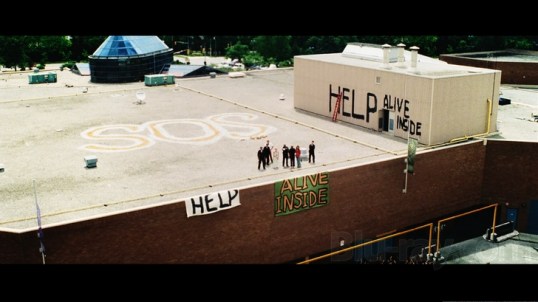
Today, the Shattered Lens wishes a happy birthday to my fellow redhead, Amy Adams!
Amy gave one of the best performances to not be nominated for an Oscar in 2016’s Arrival. Today, my scene that I love is the poignant and thought-provoking ending of that film.
4 Shots From 4 Films is just what it says it is, 4 shots from 4 of our favorite films. As opposed to the reviews and recaps that we usually post, 4 Shots From 4 Films is all about letting the visuals do the talking.
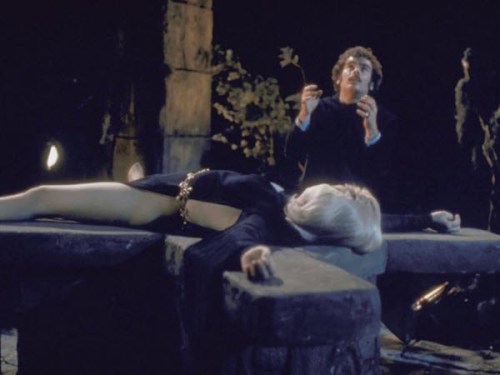
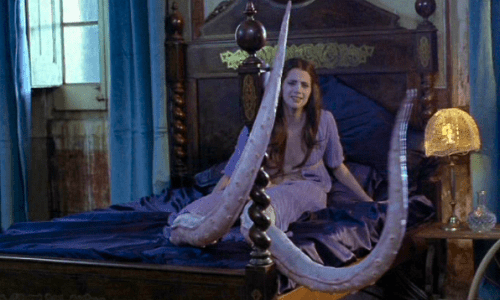
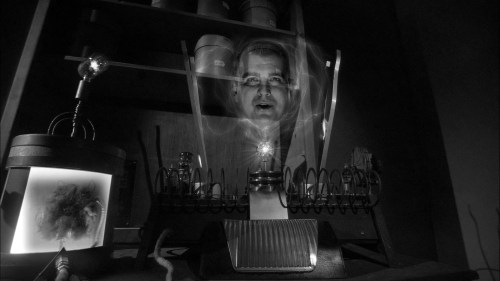
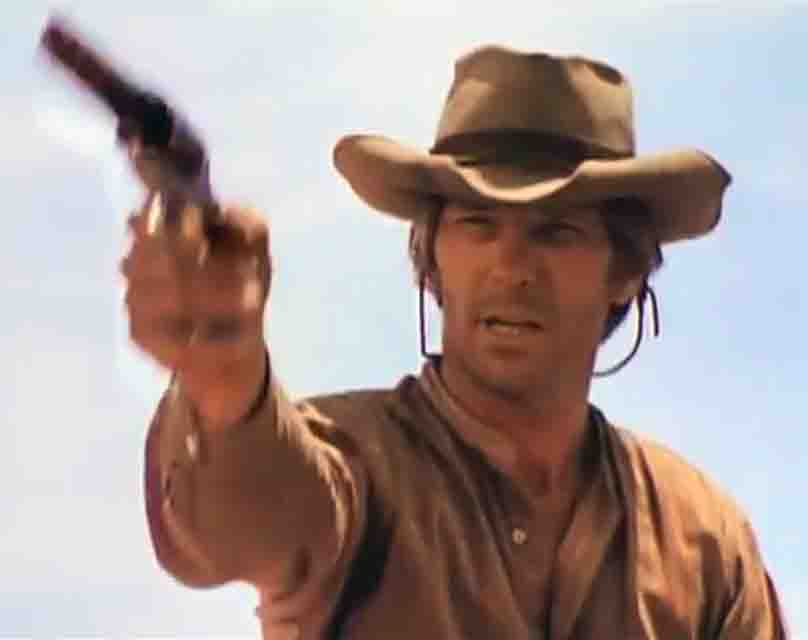
This edition of 4 Shots From 4 Films is dedicated to H.P. Lovecraft, on the occasion of his 136th birthday.
4 Shots From 4 Films
The Dunwich Horror (1970, directed by Daniel Haller)
Dagon (2001, directed by Stuart Gordon)
The Call of Cthulhu (2005, directed by Andrew Leman)
The Whisperer in Darkness (2011, directed by Sean Branney)
Today would have been L.Q. Jones’s birthday. Jones was one of the great character actors and a pretty good director as well. A favorite of Sam Peckinpah’s, Jones often played dangerous outlaws who teamed up with Strother Martin to keep the west wild.
In this scene from Peckinpah’s The Wild Bunch, Jones and Martin play two greedy bounty hunters who arrive in a town after the Wild Bunch have already shot the place up. While their boss, Robert Ryan, watches in disgust, Jones and Martin loot the dead and argue over who gets what.
4 Or More Shots From 4 Or More Films is just what it says it is, 4 shots from 4 of our favorite films. As opposed to the reviews and recaps that we usually post, 4 Shots From 4 Films lets the visuals do the talking!
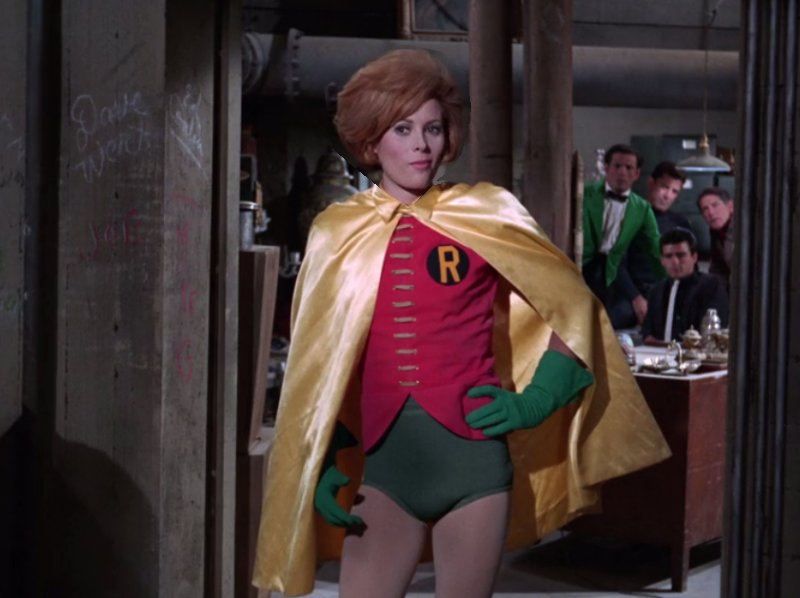
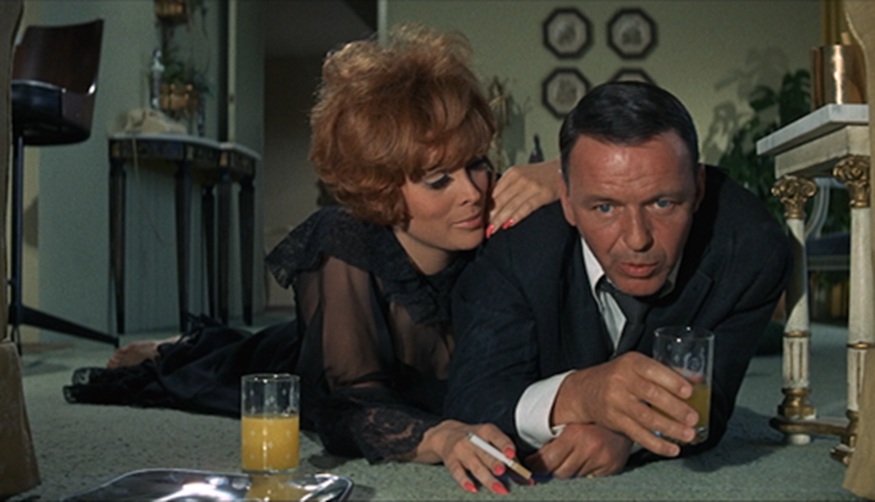
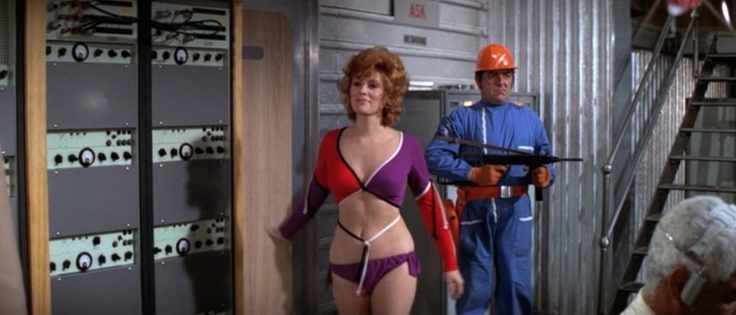
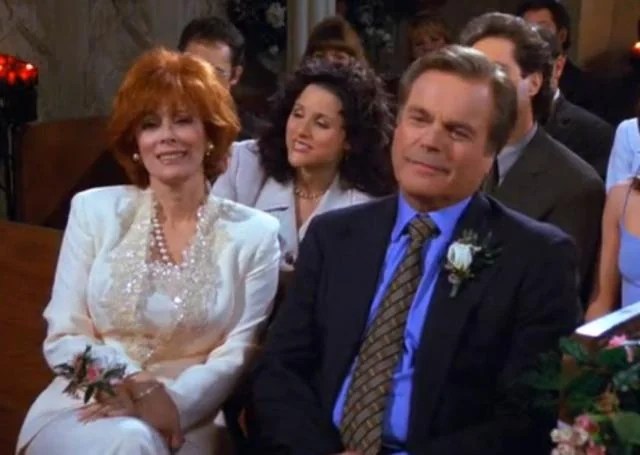
The beautiful Jill St. John, who did countless USO tours and was also the first American Bond girl in Diamonds are Forever, is 86 years old today. Happy birthday to the woman who tamed Frank Sinatra, changed the way people looked at Robin, helped to defeat Blofeld, and made every wedding special!
“When two hunters go after the same prey, they usually end up shooting each other in the back. And we don’t want to shoot each other in the back.” — Col. Douglas Mortimer
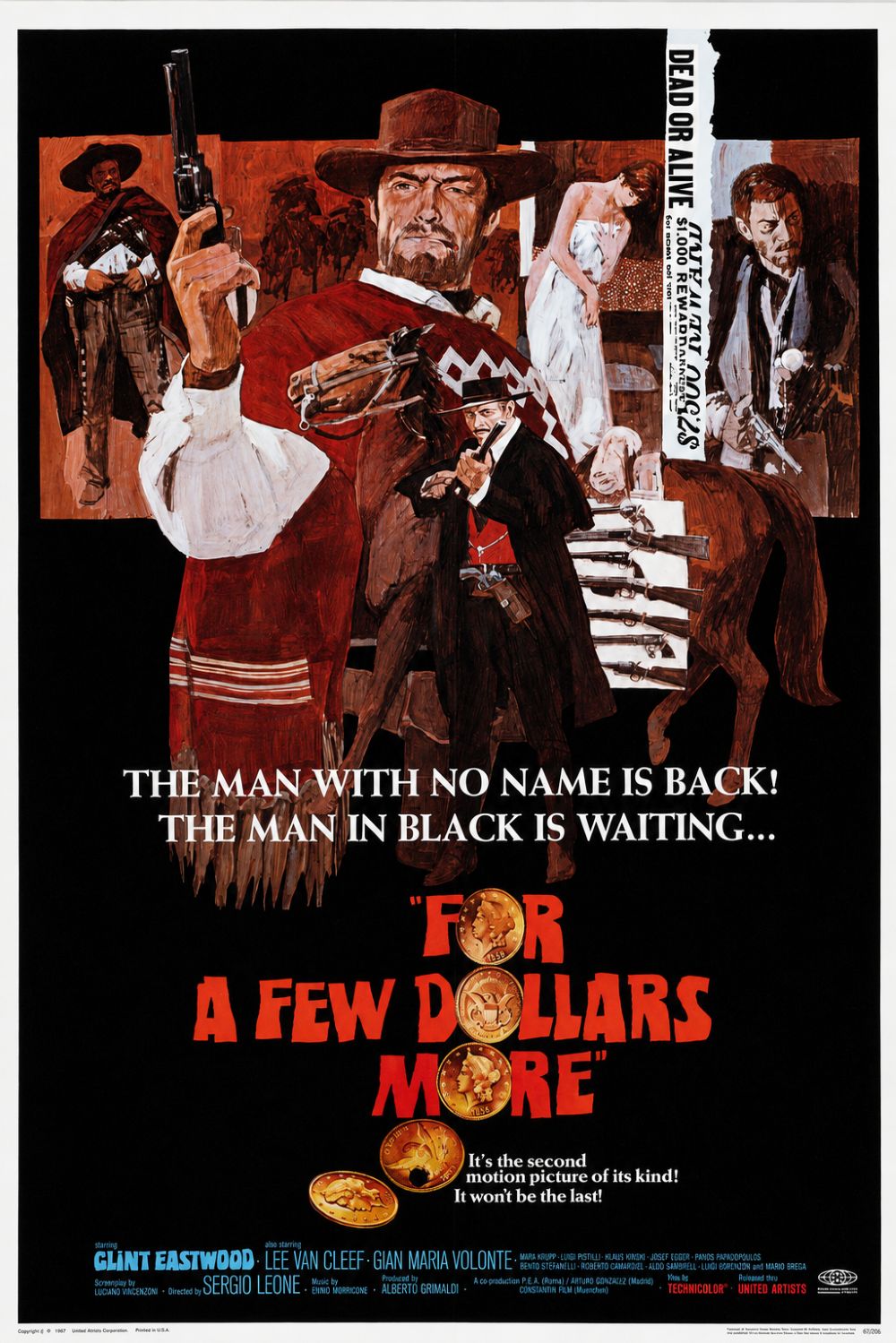
For a Few Dollars More is the moment Sergio Leone’s western style starts to feel fully formed: larger, stranger, more emotionally bruised, and far more confident in its ability to turn silence into suspense. Released in 1965, it serves as the second leg of Leone’s “Dollar’s Trilogy,” following A Fistful of Dollars and preceding The Good, the Bad and the Ugly. It shares the earlier film’s basic ingredients—dusty towns, morally compromised gunmen, crooked institutions, and Ennio Morricone’s unforgettable music—but it is not simply a bigger repeat. Leone takes the stripped-down revenge-and-gold framework of the first movie and gives it a darker emotional center. This is a western about obsession, damaged masculinity, and a world in which violence does not restore order so much as expose how little order existed in the first place.
Clint Eastwood returns as the Man with No Name, although he is called Manco here, and he is still the same lean, poncho-wearing opportunist viewers met in A Fistful of Dollars. He moves through the film with that familiar mixture of cocky calm and barely concealed menace. Manco is a bounty hunter, collecting rewards for dead criminals with an efficiency that makes his work feel almost casual. There is comedy in his early scenes, especially in the way he manages an absurdly large number of wanted men, but the humor has a sharp edge. Manco is not a conventional hero. He is charming because he is capable, because he has style, and because Eastwood knows exactly how little effort the role needs. A squint, a pause, or a hand resting near a gun does more than most full pages of dialogue.
The major difference is that this time Eastwood is not alone at the center of the story. Lee Van Cleef enters as Colonel Douglas Mortimer, another bounty hunter, and his presence gives the film its real dramatic charge. Mortimer is older, more formal, and more openly haunted than Manco. Where Manco seems motivated largely by money and survival, Mortimer carries himself like a man pursuing something much more personal. Their relationship begins as a rivalry, with both men circling the same targets and testing one another’s abilities. Leone gets a lot of mileage out of the contrast: Eastwood is loose and youthful, Van Cleef is rigid and calculating; one looks like he has wandered in from the wilderness, while the other has the manner of a retired officer who never truly left the battlefield.
Their eventual partnership is what makes For a Few Dollars More so satisfying. It is a buddy movie in the least sentimental sense possible. Neither man becomes especially warm or expressive, and their bond is built less on trust than on mutual respect for professional competence. They know the other is dangerous. They also know that the other may be necessary. Leone stages their alliance with a kind of deadpan amusement, particularly when Manco and Mortimer try to outdo each other with increasingly elaborate shooting demonstrations. Those sequences are entertaining because they are absurdly masculine, but the film never lets the spectacle become completely weightless. In this world, skill with a gun is not a sport; it is a qualification for survival.
The villain, Gian Maria Volonté’s El Indio, pushes the film decisively into darker territory than A Fistful of Dollars. Volonté had already played a memorable antagonist in Leone’s previous film, but El Indio is far more unsettling than Ramón Rojo. He is not merely greedy or power-hungry. He is psychologically ruined, driven by trauma and by a sadistic need to revisit it. His recurring pocket-watch motif, paired with Morricone’s chiming melody, becomes one of the film’s great inventions. The tune begins almost innocently, but Leone gradually turns it into a signal of dread. Every time El Indio opens the watch, it feels as though time itself has stopped and everyone nearby has been sentenced to wait for death.
The backstory tied to El Indio is where the movie reveals just how much more disturbing its narrative ambitions are. Leone and his screenwriters introduce subjects that are much uglier than the genre’s usual tales of outlaws and frontier justice: rape, suicide, and the lingering horror of sexual violence. The film does not handle these ideas with contemporary sensitivity, and it is not interested in exploring their victims with the depth they deserve. Still, their presence changes the atmosphere. El Indio’s trauma is not abstract; it is tied to a violent violation and the suicide that follows it. That history does not humanize him in any easy way, nor does it excuse him. Instead, it explains the repetitive, self-destructive pattern of his cruelty. He is obsessed with an event he cannot undo, and he converts that obsession into violence against everyone around him.
That theme of obsession runs through nearly every important character. Mortimer’s pursuit of El Indio turns out to be rooted in a personal wound that has shaped his entire life. His bounty-hunting career, disciplined exterior, and almost mechanical precision are revealed as part of a long-delayed act of vengeance. Manco, meanwhile, is obsessed in a different and less tragic way: with winning, with money, and with proving that he cannot be manipulated. Even the gang’s massive bank robbery has an obsessive quality. It is overcomplicated, theatrical, and clearly more about El Indio demonstrating power over his men than about securing wealth. Leone’s characters do not simply want things. They become imprisoned by them.
The plot itself is fairly direct, though Leone fills it with enough betrayal and shifting alliances to keep it lively. El Indio and his gang target the bank in El Paso, using a jailbreak as part of a larger scheme. Manco and Mortimer separately infiltrate the group, both pursuing the reward on El Indio’s head while working toward their own goals. From there, the film becomes a tense contest of patience. Leone is never in a rush to deliver a payoff. He lets scenes breathe, often lingering on faces, boots, hands, doorways, and empty spaces. In another director’s hands, this could feel slow. Here, it feels like the movie is daring the audience to notice every tiny movement before the gunfire begins.
That visual patience is one of Leone’s greatest strengths. For a Few Dollars More is full of faces that feel weathered by the landscape around them. The film’s close-ups are almost confrontational, catching sweat, stubble, suspicious glances, and flashes of fear. Leone makes the human face as important as the wide-open Spanish locations standing in for the American West. He also understands that scale works best through contrast. A showdown can begin with an extreme close-up of a man’s eyes, then pull back to reveal two tiny figures facing each other in a vast, empty space. The result is both operatic and intimate.
Morricone’s score deserves equal credit for making the movie feel larger than life. The music is less a background element than another character in the story. Whistles, bells, guitar, percussion, and that eerie watch melody give the film a sound unlike the traditional Hollywood western. It is playful in some moments and nightmarish in others. Most importantly, it makes the climactic duel feel like the culmination of everything the film has been building toward. The final confrontation is not just about who draws first. It is about memory, guilt, revenge, and whether a person can ever truly escape the worst moment of their life.
If A Fistful of Dollars was Leone proving that he could reinvent the western with attitude, For a Few Dollars More is him demonstrating that the formula could carry genuine darkness. It is still stylish, funny, and gleefully exaggerated. It still has impossible gunplay, swaggering antiheroes, and scenes designed purely to make the audience grin. But beneath all that is a colder film. Its violence is tied to trauma. Its men are defined by grudges they cannot release. Its most memorable villain is terrifying not because he is invincible, but because he is already spiritually broken.
Eastwood remains iconic, but Van Cleef is arguably the film’s emotional anchor. His performance gives the story weight without ever becoming melodramatic. Volonté, meanwhile, creates one of the great spaghetti-western villains: volatile, wounded, cruel, and unforgettable whenever that pocket watch begins to play. Leone would go even bigger and more ambitious with The Good, the Bad and the Ugly, but For a Few Dollars More may be the trilogy’s most focused character piece. It takes the sparse coolness of its predecessor and adds scars, grief, and a genuinely haunted sense of purpose.
I’ve shared several episodes of the “This Week in Charles Bronson” podcast with our readers over the last year. I just love visiting with my Buchinsky Buddy Eric Todd about all things related to Charles Bronson. In our latest episode, Eric pays tribute to actress Antoinette Bower, who passed away on April 30th, 2026, at the age of 93. The first Bronson film he ever saw was THE EVIL THAT MEN DO (1984), where Bower plays Claire Molloch, the sister and the love of the life of political torturer Clement Molloch (Joseph Maher). In Bower’s three-decade career she starred in just about every classic TV series you can think of, including Have Gun, Will Travel, The Man from U.N.C.L.E., Star Trek, and with Bronson and Kurt Russell in The Travels of Jaimie McPheeters. It’s a lot of fun revisiting much of her film work, and finding out a lot of other interesting things about her life after she retired from show business in the early 90’s.
After that, I get to tell you all about my trip to Vermont! My wife and I were able to visit Charles Bronson’s gravesite at the Brownsville Cemetery in West Windsor, as well as the property that was once his and Jill Ireland’s horse farm on Bronson Road. We were able to eat at places where he liked to eat and even go shopping at places where he liked to shop! And to top it all off, we had the good fortune to meet his son, Valentine McCallum, who still has property in the area and just happened to be visiting when we were there. Val’s an incredible professional musician and singer, and we were able to catch him performing at the Skunk Hollow Tavern on our last night in the area. I share a couple of his songs on the podcast. What I love the most is that these are very personal songs that Val performed that night. I think you’ll enjoy them. I know we sure did!
So, if any of that sounds like fun to you, take some time to give us a listen. I’m sharing the YouTube and Spotify links below, but you can find us on Apple Podcasts as well!
4 Or More Shots From 4 Or More Films is just what it says it is, 4 shots from 4 of our favorite films. As opposed to the reviews and recaps that we usually post, 4 Shots From 4 Films lets the visuals do the talking!
Today, we pay tribute to the year 2004! It’s time for….
4 Shots From 4 2004 Films
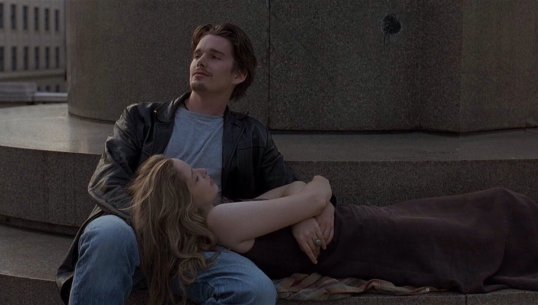
Before Sunset (2004, dir by Richard Linklater, DP: Lee Daniel)
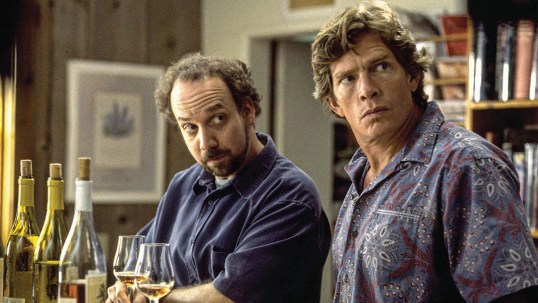
Sideways (2004, dir by Alexander Payne, DP: Phedon Papamichael)
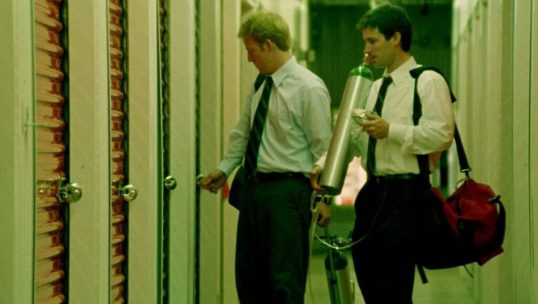
Primer (2004, dir by Shane Carruth)
Dawn of the Dead (2004, dir by Zack Snyder, DP; Matthew F. Leonetti)
When I was a teenager growing up in Toad Suck, Arkansas, we only had 5 TV channels. My favorite of those channels was Fox 16 out of Little Rock, because they showed a lot of movies. Many of my favorite movies to this day are the movies that showed on Fox 16 in the mid-80’s. One of those movies that they played frequently was TIGHTROPE. This being the TV edit of the movie, I was too young and naive to realize just how different of a character Wes Block was for Clint Eastwood. Sure, he was a badass cop, but he also indulged in somewhat perverse sexual activities with the ladies of the night in New Orleans. It’s actually an incredible performance and the type that helps separate Eastwood from so many of his contemporaries.
TIGHTROPE was released 42 years ago to the date on August 17th, 1984. Let’s celebrate by watching this interesting clip from the movie. It’s definitely tame compared to many others in film, but I love the payoff !
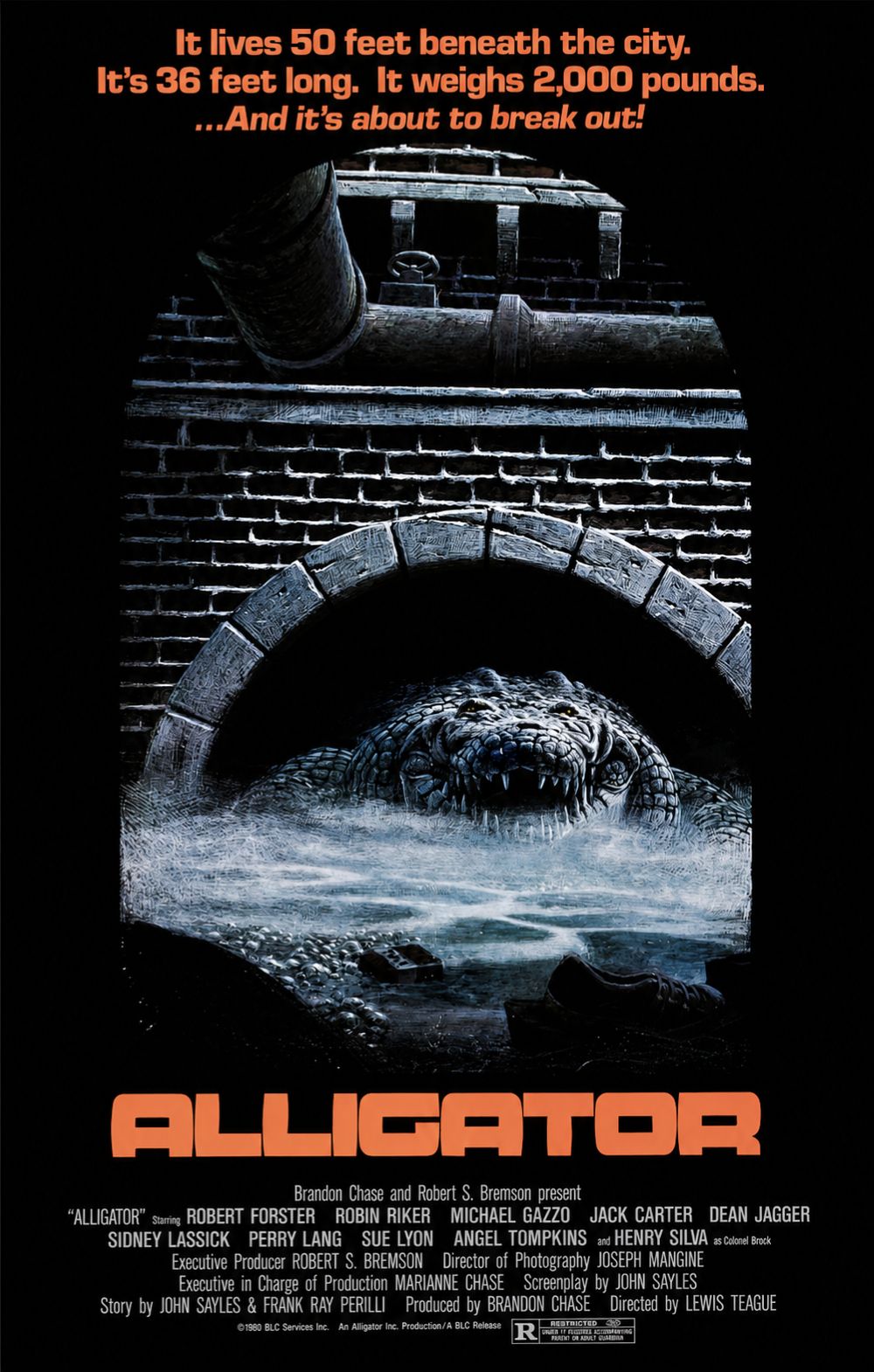
Lewis Teague’s Alligator is exactly the sort of movie that sounds like a bad joke until you sit down with it and realize it is having a much better time than most “serious” creature features. The premise is pure drive-in delirium: a baby alligator is flushed down a toilet, survives in the sewer system beneath St. Louis, Missouri, feeds on discarded laboratory animals pumped full of experimental growth hormones, and eventually becomes a gigantic, people-eating urban nightmare. It is absurd from the start, but that absurdity is the movie’s best asset. Alligator is not a good film in the polished, tightly controlled sense. It is too clunky, too broad, and too openly ridiculous for that. But it is never boring, and it understands that a movie about a giant alligator stalking the sewer tunnels under St. Louis should be grimy, nasty, funny, and just a little bit stupid.
The film arrives in that sweet spot between the straightforward animal-attack movies of the 1970s and the increasingly self-aware horror comedies of the 1980s. It has some of the structure of a Jaws knockoff, of course: authorities dismiss warnings, a difficult investigator takes the danger seriously, and a creature grows into an outsized public threat before the final confrontation. But Alligator does not have the resources, atmosphere, or aquatic terror of Spielberg’s film, and to its credit, it does not really pretend to. Instead, it leans into the cheapness of its materials. The alligator is mostly an oversized practical effect, sometimes convincing enough to be threatening and sometimes looking like the kind of thing that should be knocking over miniature buildings in a 1950s monster movie. The difference is that Teague knows how to frame the thing. He keeps the creature partly hidden when that helps, lets the sewer setting do much of the atmospheric heavy lifting, and saves the full ridiculousness of the monster for when ridiculousness is exactly what the audience wants.
There is an immediately appealing trashy logic to the story. The alligator is not simply an animal that wandered into the wrong place; it is a product of environmental carelessness, corporate experimentation, and the city’s tendency to throw its problems underground. The movie opens with a young girl’s pet alligator being flushed away after it bites someone, a cruelly comic act that functions as the film’s entire moral universe in miniature. Humans dispose of an inconvenient creature, neglect the consequences, and then act shocked when the creature becomes a gigantic murderous problem. The idea is broadly ecological and vaguely anti-corporate, but Alligator never becomes preachy. It keeps those elements in the background as an excuse for gore, sewer crawling, and a steadily escalating body count.
Robert Forster plays David Madison, a St. Louis cop with the permanently tired demeanor of someone who has been forced to listen to too many witnesses describe impossible things. Forster is a major reason the movie works as well as it does. He does not play the material like a joke, but he also does not strain to elevate it into prestige horror. His performance is dry, irritated, and completely appropriate for a man investigating missing-person cases that increasingly point toward a subterranean reptile large enough to eat a car. Madison is not a particularly complicated protagonist, but Forster gives him enough weary professionalism that the audience can follow him through the nonsense. His deadpan approach also makes the film funnier without turning it into outright parody.
The supporting cast is a strange, entertaining mixture of familiar character-actor energy and exploitation-movie weirdness. Robin Riker plays Marisa, a reptile expert and Madison’s eventual love interest, and she is better than the role strictly requires. She has a brisk, practical presence, which is useful in a movie where most characters either refuse to believe the obvious or exist to become alligator food. The romance between her and Madison is thin, but it is handled with enough low-key charm that it does not stop the movie cold. It feels like a necessary B-movie ingredient rather than a desperate attempt to convince viewers that they are watching something emotionally profound.
Then there is Henry Silva. Honestly, the presence of Henry Silva alone tells you what kind of movie Alligator is trying to be. Silva plays Colonel Brockman, a professional hunter hired by the evil pharmaceutical company to find and kill Ramon, the giant gator created by its illegal growth-hormone dumping. He is not the mastermind behind the scientific mess; he is the company’s hired cleanup crew, brought in once the whole operation has become too big and too toothy to bury. Silva approaches the role with exactly the degree of swaggering, oily menace it needs. He is here to be Henry Silva in a monster movie, which means glaring, sneering, and acting as though the chance to hunt a massive sewer reptile is simply another profitable afternoon at work. Every time he shows up, the movie gets a little more fun.
The screenplay comes from John Sayles, which is almost comically overqualified on paper, though it makes more sense once the dialogue starts landing. Sayles gives the movie flashes of wit and an edge of social satire that keep it from being totally disposable. There are jokes about cops, politicians, wealthy elites, and corporate corruption, and while none of them are especially subtle, they have the right bite for a film this grubby. The story’s best satirical impulse is its refusal to make the rich and powerful merely unlucky victims of the monster. The alligator’s rampage eventually collides with a wealthy social gathering, and the movie takes obvious pleasure in turning a fancy event into a feeding ground. It is not exactly The Texas Chain Saw Massacre in its class consciousness, but it does understand that watching an enormous reptile crash through the polished facade of upper-class respectability is satisfying.
Teague directs with the workmanlike confidence of someone who knows that the material only needs to get from one entertaining set piece to another. The sewer scenes are the film’s strongest visual material. They are damp, shadowy, cluttered, and full of the sort of industrial grime that exploitation cinema loves. The setting is inherently creepy because it is both unreal and plausible: everyone knows a city like St. Louis has tunnels, pipes, forgotten chambers, and places where things can disappear, even if nobody really believes a giant alligator lives down there. The movie uses that unease effectively. When characters descend into the darkness, the tension is simple but real. You know something huge is moving nearby, and you know the special effects are not going to hold up to close inspection, but the atmosphere carries you through.
The attacks are uneven, but that is part of the charm. Some are genuinely nasty, particularly when the movie lets the creature strike suddenly from the shadows. Others are so exaggerated that they become funny in ways the filmmakers likely anticipated. There is a particularly memorable moment involving a child and a swimming pool that has the gleefully tasteless punch of old-school grindhouse horror. Alligator is never as graphic as the nastier exploitation films of its era, but it has enough blood, torn bodies, and monstrous chomping to satisfy an audience looking for low-rent carnage. It knows the basic rule of this kind of movie: if you are going to ask viewers to accept a mutant sewer alligator, you had better let it eat some people.
What makes Alligator last beyond its premise is that it does not seem embarrassed by what it is. There are many creature features that feel apologetic, as if the filmmakers know they are making junk and are waiting for the audience to laugh at them. Teague’s film is junk, absolutely, but it is crafted junk. It has actual pacing, committed actors, useful atmosphere, and a screenplay that occasionally has more on its mind than the average monster-on-the-loose picture. It is bad enough that its flaws become part of the entertainment, especially whenever the huge reptile lumbers into view or the plot makes a leap that only makes sense if nobody involved pauses to think for ten seconds. Yet it is not so bad that it becomes a chore. That is the crucial distinction.
By the time Alligator reaches its climax, it has delivered nearly everything its title promises: sewers, corrupt businessmen, cops with guns, practical monster effects, socialites getting their comeuppance, and Henry Silva looking like he would gladly accept a corporate paycheck to hunt an enormous mutant reptile. It is the kind of film best watched with an appreciation for grime, excess, and the noble tradition of exploitation cinema turning a ridiculous idea into a perfectly decent Saturday-night monster movie. Alligator will not make anyone forget the great creature features, but it earns its place as a scrappy, trashy, oddly lovable B-movie. It is not awful. It is not even truly bad. It is just delightfully cheap, mean, and goofy enough to remind you why bad movies can sometimes be more fun than good ones.