4 Shots From 4 Films is just what it says it is, 4 shots from 4 of our favorite films. As opposed to the reviews and recaps that we usually post, 4 Shots From 4 Films lets the visuals do the talking.
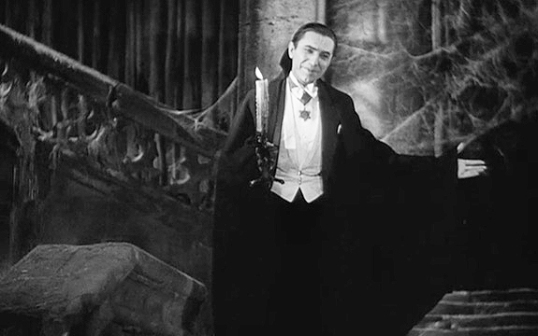
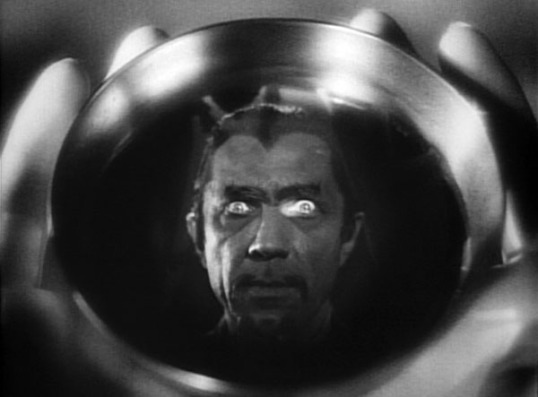
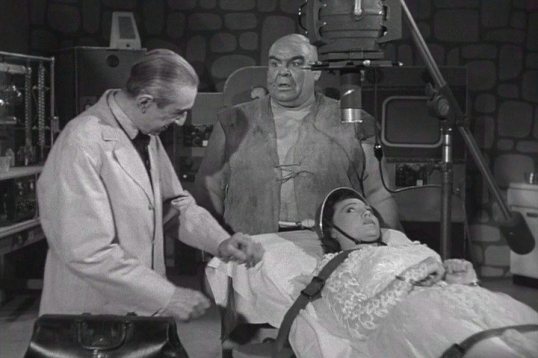
144 years ago on this date, Bela Lugosi was born in Hungary. Today, we honor his memory with….
4 Shots From 4 Bela Lugosi Films
Dracula (1931, dir by Tod Browning, DP; Karl Freund)
White Zombie (1932, dir by Vincent Halperin, DP: Arthur Martinelli)
Ninotchka (1939, dir by Ernst Lubitsch, DP: William H. Daniels)
Bride of The Monster (1955, dir by Ed Wood, DP: Ted Allan and William H. Thompson)
In 2016’s Old Rugged Cross, Pastor Evan Shepherd (played by the film’s director, Donald James Parker) is looking for a new church. He feels that he lost his way at his old church, becoming more concerned with money and prestige than with leading the people to God. He was also accused of “sexual improprieties” with a member of the congregation but he’s quick to point that none of the accusations were actually proven. Evan was set up and he left town because he was feeling burned out.
But now, he’s ready to return to preaching. He rents out and reopens a previously abandoned church called the Old Rugged Cross. He worships on Saturday morning. He delivers messages from God to those who attend. He only occasionally preaches a sermon and he doesn’t make a big deal out of tithing. He’s not in it for the money or the prestige anymore. And, if you have any doubts, he’ll talk to you about them. And by talk, I mean that he will just ramble on and on and on. This film will seriously test how much patience you have for an old man who never makes a point twice when he can make it three times instead.
Pastor Luke Wolfe (David Vanergriff) views Evan and the Old Rugged Cross as a threat. Wolfe is the pastor at Victory Church and all he cares about is bringing in enough money so that he can redesign the church and have the biggest sanctuary in town. He’s cold and distant from the people who attend his church and his little time to listen to their problems. He’s also single. He wants to marry Anita (Kelly Nelon Clark), Victory’s pianist, but she starts attending the Old Rugged Cross. In fact, all sorts of people are abandoning Victory Church for the Old Rugged Cross.
At a meeting of all the local protestant pastors, Wolfe challenged Evan on his style of worship. Evan responds by talking about W.C. Fields searching the bible on his deathbed because he was looking for a loophole….
Yes, this is another Donald James Parker film and it has all of the things that one typically associates with his productions. The scenes drag out interminably. The acting is abysmal. There’s a strange obsession with filming characters sitting in restaurants and debating religion. Early on in the film, there’s a scene of Evan and Anita talking in a restaurant. It goes on for what feels like 15 minutes. Before you can even breathe a sigh of relief that the scene is over, we then suddenly cut to the next night and Anita having a conversation with Luke Wolfe while sitting at the exact same table in the exact same restaurant. Just when you think you’ve escaped, the films drags you back in! It would perhaps have helped if Parker had occasionally moved the camera during these lengthy scenes but that sort of thing just isn’t a part of his directorial aesthetic.
As with many of Parker’s films, Old Rugged Cross is, at times, a rather angry film. Evan may be an old man but he still often comes across as if he’s about to hit someone. His dislike of Luke Wolfe feels as much personal as theological which is really not a good look for a pastor. Seriously, you don’t want to get on Evan Shepherd’s bad side!
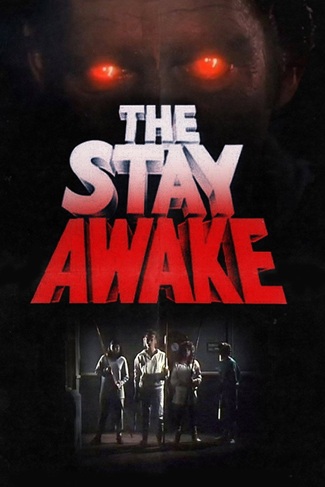
See if you can follow the plot of 1987’s The Stay Awake.
The film opens in 1969. A title card assures us that we’re in America. A serial killer has been tried, convicted, and condemned to die. Normally, this would lead to 30 years of appeals and moratoriums from bleeding-heart politicians. However, this guy is such a dastardly figure that he’s led to the execution chamber almost immediately after being convicted. Before he’s executed, he shouts that he’ll be back for revenge. Wow, scary!
We jump forward 25 years. A title card now tells us that we’re in “Europe.” It doesn’t specifically say where in Europe, but everyone that we see is speaking English. In all probability, we are meant to be in the United Kingdom. However, everyone also speaks with a South African accent. We’re introduced to a small group of students who are going to be doing a “stay awake” at their private school. Apparently, a stay awake is a type of slumber party where you don’t actually sleep. Instead, you stay awake and you watch movies and you play volleyball and, once morning comes around, you’ve somehow raised money for charity. It’s never really explained how they’re raising money by staying awake, but then again, in the UK, apparently you can raise money just by wearing a red nose. It’s a strange country.
Something is very slowly moving through the hallways of the school. Eventually, it kills the school’s security guard and then it proceeds to follow the students around. I’m going to assume that they’re being stalked by the spirit of the killer because otherwise, there’s no reason for the film to feature that scene in America. However, why would an executed American serial killer seek revenge by spirit-stalking a bunch of South African girls in Europe? I mean, they had nothing to do with his execution. The people who were responsible for his execution are probably never even going to hear about anything that the dead killer does in Europe. It’s a thoroughly incoherent film.
Usually, I can excuse a little incoherence if the film is at least visually interesting or features an unexpectedly good performance. Unfortunately, The Stay Awake is quite possibly the slowest horror film that I’ve ever seen. There are countless POV shots of the evil spirit moving through the school’s hallways, but the film is so ineptly edited that we’re never really sure where the killer exactly is in the school, especially in relation to the girls having the stay awake. While the film itself was clearly meant to take advantage of the ’80s slasher boom, there really aren’t that many deaths. Instead, the spirit seems to possess his victims rather than kill them. If they’re possessed, it would seem to stand to reason that they can still be saved if the killer’s spirit is vanquished. However, that would apparently require too much work on the part of the girls who haven’t been possessed. It’s easier to just blow up the school and, I guess, kill everyone.
The film’s title feels almost like a dare. I’m surprised I was able to stay awake while watching.
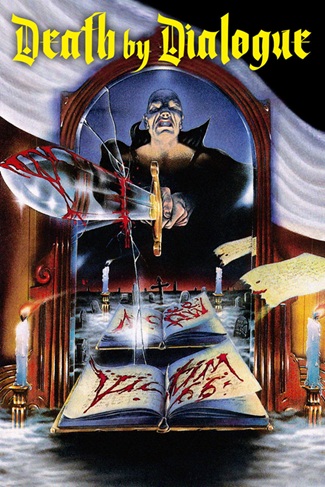
In this 1988 film, a group of college friends visit Uncle Ive (Theodore Lehmann), a crippled taxidermist who lives next door to a film set. (We never actually see this film set, but we are assured that it’s there.) Uncle Ive is taken care of by his devoted housekeeper, Ms. Camden (Judy Gordon). And he needs a lot of taking care of because, for some reason, there’s a haunted screenplay on his property. The title of the screenplay is constantly changing, but the one thing that remains consistent is the word “Victim.” The screenplay goes from being “Victim #69” to “Victim #70,” but what never changes is that there has to be a victim. The screenplay predicts how each person in the film is going to die. It’s not so much Death By Dialogue as it is Death By Rewrite.
Speaking of screenplays, this film has a strange one. It’s never really clear why the screenplay is on the property of Uncle Ive, but there are more than a few deaths that manage to be memorable. There’s a standard bursting into flames death. There’s a decapitation by scarf death. There’s a death by impalement on the blade of a bald demon. Strangest of all is the moment when one of the victims stumbles across an ’80s hair band that just happens to be performing behind some bushes. This leads to death by having one’s head smashed with a musical instrument. What’s odd is that we never really know where the band came from. Were they demons? Were they a legitimate band? What happened to them after the head smashing? How come no one heard them playing? Is this the sort of thing that regularly happens near film sets? I mean, I imagine that sort of thing happened at the Spahn Ranch on a daily basis, but I always figured that was the exception to the rule. Eventually, a big scary demon shows up and we’re left to wonder if he wrote the script and if he did so on spec. During WGA strikes, can the cursed screenplay still kill people, or do they have to hire a scab to write the death scenes until the strike is settled? Personally, if anyone wrote my death in a screenplay, I would hope that the studios would, at the very least, bring in an Oscar-winner to do an uncredited rewrite.
(Actually, now that I think about it, my best friend Evelyn and I wrote a pretty good slasher screenplay when we were in college. We gave the best death scenes to ourselves and the people we liked the most. The people we disliked just got dragged offscreen. I really should get it out of storage and do some work on it.)
Anyway, have I rambled enough? If this review seems a bit disjointed and random …. well, so does the film. But that’s not necessarily a bad thing. This is one of those films where the incoherent story actually works to the story’s advantage. It really does create the feeling of being at the mercy of beings that simply cannot be understood or reasoned with. Featuring a game cast and an intriguingly weird premise, Death by Dialogue is enjoyable almost despite itself. No rewrite was necessary!
First released in 1982, Piranha II takes place at a Caribbean resort. It’s a great vacation spot. There’s a beautiful beach. There are lots of boats. The locals are friendly and eager to take your money. Chief Steve Kimbrough (Lance Henriksen) does his best to maintain law and order and keep the tourists safe. There’s a shipwreck nearby, and Steve’s estranged wife, Anne (Tricia O’Neill), leads regular underwater tours. Just watching the first few minutes of Piranha II, I was totally prepared to book a vacation, despite the fact that those Trivago commercials have left me somewhat fearful of the whole resort experience. (“You didn’t use Trivago.” And how is that any of your business?)
Then the piranhas arrived.
Yes, the water is soon full of piranhas, the sharp-toothed fish that look scary in 3D and that destroyed an entire resort in the first Piranha film. However, these new piranhas are even worse than the ones that came before them. These piranhas can fly! Someone has been performing gene-splitting experiments and now, as a result, the piranhas not only have sharp teeth—they have wings! And they can even survive inside the bodies of their victims. (One poor morgue attendant discovers this to her own grave misfortune.) Why would anyone put wings on a piranha? I mean, seriously, who thought that was a good idea? Is that what my parents’ tax dollars were going to during the Carter years? Putting wings on piranhas?
Soon, both the water and the air are full of blood. Can Captain Kimbrough save some lives? Even more importantly, can he save the lives of his family? This is one of those movies where we’re really not supposed to care about anyone other than the main characters. A lot of people die, but what matters is whether or not they’re a Kimbrough.
This film, which is not particularly good, is infamous for being the first film on which James Cameron was credited as director. Cameron himself has said that he had little to do with the content of the film and therefore considers The Terminator to be his first real film. According to Cameron, he had nothing to do with editing the film and the majority of the scenes were directed by the film’s producer, Ovidio G. Assonitis. Cameron requested that his name be removed from the film’s credits, but the production company declined to do so because they were contractually obligated to have an American director. Now, how much of this is true and how much of it’s Cameron not wanting to be associated with something as bad as Piranha II is anyone’s guess. I will say that, watching the film, I saw absolutely nothing that would make me say, “Hey, I bet James Cameron directed this!” The only real thing that this film had in common with Cameron’s other early films was the presence of Lance Henriksen. (Tricia O’Neill did go on to have a small role in Titanic.)
Henriksen is the best thing about Piranha II. No matter how ludicrous the story or bad the special effects, Henriksen keeps a straight face and takes the film seriously. There’s a fairly nonsensical moment where Henriksen jumps out of a helicopter to rescue someone, despite the fact that this causes the unpiloted helicopter to then crash and explode, leaving everyone stranded in the ocean. Somehow, Henriksen sells the moment and makes ditching a helicopter seem like the most natural, common-sense thing in the world. That takes skill. That’s the sign of a good actor, and one can see why Cameron continued to work with him even after Piranha II.
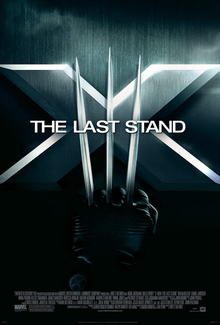
Just as the world seems to be finally on the verge of accepting mutants, industrialist Warren Worthington II (Michael Murphy) announces that he has developed a shot that will suppress the X-gene, therefore “curing” mutants of their mutation. Magneto (Ian McKellen), Mystique (Rebecca Romijn), and a host of other mutants break out of prison to try to stop Worthington from offering up his cure. Meanwhile, at Charles Xavier’s school, Rogue (Anna Paquin) wonders if maybe she should take the shot and become a “normal” person.
Professor Xavier (Patrick Stewart) and Logan (Hugh Jackman) have an even bigger concern than Magneto and the cure. Jean Grey (Famke Janssen), thought to have died at the end of the previous movie, has returned but has given in to her dark side, the so-called Phoenix. She’s already destroyed Scott (James Marsden), and it doesn’t take her long to disintegrate Professor X. Can Logan and the Beast (Kelsey Grammer) rally what’s left of the X-Men to defeat both Magneto and the Dark Phoenix?
I can still remember seeing X-Men: The Last Stand on the day that it was first released. As an X-Men fan, I was excited to see how the Dark Phoenix storyline would be adapted for the big screen. It’s difficult to put into words how disappointed I was when Jean killed Scott. That one scene told me that X-Men: The Last Stand was not going to do the story justice. In the comic books, Jean and Scott’s relationship was the heart of the X-Men. When Jean became the Dark Phoenix, she proved herself capable of destroying an entire planet, but she couldn’t bring herself to kill Scott. She chose to destroy herself rather than him. (Marvel being Marvel, Jean was resurrected a few years later.) The X-Men films never really knew what to do with the characters of Scott and Jean. They weren’t as flamboyant as Logan or even Rogue, but fans of the comic knew who Scott and Jean were and understood their importance to the series, and having Jean destroy Scott showed that, unlike the previous two films, the third X-Men film was not being made for the fans.
A large part of the problem was that director Brett Ratner didn’t seem to be interested in the characters. X-Men: The Last Stand is a collection of action scenes with none of the small character moments that made the first two films memorable. Kelsey Grammer is a welcome addition to the cast as the Beast. (The Beast always was basically Frasier Crane with blue fur.) Otherwise, this is the most forgettable of all the X-Men films.
Even though the Dark Phoenix saga is one of the key X-Men storylines, it’s never really been given its due onscreen. A second attempt to tell the story, in Dark Phoenix, also failed to capture the drama and emotion of Jean’s transformation. The X-Men are now officially a part of the MCU, so I imagine the story will probably be told again. Maybe the third time will be the charm.
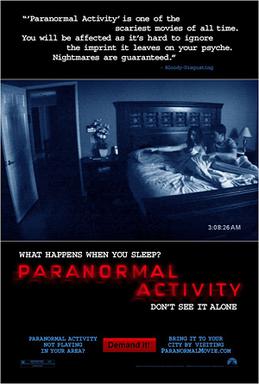
Katie (played by Katie Featherston) believes that an evil spirit has been following her ever since she was a child. Her boyfriend, a day trader named Micah (played by Micah Sloat), decides to set up cameras all over the house so that he can record any strange things that happen. A psychic (Mark Friedrichs) tells Micah that this is a really bad idea because the demon is intent on tormenting Katie and that it gets off on creating negative energy. Micah doesn’t listen because he’s dumb.
Reading Lisa Marie’s review of The Blair Witch Project reminded me of the other great found-footage horror phenomenon of our lifetime, Paranormal Activity. The whole movie is made up of “found footage” that was recorded on the stationary cameras set up around the house. Because the cameras were all supposed to be sitting on tripods or other surfaces, this eliminated the question of “Why would anyone still be filming at this point?” It gave the first Paranormal Activity film a plausibility that, in my opinion, The Blair Witch Project lost the minute Heather and Michael decided not to turn off the camera and just make a run for it. It also helped that night vision is automatically creepy. Though there have been far too many sequels, the first Paranormal Activity shows what you can do with loud noises, dark rooms, and lots of atmosphere.
Of course, most of my friends had the same reaction to Paranormal Activity. They wonder how someone like Micah could have ever hooked up with someone as hot as Katie in the first place. Paranormal Activity briefly gave hope to dorky guys everywhere, or at least it did as long as you ignored what happened to Micah at the end of the movie. I have yet to meet anyone who watched Paranormal Activity and felt bad for Micah. There’s a lot of sympathy for Katie, but everyone seems to agree that Micah brought it all on himself.
Paranormal Activity has inspired six sequels, with a seventh scheduled to come out in 2027.
Watching Lifetime’s Center Stage for Murder brought back a lot of memories for me.
A lot of that is because it took place in the world of ballet. Dancing in general and ballet in particular was pretty much my life up until I turned sixteen. Sixteen was when I started to realize that, thanks to a combination of big boobs and lack of coordination, I was never going to be known as the world’s greatest ballerina and instead started to turn my attention to writing. Still, I stuck with dancing until I fell down a flight of stairs at the age of 17 and broke my ankle in two places. Injuries were nothing new to me. Even when I was really into ballet, I was still basically a klutz. (Someone once told me that my main strength as a dancer was that I was cute enough to distract everyone from my mistakes and, in retrospect, I have to agree.) When this movie opened with a shot of dancers in their leotards trying to focus while a snooty teacher with an indecipherable accent savagely critiqued them, it was a true “Oh my God! Just like me!” moment.
The other “Oh my God! Just like me!” moment came when Chloe Pearson (Krystal Ellsworth) fell down a flight of stairs and ended up confined to her home due to injury. I cannot begin to count the number of times that happened to me. In fact, it happened so many times that my mom started to tell my instructors not to let me go outside alone if it was raining, snowing, or in any way icy because she knew there was no way I wouldn’t end up slipping and spraining something. (At least that’s the way I remember it!) At the time, I always laughed off the pain. “Oh my God, why am I so clumsy!?” Of course, whenever I found myself limping because the weather had suddenly changed, I find it to be a little less amusing.
In Center Stage for Murder, Stephen Tracy plays a guy who claims to be a physical therapist. He shows up at Chloe’s apartment and introduces himself as Avery Mitchell. He’s been assigned to help Chloe get back on her feet. At first, Chloe is thankful for Avery’s help. He’s not only a physical therapist but he’s also a good listener, and goodness knows, Chloe has a lot of problems that she needs to discuss. However, one of Chloe’s friends points out that Avery doesn’t appear to know some basic things about physical therapy. And Avery himself quickly starts to become rather possessive of Chloe. Soon, Avery is at the apartment all the time and Chloe finds herself a prisoner in her own rented home. Is Avery an obsessed psycho or is there an even bigger conspiracy at work?
Anyone who has ever seen a Lifetime film already knows the answer to that question, just like we knew as soon as Avery showed up that he wasn’t the real Avery Mitchell. Indeed, for all of her talent as a dancer, Chloe apparently doesn’t have much common sense because it’s pretty obvious from the start that something is off about Avery. That’s not a complaint, though. Part of the appeal of Lifetime movies is that they’re so predictable. In an uncertain world, they’re comfort food. They’re a nice brunch or late-night snack, served with appetizers of sex, blood, and melodrama. Center Stage for Murder was entertaining both because of the “Oh my God! Just like me!” moments and also because it embraced the melodrama without shame or hesitation. It was over-the-top from the word “go!” and that’s exactly the way Lifetime fans like it!
Center Stage for Murder is not the best Lifetime film of 2026. Of the 2026 Lifetime films that I’ve watched, that honor still belongs to The Couple Across the Street. That said, it’s definitely a film that reminded me of why I fell in love with Lifetime to begin with.
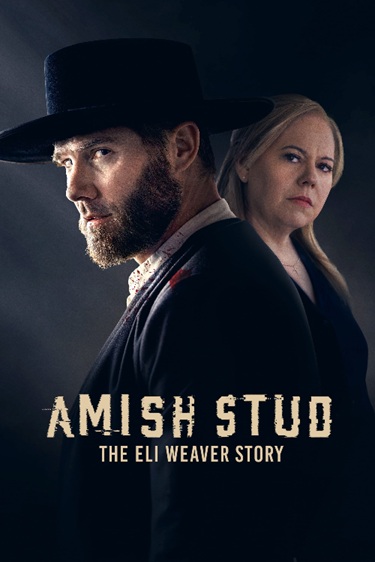
When Barbara Weaver (Miranda MacDougall) is found shot to death in her own home, the police have a difficult task ahead of them. It’s not that there’s any real question as to who probably killed Barbara. Everyone seems to know that Barbara’s husband, Eli (Luke Macfarlane), was a serial philanderer and that Barbara was on the verge of revealing all of his sins to the members of their community. The problem comes from the fact that the community in question is the Amish community and no one is willing to work with a bunch of outsider detectives. Only Barbara’s sister, Abigail (Clare Filipow), seems to be willing to help the detectives prove that Eli and his mistress, Barb (Kirsten Vangsness), were responsible for Barbara’s murder. The investigation reveals that, online, Eli Weaver was known as “Amish Stud” and that he had a long history of cheating.
Amish Stud: The Eli Weaver Story originally aired on Lifetime in 2023. Over the past few years, Lifetime has aired several films about the sordid lives of the Amish. It actually started out on a good note, with a film about the 2006 Amish schoolhouse shooting that emphasized the importance of community and also the power of forgiveness. Since then, the films have grown steadily more melodramatic, with the emphasis usually on Amish women who want to hit the clubs and Amish men who turn out to be full-blown stalkers. One has to feel a bit sorry for the Amish, who for the most part seem like they just want to be left alone and who try not to bother anyone. The truth of the matter is that the outside world will always be fascinated by the Amish. Some of it is because it’s hard to imagine a community living without the technology that the rest of us take for granted. In fact, it’s so hard to imagine that a lot of films about the Amish seem to be determined to prove that the Amish really aren’t so old-fashioned. On Lifetime, Amish communities are regularly portrayed as being a hotbed of sex and betrayal, and one often gets the feeling that a lot of that is because they don’t have to worry about the Amish watching the movie and then hopping on social media to discuss how offended they are.
(For the record, I don’t know any Amish people. I live in Texas. We have quite a few Mennonites, but I haven’t spent much time in any of their communities. I do plan on ordering some of their furniture in the future.)
With all that in mind, I should mention that Amish Stud is based on a true story. Luke Macfarlane plays Eli as being someone who is not particularly religious but who sticks with his Amish community because he knows he would probably end up broke and homeless if he tried to live among the English. The film emphasizes that Eli is not just sleazy but he’s also extremely dorky and needy, and that’s not a good combination by any stretch of the imagination. When Barbara goes to the Bishop about Eli’s cheating, she’s told that it’s her fault for not being a good enough wife. Yikes! It’s a well-made true crime story, featuring good performances from Macfarlane, MacDougall, and Kirsten Vangsness. Watching the film, it occurred to me that Eli really wasn’t that much different from all of the other philandering and untrustworthy husbands and boyfriends that have appeared in countless Lifetime films. He just happened to be Amish. If he hadn’t been Amish, it’s doubtful anyone would have paid that much attention to the story.
As for the real Eli Weaver, he’s currently serving 15 years to life in an Ohio prison. He was denied parole in 2024. His next parole hearing will be in 2032.
In a town off the coast of Spain, women are being murdered and their bloodless bodies left on the beach. A journalist named Charlie (Fernando Bilbao) investigates and discovers that the locals are convinced the killings are the work of a supernatural entity. Meanwhile, the aristocratic Karlstein family gathers at a chapel where the dying Countess Karlstein gives her daughter, Louisa (Britt Nichols), the key to the basement. There, Louisa discovers not only Count Dracula (Howard Vernon) but also her vampirized cousin and lover, Karine (Anne Libert).
The Karlstein family is under a vampire curse. Or maybe they’re not. It’s not always easy to follow this film’s logic. The Countess’s personal secretary (played by the film’s director, Jess Franco) is convinced a curse is at work, but Count Karlstein (Daniel White) appears to be not a vampire but simply a typical self-indulgent aristocrat. (Indeed, it’s sometimes hard to figure out how exactly Dracula ended up in the basement to begin with.) Count Karlstein is also a leading suspect in the murders. He has an alibi for at least one of them, but revealing it would mean admitting he’s been having an affair with Ana (Yelena Samarina), the secretary’s wife…
Yes, this is indeed a Jess Franco film. Even if you didn’t already know, the long, languid (and occasionally out-of-focus) shots of the Spanish beach would give it away. This was one of the eight films Franco shot in 1972, and the storyline has that incomplete feeling that often comes from a rushed production. Franco clearly had a few elements he either wanted or was contractually obligated to include: vampires, lesbians, and decadent aristocrats. A coherent plot doesn’t appear to have been a major concern. Daughter of Dracula has an improvised feel, as if Franco was making the story up as he went along. I suspect that’s exactly what he was doing.
And yet, as was often the case with Franco’s work (especially in the early ’70s), the loose structure and nonsensical plot actually work to the film’s advantage. There’s a dream-like quality to the action, one in which everyone seems to be moving either too slowly or too quickly. The atmosphere of ennui is inescapable. The Karlsteins are an aristocratic family trapped in an inescapable state of decay, and one could argue they’re meant as a stand-in for Old Europe, already being challenged by the ’70s counterculture. That decay is mirrored in Howard Vernon’s world-weary Dracula. Both the Karlsteins and Dracula are creatures from a different age who have found themselves in a rapidly changing Europe. When this film was made, Spain was still ruled by General Francisco Franco, but even he seemed to understand that his time was coming to an end.
Daughter of Dracula is ultimately a lesser Franco film. The version I saw ran a little over 70 minutes and still felt a bit too slow for its own good. It never reaches the decadent heights of Female Vampire or A Virgin Among the Living Dead. That said, Howard Vernon is always entertaining, and the film definitely sprang from the mind of Jess Franco. For better or worse, there was no other filmmaker like him.