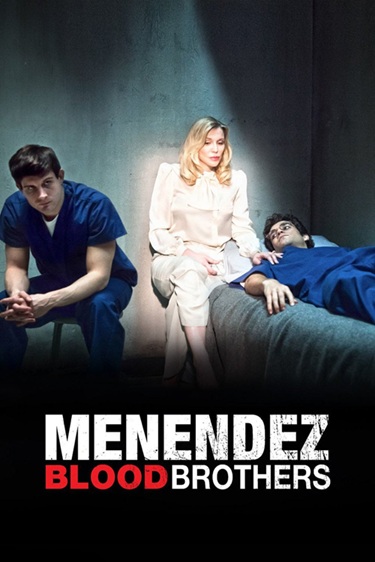
Hollywood is stunned when entertainment executive Jose Menendez (Benito Martinez) and his wife Kitty (Courtney Love) are brutally gunned down in their Beverly Hills home. Hollywood is shocked a second time when Jose and Kitty’s two sons, Erik (Myko Oliver) and Lyle (Nico Tortorella), are arrested and charged with the crime. A third shock comes when Erik and Lyle admit to killing their parents but claim that it was done in self-defense. They tell a harrowing story of being physically and sexually abused by their father, and they portray their mother as being his enabler. High-powered defense attorney Leslie Abramson (Meredith Scott Lynn) is hired to defend Erik in his trial. A final shock comes when it’s discovered that 20-something Lyle is bald and has been wearing a wig since he was a teenager.
Menendez: Blood Brothers aired on Lifetime in 2017, several years before the better-known Menendez brothers miniseries aired on Netflix. However, both Blood Brothers and Monsters: The Lyle and Erik Menendez Story suffer from the same problem. On the one hand, the Menendez brothers are obviously guilty and, while everyone seems to agree that Jose could be a harsh taskmaster when it comes to his sons, not everyone agrees that he was abusive. (And indeed, it’s interesting to note that, while both parents were shot at close range, Kitty was the one that the brothers really seemed to be obsessed with punishing.) On the other hand, no one wants to admit that someone could lie about being abused and, as a result, many people feel like they have almost an obligation to believe the claims of the Menendez brothers. Monsters handled this issue by refusing to take a definite side. The first half of the series was devoted to the brothers telling their story while the second half dealt with the lives of Jose and Kitty. Blood Brothers deals with this issue by focusing on Erik as the more sympathetic of the two brothers and essentially suggesting that anything bad that happened was totally the fault of Lyle. Erik just wants to be a good son, a good defendant, and ultimately a good prisoner. But dangit, arrogant old Lyle with his bald head and his smug smirk just keeps getting in the way!
That said, Blood Brothers is definitely on the side of Lyle and Erik. Jose is portrayed as a tyrant and the brothers are portrayed as being two somewhat spoiled rich kids who were ultimately pushed to murder by the abuse that they suffered. The ghost of Kitty shows up throughout the film and, for the most part, she seems to be sympathetic to her sons. At the very least, she doesn’t give them a hard time about killing her. (If I were her, I would never stop making them feel guilty about it.) Love gives a fairly good performance in the role and keeps you guessing as to whether or not she’s really a ghost or just a figment of the brothers’ imagination. It’s a well-made film, even if its biases are pretty clear from the start. I’d recommend it over Monsters if only because Blood Brothers gets the job done in 90 minutes and there’s something to be said for not wasting time.
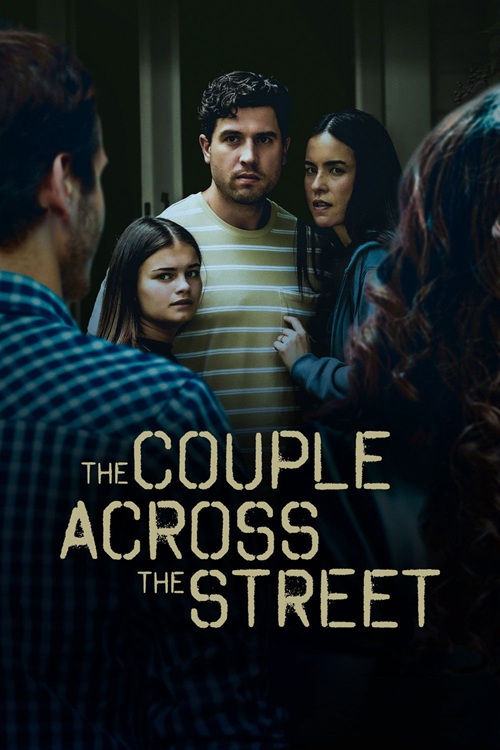
The Lawsons—Amy (Jenny Raven), Brett (Nate Lawson), and their teenage daughter Lily (Presley Allard)—have just moved into a new home in the country. It’s a nice house and, for Amy, it’s a chance to get away from the city and her former life as a high-priced lawyer. Amy spends a lot of time repeating to herself that she’s strong and she can survive. Of course, all the self-help mantras in the world don’t change the fact that Brett is kind of goofy and Lily is at that age where she really doesn’t want to spend too much time hanging out with her mother.
Living across the street are Rachel (Ellen David) and Tom Sullivan (William MacDonald). Rachel and Tom are an older couple. Tom used to work in military intelligence, which leads to a bit of awkwardness when he admits that he ran a background check on Amy and Brett before they even moved into their new house. Rachel and Tom are also doomsday preppers, complete with an underground bunker and bear traps on their property. Amy takes an almost instant dislike to Tom and Rachel, but Brett seems to enjoy their company. “They’re fun,” Brett puts it.
And they are fun… until a police helicopter flies overhead and Rachel and Tom learn that there’s a killer on the loose. They take Lily, Brett, and Amy into their underground bunker. Rachel and Tom claim that they’re just trying to keep them safe, but Amy has her doubts. Why are Tom and Rachel always whispering to each other? Why do they seem so interested in Amy’s marriage to Brett and whether or not the two of them ever fight? When Amy hears Brett talking to someone and saying that he doesn’t have enough information, what is he talking about? Brett keeps saying that Amy is being paranoid, but Amy comes to suspect that there’s something Tom and Rachel aren’t telling her…
This turned out to be one of the best Lifetime films that I’ve recently seen. When the film started, I didn’t think I was going to like it. It seemed like Rachel and Tom were a heavy-handed representation of every delusion that blue staters have about red staters. Amy seemed so suspicious and so instantly judgmental that I wondered if the film’s director realized that she was kind of unlikable. It seemed as if she was going to spend the whole film complaining about the fact that people enjoyed hanging out with Brett more than they did with her.
Luckily, the film turned out to be a lot smarter and far more self-aware than I gave it credit for. There’s a twist that occurs during the final fourth of the film that totally changes the entire film and forces you to reexamine everything that you originally assumed about the characters. This film is actually a pretty clever look at how we allow our own prejudices to affect our thinking without even realizing it. Both the film’s characters and the audience are forced to reconsider how they originally reacted to each other.
This was a good Lifetime film. The bunker was a fascinating location and all five members of the main cast gave excellent performances. There were a few solid jump scares as well, making this a good pick if you’re looking to watch a Lifetime film for October
In 1989’s Teen Witch, Robyn Lively plays Louise Miller, a 15-year-old who is not particularly popular in high school. While all of the popular girls sing a song called “I Like Boys” and perform an impromptu dance number in the locker room, Louise can only watch and wish she had the courage to ask her crush, Brad Powell (Dan Gauthier), to prom. Later, after Brad nearly runs over Louise in his car, Louise stumbles into the home of palm reader Madame Serena (Zelda Rubinstein). Serena reveals that Louise is a witch who will be gaining her powers as soon as she turns sixteen. Hey, Louise’s birthday is only a few days away!
Suddenly, Louise has the power to make her wishes come true! She turns her brother (Joshua Miller) into a dog! She gets Brad to break up with his girlfriend! She gets the locker room girls to argue! She helps her friend Polly (Mandy Ingber) win a rap battle against Rhet (Noah Blake). “Look how funky he is!” Polly says about Rhet. Well, Rhet may be funky, but soon Louise is the most popular girl at school. She’s so popular that Polly starts to feel left out. Why didn’t Louise wish for Polly to be popular? I mean, the solution was right there.
It’s difficult to put into words just how weird and tonally mixed-up Teen Witch is. There’s the “Top That” rap battle between Polly and Rhet. There’s the “I Like Boys” production number. There’s Zelda Rubinstein sitting on Robyn Lively’s lap and both of them laughing at how awkward it all is. There’s Joshua Miller, playing Louise’s younger brother in much the same way that he played the vampire kid in Near Dark. There’s Dick Sargent and Caren Kaye as Louise’s parents, Marcia Wallace as her teacher, and there’s also the fact that Brad turns out to be a nice guy even though he nearly ran over Louise. There’s the scene where Louise tells the star of the school play to “break a leg” and you can guess what happens. Louise spends the movie worrying about accidentally hurting someone with her powers and then uses a voodoo doll to torment a teacher. Reportedly, the film’s producer added some scenes after production initially wrapped. That explains why Louise abruptly goes from being innocent and naive to being a music video vixen and back again.
It’s a silly mix of tones and style that makes no sense and that’s why it’s the perfect film about being a teenager. There’s a sweetness in the center of Teen Witch’s chaos and it makes for an enjoyably weird film to which almost everyone can relate. Who hasn’t wanted to have magical powers? Who hasn’t looked at three guys dancing in the middle of the street and said, “I will never be hip.” And, in the end, what’s important is that Louise ultimately learns that she doesn’t need the magic to get the cute boy and to star in the school play. She just has to be herself.
Seriously, I’ll take Teen Witch over this new version of Carrieany day.
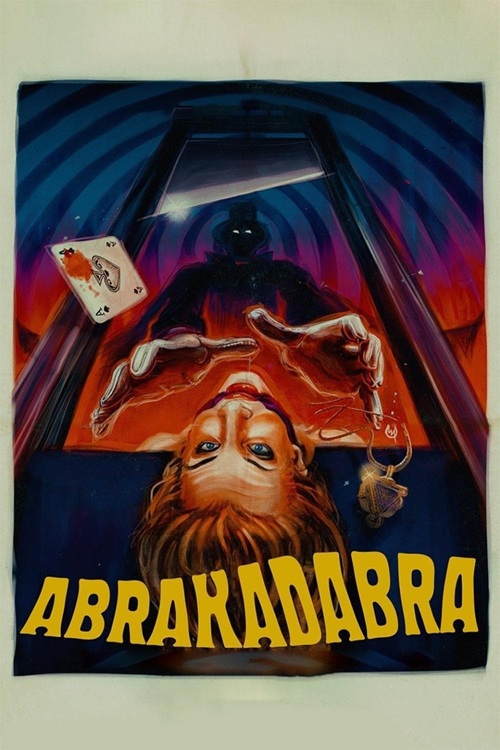
First released in 2018, the Argentine film Abrakadabra is a sweet, loving, short, and wonderfully bloody tribute to the giallo genre.
When he was a little boy, Lorenzo Manzini (German Baudino) watched as his magician father was shot while demonstrating a magic trick. Despite having seen magic go terribly wrong, Lorenzo grows up to be a traveling magician. Accompanied by his mysterious companion, Antonella (Maria Eugenia Rigon), Lorenzo travels from one Italian town to another. His stage is notably macabre, featuring a guillotine amongst other things. It’s obvious that Lorenzo has grown up to be obsessed with death. He also appears to be an alcoholic who doesn’t have much impulse control. His demons have made him self-destructive, but have they turned him into a murderer? After a woman is found dead with her head in one of Lorenzo’s magic boxes, that’s what the police would like to know.
The majority of the film is shown from Lorenzo’s point of view and, visually, the film does a great job of putting us in the middle of Lorenzo’s paranoid mind. Is the bald man with the cigarette who keeps showing up a true threat, or is Lorenzo just letting his own fears and traumas get the better of him? When Antonella appears to be watching him, is her stare really that intense, or is it just Lorenzo’s imagination? Lorenzo makes his living fooling other people and tricking them into seeing things that aren’t really there, but what if he’s the one being tricked? What if he’s the victim of the illusion?
Clocking in at a brisk and enjoyably sordid 65 minutes, Abrakadabra is ultimately more of an experiment than a traditional film. Luciano Onetti and Nicolas Onetti set out to pay tribute to the great giallo films of the past, and they did exactly that. It’s not just the film’s twisty story that captures the feel of a great giallo. It’s also the film’s visual style, from the unsettling close-ups to the use of color to the imagery that is frequently sordid in the way that only someone from a Catholic background can fully appreciate. It’s in the fact that, like the best giallo films, the majority of the dialogue was dubbed, and occasionally the words we hear do not quite fit with the movement of the lips that are saying them. Yes, the film carries hints of Mario Bava, Dario Argento, and Lucio Fulci. But the film also pays tribute to Sergio Martino, Luciano Ercoli, Umberto Lenzi, Luigi Cozzi, and all of the other directors who brought the genre to life. This is a film made by people who clearly appreciate all giallo, even the films that haven’t been “rediscovered” by critics looking to prove their cult bona fides.
Abrakadabra ends with a clever twist, one that is just flamboyant enough to feel true to the film’s giallo heritage. German Baudino does a good job as the paranoid magician, and my fellow redhead Maria Eugenia Rigon is perfectly cast as the assistant. This Argentine film is a perfect homage to a quintessential Italian genre.
“I don’t belong in the world—that’s what it is. Something separates me from other people.” — Mary Henry
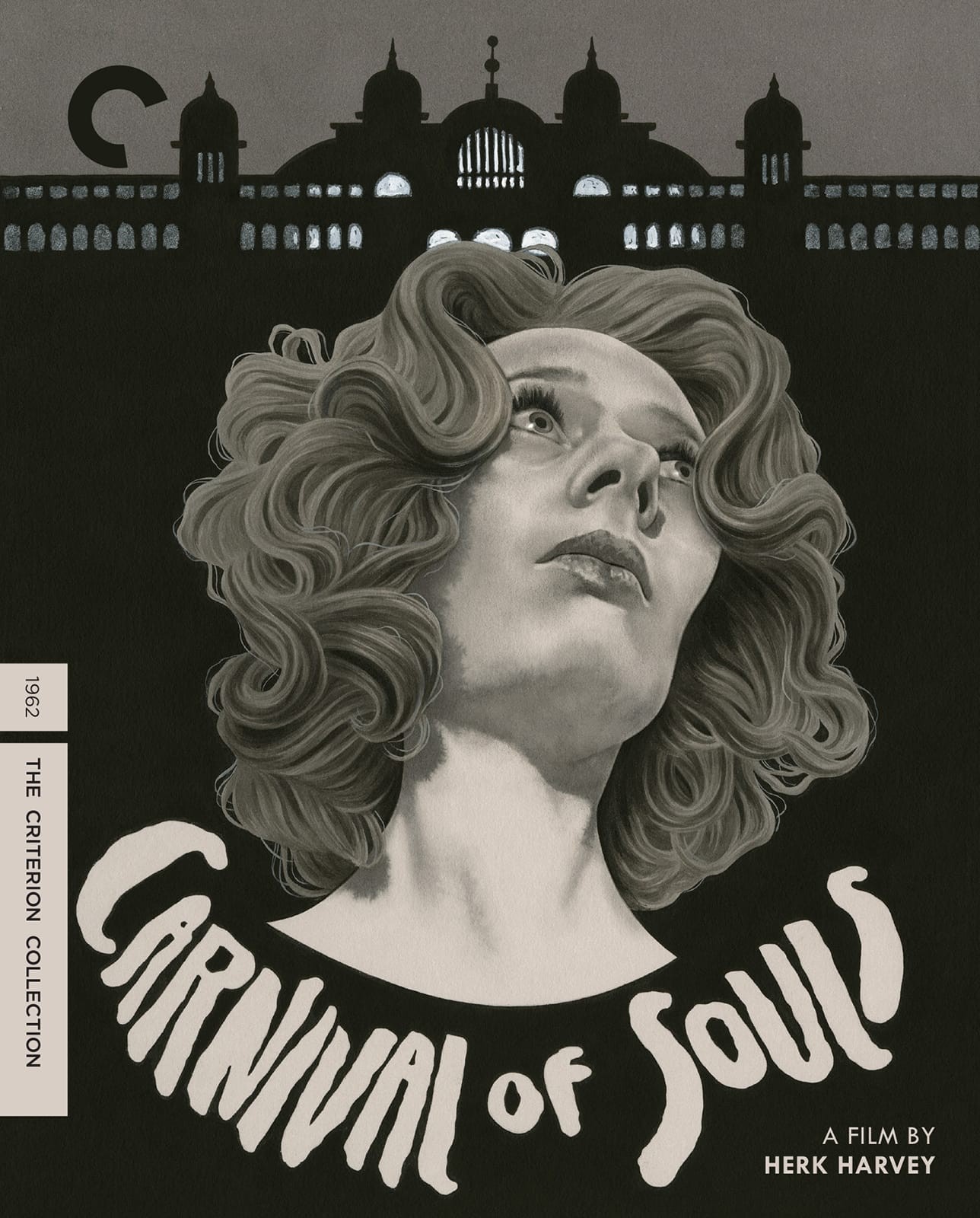
There is something deeply unsettling about a horror movie where being ignored feels just as frightening as being followed. That tension runs through Carnival of Souls, Herk Harvey’s 1962 psychological horror film about a woman who survives a car accident but cannot quite return to ordinary life. A pale stranger keeps appearing, an abandoned pavilion draws her attention, and everyday encounters become increasingly uncomfortable. Yet the movie’s strongest fear is not simply that something wants her. It is that the rest of the world might stop noticing her altogether. For all its rough edges, this is a film that knows how to turn loneliness into a nightmare.
The opening gets things moving with a reckless car race that sends a vehicle carrying three women off a bridge and into a river. Mary Henry, played by Candace Hilligoss, eventually emerges from the water, apparently the only survivor. Rather than stay and work through the experience, she leaves for Utah to take a position as a church organist. Her determination to move on is understandable, but the film makes that transition feel strangely incomplete. Mary has escaped the immediate disaster without finding any real sense of safety. A new job and a different town cannot restore the connection to everyday life that seems to have slipped away.
Mary is a compelling lead partly because the movie does not insist on making her easy company. She is guarded, impatient with intrusive questions, and uninterested in giving people the warmth they expect. Her work at the church is a professional arrangement, not an expression of religious devotion. That reserve complicates the story in a useful way. Mary wants independence, but independence becomes frightening when it starts to resemble exclusion. There is a difference between choosing to keep people at a distance and discovering that you cannot reach them at all. Much of the film’s emotional force comes from watching that distinction gradually collapse.
Hilligoss handles this tension best through her expressions and physical presence. Her dialogue delivery can be stiff, particularly when the script asks Mary to describe feelings that are already obvious from her behavior. But her watchfulness is effective. She looks like someone constantly checking the room for a sign that everything is still functioning normally. Her fear often emerges through hesitation, irritation, or a sudden break in composure rather than a sustained display of panic. That gives Mary’s distress an appealingly uncomfortable texture. She is not merely waiting for another scare; she is trying to get through the day while her confidence in reality keeps eroding.
The boarding-house scenes bring that discomfort into an unpleasantly ordinary setting. John Linden, the man renting a room nearby, sees Mary as someone to pursue rather than someone to understand. His pushiness makes companionship feel less like an answer to her isolation than another problem she has to manage. These exchanges are not always smoothly written or performed, but they serve an important purpose. Mary cannot count on human attention being reassuring. Sometimes the person who notices you is the last person you want around. The film traps her between unwanted interest and terrifying indifference, leaving very little room for genuine comfort.
Harvey gives that predicament a visual counterpart by making familiar spaces feel subtly unwelcoming. Streets, shops, rented rooms, and the church remain recognizable, but the black-and-white photography drains them of easy warmth. A window can become a point of intrusion rather than protection. A public place can feel more isolating than an empty room. The film does not need to invent an entirely separate supernatural world because the ordinary one is already becoming unstable. Some of its most effective moments come from that simple reversal: places where Mary should be able to orient herself instead leave her feeling exposed and uncertain.
The abandoned lakeside pavilion takes this idea further. It is a building associated with crowds and entertainment, now stripped of the people who gave it purpose. Its emptiness has a peculiar pull, and Mary’s attraction to it feels both understandable and deeply wrong. Harvey gets a tremendous amount from the contrast between what the place was built for and what it has become. A setting intended to bring people together now seems to promise a much darker kind of gathering. It is not frightening merely because it is deserted. It is frightening because its silence never feels permanent, and whatever might fill it again seems unlikely to offer welcome.
The pale man who haunts Mary provides the other side of the film’s central tension. Played by Harvey himself, he notices her with a persistence she cannot escape. His appearance is theatrical rather than realistic, but the simplicity works in the movie’s favor. He has the unsettling clarity of a face remembered from a bad dream. The horror comes from where he appears and how little explanation accompanies him. While ordinary people become increasingly difficult for Mary to reach, this stranger seems to have no trouble finding her. His attention feels inevitable, making the world’s indifference even more disturbing.
Sound helps hold these ideas together. The organ music fits Mary’s profession while giving the film a mournful, almost funereal atmosphere. At times it presses the mood a little too hard, but it remains a major part of the movie’s identity. More striking are the sequences in which Mary loses contact with the activity around her and people fail to acknowledge her presence. The absence of a response becomes the scare. These passages do not need much explanation because the basic experience is so immediate: she is there, she is trying to communicate, and nobody seems able to confirm either fact.
The film’s weaknesses are real. Some dialogue states what the atmosphere has already made clear, the supporting performances can be broad, and a few scenes repeat Mary’s distress without developing it. Not every awkward pause deserves to be praised as dream logic. Still, the strongest passages make those limitations feel secondary. As the mystery moves toward its conclusion, Carnival of Souls leaves its deepest impression through Mary’s increasingly fragile place in the world. Harvey turns the need to be recognized into something frightening, then makes recognition itself feel dangerous. The result is a haunting little movie in which neither company nor solitude offers much protection.
The first thing I noticed when I watched this film was – Wow, this subway is nice! It turns out the film is from seven years ago; so, maybe it’s terrible now. I don’t know. The train could be riddled with plague and people running for office. For this moment in history, the subway was clean, people were bantering, and a man was on the phone; then, everyone disappeared.
We see the film through the eyes of a woman who quietly sits and observes her surroundings. She watches the other passengers until she dozes off. When she wakes up, everyone is gone – except for a psychopath.
The film disturbed me because it really made me wish everyone in England carried guns. She was completely alone, stalked, and her government made her completely vulnerable.
In 2002’s The Mothman Prophecies, Richard Gere stars as John Klein, a columnist with the Washington Post. (The film takes place in the 1960s, presumably before the CIA placed Bob Woodward on staff… allegedly.) One night, while driving a car with his wife, Mary (Debra Messing), in the passenger seat, John swerves to avoid crashing into what appears to be a man with wings and glowing red eyes. Mary smashes her head against the car’s window. At the hospital, it’s discovered that she has a brain tumor. Mary dies a few months later, having spent her final days obsessively drawing pictures of the “Mothman.”
Two years later, a still-in-mourning John is assigned to cover a story in Richmond, Virginia. However, he somehow finds himself in a small town in West Virginia. When his car breaks down at two in the morning, John seeks help at an isolated farmhouse and is greeted by an angry farmer named Gordon (Will Patton) who claims that John has knocked on his door at the same time for three nights straight. The local sheriff, Connie (Laura Linney), shows up and calms things down. When Connie tells John that the locals are spooked by reports of a mysterious flying creature with glowing red eyes, John decides to stay in West Virginia and investigate the story. Gordon, it turns out, claims that he’s being stalked by a figure named Indrid Cold who sends him messages that predict future disasters. Soon, John himself is getting phone calls from Mr. Cold.
The Mothman Prophecies is a surprisingly effective horror film. At first, Richard Gere seems to be miscast as the lead of a horror film. The best horror actors have traditionally been touched by a breath of wind from the wings of madness. They carry a hint of instability, all the better to keep you guessing as to whether or not the horror is real or just a product of their imagination. Gere, on the other hand, is an actor who comes across as if he’s never had a moment of doubt or insecurity. His best roles—Days of Heaven, American Gigolo, Internal Affairs, Chicago—featured him playing charismatic but ultimately empty narcissists. The Mothman Prophecies actually puts Gere’s inherent blandness to good use. Gere comes across as being so rationally minded that it actually does make the scenes where he talks to Indrid Cold all the more creepy. A man who works for one of the nation’s most important newspapers comes across a story that cannot be solved through old-fashioned reporting. The supporting cast does a good job as well. That Will Patton is compelling as the paranoid farmer should not be a surprise to anyone who has seen Patton’s work. But Laura Linney, who is usually a bit too studied in her performances, is surprisingly natural and convincing as the sheriff. There are hints of a romantic attraction between Connie and John, but the film is smart enough not to make them the center of the story. The story is about the Mothman and Indrid Cold.
Director Mark Pellington is smart enough to keep Cold and the Mothman off-screen for the most part. The scenes where Cold calls John are frightening specifically because John can’t see Cold but Cold can obviously see him. The Mothman is frightening because the film never explains what the Mothman is or whether it even exists. (Much like the Boggy Creek Monster, both the Mothman and Indrid Cold were a part of the local folklore long before a movie was made about them.) Pellington takes his time telling the story and focuses more on atmosphere than jump scares. At its best, the film plays out like a deliberately paced nightmare, an examination of what might be out there. It’s a film that makes even the most rational of us wonder what might be out there.
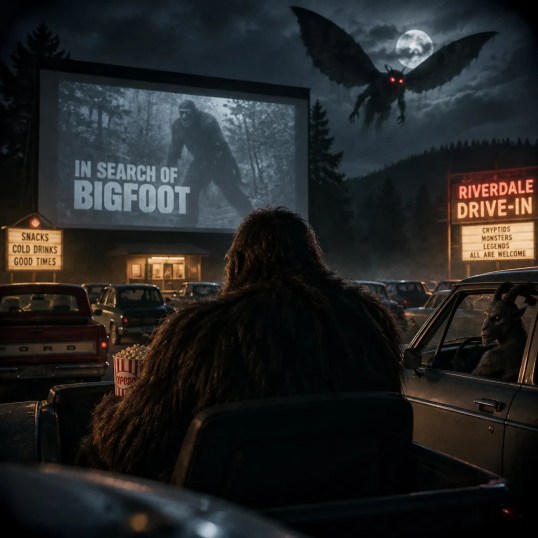
Today, we have In Search of Bigfoot, a 1976 documentary about the search for everyone’s favorite backwoods inhabitant. Will our hunters be able to find Bigfoot before the camera runs out of film? Will we hear stories about playing catch with Sasquatch? Watch to find out!
(Personally, I always love these pseudo-scientific documentaries. After the success of The Legend of Boggy Creek, they were apparently all the rage for a little while. Can you prove it didn’t happen?)
Shot straight-on-video, 2013’s My Refuge is a film about the end of the world.
Maybe.
It’s actually somewhat difficult to explain what’s going on in My Refuge. It’s an ensemble film, one that is apparently taking place in a small city in Arizona. (That’s according to the plot summary on Tubi. The film itself doesn’t give us as specific location, though it certainly looks like it’s taking place in the arid Southwest.) It’s an ensemble film, one that has a dizzying amount of characters. The majority of the character never meet each other and quite a few are never even named. After reports come in that New York City (which is pretty far away from Arizona) has been hit with a nuclear bomb, the characters all deal with the impending end of the world in their own way.
One woman quit her retail job and makes plan to finally finish that novel that she started years ago.
One teenage girl overdoses and is rushed to the hospital, where her family watches and prays.
A woman obsessively cleans her house and accuses her husband of having an affair. Her husband says that he was tempted but he never actually went through with it but, eventually, he decides that being tempted is just as bad.
A criminal seeks revenge on the cop who shot his best friend.
A married couple look forward to the birth of their first child.
A preacher preaches.
The news reports that more bombs are on the way.
People pray in the street and prepare for the unknowable future.
The film’s message is clear. Even with the world descending into chaos and the end apparently right around the corner, the people in this film find peace and hope through their belief in God. He is their refuge in terrible times. The film itself is not as preachy as I probably just made it sound and it deserves some credit for acknowledging that all of the characters have a good reason to be worried about the future. I mean, nuclear war is a big deal, regardless of what you may believe about the afterlife.
The narrative is difficult to follow. This is a low-budget,straight-to-video film and it’s pretty clear that the majority of the performers were not professionals. There’s a lot of awkward line readings and moments that don’t quite make sense. Everyone tends to blend together. Normally, I would say that would be a problem for an ensemble film but, oddly enough, it kind of works here. In the end, everyone is in the same boat. All of their individual drams are going to reach the same conclusion, regardless of how they may feel about it.
The film is only 79 minutes long but, as is so often the case with earnest , shot-on-video productions, the pace is slow and things aren’t helped by a muddy soundtrack that sometimes makes it a struggle to understand what the characters are saying. Amateur filmmakers often tend to overlook the importance of clean and understandable sound.
My Refuge is flawed but sincere. At its best, it captures the shock and fear that would surround any major calamity. It’s a confusing film but, for many people, these are confusing times.
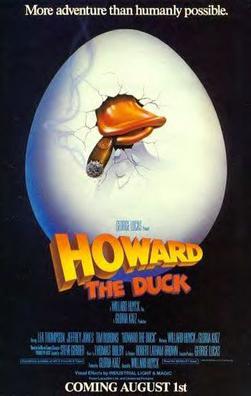
There’s a scene in Howard the Duck where Tim Robbins looks like he briefly wants to strangle the title character, and I don’t blame him. Howard the Duck (voiced by Chip Zien) is not a very likable character in this movie. Due to an experiment with a laser spectroscope, he’s been transported from his planet to Earth. He’s in a world he didn’t make, and he doesn’t stop complaining for one moment. As for Tim Robbins, he plays Phil Blumburtt, a laboratory assistant who is a friend of Beverly Switzler (Lea Thompson), the aspiring singer who is also Howard’s girlfriend. Beverly ends up getting abducted by Dr. Jennings (Jeffrey Jones), Phil’s boss, who has been possessed by a space monster that was brought to Earth by the same spectroscope that caught Howard. Howard wants to return to his planet, but he also wants to manage Beverly’s band; first, though, he has to defeat the space monsters.
Produced by George Lucas and based on the character created by Steve Gerber, Howard the Duck was a notorious box office bomb when it was first released in 1986, and it’s actually one of the reasons why it took so long for Marvel to start regularly producing films. I watched it recently to see if it had gotten any better with age, but no, it’s still pretty bad. Lea Thompson is cute, likable, and probably a little bit too sexy for a film about a talking duck, but otherwise, it’s a typical ’80s mix of action, comedy, and science fiction that gets too buried under its special effects to really be effective.
The main problem with the movie is its version of Howard himself. According to Steve Gerber, Howard the Duck was originally envisioned as being an animated film, but Lucas decided to do the film live-action, which meant creating a duck suit for Ed Gale to walk around in. Unfortunately, the suit doesn’t look like a duck, animated or real. It made Howard look like a puppet. The scenes of an underwear-clad Beverly rolling around with a duck were already strange enough without making the duck look like a ventriloquist dummy. The movie also didn’t capture the personality that made Howard so memorable in the comic books. In the comic books, Howard is cynical, easily irritated, and frustrated with the madness of everyday life. He’s an intellectual duck who wants to be left alone. In the movie, he tells a lot of bad jokes and is only once seen smoking his famous cigar. The satire that was at the heart of Gerber’s creation is lost as Howard instead tries to save Earth from being conquered by another group of aliens.
The movie never really decides if it wants to be a comedy or a big-budget action film. The movie not only damaged George Lucas’s reputation as a producer, but it also ended Willard Huyck’s career as a director. Howard the Duck is still a beloved character amongst readers. I remember the entire theater applauding when he showed up in Guardians of the Galaxy, looking like a real talking duck and voiced by Seth Green. He was featured in several episodes of What If…?. There might be a movie future for this duck yet.