Cleaning Out The DVR #32: Ninotchka (dir by Ernst Lubitsch)


(For those following at home, Lisa is attempting to clean out her DVR by watching and reviewing 38 films by the end of today!!!!!  Will she make it?  Keep following the site to find out!)
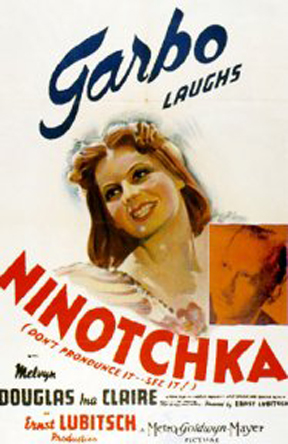
Film_ninotchka

Oh my God, I love this movie!

First released in 1939, Ninotchka is many things.  It’s a love story.  It’s a comedy.  It’s a story of international intrigue.  It’s a political satire.  It’s a celebration of freedom.  And, perhaps most importantly, it’s a showcase for one of the greatest actresses of all time, the one and only Greta Garbo!

But you know what?  As great as Garbo is, she’s not the only worthy performer in this film.  Melvyn Douglas plays Garbo’s love interest and his performance is full of charm and class.  And guess who plays the main villain?  BELA LUGOSI!  That’s right — this was one of Lugosi’s few roles that did not require him to play a variation on his famous Dracula.  And, even if he doesn’t have a lot of scenes, Lugosi does a pretty good job in Ninotchka.  It’s interesting to see Lugosi playing an all-too real monster for once.

Ninotchka opens in Paris.  Three Russians are in town and they’re trying to sell some jewelry that was confiscated by the government during the revolution of 1917.  That’s right — they’re communists!  When they first show up in Paris, they make a big deal about hating the decadence of capitalism.  But then they meet Count Leon d’Algout (Melvyn Douglas), who proceeds to introduce them to the wonders of the free market.  Soon, the three of them are holed up in their luxurious hotel, ordering room service and having a nonstop party.

(Leon, incidentally, is working for the original owner of the jewelry.  The jewelry, as you’ve probably guessed, is what Hitchock would have called a macguffin.)

Once it becomes obvious that the first three Russians have been corrupted by western society, Ninotchka (Greta Garbo) is sent to bring them back to Moscow.  Ninotchka is a “special envoy” and, from the minute that she meets Leon, it’s obvious that she’s going to be a lot more difficult to corrupt.  For all of Leon’s charm, he cannot get Ninotchka to smile or drop her “all Marxist business” attitude.

Of course. from the minute that she first appears, we all know that Ninotchka is eventually going to loosen up and come to love both the west and Melvyn Douglas.  But what makes Garbo’s performance truly special is that we like and sympathize with Ninotchka even before she embraces decadence.  Even when Ninotchka is reciting Marxist-Leninist dogma, there’s a playfulness to the way Garbo delivers the lines.

That’s one reason why it’s so much fun to watch as Ninotchka (and Garbo) starts to actually relax and enjoy both Paris and life.  Wisely, the film doesn’t suggest that Paris has changed Ninotchka.  Instead, it merely shows that being in Paris and getting to know Leon has finally allowed her to act like the person that she was all along.

(Before her appearance in Ninotchka, Garbo was known for playing very dramatic roles.  Not only is this film about Ninotchka learning to enjoy herself.  It’s also about Garbo proving that she could play comedy just as well as she could play melodrama.)

Of course, eventually, Ninotchka and the three Russians are forced to return to Moscow and director Ernst Lubitsch does a wonderful job contrasting the glamour of freedom-loving Paris with the drabness of life under communism.  Just when it looks like Ninotchka is going to be forced to spend the rest of her life in her depressing apartment and missing the luxury of being able to wear silk stockings, her boss (Lugosi) tells her that she is being assigned somewhere else.  Ninotchka doesn’t want the assignment but, as Lugosi explains, the revolution doesn’t care what the individual wants.

Will Ninotchka and her friends ever find their way back to freedom and Leon?  Or will she remain trapped in the bureaucracy?  You’ll have to watch the film to find out!

I really liked Ninotchka.  Even 77 years after it was first released, it remains a wonderfully romantic and sweet-natured little comedy.  If you haven’t seen it, you definitely should!

Ninotchka was one of the many great films to be nominated for best picture of 1939.  However, the Oscar went to another famously romantic film, Gone With The Wind.
I Should Have Watched Something Else, But I Sat Through Superdragon vs. Superman (1975, dir. Chia Chun Wu)


vlcsnap-2016-03-17-16h30m02s191

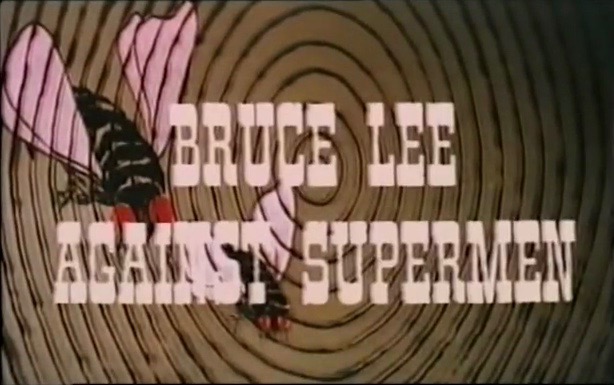
The movie is also called Bruce Lee Against Supermen. By that they mean Bruce Li Against 80 Minutes Of Your Life. I really should have been watching something else.

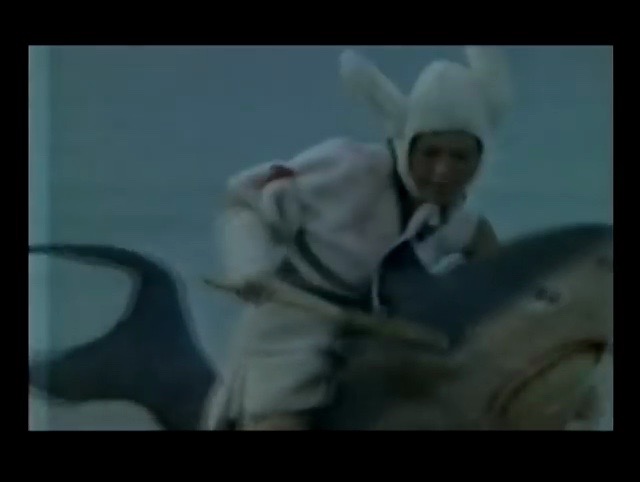
Right now a woman is riding a shark while wearing a bunny suit. (Zodiac Fighters, 1978)

Right now a woman is riding a shark while wearing a bunny suit. (Zodiac Fighters, 1978)

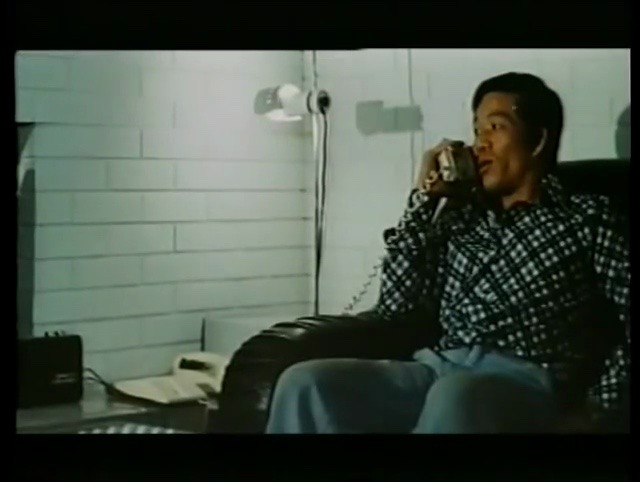
The movie begins with a car chase. Get used to that cause it will happen a lot. This time it’s a police car chasing a couple of criminals. The criminals see that the police are catching up. They are carrying a bag full of money, which they promptly toss out the window. A man and a woman find the money, but are surprised by Bruce Li dressed as Kato.

vlcsnap-2016-03-17-16h28m12s305

Why is he dressed like Kato? Who knows? Once a battle after the credits is done, he won’t do it again for the whole movie. There will be a mention of The Green Hornet who I’m pretty sure is two guys dressed like Supermen. Kato takes the couple to his car and drives them away to the police station.

Right now a dog taught to hate is heading towards a tragic end. (White Dog, 1982)

Right now a dog taught to hate is heading towards a tragic end. (White Dog, 1982)

Now the film cuts to the opening credits. There are flies all over them. I’m not sure why. Later we’ll see flies on the Superman uniforms of the Supermen who might be The Green Hornet in this movie.

After dropping the couple off at the police station we see Kato drive away. He doesn’t get far before he appears to have trouble with his tire. After getting out he is attacked from behind.
vlcsnap-2016-03-17-16h40m11s216

One thing immediately clear is that not only is Bruce Li not as good an actor as Bruce Lee, but not as good a fighter either. However, everyone else is worse than him in this movie.

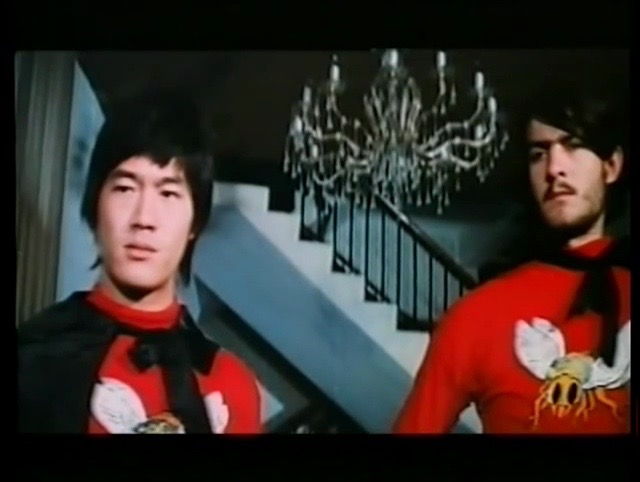
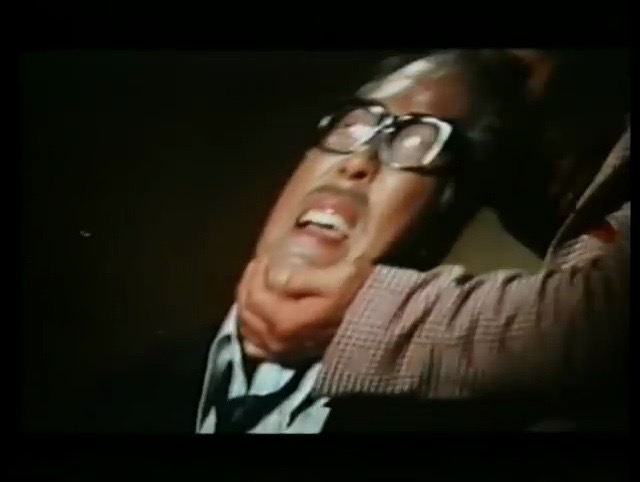
After Bruce Li dispatches with them, it cuts to one guy in a suit strangling another guy in a suit. The guy being strangled tells him The Green Hornet did it. That’s when it cuts to some newspapers to tell us that Dr. T has invented a way to refine food from petroleum by-products. He has been invited by the Arabs so he is going to travel to the middle east with his daughter. Then we get to see the Supermen who might be The Green Hornet.

vlcsnap-2016-03-17-16h43m23s258

They also have this glowing ball.

vlcsnap-2016-03-17-16h43m21s248

Sadly Burt Reynolds doesn’t talk to them through it. Instead, it flashes, and a printer spits out something we can’t read. If you watch this movie, then I hope you enjoy this shot of the Supermen because you won’t see them again in uniform till the very end of the film.

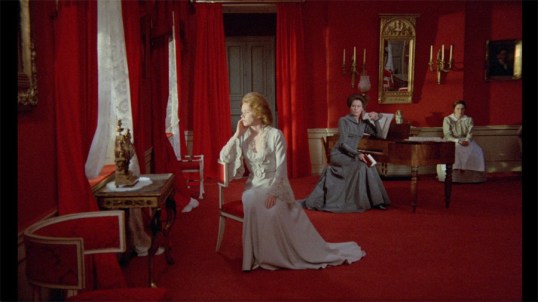
Right now a Russian Count may or may not be coming to the rescue. (The Marquise of O, 1976)

Right now a Russian Count may or may not be coming to the rescue. (The Marquise of O, 1976)

That’s when we cut to the bad guys talking to a guy who is willing to pay big bucks for the bad guys to get Dr. T’s formula. He is willing to pay a lot of money. Now we cut to the “Middle East”

vlcsnap-2016-03-17-16h46m31s674

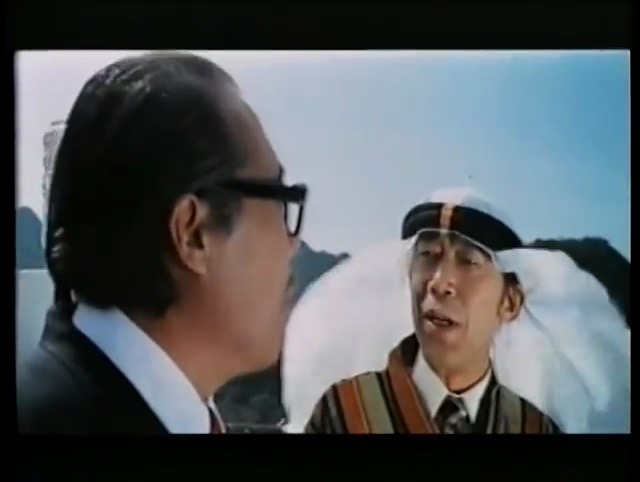
No joke. That’s supposed to be an Arab. That Chinese guy right there is supposed to be an Arab. You might be wondering what he sounds like. He sounds like a Chinese stereotype. I think he is trying to do a Middle Eastern accent, but it’s hard to tell. I seriously doubt they cared. Now the movie cuts to Will Our Heroes Be Able to Find Their Friend Who Has Mysteriously Disappeared in Africa? (1968) as they take Dr. T out to a dig site.

vlcsnap-2016-03-17-16h48m34s625

When they arrive at the site they hand the doctor some ore. He suddenly has an attack, but is okay once his daughter gives him some medication. Then he takes a good long look at the ore. We get nice closeups of the ore. We get a zoom shot on her dropping a liquid on the ore. We get a zoom shot on the doctor looking through a magnifying glass at the ore. Once that padding of the movie is done, the daughter decides to go swimming.

Right now a playboy is realizing he killed someone. (Il Sorpasso, 1962)

Right now a playboy is realizing he killed someone. (Il Sorpasso, 1962)

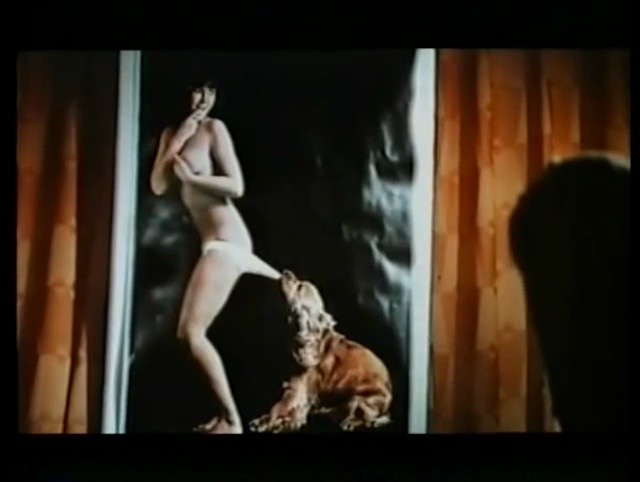
This is when the movie decides it’s time to show us the daughter swimming around naked. Oh, and we see the bad guys spying on her, but it’s really just so we can see her naked. Will they actually say anything? Nope. She just gets dressed, then cut to an airplane landing.

Now we watch a man cross the street for a minute or so before hailing a cab to pad the movie out some more. Then we cut to fighting.

vlcsnap-2016-03-17-16h56m00s779

We don’t know what they are fighting about at first, but who cares! They’ve got 80 minutes of your life to take away so some of it might as well be mildly entertaining. It turns out they were just practicing. We find out…

vlcsnap-2016-03-17-16h57m32s417

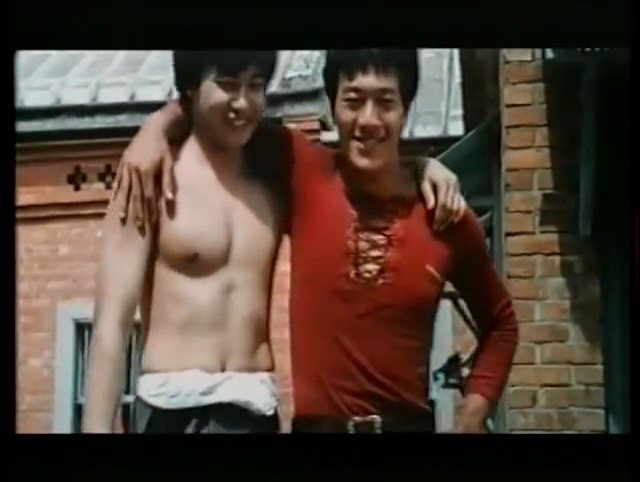
this guy in red needs help protecting Dr. T and his daughter. I’m quite sure it’s Bruce Li, but I’m not sure if he was one of the Supermen at the beginning or not. Doesn’t matter because in the next scene Dr. T is getting kidnapped and shoved in a car. In a car that’s passing, the two guys above spot the car and give chase. A long slow car chase.

vlcsnap-2011-09-04-00h27m04s45

Right now a pen tester is going through somebody’s trash. (Sneakers, 1992)

Back in the movie the car chase is still happening with a needlessly crazy angle…

vlcsnap-2016-03-17-16h59m22s256

that doesn’t add anything to the film.

Right now a boxer is finding out that winning the fight doesn't keep him from the fate he didn't know was coming. (The Set-Up, 1949)

Right now a boxer is finding out that winning the fight doesn’t keep him from his fate he didn’t know was coming. (The Set-Up, 1949)

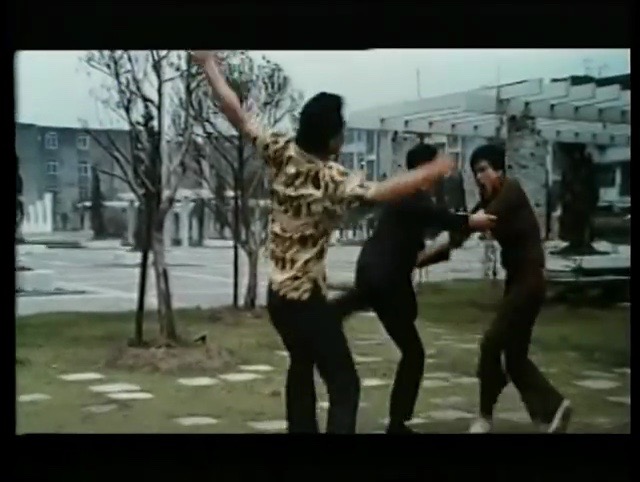
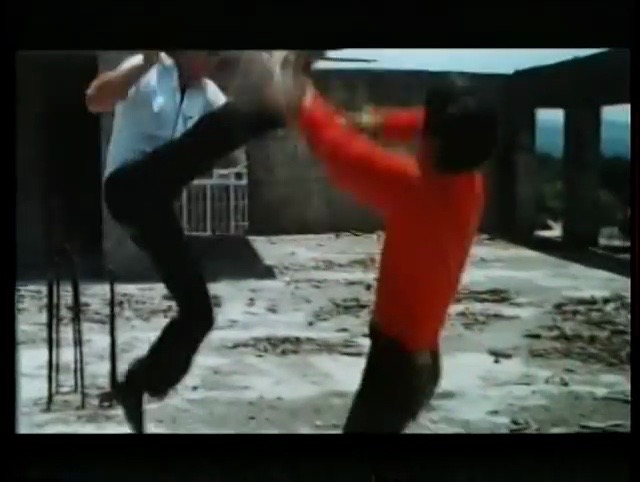
After a four minute slow speed car chase our two heroes pretend to be lying on the road to stop the kidnappers. They take them by surprise and a fight breaks out.

vlcsnap-2016-03-17-17h16m12s901

I call that kick, the Dolemite. That’s where you just place your foot near their face and they pretend to get hit.

Right now you're looking at Degrassi long before Netflix got ahold of it.

Right now you’re looking at Degrassi long before Netflix got ahold of it.

After three minutes of fighting we cut to this guy…

vlcsnap-2016-03-17-17h19m55s572

who is ordering a sniper. Then we cut to who I assume is Bruce Li and Dr. T’s daughter walking around.

vlcsnap-2016-03-17-17h20m41s206

Then they walk around some more.

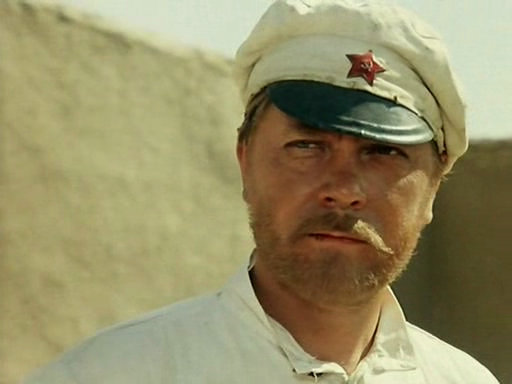
Right now you're looking at an Eastern you should see. (White Sun of the Desert, 1970)

Right now you’re looking at an Eastern you should see. (White Sun of the Desert, 1970)

After three minutes of walking around we cut to a shot of a building. For reasons that I don’t know, a guy who I assume is still Bruce Li walks up to a little girl and somebody takes a shot at him. He grabs the little girl and they hide behind a pillar. She is carrying a little wind up toy. Bruce winds it up and places it on the street. He leaves the girl to make a run for the building.

vlcsnap-2016-03-17-17h25m09s059

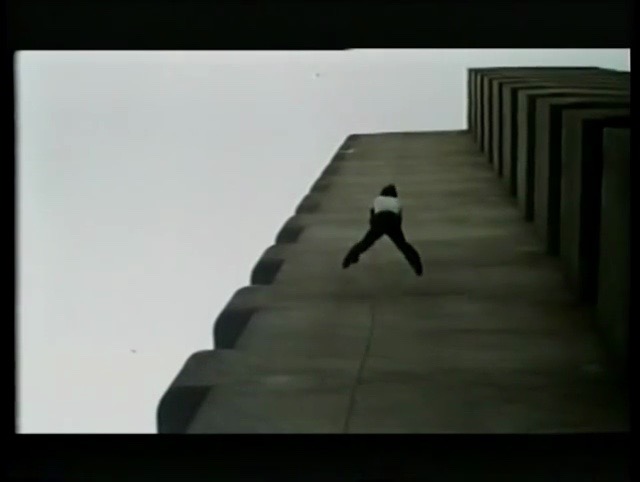
He runs to the top of the building where the shot came from. Then he throws a rope over the edge of the building and rappels down the side of it to pad the movie out some more.

vlcsnap-2016-03-17-17h26m46s838

Then he gives chase.

vlcsnap-2010-07-05-15h22m13s199

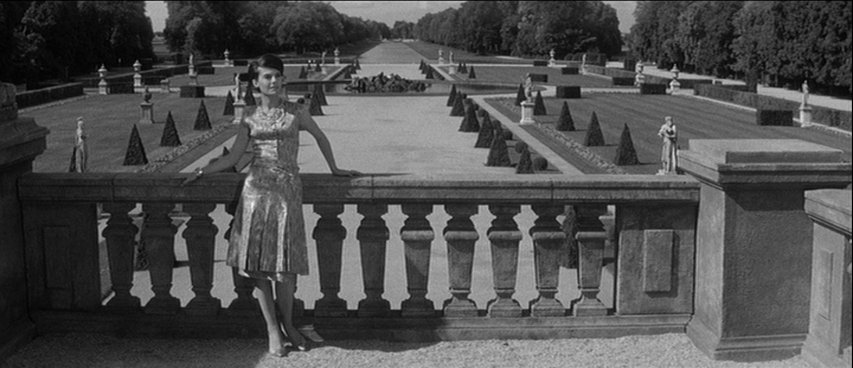
Right now this woman is in the middle of having explained to her what happened last year. (Last Year at Marienbad, 1961)

After seven and a half minutes of him chasing him, the two fight.

vlcsnap-2016-03-17-17h59m49s658

It cuts to this shot during the fight.

vlcsnap-2016-03-17-18h01m46s334

After leaving the audience wondering Where’s Waldo? it then cuts back to the two of them on the top of the building where the bad guy falls to his death.

Back to the phone guy, and we learn that “The Green Hornet” is a real problem for him. But after listening to the unseen person on the other end, he says he’ll just get Superman. Maybe that’s this next guy who now does his part to pad this movie out more.

vlcsnap-2016-03-17-18h04m07s082

After he spends a minute of doing his martial arts/calligraphy routine, we cut to ninjas flipping.

vlcsnap-2016-03-17-18h04m53s424

No really, random ninjas inserted that flip around for 10 seconds. Maybe Godfrey Ho did this part of the movie.

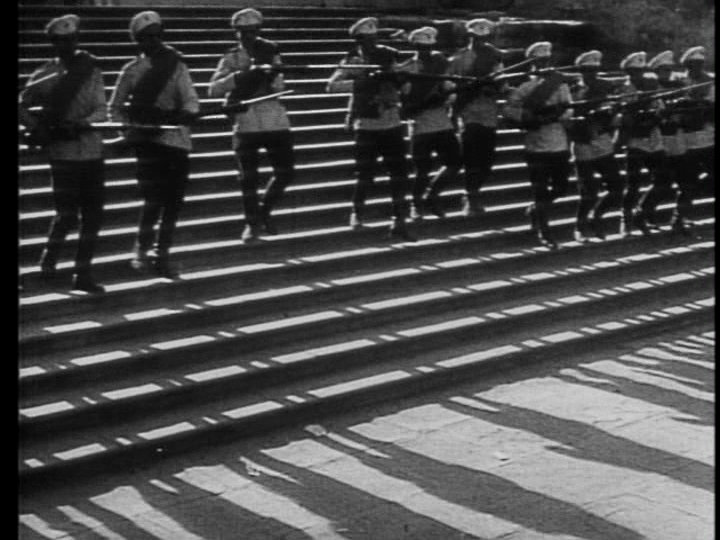
Right now you're looking at a very famous scene of a historical event that didn't take place where the film says. (Battleship Potemkin, 1925)

Right now you’re looking at a very famous scene of a historical event that didn’t take place where the film says. (Battleship Potemkin, 1925)

Now a guy and a girl speak in Adam and Eve talk before padding the movie out with sex.

vlcsnap-2016-03-17-18h06m44s222

We cut to the doctor getting kidnapped again before cutting back to sex. Now the doctor’s daughter runs on the street, bumps into a guy, and he takes her to the sex scene. Then we see more sex to pad the film out some more. Daughter bursts in and immediately starts a cat fight with the girl. After one tries to hold the other’s head under a running shower, we cut to this.

vlcsnap-2016-03-17-18h11m06s173

While they have to wait for “Green Hornet”, the doctor is getting tortured by bad camera effects.

vlcsnap-2016-03-17-18h13m49s917

Planet of Dinosaurs (1977)

Planet of Dinosaurs (1977)

Right now that’s how I feel about the rest of this review. Let’s cut through this: chase, fight, pointless hostage scene, fight, chase, fight, pointless hostage scene, fight, fight, fight, chase, and movie!

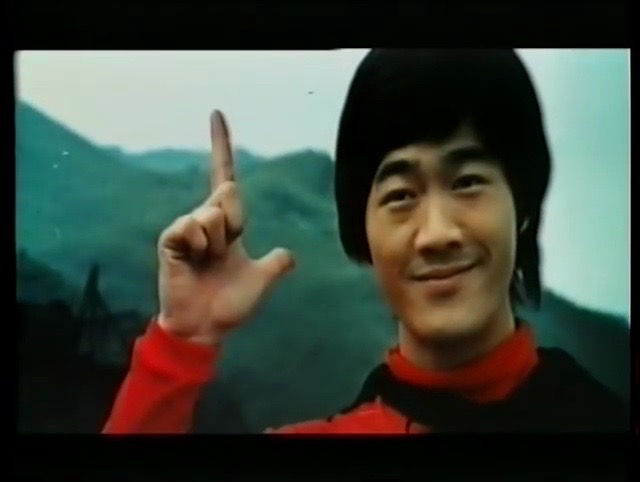
vlcsnap-2016-03-17-19h41m17s959

Make that the middle finger, and you have what I felt the film was trying to tell me. You didn’t miss anything. It’s all padding. The chase scenes go on forever, the fighting is boring, and the plot is almost non-existent. Please go watch the other movies and TV Shows I mentioned rather than subjecting yourself to this. Well, that is except for the one just below this text. That documentary was awful.

Right now another bad movie is getting made because of what this title card says. (I Love Dollars, 1986)

Right now another bad movie is getting made because of what this title card says. (I Love Dollars, 1986)

Cleaning Out The DVR #31: Libeled Lady (dir by Jack Conway)


(For those following at home, Lisa is attempting to clean out her DVR by watching and reviewing 38 films by the end of this Friday.  Will she make it?  Keep following the site to find out!)

In the 1936 comedy Libeled Lady, tabloid newspaper editor Warren Haggerty (Spencer Tracy) has a problem.  His newspaper has just published a story accusing wealthy heiress Connie Allenbury (Myrna Loy) of being the other woman in a scandalous divorce.  The problem is that Connie was not the “other woman” and she is now suing the newspaper for $5,000,000.

“5 million dollars!” an astonished Warren declares, “nobody has that type of money!”

(It was 1936, after all.)

However, Warren has a plan and, since this is a screwball comedy, it’s an unneccesarily complicated plan.  He hires a former reporter, the suave Bill Chandler (William Powell, the suavest man alive in the 30s) to meet with Connie.  Warren believes that there’s no way that Connie won’t fall in love with Bill.  (Perhaps Warren had recently seen The Thin Man…)  Once Connie does fall in love, Warren will arrange for Bill’s wife to catch the two of them together.  In order to avoid the scandal, Connie will drop the suit.

The problem is that Bill isn’t married.  However, Warren has a solution for that as well.  Warren arranges for Bill to marry Warren’s fiancée, Gladys (Jean Harlow).  Gladys is not happy about the arrangement but goes along with it because, despite his behavior, she truly loves Warren and Warren promises her that the marriage will only last for 6 weeks.
(When the minister says that he hopes he’ll be invited to the new couple’s silver anniversary, Gladys replies, “It better be in six weeks.”)

And, at first, things go as planned.  Bill meets Connie on a luxury cruise and she quickly falls in love with him.  However, Bill finds himself falling in love with her too.  Soon, he no longer wants to frame her.  However, that’s not the only complication.  Finally fed up with Warren’s behavior, Gladys has started to think that maybe it would be better to be married to Bill.  Soon, she decides that she has no intention of getting a divorce…

Libeled Lady is a minor but enjoyable screwball comedy.  The plot is thoroughly implausible but, fortunately, William Powell was one of those actors who could get you to believe almost anything.  As anyone who has seen any of the Thin Man films can tell you, Powell and Myrna Loy had great chemistry together.  Spencer Tracy seems a little uncomfortable with the role of Warren but Jean Harlow is a lot of fun as Gladys.  She doesn’t have a big role but, at the same time, you can still understand why she was such a huge star and why her tragic death a year later was such a shock.

(At the time the movie was made, Harlow was dating William Powell.  She wanted to play Connie but MGM was determined to repeat the formula of previous William Powell/Myrna Loy comedies and Harlow settled for the secondary role of Gladys.)

As enjoyable as the film is, it still does seem a bit strange that it was nominated for best picture.  It lost the Oscar to The Great Ziegfeld, another MGM film that starred William Powell and Myrna Loy.

Cleaning Out The DVR #30: The Great Ziegfeld (dir by Robert Z. Leonard)


(For those following at home, Lisa is attempting to clean out her DVR by watching and reviewing 38 films by the end of this Friday.  Will she make it?  Keep following the site to find out!)

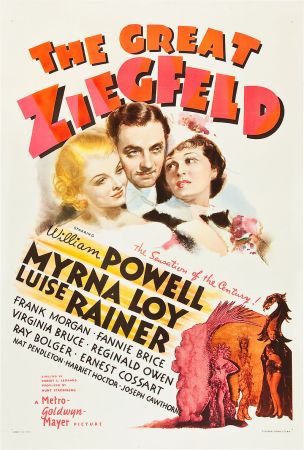
Great-Ziegfeld-1936-Poster

Do you know who Florence Ziegfeld was?

Don’t feel bad if you don’t because, until I saw the 1936 film The Great Ziegfeld, I had no idea and history is my number one obsession.  Florence Ziegfeld was a theatrical producer who, in the early days of the 20th Century, produced huge spectacles.  He was a showman who understood the importance of celebrity and gossip.  He produced a show called The Ziegfeld Follies, which was considered quite risqué at the time but which looks remarkably tame today.  Florence Ziegfeld was so famous that he even got his own Oscar-winning biopic.

The Great Ziegfeld features the always smooth William Powell as Ziegfeld.  When we first meet him, he’s promoting a strongman and a belly dancer and nobody takes him seriously.  But through hard work, good luck, and his own instinct for showmanship, he becomes famous and his shows gets bigger and bigger.  The film follows Ziegfeld as he gets married, both times to someone he is grooming to be a star.  His first wife is Anna (Luise Rainer), who loves him but divorces him when it becomes obvious that Ziegfeld’s life will always revolve around his work.  His second wife is Billie Burke and we know that she is Ziegfeld’s true love because she’s played by Myrna Loy.  Whenever you see William Powell and Myrna Loy in the same film, you know that they belong together.

The majority of The Great Ziegfeld is taken up with recreations of Ziegfeld’s stage shows.  In fact, the film almost feels more like a musical variety show than a real biopic.  (Judging from the credits, quite a few of Ziegfeld’s stars played themselves and recreated their acts on the big screen.)  I can understand why this was attractive to audiences in the 1930s.  With no end in sight to The Great Depression and Ziegfeld himself recently deceased, this movie was their only opportunity to see one of his spectacles.  The film made sure that they got their money’s worth.

However, for modern audiences, all of the acts just add to what is already an oppressive running time.  My main impression of The Great Ziegfeld was that it was really, really long.  The movie itself is well-produced and William Powell and Myrna Loy are always fun to watch but the movie just goes on and on.  As well, this biopic is so worshipful of Ziegfeld — the title is meant to be taken literally — that, as a result, he comes across as being one-dimensional.  I did appreciate the film as a historical artifact but otherwise, it didn’t do much for me.

However, it did something for the Academy.  The Great Ziegfeld was named the best picture of 1936!  Luise Rainer won best actress despite only being on-screen for a handful of scenes.  So many people were critical of Rainer’s award that, the very next year, the Academy introduced the award for best supporting actress.

As for why Ziegfeld won that Oscar — well, if you look at its competition and some of the other 1936 films that received nominations, you’re struck by the lack of truly memorable films.  It would appear that, in a weak year, the Academy decided to give the award to the biggest production they could find.

And that was The Great Ziegfeld.

(Incidentally, if Flo Ziegfeld were alive today, he would probably be a reality TV producer.)

Cleaning Out The DVR #29: Broadcast News (dir by James L. Brooks)


(For those following at home, Lisa is attempting to clean out her DVR by watching and reviewing 38 films by the end of this Friday.  Will she make it?  Keep following the site to find out!)

220px-Broadcast_News

I’ll give you three chances to guess what the 1987 film Broadcast News is about.

Broadcast News takes place at the Washington bureau of a major network news operation.  (You can tell this film was made in the 80s in that nobody’s working for a blog and there’s no mention of Fox, MSNBC, or CNN.)  This is where a group of hard-working men and women do their best to make the national news anchor, Bill Rorish, look good.

Bill Rorish is played by Jack Nicholson and, even though he only has about five minutes of screen time (out of a 133 minute movie), he pretty much dominates the entire film.  Some of that is because he’s Jack Nicholson and he kicks ass.  All Jack has to do to dominate a scene is show up and arch an eyebrow.  But, beyond that, everyone in the movie is obsessed with impressing Bill Rorish.  Whenever a reporter and his producer get a story on the air, they obsessively watch to see if Bill smiles afterward.  Bill Rorish is the God they all hope to please and the film (as well as Nicholson’s performance) suggests that he barely even knows that they’re alive.  It’s telling that the only time Bill shows up in person (as opposed to appearing on a TV screen), it’s because a huge number of people at the Washington bureau are being laid off.

When Bill says that it’s a shame that budget cuts are leading to so many good newspeople being laid off, someone suggests that maybe Bill could help by taking a cut in his million-dollar salary.  Needless to say, Bill Rorish is not amused.

Broadcast News centers on three of the characters who work at the Washington Bureau.  First off, there’s Jane Craig (Holly Hunter), a producer.  Jane is a true believer in the mission and the importance of journalism.  Her ethics and her belief in what constitutes proper journalism are everything to her and, at times, she can get more than a little self-righteous about it.  (If Broadcast News were made today, Jane would spend the entire movie whining about how new media is destroying the country.)  At the same time, Jane is completely neurotic, a self-described “basket case” who, at one point, ends up sobbing in a hotel room as she prepares to go to sleep by herself.

Jane’s best friend is Aaron Altman (Albert Brooks), a reporter who wants to someday be an anchor.  Aaron is smart and funny (and he better be, seeing as how he’s being played by Albert Brooks) but he’s not telegenic and he’s almost as neurotic as Jane.  Like Jane, Aaron is all about journalistic ethics but there’s a defensiveness to Aaron.  Whenever Aaron complains about vapid news anchors, it’s obvious that he’s more jealous than outraged.

And then there’s Tom Grunick (William Hurt), who represents everything that Jane and Aaron claim to be against.  He’s handsome, he’s smooth, he’s charismatic, and he’s definitely not an intellectual.  He knows little about the specifics of current events.  However, he has great instincts.  He knows how to sell a story and he knows how to present himself on camera.  He’s also a surprisingly nice and sincere guy, which makes it all the more difficult for Aaron to justify his belief that “Tom is the devil.”

From the minute that Tom arrives at the Washington bureau, there’s a strong attraction between Tom and Jane.  (Jane even sends another reporter to Alaska after she finds out that Tom slept with her.)  Tom wants to be a better reporter.  Jane wants to be happy but fears compromising her ethics.  And Aaron … well, Aaron wants Jane.

Not surprisingly, considering that the film was made 29 years ago, there were some parts of Broadcast News that felt extremely dated.  A scene where Aaron complains about a story that Tom did on date rape feels especially uncomfortable when viewed today and both Jane and Aaron occasionally came across as being a bit too self-righteous.  In today’s media world, Tom’s sins really didn’t seem like that big of a deal.

But, for the most part, I enjoyed Broadcast News.  It was an intelligent film, one the featured people having actual conversations about actual ideas and, listening to them, I realized how rare, in both movies and real life, that actually is.  It’s a witty film, full of good performances.  While I hope I never become as self-righteous as Jane, I could still relate to her in her more neurotic moments.  And who wouldn’t want a best friend like Aaron?

And, for that matter, who wouldn’t want a lover like Tom?

(That’s something I never expected to write about a character played by William Hurt.)

And, of course, there’s this scene.  Poor Aaron!

Broadcast News was nominated for best picture of 1987.  However, it lost to The Last Emperor.


Cleaning Out The DVR #28: Top Hat (dir by Mark Sandrich)


(For those following at home, Lisa is attempting to clean out her DVR by watching and reviewing 38 films by the end of this Friday.  Will she make it?  Keep following the site to find out!)

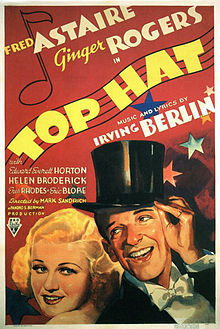
220px-TopHatORGI

The 1935 film Top Hat is a film that, much like An American In Paris, is pure joy.

Top Hat features Fred Astaire as Jerry Travers, a famous dancer who has come to London to star in a show that’s being produced by his friend, Horace Harwick (Edward Everett Horton).  (Oddly enough, Gene Kelly also played a character named Jerry in An American In Paris.)  Jerry may be sophisticated and refined but he’s still enough of an American that, upon leaving a snooty British club that insists on total silence, he still breaks up the tedium with some impromptu tap moves.

Back at his hotel, Jerry is practicing a tap routine and makes such a racket that he ends up waking up the guest staying in the room below him, Dale Tremont (Ginger Rogers).  When Dale goes upstairs to complain, Jerry immediately falls in love with her.  Soon, he is pursuing her all over London, trying to win her heart.  Eventually, he even follows her to Venice.

And Dale is definitely attracted to Jerry.  Whenever they get near each other, they start dancing.  (Needless to say, whether they’re dancing or talking or merely looking at each other from across the room, Astaire and Rogers have wonderful chemistry.)  However, Dale thinks that Jerry is actually Horace.  And Horace happens to be married to her friend, Madge (Helen Broderick.)  Convinced that Jerry is pursuing an adulterous affair with her, the indignant Dale makes plans to marry the Italian fashion designer, Alberto Beddini (Erik Rhodes).

The plot is typical screwball comedy stuff and the fact that you don’t even end up getting annoyed with all the misunderstandings is a testament to the abilities of Astaire, Rogers, and their wonderful supporting cast.  Even if not for the dancing, Top Hat would be a success because of the chemistry between the actors and film’s mix of sophistication with just pure silly fun.  I imagine that for audiences dealing with the daily realities of the Great Depression, Top Hat offered a wonderful escape.  And you know what?  It still provides a wonderful escape for today, as well.

(Wouldn’t it be nice if we could just dance this presidential election away?)

And then, of course, there’s the dancing.  That really is the main reason that we’re here, right?  Check out a few scenes.  They’ll make you happy.

(Incidentally, I’m a bit disappointed that YouTube does not feature more from Top Hat.)

Top Hat was nominated for best picture, though the award itself went to Mutiny On The Bounty, a film that did not feature quite as much dancing.

Cleaning Out The DVR #27: An American In Paris (dir by Vincente Minnelli)


(For those following at home, Lisa is attempting to clean out her DVR by watching and reviewing 38 films by this Friday.  Will she make it?  Keep following the site to find out!)

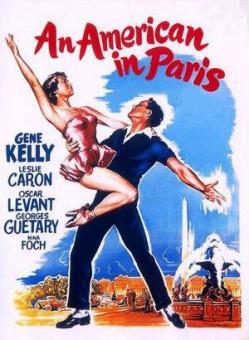
An_American_in_Paris_poster

I can’t believe it took me this long to see the Oscar-winning 1951 film, An American In Paris.  Seriously, I love dancing.  I love Paris.  I love Gene Kelly.  Though this film was made decades before I was born, it still feels like it was literally made for me.  And yet, until last night, I had never seen it.  Thank God for TCM (and thank God for the DVR that I used to record the movie when it aired on TCM).

Gene Kelly plays Jerry Mulligan, an American veteran of World War II who, now that he is out of the army, is making his living as a painter and living in Paris.  (The real Paris is only seen in a few establishing shots.  Most of the film takes place on sets that were clearly designed to look more theatrical than realistic.  This is the Paris of our most romantic fantasies.)  Jerry’s roommate is Adam (Oscar Levant), a pianist who fantasizes about playing before a huge audience.

When the movie begins, Jerry gets his first patron, the wealthy and lonely Milo Roberts (Nina Foch).  Though Milo is in love with Jerry, Jerry falls in love with an innocent French girl, Lise Bouvier (Leslie Caron).  Although Lise falls in love with Jerry, she feels obligated to marry French singer Henri (Georges Guetary) because Henri helped to keep her safe during the Nazi occupation.  And, of course, Henri is friends with Adam who is the roommate of Jerry who is in love with Lise who is engaged…

It sounds a lot more complicated than it actually is.  If anything the plot of An American In Paris is too simple.  (Just compare An American In Paris to Singin’ In The Rain.)  But ultimately, An American In Paris is not about the story.  It’s about George Gershwin’s music and Gene Kelly’s dancing.  It’s a triumph of pure style.  It was said that Fred Astaire made love through dancing and that’s even more true of Gene Kelly, who is literally a force of masculine nature in this film.  So impressive was his choreography that it received a special, noncompetitive Oscar.

Check some of this out:

It all eventually ends with the incredible 17-minute The American In Paris Ballet, which sees Gene Kelly and Leslie Carson dancing through a series of sets that were modeled on Impressionist paintings.  It’s one of those great movie moments that simply has to be seen.

How impressed were the members of the Academy with An American In Paris?  They were impressed enough to name it the best film of 1951.  I don’t know if I would go that far because I’ve seen both A Streetcar Named Desire and A Place In The Sun.  (And An American In Paris‘s victory is considered to be one of the biggest upsets in Oscar history.)  But, with all that said, An American In Paris is still an incredibly enjoyable film to watch.

It is pure joy.

Cleaning Out The DVR #26: Little Women (dir by George Cukor)


(For those following at home, Lisa is attempting to clean out her DVR by watching and reviewing 38 films by this Friday.  Will she make it?  Keep following the site to find out!)

Little_Women_1933_poster

Based on the beloved classic by Louisa May Alcott, the 1933 film Little Women tells the story of the March sisters.  Growing up in Concord, Massachusetts during the Civil War, they wait — with their mother, Marmee (Spring Byington) — for their father to return from serving as a chaplain in the Union Army.  There are four sisters.  The oldest, Meg (Frances Dee) is a responsible and practical (which is a nice way of saying that someone is boring) seamstress.  The youngest, Beth (Joan Bennett) is beautiful but selfish.  Meanwhile, saintly Beth (Jean Parker) spends her time playing a severely out-of-tune piano.

And then there’s Jo (Katharine Hepburn).  Jo is just a year younger than Meg and … well, basically, she’s Katharine Hepburn.  She’s an independent-minded intellectual who dreams of being a writer and who isn’t interested in conforming to society’s expectations.  She’s head-strong and occasionally, she’s too stubborn for her own good.  But she’s also kind-hearted and loves her sisters, even if she does sometimes disagree with them.  We follow Jo as she rejects one potential suitor, poor earnest Laurie (Douglass Montgomery) and discovers another when she meets the older Prof. Behar (Paul Lukas).  We also watch as a family tragedy brings her and her sisters back together.

In fact, Katharine Hepburn is so perfect as Jo that it throws the rest of this adaptation out of balance.  So totally does Hepburn dominate this film that it’s hard not to feel that the other March sisters end up getting a short shrift.  To a certain extent, it does make sense.  Jo is the lead character and the story is largely told through her point of view.  But, for someone who enjoyed reading Alcott’s novel, it’s hard not to be disappointed.  I mean, Jo is great but some of us may have related more to one of the other March sisters.  Like Beth, for instance.

Another problem with this version of Little Women is that the March sisters are all supposed to be teenagers and yet, they’re played by actresses who were in their 20s.  For instance, 23 year-old Joan Bennett played Amy, who is supposed to be only 12 years old when we first see her.  By casting actresses who were already clearly adults, it makes t difficult for the film to work as a coming-of-age story.

(Personally, my favorite version of Little Women — and the first one that I ever saw — was the 1994 version that starred Winona Ryder as Jo.  Even though Ryder was clearly the film’s star, the other three March sisters were all given time to make an impression as well and, as a result, they felt like a real family.  Speaking as the youngest of four sisters, there was a lot about that movie to which I could relate.  Add to that, Christian Bale made for a far more interesting Laurie than Douglass Montgomery.)

With all that said, it bears repeating that Katharine Hepburn is absolutely perfect as Jo and, if you’re a Hepburn fan (and who isn’t), this is one of her essential films.  It helps that she was directed by George Cukor, the director who was responsible for some of Hepburn’s best performances.  The rest of the movie doesn’t quite live up to Hepburn’s performance but she was such a great talent that it almost doesn’t matter.

Little Women was nominated for best picture.  However, it lost to Cavalcade.

Cleaning Out The DVR #25: The Maltese Falcon (dir by John Huston)


(For those following at home, Lisa is attempting to clean out her DVR by watching and reviewing 38 films by this Friday.  Will she make it?  Keep following the site to find out!)

220px-Falconm

I would love to see a remake of The Maltese Falcon with Bill Murray in the role of Sam Spade.  Well, maybe not the Bill Murray of today because he’s getting a little bit too old to play a hard-boiled private detective who is as good with his fists as his brain.  Instead, I’m thinking more of Lost In Translation era Bill Murray, when he was no longer young but could still probably beat up any sniveling punk who came at him with a gun.

Now, that may sound crazy to some but think about it.  Bill Murray is one of the great deadpan snarkers and so is Sam Spade.  Last night, when I watched the famous 1941 version of The Maltese Falcon (the story was filmed twice before, once with Bette Davis as the femme fatale), I was struck by how much of the film really was a comedy.  It may have been a murder mystery that featured death and betrayal and a lot of people getting beaten up but, ultimately, The Maltese Falcon is really about Sam Spade reacting to all of the crazy and strange people around him.  No matter how weird things get, Spade always responds with a smirk and a quip.  It’s a role that, at times, seems to be tailor-made for an actor like Bill Murray.

Bill Murray wasn’t around in 1941 but fortunately, Humphrey Bogart was.  Humphrey Bogart may have grown up wealthy and attended private schools but, on screen, nobody was tougher than Humphrey Bogart and nobody was better at delivering sarcastic, snark-filled dialogue.  After spending years as a villainous supporting actor, Humphrey Bogart got his first starring role when he played Sam Spade in The Maltese Falcon.  His performance, of course, would set the standard by which all future cinematic private eyes would be judged.

And, of course, Spade was tough and he was cynical and he has that wonderful moment at the end of the film where he explains that nobody’s going to make a “sap” out of him.  But for me, Bogart’s best moments come when Spade is alone and thinking.  It’s at those times that Spade suddenly becomes a human being.  A slight smirk comes to his lips, almost as if he’s sharing a private joke with the audience.  You can tell that he’s thinking to himself, “Can you believe how weird my life is?”

And it is indeed a weird life.  The film opens with Spade’s partner, Miles Archer (Jerome Cowan), being murdered.  The police believe that Archer was murdered by a man named Thursby and that Thursby was subsequently murdered by Spade.  Spade, however, suspects that both Archer and Thursby were killed by his latest client, a woman who introduced herself as Ruth Wonderly (Mary Astor).  Except, of course, that’s not her real name.  Her real name is Brigid O’Shaughnessy and, as she admits to Spade, Thursby was her partner.  She claims that Thursby must have murdered Archer but that she doesn’t know who could have possibly killed Thursby.

What’s particularly interesting about all this is that no one really seems to be that upset about Archer’s death.  Spade’s main motivation for investigating the murder is to clear his name and there are several lines of dialogue that reveal how little regard he had for Miles.  In fact, when Archer’s widow (Gladys George) suggests that Spade might be Archer’s killer, you can understand why she might think that.  But then again, that’s the world of The Maltese Falcon.  Only the tough survive.  Getting sentimental or allowing yourself to care is the biggest mistake you can make.

The murders are connected to the hunt for a valuable statue of a bird.  (This is the famous Maltese Falcon of the title.)  As Spade tries to clear his name in the two murders, he also finds himself getting caught up with a strange group of treasure hunters.  There’s the obsequious Joel Cairo (Peter Lorre).  There’s the ruthless “fat man,” Kasper Gutman (Sidney Greenstreet).  And then there’s Wilmer (Elisha Cook, Jr.), Gutman’s young henchman who spends the entire film trying to convince everyone that he’s tougher than he appears.  Wilmer is a born patsy.  Whenever Spade gets annoyed, he beats up Wilmer.  And he usually smiles afterward.

Along with being the directorial debut of John Huston, The Maltese Falcon was also one of the first great film noirs.  It’s one of the most influential films ever made and, even seen today, it’s a lot of fun.  You really can’t go wrong with Bogart, Astor, Greenstreet, Lorre, and Cook all in the same movie.  Bill Murray may never get a chance to play Sam Spade but that’s okay.  Humphrey Bogart’s the only Sam Spade we really need.

The Maltese Falcon was nominated for best picture.  However, it lost to How Green Was My Valley, a film that literally seems to take place in an entirely different universe from The Maltese Falcon.

Cleaning Out The DVR #24: Cries and Whispers (dir by Ingmar Bergman)


Cries-and-Whispers-31

The time is the 19th century.  The country is Sweden.  The setting is a mansion that is decorated with red carpet, red walls, and almost blindly white statues.  But beyond that setting, the 1973 film Cries and Whispers is really set in the hearts and minds of four women.  One of them is selfless.  Two of them are bitter and uncaring.  And one of them is slowly dying.

Agnes (Harriet Andersson) is the one who is dying.  She spends her time laying in bed and screaming in pain.  A doctor (Erland Josephson) provides her with no hope and can only promise that the end will come soon and a priest (Anders Ek) coldly goes about planning for her funeral and offering up empty promises of a final reward.  Occasionally, through her diary and flashbacks to her youth, we get glimpses of who Agnes was before her life become dominating by her impending death.

Agnes’s sisters have come to the house to wait out her death.  Though they’ve arrived to provide comfort, neither is capable of it.  The youngest sister, Maria (Liv Ullman), was her mother’s favorite and has grown up to be coldly self-centered.  Through flashbacks, we see the details of her affair with Agnes’s doctor.  When Maria’s husband (Henning Moritzen) reacts to her infidelity by stabbing himself, Maria can only dispassionately watch.  Meanwhile, the oldest sister, Karin (Ingrid Thulin) has grown up to be bitter and sexually repressed.  In a truly shocking scene, Karin mutilates her vagina with a shard of glass and, after smearing the blood on her face, lies in bed and smirks at her husband.

In the end, only Anna (Kari Sylwan) can provide Agnes with any comfort.  Anna is Agnes’s maid.  Deeply religious and mourning the loss of her own daughter, only Anna is willing to reach out and hold Agnes while Agnes is in pain.  And, after Agnes dies, Anna seems to be the only one who shows any real grief.

There are depressing movies and then there’s Cries and Whispers.  Cries and Whispers is such an emotionally raw and dark movie that it was difficult for me to watch.  It’s also difficult to review because just thinking about the movie brings up so many emotions.  It’s just such a well-made and extremely painful movie.

It’s also an Ingmar Bergman film and that’s fortunate because Bergman somehow had an instinct for how to keep audiences watching even when the images on screen were amazingly painful.  Visually, Cries and Whispers is as beautiful as it is thematically cold.  By emphasizing the color red (not only is the entire house decorated in red but scenes often end by fading to red as opposed to black), Bergman makes the audience feel as if they truly have been transported into the human soul.  Red, after all, is the color of blood and life.

And really, Cries and Whispers is one of those films that makes you wonder what exactly the point of life is.  While the dream-like flashbacks give us clues as to how the three sisters became who they are, they also suggest that it really doesn’t matter.  In the end, regardless of whether they’re in love or alone or happy or sad, they’re all going to die and that’s going to be it.  All stories and issues will be left unresolved.

And, in the end, the best we can hope for is that someone like Anna will mourn us.

Cries and Whispers is one of the few foreign language films to be nominated for best picture.  It’s also the only Ingmar Bergman film to be so nominated (though Bergman had more success in the Best Foreign Language Film category).  It lost to The Sting, a far happier film.