Film Review: The Bronze (dir by Bryan Buckley)


The Bronze has been getting terrible reviews since it first premiered at Sundance last year.  Telling the story of an Olympic bronze medalist who has grown up to be bitter and angry, The Bronze has been unfavorably compared to Bad Santa, Bad Words, Bad Teacher and … well, bad anything.  (You know you’re in trouble when your film gets compared to Bad Teacher because most critics have an irrational hatred for that film.  I actually enjoyed it.)  The Bronze was originally scheduled to be released last July and then it was pushed back and then, for a little while, it vanished all together as it was traded between different distributors.  Finally, last Friday, Sony Pictures Classics released The Bronze with all the fanfare of a community theater announcing their annual production of Forever Plaid.

Well, after hearing how terrible it was, there was no way that my BFF Evelyn and I could resist the temptation to experience it for ourselves.  (We both enjoy watching and commenting during bad movies.  That’s what led to us watching that Tyler Perry movie about the adulterous matckmaker .)  We caught a 10:15 showing last night at the AMC Valley View and the theater was almost totally deserted.  (Admittedly, not many people are brave enough to go to Valley View Mall past 9:00 but Evelyn and I fear nothing.)  We were expecting to see a thoroughly mediocre film but you know what?

We were both kind of surprised to discover that The Bronze was not the terrible film that we had been led to expect.

Melissa Rauch (who co-wrote the script) plays Hope Ann Gregory, a former Olympic gymnast who won the Bronze medal at the Summer Olympics.  She won the medal despite competing on an injured ankle.  Unfortunately, her injury ended her competitive career but it also briefly made her a national celebrity.  12 years later, most of the country may have forgotten Hope but the people of hometown of Amherst, Ohio still love her.

When we first meet Hope, she’s masturbating while watching footage of herself competing at the Olympics.  She then proceeds to steal money from her father’s mail route so she’ll have enough money to buy weed.  Hope is rude to almost everyone and yet, no one in the town seems to notice.  Or maybe they are so happy to be in the presence of a minor celebrity that they just don’t care how terribly she treats them.  The movie is actually somewhat vague on this point but still, the contrast between Hope’s reality and the opinion that others have of her is one of the best things about the film.  Intentionally or not, it perfectly satirizes that way that we idealize our celebrities.

When Hope’s former coach commits suicide, her final request is that Hope agree to train an up-and-coming gymnast, Maggie (Haley Lu Richardson).  At first, the jealous Hope tries to sabotage Maggie but eventually, Hope starts to take her job as coach seriously.  (When Maggie first shows up, she seems to be a one-note, excessively perky character but eventually, she reveals some needed, if not exactly surprising, complexity.)  Hope also develops an unexpected relationship with Maggie’s assistant coach, Twitchy (Thomas Middleditch).  (Twitchy is called Twitchy because he blinks a lot.)

The Bronze is not a great film.  Instead, it’s an extremely uneven film, one that often seems to be trying too hard.  It never manages to find the right balance between its raunchy comedy and the occasional and surprisingly subtle moments when it suddenly becomes a character study.

And yet, at the same time, it’s not as terrible as you’ve heard.  There are moments that work surprisingly well.  Some of them are moments like an enjoyably over-the-top sex scene between two gymnasts.  But then there are moments like the scene where Hope talks about the first time she learned that, as a result of the injury she sustained while winning her Bronze, she would never be able to compete again.  There are scenes like the one where Hope proves herself to be surprisingly loyal to the citizens of Amherst or where her long-suffering father (Gary Cole) confronts her about her behavior.  Though these moments may be few and far between, they still work surprisingly well.  It’s during these moments that The Bronze drops the protective mask of outrageousness and reveals some unexpected depth.  It helps that, along with writing the script, Melissa Rauch totally commits herself to the role.  At her best, she’s like a force of stoned nature.

Is The Bronze really worth seeing on the big screen?  Probably not.  It’s too uneven to really be successful.  But when it shows up on Netflix, I predict that a lot of people are going to be surprised to discover that The Bronze isn’t as terrible as they’ve been told.
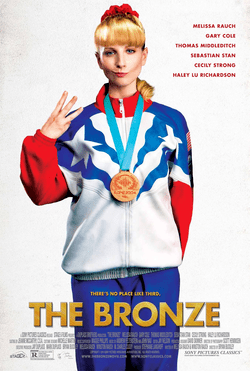
The_Bronze_poster

So You Want To Be A Rock’n’Roll Star: The Idolmaker, Breaking Glass, That’ll Be The Day, Stardust


So, you want to be a rock and roll star?  Then listen now to what I say: just get an electric guitar and take some time and learn how to play.  And when your hair’s combed right and your pants fit tight, it’s gonna be all right.

If you need any more help, try watching these four films:

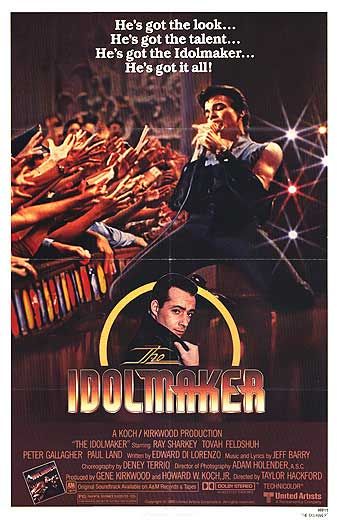
Idolmaker

The Idolmaker (1980, directed by Taylor Hackford)

The Idolmaker is a movie that asks the question, “What does it take to be a star?  Who is more interesting, the Svengalis or the Trilbys?”  The year is 1959 and Vinny Vacari (Ray Sharkey, who won a Golden Globe for his performance but don’t let that dissuade you from seeing the movie) is a local kid from New Jersey who dreams of being a star.  He has got the talent.  He has got the ambition and he has got the media savvy.  He also has a receding hairline and a face like a porcupine.

Realizing that someone who looks like him is never going to make hundreds of teenage girls all scream at once, Vinny instead becomes a starmaker.  With the help of his girlfriend, teen mag editor Brenda (Tovah Feldshuh) and a little payola, he turns saxophone player Tomaso DeLorussa into teen idol Tommy Dee.  When Tommy Dee becomes a star and leaves his mentor, Vinny takes a shy waiter named Guido (Peter Gallagher) and turns him into a Neil Diamond-style crooner named Cesare.  Destined to always be  abandoned by the stars that he creates, Vinny continually ends up back in the same Jersey dive, performing his own songs with piano accompaniment.

The Idolmaker is a nostalgic look at rock and roll in the years between Elvis’s induction into the Army and the British invasion.  The Idolmaker has some slow spots but Ray Sharkey is great in the role of Vinny and the film’s look at what goes on behind the scenes of stardom is always interesting.  In the movie’s best scene, Tommy performs in front of an audience of screaming teenagers while Vinny mimics his exact moments backstage.

Vinny was based on real-life rock promoter and manager, Bob Marcucci.  Marcucci was responsible for launching the careers of both Frankie Avalon and Fabian Forte.  Marcucci served as an executive producer on The Idolmaker, which probably explains why this is the rare rock film in which the manager is more sympathetic than the musicians.

breakglass_lrg

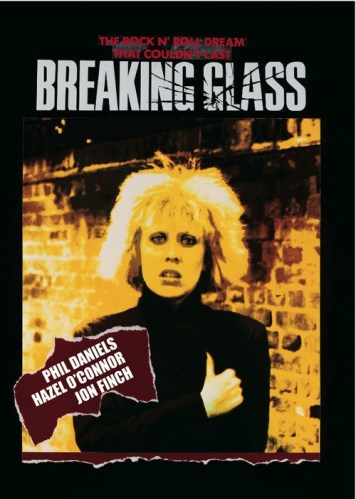
Breaking Glass (1980, directed by Brian Gibson)

At the same time that The Idolmaker was providing American audiences with a look at life behind-the-scenes of music stardom, Breaking Glass was doing the same thing for British audiences.

In Breaking Glass, the idolmaker is Danny (Phil Daniels, who also starred in Quadrophenia) and his star is an angry New Wave singer named Kate (Hazel O’Connor).  Danny first spots Kate while she is putting up flyers promoting herself and her band and talks her into allowing him to mange her.  At first, Kate refuses to compromise either her beliefs or her lyrics but that is before she starts to get famous.  The bigger a star she becomes, the more distant she becomes from Danny and her old life and the less control she has over what her music says.  While her new fans scare her by all trying to dress and look like her, Kate’s old fans accuse her of selling out.

As a performer, Hazel O’Connor can be an acquired taste and how you feel about Breaking Glass will depend on how much tolerance you have for her and her music.  (She wrote and composed all of the songs here.)  Breaking Glass does provide an interesting look at post-punk London and Jonathan Pryce gives a good performance as a sax player with a heroin addiction.

thatll-be-the-day-poster

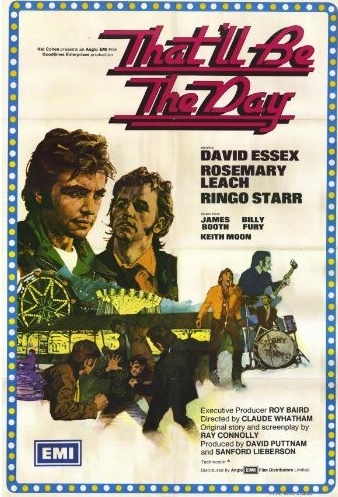
That’ll Be The Day (1973, directed by Claude Whatham)

Real-life teen idol David Essex plays Jim MacClaine, a teenager in 1958 who blows off his university exams and runs away to the Isle of Wright.  He goes from renting deckchairs at a resort to being a barman to working as a carny.  He lives in squalor, has lots of sex, and constantly listens to rock and roll.  Eventually, when he has no other choice, he does return home and works in his mother’s shop.  He gets married and has a son but still finds himself tempted to abandon his family (just as his father previously abandoned him) and pursue his dreams of stardom.

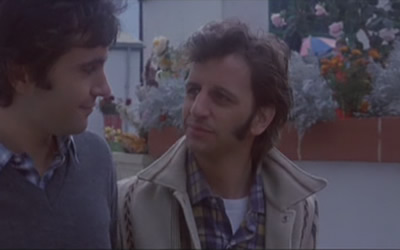
David Essex and Ringo Starr

Based loosely on the early life of John Lennon, the tough and gritty That’ll Be The Day is more of a British kitchen sink character study than a traditional rock and roll film but rock fans will still find the film interesting because of its great soundtrack of late 50s rock and roll and a cast that is full of musical luminaries who actually lived through and survived the era.  Billy Fury and the Who’s Keith Moon both appear in small roles.  Mike, Jim’s mentor and best friend, is played by Ringo Starr who, of all the Beatles, was always the best actor.

That’ll Be The Day ends on a downbeat note but it does leave the story open for a sequel.

stardust-1

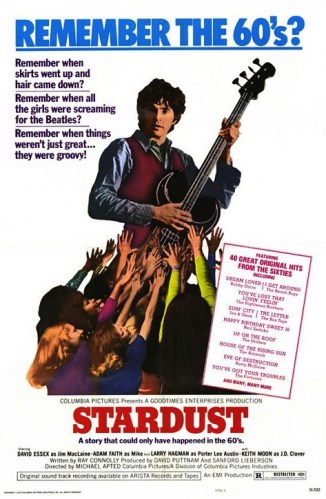
Stardust (1974, directed by Michael Apted)

Stardust continues the story of Jim MacClaine.  Jim hires his old friend Mike (Adam Faith, replacing Ringo Starr) to manage a band that he is in, The Straycats (which includes Keith Moon, playing a far more prominent role here than in That’ll Be the Day).  With the help of Mike’s business savvy, The Stray Cats find early success and are signed to a record deal by eccentric Texas millionaire, Porter Lee Austin (Larry Hagman, playing an early version of J.R. Ewing).

When he becomes the breakout star of the group, Jim starts to overindulge in drugs, groupies, and everything that goes with being a superstar.  Having alienated both Mike and the rest of the group, Jim ends up as a recluse living in a Spanish castle.  Even worse, he gives into his own ego and writes a rock opera, Dea Sancta, which is reminiscent of the absolute worst of progressive rock.  Watching Jim perform Dea Sancta, you understand why, just a few years later, Johnny Rotten would be wearing a homemade “Pink Floyd Sucks” t-shirt.

Stardust works best as a sad-eyed look back at the lost promise of the 1960s and its music.  Watch the movie and then ask yourself, “So, do you really want to be a rock and roll star?”

21494_2

Film Review: Supermen Against the Orient (1973, dir. Bitto Albertini)


vlcsnap-2016-03-18-11h50m53s757

Forgive me, but I watched this last week. I may have some trouble remembering the complex storyline. Good thing I have the movie right here. Let me just turn it on.

“I smack ’em! I whack ’em! I scratch ’em! I bash ’em! I cream ’em! I ream ’em! And then I redeem them!”

Ah, it’s all coming back to me now!

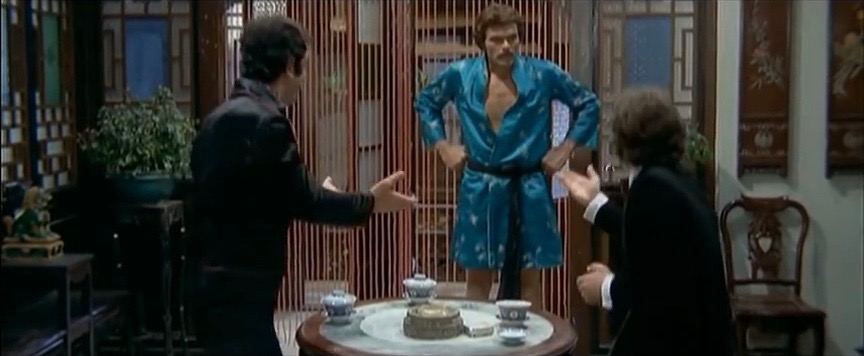
First off, me being half Italian, I can assure you that title translates to Knockoff Burt Lancaster, Harpo, and Rick Wright Rob a Safe in the Orient. The alternate tile being Supermen Against the Orient. By the way, the opening song is awesome!

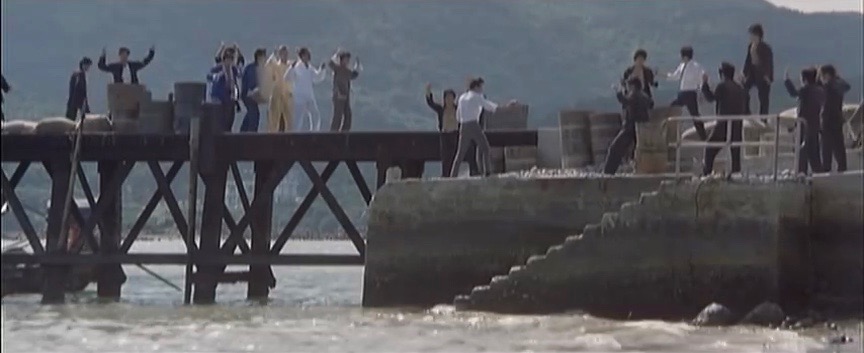
The movie opens up on a deal gone wrong between criminals after two guys pop out of boxes with guns.

vlcsnap-2016-03-18-13h39m01s612

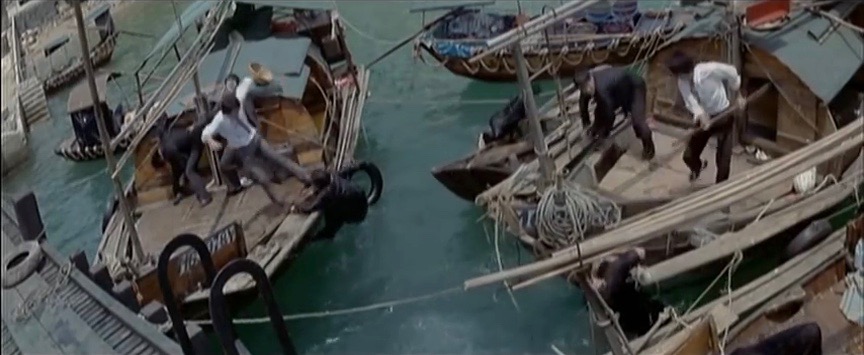
There is more talent on display here in this opening scene than in all of Superdragon vs. Superman. Just the fact that they have two fights going on during this scene on two different boats in the same frame is incredible. They even have the courtesy to make sure the bad guys were in black and blue while the other guys were in white. It’s small, but it makes fights easier to follow. Being confused about who is who gets in the way of enjoying fight scenes.

vlcsnap-2016-03-18-13h39m46s148

Oh, and it’s clearly done by people who are fans of 60’s crime and western films. A lot of style on display here.

After torturing the two guys who popped out of the boxes, the bad guys find out about something in Bangkok. Cut to a boardroom meeting and who cares. All you need to know is that they need Captain Wallace. They describe him like they are going to bring in Peter Sellers or something.

vlcsnap-2016-03-18-13h46m37s015

Here is Captain Wallace played by Robert Malcolm. He’s pretty funny in this movie. He’s here to finally get married. It’s the third time he’s tried.

vlcsnap-2016-03-18-13h46m51s597

Boy, the guy singing over the opening credits wasn’t kidding when he said he reams ’em.

Anyways, people show up to drag him away to serve his country of America. Yeah, he’s actually supposed to be from America in this Italian film. He goes to Bangkok.

After calling for a taxi, this guy pops out to look at our hero.

vlcsnap-2016-03-18-13h53m20s832

Clearly, he wants to check out our hero’s awesome mustache!

vlcsnap-2016-03-18-13h53m26s223

He also follows him in his car. Then a car chase ensues that lasts the enormous time of…

vlcsnap-2016-03-18-13h54m03s780

a few seconds. After Superdragon vs. Superman I expected this to go on for 7 minutes at least.

He now checks in at the hotel where he bumps into this lady.

vlcsnap-2016-03-18-13h55m18s667

She will be our Supergirl later on. Yes, I know she looks blind in that screenshot, but she isn’t.

Now the movie goes on Thailand vacation.

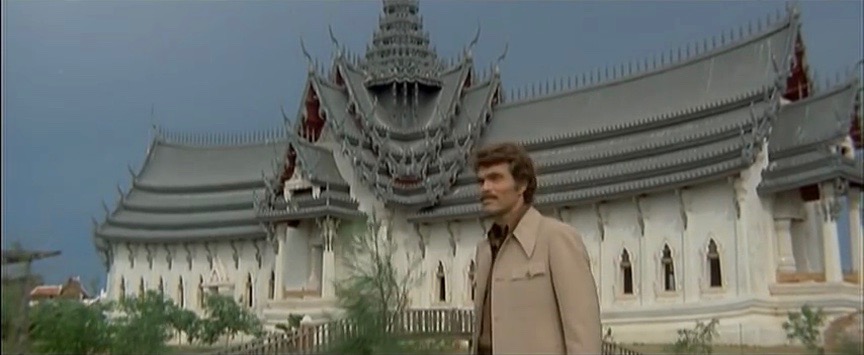
vlcsnap-2016-03-18-13h58m16s149

It’s like these scenes are here not only to add some realism, but as if the filmmakers cut a deal with the tourism board. You can shoot here, but show off some of the sights please!

After going to the pool and a kickboxing match for reasons that don’t matter, the film has fulfilled it’s Thai quota for the movie so it’s off to Hong Kong. He needs to find the “kung fu expert”. Although Jackie Chan is supposed to be in this movie, he’s just an extra and not the man he is looking for.

Wallace goes to the American embassy, which is run by an Italian character actor sitting in front of a picture of Nixon.

vlcsnap-2016-03-18-14h06m42s227

He’s a cryptic prick who says he has some sort of secret weapon that is so secret that he can’t tell Wallace about it even though he is supposed to use it to protect Wallace. No joke. He says all that crap along with a bunch more. He’s quite annoying in this movie. So is what should have been a subplot behind Wallace (the safe) under the painting that is next to the cover of Radiohead’s Kid A album. Wallace actually does guess at what this super secret thing could be. He says he thinks it may be a Buck Rogers Ray Gun. He’s in the wrong decade for that kind of a guess. That’s Reagan era stuff. It’s long johns. In other words, it’s a full body suit that makes you invulnerable to projectiles. Oh, and character actor farts before saying that kung fu is like a laxative because everything comes from inside. If he had only waited four more years, then a film a man like him would go see could have taught him how to solve his little problem.

Not going to say till I review it. If you know, then don't tell. It's a surprise!

Not going to say till I review it. If you know, then don’t tell. It’s a surprise!

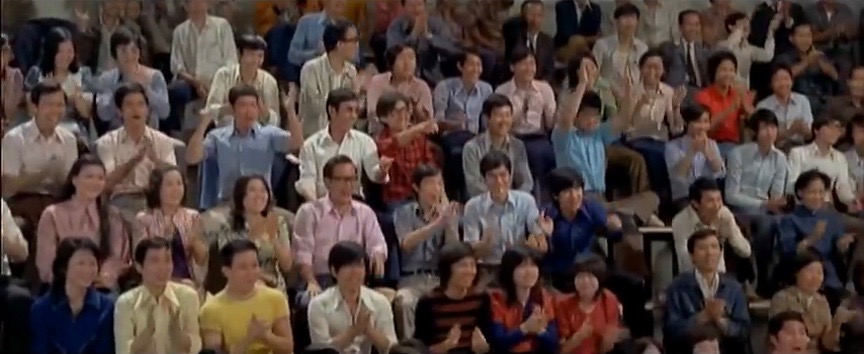
Now we are off to continue the search for Jackie Chan in this movie at a kung fu competition.

vlcsnap-2016-03-18-14h18m24s472

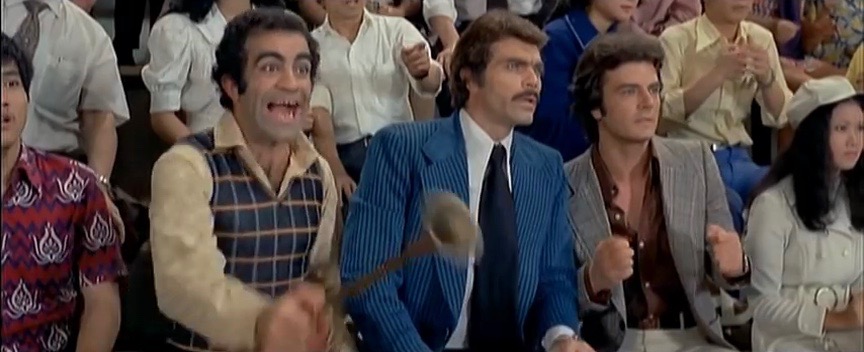
He’s probably in this crowd somewhere just like Phil Collins in A Hard Day’s Night (1964).

We also meet Harpo (Salvatore Borghese), and who I like to call Rick Wright (Antonio Cantafora) even if he isn’t nearly as short as Larry Manetti.

vlcsnap-2016-03-18-14h18m32s711 (1)

Super Stache is called out to fight the kung fu champion. After a good old ass kickery. This happens.

vlcsnap-2016-03-18-14h30m04s323

Then we are in the hospital.

vlcsnap-2016-03-18-14h30m05s305

There had to be an easier way to meet the champ. Don’t worry about him. A good acupuncture treatment and he’s back in business. By that I mean it’s time for training. Such as punching hot coals.

vlcsnap-2016-03-18-14h34m45s369

I’m sorry, but Cüneyt Arkin punches rocks to train.

vlcsnap-2015-12-04-21h25m21s645

Now their palms are as strong as steel! They can kill a horse with one hand.

vlcsnap-2016-03-18-15h16m28s070

That’s all well and good, but Chuin can finger punch a nail.

vlcsnap-2016-03-18-15h21m30s035

Next we get a scene to remind me how much I like traditional Asian dresses/tops, that same guy from earlier is still watching Super Stache, and…

vlcsnap-2016-03-18-15h26m09s457

Supergirl, whose pink top I would take off of her cold dead body, tells him to watch out for people who are keeping their eyes on him. Particularly the guy under his table. Then we go back to stick feet into fire followed by a joke about donkeys and ointment for the ass. Moving on.

After ridiculously going around pretending he is Chinese, which no one believes, Wallace runs into Supergirl.

vlcsnap-2016-03-18-15h30m12s854

Blah, blah, blah, their kung fu means that bullets don’t work, blah, blah, blah, watch out, blah, blah, blah.

Now Super Stache goes out on the street to get his ass kicked again.

vlcsnap-2016-03-18-15h37m25s550

Luckily, Supergirl comes to his rescue and deals with them.

vlcsnap-2016-03-18-15h38m09s334

Now Super Stache meets with his friends to ask for their help.

vlcsnap-2016-03-18-15h41m36s228

They say they’ll help, but only if he helps them rob the safe at the embassy. After he is initially offended at the prospect, he agrees. The movie is at the halfway point. It’s a heist movie now. Seriously! It now carries on primarily with robbing the safe for about 30 minutes. No joke. 30 minutes! We get a few things in here like this.

vlcsnap-2016-03-18-15h57m49s868

This too.

vlcsnap-2016-03-18-16h31m36s640

It goes so off track that there is a scene where Super Stache runs to a library to find out when Abraham Lincoln was born and died in order to figure out the safe combination. The movie eventually gets back on track for the last 15 minutes or so of the film.

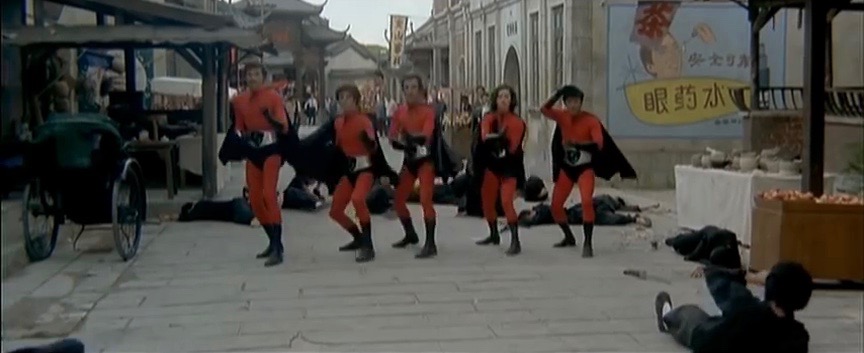
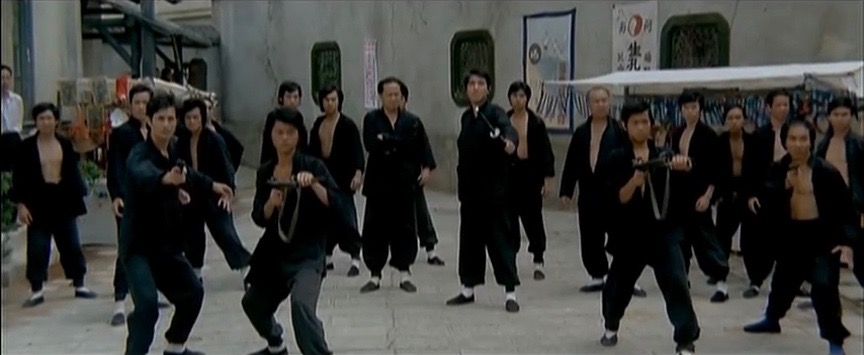
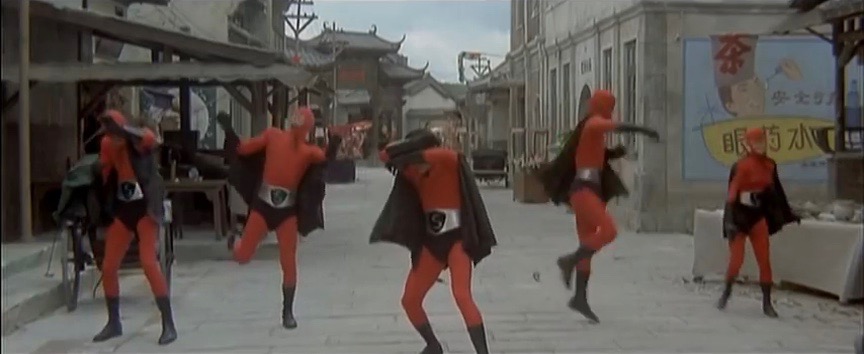
Finally, here are the Supermen and Supergirl vs. the dudes in black. I really don’t know what the deal with with these guys is, but after they attacked random business owners in the street I knew they had to be stopped.

vlcsnap-2016-03-18-16h42m16s325

vlcsnap-2016-03-18-16h42m18s276

With masks they can completely withstand bullets.

vlcsnap-2016-03-18-16h49m35s599

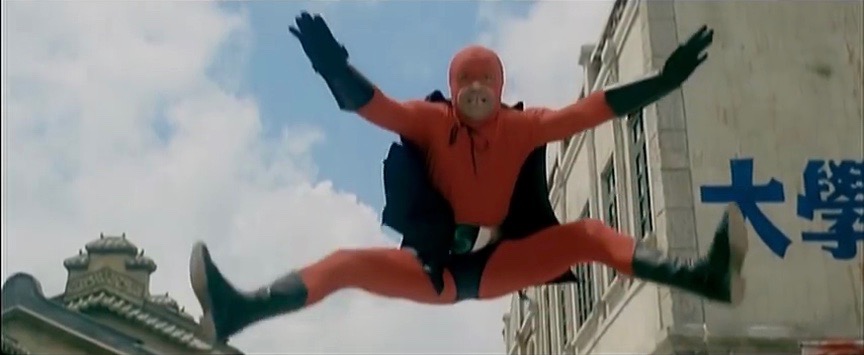
Except that guy in the front. He has to use his arms. Oh, and this guy jumps in the air.

vlcsnap-2016-03-18-16h49m43s355

Somedays you just gotta do midair splits.

There are a few goodbyes and the embassy guy does more of his comedy shtick, but that’s it! It was way better than Superdragon vs. Superman, but why did it have to go into that whole rob the safe thing? It had a good setup. I liked the actors. Them being Supermen and having a Supergirl too is fun. It could have worked better if they had stuck with it, but the safe thing is really boring and takes over the movie.

I’d still recommend this if only for Super Stache. He really is funny. It’s a shame that according to IMDb he only made two other films the same year as this one called Sinbad and the Caliph of Baghdad as well as And They Smelled the Strange, Exciting, Dangerous Scent of Dollars. In the first, he played Simbad. In the second, he played Butch ‘Charity’ Jenkins. Maybe someday I’ll see them.

In the meantime, I’ll pull out my complete series box set of The Greatest American Hero when I need my fix of comedians in red suits.

Film Review: The Divergent Series: Allegiant (dir by Robert Schwentke)


Oh, Who Gives A Fuck About This Fucking Movie?

Oh, who cares?

I really hate to start my review with such a negative statement but seriously, after watching Allegiant today, I am now convinced that the Divergent movies are perhaps the least interesting film franchise since the Paranormal Activity sequels.  Not only are the films so derivative of The Hunger Games that I’m always surprised that Donald Sutherland isn’t lurking around in the background but they’ve also managed to waste the talents of some of the best actors of my generation.  When you’ve got performers like Shailene Woodley and Miles Teller at your disposal, there’s no excuse not to be interesting.

I watched Allegiant with my BFF Evelyn and I’ll admit right now that we talked throughout the entire movie.  We laughed at the most serious of moments.  When Jeff Daniels showed up, we had a very long discussion about how, when he’s good, Jeff Daniels is really good but when he’s bad, he manages to come across as being the most boring man on the planet.  When Miles Teller betrayed his allies, Evelyn said, “Again!?” and then she had to remind me that Miles Teller always ends up betraying everyone in every Divergent film.

(It makes you wonder why the Tris (played by Shailene Woodley) and Four (Theo James) always bring Miles Teller with them as opposed to just killing him.  I suppose some of it might have to do with the fact that he’s Miles Teller and he’s a badass.  In fact, he probably should be playing Four.  He certainly has more chemistry with Shailene Woodley than Theo James does.  In fact, Theo James always looks like he’d rather be doing anything other than appearing in another goddamn Divergent film.)

And yes, Evelyn and I did get a few dirty looks from some people in the audience but you know what?  I fully understand that it’s rude to talk through a movie but oh my God, we had to do something.  Allegiant is such a boring movie.  The film moves slowly, as if the filmmakers don’t understand that everyone in the audience has seen enough YA adaptations to already know everything that’s going to happen.  If you want to truly understand what film critics mean when they say that a film is “draggy,” try to watch an entire Divergent film without standing up to stretch your legs or get something to drink.  Perhaps the biggest mistake you can make while watching Allegiant is to actually concentrate on what’s slowly playing out on screen.

The Divergent films aren’t terribly complicated and yet, I always find myself struggling to follow them.  They’re so bland and forgettable that I can never remember what happened in the previous film.  As Allegiant started, I was like, “Why is Naomi Watts in charge of Chicago now?  Oh yeah, Kate Winslet did die at the end of the last movie!”  And then I remembered that Evelyn was Four’s mother.

And then my BFF Evelyn (as opposed to the film’s Evelyn) said, “Four is a stupid name,” and I started laughing way too hard.  In fact, we made many jokes about Four’s nickname and then eventually, I remembered that he was called Four because he only has four fears.  But it took me a while to remember and, once I did remember, I couldn’t help but think about how stupid a backstory that was.

Anyway, the plot of the film is that the movie’s Evelyn is now in charge of Chicago but she’s turning out to be just as bad as the system that she’s replacing.  So, Tris, Four, and friends escape from Chicago and explore the barren landscape that surrounds the city.  Eventually, they are found by the Bureau of Genetic Welfare.  The Bureau is headed up by a boring guy named David (Jeff Daniels).  At first, David seems to be a good guy but then it turns out that the Bureau was behind the whole Faction experiment.  And now the Bureau wants to attack Chicago, wipe the slate clean, and start the experiment all over again.

Will Four and Tris go along with David’s plan or will they try to stop him?

At this point, who cares?

The thing that’s annoying about the Divergent films is that the storyline has potential.  At the heart of it all, the battle between the Factions and the Factionless has the potential to be a powerful, if simplistic, metaphor.  But the films are so plodding and take such an obvious approach that most of that potential is wasted.  Add to that, Shailene Woodley is a great actress.  In fact, I think it can be argued that she actually has more range than Jennifer Lawrence.  (Just check out her performance in The Spectacular Now.)  But the franchise has never known what to do with her uniquely off-center style.  Instead, it simply gives her speeches that feel as if they’ve been lifted from every other dystopian YA franchise.  The films insist on trying to make Shailene Woodley predictable and she deserves better on that.

As is typical of big franchise films nowadays, Allegiant is just part one of the Divergent finale and even the “to be continued” ending feels annoying because it’s so obviously lifted from every other franchise finale that’s ever been produced.  As with all the Divergent films, Allegiant never escapes the shadow of The Hunger Games.  The best that can be said about this franchise is that it will be over soon.  Hopefully, Shailene Woodley will be able to move onto a film more worthy of her considerable talents.

Cleaning Out The DVR #38: It Happened One Night (dir by Frank Capra)


For those following at home, Lisa is attempting to clean out her DVR by watching and reviewing 38 films by the end of today!!!!!  Will she make it?  Well, it depends on whether or not she can finish the review below!)

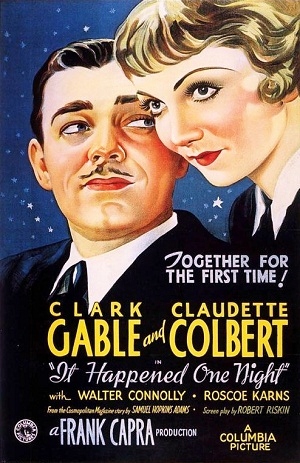
Gable_ithapponepm_poster

Before I talk too much about the 1934 film It Happened One Night, I want to tell a story about legs.

I’ve always been insecure about having a slightly large nose and once, when I was 17 years old, I was giving my mom a hard time about the fact that I had basically inherited it from her.  I was going on and on and being fairly obnoxious about it.  (Yes, believe it or not, I can occasionally be obnoxious…)

Finally, my mom held up her hand and said, “Yes, you got your nose from me but you also got my legs so stop crying!”

And you know what?  I glanced down at my legs and I realized that she was right and that made me feel a lot better.  Ever since then, I’ve taken a lot of pride in having a good pair of legs.

Now, you may be asking yourself what that has to do with It Happened One Night.  Well, It Happened One Night is one of the ultimate “good legs” movies.  That’s because It Happened One Night features the famous scene in which Claudette Colbert teaches Clark Gable the proper way to hitchhike.  (If I ever take up hitchhiking, I’m planning on using the same technique.)

That’s the scene that It Happened One Night is justifiably famous for.  However, It Happened One Night is more than just a film about hitchhiking.

It’s also a romance, one that features Claudette Colbert at her wackiest and Clark Gable at his sexiest.  Reportedly, the sell of undershirts plummeted after Clark Gable took off his shirt and revealed that he wasn’t wearing one.

It was one of the first road movies and it was such a success that it remains influential to this very day.  Any time you watch a movie that features two seemingly different characters getting to know each other on a road trip, you’re watching a movie that exists because of It Happened One Night.  (And yes, that includes Tom Hardy and Charlize Theron in Mad Max: Fury Road.)  

Frank Capra won his first Oscar for directing this film and It Happened One Night remains one of his most likable and least preachy films.  Just compare the unpretentious, down-to-Earth style of It Happened One Night to Meet John Doe.

Perhaps most importantly, It Happened One Night was the first comedy to win the Oscar for best picture.  It Happened One Night is a film that announces that a film doesn’t have to be a self-serious, pretentious epic to be great. Before the victory of It Happened One Night, the top prize was exclusively reserved for films like Cimarron and Calvalcade.  (Seriously, just try watching some of those early winners today.)  It Happened One Night‘s Oscar victory was a victory for the future of entertainment.

(By the way, as I sit here typing up this review, I keep accidentally typing It’s A Wonderful Life instead of It Happened One Night.  That’s the power of Frank Capra.)

It Happened One Night tells the story of  Pete Warne (Clark Gable).  Pete is an out-of-work reporter.  Though he may be down on his luck, he’s still confident and lovably cocky in that way that only Clark Gable could be.  While riding on a bus from Florida to New York, Pete recognizes one of his fellow passengers as Ellie Andrews (Claudette Colbert), an heiress who has recently eloped with a buffoonish big game hunter named King Westley (Jameson Thomas).  Ellie’s father wants to get the marriage annulled and has people all over the country searching for his daughter.  Pete agrees not to call Ellie’s father if Ellie will agree to give him an exclusive story when she meets up with Westley in New York.

For the rest of the film, we follow Pete and Ellie as they cross the United States, spending awkward nights in motel rooms, getting kicked off of buses, and hitchhiking.  Ellie gives lessons on how to get a car to stop.  Pete delivers a long monologue on the proper way to undress before going to bed.  Along the way, Pete and Ellie fall in love.  It also becomes obvious that Ellie’s father is right about Westley only marrying her for her money.

They also meet a large cast of increasingly eccentric characters.  Whether they’re dealing with the passengers on the bus or the cranky people staying at a rest stop or a motorist who won’t stop singing, Pete and Ellie do noy meet anyone who doesn’t have at least one odd quirk.  Like many classic screwball comedies, It Happened One Night takes place in a world where everyone — from a bus driver to a desk clerk to a group of women waiting to use a shower at a rest stop — has something to say about everything.  Some of the film’s funniest moments come from watching the normally smooth Pete have to deal with the increasingly crazy world in which he’s found himself.

(For her part, Ellie is at her happiest when things are at their strangest.  Ellie’s the best.)

The other great moments come from simply watching Gable and Colbert interact.  They have an amazing chemistry and it comes through in their performances.  It’d odd to read that apparently neither Gable nor Colbert were happy to be cast in It Happened One Night because their performances are so much fun to watch.  A love story only works if you love the characters and the love story in It Happened One Night definitely works.

As I stated above, It Happened One Night was the first comedy to win Best Picture.  Beyond that, it was also the first movie to win all of the top 5 Oscars: Picture, Director, Actor, Actress, and Adapted Screenplay.  (Those were also the only 5 nominations that It Happened One Night received.)  For once, the Academy got it right.  It Happened One Night remains a delightful film.

(Oh my God, y’all, I did it!  That’s 38 films reviewed in 10 days and my DVR now has space to record all sorts of things!  And making it all the better is that I finished this project by reviewing a truly wonderful comedy like It Happened One Night!)

Cleaning Out The DVR #37: A Room With A View (dir by James Ivory)


(For those following at home, Lisa is attempting to clean out her DVR by watching and reviewing 38 films by the end of today!!!!!  Will she make it?  Keep following the site to find out!)

Room_with_a_View

Poor Cecil Vyse.

The 1986 film A Room With A View is a love story.  It’s about a young woman who meets a young man in Florence, Italy and then, upon returning to England, she discovers that the same young man and his father are now her neighbors.  From the minutes they meet, it’s obvious that the young man and the young woman are destined to be together.  The only thing that’s standing in their way is the strict culture of conformity of Edwardian England.  That and the fact that the young woman is engaged to Cecil Vyse.

Cecil represents the establishment.  He comes from a good family.  He’s well-educated.  He talks about the right subjects.  He holds all the right opinions.  He’s not an exciting man but he’s a good man who is destined to have successful but not very interesting life.  From the minute that we meet him, we know that our heroine is not meant to stay with Cecil.

And it’s heart-breaking because the film goes out of its way to show that Cecil is not a bad person.  In his own befuddled way, he’s one of the most likable people in the entire film.  He may not have an interesting mind but he does have a good heart.  When the moment comes that Cecil’s heart is broken, the film treats him with respect.

Of course, it helps that Cecil was played, in one of his first roles, by Daniel Day-Lewis.  Day-Lewis plays the role with a quiet dignity.  Instead of just turning Cecil into a mere nuisance that has to be pushed out of the way in the name of love, Day-Lewis emphasizes Cecil’s humanity.  There’s a quiet scene where the recently heart-broken Cecil ties his shoes that is an example of truly great acting.

As for the two young lovers, Lucy Honeychurch is played by Helena Bonham Carter while George Emerson is played by Julian Sands.  Both of them are achingly beautiful and, even more importantly, they both look as if they belong in Edward England and with each other.  Still, seeing this film today, it takes a little while to adjust to seeing both Bonham Carter and Sands playing such … normal characters.  We’re so used to seeing Helena killing people in Tim Burton movies that it’s nice to see her getting to rather sweetly fall in love for once.

The entire film is full of great British actors, all at their best.  Denholm Elliott plays George’s father and gets to deliver a rousing defense of both true love and free thought.  Maggie Smith plays Lucy’s overprotective aunt while Rosemary Leach is Lucy’s supportive mother.  And then you’ve got Simon Callow as an eccentric vicar.  (Because every British film needs an eccentric vicar.)  Lucy’s younger brother is played by an actor named Rupert Graves and he’s so adorable that I kind of found myself wishing that he could have had a spin-off movie of his own.

A Room With A View is a wonderfully romantic film, one that I could easily see myself spending days just watching over and over again.  A Room With A View was nominated for best picture but it lost to the far less romantic Platoon.

(For those following at home, I now have one more review to go to reach my goal of reviewing 38 films in 10 days!)

Cleaning Out The DVR #36: Toni Braxton: Unbreak My Heart (dir by Vondie Curtis-Hall)


(For those following at home, Lisa is attempting to clean out her DVR by watching and reviewing 38 films by the end of today!!!!!  Will she make it?  Keep following the site to find out!)

tb

It’s becoming a new annual tradition.  Every January, Lifetime airs a biopic about a singer.  As I watched Toni Braxton: Unbreak My Heart, I found myself thinking about what makes a good biopic.  Unfortunately, good lives rarely make good biopics.  After all, we watch biopics for the drama behind-the-scenes.  When someone has lived a successful life and has basically lived her life with intelligence and integrity, it makes them a role model.  But it doesn’t necessarily make them into a fascinating subject for a movie.

Now, I have to admit that, before watching this movie, I didn’t know much about Toni Braxton.  My musical taste tends to run from EDM to more EDM.  I had heard the name Toni Braxton, of course.  I knew that there was a reality show called Braxton Family Values, though I’ve never seen an episode.  But I didn’t know much about her or her life.

So, as I watched, I kept waiting for the inevitable moment when Toni Braxton would first be pressured into trying cocaine or when she would end up in an abusive marriage or when she would eventually end up going through a Hellish rehab experience.  But none of that happened, largely because Toni Braxton appears to have been pretty intelligent when it came to making her life decisions.

Oh, there’s certainly some drama.  She had some financial difficulties early on her career.  Some members of her family get jealous of her success but not so jealous that they can’t be totally supportive.  She gets married but the marriage ends — not because of infidelity or abuse but just because sometimes marriages end.  And really, Lifetime should be commended for the way it handled the end of Braxton’s marriage because sometimes, marriages just don’t work out and it’s not anyone’s fault.  Finally, Toni discovers the she has Lupus.  Lupus is a serious disease and both Toni and the movie deserve full credit for educating the public.

In the end, Toni Braxton: Unbreak My Heart is a well-made and perfectly pleasant film but it’s not particularly memorable  Lex Scott Davis does a good as Toni and the film provides good roles for a lot of talented African-American performers.  But, as a movie, Toni Braxton: Unbreak My Heart never quite reaches the memorable heights of last year’s Whitney.

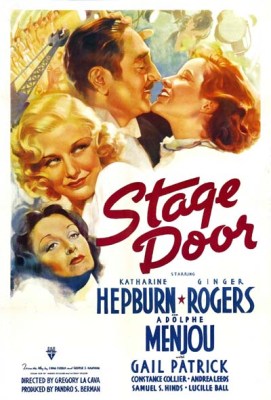
Cleaning Out The DVR #35: Stage Door (dir by Gregory La Cava)


(For those following at home, Lisa is attempting to clean out her DVR by watching and reviewing 38 films by the end of today!!!!!  Will she make it?  Keep following the site to find out!)

Stage_Door_(1937)

The 1937 film Stage Door is a great example of a unique genre of American film, the Katharine Hepburn Gets Humbled genre.

In the 1930s, Katharine Hepburn went through a period of time where she was considered to be “box office poison.”  She was undeniably talented but it was obvious that the studios weren’t sure how to showcase that talent.  They put her in high-brow films that often did not have much appeal to audiences.  As well, the press hated her.  Katharine Hepburn was outspoken, she was confident, she was a nonconformist, and, too many, her refusal to do interviews and sign autographs marked her as a snob.  Very few people wanted to see a movie starring Katharine Hepburn and therefore, very few people were willing to make a movie starring Katharine Hepburn.

(Interestingly enough, as I sit here typing this, another KH — Katharine Heigl — is pretty much in the exact same situation, with the main difference being that Hepburn was a far more interesting actress.)

Fortunately, Katharine Hepburn was smart enough to recognize the problem and she started to appear in films like Stage Door.  In Stage Door, she essentially played a character who mirrored the public’s perception of her.  Terry Randall is a snobbish and pretentious aspiring actress who comes to New York to pursue her career and moves into a theatrical rooming house.  At first, her attitude makes her unpopular with the other actresses living in the house.  But, as the film progresses, Terry slowly starts to let down her defenses and reveals that she’s just as insecure, neurotic, and vulnerable as everyone else.  She also proves herself to be willing to stand up to manipulative producers and condescending directors.  When she’s cast in her first Broadway show, it turns out that the show is being financed by her father and his hope is that she’ll do such a bad job and be so humiliated that she’ll give up acting.  And, at first, it appears that Terry will be terrible.  During rehearsals, she is stiff and mannered.  (Hepburn was actually quite brave to portray Terry as being such a believably bad actress.)

Of course, Terry isn’t the only actress at the rooming house who has issues to deal with.  For instance, Judy Canfield (Lucille Ball) has to choose between pursuing her career or getting married and starting a family.  Kay (Andrea Leeds) is a once successful actress who is now struggling to find roles, can’t pay her bills, and has become suicidal as a result.  And then there’s Jean (Ginger Rogers), Terry’s cynical roommate and frequent enemy and occasional friend.  Jean is falling in love with Anthony Powell (Adolphe Menjou), the lecherous producer of Terry’s play.

Stage Door is a wonderfully entertaining mix of melodrama and comedy.  You’ll laugh, you’ll cry, and you’ll really find yourself hoping that all of the actresses at the rooming house will have their dreams come true.  While the film is dominated by Hepburn and Rogers, it truly is an ensemble piece.  Not only does the cast include Eve Arden, Lucille Ball and Andrea Leeds (giving the film’s best and most poignant performance) but the great dancer Ann Miller appears as Jean’s equally cynical best friend.  Stage Door may be 79 years old but it’s aged wonderfully.

At the box office, Stage Door was a modest success and it directly led to Hepburn being cast in the classic screwball comedy, Bringing Up Baby.  Stage Door was nominated for best picture but it lost to The Life of Emile Zola.

Cleaning Out The DVR #34: The Story of Louis Pasteur (dir by William Dieterle)


(For those following at home, Lisa is attempting to clean out her DVR by watching and reviewing 38 films by the end of today!!!!!  Will she make it?  Keep following the site to find out!)

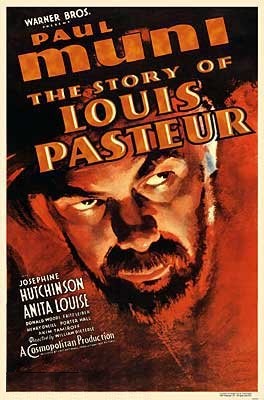
The_Story_of_Louis_Pasteur_poster

OH MY GOD, LOUIS PASTEUR WAS THE DEVIL!

Okay, maybe not but that’s certainly the impression that you might get from looking at the one sheet for the 1936 film, The Story of Louis Pasteur.  Seriously, Louis looks quite sinister!

As the movie starts, that’s certainly the view of the 19th century French medical establishment.  A doctor has been murdered by a grieving husband and it’s believed that the murder was inspired by one of Pasteur’s incendiary flyers.  What does the flyer demand?  That doctors should wash their hands and sterilize their instruments before operating.

That’s right!  Washing your hands before plunging them into a human body was once considered to be a controversial notion.  Pasteur is put on trial, accused of inciting violence with his quackery.  Even though Pasteur is acquitted, he finds himself a pariah.  The autocratic and close-minded Dr. Charbonnet (Fritz Leiber) declares Pasteur to be guilty of great quackery and even the ducks are offended.  That’s how hated Pasteur has become.

But, of course, we the audience know that Pasteur is not a quack.  Not only do we know that he is responsible for discovering the process of pasteurization but he’s also apparently important enough to have his own 1930s Warner Bros. biopic.  And he’s played by Paul Muni, who made a career out of playing great men in 1930s biopics.

The film follows Pasteur as he discovers cures for anthrax and rabies.  Along the way, he yells at a lot of people and he gives a lot of speeches.  This film might as well have been called The Paul Muni Show and … well, his performance is okay.  It’s not great.  If you’ve seen the very first version of Scarface, you know that Paul Muni was capable of giving a far better performance than he gives here.  But then again, as written, all Louis does is bellow against everyone who disagrees with him.  (And cure rabies, we shouldn’t overlook that.)

The Story of Louis Pasteur is one of those old-fashioned biopics that feels a bit creaky and stiff today.  As I watched it, I kept thinking that it felt like something you might across on PBS at three in the morning.  However, 1936 audiences disagreed with me.  The Story of Louis Pasteur did quite well at the box office and was nominated for best picture, though it lost to another biopic, The Great Ziegfeld.
Cleaning Out The DVR #33: Heaven Can Wait (dir by Ernst Lubitsch)


(For those following at home, Lisa is attempting to clean out her DVR by watching and reviewing 38 films by the end of today!!!!!  Will she make it?  Keep following the site to find out!)

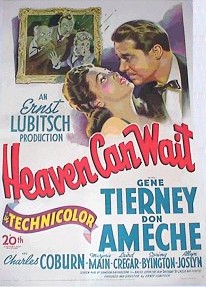
Heavencwaitposter

The 1943 film Heaven Can Wait opens with a 70 year-old man named Henry Van Cleve (Don Ameche) stepping into an opulent drawing room and having a conversation with a refined but menacing man known as His Excellency (Laird Cregar).  From their conversation, it quickly becomes obvious that Henry has recently died and His Excellency is in charge of Hell.  Most people who come to see His Excellency do so because they want to argue that they do not belong in Hell and they usually end up falling through a convenient trap door.  However, Henry is there to argue that, after living an enjoyable but dissolute life, he belongs in Hell.

Henry tells the story of his life.  He tells how he was born into great wealth and influenced by his down-to-Earth grandfather (Charles Coburn).  As a young man, he spent most of his time chasing after showgirls bur eventually, he met the beautiful and kind-hearted Martha (Gene Tierney).  He immediately fell in love with Martha but, unfortunately for him, she was engaged to his cousin (Allyn Joslyn).  Henry, however, used his considerable charm to convince her to elope with him.

(It helps, of course, that Henry’s cousin was totally and completely obnoxious, in the way that rival suitors often are in films like this.)

And, for 25 years, Henry was happy with Martha.  It took him a while to settle down and, at one point, Martha even left him as a result of his affairs.  However, they always got back together and Henry eventually did settle down, even going so far as to prevent his son from running off with a showgirl of his own.  It was only after Martha herself died that Henry, who always felt he didn’t deserve her love, returned to his old ways.

And, Henry argues, it’s because he was unworthy of his wife that he deserves to spend an eternity in Hell.  Does His Excellency agree?

Well, it would certainly be a depressing movie if he did.
One of the great things about TCM’s 31 Days of Oscar is that it gave me a chance to discover several films from director Ernst Lubitsch, films like The Smiling Lieutenant, The Love Parade, Ninotchka, and Heaven Can Wait.  Of those four Lubitsch films, Heaven Can Wait is probably the least substantial but it’s still an undeniably entertaining and nicely romantic film.  This is one of those films that you watch because the sets look wonderful, the costumes are to die for, and the performers are all pleasant to watch.  It’s pure entertainment, a crowd-pleaser in the best sense of the word.

In fact, tt was such a crowd-pleaser that it was nominated for best picture of the year.  However, it lost to the ultimate crowd-pleaser, Casablanca.