What Lisa Watched Last Night #178: Evil Doctor (dir by Brian Skiba)


On Sunday night, immediately after watching Twin Betrayal, I watched and, working with TSL contributor Case Wright, live tweeted a film called Evil Doctor!

Why Was I Watching It?

The first reason was an obvious one.  It was a Lifetime movie and, as our regular readers know, there’s no way that I would ever miss the chance to watch a Lifetime film.

The other reason was that the film was named Evil Doctor, which made it sound like the origin story of perhaps the greatest MCU villain of all time.  As a general rule, any Lifetime film that has the word “evil” in the title is going to turn out to be good.  Evil is right up there with “Bad,” “Confessions,” and “…at 17” as far as words in Lifetime movie titles are concerned.

What Was It About?

Everyone wants something.

Aubrey Lewis (Jen Lilley) just wants to have her baby in peace.

Aubrey’s husband, Matt (Corin Nemec), wants to be a respected television writer, even if he is stuck writing for a sitcom called Family Phun.

And what does Dr. Natalie Barnes (Dina Meyer) want?  She wants to have a baby and she wants a baby now!  She also wants to deal with all of the unresolved issues that she had with her dead father, who happened to look just like Matt!  What better solution to Natalie’s problems than seduce Matt, steal Aubrey’s baby, and kill anyone who gets in her way?

Seriously, she’s not called an evil doctor for nothing.

What Worked?

Obviously, with a film like this, success is going to depend on how effectively the title character is played.  Fortunately, Dina Meyer really threw herself into the role of the evil doctor, kidnapping babies, seducing starlets, and murdering anyone who looked at her the wrong way.  Dina Meyer has always done a good job when she’s been cast as a Lifetime movie psycho and Evil Doctor was no different.  As well, Corin Nemec and Jen Lilley were likable as the objects of her obsession.

Evil Doctor was one of those Lifetime films that showed no hesitation about going totally and completely over-the-top.  Between the evil doctor plotting and the wayward husband trying not to get caught and the poor wife just trying to have her baby in peace, there was not one ounce of drama that this film did not explore.  It was outlandish, flamboyant, silly, and a hell of a lot fun!

What Did Not Work?

I think that the film missed a huge opportunity by not recruiting Eric Roberts to reprise his character from Stalked By My Doctor in a cameo appearance.  I would have ended the film with Matt and Aubrey going to see their new doctor and discovering Dr. Beck waiting for them in his office.  That would have been a legendary ending!

(For the record, according to the imdb, Eric Roberts currently has 57 films that are either currently filming or in post-production.  That has nothing to do with Evil Doctor but it is a fun piece of trivia.)

Other than the glaring lack of Eric Roberts, everything worked in Evil Doctor.  I mean, let’s be honest.  When you watch a film with a title like Evil Doctor, you know what you’re going to get.  You watch a film like this because you want to embrace the melodrama and you’re looking forward to trying to predict every outlandish twist.  Evil Doctor delivered exactly what it promised.

“Oh my God!  Just Like Me!” Moments

I totally related to Janelle (Kelsey Griswold), who was Aubrey’s sister and who moved in to help around the house while Aubrey was pregnant.  Janelle had this wonderfully sarcastic, no-bullshit approach to life, to which I totally related.  Janelle disliked almost everyone who came by the house and never made any attempt to hide that fact.

Lessons Learned

Always trust your sister’s instincts.

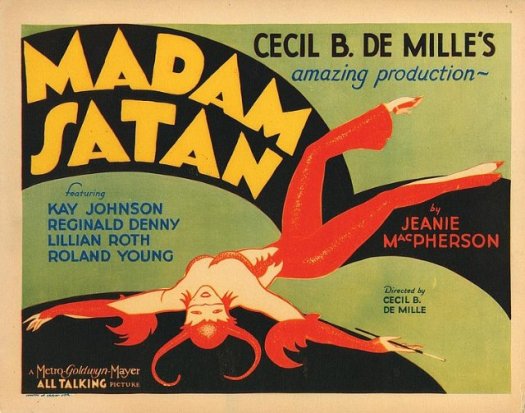
Cecil B. DeMented: MADAM SATAN (MGM 1930)


gary loggins's avatarcracked rear viewer

It’s wild! It’s weird! It’s Cecil B. DeMille’s  MADAM SATAN, a movie I’ve heard about for decades, but never had the chance to catch, until now. It’s got a little something for everybody, from drama to comedy to musical numbers to half-naked women to jazz baby Lillian Roth! Was it worth the wait, Dear Readers? Well… read on!

Better hold on to your seats though, as MADAM SATAN shifts abruptly in tone throughout it’s running time. It’s slow going the first few minutes, starting out as a stiff drawing-room drama. Angela Brooks (Kay Johnson) is worried about her dissipating  marriage to Bob, who neglects her and stays out all night. Now here comes comedy, with Bob (Reginald Denny ) and his pal Jimmy (Roland Young) trying to sneak in at dawn, two wasted wastrels drunk as the proverbial skunks. Suddenly, out of nowhere, the maid (Elsa Peterson) breaks out…

View original post 542 more words

What Lisa Watched Last Night #177: Twin Betrayal (dir by Nadeem Soumah)


On Sunday night, I watched the latest Lifetime premiere, Twin Betrayal!

Why Was I Watching It?

The obvious answer is that it was on Lifetime.  However, I also have a weakness for films about evil twins.  Don’t ask me why, I just do.

What Was It About?

Poor Jessica Klint (Jen Lilley)!  Not only is she struggling financially but her estranged husband (Peter Douglas) wants custody of their daughter.  We know her husband is a bad guy because he wears a suit even when he’s at home and his name is Lars.  Never in a Lifetime film has anyone good been named Lars.  (Before anyone mentions Lars and the Real Girl, allow me to point out that 1) that’s not a Lifetime film and 2) even if it was, it would be the exception to the rule.)

However, following a business trip to Dallas, Jessica’s problems get even worse!  After having a one-night stand with a cowboy named Henry (Nick Ballard), Jessica finds herself being blackmailed!  Where can she get the money?  Her wealthy father isn’t going to be much help.  How about from her twin sister, Alessandra (Jen Lilley)?  Sure, Jessica and Alessandra have a strained relationship and haven’t spoken in years but surely one twin will help the other, right?

And surely, no matter what personal issues there may be, one twin would definitely never try to frame the other for murder, right?

Right?

Watch the film to find out!

What Worked?

I enjoyed this one because, as any film about a twin betrayal should be, it was totally melodramatic, over-the-top, and very self-aware.  Whenever I give a film like this a good review, I always seem to get at least one comment from someone complaining that the film was too silly or implausible but I think those people are missing the point.  You don’t watch a film like Twin Betrayal because you want to see a serious exploration of what it’s like to be a twin.  You watch a movie like this because you want to have fun!  Twin Betrayal promised twisty entertainment and it delivered and, in the end, that’s all that really matters.

Jen Lilley obviously had a blast playing the twins, especially the wonderfully decadent Alessandra.  Alessandra had obviously been waiting for years for the chance to make her sister uncomfortable and she did not let the opportunity pass her by.

What Did Not Work?

On the one hand, I was really happy that part of the film took place in Dallas.  I don’t know if they actually filmed in Dallas but, at the very least, they at least included a shot of the Dallas skyline.  (Whenever a movie spends any time in Dallas, you always know that you’re going to get at least one shot of Reunion Tower and one shot of Bank of America Plaza.)  However, in reality, it’s doubtful that Jessica would have met any cowboys in Dallas.  Football aside, cowboys are really more of a Fort Worth thing.

“Oh my God!  Just like me!” Moments

Much like Jessica Klint, I have a weakness for cowboys.  Seriously, who doesn’t?  I’m also close to my sisters but, fortunately, none of us are twins.  If there’s anything that I’ve learned from watching Lifetime films, it’s that you can always depend on your sister unless she’s your twin sister.  Sadly, there’s always one evil twin and it seems like the good twin always ends up getting framed.  Hopefully, Lifetime will continue to explore this theme whenever they get around to making the inevitable Mary-Kate and Ashley biopic.

Actually, I guess if I was a twin, I probably would end up being the evil one.  Seriously, it just seems like it would be too much of a temptation to resist…

Lessons Learned

As I stated above, one twin will always be evil.  The trick is figuring out which one.

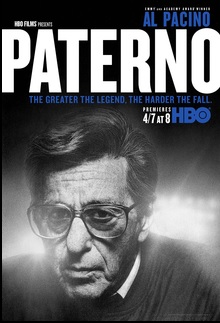
Film Review: Paterno (dir by Barry Levinson)


There’s a great scene that occurs about an hour into HBO’s latest original film, Paterno.

Joe Paterno (Al Pacino), the legendary and aging Penn State football coach, has been accused of knowing and failing to report that one of his former assistant coaches, Jerry Sandusky (Jim Johnson), was a pedophile.  With Paterno and his family plotting out strategy behind closed doors, a group of Penn State students gather outside of the Paterno home.  Instead of being angry that children were molested at their college, they’ve come to show their support for Paterno.

“JOE PATERNO!” they chant.

Scott Paterno (Greg Grunberg) hears the chants.  Scott is a lawyer and appears to be the only member of the Paterno family to truly understand the seriousness of the accusations.  Scott steps outside.

“JOE PATERNO!” the crowd continues to chant.

Scott thanks them for their support but then says that they also need to show the same support to all of Sandusky’s victims…

“JOE PATERNO!” the chant continues.

Struggling to be heard, Scott again asks them to remember that the children molested by Sandusky are the ones who need the most support…

Suddenly, the chant changes.  “SCOTT PATERNO!” the crowd starts to chant.  It’s not because they’ve heard anything that Scott’s said.  Instead, it’s because Scott’s a Paterno and, in the eyes of the crowd, that makes him royalty.  As the crowd continues to chant his name, Scott gives up and reenters the house.

Paterno could have used more scenes like that, scenes that explicitly showed the danger of blind hero worship as opposed to just telling us about it.  For the most part, Paterno feels like a well-written Wikipedia article.  You can’t deny the skill with which the film was made but, at the same time, it’s difficult not to get frustrated by Paterno‘s refusal to really dig too far underneath the surface of the story.

Some of the problem is with the film’s structure.  The film primarily takes place over the final six days of Paterno’s career.  Paterno spends the majority of the film locked away in his house, passive aggressively avoiding the question of what he knew and when he knew it.  His wife (Kathy Baker) and his other son, buffoonish Jay (Larry Mitchell), make excuses for him while Scott tries to get everyone to understand that the accusations aren’t just going to go away.  This is the part of the Paterno story that, in most films, would be summed up by an end credits title card.

As a result, Paterno never really deals with why Joe Paterno not only didn’t report Sandusky but also apparently protected him and that, to be honest, is the most important and troubling part of the story.  Since Sandusky is only briefly seen, we never get any insight into his relationship with Paterno and we never understand why Paterno would go to bat for an assistant who he, at one point, refers to as being “a pain in the ass.”  Was Paterno truly clueless about what was happening or did he just think he could sweep it under the rug and nobody would say anything because he was Joe Paterno?  Were Paterno’s actions the result of willful blindness or hubris?  It’s not so much a problem that the film leaves certain questions unanswered as much as it’s a problem that the film itself doesn’t seem to be all that concerned with the answers.

When the film isn’t concentrating on the Paternos, it’s concentrating on the reporter, Sara Ganim (Riley Keough), who originally broke the story.  However, these scenes are never quite as compelling as the film seems to think they are.  Riley Keough, who was so great in American Honey, seems miscast here.  For the most part. Sara seems to be there so that she can witness the Penn State students rioting and chanting, “Fuck the Media” after Paterno loses his job.

The best thing that Paterno has going for it is the lead performance of Al Pacino.  Pacino plays Paterno as a man who is very comfortable with the routine that he’s built up for himself.  His life revolves around Penn State, his team, and finally his own legend.  When the Sandusky story first breaks, Paterno can’t understand why he even has to be concerned about it.  He’s got a game against Nebraska coming up!  Awkward even around his adoring family, Paterno only seems to be truly comfortable when he’s coaching.  Pacino plays Paterno as a fragile and sickly man, a once ferocious lion brought down by a combination of cancer and scandal.  When we first see him, Paterno is coaching his team to a record-setting victory and he seems like a larger-than-life figure.  By the end of the movie, Paterno seems much smaller, a confused man who still can’t seem to bring himself to deal with why everyone is getting so upset.  It’s a great performance in an uneven film.


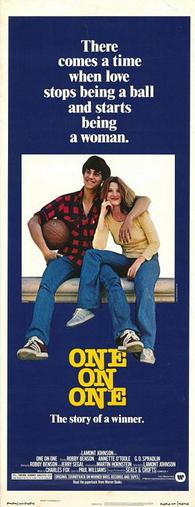
Cleaning Out The DVR: One On One (dir by Lamont Johnson)


Sometimes, I come across things on my DVR that I not only have no memory of recording but which I also cannot, for the life of me, figure out why I decided to record it in the first place.  I recorded the 1977 film One On One off of TCM on January 17th and I’m not really sure why.

It’s not that One On One is a terrible movie or anything like that.  It’s an extremely predictable film and it’s got one of those soundtracks that is extremely 70s but not cool disco-style 70s.  No, instead this film is full of the type of soft rock music that your grandmother listens to while driving to the local CVS Pharmacy.  (The majority of the songs are performed by a group called Seals and Croft and are painfully undanceable.)  But, even with that in mind, it’s not really a bad movie.  If I’m confused about why I recorded it, it’s because One on One is a movie about basketball, which is a sport that holds absolutely zero interest for me.

(My main issue with basketball has to do with the sound of all of those squeaky shoes on the court.)

But, before going any further, let’s watch a commercial:

One on One tells the story of Henry Steele (Robby Benson), a high school basketball star.  Henry is from Colorado, which this film seems to suggest is the equivalent of coming from Siberia.  When Moreland Smith (G.D. Spradlin). the renowned coach of Western University’s basketball team, offers Henry a full athletic scholarship, Henry negotiates a pretty good deal for himself.  Not only is his education going to be paid for but he also wins a guarantee that he’ll never be cut from the team and that his father will get a car.  All Henry has to do is keep his grades up but that shouldn’t be a problem.  Sure, Henry appears to be an idiot but the athletic department will set him up with a tutor and, as long as the coach is happy with him, it’s not like Henry’s actually going to have to go to class.

Upon arriving in Los Angeles, Henry picks up a hitchhiker (a very young Melanie Griffith) who promptly robs him of all of his money.  Once he arrives at the university, he discovers that Coach Smith is not going to be the surrogate father figure that he was expecting.  Instead, Coach Smith is a rather cold and ruthless taskmaster, whose main concern is winning.  When Henry, who is by far the shortest player on the team, struggles, Smith tells Henry that he needs to renounce his scholarship and return home.  When Henry refuses to do so, Smith becomes obsessed with trying to break him.

As Henry’s roommate, Tom (Cory Faucher), points out, Henry’s head is not in the game.  Instead, Henry can’t stop thinking about his tutor, Janet (Annette O’Toole).  At first, Janet assumes that Henry is just a dumb jock, largely because Henry’s a jock and he spends the first half of the movie acting really, really dumb.  Then, out of nowhere, Henry reveals that he’s not only read Moby Dick but he can quote passages from memory.  In fact, Henry even understands that Ahab was — wait for it — obsessed!  Oh my God, Janet realizes, Henry’s literate!  In fact, Janet exclaims that Henry is the first person she’s met who has actually read Moby Dick!  (Really?)  Janet and Henry fall in love but, unfortunately, Janet is already dating her psychology professor.

(The professor has got a beard that looks like it reeks of stale weed and he says stuff like, “Have you seen my sandals?,” so we know better than to take him seriously when he compares the popularity of college athletics to the rise of fascism.  When Henry accuses him of being a hippie, the professor just smirks and says something condescending.  Stupid hippie.)

Will Janet and Henry fall in love?  Will Janet dump her unattractive and unappealing boyfriend so she can date Henry?  Will Henry manage to pass his classes?  Will Henry ever get a chance to prove himself on the court?  Will … oh, why even ask these questions?  You already know what’s going to happen in this movie.  There’s really not a single unexpected moment to be found in One on One.  Everything about the film, from the coach’s ruthlessness to Henry’s transformation from idiot to savvy player, feels pre-ordained.  It’s a predictable movie but, at the same time, it’s a likable movie.  At the start of the film, Benson overplays Henry’s stupidity and O’Toole overplays Janet’s brittleness but, at the film progresses, both performers seem to relax and, by the time the end credits role, they’re actually a fairly likable couple.  Benson even gets a killer final line, one that I imagine made audiences in 1977 applaud.

That said, the film is pretty much stolen by G.D. Spradlin.  Spradlin was a former Oklahoma oilman who reinvented himself as a politician and then as a character actor.  Best known for playing Senator Pat Geary in The Godfather, Part II, Spradlin had a flair for bringing casually corrupt authority figures to life.  In One on One, Spradlin turns Coach Smith into a Mephistophelean figure, offering Henry success at the cost of his soul.  Coach Smith is arrogant, oily, casually racist, and an all-around jerk but, at the same time, it is also obvious that he knows how to lead a team to victory.  The great thing about Spradlin’s performance is to be found in not just how menacing he is but in how charismatic he is.  You never doubt that Coach Smith is both a lousy human being and an absolutely brilliant coach.  If nothing else, he’s good at his job.

As I said at the start of this review, I am not really sure why I recorded One on One but it turned out to be better than I was expecting.  It is a flawed and uneven film but worth watching for Spradlin’s intriguingly villainous turn.


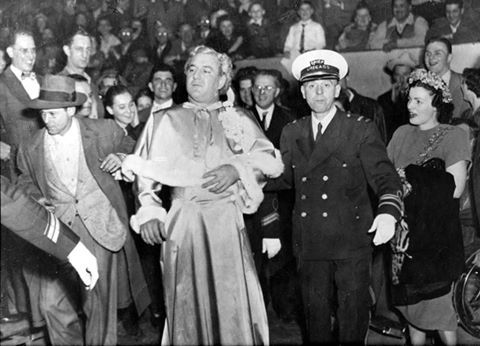
The Human Orchid: Gorgeous George in ALIAS THE CHAMP (Republic 1949)


gary loggins's avatarcracked rear viewer

WWE’s annual “Wrestlemania” extravaganza is scheduled for Sunday night in New Orleans, so I thought I’d dig up something wrestling related for tonight’s post… 

George Raymond Wagner (1915-1963), better known by the nom de guerre Gorgeous George, helped sell more television sets in the late 40’s/early 50’s than anyone this side of ‘Uncle’ Milton Berle . Professional wrestling was on the airwaves six nights a week, on every network, and Americans were clamoring to get a glimpse of the flamboyant antics of the  bleached-blonde, sequin-robed “sissy” who grappled like a wild tiger inside the squared circle. But TV sets were over many an Average Joe’s budget back in those days, so Republic Pictures took the opportunity to strike while the iron was hot, signing “The Toast of the Coast” to star in his own movie, 1949’s ALIAS THE CHAMP.

Gorgeous George in his heyday

The movie itself is nothing…

View original post 531 more words

Psycho-Killer: Peter Falk in MURDER INC. (20th Century-Fox 1960)


gary loggins's avatarcracked rear viewer

American filmgoers have had a long love affair with the gangster movie. The Pre-Code era was riddled with rat-a-tat-tat tommy gun action from Warner Brothers, MGM, and the other studios, helping to make stars out of Edward G. Robinson , James Cagney , Clark Gable , and a host of movie tough guys. Things quieted down once the Code was strictly enforced, but the gangster was still around, sometimes in comedy masks as likeable lugs, deneutered yet always lurking on-screen in some capacity.

By the late 1940’s, film noir introduced us to a darker vision, one seething with murderous rage. Cagney in WHITE HEAT, Robinson in KEY LARGO , and virtually everything Lawrence Tierney was in showed us gangsters were no “swell guys”, but anti-social psychopaths. The 50’s saw the gangster relegated mainly to ‘B’ status, just another genre to pit the good guys against the bad guys. Then in…

View original post 568 more words

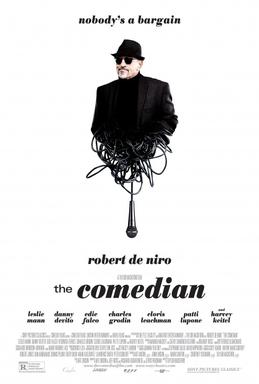
Insomnia File #33: The Comedian (dir by Taylor Hackford)


What’s an Insomnia File? You know how some times you just can’t get any sleep and, at about three in the morning, you’ll find yourself watching whatever you can find on cable? This feature is all about those insomnia-inspired discoveries!

If you were having trouble getting to sleep around two in the morning last night, you could have turned over to Starz and watched the 2016 film, The Comedian.

It probably wouldn’t have helped.  It’s not that The Comedian is a particularly interesting movie or anything like that.  Abysmally paced and full of dull dialogue, The Comedian would be the perfect cure for insomnia if it just wasn’t so damn loud.  Robert De Niro plays an aging comedian named Jackie Burke and, in this movie, being an aging comedian means that you shout out your punch lines with such force that you almost seem to be threatening anyone who doesn’t laugh.  However, the threats aren’t necessary because everyone laughs at everything Jackie says.

Actually, it’s a bit of an understatement to say that everyone laughs.  In The Comedian, Jackie is such a force of pure, unstoppable hilarity that all he has to do is tell someone that they’re fat and literally the entire world will shriek with unbridled joy.  The thing with laughter is that, in the real world, everyone laughs in a different way.  Not everyone reacts to a funny joke with an explosive guffaw.  Some people chuckle.  Some people merely smile.  But, in the world of The Comedian, everyone not only laughs the same way but they also all laugh at the same time.  There’s never anyone who doesn’t immediately get the joke and, by that same token, there’s never anyone who can’t stop laughing once everyone else has fallen silent.  The Comedian takes individuality out of laughter, which is a shame because the ability to laugh is one of the unique things that makes us human.

Anyway, The Comedian is about a formerly famous comedian who is now obscure.  He used to have a hit TV show but now he’s nearly forgotten.  Why he’s forgotten is never made clear because nearly everyone in the movie still seems to think that he’s the funniest guy in the world.  Jackie’s an insult comic and people love it when he tells them that they’re overweight or when he makes fun of their sexual preferences.  This would probably be more believable if Jackie was played by an actor who was a bit less intense than Robert De Niro.  When De Niro starts to make aggressive jokes, you’re natural instinct is not so much to laugh as it is to run before he starts bashing in someone’s head with a lead pipe.

Anyway, the plot of the film is that Jackie gets into a fight with a heckler.  The video of the fight is uploaded to YouTube, which leads to a scene where his manager (Edie Falco) stares at her laptop and announces, “It’s going viral!”  Later on, in the movie, Jackie forces a bunch of old people to sing an obnoxious song with him and he goes viral a second time.  I kept waiting for a shot of a computer screen with “VIRAL” blinking on-and-off but sadly, the movie never provided this much-needed insert.

In between beating up the heckler, ruining his niece’s wedding, and hijacking a retirement home, Jackie finds the time to fall in love with Harmony Schlitz (Leslie Mann), a character whose name alone is enough to The Comedian one of the most annoying films of all time.  Harmony’s father is a retired gangster (Harvey Keitel) and you can’t help but wish that Keitel and De Niro could have switched roles.  It wouldn’t have made the movie any better but at least there would have been a chance of Keitel going batshit insane whenever he took the stage to deliver jokes.

I’m not sure why anyone thought it would be a good idea to cast an actor like Robert De Niro as a successful comedian.  It’s true that De Niro was brilliant playing a comedian in The King of Comedy but Rupert Pupkin was supposed to be awkward, off-putting, and not very funny.  I’m not an expert on insult comics but, from what I’ve seen, it appears that the successful ones largely succeed by suggesting that they’re just having fun with the insults, that no one should take it personally, and that they appreciate any member of the audience who is willing to be a good sport.  Jackie just comes across like a cranky old misogynist.  Watching Jackie is like listening to your bitter uncle play Vegas.  I guess it would help if Jackie actually said something funny every once in a while.  A typical Jackie joke is to refer to his lesbian niece as being a “prince.”  Speaking for myself, when it comes to Robert De Niro being funny, I continue to prefer the scene in Casino where he hosts the Ace Rothstein Show.

Perhaps the funniest thing about The Comedian is that, when it originally released into theaters, it was advertised as being “The Comedian, a Taylor Hackford film,” as if Taylor Hackford is some type of Scorsese-style auteur.  Taylor Hackford has been making films for longer than I’ve been alive and he has yet to actually come up with any sort of signature style beyond point and shoot.  The second funniest thing is that The Comedian was billed as a potential Oscar contender, up until people actually saw the damn thing.

Though it may have failed at the box office, The Comedian seems to show up on Starz quite frequently.  They always seem to air it very late at night, as if they’re hoping people won’t notice.  

Previous Insomnia Files:

  1. Story of Mankind
  2. Stag
  3. Love Is A Gun
  4. Nina Takes A Lover
  5. Black Ice
  6. Frogs For Snakes
  7. Fair Game
  8. From The Hip
  9. Born Killers
  10. Eye For An Eye
  11. Summer Catch
  12. Beyond the Law
  13. Spring Broke
  14. Promise
  15. George Wallace
  16. Kill The Messenger
  17. The Suburbans
  18. Only The Strong
  19. Great Expectations
  20. Casual Sex?
  21. Truth
  22. Insomina
  23. Death Do Us Part
  24. A Star is Born
  25. The Winning Season
  26. Rabbit Run
  27. Remember My Name
  28. The Arrangement
  29. Day of the Animals
  30. Still of The Night
  31. Arsenal
  32. Smooth Talk

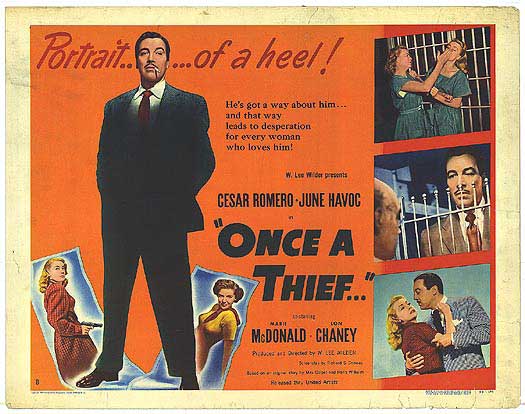
Female Trouble: ONCE A THIEF (United Artists 1950)


gary loggins's avatarcracked rear viewer

I devote a lot of time and space on this blog writing about ‘B’ Movies, those frequently overlooked quickies from days past made on the cheap for the bottom of a double feature bill. Some are highly innovative, others less so, but they served as a kind of on-the-job-training ‘film school’ before there was such a thing. Most (but not all) of them have something to offer, whether a performance by a cast member on their way up (or down) or an early effort by a future director of note. Recently, I watched ONCE A THIEF, and while it certainly broke no new ground, I found it a tight little ‘B’ noir featuring in this case a female protagonist trapped in that familiar downward spiral.

‘B’ Movie Queen June Havoc (sister of famed ecdysiast* Gypsy Rose Lee) is the troubled gal in question, a down on her luck lady named…

View original post 429 more words

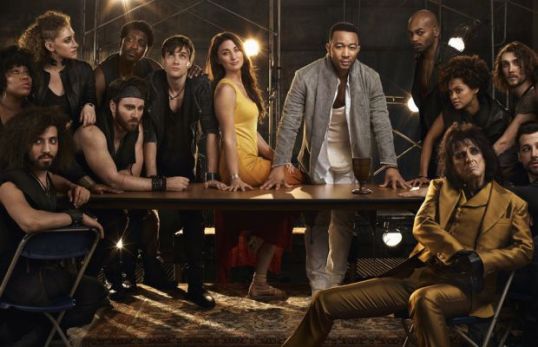
Let’s Talk About Jesus Christ Superstar Live In Concert (dir by David Leveaux and Alex Rudzinski)


On Sunday night, my family and I ended our Easter Sunday by watching Jesus Christ Superstar Live.  Now, before I say anything else about NBC’s latest live musical production, there are a few things that I should make clear:

In college, there was this girl in my dorm who started the semester as a pagan, spent a month as an evangelical, and then ended the semester as a pagan again.  When she was going through her evangelical phase, she would listen to the Jesus Christ Superstar soundtrack constantly, with the volume turned up so loud that you could hear it up and down the hallway.  Seriously.  24 hours a day.  7 days a week.  After three days, I was sick of hearing it.  I found myself wondering if anyone had ever been driven to murder over having to listen to Heaven On Their Minds one too many times.  Fortunately, something happened to cause her to once again lose her faith and she went back to listening to Fall Out Boy.

For quite some time afterward, I would instinctively cringe whenever I heard any of the songs from Jesus Christ Superstar.  In fact, it wasn’t until I first came across the 1973 film version that I was able to once again appreciate it as a musical and overlook its association with that annoying pagan.  From the first time I watched it, I really liked that movie and, every time I rewatch it, I like it even more.  When I started watching Sunday’s production, I was seriously wondering if I’d be able to set aside my feelings about both the pagan and the movie and judge the television version on its own merits.

Well, I shouldn’t have worried.  While I still prefer the original film version, Sunday’s television production was wonderfully conceived and executed.  From the first note of music to the final curtain call, Jesus Christ Superstar Live In Concert captured my attention and refused to let it go, keeping me watching even through the lengthy commercial interruptions.  The musicians and the singers sounded great, or at least they did once the audience mics were turned down.  (At the start of the show, the audience was so loud that they threatened to drown out Heaven On Their Minds.)  The production design was simply amazing, combining downtown New York with ancient Judea in a way that reminded us just how timeless the musical’s story truly is.  (The 1973 film opened with a bunch of hippies driving through the desert.  The 2018 production opened with Jesus’s name being spray painted on a wall.  Both openings felt perfect for the story that was being told.)

As for the cast, Brandon Victor Dixon was compellingly intense as Judas and Norm Lewis was properly intimidating as Caiaphas.  The big marquee name was Alice Cooper, who obviously enjoyed playing the production’s burlesque version of Herod.  That said, the entire show was stolen by Ben Daniels, who was wonderfully conflicted as Pilate.  I wasn’t as impressed by Sara Bareilles as Mary Magdalene, or I should say that I apparently wasn’t as impressed with her performance as everyone else on twitter.  (To me, she seemed a bit too peppy, especially in the early numbers.  I know I’m in the minority as far as that goes.)  Finally, in the role of Jesus, John Legend grew on me.  Of course, in the show, Jesus doesn’t really become an interesting character until he sings “Poor Jerusalem” and that was the moment that Legend himself seemed to truly feel comfortable with the role.

It’s probably pointless to compare the 1973 film to the 2018 version but still, I did find it interesting how the live version reimagined the relationship between Jesus and Judas.  In the 1973 version, Jesus is largely aloof for almost the entire film.  Judas seems to be frustrated because he can’t figure out what Jesus is planning to do and Jesus himself never seems to feel that he can allow himself to get truly close to anyone.  In the film, Judas’s anger is the anger of someone who has spent the last few years of his life following a leader and who is now wondering if he’s been wasting his time.  He’s like a Democrat who has just realized that his party is even less interested in reigning in Wall Street than the Republicans.

In the live version, the Jesus/Judas relationship came across as being a bromance gone wrong.  In this version, Judas’s disatisfaction is less political and more jealousy over Jesus being closer to the Magdalene than to him.  When Judas snaps at Jesus in the 2018 version, Jesus actually seems to get personally offended.  The dynamic between Dixon and Legend is definitely different from the one between Ted Neeley and Carl Anderson in the original version.  Of course, there’s nothing wrong with that.  That’s one of the wonderful things about theater.  When successfully done, each subsequent production brings something new to an old story.

Jesus Christ Superstar definitely worked.  As far as the current wave of live television musicals is concerned, this was the best one yet.