A few nights ago, as I watched the 1970 documentary Woodstock, I thought to myself, “Goddamn, this is a long movie…”
Just how long Woodstock is depends on which version that you watch. The original version, which won an Oscar for Best Documentary and which was also nominated for Best Editing (the first nomination ever for the legendary Thelma Schoonmaker), had a running time of little over three hours. The version that I watched was the “director’s cut,” which clocks in at close to four hours. Of course, since Woodstock was shot over the course of a three-day music festival, it could have been even longer. 32 acts performed at Woodstock but only 14 of them appeared in the original version of the film. (By including footage of Jefferson Airplane, Janis Joplin, and Canned Heat, the director’s cut increases that number to 17.)
As for the music that does appear in the film, your reaction is going to depend on how much you like the music of the late 60s. Jimi Hendrix, Sly and the Family Stone, and Ten Years After are all brilliant but, at the same time, you also have to deal with Joan Baez rambling about her imprisoned husband and singing perhaps the smuggest version of Swing Low Sweet Chariot ever recorded. Watching Crosby Stills & Nash perform, I was reminded of every boring grad student that I’ve ever known while John Sebastian’s stage patter sounded almost like a parody of hippie shallowness. I would say that Woodstock was a perfect example of why the rockers are better remembered than the folk singers, except for the fact that my favorite musical performance in the film comes from Arlo Guthrie:
That said, Woodstock really isn’t about the music. That may sound like a strange thing to say, considering that almost every concert film made since owes a debt to Woodstock but really, the most interesting parts of the film aren’t the performances. Instead, it’s the interviews with the people involved, not only the concertgoers themselves but also the citizens of the nearby town of Bethel, New York. Some of the people interviewed as very positive about the sudden hippie invasion. Quite a few others are not. One older man seems to be more concerned with working on his car than anything else. Like any good documentary, Woodstock provides a record of the time when it was made. As much as I like music, I absolutely love history and, to me, that’s the main appeal of Woodstock. Watching the film is like getting a chance to step into a time machine and experience an age that I would otherwise never get a chance to know.
Whenever I watch Woodstock, I’m always struck by the fact that I probably would not have enjoyed it as much as some of the people who attended. I have a feeling that I’d be like that poor girl who is spotted about halfway through the film, crying about how it’s too muddy and crowded. I always cringe a little when I see everyone bathing in the same dirty pond. (A young Martin Scorsese worked on the film and reportedly spent the entire festival wearing an immaculate white suit. That’s something that I would have liked to have seen.) And yet, at the same time, I just find the documentary fascinating to watch. I always find myself wondering what became of the people who were interviewed in the film. How many of the hippies are still hippies and how many of them eventually ended up working on Wall Street? Did the cranky guy working on his car even bother to see the film? (It wouldn’t surprise me if he didn’t. Movies, especially movies about a bunch of stoned hippies, really didn’t seem to be his thing.) To me, questions like those are what makes a movie like this fascinating.
As an event, the original Woodstock is often cited as being the best moment of the 60s counterculture. (30 years later, the 1999 Woodstock would be remembered as one of the worst moments in the history of both music and American popular culture.) As a film, Woodstock is undeniably optimistic that the people who braved the rain and the mud so that they could see Joan Baez would somehow manage to build a new society. Still, sharp-eyed viewers will note a hint of what was to come. One of the first people interviewed in the documentary is a local shopkeeper. As he speaks, a newspaper can be seen over his shoulder.
The headline reads: “Sharon’s Pals Balk At Probe,” a reference to the investigation into the murder of Sharon Tate by Charles Manson and his followers. Seen today, that headline serves as a reminder that, even at the time it was occurring, the peaceful promise of the original Woodstock would be short lived.
The haunting opening scene of I Just Don’t Dig Him…
Ah, parents and their children!
It doesn’t matter what year it is or where they live or who they are. Parents never understand their children and children never understand their parents and, ultimately, there’s always that one friend who ends up nearly chopping his finger off.
At least, that’s the message that I got from watching the 1970 educational film, I Just Don’t Dig Him.
This film was produced by the state of Connecticut’s Department of Mental Health and apparently, it was designed to show that adults and teenagers actually had more in common than they realized. For instance, in this film, both groups share an intense loathing for each other.
The film is about a father and his son. The father spends all of his time complaining about his son. The son spends all of his time complaining about his father. For some reason, we’re treated to a really gross close-up of the son’s bare feet. Meanwhile, the father applies aftershave as if the fate of the world depended upon it. The son’s best friend assures him that his father isn’t so bad. The father’s best friend assures him that his son isn’t so bad. And then the son’s friend accidentally chops off his finger while fooling around with a car engine. The father helps to stop the bleeding while his son stares at him resentfully. The message appears to be that adults and children need to communicate better but, ultimately, you want an adult around if anyone starts bleeding.
I like films like this, largely because I’m an unapologetic history nerd and I Just Don’t Dig Him is such a product of its time that it might as well be wearing bell bottoms and dropping brown acid. Watching the film today, it’s hard not to be amused by how intense both the father and the son are about … well, everything. When the father shaves, you’re first thought is, “That man should not be allowed to handle anything sharp.” When the son talks on the phone, you feel bad for whoever’s having to listen to him whine. Generations are at war, this film seems to say, and there’s no hope until the younger generation realizes that they have no business working on cars.
With this being 4/20 and the world currently being caught up in its own increasingly tedious generational war, today seems like the perfect time to share I Just Don’t Dig Him!
What’s an Insomnia File? You know how some times you just can’t get any sleep and, at about three in the morning, you’ll find yourself watching whatever you can find on cable? This feature is all about those insomnia-inspired discoveries!
Last night, if you were unable to sleep at one in the morning, you could have turned over to Starz and watched the 1999 film, The Minus Man!
The Minus Man is a strange little film about a rather odd man. Vann (Owen Wilson) is a drifter. He avoids questions about his past with the skill of someone who specializes in being whatever he needs to be at the moment. When he rents a room from Doug and Jane Durwin (Brian Cox and Mercedes Ruehl), he tells them that he’s only drunk one beer over the course of his entire life, he always works, he always pays his rent on time, and that he’s never smoked “the dope.” He says it so earnestly that it’s difficult to know whether you should take him seriously or not. And yet, Vann is so likable and so charmingly spacey that you can’t help but understand why people automatically trust him. Vann succeeds not because people believe him but because they want to believe him.
Vann’s new in town. As he explains to a cop who pulls him over, he’s just interested in seeing the countryside. From the minute that Vann shows up, he’s accepted by the community. He goes to a high school football game and befriends the local star athlete (Eric Mabius). He tries to help repair Doug and Jane’s marriage, which has been strained ever since the disappearance of their daughter. With Doug’s aid, Vann gets a job at the post office and proves that he wasn’t lying when he said he was a hard worker. Vann even pursues a tentative romance with the poignantly shy and insecure Ferrin (Janeane Garofalo).
In fact, it’s easy to imagine this film as being a sweet-natured dramedy where a drifter comes into town for the holidays and helps all of the townspeople deal with their problems. However, from the first time we see him, we know that Vann has some issues. As Detective Graves (Dennis Haysbert) puts it, Vann is a “cipher, a zero.” There’s nothing underneath the pleasant surface. Of course, Graves doesn’t really exist. Neither does his partner, Detective Blair (Dwight Yoakam). They’re two figments of Vann’s imagination. They appear whenever Vann is doing something that he doesn’t want the world to find out about.
Whenever the urge hits him, Vann kills people. When we first meet him, he’s picking up and subsequently murdering a heroin addict named Casper (Sheryl Crow). Vann makes it a point to use poison because he says that it’s a painless death. Vann also says that he’s doing his victims a favor, as he feels that the majority of them no longer want to live. Vann is the type of killer who, after having committed his latest murder, sees nothing strange about volunteering to help search for the missing victim.
Like a lot of serial killer films, The Minus Man cheats by giving all of the best lines to the killer. In real life, most serial killers are impotent, uneducated losers who usually end up getting caught as a result of their own stupidity. In the movies, they’re always surprisingly loquacious and clever. While Vann may not be a well-spoken as Hannibal Lecter, he’s still a lot more articulate than the majority of real-life serial killers. As I watched the film, it bothered me that we didn’t really learn more about Vann’s victims. (It would have been a far different film if someone had mentioned that Vann’s third, unnamed victim was “Randy, who was just having a bite to eat while shopping for a present for his little girl’s birthday.”) Too often, The Minus Man seemed to be letting Vann off the hook in a way that a film like Henry: Portrait of a Serial Killer or even American Psycho never would.
That said, The Minus Man may be occasionally uneven but it’s still an intriguing and sometimes genuinely creepy film. The Minus Man makes good use of Owen Wilson’s eccentric screen persona and Wilson gives a very good performance as a man who has become very skilled at hiding just how empty he actually is. Much like everyone else in the film, you want to believe that there’s more to Vann than meets the eye because, as played by Wilson, he’s just so damn likable. Over the course of the film, Vann and Doug develop this weird little bromance and, as good as Wilson is, Brian Cox’s performance is even more unsettling because we’re never quite sure what Doug may or may not be capable of doing. Even Janeane Garofalo gives a touching and believable performance as a character who you find yourself sincerely hoping will not end up getting poisoned.
With all that in mind, I wouldn’t suggest watching this film if you’re trying to get over insomnia. This is the type of unsettling film that will keep you awake and watching the shadows long after the final credits roll.
Here in Massachusetts, every third Monday in April is designated Patriots’ Day, a state holiday commemorating the 1775 Battles of Lexington and Concord which gave birth to the American Revolutionary War. The annual Boston Marathon is run on this day, as well as an 11:00AM Boston Red Sox game, so it’s a pretty big deal in this neck of the woods. Those of you in other parts of the country can celebrate by watching JOHNNY TREMAIN, Walt Disney’s film about a young boy living in those Colonial times that led up to the birth of “a new nation, conceived in liberty and dedicated to the proposition that all men are created equal”.
Based on the 1943 Newbery Award-winning YA novel by Esther Forbes, the film tells the story of the Revolution through the eyes of young Johnny Tremain (Hal Stalmaster), a teen apprenticed to silversmith Mr. Lapham (crusty Will Wright
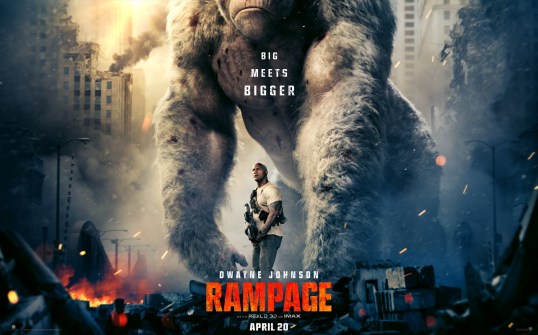
I thoroughly enjoyed this film!! Why? Because it’s a Dwayne Johnson movie. He’s an actor, a brand, and you know what you’re going to get. EVERY. SINGLE. TIME. Did it have a couple of slow moments? Yep. Were the characters, especially the villains, one dimensional or 8-Bit? Sure. But, so what? Rampage is fun and sometimes it’s great to take a bath in nostalgia and see some shit blow up.
A Dwayne Johnson movie is really a sub-genre all its very own. I won’t compare it to other movies. His movies are also fun because we just like Dwayne Johnson so much as a Man that we feel like he’s a friend. It becomes reflexive that we hear Dwayne Johnson has a movie out, it’s as if one of our friends just made one. I told a guy at work that I was going to see a Dwayne Johnson movie, he knew exactly what I meant, and he referred to Dwayne Johnson as a National Treasure. Yes, we’re now getting married in the fall and are registered at Pottery Barn.
I played Rampage when I was a wee bairn. In fact, with the help of my friend Robbie, we stayed up all night and destroyed the whole country. Congratulations! I, like every boy in the Y-Generation, was excited for this film. Sidenote: sorry everyone, Millenials are no more, you’ve been folded into Y, but take heart – “Even children get older, I’m gettin older …too.”
An Evil Corporation, run ostensibly by Ivanka Trump and her Generic Trump brother, create a virus that mutate ordinary animals into genetically spliced super-creatures that run amok. That’s it- that’s the plot- and like the video game upon which it was based, Rampage the Film is beautifully Wabi Sabi.
The film begins with The Rock who is closed off from people because after seeing their terrible acts in war and poaching, he just can’t let them in. *sniff* The Rock’s best friend is George- an albino gorilla- who can sign. Soon, the Trump family look alikes’ experiment accidentally infects George, a wolf, a crocodile, and a partridge in a pear tree. The Partridge Monster doesn’t actually destroy anything, but he blatantly re-gifts Christmas presents; therefore, he’s the worst monster of all because he destroys your self-esteem.
George, the wolf, and crocodile get BIGGER, the government – embodied by Jeffrey Dean Morgan- try to stop the monsters, but can’t. Jeffrey becomes an ally of The Rock, helping him along the way with helicopter keys, air strikes, and lending him his edger so The Rock can really make his lawn POP for barbecue season. The Trumps put out a signal to draw the monsters to Chicago, hoping they’ll kill each other off. The Trumps hope that they’ll be able to take a sample of the monster flesh, replicate it, and sell it to whomever. It doesn’t go well. The monsters go nuts. I’m not going to spoil anything. Needless to say, the last 40 minutes of the film are amazingly satisfying.
Congratulations! Dwayne you’ve done it! The Video Game Curse is Broken.
Milos Forman passed away yesterday in Danbury, Connecticut. He was 83 years old.
When the news of Forman’s passing first broke, many commentators focused on the fact that, over the course of his career, Forman accomplished something that few other directors have. Forman not only directed two movies that won the Academy Award for Best Picture but he also won two directing Oscars. On the surface level, One Flew Over the Cuckoo’s Nest and Amadeus may have looked like two very different films but both of them dealt with a nonconformist and the people who sought to destroy him. Time and again, that was a theme to which Forman would return.
Loves of a Blonde (1965)
Even before Forman won his first Oscar, he had established himself as an important director. As a young man, Forman survived the two greatest evils of the 20th Century, Nazism and Communism. Both his mother and the man who he originally believed to be his father died in concentration camps during World War II. After the war ended, Forman would discover that his real father was Otto Kohn, a Jewish architect who was also a survivor of the Holocaust.
The Fireman’s Ball (1967)
Forman started his film career working in the Czech Republic, which at that time was communist-controlled and known as Czechoslovakia. Forman was one of the leading directors of the Czech New Wave, making films that took a satirical look at life under the communist regime. It was during this time when he received his first two Oscar nominations, both for Best Foreign Language Film. In 1968, Forman was fortunate enough to be in Paris when the Russians decided to invade Prague and put an end to all that subversive individual freedom. While the new Czech goverment kept itself busy by banning all of his films, Forman moved to the United States.
Taking Off (1971)
Forman’s first film in the States was a satire called Taking Off, which failed at the box office but has since developed a cult following. Despite the box office failure of Taking Off, Forman was hired to direct 1975’s One Flew Over The Cuckoo’s Nest, a film in which an authoritarian institution reacts to a nonconformist by ripping out part of his brain. Not only did this film win the Academy Awards for picture and director but it also won awards for actor, actress, and screenplay. One Flew Over The Cuckoo’s Nest was the first film to win the big five awards since It Happened One Night.
One Flew Over The Cuckoo’s Nest (1975)
Forman continued to make films about nonconformists. Hair was a film adaptation of the famous hippie musical. Ragtime looked at early 20th century America through the eyes of a proud black man who refused to bow under the prejudice of the time. Amadeus portrayed Mozart as a rock star and Salieri as a man who declared war on God, all the while trying to please a culturally illiterate ruler. Later films like Valmont, The People vs. Larry Flynt, and The Man In The Moon were a bit more uneven but all of them featured moments that celebrated the right of the individual to refuse to go along with the crowd.
Ragtime (1981)
A master director of actors, Forman directed Jack Nicholson, Louise Fletcher, and F. Murray Abraham to Oscar wins while Brad Dourif, Howard Rollins, Eizabeth McGovern, Tom Hulce, and Woody Harrelson were all nominated for performances that they gave in Forman films.
Milos Forman may be gone but his films will live on.
During a torrential rainstorm on a dark, bone-chillingly cold night, a band of men guarding a cache of gold are all murdered by a masked outlaw gang. The marauders then enter the home of the leader, a married man with a family. He is the first to die, and after his wife and young daughter are brutally raped, they too are killed. But the marauders haven’t seen the little boy hiding in the shadows, witnessing his family’s violent demise. The house is burned to the ground, but the boy lives, storing the memory of the men who destroyed his family, until fifteen years pass, and the boy has become a man with an unquenchable thirst for revenge…
This dark, disturbing scene sets the stage for DEATH RIDES A HORSE, a gem of a Spaghetti Western directed with style by Giulio Petroni, made in 1967 but not released stateside until 1969…
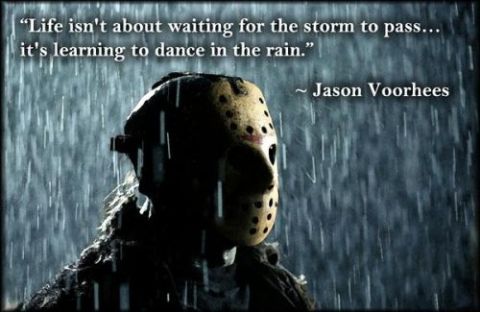
As we all know, with one notable exception, the majority of the cast of the original Friday the 13th didn’t exactly go on to greater heights of stardom. The movie may have made a lot of money but it didn’t lead to bigger roles for Laurie Bartram and Mark Nelson. When the movie was released in 1980, Betsy Palmer was the best known member of the cast and, according to the book Crystal Lake Memories, the cast of Friday the 13th Part 2 used to joke that maybe the cast of the first film actually had been murdered in the woods because no one ever saw them again.
Of course, today, no one can watch Friday the 13th without saying, “Oh my God, Kevin Bacon’s wearing a speedo!” but, at the time he was cast as doomed Jack, he was just another struggling actor. However, if things had gone as originally planned, today Bacon would not be the only respected actor with Friday the 13th on his resume. When the film was in pre-production, director Sean Cunningham originally tried to get a star to play the role of Alice, the only camp counselor to make it out of Camp Crystal Lake alive.
Who was that star?
Sally Field.
The future multiple Oscar-winner was seriously pursued for the role of Alice. She did not, as some sources claim, audition for the role. Instead, she merely turned it down and went on to win her first Oscar for Norma Rae. Once it became obvious that Field had no interest in going to Camp Crystal Lake, Cunningham decided to go with a cast of unknowns and Adrienne King was given the role of Alice.
Personally, I think that worked out for the best. Not only was Adrienne King perfect for the role but the use of unknowns undoubtedly made the film more effective when it was released. After all, everyone knows that a star is going to survive. (That’s one reason why, when seen today, it’s still jarring to see Kevin Bacon get dispatched.)
Here’s a few more bits of trivia to make your Friday the 13th a good one:
2. After the success of Friday the 13th, Adrienne King was stalked by an obsessed fan and, when she was asked to return for 1981’s Friday the 13th Part 2, she requested that her role be as small as possible. As a result, Alice showed up just long enough to be killed off. Amy Steel replaced King as the film’s heroine. Steel would later go on to star in another classic slasher film, April Fool’s Day.
3. Originally, 1982’s Friday the 13th Part 3 was envisioned with Steel returning to play Ginny. However, Steel turned down the chance to return, leading to the filmmakers instead simply remaking the first film (in 3D!). After being cast in the lead role, Dana Kimmel requested that the sex and drugs featured in the original script be toned down. That’s just one of many reasons why many consider Friday the 13th Part 3 to be the worst film in the series.
4. Even if she didn’t return for Part 3, Amy Steel was instrumental in convincing her friend, actor Peter Barton, to appear in 1984’s Friday the 13th — The Final Chapter. Barton’s likable performance as the handsome but definitely doomed Doug was a highlight of the film. Another highlight was Ted White’s performance as Jason. As opposed to the character he played, White once threatened to quit the film because he didn’t like the way the director was treating the film’s cast.
5. The working title for 1985’s Friday the 13th: A New Beginningwas Repitition. Having killed Jason at the end of The Final Chapter, Corey Feldman returned for a cameo that he shot at the same time that he was filming The Goonies for Richard Donner. Along with the first film, this is the only one to not feature Jason Voorhees committing any murders (unless you count the ones that he committed in Tommy’s nightmare) and the film’s ending was specifically set up so that Tommy could take over Jason’s murderous ways. However, the film’s disappointing box office reception led to Jason returning as a zombie in the next film.
6. With its intentional comedy and its emphasis on action over blood, 1986’s Friday the 13th: Jason’s Lives is a rarity in that it was a Friday the 13th film that actually got somewhat good reviews. John Shepherd, who played Tommy in a New Beginning, was offered a chance to return to the role but turned it down, saying that the film’s went against his religious beliefs. As a result, Thom Matthews was cast as Tommy. Matthews also played the lead in another horror comedy, Return of the Living Dead.
7. 1988’s Friday the 13th Part VII: The New Blood was originally envisioned as being a cross-over with A Nightmare on Elm Street. However, when Paramount (who held the rights to Jason) and New Line Cinema (who held the rights to Freddy) could not come to an agreement, the project was temporarily abandoned. According to Crystal Lake Memories, the film’s executive producer, Barbara Sachs, wanted Friday the 13th Part VII to be the first Friday the 13th to win an Academy Award and came with an extremely ambitious storyline that she envisioned being directed by none other than Federico Fellini. Cooler heads prevailed and, instead, The New Blood found Jason battling a young woman with psychic powers.
8. The initial working script for 1989’s Friday the 13th Part VIII: Jason Takes Manhattanwas entitled “Ashes to Ashes.” The film’s anemic box office convinced Paramount to sell the franchise to New Line Cinema.
9. After New Line purchased the franchise, the first film’s director, Sean S. Cunningham, returned to produce 1993’s Jason Goes To Hell: The Final Friday. Much like The New Blood, this was originally envisioned as being a Freddy vs. Jason film but that plan was, again, abandoned. Freddy Krueger does make one brief appearance, when his clawed hand appears and drags Jason’s hockey mask to Hell. Director Adam Marcus also included a shot of a book that was meant to be the Necronomicon as an attempt to link Jason to the Evil Dead universe as well. Because New Line did not own the rights to Evil Dead, Marcus did not tell them what he was planning to do and instead asked Sam Raimi if he could borrow the prop. Raimi thought it was a great idea. Less amused was Tom Sullivan, the man who actually created the prop and who received no money for its use in Jason Goes To Hell.
10. The 8 year gap between the release of Jason Goes To Hell and 2001’s Jason Xwas a result of Freddy vs. Jason being stuck in development Hell. Jason X was largely produced to keep audiences from forgetting about Jason. Screenwriter Todd Farmer appeared in Jason X, playing a character named Dallas (a nod to the original Alien).
11. After spending two decades in development, 2003’s Freddy vs Jason finally brought the two infamous serial killers together. Kane Hodder, who had played Jason in every film since New Blood, was not asked to return for Freddy vs. Jason, supposedly because the film’s director wanted Jason to tower over Freddy and it was felt that Hodder was not tall enough. At one point, Freddy vs. Jason was envisioned as ending with Pinhead appearing and defeating both of them but New Line could not secure the rights to the Hellraiser character.
12. 2009’s Friday the 13thwas meant to reboot the series. Perhaps the less said about it, the better. Plans for a sequel to the reboot are currently trapped in the same development Hell that once imprisoned Freddy vs. Jason.
Clint Eastwood is posing as a preacher in a small Montana town, giving his Sunday sermon. Meanwhile, carefree Jeff Bridges steals a Trans Am off a used car lot and goes for a joyride. Clint’s sermon is interrupted by a hit man who opens fire in the church, chasing Eastwood down through a wheat field, when Bridges comes speeding along, running the killer down. Clint hops in the Trans Am, and the two become fast friends, setting up THUNDERBOLT AND LIGHTFOOT, a wild and wooly tale that’s part crime caper, part character study, and the directorial debut of Michael Cimino.
Clint plays Korean War veteran John Mahoney, a criminal known as “The Thunderbolt” who pulled off a successful half-million dollar armory robbery. His ex-gang members (George Kennedy ,Geoffrey Lewis ) think he betrayed them, and are out to kill him, but not before finding out where the loot is…
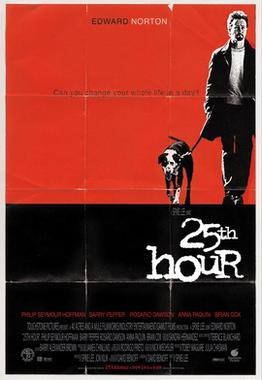
First released in 2003, 25th Hour is one of those films that gets better and better with each subsequent viewing.
Monty Brogan (Edward Norton) may have done some very bad things in the past but nearly everyone has benefited. His childhood friends, a trader named Frank (Barry Pepper) and a teacher named Jacob (Philip Seymour Hoffman), both get to live vicariously through their friend, even if neither one of them is quite willing to admit it. Monty’s father (Brian Cox) is a retired fireman who now owns a bar that was largely purchased with the money that Monty made from dealing drugs. Monty’s girlfriend, Naturelle (Rosario Dawson), is “living high” off of the profits of Monty’s drug deals. For that matter, so is Monty. Monty has a nice apartment, a loyal dog, and a supportive boss named Uncle Nikolai (Levan Uchaneishvili).
Of course, Monty understands that he’s in the business of destroying lives. When Monty first met Naturelle, he had just completed a transaction with a well-dressed businessman. Years later, when Monty is sitting on a bench with his dog, that same man approaches him and begs for more drugs. The man’s no longer wearing a suit. Now, he’s apparently homeless and so addicted that he takes it personally when Monty informs him that he’s no longer in the drug-selling business.
Why is Monty no longer selling? Someone told on Monty. When the DEA showed up at his apartment, it didn’t take long for them to find the packages that he had hidden in the cushions of the couch. For all of his swagger and confidence, it would appear that Monty wasn’t quite as clever as he thought he was. Monty was arrested and subsequently sentenced to seven years in prison.
The majority of 25th Hour takes place during Monty’s final night of freedom, a night that he’s planning on spending it with Frank and Jacob, both of whom could have made the same mistakes that he did but, for whatever reason, they didn’t. Needless to say, Monty’s got a lot on his mind. For all of his attempts to hide it, Monty isn’t as tough as he pretends to be. He knows that it’s not going to be easy for him to do seven years in confinement. He’s terrified of getting raped in prison and he worries that he’s going to be locked in a holding cell with 200 other criminals. Both he and his friends know that, even if he does survive, he’ll be a different man when he gets out. Frank suggests that he and Monty could open a bar when Monty is released but they both know this is an empty promise. Not only is Monty is scared of the future but he’s haunted by the past. Is he getting what he deserves? What if he had made different choices? Will Nautrelle wait for him or, as some of his associates suggest, is she the one who betrayed him in the first place?
Over the course of the night, both Frank and Jacob are also forced to deal with their feelings towards Monty. Frank is a Type A personality, the one who spends his day screaming into telephones and who eagerly looks forward to exploiting bad economic news for his own financial gain. Frank says that Monty is getting what he deserves but, as the film progresses, it becomes obvious that Frank knows that he has more in common with Monty than he wants to admit. Jacob, on the other hand, is a socially awkward teacher who is struggling to deal with a crush that he’s developed on one of his students (Anna Paquin). If Frank fears that he’s more like Monty than he wants to admit, Jacob wishes he could be more like him. At first, it’s hard to imagine that these three men could ever have been close friends but, as soon as you see them together, it all makes sense.
As directed by Spike Lee, one of American cinema’s greatest provocateurs, 25th Hour is more than just the story of one man’s last night of freedom. Over the course of the film, Monty becomes a symbol of not just New York City but of America itself. Driven by self-interest, Monty has spent his life ignoring the consequences of his actions and, now that he has no choice but to confront them, it’s too late. During the film’s most famous scene, Monty stares in a mirror while his reflection rants against every single neighborhood and ethnic group in New York City. The rant is such a powerful scene that it’s easy to miss the most important point. Only at the end of the rant does Monty’s reflection admit that he’s as much to blame for his life as any of them.
Oh yes, the Rant. The Rant is so famous that I was almost tempted to not mention it in this review, just because it doesn’t seem as if there’s much left to be said about it. Even people who dislike the film seem to be in agreement that the Rant is one of the most powerful and incendiary moments in early 21st century cinema. The Rant gives us a portrait of a divided and angry society in collapse and it’s a portrait that is probably even more relevant today than it was when the film was first released. The Rant feels like such a classic Spike Lee moment that it’s surprising to discover that the Rant was included in the script even before Lee was attached to the film.
A few things about the Rant:
The film deliberately leaves it ambiguous as to whether or not Monty is actually speaking. We see the back of his head and his reflection but the movement of his head rarely seems to match the movement of his reflection. Regardless of whether Monty is actually speaking or just imagining the rant, the scene does make clear that, even on his way to prison, Monty can only truly express himself while alone. Of course, once he’s locked up, Monty’s not going to be alone for at least seven years.
“Enron!” I have to admit that, when I recently rewatched film, I laughed when Monty started ranting about Enron. I can vaguely remember a time when everyone was obsessed with Enron and Halliburton and all that other stuff so I found it funny that I briefly had to struggle to recall just what exactly Enron was. 16 years from now, I wonder if people will watch old movies and TV shows and say, “Why are they all so obsessed with Russia?”
As well-done and brilliantly acted as it may be, the Rant has tended overshadow an even better moment. It has been said that the key to a successful work of art is a good ending. As a writer, I can tell you that endings are a hundred times more difficult than beginnings. Fortunately, 25th Hour has an absolutely brilliant ending.
After having finally convincing Frank to beat him up (in an effort to make himself look tougher once he arrives in prison), Monty is being driven to the prison by his father. As they leave New York City, Monty takes one final look at the city and it’s citizens enjoying freedom that he’ll never again have. (This is such a New York City that you can’t help but feel that it’s adding insult to injury that Monty’s going to have to serve his time upstate.) As he drives, Monty’s father begins to talk…
It’s all about decisions and consequences. Monty made his decisions years ago. Over the course of Monty’s last night of freedom, Frank, Jacob, Naturelle, and even Uncle Nikolai made their decisions. And now, as he drives his son to prison, Monty’s father is forced to make a decision of his own. There’s so much great acting to be found in 25th Hour but, during that final soliloquy, Brian Cox upstages all of them. Brian Cox is one of those character actors who seems as if he’s been around forever. He’s the type of dependable actor who, much like Monty’s father, is often taken for granted. If nothing else, you have to be thankful for a film like 25th Hour because it gives everyone a chance to be reminded of just how brilliant an actor Brian Cox truly is.
(Here’s a random bit of a Brian Cox trivia. While everyone knows that, in Manhunter, Brian Cox was the first actor to play Hannibal Lecter, he also played Winton Churchill the same year that Gary Oldman won an Oscar for playing the same role in Darkest Hour.)
25th Hour is not an easy film to watch. At times, it’s one of the most depressing films ever made. It’s tempting to say that, as bad as things ultimately turn out for him, you’re glad that Monty has his father and his friends but that’s really not true. No matter how much his friends care about him or how much Naturelle and his father love him, Monty’s going to prison and his story is simply not going to have a happy ending.
And yet, 25th Hour is one of those films that you can’t look away from and, after you watch it, you simply can’t forget. Every time I watch 25th Hour, I find new details to appreciate. With each subsequent viewing, the pungent dialogue becomes even more multi-layered. With each subsequent viewing, Monty becomes even more of an intriguing and tragic figure. This is a film that makes you appreciate the brilliance of Edward Norton and mourn the fact that Barry Pepper rarely gets roles as good as his role here. With each viewing, 25th Hour reminds you of what a great talent we lost when we lost Philip Seymour Hoffman. It’s film that gets better with each viewing.
Assuming that Monty survived and managed to stay out of trouble, he should be out of prison by now. Hopefully, wherever he is, he’s doing okay.
 The headline reads: “Sharon’s Pals Balk At Probe,” a reference to the investigation into the murder of Sharon Tate by Charles Manson and his followers. Seen today, that headline serves as a reminder that, even at the time it was occurring, the peaceful promise of the original Woodstock would be short lived.






 Through the Shattered Lens