I Watched Gibsonburg (2013, dir. by Jonathon Kimble and Bob Mahaffey)


Based on a true story, Gibsonburg is my favorite type of sports story.  It’s about a team that won even though everyone expected it to lose.

During the 2005 regular season, Gibsonburg High School’s baseball team compiles a desultory record of 6 wins and 17 losses.  With a record like that, no one gives them much of a chance in the state’s championship tournament.  But, against the odds, the Gibsonburg Golden Bears not only win the first game of the tournament but the second one and then the third one.  Soon, it starts to look like Gibsonburg could actually come out of nowhere to win the state championship!

I liked Gibsonburg.  There’s a lot of baseball scenes but, even more importantly, the movie is about what the underdog baseball team does for the spirit of its hometown.  Gibsonburg has been hit hard by the recession and businesses are shutting down left and right.  One of the team’s best players had just been told that the family’s bakery is going to be closed in a few weeks.  The team’s victories gives the entire town something to believe in and it shows that you can succeed even when everyone is expecting you to fail.  The team starts to win after the player comes across as valuable coin that might be lucky but, as the movie shows, the coin had nothing to do with it.  Gibsonburg won because the team came together and refused to give up.  The movie is a heart-warming celebration of community, friendship, and baseball.

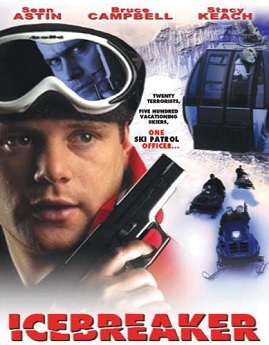
Icebreaker (2000, directed by David Giancola)


Carl Grieg (Bruce Campbell) is a terminally ill terrorist who takes over a Vermont ski resort while his henchpeople search the nearby mountains for a lost shipment on plutonium.  The only man who can stop Carl is a wiseass but determined ski patroller, Matt Foster (Sean Astin).  Not only does Matt have to stop Carl from getting his hands on the plutonium but he also has to save his fiancée (Suzanne Turner) and her father (Stacy Keach), both of whom are being held hostage by Carl.  Since his future father-in-law thinks that he’s nothing more than good for nothing ski bum, this is Matt’s chance to prove himself worthy of joining the family.

Icebreaker tries to be Die Hard in a Ski Lodge but it fails because Sean Astin is no one’s idea of an action star.  With his laid back and goofy manner, Astin miscast as someone who can leap from from an exploding ski lift and land in the snow with barely a scratch on him.  This was the last film that Sean Astin made before Peter Jackson offered him the role of Sam in the Lord of the Rings trilogy.  Needless to say, Astin was much better cast in that role than as a knock-off of Bruce Willis.

As for the rest of the cast, Bruce Campbell hams it up as Carl and, while it is always good to see Bruce, he also appears to be having so much fun that it makes him a less than convincing terrorist.  With his shaved head, it’s easy to mistake Bruce for Billy Zane.  Stacy Keach does a good job playing someone who is never not annoyed.  Considering that his daughter wants to marry a ski bum and they’re being held hostage by a villain who wants to make his very own nuclear bomb, can you blame him?

There’s some skiing action but none of it is really memorable.  There is also a scene featuring repeated shots of a counter on a bomb, announcing that Astin only had 30 seconds to do what he needs to do before everything explodes.  I think the timer may have been broken because it took a lot long than 30 seconds for that countdown to reach zero.  If you really want to see Die Hard In A Ski Resort, I suggest sticking with Cliffhanger.  That one not only only has Sylvester Stallone and Michael Rooker cracking jokes but also John Lithgow speaking with a posh accent.

Retro Television Reviews: Hitchhike! (dir by Gordon Hessler)


Welcome to Retro Television Reviews, a feature where we review some of our favorite and least favorite shows of the past!  On Sundays, I will be reviewing the made-for-television movies that used to be a primetime mainstay.  Today’s film is 1974’s Hitchhike!  It  can be viewed on YouTube!

Claire Stevens (Cloris Leachman) is an emotionally vulnerable woman who is dealing with her loneliness and depression by driving to San Francisco to visit her sister.  As she’s driving, she spots a young man named Keith (Michael Brandon).  Keith is standing on the side of the road and holding out his thumb.  At first, Claire does the smart thing and she drives by him without stopping.  However, Claire starts to feel guilty so she turns around and — NO, CLAIRE!  WHAT ARE YOU THINKING!? — offers him a ride.  It turns out that he’s going to San Francisco as well!

At first, the drive is awkward.  Keith says that he doesn’t want to talk and he doesn’t appreciate it when Claire tries to make him listen to the classical music station.  But, as they drive, Keith starts to let down his defenses.  He says that he wishes that he could just sail away on the ocean.  He encourages Claire to embrace life and to just go for it.  They stop at a pier and have lunch.  Claire buys Keith a silly white hat and she places it on his head because, as she puts it, “it’s cute.”  Keith argues with her but he doesn’t take off the hat.  However, when Keith spots some cops, he immediately leads Claire away from them.

The viewer watches all of this with a sense of dread because the viewer knows what Claire doesn’t.  The viewer knows that Keith is the son of a wealthy man.  The viewer knows that Keith had been having an affair with his stepmother, who was only a few years older than Keith.  And the viewer knows that Keith murdered his stepmother with the same weapon that he’s currently carrying in his bag.  The police are looking for Keith and Keith is willing to do just about anything to stay free.

I have to admit that I yelled a little when Claire offered Keith a ride because it was such an obviously stupid thing to do.  Everyone knows that it’s never a good idea to pick up a hitchhiker.  And, if you’re a woman who is driving down an isolated road by yourself, the last thing you should ever do is offer a ride to some strange man standing on the side of the road.  Claire’s actions were foolish but, because she was played by Cloris Leachman, it was still hard not to sympathize with her.  Claire is someone who feels as if she’s been abandoned by the world and, quite obviously, she sees Keith as a kindred spirit.  Over the course of their journey, it becomes obvious that Claire is using Keith as a substitute for what she’s missing in her life.  He becomes both a son and a companion to her.  Unfortunately, Keith tends to go into a rage whenever he sense anyone getting too close to him.

Hitchhike! is a short movie and, for all the dramatic build-up, it ends on a rather anti-climatic note.  Cameron Mitchell shows up as a detective who is looking for Claire and Keith and he gives a mannered performance that is oddly over-the-top by even his generous standards.  That said, Michael Brandon has the blandly handsome look of a generic but charming serial killer while Cloris Leachman gives a credible and sympathetic performance as Claire.  If nothing else, this film can be watched with The Hitcher as a double feature.  Never stop your car for anyone!

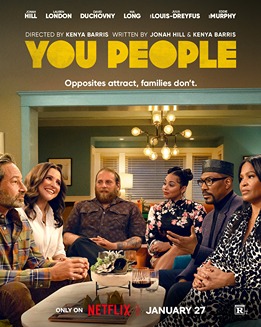
Film Review: You People (dir by Kenya Barris)


Ezra Cohen (Jonah Hill) and Amirah Mohammed (Lauren London) have been dating for six months.  Ezra is a Jewish atheist who works at a brokerage firm but who says his lifelong dream has been to be a podcaster.  Lauren is Black and a devout Muslim.  A graduate of Howard University, she is pursuing a career as a designer.  Despite coming from very different backgrounds, Ezra and Amirah are deeply in love and want to get married.  However, becoming engaged also means …. MEETING THE PARENTS!

Shelley and Arnold Cohen (played by Julia Louis-Dreyfus and David Duchovny) are self-styled progressives who immediately embarrass Ezra by going out of their way to trying to show how liberal and non-racist they are.  Shelley, in particular, goes out of her way to bond with Amirah but it’s immediately obvious that Shelley views Amirah as being more someone to show off than as an actual human being.  Meanwhile, Akbar Mohammed and Fatima Mohammed (played by Eddie Murphy and Nia Long) are members of the Nation of Islam who admire Louis Farrakhan and who claim that the Jews were behind the slave trade.

Just from that plot description, you can see a huge part of the problem with the new film, You People.  Whereas Shelley’s problem is that she’s too quick to brag about how much she loves the idea of having a black daughter-in-law, Akbar’s problem is that he’s an anti-Semite.  His main objections to Ezra are that 1) Ezra isn’t black and 2) Ezra’s Jewish.  While Shelley takes Amirah shopping, Akbar tries to get Ezra killed by tricking him into wearing “the wrong colors” to a barbershop.  While Shelley shows off Amirah to all of her liberal friends, Akbar shoves Ezra onto a basketball court.  While Shelley is awkwardly trying to prove that she’s an ally, Akbar is inviting himself to Ezra’s wild Las Vegas bachelor party.  (Akbar is disturbed to discover that Ezra has a “coke guy.”  If this film had been made ten years ago, Ezra would have had a weed guy and it would have been easier to buy the film’s contention that Akbar is being unreasonable.)  Shelley is certainly obnoxious and she fully deserves to get called out for her behavior.  But Akbar is an anti-Semite who peddles the type of conspiracy theories that have been at the center of the alarming rise in recent hate crimes.  Whereas Shelley is clueless, Akbar is actually malicious.  And while that’s a story that one certainly could try to tell, it also makes it a bit difficult to buy the film’s fanciful ending.  The movie ultimately can’t decide if it wants to be a fearless satire of race relations or a feel-good romcom.  The tone of the film switches from scene to scene and Kenya Barris’s direction is so inconsistent that he makes Judd Apatow look like a disciplined filmmaker by comparison.

The cast is full of talent but the characters are largely one-dimensional.  Jonah Hill is undoubtedly a good actor but he’s also nearly 40 years old and, with his full beard, he looks about ten years older, which makes it a bit hard to believe that he would be that concerned with getting the approval of his future in-laws.  At first, a role of Akbar would seem ideal for Eddie Murphy but, with the exception of a scene where Akbar quizzes Ezra on his favorite Jay-Z song in an attempt to trick Ezra into saying the “n-word,” Murphy doesn’t really get to do much other than stand around with a pained expression on his face.  Probably the most interesting performance in the film comes from Mike Epps, who plays Akbar’s brother and who is one of the few characters willing to call everyone out on their hypocrisy.  But, unfortunately, Epps is only in a handful of scenes and the film uses him as more of a dramatic device than a fully rounded character.

As I watched You People, I couldn’t help but think about another film about an interracial wedding, Rachel Getting Married.  That film provided a believable and multi-layered look at two different cultures coming together.  You People, however, can’t quite make up its mind what it believes or what it wants to say and, unfortunately, what it does say is often said with a surprising lack of self-awareness.  At times, it’s so proud of itself that it feels like it almost could have been written by Shelley Cohen.

You People is streaming on Netflix.

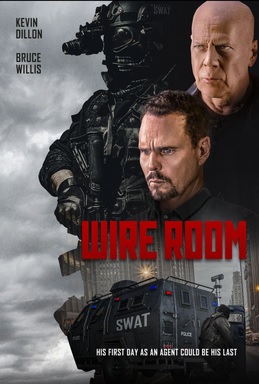
Film Review: Wire Room (dir by Matt Eskandari)


Wire Room tells the story of Justin Rosa (Kevin Dillon).

Once upon a time, Justin was a member of the Secret Service.  But, for reasons that are never really made clear, Justin was eventually demoted and found himself working for Homeland Security.  After 18 years, Justin has finally achieved his dream.  He’s been assigned to a wire room, a high-tech command center where HSI agents conduct surveillance on high-profile criminals.  On his first day, Justin shows up late.  He gets yelled at by his superior, Shane Mueller (Bruce Willis).  Justin explains that he couldn’t find anywhere to park.  Shane is not impressed.  Of course, Shane takes a taxi to and from work because Shane is a total alcoholic who likes to spend his free time at the local strip club.

After meeting Shane and Nour Holborow (Shelby Cobb), Justin is left in the wire room alone.  His sole job is to keep an eye on a British arms dealer, Eddie Flynn (Oliver Trevena, who chews the scenery with relish).  Shane is obsessed with taking down not only Eddie but also all of the corrupt cops that are on Eddie’s payroll.  Eddie has no idea that his entire mansion is wired and that Homeland Security is watching him while he wanders around the house in his leopard-print robe.  Eddie also doesn’t know that a bunch of assassins are coming to his house to try to kill him.

Realizing that Eddie is about to be killed, Justin tries to call Shane but Shane is too busy getting drunk to answer his phone.  When Nour calls about an unrelated manner, Justin asks her for advice.  She tells him to call Shane.  He already tried that!  Realizing that Homeland Security is full of drunks and incompetents, Justin decides to call Eddie himself.  Soon, Justin and Eddie enter into an uneasy partnership.  Justin tries to keep Eddie alive while Eddie tries to figure out how Justin knows what’s happening at his house.  To me, it would seem like it shouldn’t be difficult for Eddie to figure out that Homeland Security has wired his house but no one in this movie is particularly smart.

Wire Room was one of the last movies that Bruce Willis made before announcing his retirement from acting.  Willis doesn’t get much screen time and his dialogue consists mostly of profane insults.  That said, it is nice to see Willis playing a good guy again and there’s even a few hints of the old Willis charisma to be found in his performance.  If nothing else, he seems to enjoy the scenes in which Shane gives Justin a hard time.  As for Justin, he really is a truly stupid character who makes so many obvious mistakes that it’s hard not to worry about the fact that he’s been entrusted with keeping the homeland safe.  Fortunately, Kevin Dillon is an actor who can make stupidity likable.  (There’s a reason why Johnny Drama was the only character on Entourage that anyone really cared about.)

Like the majority of Willis’s recent films, Wire Room is a low-budget action film.  The special effects aren’t particularly special and the action scenes are fairly rudimentary.  A huge problem with the film is that the viewer is never quite sure how close or how far anyone is from the titular location.  For instance, we’re continually told that people are heading towards the wire room but it seems like it takes them forever to actually show up.  At one point, we see a group of bad guys heading up to the wire room but, somehow, Justin and Shane still have time to scrounge up some weapons and have a fairly detailed conversation before any of them actually arrive.  For all of the shooting and the yelling, Wire Room also never convinces us that there’s much at stake as far as the story is concerned.  Shane, for instance, doesn’t seem to be particularly upset when Justin tells him about what is happening at Eddie’s house, despite the fact that Eddie’s death would destroy Shane’s investigation into police corruption.  If Shane, the man in charge of the investigation, doesn’t care about what happens then why should we?

That said, there is some perhaps unintentional enjoyment to be found in Wire Room.  Kevin Dillon plays Justin as being so dense and so slow-witted that the film almost becomes a parody of the recent spate of movies and television shows that have been released about hyper competent government agents.  There are laughs to be found and Bruce Willis gets to be the good guy again.  Wire Room is not a particularly memorable movie but it is a decent time waster.

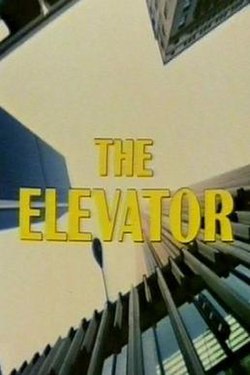
Retro Television Reviews: The Elevator (dir by Jerry Jameson)


Welcome to Retro Television Reviews, a feature where we review some of our favorite and least favorite shows of the past!  On Sundays, I will be reviewing the made-for-television movies that used to be a primetime mainstay.  Today’s film is 1974’s The Elevator!  It  can be viewed on YouTube!

Marvin Ellis (Roddy McDowall) hates his job.  He’s been assigned to be the manager of a new high-rise office building.  Parts of the building are still under construction but that hasn’t stopped the company that owns it from selling out office space.  When Mrs. Kenyon (Myrna Loy) comes by and asks to look at the top floor penthouse, Ellis agrees.  In public, Ellis is always friendly and always courteous.  It’s only under the most stressful of circumstances that Ellis reveals that he feels as if the building has been built of out lies and cheap material.

Ellis and Kenyon soon find themselves in a stressful situation when they are trapped in an elevator.  Of course, they’re not alone in the elevator.  There’s also Dr. Reynolds (Craig Stevens), his wife (Teresa Wright), and his mistress (Arlene Golonka).  And then there’s Robert Peters (Barry Livingston), a teenager who has inherited a fortune.  And finally, there’s Eddie Holcomb (James Farentino).  Eddie has a suitcase full of money that he’s stolen from an office in the building.  He’s also got a loaded gun.  And, perhaps worst of all, he has an intense fear of tight places.  The longer that he’s trapped in the elevator, the worse his claustrophobia becomes.

Because the building isn’t really finished yet, the elevator’s alarm button doesn’t really work.  Other than the passengers trapped inside, the only people who know about the stalled elevator are Eddie’s partners-in-crime.  Irene (Carol Lynley) is Eddie’s girlfriend and she just wants to get the situation resolved with as little violence as possible.  Pete (Don Stroud) is Eddie’s sociopathic friend.  Pete is not only determined to rescue Eddie and retrieve the suitcase.  He’s also determined to take care of any potential witnesses by killing everyone on the elevator.

The Elevator is a disaster film, along the lines of Airport and The Towering Inferno.  Due to the hubris of a faceless corporation, a group of people find themselves trapped in a potentially catastrophic situation.  Some of them react with bravery.  Some of them react with cowardice.  All of them get a chance to reveal a bit of who they are on the inside.  Some might say that being trapped in an elevator is not quite as bad being trapped in a fiery skyscraper or being a passenger on a airplane that’s being held hostage by a mad bomber.  Technically, they’re right but I am also going to admit right now that I absolutely hate elevators and I try to avoid them whenever I can.  I always say that this is because running up and down several flights of stairs is a good way to keep my legs looking good and certainly that’s part of it.  But an even bigger reason is that I dread the thought of being stuck in a confined space with a bunch of strangers.  If I was on an elevator that was stuck between floors, I would probably lose my mind.  I have a hard enough time just standing in line for longer than 3 minutes.  As directed by Jerry Jameson, The Elevator does as good job of capturing the feeling of being trapped in a small space.  It’s not a film to watch if you have claustrophobia.

As for the cast, Myrna Loy is a delight as the eccentric Mrs. Kenyon.  And seriously, how can you dislike any film that gives Roddy McDowall a monologue about how much he hates skyscrapers?  It’s an entertaining, if undemanding, film.  After watching The Elevator, I’ll keep taking the stairs.

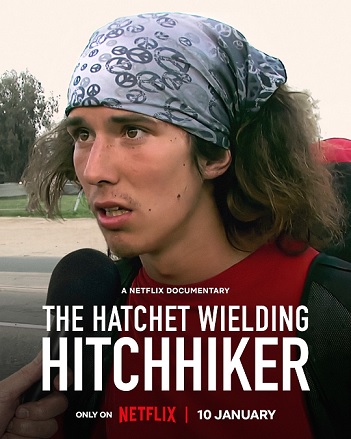
Film Review: The Hatchet Wielding Hitchhiker (dir by Colette Camden)


How dumb can people be?

That is the question that’s posed by the new Netflix documentary, The Hatchet-Wielding Hitchhiker, and the answer would appear to be that they can be extremely dumb.  The documentary takes a look at the story of Caleb “Kai” McGillvary, who went from being an internet sensation to an accused murderer over the course of three months in 2013.  Even more so, though, it’s about the people who enabled him, through a combination of their own stupidity and greed.

Kai first found fame when he was credited with stopping a hate crime.  A man named Jett McBride smashed his car into a black pedestrian and, while the pedestrian was trapped between the car and a parked truck, McBride attacked the people who attempted to help.  Kai, who was a hitchhiker who McBride had apparently picked up just a few hours before, jumped out of the car and proceeded to hit McBride three times with a hatchet.  A local news reporter interviewed Kai afterwards and was immediately taken with Kai’s spaced-out style.

At the time, it’s perhaps understandable that people were so happy that Kai had prevented McBride from killing several people that they didn’t stop to ask themselves why Kai had a hatchet with him in the first place.  Still, it does seem like it would have been a good thing to consider before the reporter uploaded his interview with Kai to YouTube.  And when Kai became a viral sensation (though I have to admit that I had never even heard of him until I saw this documentary so perhaps viral is in the eye of the beholder), maybe a few people should have said, “Before we try to make him a star, maybe we should consider that the only thing we know about him is that he’s been traveling around the country with a freaking hatchet in his backpack.”

Instead, the reporter tracked down Kai for a second interview.  Kai played guitar and expounded on his philosophy of life.  (Jack Kerouac would have kicked Kai out of a moving car but other people were impressed.)  Jimmy Kimmel had him on his show as a guest, though the interview was cut short by the fact that Kai was obviously unstable.  Despite the fact that Kai was an unpredictable alcoholic with a violent streak, there was talk of giving Kai his own reality show.  One of the documentary’s cringiest moments comes when someone says that it was felt Kai could be an unhoused Kardashian and that he could star in a show about how happy people were to be living on the streets.  None of those plans really came to fruition but Kai still remained popular enough that someone was always willing to buy him a drink or let him crash at their place for the night.  When a prominent New Jersey attorney was found beaten to death in his home, police were surprised to discover that the last man the attorney had been seen with was Kai, the Hatchet-Wielding Hitchhiker.

This documentary is about the odd nature of fame in the internet age.  It’s been said that, due to social media, everyone has at least 15 devoted fans and that’s probably true.  That said, this documentary is even more about stupidity.  Kai is not interviewed but the people who made him famous are spoken with and, with one or two exceptions, every single one of them comes across as being either extremely stupid, extremely callous, or both.  Everyone was so eager to discover (and profit off of) the newest sensation that none of them stopped to consider that Kai was an obviously unstable alcoholic who was hitchhiking across the country with a hatchet.  Indeed, he would later brag that Jett McBride went crazy specifically because Kai gave him a joint laced with LSD.  (For the record, when Jett McBride was arrested and taken to prison, he tested positive only for marijuana.  So, Kai probably was lying about that but who would brag, even falsely, about inspiring someone to commit a hate crime?)  Everyone was so eager to make Kai a star that no one stopped to wonder if they should.

Anyway, it’s an interesting documentary.  The main lesson is don’t trust anyone who just happens to have a hatchet on them, regardless of whether or not they’re a funny stoner who can play the guitar.  It’s a good lesson to learn.

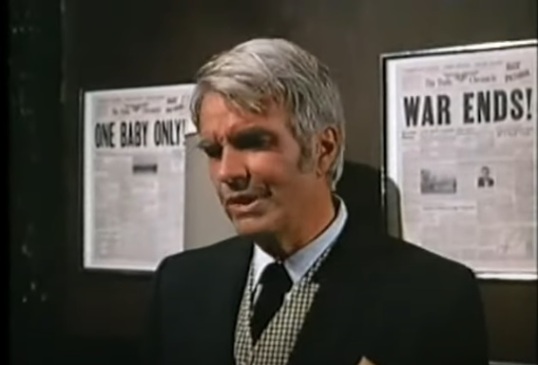
Retro Television Reviews: The Last Child (dir by John Llewellyn Moxey)


Welcome to Retro Television Reviews, a feature where we review some of our favorite and least favorite shows of the past!  On Sundays, I will be reviewing the made-for-television movies that used to be a primetime mainstay.  Today’s film is 1971’s The Last Child!  It  can be viewed on YouTube!

Welcome to the “near future.”

Panicked by hysterical claims about overpopulation and environmental catastrophe, Americans have sacrificed the majority of their civil liberties.  Smiling policeman stand on every corner and in every public hallway.  Of course, once their authority is challenged, those smiles quickly disappear.  Crude posters have been put up everywhere, demanding that everyone watch their consumption of natural resources.  The social engineers and the eugenicists are in charge.  Anyone over the age of 65 is ineligible for medical care and encouraged to consider euthanasia.  Couples are allowed to have only one child and the government requires that anyone who gets pregnant a second time have an abortion.  Anyone who questions the policy is told that they have no choice but to follow the law.  It’s their civic duty.  The media, meanwhile, runs headlines declaring that the one child policy has led to world peace.
Alan and Karen Miller (played by Michael Cole and Janet Margolin) have already had their one child.  That their child died shortly after birth doesn’t matter in the eyes of Barstow (Ed Asner), the Himmleresque head of the Population Control Police.  Every couple is allowed one child and that’s it.  When Karen gets pregnant a second time, she is determined to have the baby.  She and Alan know that their only hope is to cross the border into Canada.  Helping them is a retired U.S. Senator (Van Heflin, in his final performance) who is opposed to the government’s policies.  Caught in the middle of Karen’s brother, Howard (Harry Guardino).  Howard works for the Population Control Police and he knows just how far Barstow is willing to go to keep Karen from having her baby.

The Last Child opens with a title card informing us that the film takes place in the “not-too-distant future.”  Along with all of the propaganda posters, that’s the only real sign that this film is meant to be taking place in the future.  There’s no “futuristic” technology.  Everyone dresses in the latest 1971 fashions.  Everyone drives the latest 1971 automobiles.  Though the decision may have been motivated by the film’s low-budget, the lack of the typical sci-fi trappings serves the film well.  The Last Child does not take place in a sleekly designed future and it doesn’t takes place in an apocalyptic wasteland.  Instead, it takes place in a world that is just as shabby as you would expect a world controlled and decorated by a government bureaucracy to be.  It’s a gray dystopia, populated by people who have given up their individuality.  It’s a world that’s visually boring by design and that makes it all the more disturbing.

The Last Child is an effective and well-acted film.  It probably feels more plausible today than it did when it aired back in 1971.  In many ways, with its portrait of unfeeling government officials and bland authoritarianism, it’s the perfect film for the age of COVID.  Indeed, the government’s policy of refusing to provide life-saving care for people over the age of 65 is reminiscent of what many pundits advocated for at the height of the COVID pandemic.  As for the film’s one child policy, that too is a concept that has become recently popular with many American academics.  Among many members of the so-called “elites,” there’s a definite need to try to control people and that very real need is what makes The Last Child so disturbingly plausible.  In The Last Child, sanctuary is found in Canada.  Today, of course, Canada is at the forefront of the euthanasia trend.  Of course, in 1971, the Prime Minister of Canada was Pierre Trudeau and not Justin.

Pierre Trudeau’s personal motto was “Reason before passion” and that’s certainly the philosophy that fuels the dystopian society at the center of The Last Child.  It’s a film that holds up today as both a thriller and a prophecy,

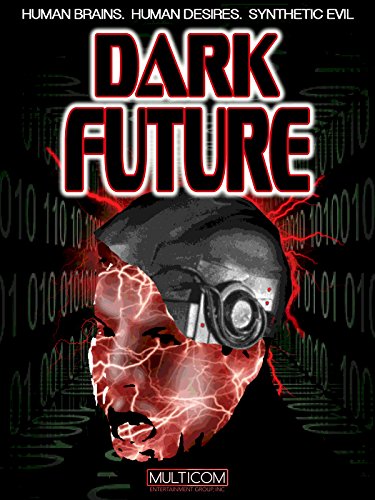
Dark Future (1994, directed by Greydon Clark)


This future is really dark.

A mysterious plague wiped out most of humanity and a group of fascist cyborgs took over.  (They actually prefer to be called Synthetics but everyone knows that they’re actually cyborgs.)  The remaining humans were exiled to an abandoned train station that was renamed the Forbidden Zone.  In the Forbidden Zone, the human survive as bartenders and sex slaves for their cyborg overlords.  If you want to enter or leave the Forbidden Zone, you have to put your hand on one of those balls of lightning that people used to buy at Spencer’s Gifts.

The humans have been told that they are all sterile, which is one reason why they are willing to accept living in such a dark future.  When a baby is born in the Forbidden Zone, it blows up the sterility myth.  Kendall (Darby Hinton, who co-wrote the script and who is best remembered for starring in Andy Sidaris’s Malibu Express) is a bartender who tries to protect the baby while rallying the other humans to rise up against the cyborgs Synthetics.  The Synthetics want that baby for their own incoherent reasons.  War breaks out between man and the half-machines.

Even by the normal standards of director Greydon Clark, this is low budget nonsense.  The action’s slow, the story is incoherent, the acting is bad, you get the idea.  There are a lot of scenes of people standing around fires that have been lit in barrels.  There’s so many barrels on fire that the Forbidden Zone should have burned down years ago.  Also, why is it called the Forbidden Zone when anyone can enter it whenever they want to?  The humans aren’t allowed to leave the train station/night club/brothel so it seems like the rest of the world should be called the Forbidden Zone.  The future is dark and not easily understood.  So is this movie.

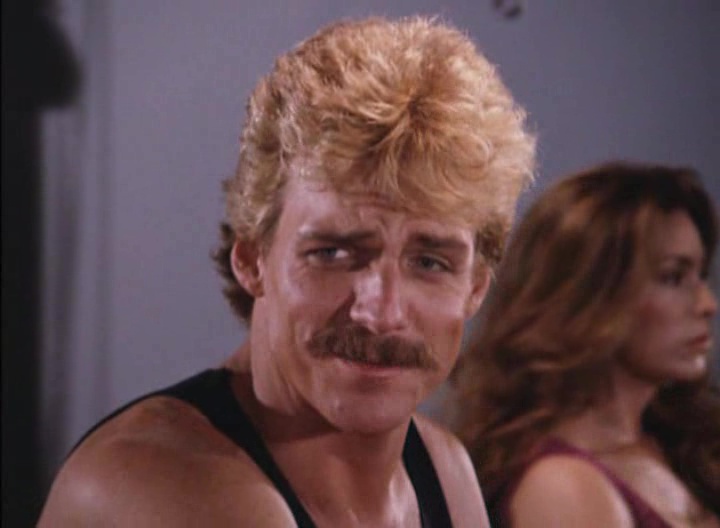
Humanity’s only hope, Kendall

Retro Television Reviews: Quarantined (dir by Leo Penn)


Welcome to Retro Television Reviews, a feature where we review some of our favorite and least favorite shows of the past! On Sundays, I will be reviewing the made-for-television movies that used to be a primetime mainstay. Today’s film is 1970’s Quarantined! It can be viewed on YouTube!
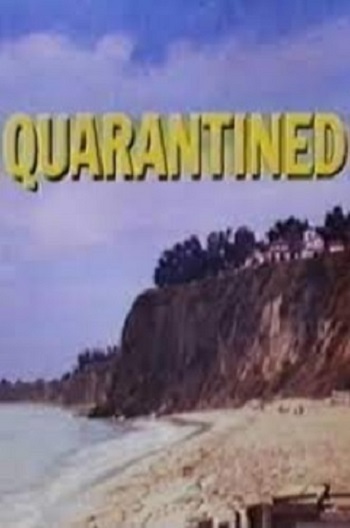
The John C. Bedford Clinic sits atop a cliff overlooking the ocean.  Though it may be a small hospital, it’s also widely respected.  The clinic was started by John Bedford (John Dehner) and the majority of its employees are related to him.  His three sons — Larry (Gary Collins), Bud (Gordon Pinset), and Tom (Dan Ferrone) — are all doctors and they all work at the clinic.  Bud’s wife, Margaret (Susan Howard), is a psychologist and she also works at the clinic, encouraging the older patients not to give up hope in their twilight years.  John Bedford is a stern taskmaster and his youngest son, Tom, resents always having his father and his older brothers staring over his shoulder.  John and Larry explain that they are simply treating Tom the way that they would treat any new doctor.  Tom isn’t so sure.

When the Bedfords aren’t hanging out in the tasteful ranch house that sits next to the clinic, they’re checking on their patients.  As Quarantined opens, they’ve got quite a few to deal with.  The most famous is Ginny Pepper (Sharon Farrell), a film star who has come to the clinic because she’s been suffering from back pain.  Larry quickly diagnoses her as suffering from kidney failure and announces that she’s going to need to get an immediate transplant.  Ginny is not happy to hear that and spends most of her time trying to make both Larry and Nurse Nelson (Virginia Gregg) miserable.  Of course, it eventually turns out that Ginny’s not so bad.

Meanwhile, Margaret attempts to cheer up a dying old man named Mr. Berryman (Sam Jaffe) and an eccentric man named Wilbur Mott (Wally Cox) hangs out in the hospital hallway.  Martha (Terry Moore) and Lloyd Atkinson (Madison Arnold) are at the hospital to visit their son, Jimmy (Mitch Vogel).  Unfortunately, while in Jimmy’s hospital room, Lloyd suddenly collapses and subsequently dies.  John takes one look at Lloyd and announces that Lloyd might have Cholera and, as a result, no one can leave or enter the hospital until the test results come back.

In other words, the John C. Bedford Clinic is …. QUARANTINED!

If you’re thinking this sounds a little bit dull …. well, you’re not wrong.  Quarantined has a 73-minute running time and a large cast but it really does just feel like an episode of a not particularly interesting medical drama.  It wouldn’t surprise me to discover that this movie was actually meant to serve as a pilot for a show that would have followed day-to-day life at the clinic.  Each member of the Bedford family is given a hint of characterization, just enough to suggest what type of situations they would get involved in on a weekly basis.  Larry was the straight shooter who was dedicated to saving lives.  Bud was the well-meaning middle child while Margaret was the one who encouraged the men to talk about their feelings.  Tom was the idealistic but impulsive youngest child.  John was the wise patriarch.  They’re all kind of boring.

The same can be said of Quarantined as a movie.  As directed by Leo “Father of Sean” Penn, the movie promises a lot of drama but it never really delivers and there’s something rather annoying about how casually John announces that no one is allowed to leave the clinic.  He even calls the police and has them set up road blocks around the clinic.  On the one hand, John is doing the right thing.  No one wants a cholera epidemic.  On the other hand, everyone’s so quick to accept that idea of John being a benign dictator that …. well, one can only imagine what a pain in the ass the Bedfords would have been during the COVID era.

As far as I know, there was never a TV show about the Bedford family and their clinic on a cliff.  Personally, I’m okay with that.