Man on a Train, Short Film Review by Case Wright


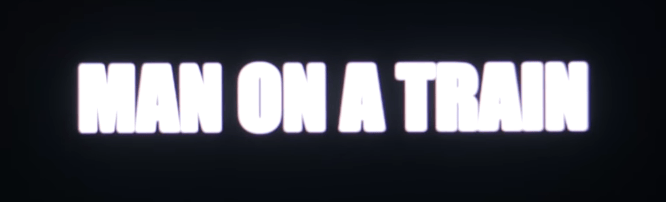
The first thing I noticed when I watched this film was – Wow, this subway is nice! It turns out the film is from seven years ago; so, maybe it’s terrible now. I don’t know. The train could be riddled with plague and people running for office. For this moment in history, the subway was clean, people were bantering, and a man was on the phone; then, everyone disappeared.

We see the film through the eyes of a woman who quietly sits and observes her surroundings. She watches the other passengers until she dozes off. When she wakes up, everyone is gone – except for a psychopath.

The film disturbed me because it really made me wish everyone in England carried guns. She was completely alone, stalked, and her government made her completely vulnerable.

Horror Film Review: The Mothman Prophecies (dir by Mark Pellington)


In 2002’s The Mothman Prophecies, Richard Gere stars as John Klein, a columnist with the Washington Post. (The film takes place in the 1960s, presumably before the CIA placed Bob Woodward on staff… allegedly.) One night, while driving a car with his wife, Mary (Debra Messing), in the passenger seat, John swerves to avoid crashing into what appears to be a man with wings and glowing red eyes. Mary smashes her head against the car’s window. At the hospital, it’s discovered that she has a brain tumor. Mary dies a few months later, having spent her final days obsessively drawing pictures of the “Mothman.”

Two years later, a still-in-mourning John is assigned to cover a story in Richmond, Virginia. However, he somehow finds himself in a small town in West Virginia. When his car breaks down at two in the morning, John seeks help at an isolated farmhouse and is greeted by an angry farmer named Gordon (Will Patton) who claims that John has knocked on his door at the same time for three nights straight. The local sheriff, Connie (Laura Linney), shows up and calms things down. When Connie tells John that the locals are spooked by reports of a mysterious flying creature with glowing red eyes, John decides to stay in West Virginia and investigate the story. Gordon, it turns out, claims that he’s being stalked by a figure named Indrid Cold who sends him messages that predict future disasters. Soon, John himself is getting phone calls from Mr. Cold.

The Mothman Prophecies is a surprisingly effective horror film. At first, Richard Gere seems to be miscast as the lead of a horror film. The best horror actors have traditionally been touched by a breath of wind from the wings of madness. They carry a hint of instability, all the better to keep you guessing as to whether or not the horror is real or just a product of their imagination. Gere, on the other hand, is an actor who comes across as if he’s never had a moment of doubt or insecurity. His best roles—Days of Heaven, American Gigolo, Internal Affairs, Chicago—featured him playing charismatic but ultimately empty narcissists. The Mothman Prophecies actually puts Gere’s inherent blandness to good use. Gere comes across as being so rationally minded that it actually does make the scenes where he talks to Indrid Cold all the more creepy. A man who works for one of the nation’s most important newspapers comes across a story that cannot be solved through old-fashioned reporting. The supporting cast does a good job as well. That Will Patton is compelling as the paranoid farmer should not be a surprise to anyone who has seen Patton’s work. But Laura Linney, who is usually a bit too studied in her performances, is surprisingly natural and convincing as the sheriff. There are hints of a romantic attraction between Connie and John, but the film is smart enough not to make them the center of the story. The story is about the Mothman and Indrid Cold.

Director Mark Pellington is smart enough to keep Cold and the Mothman off-screen for the most part. The scenes where Cold calls John are frightening specifically because John can’t see Cold but Cold can obviously see him. The Mothman is frightening because the film never explains what the Mothman is or whether it even exists. (Much like the Boggy Creek Monster, both the Mothman and Indrid Cold were a part of the local folklore long before a movie was made about them.) Pellington takes his time telling the story and focuses more on atmosphere than jump scares. At its best, the film plays out like a deliberately paced nightmare, an examination of what might be out there. It’s a film that makes even the most rational of us wonder what might be out there.

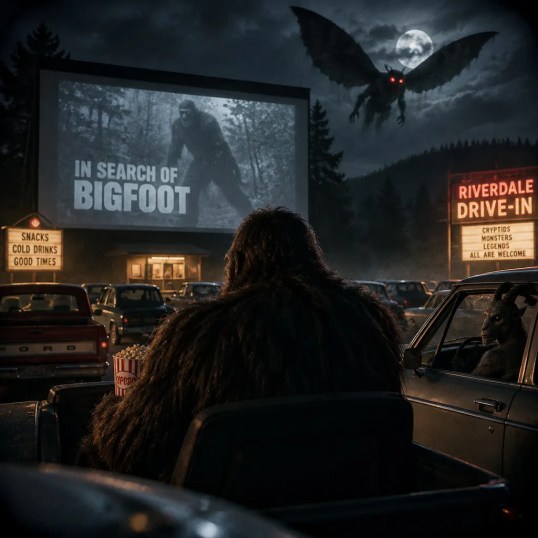
Horror On The Lens: In Search of Bigfoot (dir by Lawrence Crowley and William F. Miller)


Today, we have In Search of Bigfoot, a 1976 documentary about the search for everyone’s favorite backwoods inhabitant.  Will our hunters be able to find Bigfoot before the camera runs out of film?  Will we hear stories about playing catch with Sasquatch?  Watch to find out!

(Personally, I always love these pseudo-scientific documentaries.  After the success of The Legend of Boggy Creek, they were apparently all the rage for a little while.  Can you prove it didn’t happen?)

Horror Song of the Day: Season of the Witch by Donovan


Since we are now almost halfway through October, it only seems appropriate to share what may be the most famous (and perhaps the most covered) song about witchcraft, Donavon’s Season of the Witch!

This song was originally recorded in 1966 and it’s gone on to become a Halloween mainstay.  One fan of the song was future director Martin Scorsese, who originally planned to borrow the song’s title for one of his own films.  However, George Romero beat Scorsese out the gate with a film called Season of the Witch and Scorsese ended up renaming his film, Mean Streets.

Horror Scenes That I Love: The Drive to the Overlook from Stanley Kubrick’s The Shining


As I’ve stated many times on this site, Stanley Kubrick’s The Shining is one of my favorite horror films and it’s also one of the few horror films that can still scare me even after I’ve seen it hundreds of time.  Those two little “Come and play with us” girls still freak me out and I still think about the blood pouring out of that elevator at least one week out of the month.

That said, one of my favorite scenes from The Shining comes early on in the film.  It’s the scene where Jack Torrance (Jack Nicholson, of course) is driving his family to the Overlook Hotel for the first time.  He’s already visited for his job interview but this is the first time that his family is going to see their new home.  And, as you can tell in this scene, he already appears to be kind of sick of them.

Seriously, when someone is driving and has that expression on his face, don’t ask him about the Donner Party.

What I love about this scene is Nicholson’s obvious exasperation.  You can just tell that he’s thinking, “I’m going to be stuck in a hotel with these two for months.”  I especially love the way that he delivers the line about Danny learning about cannibalism from the television.  (Of course, I think one reason why Jack is upset is because Wendy’s the one who brought up the Donner Party, in the first place.  If you don’t want your child to know about cannibalism, don’t randomly start talking about a famous example of it.  That’s parenting 101, I’d think.)

Seriously, if I was a passenger in that car, that is exactly when I would say, “Pull over and let me out.  This is not going to end well.”

4 Shots From 4 Horror Films: October 13th


4 Or More Shots From 4 Or More Films is just what it says it is, 4 shots from 4 of our favorite films. As opposed to the reviews and recaps that we usually post, 4 Shots From 4 Films lets the visuals do the talking!

4 Shots From 4 Horror Films

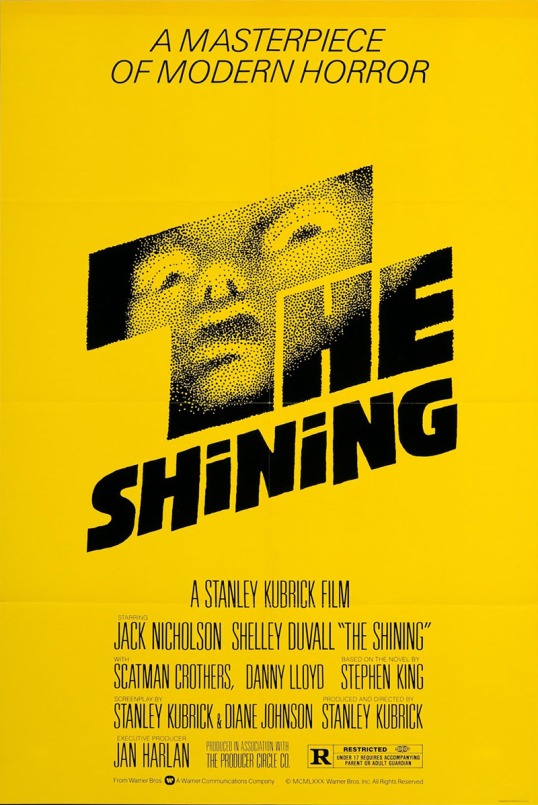
The Shining (1980, dirby Stanley Kubrick, DP: John Alcott)

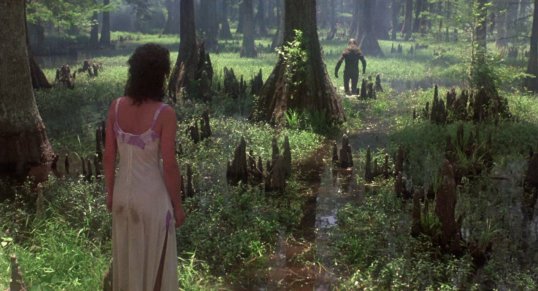
Swamp Thing (dir by Wes Craven, DP: Robbie Greenberg)

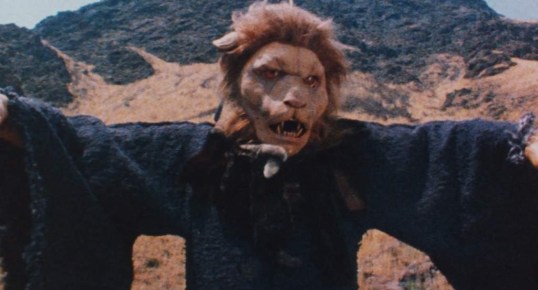
Scalps (1983, dir by Fred Olen Ray, DP: Larry Van Loon and Cynthia Webster)

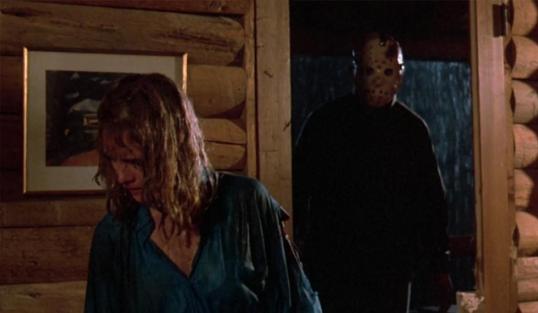
Friday the 13th: The Final Chapter (1984, dir by Joseph Zito, DP: João Fernandes)


Music Video of the Day: Ride On by Lulabox (1992, directed by ????)


This song appears on the Pet Sematary 2 soundtrack, which might be the best soundtrack to have never been given an official release.  In the film, this is the song that plays over the end credits.  The video follows the film’s story of the dead rising back to life.

Enjoy!

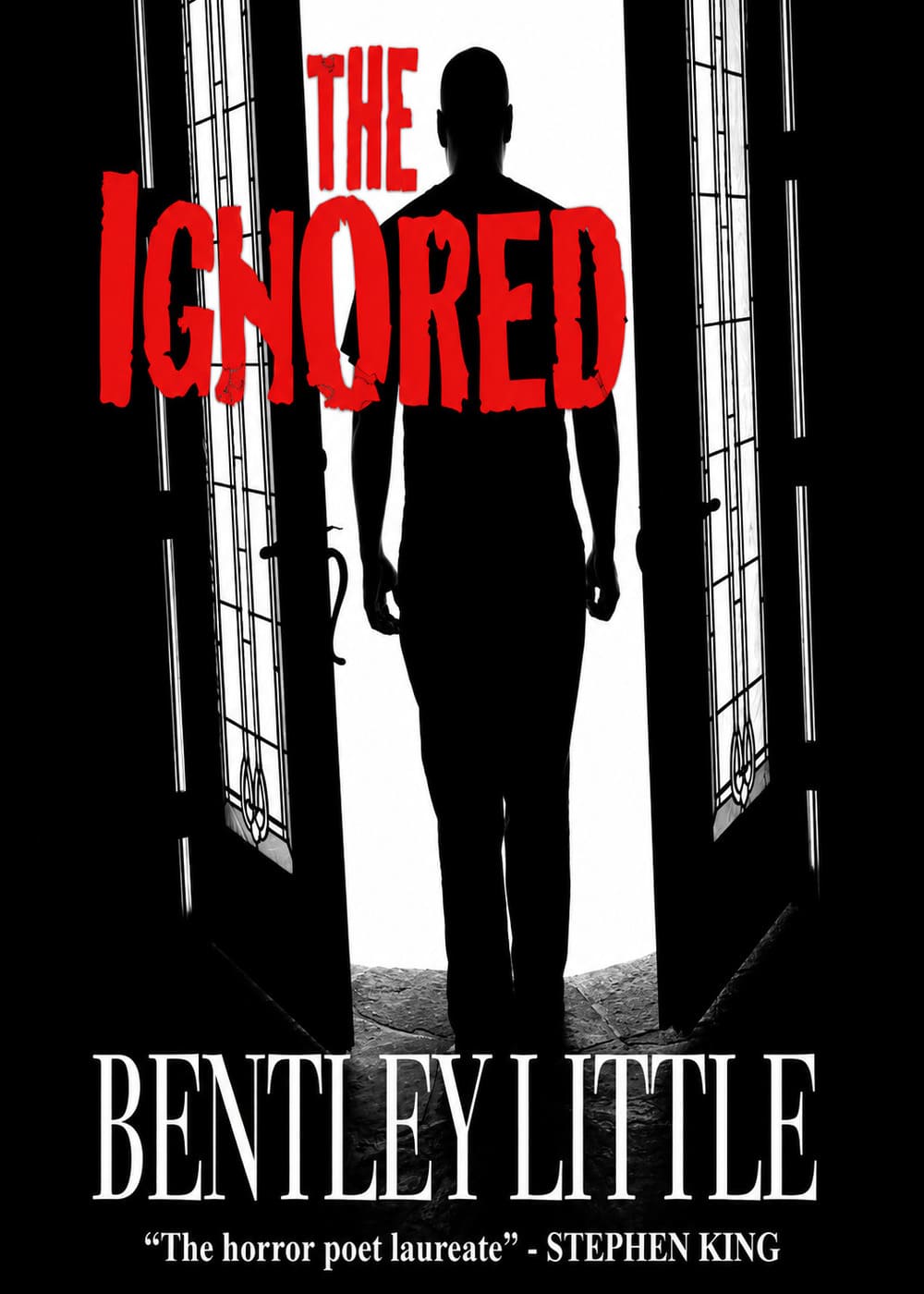
Horror Book Review: The Ignored (by Bentley Little)


“Murder is an inherently evil act, no matter what the circumstances, no matter how convincing the rationalizations.” — Bentley Little, The Ignored

Sometimes the worst people to find you are the ones who make you feel like you finally belong. That’s the unsettling idea running through Bentley Little’s The Ignored, a horror novel that takes the ordinary fear of being overlooked and pushes it into bizarre, disturbing territory. Its protagonist doesn’t begin by searching for trouble. He wants acknowledgment, connection, and some reassurance that his existence matters. Little makes those perfectly understandable needs the foundation of a nightmare in which finding your people can be almost as frightening as having nobody at all.

Bob Jones is an appropriately ordinary name for an appropriately ordinary man. When he lands a job he isn’t qualified for, it initially seems like a lucky break. However, his coworkers’ lack of interest soon becomes something stranger than everyday workplace indifference. His presence barely registers, unfinished responsibilities go unnoticed, and behavior that should attract immediate attention produces little response. Bob gradually discovers that he isn’t just an overlooked employee. There’s something fundamentally wrong with the way other people perceive him, and the usual methods of making himself noticed aren’t going to fix it.

Little gets some of his best material from Bob testing that situation. An incident involving a clown suit and a knife captures the book’s uncomfortable mixture of absurdity and dread. The image is ridiculous, but the failure to provoke an appropriate reaction makes it disturbing. Bob isn’t hiding or trying to blend into the background. He can make himself conspicuous and still fail to matter. That difference between visibility and recognition gives the premise its bite. The horror isn’t that nobody can physically see him; it’s that seeing him seems to carry no significance.

The office setting makes this especially effective because it exaggerates an environment where people can already feel interchangeable. Bob has a position, duties, and a routine, yet those markers of participation provide little meaningful connection. Little turns conformity into a trap: Bob fits into ordinary life so neatly that his individuality almost disappears within it. There’s a bitter joke in his ability to escape supervision and consequences. Getting away with anything might sound appealing until you realize it means nobody cares enough to hold you accountable. Freedom becomes a miserable substitute for acknowledgment.

That’s where the novel’s themes of anonymity, alienation, and identity come together. Bob knows he exists, but the world gives him less and less confirmation that his existence means anything. Little takes the familiar insecurity of being forgettable and makes it feel like a condition that might swallow someone whole. The premise works because it doesn’t require readers to share Bob’s supernatural circumstances to understand his distress. Feeling disconnected from the people around you is enough to make the exaggerated version uncomfortable, particularly when the book suggests that fulfilling society’s expectations offers no guarantee of belonging.

When Bob discovers other people who share his condition, the story offers him what looks like relief. Through Philipe and the other Ignored, he finds a community capable of acknowledging him when ordinary society cannot. Their shared experience gives him a reason to feel less alone. But Little refuses to treat that connection as an uncomplicated rescue. Philipe wants to force the world to recognize them through terrorism, and the group’s exclusion becomes a justification for harming others. The people who understand Bob’s predicament also offer a dangerous interpretation of what he should do about it.

This is the aspect of The Ignored that feels especially timely in today’s social-media- and online-driven society. Read through that lens, Bob’s search for recognition resembles the loneliness that can make almost any welcoming community feel irresistible. The attraction might be mundane, ridiculous, or extreme; the immediate reward is the feeling that someone finally gets you. A shared hobby, an outlandish obsession, a charismatic personality, or a hostile worldview can become the center of someone’s identity when it supplies that missing sense of connection. Little’s story makes the emotional appeal understandable without making every expression of it defensible.

The point isn’t that online communities are inherently sinister or that lonely people inevitably become dangerous. It’s that the need to belong can make people less willing to question whoever satisfies it. When a group provides the acknowledgment everyone else has withheld, challenging its behavior can feel like threatening your only source of acceptance. Bob’s situation exposes that pressure. Recognition becomes leverage, and shared pain becomes something that can be redirected into resentment. Little explores the uncomfortable possibility that people who understand your suffering may encourage your worst impulses rather than help you escape them.

There’s also a bleak irony in the group’s efforts to make an impression. Their actions can affect the world without securing the personal acknowledgment they crave. That disconnect turns apparent freedom into another form of entrapment and sharpens the novel’s questions about responsibility. Little’s straightforward prose suits the material, letting outrageous events unfold with a matter-of-fact quality, although the broader exploration doesn’t always maintain the urgency of Bob’s initial discovery. Still, The Ignored leaves a strong impression because its horror remains attached to a recognizable emotional hunger. It asks what happens when the relief of finally belonging makes you overlook the people you’re belonging to—and the person they expect you to become.
October Positivity: My Refuge (dir by Jeff Morrison)


Shot straight-on-video, 2013’s My Refuge is a film about the end of the world.

Maybe.

It’s actually somewhat difficult to explain what’s going on in My Refuge.  It’s an ensemble film, one that is apparently taking place in a small city in Arizona.  (That’s according to the plot summary on Tubi.  The film itself doesn’t give us as specific location, though it certainly looks like it’s taking place in the arid Southwest.)  It’s an ensemble film, one that has a dizzying amount of characters.  The majority of the character never meet each other and quite a few are never even named.  After reports come in that New York City (which is pretty far away from Arizona) has been hit with a nuclear bomb, the characters all deal with the impending end of the world in their own way.

One woman quit her retail job and makes plan to finally finish that novel that she started years ago.

One teenage girl overdoses and is rushed to the hospital, where her family watches and prays.

A woman obsessively cleans her house and accuses her husband of having an affair.  Her husband says that he was tempted but he never actually went through with it but, eventually, he decides that being tempted is just as bad.

A criminal seeks revenge on the cop who shot his best friend.

A married couple look forward to the birth of their first child.

A preacher preaches.

The news reports that more bombs are on the way.

People pray in the street and prepare for the unknowable future.

The film’s message is clear.  Even with the world descending into chaos and the end apparently right around the corner, the people in this film find peace and hope through their belief in God.  He is their refuge in terrible times.  The film itself is not as preachy as I probably just made it sound and it deserves some credit for acknowledging that all of the characters have a good reason to be worried about the future.  I mean, nuclear war is a big deal, regardless of what you may believe about the afterlife.

The narrative is difficult to follow.  This is a low-budget,straight-to-video film and it’s pretty clear that the majority of the performers were not professionals.  There’s a lot of awkward line readings and moments that don’t quite make sense.  Everyone tends to blend together.  Normally, I would say that would be a problem for an ensemble film but, oddly enough, it kind of works here.  In the end, everyone is in the same boat.  All of their individual drams are going to reach the same conclusion, regardless of how they may feel about it.

The film is only 79 minutes long but, as is so often the case with earnest , shot-on-video productions, the pace is slow and things aren’t helped by a muddy soundtrack that sometimes makes it a struggle to understand what the characters are saying.  Amateur filmmakers often tend to overlook the importance of clean and understandable sound.

My Refuge is flawed but sincere.  At its best, it captures the shock and fear that would surround any major calamity.  It’s a confusing film but, for many people, these are confusing times.