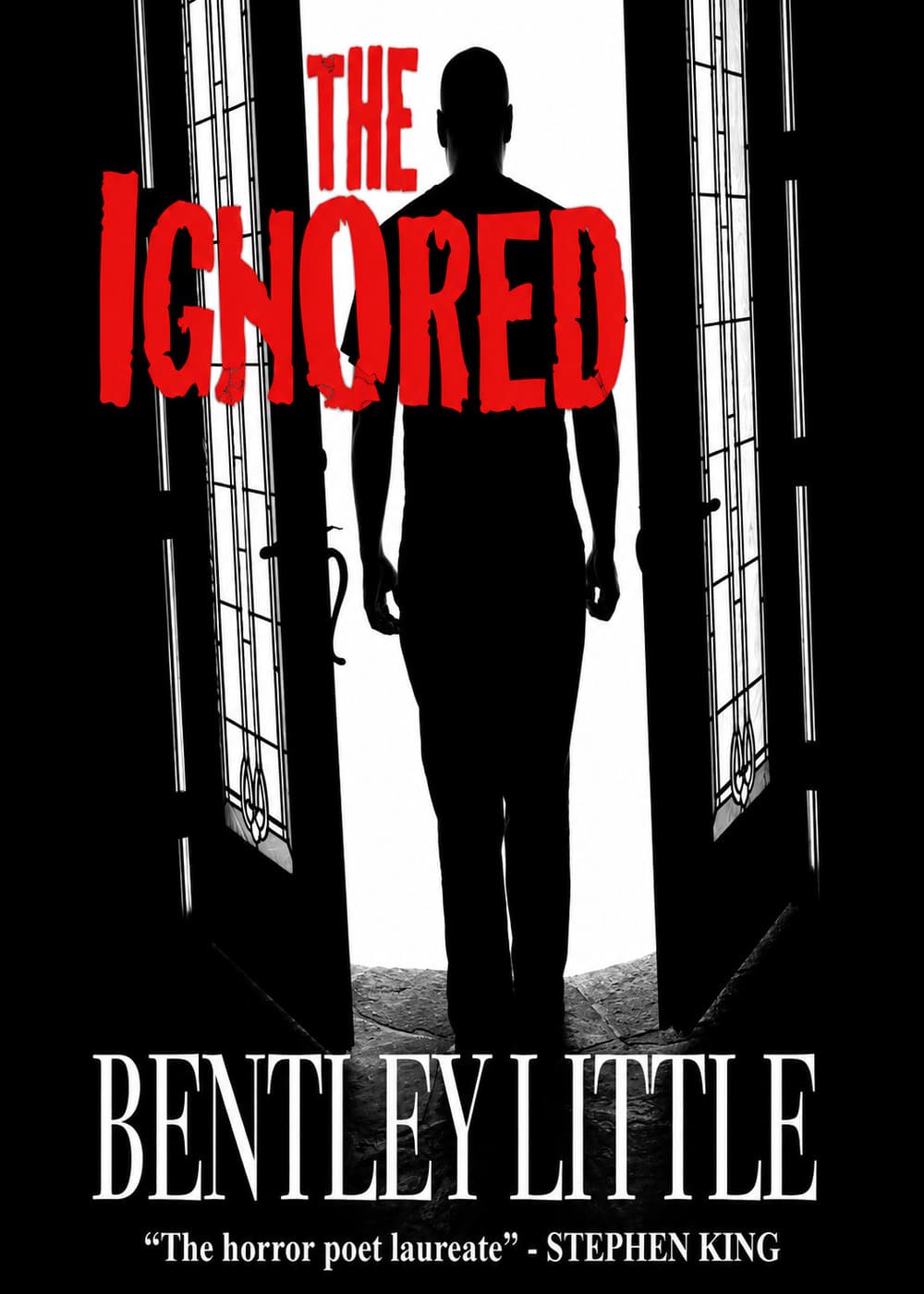
“Murder is an inherently evil act, no matter what the circumstances, no matter how convincing the rationalizations.” — Bentley Little, The Ignored
Sometimes the worst people to find you are the ones who make you feel like you finally belong. That’s the unsettling idea running through Bentley Little’s The Ignored, a horror novel that takes the ordinary fear of being overlooked and pushes it into bizarre, disturbing territory. Its protagonist doesn’t begin by searching for trouble. He wants acknowledgment, connection, and some reassurance that his existence matters. Little makes those perfectly understandable needs the foundation of a nightmare in which finding your people can be almost as frightening as having nobody at all.
Bob Jones is an appropriately ordinary name for an appropriately ordinary man. When he lands a job he isn’t qualified for, it initially seems like a lucky break. However, his coworkers’ lack of interest soon becomes something stranger than everyday workplace indifference. His presence barely registers, unfinished responsibilities go unnoticed, and behavior that should attract immediate attention produces little response. Bob gradually discovers that he isn’t just an overlooked employee. There’s something fundamentally wrong with the way other people perceive him, and the usual methods of making himself noticed aren’t going to fix it.
Little gets some of his best material from Bob testing that situation. An incident involving a clown suit and a knife captures the book’s uncomfortable mixture of absurdity and dread. The image is ridiculous, but the failure to provoke an appropriate reaction makes it disturbing. Bob isn’t hiding or trying to blend into the background. He can make himself conspicuous and still fail to matter. That difference between visibility and recognition gives the premise its bite. The horror isn’t that nobody can physically see him; it’s that seeing him seems to carry no significance.
The office setting makes this especially effective because it exaggerates an environment where people can already feel interchangeable. Bob has a position, duties, and a routine, yet those markers of participation provide little meaningful connection. Little turns conformity into a trap: Bob fits into ordinary life so neatly that his individuality almost disappears within it. There’s a bitter joke in his ability to escape supervision and consequences. Getting away with anything might sound appealing until you realize it means nobody cares enough to hold you accountable. Freedom becomes a miserable substitute for acknowledgment.
That’s where the novel’s themes of anonymity, alienation, and identity come together. Bob knows he exists, but the world gives him less and less confirmation that his existence means anything. Little takes the familiar insecurity of being forgettable and makes it feel like a condition that might swallow someone whole. The premise works because it doesn’t require readers to share Bob’s supernatural circumstances to understand his distress. Feeling disconnected from the people around you is enough to make the exaggerated version uncomfortable, particularly when the book suggests that fulfilling society’s expectations offers no guarantee of belonging.
When Bob discovers other people who share his condition, the story offers him what looks like relief. Through Philipe and the other Ignored, he finds a community capable of acknowledging him when ordinary society cannot. Their shared experience gives him a reason to feel less alone. But Little refuses to treat that connection as an uncomplicated rescue. Philipe wants to force the world to recognize them through terrorism, and the group’s exclusion becomes a justification for harming others. The people who understand Bob’s predicament also offer a dangerous interpretation of what he should do about it.
This is the aspect of The Ignored that feels especially timely in today’s social-media- and online-driven society. Read through that lens, Bob’s search for recognition resembles the loneliness that can make almost any welcoming community feel irresistible. The attraction might be mundane, ridiculous, or extreme; the immediate reward is the feeling that someone finally gets you. A shared hobby, an outlandish obsession, a charismatic personality, or a hostile worldview can become the center of someone’s identity when it supplies that missing sense of connection. Little’s story makes the emotional appeal understandable without making every expression of it defensible.
The point isn’t that online communities are inherently sinister or that lonely people inevitably become dangerous. It’s that the need to belong can make people less willing to question whoever satisfies it. When a group provides the acknowledgment everyone else has withheld, challenging its behavior can feel like threatening your only source of acceptance. Bob’s situation exposes that pressure. Recognition becomes leverage, and shared pain becomes something that can be redirected into resentment. Little explores the uncomfortable possibility that people who understand your suffering may encourage your worst impulses rather than help you escape them.
There’s also a bleak irony in the group’s efforts to make an impression. Their actions can affect the world without securing the personal acknowledgment they crave. That disconnect turns apparent freedom into another form of entrapment and sharpens the novel’s questions about responsibility. Little’s straightforward prose suits the material, letting outrageous events unfold with a matter-of-fact quality, although the broader exploration doesn’t always maintain the urgency of Bob’s initial discovery. Still, The Ignored leaves a strong impression because its horror remains attached to a recognizable emotional hunger. It asks what happens when the relief of finally belonging makes you overlook the people you’re belonging to—and the person they expect you to become.

