Horror Film Review: One Body Too Many (dir by Frank MacDonald)


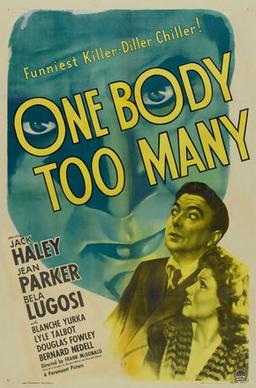
In 1944’s One Body Too Many, Jack Haley stars as Albert L. Tuttle. Tuttle is an insurance agent. He’s a rather mild-mannered one. In fact, people often have a hard time remembering his name. He’s called “Mr. Turtle.” He’s called “Mr. Title.” Patiently, he explains over and over again that his name is Tuttle. Looking to secure his job, Tuttle hopes to sell $200,000 in life insurance to an eccentric millionaire named Cyrus J. Rutherford.

What Tuttle doesn’t know is that Cyrus J. Rutherford has recently died. His entire greedy family and all of his servants have gathered at the Rutherford Mansion so that they can hear the reading of the will. In his will, Rutherford lays out all the reasons why he didn’t like his family or anyone who worked for him. He accuses the butler, Merkil (Bela Lugosi), of padding his expense account. He accuses his lawyer (Bernard Nedell) of always trying to take advantage of him. Rutherford writes that his last request is that his body be placed in a glass-domed vault so that the stars can forever shine down upon his face. He says that anyone who leaves the house before the glass vault is built will lose their inheritance. If the body is buried instead of in the vault, then Rutherford’s largest beneficiaries will instead become his smallest beneficiaries and vice versa. It’s a bit of an odd will, to be honest. I’m not particularly sure that it would stand up in court today, but in 1944, eccentric millionaires could pretty much do whatever they wanted. Myself, I have to applaud Rutherford for messing with everyone even after death. That takes determination.

When Tuttle shows up, the family mistakes him for a detective that has been sent to make sure that Rutherford’s body isn’t stolen before the glass dome is constructed. Tuttle, not picking up on how weird this all is, assumes that the family is just really excited about insurance. When Tuttle finds himself locked in with the dead body, he immediately demands to leave. However, since the real detective has failed to show up, Rutherford’s niece, Carol (Jean Parker), asks him to stay and guard the body. A good Tuttle appears on one of Tuttle’s shoulders while a bad Tuttle appears on the other. After listening to the debate, Tuttle decides to stay if only because Carol is attractive.

It’s going to be a long night, though. Not only does the body disappear, but it appears that there is a murderer in the house!

One Body Too Many is an amiable comedy, one that features a very 1940s mix of absurd dialogue and slapstick humor. Though Jack Haley, who is best-remembered for playing the Cowardly Lion in The Wizard of Oz, is the lead and a very likable one at that, the movie is pretty much stolen by Bela Lugosi. Lugosi’s later films tend to be a mixed bag, but One Body Too Many allows Lugosi to give a good and genuinely funny performance as a butler who is far more clever than anyone realizes. Lugosi’s snarky reactions make the film, and they’re a nice reminder that Lugosi was a far more talented actor than he’s often given credit for.

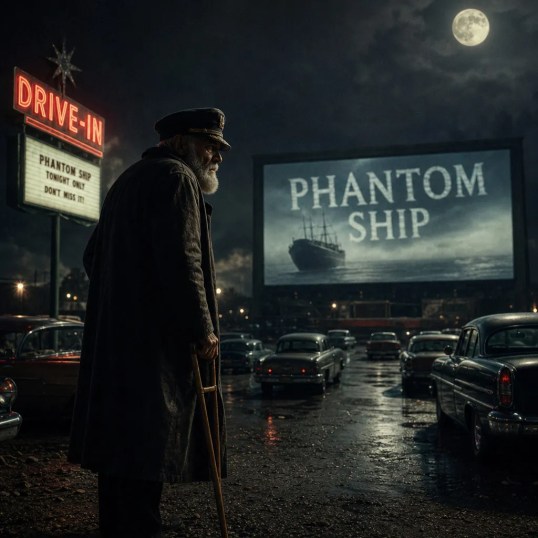
Bonus Horror on the Lens: Phantom Ship (dir by Denison Clift)


In December of 1872, a sailing ship called the Mary Celeste was found adrift and deserted in the Atlantic Ocean.  When the ship left New York in October, it had a captain and a full crew.  The captain’s wife was among the passengers sailing on the ship.  When the Mary Celeste was discovered, not only was no one on board but there was no evidence as to where everyone had gone or what caused them to abandon the ship in the first place.  The crew of the Mary Celeste appeared to have vanished into thin air and none of them were ever seen again.

As you might guess, this led to years of speculation about what happened.  Some people blamed pirates.  Some blamed food poisoning.  Some blamed ghosts and sea monsters.  More modern theorists have blamed UFOs.

First released in 1935 and originally entitled The Mystery of the Mary Celeste, Phantom Ship offers up a theory of its own.  It speculates about what happened during the final voyage of the Mary Celeste and why its crew vanished.  One of the members of the crew is played by Bela Lugosi.  Lugosi was still riding high from his starring role in Dracula when he starred in Phantom Ship and, playing a veteran sailor who appears to be a bit unstable, Lugosi gives an enjoyably over the top performance.  Admittedly, Phantom Ship has its slow spots and, at times, it threatens to get bogged down in a subplot about the love triangle involving the Captain, his wife, and the Captain’s best friend.  But Lugosi makes the film worth watching and, towards the end, there are some wonderfully atmospheric shots of the nearly deserted ship.

Along with being one Lugosi’s non-Dracula horror films, Phantom Ship is also well-known for being one of the first films to be produced by the British film company that would eventually become known as Hammer Pictures.

Enjoy!

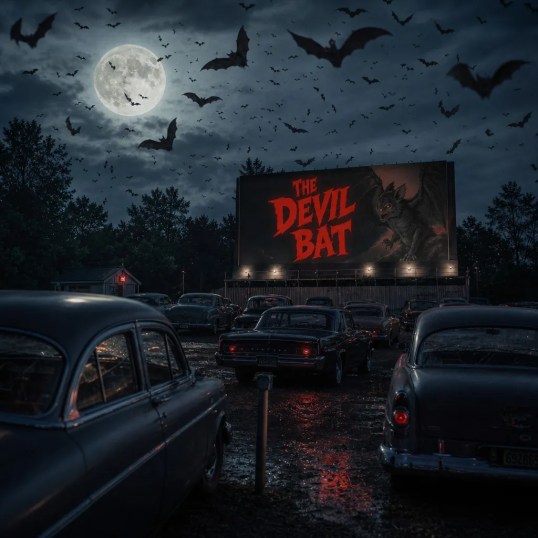
Horror On The Lens: The Devil Bat (dir by Jean Yarborough)


In the 1940 film, The Devil Bat, the owners of a company in the small town of Heathville are super-excited because they’re going to be given their head chemist, Dr. Paul Carruthers (Bela Lugosi), a bonus check of $5,000.  However, since Carruthers’s inventions have made millions for the company, he is offended by the small check and decides that the best way to handle this would be to sue in court and demand fair compensation …. just kidding!  Instead, Dr. Carruthers sends his army of giant bats to kill the families of his employers.

The Devil Bat was produced by Production Releasing Corporation, a poverty row studio that specialized in shooting quickly and cheaply.  Going from Universal to PRC was technically a step down for Lugosi but The Devil Bat is actually an excellent showcase for Lugosi and he gives one of his better non-Dracula performances as the embittered Dr. Carruthers.  Indeed, one can imagine that Lugosi, who played such a big role in putting Universal on the map, could relate to Carruthers and his bitterness over not being fairly rewarded for the work he did to make others wealthy.

Enjoy The Devil Bat, starring the great Bela Lugosi!

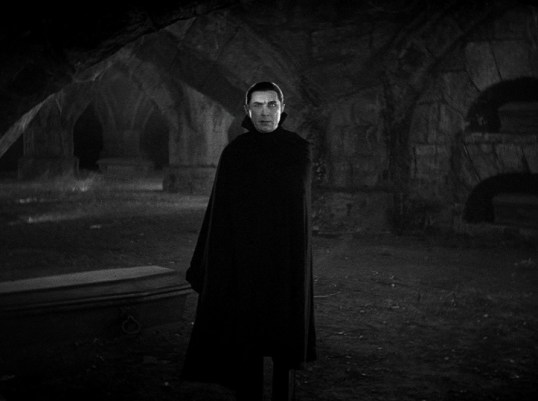
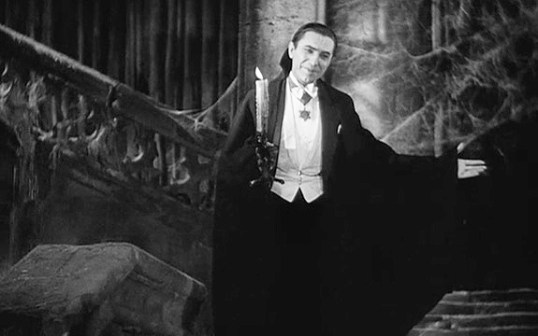
Horror Scenes That I Love: Bela Lugosi in Dracula


Dracula (1931, starring Bela Lugosi as the Count, Dir by Tod Browning, DP: Karl Freund)

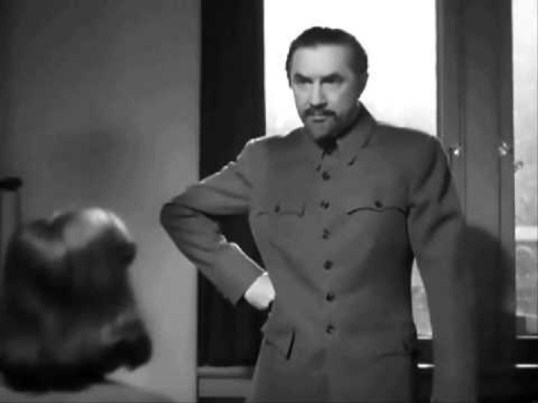
On this day, 144 years ago, Bela Lugosi was born in what is now Romania.  Lugosi began his career in his native country, appearing on stage.  After serving as an infantryman in World War I, Lugosi moved into the movie industry and appeared in silent Hungarian films.  The young Lugosi was an activist, involved in labor issues and trying to unionize the Hungarian film industry.  When a new government came to power in Hungary in 1920, the politically-active Lugosi moved first to Germany and then eventually ended up in the United States.  After a period of working as a merchant seaman, Lugosi returned to acting.

He first played Dracula on stage in New York City.  In 1928, while touring in the role of Dracula, he moved out to California and quickly became a part of the Hollywood community.  When Universal produced a film adaptation of Dracula in 1931, Lugosi was the obvious choice for the lead role.  The film made Lugosi a star and it also typecast him.  Lugosi never stopped acting, though the films varied widely in quality.  By the end of his career, Lugosi was a member of the Ed Wood stock company.  Even appearing in something like Bride of the Monster, Lugosi still made an impression.

In the scene below, from 1931’s Dracula, Lugosi suggests that Edward van Sloan’s Van Helsing should perhaps leave the country.

4 Shots From 4 Bela Lugosi Films


4 Shots From 4 Films is just what it says it is, 4 shots from 4 of our favorite films. As opposed to the reviews and recaps that we usually post, 4 Shots From 4 Films lets the visuals do the talking.

144 years ago on this date, Bela Lugosi was born in Hungary.  Today, we honor his memory with….

4 Shots From 4 Bela Lugosi Films

Dracula (1931, dir by Tod Browning, DP; Karl Freund)

White Zombie (1932, dir by Vincent Halperin, DP: Arthur Martinelli)

Ninotchka (1939, dir by Ernst Lubitsch, DP: William H. Daniels)

Bride of The Monster (1955, dir by Ed Wood, DP: Ted Allan and William H. Thompson)


Music Video of the Day: Bullet With Butterfly Wings by Smashing Pumpkins (1995, directed by Samuel Bayer)


The world is vampire

For a period of time in the 90s, you couldn’t go anywhere without hearing that.  It was one of the original memes, thanks to both the song and the video that was made to promote it.  The video, which was inspired by photographs of a Brazilian gold mine, was filmed in a quarry near Simi Valley.  While the extras dressed like miners and were meant to represent the Biblical lepers who asked Jesus to heal them, the band goes for a glam rock look.  It pays to be in the band.

This video was directed by Samuel Bayer, who has done music videos for everyone who is anyone.

Enjoy!

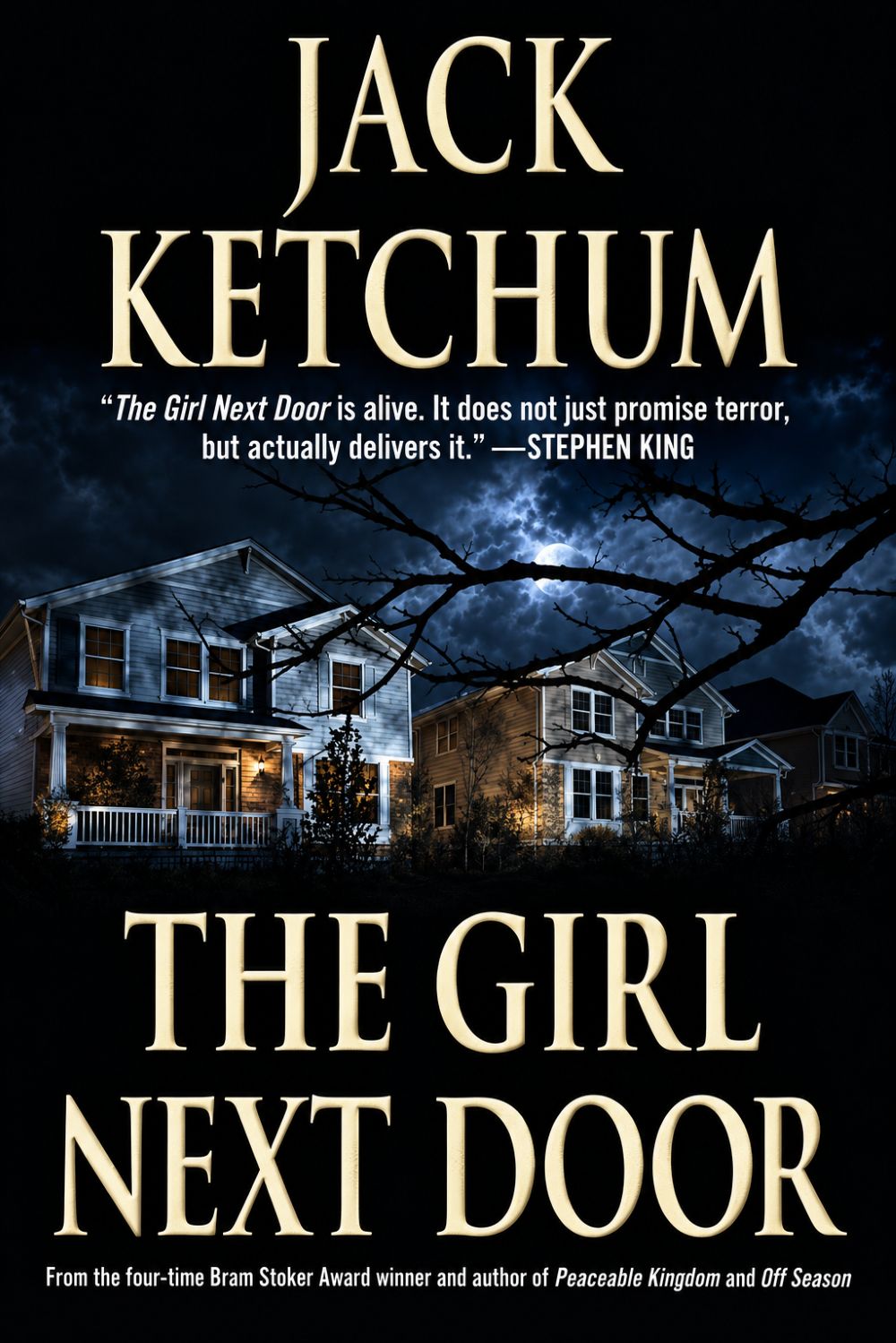
Horror Book Review: The Girl Next Door (by Jack Ketchum)


“It’s for your own good. I got to teach you about connivance.” — Ruth Chandler

The Girl Next Door, the 1989 horror novel by Jack Ketchum (the pseudonym of Dallas William Mayr), makes calling something “disturbing” feel inadequate. It takes the familiar ingredients of a childhood summer and turns them into something almost unbearably ugly. There are no supernatural creatures, no elaborate mythology, and no comforting suggestion that evil belongs somewhere outside ordinary life. Instead, Ketchum builds his nightmare around an abusive adult, vulnerable children, and a neighborhood willing to look away. Loosely inspired by the 1965 murder of Sylvia Likens, the novel carries a weight that goes beyond its fictional circumstances.

The story follows David, a boy looking back on the summer when Meg and her younger sister, Susan, came to live next door. Having lost their parents in a car accident, the sisters enter the household of their aunt, Ruth Chandler, whose relaxed attitude initially makes her seem appealing to the neighborhood boys. She gives them access to an adult world without demanding much responsibility. But that apparent freedom has a rotten foundation. Ruth’s hostility toward Meg gradually develops into systematic abuse, with the children around her becoming witnesses, accomplices, and participants. David’s memories turn the story into an account of both victimization and failed intervention.

One of Ketchum’s smartest choices is letting the neighborhood feel like a neighborhood before it becomes a nightmare. The early stretches have the loose, unstructured atmosphere of childhood: hanging around, exploring, watching other people, and trying to understand feelings you cannot quite name. That ordinary texture matters. Without it, the novel might feel like a sequence of atrocities arranged for maximum impact. Instead, the horror grows out of a recognizable social world. Places that should offer safety become threatening, and familiar relationships become mechanisms of control. The book does not transport its characters into hell so much as show how they make one together.

David is the key to that effect, and also the character most likely to frustrate readers. He recognizes that something is wrong, but recognition does not immediately produce courage. His affection for Meg exists alongside curiosity, fear, and a troubling willingness to remain near the people hurting her. That gap between feeling and action gives the novel much of its moral force. It would be easier to follow a straightforward rescuer or an openly vicious participant. David occupies a less comfortable position: someone who wants to think of himself as decent while repeatedly failing to do what decency requires.

The retrospective narration makes his hesitation even harder to dismiss. We are not simply watching a child misunderstand events as they happen; we are hearing an adult return to experiences he cannot comfortably leave behind. Memory becomes something closer to an ongoing accusation than a source of nostalgia. Ketchum understands how people bargain with themselves when taking action might mean losing friends, challenging authority, or admitting that the situation has already become intolerable. David’s perspective keeps raising an unpleasant question: how much does private sympathy matter when the person suffering never receives meaningful help?

Ruth, meanwhile, is frightening because her power does not depend on being especially clever. She controls the household, establishes the rules, and gives the children permission to treat cruelty as acceptable behavior. Her authority supplies an excuse that their curiosity and aggression can hide behind. What makes her particularly repulsive is the way she turns her hostility toward Meg into a kind of moral judgment. Punishment becomes something she claims the girl deserves. Ketchum shows how easily an adult’s resentment can become a shared reality when nobody with enough power challenges it.

There is also a perverted sense of herd mentality running through the children’s treatment of Meg. The group becomes its own little moral universe, where joining in is accepted and objecting means setting yourself against everyone else. Ruth provides permission, but the kids reinforce it through their willingness to watch, participate, and return for more. Their shared involvement makes each act seem less like an individual choice, even though that does nothing to erase anyone’s responsibility. What should be the ordinary childhood desire to belong becomes something grotesque: belonging through another person’s humiliation. Meg’s suffering turns into a group activity, and the absence of meaningful resistance helps cruelty pass for normal behavior.

Meg is the novel’s emotional center, although the decision to tell her story through David creates a genuine limitation. We know her partly through his attraction, admiration, and guilt rather than through sustained access to her own thoughts. That distance can be painful, and readers may reasonably wish she had more room to exist beyond what happens to her. Still, her concern for Susan and her resistance to Ruth’s attempts to define her give her an identity that the abuse cannot entirely erase. The strongest passages make her feel like a person being attacked, not merely a device designed to upset the audience.

Ketchum’s prose helps keep the book from collapsing under its subject. The writing is direct and generally unfussy, with little interest in making brutality sound beautiful. That plainness gives the escalation a terrible clarity. The violence is graphic, including sexual violence and prolonged abuse involving minors, and it is worth being blunt about that before recommending the novel. Yet the most upsetting element is not necessarily any individual act. It is the repetition, the growing participation, and the sense that every crossed boundary makes the next one easier to ignore.

There is nevertheless a fair argument to be made against the book. Fiction drawn from a real child’s suffering invites questions about exploitation, and the intensity here does not automatically settle those questions in Ketchum’s favor. Some readers will find that the accumulation of cruelty overwhelms the characterization or makes the novel’s point long before it ends. That is not a failure of nerve on their part. The book deliberately occupies territory where bearing witness and consuming suffering become difficult to separate. Its seriousness deserves consideration, but seriousness alone does not make every artistic choice beyond criticism.

For me, The Girl Next Door works because its lasting subject is complicity rather than shock. The violence is impossible to overlook, but what stays with you is the machinery surrounding it: permission, cowardice, resentment, and the small decisions that allow something monstrous to continue. It is not an enjoyable read in the usual sense, and I would hesitate to recommend it simply because someone likes horror. As a bleak examination of cruelty and moral failure, though, it is exceptionally effective. Ketchum removes the comfortable distance between ordinary life and atrocity, leaving a novel whose real terror is how little separates the two.
October Positivity: Old Rugged Cross (dir by Donald James Parker)


In 2016’s Old Rugged Cross, Pastor Evan Shepherd (played by the film’s director, Donald James Parker) is looking for a new church.  He feels that he lost his way at his old church, becoming more concerned with money and prestige than with leading the people to God.  He was also accused of “sexual improprieties” with a member of the congregation but he’s quick to point that none of the accusations were actually proven.  Evan was set up and he left town because he was feeling burned out.

But now, he’s ready to return to preaching.  He rents out and reopens a previously abandoned church called the Old Rugged Cross.  He worships on Saturday morning.  He delivers messages from God to those who attend.  He only occasionally preaches a sermon and he doesn’t make a big deal out of tithing.  He’s not in it for the money or the prestige anymore.  And, if you have any doubts, he’ll talk to you about them.  And by talk, I mean that he will just ramble on and on and on.  This film will seriously test how much patience you have for an old man who never makes a point twice when he can make it three times instead.

Pastor Luke Wolfe (David Vanergriff) views Evan and the Old Rugged Cross as a threat.  Wolfe is the pastor at Victory Church and all he cares about is bringing in enough money so that he can redesign the church and have the biggest sanctuary in town.  He’s cold and distant from the people who attend his church and his little time to listen to their problems.  He’s also single.  He wants to marry Anita (Kelly Nelon Clark), Victory’s pianist, but she starts attending the Old Rugged Cross.  In fact, all sorts of people are abandoning Victory Church for the Old Rugged Cross.

At a meeting of all the local protestant pastors, Wolfe challenged Evan on his style of worship.  Evan responds by talking about W.C. Fields searching the bible on his deathbed because he was looking for a loophole….

Yes, this is another Donald James Parker film and it has all of the things that one typically associates with his productions.  The scenes drag out interminably.  The acting is abysmal.  There’s a strange obsession with filming characters sitting in restaurants and debating religion.  Early on in the film, there’s a scene of Evan and Anita talking in a restaurant.  It goes on for what feels like 15 minutes.  Before you can even breathe a sigh of relief that the scene is over, we then suddenly cut to the next night and Anita having a conversation with Luke Wolfe while sitting at the exact same table in the exact same restaurant.  Just when you think you’ve escaped, the films drags you back in!  It would perhaps have helped if Parker had occasionally moved the camera during these lengthy scenes but that sort of thing just isn’t a part of his directorial aesthetic.

As with many of Parker’s films, Old Rugged Cross is, at times, a rather angry film.  Evan may be an old man but he still often comes across as if he’s about to hit someone.  His dislike of Luke Wolfe feels as much personal as theological which is really not a good look for a pastor.  Seriously, you don’t want to get on Evan Shepherd’s bad side!