In 1972, Lt. Steve Shepherd (William Katt) disappeared in the jungles of Vietnam. He was listed as being MIA and he was mistakenly presumed dead. Instead, he survived in the jungle and continued to fight his own war against the North Vietnamese. Eventually, he “married” a Thai woman named Thi Hau (Rosalind Chao). The North Vietnamese began to call him the “White Ghost.”
16 years later, Major Cross (Reb Brown) hears the legend of the White Ghost and arranges for a group of elite rangers to parachute into the jungle and retrieve Lt. Shepherd. However, Thi Hau has been captured by the Vietnamese army and is being held at one of their torture camps. Shepherd is determined to rescue her. As well, one the rangers (Wayne Crawford) has a personal issue with Shepherd that goes back to their time in Vietnam. He determined to get his revenge, no matter what the cost.
White Ghost came out at a time when films like Rambo: First Blood II and Missing In Action were bringing in the big bucks at the box office. Like those movies, White Ghost gives audiences a chance to watch as the Vietnam War is refought, this time with America as the victor. What sets White Ghost apart is that Shepherd not only has to destroy the Vietnamese prison camp but he also has to avoid his fellow Americans while doing it. This is a violent movie with an astronomical body count. The action is pretty much nonstop and, for once, not even the hero can escape without a scratch. Director BJ Davis was a stuntman and, not surprisingly, he gets fantastic work from the film’s stunt team. This film also owes a debt to Predator, with its jungle locations and its emphasis on booby traps. Karl Johnson appears as one of the Rangers and he looks so much like Jesse Ventura that I actually checked to make sure that it wasn’t him.
At first, William Katt seemed miscast as Steve Shepherd and he seemed to be in surprisingly good shape for someone who has spent sixteen years living in the jungle. By the end of the movie, though, Katt had won me over. He looked convincing shooting a machine gun and throwing grenades and his scenes with Rosalind Chao had enough depth that you cared whether or not he was able to rescue her. Reb Brown fans will probably be disappointed that he spends most of the movie behind a desk but, in the gloriously frenetic finale, he does finally get to do his trademark yelling.
White Ghost is an exciting slice of Namsploitation. At one point, there was a sequel planned that would have featured Shepherd fighting crime in America but unfortunately, it never happened.
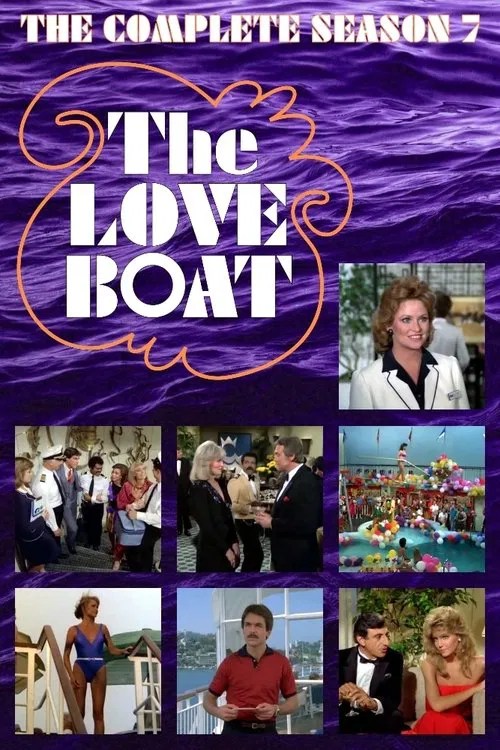
Welcome to Retro Television Reviews, a feature where we review some of our favorite and least favorite shows of the past! On Wednesdays, I will be reviewing the original Love Boat, which aired on ABC from 1977 to 1986! The series can be streamed on Paramount Plus!
This week, the ship is a casino!
Episode 7.16 “The Buck Stops Here/For Better or Worse/Bet on It”
(Dir by Richard Kinon, originally aired on January 14th, 1984)
It’s a gambling cruise!
Of course, it’s all for charity. The Love Boat has been turned into a floating casino but all of the money that the passengers lose will be donated to the Flanders Hospital. Florence Flanders (Celeste Holm) is yet another old friend’s Captain Stubing’s and he’s happy to welcome her aboard. He is less happy to see Florence’s ne’er-do-well brother, Frank (Richard Jaeckel). Frank is in debt to another passenger, Al Dixon (Richard Ponzini). Frank is willing to cheat and steal to get the money to pay off Al. When Stubing calls Frank out on it, Frank threatens to reveal that Florence’s deceased husband had a mistress.
One of the people cheated by Frank is newlywed Nancy Sidon (Leah Ayres), who is upset about the prospect of having to move in with her in-laws. Her husband, Stewart (Shea Farrell), says that it’s perfectly normal to move back in with your parents after you get married. He also doesn’t want Nancy gambling. When Nancy loses all of her money, she fears that she’s going to lose Stewart as well. Fortunately, Frank has a change of heart and returns all of the money that he stole. Not only has Nancy avoided divorce but she now has enough that she and Stewart won’t have to move in with the in-laws.
Meanwhile, Michael Borden (McClean Stevenson) is carrying a very valuable silver dollar with him. When Sally (Jo Ann Pflug) accidentally puts the silver dollar in a slot machine, Michael has a near breakdown. He obsessively pulls on the lever, hoping to win back his silver dollar. Soon, he’s broke. However, Sally puts her final dollar in the slot machine, pulls the lever, and hit the jackpot. Michael wins back his silver dollar and he also finds love. To be honest, Sally could do better.
This was a rather low-key and almost moody episode. The laugh track was notably muted. On the one hand, the show celebrated gambling for charity. On the other hand, nearly everyone’s life was ruined in the casino. Richard Jaeckel gave a good performance as the conflicted Frank. Not giving a good performance was McClean Stevenson, who came across as being so cranky and whiny that I found myself hoping he would never win back his silver dollar.
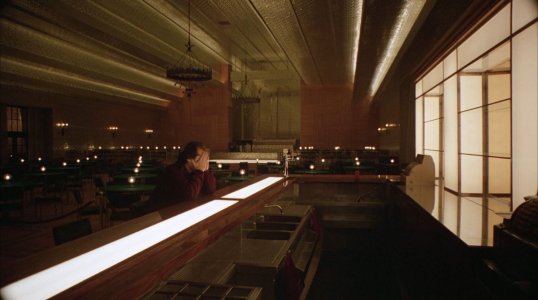
The Shining (1980, dir by Stanley Kubrick, DP: John Alcott)
For today’s song of the day, we have the title tune to Stanley Kubrick’s The Shining. The Shining is a classic horror film and features one of Jack Nicholson’s most iconic performances.
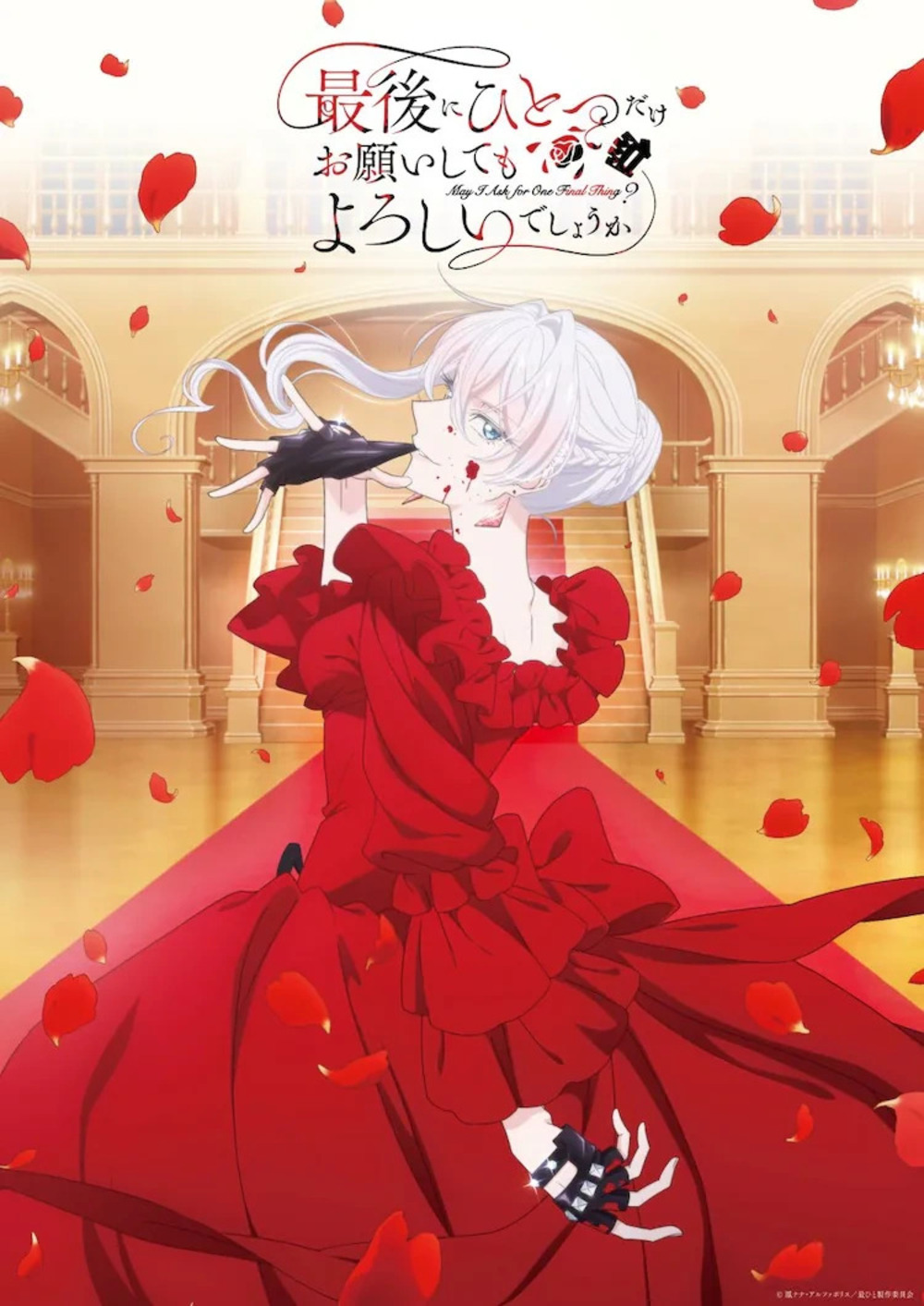
“Corrupt nobles are my meat. You will not deny me my meat.” — Scarlet El Vandimion
May I Ask for One Final Thing? delivers a sardonic skewering of otome genre conventions in its 2025 Fall season run, transforming the familiar villainess trope into a relentless satire of noble excess and romantic delusion. Adapted from Nana Ōtori’s light novels with illustrations by Satsuki, the series follows Scarlet El Vandimion, a duchess trapped in an abusive engagement to the insufferable Prince Kyle von Pallistan. The premiere episode wastes no time dismantling expectations: rather than the prince casting off his “wicked” fiancée for a doe-eyed commoner, Scarlet responds to his public betrayal with a devastating one-punch knockout, toppling Kyle, his paramour Terrenezza Hopkins, and a ballroom full of corrupt elites. This brazen inversion establishes the show’s core mode—mocking the otome formula’s predictable beats while reveling in their absurdity, all anchored by Scarlet’s unyielding presence as its emotional and thematic linchpin.
Scarlet El Vandimion stands as such a strong character that whatever flaws the narrative may have are propped up by how exceptionally well-written she is, her complexity elevating the entire production. Voiced masterfully by Asami Seto, whose excellent performance infuses every line with layers of restrained fury, wry sarcasm, and vulnerable steel, Scarlet embodies the villainess archetype with exaggerated precision—her poise and sharp tongue a deliberate caricature of haughty nobility, yet grounded in palpable humanity. Beneath the icy beauty and controlled outer persona lies a very ultra-sadistic, violent, and confrontational individual, a revelation that adds delicious menace to her every action. Years of Kyle’s physical and emotional mistreatment have conditioned her to endure for her family’s sake, forging a restraint that makes her eventual snap all the more cathartic—and terrifying. When he announces his love for the scheming Terrenezza—a parody of the “pure-hearted” heroine with her manipulative glint—Scarlet’s polite facade shatters. Her iconic line, “May I ask for one final thing?” precedes a barrage that sends foes crashing through opulent decor, satirizing the genre’s ritualized humiliations by reversing victim and victor. Seto’s delivery here is pitch-perfect, a silky venom that turns menace into melody, carrying Scarlet from icy composure to explosive triumph and making her the undeniable heart of every scene, her sadistic glee in the chaos impossible to ignore.
What makes Scarlet even more compelling is how unlike similar characters in otome games and stories she feels. Despite being a master of magic and highly proficient in archery, swordplay, and other martial arts, she still prefers to use her hands to do the talking, as if the black leather gloves with studded knuckles are the most natural extension of her personality. That choice says a lot about her: she is not interested in flashy posturing when direct action will do, and she does not waste time pretending that elegant court manners can solve what brute honesty—and a vicious thrill in inflicting pain—can. The gloves become part of her identity, a visual shorthand for a character who understands perfectly well how much power she has and chooses to express it in the bluntest, funniest, and most satisfying way possible, her confrontational nature reveling in the up-close brutality. It also makes her feel sharper than the typical otome heroine or villainess, because her combat style is not just about strength but about attitude—an ultra-violent worldview that prioritizes the raw satisfaction of a personal beatdown over distant spells or refined techniques.
What unfolds is a parade of otome clichés turned on their head: the engagement ball becomes a demolition derby, scheming rivals meet cartoonish ends, and the “evil fiancée” emerges as the sole agent of justice, her fists a blunt rebuttal to whispered intrigues and teary confessions. Scarlet’s strength shines in these moments, her well-crafted arc—from dutiful sufferer to empowered avenger—propelling the satire forward, fueled by the sadistic undercurrent that makes her victories feel wickedly personal. Seto’s voice acting elevates this further, modulating from haughty drawl to deadpan quips amid chaos, ensuring that even formulaic beatdowns feel fresh through her character’s magnetic charisma and the actress’s nuanced range, capturing the thrill Scarlet takes in her violence. The animation amplifies this satirical edge, with character designs that lampoon aristocratic vanity—elaborate wigs and gowns unraveling into chaotic combat poses, faces contorting from smug superiority to slack-jawed panic. Its art style, reminiscent of classic otome, reverse harem romance stories, and even the yaoi genre, makes light of the series’ overall theme, adopting those genres’ polished, ethereal aesthetics—flowing locks, luminous eyes, and dramatic shading—to underscore the very pretensions it skewers, all while Scarlet’s commanding design cuts through the gloss with her predatory intensity.
Action sequences mimic One Punch Man‘s deadpan efficiency, Scarlet’s blows—voiced with Seto’s exhilarating exertion—dispatching antagonists in over-the-top fashion, underscoring the genre’s inflated stakes while highlighting her confrontational preference for hands-on savagery. The score layers orchestral pomp with jarring rock bursts, mirroring the disconnect between noble pretense and brutal reality. Yet the satire sharpens in quieter moments: Scarlet’s mixed-heritage ally highlights the world’s hypocritical prejudices, a nod to otome’s often superficial “fantastic racism,” while bloodied nobles whimper like the damsels they once scorned. Scarlet’s interactions here reveal her depth, her protective instincts and moral clarity making her a beacon amid the farce, propped up flawlessly by Seto’s emotive subtlety that hints at the violent storm beneath.
Romantic subplots receive the same sardonic treatment, with First Prince Julian—Kyle’s upright counterpart, voiced by Wataru Katoh—offering alliance and affection amid slave-trading busts. Scarlet’s dynamic with him pokes at otome’s chivalric fantasies: her post-abuse caution deflates swooning tropes, turning courtship into pragmatic maneuvering, and Seto’s wary inflections add authentic texture to her guarded heart, even as her sadistic side simmers in the background. Side figures, from enslaved unfortunates to scheming lords, function as satirical props—punchable embodiments of entitlement rather than nuanced players—further mocking the genre’s tendency to flatten opposition. Yet Scarlet’s well-written navigation of these elements, her strategic alliances and unapologetic agency, overshadows their shallowness. The narrative arcs from ballroom chaos to noble reckonings and trafficking exposés, all framed as exaggerated justice porn that lampoons revenge isekai’s moral simplicity. Content like violence and abuse allusions fits the older-teen skew, but Scarlet’s robust characterization and Seto’s vocal prowess keep the satire from descending into mere exploitation.
Even its flaws have basis in its themes of deconstructing and turning the otome genre on its head—and Scarlet props them up regardless. Repetition in the “smug jerk arrives, gets obliterated” formula, waning animation enthusiasm later on, and shallow side-character development mirror the very rote predictability and superficiality the series mocks in its source material—turning potential weaknesses into meta-commentary on otome’s formulaic limitations. Thematically, Scarlet wields sarcasm like a weapon, dismantling otome’s core illusions: the redemptive power of true love, the nobility of suffering silence, the inevitability of the heroine’s triumph. Nobles’ powdered facades flying amid beatdowns evoke a farce on privilege, Kyle’s perpetual bruising a running gag on unearned arrogance, but it’s Scarlet’s growth, voiced with Seto’s masterful control, that ties it all together—her ultra-sadistic core making each triumph a dark delight. Meta-awareness rewards genre veterans—every “prince forsakes fiancée” echo inverted for laughs—while the 12-episode structure satirizes seasonal pacing, teasing light novel extensions without deeper commitment. Pacing falters mid-run, but Scarlet’s charisma, amplified by Seto, sustains the bite: Kyle’s whiny bluster and Terrenezza’s cloying falsity become foils that highlight her superiority.
World-building serves the send-up, opulent halls clashing with sordid underbellies in ways that ridicule escapist splendor. Scarlet’s evolution—from corseted symbol of repression to geared-up avenger—mirrors the genre’s own half-hearted empowerment arcs, taken to gleeful extremes, her journey rendered compelling by Seto’s expressive range and the revelation of her violent essence. Mid-season triumphs, like dismantling a trafficking network, blend action with pointed jabs at abuse narratives, while the finale’s noble clash affirms her ascent, albeit in convoluted fashion that self-mockingly apes convoluted plots—yet Scarlet’s resolve carries it through.
This satirical lens polarizes, delighting those weary of otome’s saccharine loops while frustrating purists attached to its comforts. It thrives as guilty-pleasure critique, echoing Kill la Kill‘s irreverence or Magical Girl Ore‘s gender flips, without reinventing the wheel—content to punch holes in the one it rides, thanks to Scarlet’s anchoring strength.
May I Ask for One Final Thing? stands as a 2025 highlight for its biting otome satire, channeling Scarlet El Vandimion’s rampage into a mirror held to genre absurdities. Her well-written depth—icy facade masking an ultra-sadistic, violent confrontational core—her unusual preference for settling things with her fists despite her magical and martial mastery, and Asami Seto’s excellent voice acting prop up every flaw, elevating the caustic glee and trope-torching catharsis into essential viewing for fans ready to laugh at the formula’s follies.
Today, the Shattered Lens wishes a happy 89th birthday to the legendary Jack Nicholson.
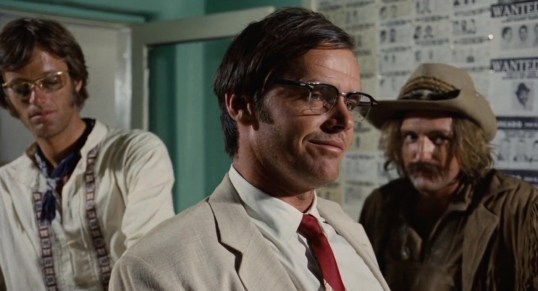
Today’s scene that I love comes from the 1970 film,Five Easy Pieces. In this Oscar-nominated film, Jack Nicholson plays Bobby Dupea. Born to a wealthy and music-obsessed family, Bobby currently works in an oil field and is alternatively angry, cynical, and idealistic. After Jack Nicholson’s Oscar-nominated turn in Easy Rider,Five Easy Pieces featured Nicholson playing the type of role for which he would be best-known in the 70s, the wayward rebel who must choose between being a part of society or being forever an outcast.
In this scene, Bobby and his oilfield co-worker find themselves stuck in a traffic jam. Bobby gets a chance to show off both his temper and his talent. It’s a great scene and Nicholson gives such a strong performance that it’s only later that you realize that Bobby’s anger didn’t really accomplish much.
4 Shots From 4 Films is just what it says it is, 4 shots from 4 of our favorite films. As opposed to the reviews and recaps that we usually post, 4 Shots From 4 Films lets the visuals do the talking!
Today is Jack Nicholson’s 89th birthday!
It’s been sixteen years since Jack Nicholson last appeared in a movie, the forgettable How Do You Know. And yet, he remains a screen icon with a filmography that is a cinema lover’s dream. He’s worked with everyone from Roger Corman to Stanley Kubrick to Milos Forman to Martin Scorsese and, along the way, he’s become a symbol of a very American type of rebel. Though often associated with the counter-culture, his style has always been too aggressive and idiosyncratic for him to be a believable hippie. Instead, he’s one of the last of the beats, an outsider searching for meaning in Americana.
Happy birthday, Jack Nicholson. May you have many happy returns!
4 Shots From 4 Jack Nicholson Films
Easy Rider (1969, dir by Dennis Hopper, DP: Laszlo Kovacs)
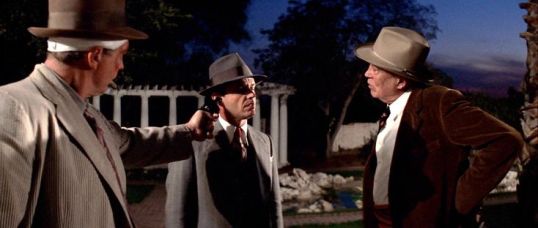
Chinatown (1974, dir by Roman Polanski, DP: John A. Alonzo)
The Shining (1980, dirby Stanley Kubrick, DP: John Alcott)
The Departed (2006, dir by Martin Scorsese, DP: Michael Ballhaus)
Body Count never gets the respect that it deserves. Though it may have started out as being Ice-T’s side project, it developed into an important band of its own.
This video was directed by actor and rapper Treach, who also directed three videos for his own group, Naughty by Nature.
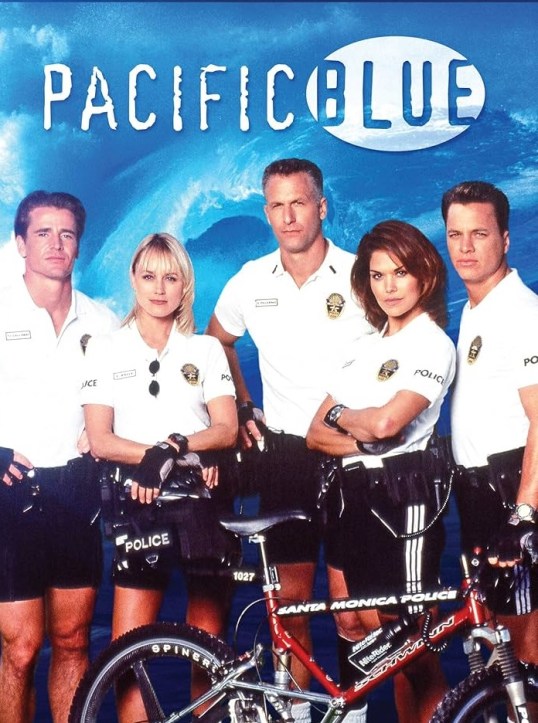
Welcome to Late Night Retro Television Reviews, a feature where we review some of our favorite and least favorite shows of the past! On Tuesdays, I will be reviewing Pacific Blue, a cop show that aired from 1996 to 2000 on the USA Network! It’s currently streaming everywhere, though I’m watching it on Tubi.
This week, season 3 comes to an end.
Episode 3.22 “Best Laid Plans”
(Dir by John B. Moranville, originally aired on April 19th, 1998)
Heh heh …. they said laid.
The third season finale of Pacific Blue finds everyone at a crossroads, almost as if the showrunners weren’t sure who would be back for the fourth season so they wanted to make sure that everyone had an excuse to leave. There’s a lot of personal drama in this episode and I guess it would be compelling if any of these people were the least bit likable or sympathetic.
Victor Del Toro is being investigated by Internal Affairs and he spends the majority of the episode telling people that he suspects that he’s going to lose his job.
Cory is dumped by her long-distance boyfriend and leaps into a new relationship with some guy she accidentally punched at a bar. (She was trying to hit his friend, who was being pretty obnoxious at the time.)
Chris takes a pregnancy test and it’s positive. TC asks her to marry him. Despite the fact that Chris was previously hoping TC would ask her to marry him, Chris says no because …. well, because Chris is the worst. No, actually, it’s because Chris doesn’t want TC to marry her just because he feels like he has to. Chris and TC have separate scenes where they imagine how wonderful it would be to have a baby and how annoying it will be once the baby grows up to be a bratty teenager. But then Chris finds out that it was a false positive.
Palermo, meanwhile, is burned out. He’s feeling old. He wants to do more than just look at crime scenes. Plus, he’s having sex with a 22 year-old (played by Saved By The Bell: The Next Class’s Sarah Lancaster) and he’d rather do that then go to work.
Sadly, Palermo does have to go to work. A gang of criminals is breaking into people’s home and carving letters on their foreheads. (The letters correspond to their last name — Edwards gets an E and so on.) It turns out that the leader of the gang blame Palermo for his mother’s death and is spelling out P-A-L-E-R-M-O. The bad guys are always one step ahead because a member of the gang (Ginny Shcrieber) is working as a receptionist at Pacific Blue headquarters. Do they not do background checks before hiring people?
Palermo does catch the guy, though only after several people have been permanently scarred. Once again, you have to wonder why the bike cops are the only people working these cases. Add that the end of the episode, Palermo announces he’s going to Italy.
That’s one down and four more to go! Who will be around for season 4?
I’m a big fan of westerns made in the 1940’s and 1950’s. I’m also a big fan of the writings of author Louis L’Amour. STRANGER ON HORSEBACK, a 1955 western based on a story by L’Amour, is a good example of why I love both, and it’s currently playing on Amazon Prime, HBOMAX, and Tubi.
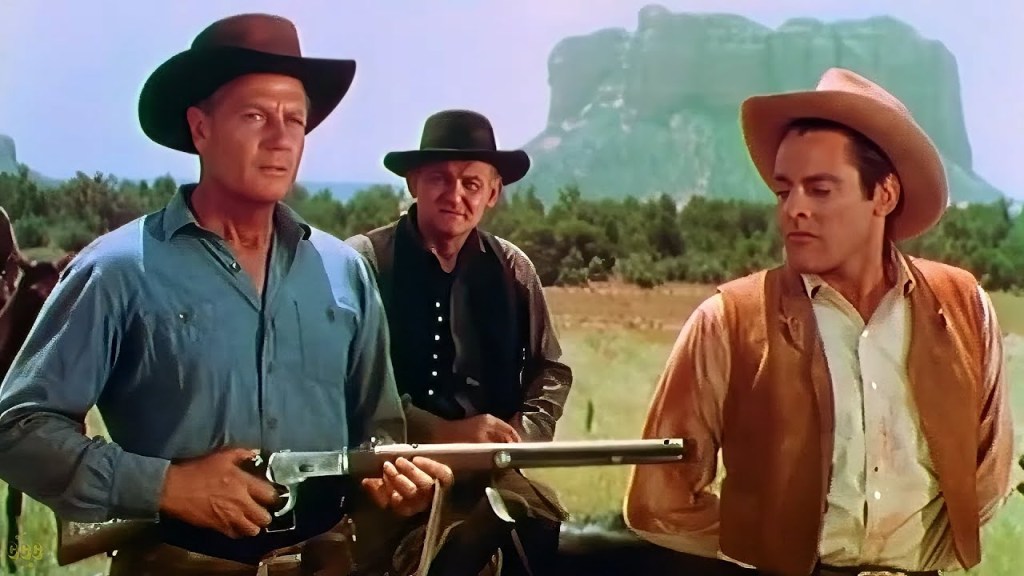
STRANGER ON HORSEBACK opens on the traveling Circuit Judge Rick Thorne (Joel McCrea) as he rides his horse into a small western town that seems to be run by the Bannerman family. We hear his thoughts on western justice, and it goes something like this… “a judge needs three things to bring justice to this country; a law book, a horse and a gun. The further west he gets, the less he needs the book.” That’s a L’Amour line if I’ve ever heard one. As soon he gets into town, he finds out from Colonel Buck Streeter (John Carradine) that young Tom Bannerman (Kevin McCarthy) has gunned a local man down and Thorne is determined that the young man face trial for the killing. That doesn’t set too well with Tom’s dad Josiah Bannerman (John McIntire), who bluntly tells the judge that his son will not face trial for murder. After Thorne and the local Sheriff Nat Bell (Emile Meyer) arrest young Tom, it’s just a matter of time before Thorne has to take on the Bannerman clan and their hired guns. Meanwhile, Amy Lee Bannerman (Miroslava), Tom’s cousin, starts making some love moves on the judge. Is she truly falling for the righteous judge, or is she trying to save her cousin’s ass?
Director Jacques Tourneur (CAT PEOPLE, OUT OF THE PAST, WICHITA) has crafted an extremely economical, classic western. Clocking in at just 65 minutes, the story can’t afford to waste any time and gets right to the action. Joel McCrea is perfect as the morally impeccable judge who will face off against impossible odds to make sure young Tom Bannerman goes to trial for murder. Kevin McCarthy is the exact opposite as the arrogant, amoral killer whose family name has protected him all of his life. John McIntire, as the patriarch of the Bannerman family, is as tough as they come and nobody is going to tell him what to do, or hang his son. He’s not necessarily against his son hanging, but as he implies at one point, if anyone’s going to hang my son, it’s going to be me! And Miroslava is awfully cute as the Bannerman who ends up putting her feelings for the judge over the family name. Sadly, the actress would take her own life just after filming this movie.
STRANGER ON HORSEBACK was filmed in Sedona, AZ, which makes for a beautiful backdrop to this combination of western and legal thriller. The fact that McCrea is playing a judge rather than a sheriff is an interesting twist on the classic western story. His primary focus is to make sure Tom Bannerman gets his due process, but still faces a jury for his crimes, and he’ll do anything to make sure that happens. And it doesn’t take him very long to do it, because it felt like there should have been more movie when the words THE END flashed across the screen. I guess I was enjoying myself, because this 65 minute movie felt even shorter than you might expect!
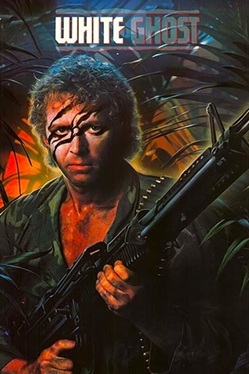 In 1972, Lt. Steve Shepherd (William Katt) disappeared in the jungles of Vietnam. He was listed as being MIA and he was mistakenly presumed dead. Instead, he survived in the jungle and continued to fight his own war against the North Vietnamese. Eventually, he “married” a Thai woman named Thi Hau (Rosalind Chao). The North Vietnamese began to call him the “White Ghost.”