Embracing the Melodrama Part II #107: No Country For Old Men (dir by the Coen Brothers)


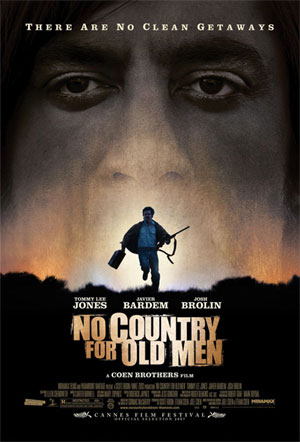
No_Country_for_Old_Men_posterI love my home state of Texas and I love movies. Therefore, it has always upset me that most movies set in Texas get the state totally wrong.  That’s not exactly shocking.  Unlike the rest of the states, there’s actually a lot of variety to Texas.  We’re a big state and we’re home to a lot of people.  Unlike some place like Vermont, Texas is a world all its own and it’s not surprising that most outsiders are incapable of getting their mind around that and instead find themselves embracing simple-minded clichés and stereotypes.  That’s perhaps why the best films about Texas tend to be ones that were actually made by Texans.  If you want to see the real Texas — flaws and all — than I suggest watching the films of Richard Linklater or perhaps Wes Anderson’s Rushmore.

And yet, it took two outsiders to write, produce, and direct one of the best films ever made about Texas.  The 2007 best picture winner No Country For Old Men was largely the work of two brothers from Minnesota, Joel and Ethan Coen.  It’s not only one of the best films about my home state but it’s also one of the best films of the past decade.

Based on a novel by Cormac McCarthy, No Country For Old Men tells the story of three determined men in South Texas whose lives are interconnected despite the fact that three of them spend almost the entire movie one step behind each other.  In fact, despite a few brief encounters where their paths meet, it can be argued that, at no point, do any of them truly interact with each other face-to-face.

Llewelyn Moss (Josh Brolin) is the type of person that anyone who has ever lived in Texas will have met.  He’s a hard-working, plain-spoken man, the type who drives a pickup, owns a gun, and likes to begin and end the day with a beer.  He lives in a trailer with his wife, Carla Jean (Kelly MacDonald, who may be Scottish but speaks here with an almost flawless Texas accent).  Llewelyn’s not a bad guy but he’s not as smart as he thinks and, like a lot of folks down here, he doesn’t like the idea of being told what to do.  In fact, he’d almost rather die for his trouble than admit to making a mistake.  When Llewleyn comes across the aftermath of a drug deal turned violent, he takes off with a suitcase that contains $2,000,000.  After barely escaping the remaining drug dealers (and the scene where Llewelyn is chased by a pit bull is a classic), Llewelyn sends Carla Jeans to stay with her sick mother and then he grabs the suitcase and heads over to the next county.  It quickly becomes apparent, to the viewers at least, that Llewelyn has absolutely no idea how to get out of the mess that he’s found himself in.

And it’s quite a mess because Anton Chigurh (Javier Bardem) has been hired to track down the money.  Perhaps one of the greatest movie villains of all time, Chigurh is an almost unstoppable force of death and destruction.  Chigurh pursues Llewelyn across Texas, killing almost everyone who he meets along the way.  Interestingly enough, just as Llewelyn continually makes excuses for his own greed, Chigurh also makes excuses for his murderous activities, seeming to obsess over the role of fate and chance.  Whereas Llewelyn refuses to give up the suitcase, even though it means that he’s putting his own wife in danger, because he insists that he can figure out a way to keep the money, Chigurh occasionally dodges responsibility for his own actions by flipping a coin and putting the blame on fate.

And finally, there’s Sheriff Ed Tom Bell (Tommy Lee Jones), who is both the most decent and the most ineffectual male character to be found in the film.  He’s an old-fashioned lawman, the type who, had this film been made in the 50s or the 60s, would have been played by Gary Cooper and would have both vanquished Chigurh and given Llewelyn and Carla Jean marriage advice as well.  In the world of No Country For Old Men, however, Ed is almost always one step behind both Chigurh and Llewelyn.  Instead of saving the day, Ed spends most of the movie shocked and saddened by the violence around him.  As the film draws to its conclusion, he’s left to wonder whether any one man can make a difference.  He’s left to literally wonder whether his area of South Texas has truly become no country for old men.

I recently rewatched No Country For Old Men on TCM and I was surprised to discover just how well this film holds up, even after repeat viewings.  If anything, the film actually improves on repeat viewings.  Once you know how the story is going to end (and, in a fashion typical of both the Coens and Cormac McCarthy, No Country For Old Men does not have a traditional ending), it’s easier to see all of the things that you may have been too overwhelmed to appreciate the first time, like Kelley McDonald’s performance as Carla Jean and Stephen Root’s cameo as Chigurh’s shady employer.

However, for me, the main reason that I appreciate No Country For Old Men is because it is one of the few films that actually manages to get South Texas right.  My mom was born and grew up in South Texas, in the town of Benavides to be exact.  I’ve spent a lot of time down there.  The portrait that No Country For Old Man paints of South Texas is not always flattering but it is largely accurate.  No County For Old Men captures both the region’s terrifying violence and its natural beauty.  It’s honest about the fact that there are men like Anton Chigurh but, at the same time, you occasionally meet an Ed Tom Bell as well.  And, of course, there’s a Llewelyn Moss in every town.  He’s the one who you meet and you hope — often against your better instincts — that he won’t get in over his head.

The Academy named No Country For Old Men the best film of 2007.  For once, the Academy was right.
Embracing the Melodrama Part II #106: The Queen (dir by Stephen Frears)


The_Queen_movieIt recently occurred to me that, if you were so inclined, you could reconstruct the entire history of the British royal family by watching movies that have been nominated for best picture.

You would start, of course, by watching Becket.  Then you’d move on to The Lion In Winter.  After The Lion in Winter, you’ll enjoy a double feature of Ivanhoe and The Adventures of Robin Hood.  After that, it’s time to watch Henry V.   When it comes to Henry VIII, you’ve actually got three films to choose from: The Private Life of Henry VIII, A Man For All Seasons, or Anne of The Thousand Days.  I suggest that you go with the Private Life of Henry VIII and then follow it up with a double feature of Elizabeth and Shakespeare in Love.  After that, you’ll jump forward in time a bit.  You’ll watch The Madness of King George and Mrs. Brown because, even though neither was nominated for best picture, they both feature Oscar-nominated royal performances.  Finally, you’ll watch Chariots of Fire and The King’s Speech.  And, after all of that, you’ll end things by watching the 2006 Best Picture nominee The Queen.

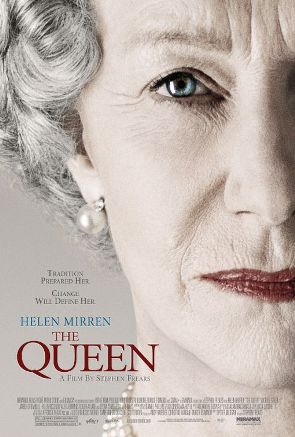
And what a way to end!  The Queen is perhaps the best of the many Oscar-nominated films to be made about British royalty.  While the Queen is rightly known for being the film that finally won the great Helen Mirren an Oscar, it’s also a witty and frequently poignant look at how a group of entrenched people are forced to adapt to a changing world.  It’s a film that works not just because Helen Mirren gives a good performance in the role of Queen Elizabeth II but also because she humanizes Elizabeth, turning her into a character to whom viewers can relate.

The film opens with the death of Princess Diana in Paris.  As the world mourns, the British royal family struggles with how to deal with the tragedy.  Prince Charles (Alex Jennings) worries about the well-being of his sons.  Prince Philip (James Cromwell) is rather haughtily unconcerned with how the general public feels about Diana or the rest of the royal family.  The Queen Mother (Syliva Syms) continues to insist that the Royal Family is just as important as it has always been.  Only Queen Elizabeth (Helen Mirren) seems to truly understand that the Royal Family cannot continue to cut itself off from the rest of the world.  Even though Elizabeth understands that the world outside of Buckingham Palace has changed, she’s still unsure about what her place in this new world will be.

Of course, not only does Elizabeth have to adjust with the changing values of the British public but she also has to deal with a new prime minister.  Tony Blair (Michael Sheen) has been swept into office, pledging that he’s going to “modernize” British society.  While the politically savvy Blair is determined to treat Elizabeth with respect, some of his closest advisers do little to disguise the contempt with which they view the royal family.  This include Tony’s own wife, Cherie (Helen McCrory).

And so, while self-styled reformer Blair finds himself in the strange position of defending tradition, Elizabeth tries to figure whether those traditions still matter in changing times.

The Queen is a film that demands an intelligent audience, one that is capable of enjoying a film based solely on the basis of good acting and intelligent dialogue.  The Queen‘s triumph is that it humanizes an iconic figure and reminds us that even the biggest events are both historical and personal.  I have no idea whether the real Elizabeth is anything like the character played by Helen Mirren but I certainly hope she is.

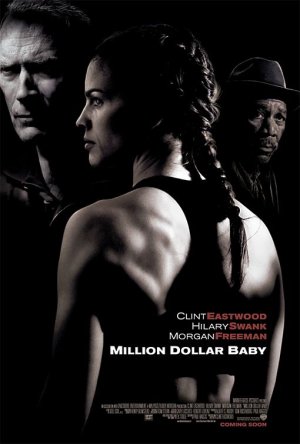
Embracing the Melodrama Part II #105: Million Dollar Baby (dir by Clint Eastwood)


Million_Dollar_Baby_poster

(This review and the Spanish trailer below are dedicated to mi madre, who saw Million Dollar Baby when it was first released and told me that, even though the film had been nominated for lots of Oscars, I shouldn’t watch it until I was in a better and more stable place emotionally.  She was right.)

Two months ago, I started Embracing the Melodrama Part II.  At the time, I announced that I would be reviewing 126 cinematic melodramas and I would get it all done in 3 weeks time!  Well, here we are 8 weeks into it and we are just now approaching the finish line.  That’s okay, though.  Even if it’s taken me longer than I thought it would, I’ve still been having fun writing and sharing these reviews.

I’ve been posting these reviews in chronological order.  Though it may be hard to remember, we started with a 1927 silent classic called Sunrise.  From Sunrise, we’ve worked our way through history and we’ve taken a look at films that are both famous and obscure.  And now, 104 reviews later, we finally reach the 2004 best picture winner, Million Dollar Baby.

When I first saw Million Dollar Baby, I had two reactions.  On the one hand, I thought it was a great film.  I thought it was a film that featured great performances and which gave me a chance to experience a world that I did not know much about.  I thought to myself, “This is a film that future directors will cite as an influence.  This is a film that proves that, even if he does sometimes make movies like Hereafter or Jersey Boys, Clint Eastwood still deserves to be known as a great American filmmaker.”  On the other hand, I thought to myself, “This film is so damn depressing that there’s no way I’m ever going to watch it again.”

And really, it is an amazingly sad film.  When the film starts, of course, you don’t think it’s going to be sad.  You think it’s going to be your standard sports film, the one where the underdog beats the odds and becomes a champion.  For one thing, the film is narrated by Morgan Freeman and Morgan’s got that voice that makes you believe that there is some justice to the universe.  Secondly, Hillary Swank is so appealing in the role of Maggie, a waitress who wants to become a boxer, that you just know she deserves a happy ending.  At first, veteran trainer Frankie (Clint Eastwood) refuses to work with her but her determination wins him over.  And soon, Frankie — who, in typical Clint movie fashion, has a strained relationship with his daughter — becomes a father figure for Maggie.

And as you watch Maggie find success as a boxer, you’re so happy for her.  I certainly was, despite the fact that I know next to nothing about boxing beyond the fact that it’s something that I would never want to do.  And when Clint starts to soften up to her, you’re not surprised.  After all, he’s craggly old Clint Eastwood.  He’s scary but we all know he has a heart of gold.  Add to that, Morgan Freeman’s still telling the story and surely the voice of God would not allow anything bad to happen…

And then … tragedy.  By the time that I finally saw Million Dollar Baby, I already knew the story’s big twist.  I knew that, as a result of a brutal fight, Maggie would be left paralyzed.  I knew that she would beg Frankie to euthanize her.  But seriously, imagine what a shock it must have been for audiences when this film first came out.

I mean, everything’s going perfectly and then suddenly, it’s not.

To a certain extent, I was jealous of those who got to see Million Dollar Baby without any advanced knowledge of the tragedy that defines the final third of the film.  When I watched the film, I found myself dreading the thought of enjoying any of Maggie’s triumphs because I knew what was going to happen.  Those who watched the film with know knowledge may have been shocked but at least they got to believe, for a few scenes, that Maggie could find that perfect sports film ending.

Then again, Million Dollar Baby is a great film because it refuses the temptation to give us the ending that we all want and expect.  Instead, it’s a movie that celebrates the people who will be there for you even when thing’s suddenly aren’t perfect.

That’s why Million Dollar Baby works as well as it does.  Unfortunately, it’s also why it’s a film that I could only watch once.

Scenes I Love: Saving Private Ryan


SavingPrivateRyan

Today marks the 71st Anniversary of the Normandy Landings on D-Day. As the day winds down I thought it best to share one of my favorite scenes from a film that tried to capture the chaos and death of the fateful day on June 6, 1944. The film in question is Steven Spielberg’s Saving Private Ryan. This is the film which won him his second Best Director Oscar (I still think the film should’ve won Best Picture over Shakespeare In Love) and the film which helped redefine not just how war films were shot from 1998 on, but also de-glorify World War II on film.

This scene showed the opening moments of the D-Day Landings on Omaha Beach in Normandy, France. It’s a scene that’s over 22-minutes in length and shows the utter chaos and destruction heaped on American troops as they attempted to land on the beach to take their objectives. While there have been war film before Saving Private Ryan that depicted war as the hell it truly is they were mostly about the Vietnam War. Rarely did we ever get a World War II-based war film which showed war in realistic fashion. Spielberg broke that taboo by making the battle scenes in his film — especially this extended opening sequence — done as realistic as possible without actually having people killed for real on-screen.

When this film first came out in the summer of 1998 no one knew what to make of it. This opening sequence became the talk of everyone who went to see the film. To say that they were shocked by what they saw was an understatement. Even now with over a decade since the film was released and people having seen this scene over and over again it still retain it’s impact. It’s not even the grand scale of the production required to film this action sequence which made this scene so memorable. It were the little things. Like a mortally wounded American GI crying out to his mother while trying to keep his blown out insides from spilling out. Then there’s the scene of another young soldier praying furiously with his rosary beads as men around him die by the score.

This scene also showed what most World War II films of the past failed to do. It showed both sides behaving barbarically. In the past, only the Germans were shown in a bad light. In Saving Private Ryan, we see that American soldiers were also prone at shooting surrendering troops and/or not mercy-killing enemy soldiers being burned alive (actions that have been well-documented by historians). This scene also showed just how courageous the young men of this generation which Tom Brokaw has called “The Greatest Generation”. Men who went off to war not for material gains, but for an idea that they had to stop evil (Nazi and Hitler) from taking all of Europe and, maybe, the world itself.

There’s a reason why Saving Private Ryan is in my list for greatest films of all-time and why this scene remains one of my all-time favorites.

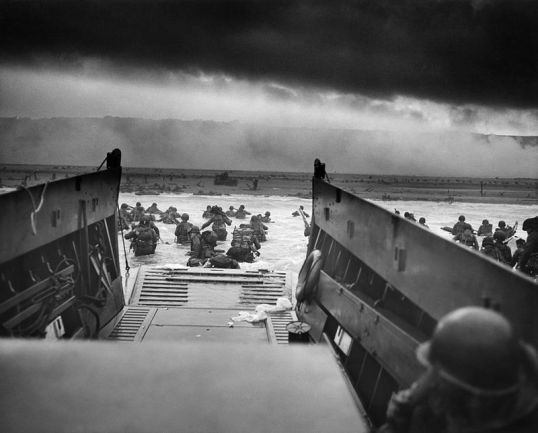
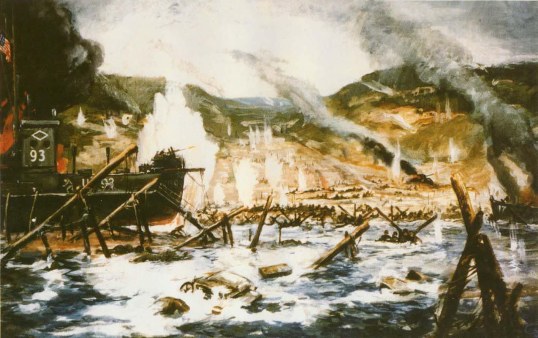
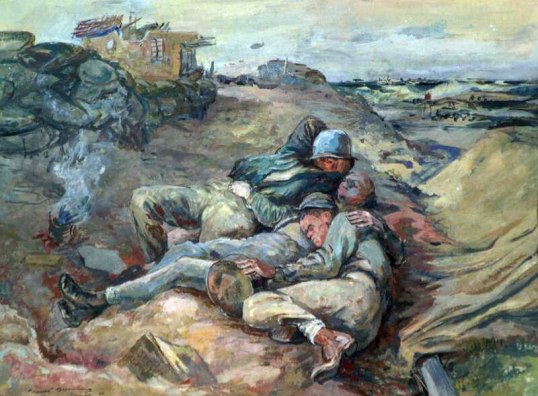
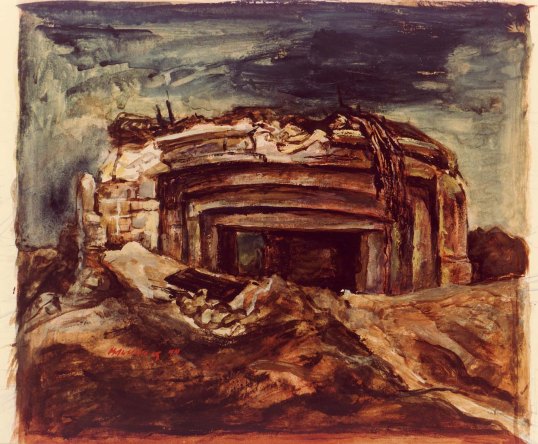
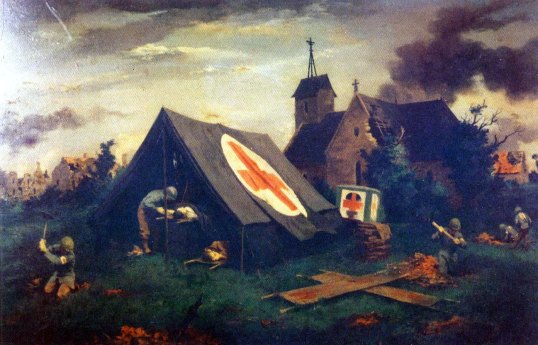
Images of D-Day


Photograph by Robert F. Sargent

Photograph by Robert F. Sargent

“The eyes of the world are upon you. The hopes and prayers of liberty-loving people everywhere march with you.” — General Dwight D Eisenhower


Painting by Olin Downs

Painting by Olin Downs


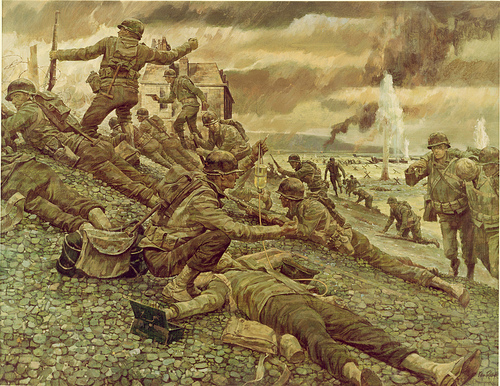
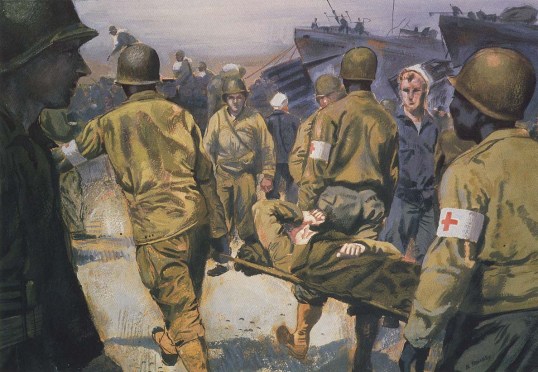
Painting by Harrison Standley

Painting by Harrison Standley

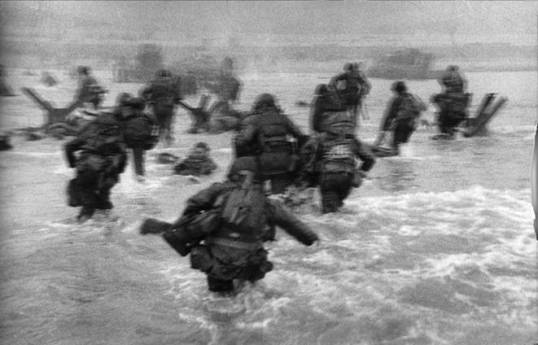
Photograph by Robert Capa

Photograph by Robert Capa


Photography by Robert Capa

Photograph by Robert Capa

Painting by Simon Smith

Painting by Simon Smith

Painting by Ken Riley

Painting by Ken Riley

Painting by Joseph Gary Sheahan

Painting by Joseph Gary Sheahan

Painting by Joseph Gary Sheahan

Painting by Joseph Gary Sheahan

“There is one great thing that you men will all be able to say after this war is over and you are home once again. You may be thankful that twenty years from now when you are sitting by the fireplace with your grandson on your knee and he asks you what you did in the great World War II, you won’t have to cough, shift him to the other knee and say, Well, your Granddaddy shoveled shit in Louisiana.” — General George S Patton Jr.

Painting by Manuel Bromberg

Painting by Manuel Bromberg

Painting by Manuel Bromberg

Painting by Manuel Bromberg

Painting by Laurence Beall Smith

Painting by Laurence Beall Smith

Painting by Harrison Standley

Painting by Harrison Standley

“There’s a graveyard in northern France where all the dead boys from D-Day are buried. The white crosses reach from one horizon to the other. I remember looking it over and thinking it was a forest of graves. But the rows were like this, dizzying, diagonal, perfectly straight, so after all it wasn’t a forest but an orchard of graves. Nothing to do with nature, unless you count human nature.” — Barbara Kingsolver

Photography by Michael Osmenda

Photograph by Michael Osmenda

Photograph by Christine Cantera

Photograph by Christine Cantera

“They fight not for the lust of conquest. They fight to end conquest. They fight to liberate.” — President Franklin D. Roosevelt


Embracing the Melodrama Part II #104: Phone Booth (dir by Joel Schumacher)


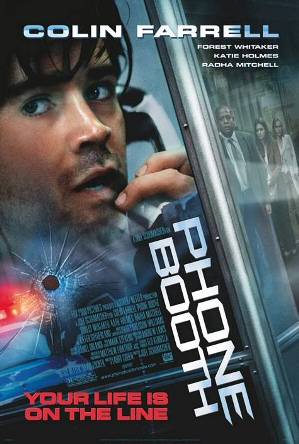
Phone_Booth_movie (1)

First released in 2003, Phone Booth is a good film.

Now, I know that you’re probably thinking, “Okay, that’s good, Lisa.  There were a lot of good films released in 2003.  I can’t think of any off the top of my head but let me go look on Wikipedia and I’m sure I can come back with a few dozen good films and…”

Well, before you go over to Wikipedia and do a search on 2003 in film (and I even included a direct link to make it easy for you because I like to be helpful), allow me to point something else out about Phone Booth.

Phone Booth is not only a good film but it’s a good film that was directed by Joel Schumacher!

That’s right!  There are several online film critics who will tell you that Joel Schumacher is one of the worst directors of all time and, to be honest, there’s actually a pretty good argument that can be made in support of that.  However, Schumacher did direct both The Lost Boys and Phone Booth.  So, he’s directed at least two good films and that’s two more than Uwe Boll.

In Phone Booth, Colin Farrell plays Stu, a slick publicist who has both a wife named Kelly (Radha Mitchell) and a girlfriend named Pam (Katie Holmes).  When Stu steps into the last remaining phone booth in New York City in order to call his girlfriend, he’s shocked when a pizza deliveryman shows up and attempts to give him a pizza.  No sooner has he gotten rid of the pizzaman (and, seriously, who turns down free pizza?), the phone rings.  Stu answers and is told by an unseen sniper (voice by Kiefer Sutherland) that, if he leaves the phone booth, he will be shot.  The sniper goes on to order Stu to tell the truth to both Kelly and Pam or to risk being shot as a consequence.

While all of this is going on, a group of prostitutes demand that Stu get out of the booth and let them use the phone.  When Stu refuses, their pimp approaches the booth and is promptly gunned down by the sniper.  Soon, under the assumption that Stu has a weapon, the police — led by Forest Whitaker — have surrounded the booth and are demanding that Stu step out.  The sniper, however, reminds Stu that he’ll be shot if he leaves the booth.

As a crowd of onlookers (including Pam and Kelly), police, and reporters surround the booth, Stu finds himself literally with no escape…

Telling the story in real time and keeping the film largely focused on Stu’s increasing desperation, Schumacher actually does a pretty good job with Phone Booth.  Colin Farrell gives a great performance, making Stu into a character who you like despite yourself.  While Kiefer Sutherland never appears onscreen, his sexy growl of a voice works wonders and he even manages to sell the point where his character starts to maniacally laugh.  Reportedly, screenwriter Larry Cohen came up with the idea for Phone Booth way back in the 1960s.  It took nearly 40 years for the film to be made but Schumacher, Farrell, and Sutherland made it more than worth the wait.

Embracing the Melodrama Part II #103: 21 Grams (dir by Alejandro Gonzalez Inarritu)


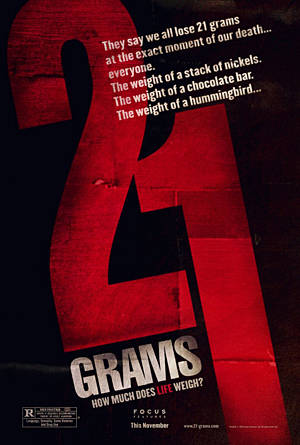
21_grams_movieRemember how shocked a lot of us were when we first saw Birdman?  Well, it wasn’t just because Birdman featured an underwear-clad Michael Keaton levitating in his dressing room.  And it also wasn’t just because Birdman was edited to make it appear as if it had been filmed in one continuous take (though, to be honest, I would argue that the whole “one continuous shot” thing added little to the film’s narrative and was more distracting than anything else.)  No, the main reason we were shocked was that Birdman was directed by Alejandro Gonzalez Inarritu and, when we thought of an Inarritu film, we thought of something like 2003’s 21 Grams.

It’s not easy to explain the plot of 21 Grams, despite the fact that 21 Grams does not tell a particularly complicated story.  In fact, if anything, the plot of 21 Grams feels like something that either Douglas Sirk or Nicholas Ray could have come up with in the 50s.  Indeed, the plot of 21 Grams is far less important than the way the Inarritu tells the story.  (In that, the dark and grim 21 Grams does have something in common with the arguably comedic Birdman.)

Inarritu tells his story out of chronological order.  That, in itself, is nothing spectacular.  Many directors use the same technique.  What distinguishes 21 Grams is the extreme to which Inarritu takes his non-chronological approach.  Scenes play out with deceptive randomness and it is left to the viewer to try to figure out how each individual scene fits into the film’s big picture.  As you watch 21 Grams, you find yourself thankful for little details like Sean Penn’s beard, the varying lengths of Naomi Watts’s hair, and the amount of sadness in Benicio Del Toro’s eyes because it’s only by paying attention to those little details can we piece together how once scene relates to another.

The film tells the story of three people whose lives are disrupted by the type of tragedies that the pre-Birdman Innaritu was best known for.

Sean Penn plays Paul Rivers, who is a sickly mathematician who desperately needs a new heart.  He’s married to a Mary (Charlotte Gainsbourg), who devotes all of her time to taking care of him and is frustrated by Paul’s fatalistic attitude towards his condition.  When Paul does finally get a new heart, he gets a new existence but is haunted by the fact that it has come at the expense of another man’s life.

Christina Peck (played by Naomi Watts) is a former drug addict who is now married with kids and who appears to have the perfect life.  That is until her husband and children are tragically killed and, in her grief, Christina falls back into her old lifestyle.  The formerly stable and happy Christina becomes obsessed with the idea of getting revenge for all that she has lost.  Naomi Watts was deservedly nominated for an Oscar for her work here.  Her vulnerable and emotionally raw performance holds your interest, even when you’re struggling to follow the film’s jumbled chronology.

And finally, there’s Jack Jordan (Benicio Del Toro).  Like Christina, Jack is a former drug addict.  Whereas Christina used the stability of family life to help her escape from her demons, Jack uses his new-found Christianity.  And just as Christina struggles after she loses her family, Jack struggles after tragedy causes him to lose his faith.  Like Paul, he struggles with why he’s been allowed to live while other have not.  Del Toro was nominated for an Oscar here and, like Watts, he more than deserved the nomination.

(While Sean Penn was not nominated for his performance in 21 Grams, he still won the Oscar for his role in Mystic River.)

21 Grams is a powerful and deeply sad film, one that will probably shock anyone who only knows Inarritu for his work on Birdman.  21 Grams is not always an easy film to watch.  Both emotionally and narratively, it’s challenging.  But everyone should accept the challenge.


The Cold War Relived Through Bridge of Spies


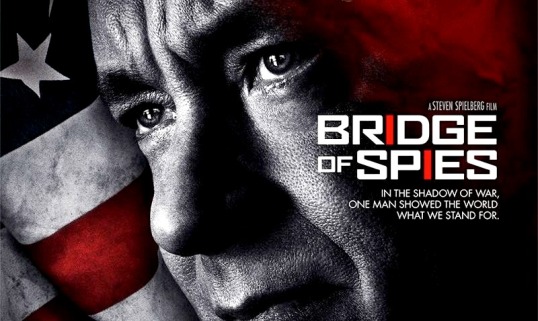
BridgeofSpies

Lisa Marie is not the only history nerd in this here place. I don’t think it was a coincidence that TSL’s co-founders ended up being both history nerds. We both love films the depict historical events. Some of them turn out to be great while some end up on the trash heap.

One filmmaker who has made a career late in his life of making historical films is Steven Spielberg. The same one who gave us great blockbusters in the scifi, thriller and fantasy genres has also given us some excellent historical films such as Saving Private Ryan, Schindler’s List, Munich and Lincoln.

We have the first trailer for Spielberg’s latest film which is based on the real-life events surrounding the 1960 U-2 spy plane incident where American pilot Francis Gary Powers was shot down while on a mission over the Soviet Union and was subsequently swapped back into US custody for a Soviet spy that the Americans were holding.

Bridge of Spies showcases the events which led to that swap and how contentious the negotiations had been before it finally came about. Everyone knows the Cuban Missile Crisis put the world very close to nuclear annihilation, but what many don’t know is how the Gary Powers Incident also pushed the two nuclear powers very close to the brink.

Bridge of Spies is set for an OCt. 16, 2015 release date…just in time for the start of Lisa Marie’s favorite film season: Awards Season.

NMY vs The World Video Game Hall of Fame Class of 2015


The Strong, an educational institution in Rochester specializing in the study of games, announced the six inaugural inductees of their World Video Game Hall of Fame yesterday. So what? Well, it made its way onto a lot of major news sites, which means it is probably going to resurface again next year and, in time, become the closest we’ve got to an “official” Hall of Fame.

My gut reaction was “my what a pretentious title”, because the “World” VG HoF looks incredibly U.S.-centric. Their game history timeline pretty much completely ignores the fact that the U.S. did not control the international gaming market for the vast majority of the 20th century. I mean, this timeline is crazy. 1982, the year that the bloody Commodore 64 was released, they feature Chicago-based Midway’s Tron instead. 1986, the year that Dragon Quest set the standard for the next two decades of role-playing games, they are at such a loss to find anything novel that they dig up Reader Rabbit by Boston-based developers The Learning Company. In spite of devoting 1992 to Las Vegas-based Westwood Studios’ Dune II, LA-based Blizzard Entertainment steals 1994 with Warcraft: Orcs and Humans. Does the invention of RTS gaming really deserve two years? Well, it’s not like it was competing with the release of the Sony Playstation or anything. Oh that’s alright, we’ll feature it in 1995, since that’s when it came to America. This list also devotes 1993 to the development of the ESRB rating system (which only applies in America), 1996 to Lara Croft’s tits (seriously, does anyone actually give a shit about Tomb Raider?), and 2002 to the U.S. Army, because uh, freedom!

So yeah, World Video Game Hall of Fame my ass. But that doesn’t mean they got the first six wrong:

Pong (1972)

“Ladies and gentlemen, you have been hand selected to choose the five games which will accompany Pong into the Hall of Fame.” It had to go something like that. Pong invented gaming like Al Gore invented the internet. Could you imagine a Hall of Fame without Pong? I mean, it’s Pong! Really though, wasn’t computer gaming kind of inevitable? Was it the first game? Nope. Did it stand the test of time? Not really. Did it usher in the age of arcade gaming? I guess it did, but the game itself had little to do with that. It was a novelty. Replace it with anything else, and that other game would be just as famous, regardless of its content. I don’t like that. There is a reason why Pong is the only game of the six Hall of Famers that I never played as a kid or else upon release, and that has nothing to do with my age. I think we get hung up on its simplicity, its catchy name, this idea that it all began with two paddles and a ball, and the desire to point to something and say “this started it all”. Pong deserves recognition in any gaming hall of fame eventually, but top 6? We can do better.

NMY gives this selection a 5/10

Pac-Man (1980)

What are Pac-Man‘s claims to fame? Well, it was the first video game to be a major social phenomenon, generating a huge market for spin-offs, toys, animated cartoons, and all sorts of other consumer products. It was the first video game with a really memorable theme song. It remains the best-selling arcade game of all time. It generated a chart-topping shitty pop song. It even destroyed the gaming industry. (E.T. the Extra-Terrestrial has absolutely nothing on the devastating consequences of Pac-Man‘s abysmal Atari port.) And sure, it’s pretty boring, but it still lasted well into the 90s. I had a pirated DOS copy as a kid. Do you think anyone bothered to pirate Pong? Uh, no.

NMY gives this selection a 10/10

Tetris (1984)

Tetris is a game that we all agree to love because it is Russian, and like Russia, it is really evil and kind of a dick. Four Z blocks in a row? Really? I didn’t double tap that button. Go back! Ugh…. Tetris annoyed the hell out of me as a kid, but I certainly did play it. It also spawned a ton of cheap rip-offs, novel improvements, and largely unrelated block puzzle games that stole its name for publicity, and a lot of these vastly outclassed the original. If I look back on all the fun I had playing Tetris Attack for the Super Nintendo, or hosting TetriNET tournaments online in the late 90s, or the amount of time my wife wastes on Candy Crush Saga, it is hard for me to pretend that Tetris was not significant. It was the mother of all “endless puzzle” games, and it deserves credit for that, even if I hated the original Alexey Pajitnov Tetris, with its never-ending tiers of frustration.

NMY gives this selection a 9/10

Super Mario Bros (1985)

This is the real shoe-in. Nintendo was able to turn Mario into (I am assuming) the most recognizable fictional character in the world because the original Super Mario Bros was so great. A game released in 1985 is not supposed to still be this much fun 30 years later, but from novel settings and mechanics to outstanding control, this game ran the gamut of what a great side-scroller was supposed to be. This, at a time when there was very little in the way of quality competition to take inspiration from. The game’s lasting legacy is so pervasive in our culture that I would feel silly even bothering to summarize it.

NMY gives this selection a 10/10

Doom (1993)

“Why an FPS, World Video Game Hall of Fame?” Because “it also pioneered key aspects of game design and distribution that have become industry standards“, according to the official induction explanation. Design-wise, they laud it for “a game ‘engine’ that separated the game’s basic functions from other aspects such as artwork.” That might be an interesting point. I don’t know much about it, though I have to imagine that anything Doom did, Wolfenstein 3D did first. Distribution-wise, they talk about how id Software marketed downloadable expansions and encouraged multi-player, online gaming. That point fails to impress me. Doom launched in 1993, which means no games before it really had the option to market themselves in this way. “First” only counts for me if the move is innovative, not inevitable. So we are left with some sort of novel modular processing system and the fact that it was the first really successful FPS. Those are fine points. I might not like FPS games, but I can’t deny that they have had a more lasting impact than say, fighting or sports games. Placing so much weight on the play style does, however, open up the doors for a lot of why nots. Why not Diablo? Why not Dragon Quest? Why not Command & Conquer?

NMY gives this selection a 7/10

World of Warcraft (2004)

I am not entirely sure why the World Video Game Hall of Fame chose World of Warcraft, because they aren’t telling. Their write-up goes into detail on what makes MMORPGs so revolutionary, but none of it is really unique to WoW. They throw out some numbers about WoW’s player base and monthly profit, and then bam, inaugural hall of fame induction. I am probably the last person to give an accurate assessment of how World of Warcraft changed gaming, because I still actively play it, but I have to believe that its enormous popularity had a lot to do with its place in time. Coming in to the 21st century, we all knew someone who played EverQuest, and we all (all of us, right guys?) secretly wanted to abandon our real lives and nerd out in 24/7 multiplayer fantasy immersion. I never played EverQuest, however, or Final Fantasy XI for that matter, because I still had dial-up internet. World of Warcraft launched right around the time that the majority of gamers were becoming equipped to play something of its magnitude. That being said, WoW is going on 11 years now, and still going strong. I’ve never seriously considered canceling my subscription. Blizzard landed on a market ripe for the picking, but they have carefully cultivated it ever since.

NMY gives this selection an 8/10

Over all, I think the World Video Game Hall of Fame is off to a good start. Pong is the only inaugural entry I strongly disagree with, but were it missing, would people still take the organization seriously? Doom is a bit sketchy to me, because its only claim seems to be “first popular FPS”. I think GoldenEye 007 was the game to push FPS into the mainstream and really reach beyond the genre, while Blizzard clearly dominated online gaming with Diablo and Starcraft, whatever id Software happened to do “first”. Doom is a good candidate, no doubt, but I feel like it belongs in another class. It would have fit in more nicely in a 2016 school that pushed genre-standardizing games like Dragon Quest, The Legend of Zelda, Street Fighter II, and Space Invaders.

Is that what we have to look forward to in 2016? Well, based on the runners-up from 2015, maybe not. The list did include Space Invaders and The Legend of Zelda, along with worthy contenders Pokémon Red and Blue and The Oregon Trail. Beyond that, it got a bit dicey. It is hard to imagine that Angry Birds, for instance, almost made the top 6. Sonic the Hedgehog would be long forgotten if not marketed as Sega’s response to Mario, yet it was a contender. FIFA International Soccer was the only sports entry–an odd choice, given that I have never heard of it, it only came out in 1993, and Tecmo Super Bowl exists. The other options were Minecraft–a bit young yet, don’t you think?–and oddly, The Sims, which I am sure was quite fun to play and left no lasting impact on gaming whatsoever. Well, they’ve got another year to straighten things out.

Embracing the Melodrama Part II #102: Chicago (dir by Rob Marshall)


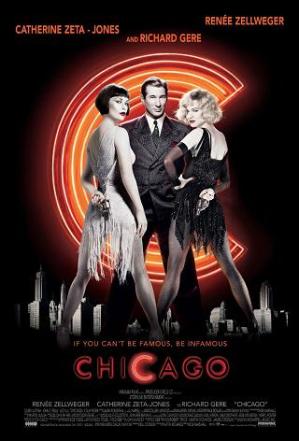
ChicagopostercastIt’s strange to refer to a best picture winner as being underrated but that’s exactly the perfect description for the 2002 film Chicago.

When Chicago was named the best picture of 2002, it was the first musical to take the top prize since The Sound of Music won in 1965.  Until the box office success and Oscar triumph of Chicago, it was assumed by many that a musical had to be animated in order to be successful.  After Chicago won, the conventional wisdom was changed.  Dreamgirls, Nine, Rock of Ages, Hairspray, Jersey Boys,  Into the Woods, Les Miserables, none of these films would have been produced if not for the success of Chicago.  It’s also due to Chicago that television networks are willing to take chances on shows like Glee and Smash.  And while I think a very valid argument could be made that we would all be better off without Glee, Smash, and Rock of Ages, you still can not deny that Chicago both challenged and changed the conventional wisdom.

https://twitter.com/Delanynder/status/606251356136042496

And yet, despite its success and its continuing influence, Chicago is one of those best picture winners that often seems to get dismissed online.  Some of that’s because, by winning best picture, Chicago defeated not only The Two Towers (which is arguably the best installment in Peter Jackson’s Lord of the Rings trilogy) but also Roman Polanski’s searing masterpiece, The Pianist.  Critics often point out that The Pianist won for best adapted screenplay, best actor, and best director but Chicago somehow managed to win best picture.  They suggest that the Academy was either worried about the implications of giving best picture to a film directed by Roman Polanski or else they were blinded by Chicago‘s razzle dazzle.  They argue that Chicago was merely an adaptation of an iconic stage production, whereas The Pianist and The Two Towers were both the result of visionary directors.

Well, to be honest, I think those critics do have a point.  The Pianist is one of the most emotionally devastating films that I have ever seen.  The Two Towers is the perfect mix of spectacle and emotion.  And yet, with all that in mind, I still love Chicago.

And it’s not just because of scenes like this:

Or this:

Or even this scene of Richard Gere tap dancing:

If you’ve been reading this site for a while then you know my bias.  You know that I grew up dancing.  You know that I love to dance.  And you know that I automatically love any film that features a dance number.  And, since you know my bias, you may be thinking to yourself, “Well, of course Lisa likes this….”  And you’re right.

But you know what?  Even if nobody danced a step in this film, I would still enjoy it.  (Though it would be odd to see a musical with absolutely no dancing.)  Chicago is not just about spectacle.  Instead, it tells a very interesting story, one that is probably even more relevant today than when the film was first released.

Set in 1924, Chicago tells the story of Roxie Hart (Renee Zellweger).  Married to the decent but boring Amos (John C. Reilly), Roxie wants to be a star.  She has an affair with slrazy Fred Casely (Dominic West), believing that he has showbiz connections.  When Fred finally admits to her that he lied in order to sleep with her, Roxie reacts by murdering him.  Because Roxie is pretty and blonde and claims to have been corrupted by the big, bad, decadent city, she becomes a celebrity even while she sits in jail and awaits trial.

Also in the jail is Velma Kelly (Catherine Zeta-Jones), a nightclub singer who killed her husband and sister.  Roxie idolizes Velma but, after Velma snubs her, a rivalry forms between the two.  Roxie hires Velma’s lawyer, the slick Billy Flynn (Richard Gere).  During the trial, Roxie becomes even more popular, Velma grows jealous, and the only innocent women on death row — a Hungarian who can’t speak English — is ignored and executed because she doesn’t make for a good news story.

Chicago is a cynical and acerbic look at both the mad pursuit of celebrity and the pitfalls of the American justice system.  In its way, it’s the film that predicted the Kardashians.  (If Roxie had been born several decades later, it’s not difficult to imagine that she’d build her career off of a sex tape as opposed to murder.)  Renee Zellweger and Catherine Zeta-Jones are both sociopathic marvels in their respective roles.  Even Richard Gere, who, in other films, can come across as being oddly empty, is perfectly cast and surprisingly witty in the role of Billy.

Director Rob Marshall does a great job of making this stage adaptation feel truly cinematic.  At no point does Chicago feel stagey.  Perhaps Marshall’s smartest decision was to tell the entire film through Roxie’s eyes.  Every musical lives and dies based on whether it can convince the audience that it would perfectly natural for everyone onscreen to suddenly break out into song.  Chicago is convincing because, of course, Roxie would view her life as being a musical.

And did I mention that the film features a lot of great dancing?

Because it so seriously does….

So, yes, it can be argued that Chicago beat out some worthier films for the title of best picture of the year.  But, regardless, it’s still a good and memorable film.