The San Francisco Film Critics and the San Diego Film Critics Have Spoken!


It’s been a busy three days as far as Oscar precursors are concerned so let’s jump straight into things and take a look at the latest victories.  We’ll start with two critics groups from Arleigh’s home state of California!

Yesterday, the San Francisco Film Critics announced their picks for the best of 2014!

Best picture: Boyhood
Best director: Richard Linklater, Boyhood
Best actor: Michael Keaton, Birdman
Best actress: Julianne Moore, Still Alice
Best supporting actor: Edward Norton, Birdman
Best supporting actress: Patricia Arquette, Boyhood
Best screenplay, original: Birdman
Best screenplay, adapted: Inherent Vice
Best cinematography: Ida
Best production design: The Best Grand Budapest Hotel
Best editing: Boyhood
Best animated feature: The Lego Movie
Best foreign-language picture: Ida
Best documentary: Citizenfour

Nightcrawler

Meanwhile, the San Diego Film Critics Society announced earlier today that they really, really love one of my favorite films of the year, Nightcrawler!  You can see a full list of the San Diego nominees by clicking here.  And the winners are listed below!

Best Picture
“Nightcrawler”

Best Director
Dan Gilroy, “Nightcrawler”

Best Actor
Jake Gyllenhaal, “Nightcrawler”

Best Actress
Marion Cotillard, “Two Days, One Night”

Best Supporting Actor
Mark Ruffalo, “Foxcatcher”

Best Supporting Actress
Rene Russo, “Nightcrawler”

Best Adapted Screenplay
“Gone Girl”

Best Original Screenplay
“Nightcrawler”

Best Cinematography
“Nightcrawler”

Best Editing
“Edge of Tomorrow”

Best Production Design
“The Grand Budapest Hotel”

Best Score
“Nightcrawler”

Best Animated Film
“The Boxtrolls”

Best Foreign Film
“Force Majeure”

Best Documentary
“CITIZENFOUR”

Best Ensemble
“Birdman”

Body of Work
Willem Dafoe (“John Wick,” “The Fault in Our Stars,” “The Grand Budapest Hotel,” “A Most Wanted Man,” “Nymphomaniac: Part 2”)

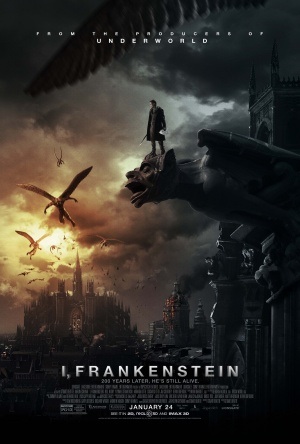
For Your Consideration #4: I, Frankenstein (dir by Stuart Beattie)


I_Frankenstein_Poster

For the tonight’s final entry in For Your Consideration, I’m going to suggest that everyone take the time to consider a film that came out way back in January — I, Frankenstein.

“WHAT!?” someone out there is saying.  “It was bad enough when you tried to convince us that The Purge: Anarchy deserved an Oscar nomination…”

Okay, okay — hold on a minute.  You get upset so easily, it can’t be good for your blood pressure.  Anyway, have you calmed down now?  Good.

Here’s the thing — I said that I was going to suggest some films that I thought were worthy of award consideration.  The Oscars aren’t the only awards around.  There’s also the Razzie Awards.  The Razzies claim that their mission is to honor the worst movies and performers of each year.  To be honest, looking over some of their past nominations, it looks like they’re more interested in picking on easy targets like Lindsay Lohan and … well, I was going to say Adam Sandler but there’s a reason why most of his films are such easy targets.

Now, as far as this year is concerned, I’m sure that the people behind the Razzie awards are already busy coming up with snarky things to say about that Kirk Cameron Christmas movie.  And good for them!  However, I’m simply suggesting that instead of just settling for nominated Kirk Cameron a gazillion times, the Razzies might want to give some consideration to another potentially deserving film that came out this year.

Personally, I really wanted to like I, Frankenstein.  It was produced by the people behind the Underworld films, all of which are definitely guilty pleasures of mine.  And it starred Aaron Eckhart, who is such a good actor even if he rarely seems to get the lead roles that he deserves.  That said, even before I saw the film, I had my doubts about whether an actor with the almost satirically all-American facial features of Aaron Eckhart would be believable as a reanimated corpse and sad to say, he was not.  You could definitely imagine Eckhart playing a legendary big game hunter who has decided that he’s going to add Frankenstein’s monster to his wall of trophies.  But as the monster — well, not so much.

In I, Frankenstein, Frankenstein’s Monster survives through the centuries and eventually ends up fighting a bunch of demons for some reason.  Or something like that.  I have to admit that I was never quite sure what was going on in I, Frankenstein.  Some of that was because I was bored with the movie and a lot of it was because the movie felt less like an actual film and more like a collection of highlights.  This is one of those films where off-screen narration was necessary to describe a huge chunk of the movie’s plot.

And, finally, I just couldn’t buy Aaron Eckhart as a monster.  He’s too handsome in his own clean-cut, middle American way.  There’s a reason why Aaron Eckhart was convincing as the symbol of good government decency in The Dark Knight and that’s the same reason why he’s not very convincing playing a creature who has been built out of random body parts.

So, to the people behind the Razzies, I would encourage them to continue to try to come up with the perfect Kirk Cameron joke.  But don’t forget about I, Frankenstein.

It’s worthy of your consideration.

And speaking of consideration, For Your Consideration will continue tomorrow with 6 more films that are worthy of your awards consideration!

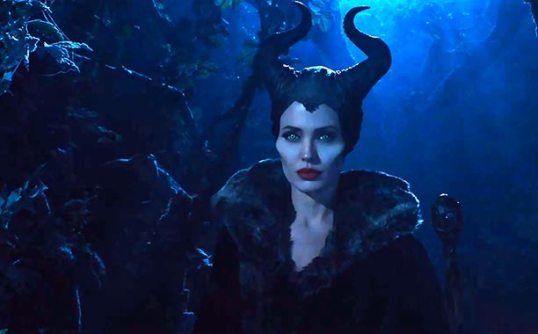
For Your Consideration #3: Angelina Jolie in Maleficent


Mal

Way back in March, when people like me first started to ask ourselves what and who would be nominated for Oscars in January, a lot of us assumed that 2014 would be the year of Angelina Jolie.  We predicted that her film Unbroken would be an Oscar front-runner and quite a few people felt that Angelina herself would become the second woman to win the Academy Award for directing.

And, it could still happen!

However, with Angelina being pretty much ignored by most of the traditional Oscar precursors and Unbroken getting positive but hardly rapturous reviews, it’s starting to look more and more like Unbroken will be lucky to receive a picture nomination, much less a mention for Jolie.

Now, I haven’t seen Unbroken yet so I can’t really judge whether it deserves any awards consideration or not.  However, I can say that Unbroken is not the only film for which Angelina Jolie deserves consideration.

Maleficent came out this summer and did quite well at the box office but it seems to have been forgotten and that’s a shame because it features one of Angelina Jolie’s best performances.  The film itself is a revisionist take on Sleeping Beauty, re-telling the story from the point-of-view of the fairy queen Maleficent (played, of course, by Angelina.)

In this version of the story, we see that the true villain was Sleeping Beauty’s father, Stefan (Sharlto Copley).  When they were younger, Stefan and Maleficent were lovers but the Stefan eventually abandoned her, knowing that having a relationship with a winged fairy would only serve to thwart his own ambitions.  Years later, when the humans attempt to conquer Maleficent’s kingdom, it is announced that whoever slays Maleficent will become the new king.  Knowing that Maleficent is still in love with him, Stefan drugs her and then cuts her wings off.  Using her wings as evidence to back up his claim that he has killed her, Stefan becomes the new king.  The now wingless Maleficent is left alone and embittered.  When Stefan’s daughter, Princess Aurora, is born, Maleficent announces that, on her sixteenth birthday, Aurora will sink into a deep sleep and will only be awaken by the kiss of someone who truly loves her.

Maleficent was one of those films that truly divided critics.  Male viewers tended to rightfully criticize the film for being tonally inconsistent and for relying too much on CGI.  Female critics, however, understood that none of that mattered.  As flawed as the film may have been, we knew that the most important thing was Angelina Jolie’s performance.  She may have been playing a fairy and she may have been appearing in a movie that was dominated by CGI but Angelina Jolie brought such strength and complexity to the role that she transcended all of the film’s flaws and instead created a thoroughly real character.  We understood and we related to Maleficent’s fury.  When she first woke up to discover that her wings had been stolen from her, it was devastating because the moment was real.  We all knew what had truly happened to Maleficent.  When she sought revenge, we sought it with her.  When she regretted her actions, we shared her regrets.  Her pain was our pain and her triumph was our triumph.

Angelina Jolie gave one of the best performances of the year in Maleficent and she certainly deserves your consideration.

Angelina-Jolie-as-Maleficent

For Your Consideration #2: The Purge: Anarchy (dir by James DeMonaco)


The_Purge_–_Anarchy_Poster

Yes, I know what you’re saying.

“Seriously, Lisa!?  We should give awards consideration to The Purge: Anarchy!?  Are you serious!?”

Yes, actually I am quite serious.  Notice that I didn’t say that we should necessarily give The Purge: Anarchy any awards or that we should even nominate it.  I just said consideration.  For whatever flaws that The Purge: Anarchy may have, it’s actually one of the better and, in its way, one of the more thought-provoking mainstream American films released this year.  Working within the guise of being a simple genre film, The Purge: Anarchy is one of the few films to give serious consideration to the politics and culture that could both lead to and result from dystopia.

What I’m saying is that — despite what the critics may have said last summer — The Purge: Anarchy is actually one of the most subversive and intellectually curious films released this year.  You just have to be willing to look past all of the action conventions and instead focus on the film’s subtext.

The Purge: Anarchy takes place one year after the end of the first Purge film.  America is still led by the New Founding Fathers and every year, for one night, all crime is legal.  As the national media constantly assures everyone, the Purge is responsible for every good thing about America.  And even though there are a few rebels who claim that the Purge is not necessarily a good thing, most people chose to believe that — as long as it’s government-sanctioned — it’s for the best.

Whereas the first Purge film took place solely inside one family’s house and focused on the domestic melodrama within, The Purge: Anarchy focuses on what goes on outside of the gated sanctuaries of the rich.  As quickly becomes apparent, the Purge is less about purging negative feelings and more about keeping the non-rich, non-white population under control.  While the poor kill each other in the streets, the rich pay for the privilege to kill poverty-stricken “volunteers” in the safety of their own homes.  (Some of the volunteers agree to die out of the hope that their family will be sent some money.  Most are just rounded up on the streets, killed, and forgotten.)

Perhaps even more so than the first film, The Purge: Anarchy works because it feels so plausible.  We live in a society where we are continually told that moral rights and wrongs can be determined by man-made laws.  When a man is filmed being literally choked to death by a pack of police officers, we’re told that it was the man’s fault because he was failing to respect authority and many choose to believe it because “the law is the law.”  (Never mind, of course, whether the law is being fairly applied or makes any sense to begin with.)  If a man in uniform is murdered, it’s rightfully called a crime.  If a man in uniform commits a murder, we’re told it’s simply a part of the job.

And so, that’s why I suggest that The Purge: Anarchy deserves greater consideration than it’s been given.  Yes, it is a genre film and yes, it is an installment in an action franchise.  However, it’s also far closer to the truth than many people are willing to acknowledge.

For Your Consideration #1: A Field In England (dir by Ben Wheatley)


A_Field_in_England_poster

With this being awards season, a lot of attention is being given to a small handful of films.  That’s not necessarily a bad thing because I love some of those films.  However, with all the focus being some narrowly directed, we run the risk of forgetting that Boyhood, Birdman, and Whiplash weren’t the only memorable films released this year.  With that in mind, I’ve decided to post 10 quick reviews of some other films that, if I was in charge of things, would be given some awards consideration.

We start things off with Ben Wheatley’s haunting and psychedelic period piece, A Field In England.

As you might be able to tell from the above trailer, A Field In England is not necessarily an easy film to describe.  The film takes place in the 17th Century, during the English Civil War.  Reece Shearsmith plays Whitehead, who is an apprentice to a never-seen alchemist known as The Gentleman of Norwich.  Fleeing from a raging battle, Whitehead meets three deserters, Cutler (Ryan Pope), Jacob (Peter Ferdinando), and Friend (Richard Glover).  Cutler offers to lead them to a nearby ale house but instead, he takes them to a desolate field where Cutler secretly drugs them with hallucinogenic mushrooms and then demands that they pull on a rope that appears to be attached to a stake in the middle of the ground.  Pulling on the rope leads to the sudden appearance of Cutler’s boss, the haughty and sadistic O’Neill (Michael Smiley).

O’Neill, it turns out, is also in some way connected to the Gentleman of Norwich.  He claims that there is a treasure buried in the field and only Whitehead — as the apprentice to an alchemist — will be able to find it.  At first, Whitehead refuses to help O’Neill but then O’Neill takes Whitehead into a tent and does …. well, he does something.  The film never makes explicit what happens in that tent and the result is one of the most hauntingly disturbing scenes that I’ve ever seen.

And from there, things only get stranger.  Jacob and Friend are forced to dig for the treasure while Whitehead consumes more and more mushrooms.  The characters occasionally freeze in place, creating a painterly tableaux.  A character dies and then repeatedly returns to life.  Most ominously of all, a black sun appears in the sky, seeming to grow with each new outrage.

Obviously, A Field in England is not a film for everyone.  That’s what makes it a truly memorable and brave cinematic experience.  At a time when so many movies are ruthlessly designed to take absolutely no risks, A Field In England is willing to run the risk of being incomprehensible.  However, the film itself is so well-directed and acted and the black-and-white cinematography is so hauntingly gorgeous that it doesn’t matter whether or not it makes any sense.  In fact, after a while, you start to truly love the fact that it does not.  This is pure cinema and therefore, it’s exactly the type of film that not only deserves but demands to be seen and honored.

Unfortunately, it’s also a film that has been ruled ineligible for any Oscar nominations, which is a pity.  However, regardless of what the Academy may say, it still deserves the consideration of film lovers everywhere.

A Field in England

Talking About Love: The Best of Me (dir by Michael Hoffman) and The One I Love (dir by Charlie McDowell)


The_Best_of_Me_poster

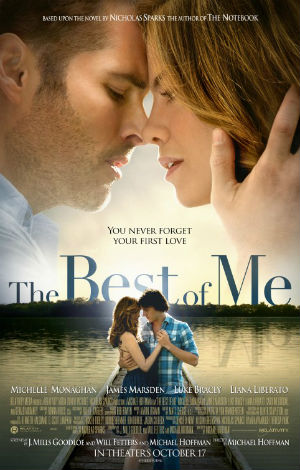
When I wrote my review of The Theory of Everything, I mentioned that Stephen Hawking’s A Brief History of Time made a brief, if important, appearance in another film released earlier this year.  That film, of course, was the latest Nicholas Sparks adaptation, The Best Of Me.  

Now, I have to admit that The Best Of Me was one of those forgettable films that I kind of suspected most of our readers would not mind me never getting around to reviewing.  It came out two months ago, it got terrible reviews, and it didn’t do much business at the box office.  I didn’t even enjoy it and I’m the girl who always ends up defending the Twilight films whenever the boys here at the Shattered Lens start to make fun of them.  You can tell the impression that the Rest Of Me made on me by the fact that I just got the name wrong and I didn’t even bother to correct my mistake.

But here’s the thing.  January is rapidly approaching and, with January, comes my annual 16 worst films of the year list.  And chances are that The Best Of Me will appear on that list and I’d like to be able to link to a review.

It’s probably not a shock to hear that The Best Of Me is not a good film.  With the exception of The Notebook, the novels of Nicholas Sparks are not known for inspiring good films.  Instead, they are known for inspiring films about achingly pretty people who meet on the beach, have a melodramatic secret in the past, and ultimately end up falling in love.  And dying, of course.  Somebody always has to die.  The familiar Nicholas Sparks formula actually works pretty well when you’re the one reading his prose and visualizing the story in your head.  That’s largely because you can always imagine yourself as the heroine and maybe James Franco, Bradley Cooper, or Ryan Gosling as the hero.  But, when it comes to making movies out of his books, the end results are often so predictable and uninspired that the Nicholas Sparks drinking game had to be legally banned after scores of single women fell ill with alcohol poisoning.

(Yes, that actually did happen!  Google it! …. or don’t.  Actually, don’t.)

The Best Of Me is, without a doubt, the most Nicholas Sparksian Nicholas Sparks adaptation ever made.  Seriously, it has everything that you would expect from a Nicholas Sparks film and it presents it all so predictably that watching the movie is a bit like watching a checklist.  We’ve got two former high school lovers who are reunited 20 years later.  We’ve got melodrama that comes out of nowhere.  We’ve got multiple flashbacks.  We’ve got soft focus cinematography.  And, of course, we’ve got an ending that is meant to be both tragic and inspiring but it’s neither because, since this is a Nicholas Sparks movie, we already knew that the ending was going to try to be both tragic and inspiring.

What we don’t have is much chemistry between the two lead actors.  James Marsden and Michelle Monaghan are both pretty in the way that people in Nicholas Sparks films often are but you never get the feeling that they have much affection for each other.  Even worse, in the flashbacks, their characters are played by two actors (Luke Bracey and Liana Liberato) who look absolutely nothing like James Marsden or Michelle Monaghan.  In particular, it’s impossible to believe that Luke Bracey could ever grow up to look like James Marsden.  I found myself half-expecting a huge twist where Marsden would reveal that he was an intruder.

And you know what?

That would have been a lot more interesting than what we got!  Somebody help me get in touch with Nicholas Sparks!  I’ve got some ideas for his next book!

The One I Love

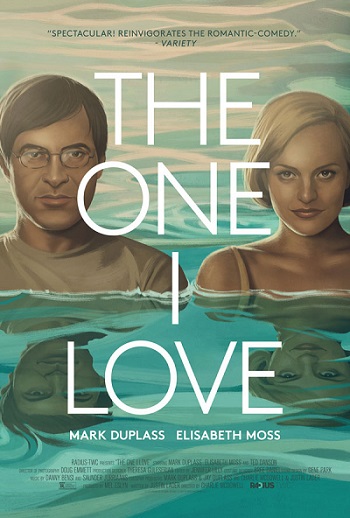
For a far more memorable look at love and relationships, allow me to suggest The One I Love, a film that was obviously made for a lot less money than The Best of Me but which is also a lot more thought-provoking.

In The One I Love, Mark Duplass and Elisabeth Moss play a couple whose marriage is on the verge of breaking up.  At the suggestion of their friendly-yet-creepy marriage counselor (Ted Danson), they agree to spend a weekend at a beautiful but remote house.  Danson assures them that they will be the only couple at the house. Duplass and Moss agree and, at first, the weekend seems to be working.  However, soon both of them start having conversations and encounters that the other claims to not remember.  Duplass and Moss discover that they are not alone at the house…

And to tell you anything else about the plot would be unfair.  The One I Love is one of those films that works best when the viewer discovers its mysteries at the same time as the characters.  To spoil the film would be a crime.  Let’s just say that there is a twist that will leave you reconsidering everything that you’ve previously seen in the movie.

Beyond that twist, however, The One I Love works for the exact reason that The Best of Me does not.  Moss and Duplass have the chemistry that the leads in The Best Of Me lack.  You believe them both as individuals and as a couple.

So, when it comes time to consider what we talk about when we talk about love, check out The One I Love and leave The Best Of Me behind.

Lisa’s Oscar Predictions for December


2013 oscars

Well, here it is, my next to last attempt to predict who and what will be nominated for an Academy Award in January.  With the AFI, SAG, and the Golden Globes all having made their voices heard, this list was definitely a bit easier to make than it was when I first started posting my monthly predictions back in March!

And yet, what’s interesting is that my March predictions aren’t all that different from my December predictions.

It’s true that I’ve recently come to the conclusion that both Foxcatcher and Unbroken will be left out of the best picture race.  And, over the past few months, both Selma and The Theory of Everything have developed into major contenders.  For that matter, I failed to predict the sudden groundswell of support for Jake Gyllenhaal, Jennifer Aniston, and the Grand Budapest Hotel.

However, from the beginning of the year, both myself and a lot of other award watchers have been predicting that both Boyhood and Birdman would be contenders.  J.K. Simmons, as well, has been viewed as a probable nominee since Whiplash premiered at Sundance.

And, of course, everyone always knows that Meryl Streep is going to get nominated for something.

Anyway, my latest predictions are below.  You can check out my predictions for March, April, May, June, July, August, October, and November by clicking on the month!

Boyhood Image

Best Picture

Birdman

Boyhood

The Grand Budapest Hotel

The Imitation Game

Selma

The Theory of Everything

Whiplash

o-BOYHOOD-facebook

Best Director

Wes Anderson for The Grand Budapest Hotel

Ava DuVernay for Selma

Alejandro G. Inarritu for Birdman

Richard Linklater for Boyhood

James Marsh for The Theory of Everything

Birdman

Best Actor

Jake Gyllenhaal in Nightcrawler

Benedict Cumberbatch in The Imitation Game

Michael Keaton in Birdman

David Oyelowo in Selma 

Eddie Redmayne in The Theory of Everything

Julianne Moore in Still Alice

Julianne Moore in Still Alice

Best Actress

Jennifer Aniston in Cake

Felicity Jones in The Theory of Everything

Julianne Moore in Still Alice

Rosamund Pike in Gone Girl

Reese Witherspoon in Wild

Whiplash

Best Supporting Actor

Robert Duvall in The Judge

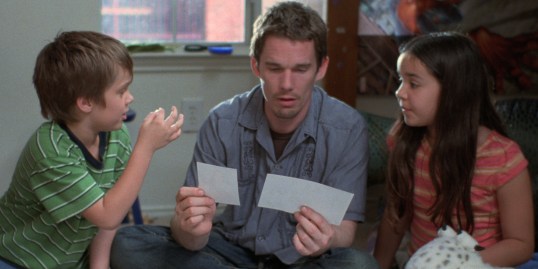
Ethan Hawke in Boyhood

Edward Norton in Birdman

Mark Ruffalo in Foxcatcher

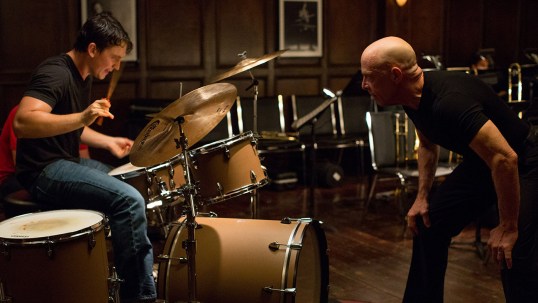
J.K. Simmons in Whiplash

Meryl-Streep-Into-The-Woods

Best Supporting Actress

Patrica Arquette in Boyhood

Jessica Chastain in A Most Violent Year

Keira Knightley in The Imitation Game

Emma Stone in Birdman

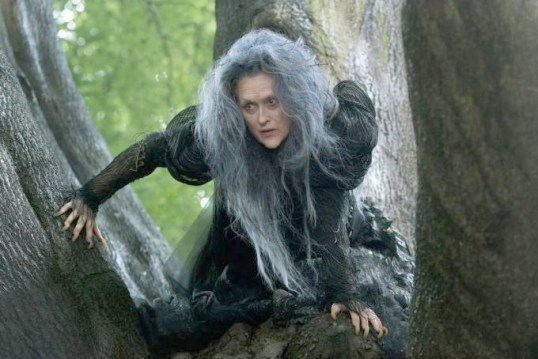
Meryl Streep in Into the Woods

Film Review: The Theory of Everything (dir by James Marsh)


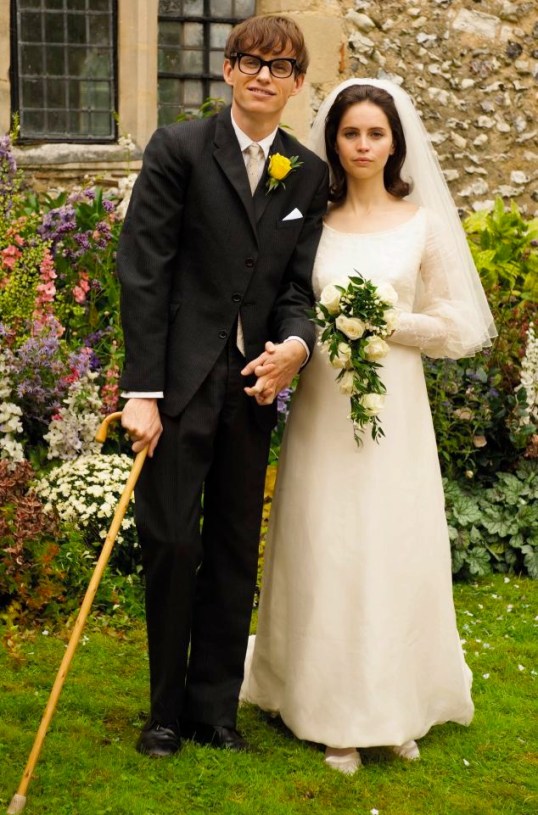
theory-of-everything-felicity-redmayne

Earlier this year, when I was sitting in the audience for the unfortunate Nicholas Sparks film The Best Of Me, I found myself staring at the sight of an oil rig worker (played by James Marsden) relaxing by reading Stephen Hawking’s A Brief History of Time.  And, before I could stop myself, I laughed out loud and I may have even loudly said something along the lines of, “Oh come on!”

At the time, I got a lot of dirty looks but I stand by my reaction.  It’s such a cliché.  Any movie character who is meant to be intelligent and soulful will be seen casually reading a copy of Hawking’s book and scrunching up his brow as he considers whatever it is that Hawking has to say.  It makes sense, of course.  If the current cult surrounding Neil deGrasse Tyson proves anything, it’s that it is currently in to pretend to be fascinated by science.

I have to admit, though — science has never been my subject.  The cold logic of it all bores me to tears and there’s no bigger turn-off then listening to someone brag about being a “rational thinker.”  (Rational thought is incredibly overrated.)  As long as things work like they’re supposed to, the how and the why don’t really concern me.  Whenever I hear someone complain that there are “too many unanswered questions,” I think to myself, “Good.”  I like unanswered questions.  I like irrational feelings.  I like mysteries that can never be solved.  They fuel imagination.  They inspire great art.  They make life interesting and unpredictable.

(Please understand, I am not anti-science.  I’m anti-pretending-to-care-when-I-don’t.)

With all that in mind, you might think that I would be bored by The Theory of Everything, the recently released biopic about Stephen Hawking (Eddie Redmayne) and his marriage to Jane Hawking (Felicity Jones).  And, I’ll be honest.  If not for the fact that the film has been pegged as being a certain Oscar contender, I might not have ever wanted to see The Theory of Everything.  However, seeing as how The Theory of Everything is a certain Oscar contender, I did want to see it.

And, up until the final 30 minutes of the film, I was surprised with just how much I liked The Theory of Everything.  I have to admit that the film’s science still went over my head.  As far as that was concerned, the only thing I really learned is that there’s a difference between General Relativity and Quantum Field Theory but don’t ask me to explain that difference.  (And, for the love of all that is good, please don’t try to explain it to me…)  But, to be honest, the exact details of Hawking’s theories aren’t really that important to The Theory of Everything.  Instead, the film is content to have supporting characters assure us that Hawking’s work is brilliant and important and that’s really all that it has to do.  After all, everyone in the audience already knows that Stephen Hawking is a genius.  The appeal of The Theory of Everything is not the science but instead the human behind the science.

The Theory of Everything works for two very old-fashioned reasons — it’s well-directed by James Marsh and it’s well-acted by Eddie Redmayne and Felicity Jones.  For all the time that the film devotes to people talking about how Hawking challenged the conventional view of the universe, The Theory of Everything is, in many ways, a conventional biopic.  But that’s not necessarily a bad thing.  A familiar story well-told is still a well-told story.

The film starts with Stephen as a student at Cambridge and we follow him as he awkwardly courts Jane and takes her on an amazingly well-filmed and soul-achingly romantic date.  Shortly after this, he’s diagnosed with motor neuron disease.  (As I discovered while doing some research for this review, Hawking was actually diagnosed before he even met Jane.)  Told he only has two years to live, Stephen’s first instinct is to isolate himself from the world but, largely as a result of Jane’s love and support, Stephen instead continues his work and becomes world famous.  The film suggests that it took a combination of Stephen’s logical (and skeptical) genius and Jane’s devout and unwavering faith (in both his genius and the God that Stephen doesn’t believe in) for him to eventually become the Stephen Hawking that we all recognize today.

And it’s all extremely well-done and touching, up until the final 30 minutes of the film.  Going into the film, I did not know much about Stephen Hawking but (thanks to Wikipedia), I did know that he eventually left Jane for another woman.  I have to admit that I did not expect the film to deal with this part of the story.  To the film’s credit, it does attempt to deal with the end of Stephen and Jane’s marriage but it does so in such an awkward way that it’s obvious that the filmmakers weren’t quite sure how they should handle the situation.

After all, the film had just spent 90 minutes presenting Jane as being an occasionally frustrated saint and Stephen as being idiosyncratic but likable.  And now, suddenly, Stephen is going to have to act like a jerk.  The film doesn’t know how to handle this and, as such, those final 30 minutes feel fake in a way that the rest of the film does not.  When Stephen tells Jane that he’s leaving her for another woman, it’s presented as being an almost mutual decision made by the two of them.  Tears are shed but there’s little visible anger, with the film going so far as to suggest that Stephen is leaving Jane because he wants her to be able to live the life that she put on hold to take care of him.  It’s even implied that Stephen was kind enough to pick out a new husband for her.

That new husband is played, quite well, by Charlie Cox.  When he first told Jane that he’s attracted to her, I assumed that the scene was included so that Jane could gently rebuff him and show us how devoted she is to Stephen.  However, thinking back on it now, it almost feels as if that scene was largely included so it could provide some cover for Stephen.  It’s as if the filmmakers are saying, “See?  Stephen wasn’t the only one tempted to end the marriage…”

And I have to admit that the way the film handled the end of Stephen and Jane’s marriage felt so false to me and the way Jane was treated and portrayed seemed so unfair that, as soon as I got home, I actually did the following google search: “Was The Theory Of Everything unfair to Jane Hawking?”

And the first result that came up was an article in The Guardian that essentially stated: “Yes, The Theory of Everything was unfair to Jane Hawking.”

Reading the article, I discovered that, according to Jane’s autobiography (upon which the film is ostensibly based), both her marriage to and divorce from Stephen Hawking was far more complex and intriguing than what was presented in the film.  For one thing, the marriage ended not with tears of acceptance but instead with a shouting match.  And trust me, if any actress could have done justice to Jane Hawking’s anger, it would be Felicity Jones.  By the time the film ends, both the character and the actress have earned the right to express their anger.  But neither one of them gets that opportunity, largely because that version of the Hawking marriage would also have been far less crowd pleasing.

And, if anything, The Theory of Everything is specifically designed to be a crowd pleaser.

And don’t get me wrong.  It’s a good film and it’s one that left me with tears in my eyes.  Do I recommend the film?  You bet I do.

I just wish that, during those final 30 minutes, the film could have been a little bit more honest with itself.  It’s a good film but it’s hard not to regret missing out on the film that it could have been.

theory-of-everything-new

Quick Review: Exodus: Gods & Kings (dir. by Ridley Scott)


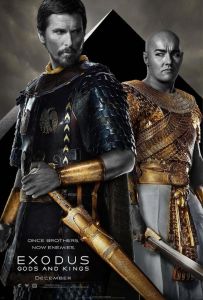
Exodus-Gods-and-Kings-Poster-Bale-and-EdgertonOkay, let’s face it.

After Cecil B. DeMille’s 1956 epic “The Ten Commandments”, it’s pretty hard to come up with another story about Moses that comes as close to it. I’ll admit I have a personal love for 1998’s The Prince of Egypt.  Ridley Scott makes a great attempt in his new film “Exodus: Gods and Kings”, but it comes off feeling like the result of having one person relay a story to you through 3 other individuals. By the time the story reaches you, it’s no longer the same tale.

This is a hard review to write with regards to avoid spilling details.

Exodus follows the story of brothers Moses (Christian Bale – The Dark Knight Trilogy) and Ramses (Joel Edgerton – The Thing, The Great Gatsby), sons to the great Pharaoh of Egypt (John Turturro). Both brothers are seasoned warriors, but with the passing of Pharaoh, a truth is brought to light that forces Moses into exile. During his time away, he finds God and makes it his mission to free his people. Ramses refuses to listen to reason, and some drastic measures are taken to help convince him.

That sounds great on the surface, but it’s the execution that’s flawed. And this is Ridley Scott of all people. I loved Kingdom of Heaven and moderately enjoyed Robin Hood, but I just didn’t completely feel like I was invested in this film.

Biblical tales are tricky. Stick too close to the source material and you can have a heavy-handed story that says what it should, but could bore some audiences. Take too many liberties, and you can have audiences excited, but leave some upset or shocked at what’s presented (like with Scorsese’s The Last Temptation of Christ). Here, the liberties are taken to a place where most of the movie doesn’t even require Moses to be in it. The argument could be made that the other films did this too – that the acts occurred with Moses as a harbinger of what was to come. Exodus makes it more of a difference of opinion on how to handle Ramses. Moses elects for a more battle hardened strategy – let the people fight for themselves. This left me wondering where they found the time and freedom away from the Egyptian Soldiers to learn what they did.

On the flip side of the coin, God decides to handle it Their own way. This leaves our Moses in a position where he’s at odds with the Almighty, a sharp contrast to the Moses that followed the Word to the letter. To an audience that can’t help but make comparisons, it’s way off, though it’s supported by the theme that one shouldn’t say things just to placate others and that they should follow what they believe. What came before basically said..”Okay, I don’t know what your plan is, but you’ve shown me your wonders, I believe in you and you’ll guide me right.” Exodus says..”Okay, you’ve got a plan I’m not too cool with, so…uh…just give me a chance to save / warn the people before your wrath comes down.”

There were four writers on board for Exodus. Both Adam Cooper and Bill Collage worked together on Brett Ratner’s “Tower Heist” and Jeffrey Caine is known for “The Constant Gardner” and “Goldeneye”. Steven Zallian (Moneyball, The Girl With the Dragon Tattoo, American Gangster) was the fourth. I’m thinking with all those fingers in the pie, the movie was bound to go in a different direction. Again, it’s not terrible, just different.

The casting for Exodus is okay. The strongest performances go to both Bale and Edgerton, and I’ll state here that I had more fun watching Edgerton on screen than I did with Bale. I haven’t seen him play the villain like this since The Guardians of Ga’Hoole and he does a decent job here. Bale does well, but it’s like watching Batman again. Not saying he’s typecast because of it, but seeing Christian Bale yell is almost expected in a movie these days. Reunited with her Aliens director, Sigourney Weaver has about 10 to 15 minutes total of screen time in the film, and Ben Kingsley might have the same amount. Aaron Paul spends most of his time making that stare he does when he see something incredible. There’s not a lot for any of these actors to chew on, but they try their best with it.  Both Indira Varma (Game of Thrones) and Ewan Bremer (Jack the Giant Slayer, Trainspotting) are on hand as Ramses’ advisors. They don’t really count too much in all this.

Visually, the effects for the Plagues are very good. I honestly think those segments were the best in the entire film. The rest, I’m not so sure. The Red Sea sequence, when it happens, it done in such a way that the mysticism is just about sucked out of it. I’m sitting there hoping for a big reveal and found myself asking if that was it. Perhaps it was the angle where I was sitting or the theatre I saw it in, but it wasn’t as clear as it could be. It seemed like I was watching a 3D version of the film (I went for the regular one). The fight sequences were also done very well, many of which were similar to Ridley’s Robin Hood or Gladiator. Also note that at 154 minutes, it’s a long film. I pulled my iPod Nano out of my pocket twice to check the time.

As for the kid factor, I would say that teens and older can see this. There’s quite a bit of violence early on, along with some bloodshed, but nothing too extreme. In terms of sexual situations, there really aren’t any.

I think overall, my expectations for what this could be were larger than the final product. Had I never known of any film prior to this, Exodus would have more of an impact for me. As it stands, I’d watch it again, but probably when it hits Cable.

So, was Noah good or not?


Poster-Noah-Aronofsky

Was Noah a good movie or not?

That’s a question that was first asked way back in March.  At the time, the answer depended on who you asked.  For instance, Noah is one of Arleigh’s favorite films of the year.  My reaction, however, was far more mixed.  Noah was one of those movies that I thought I would review as soon as I watched it but that proved to be a lot more difficult than I expected.  As I found myself wondering what I should say in my review, it became very apparent to me that I wasn’t sure whether I liked the film or not.

By the time that I finally decided that I was, overall, disappointed by Darren Aronofsky’s controversial and spiritual-but-not-quite-biblical version of the Deluge, over a month had passed and we had all moved on to different movies.

And so that review remained unwritten.  And, at first, I thought it wouldn’t matter.  As much as I try to review every single movie that I see, I know that the world is not going to end if I miss a film or two.  After all, I’ve never specifically written down just how much I hated the latest Transformers movie and the world has yet to plunge into the sun…

And yet, for all of its flaws and the fact that it left me feeling underwhelmed, Noah has stuck in my mind in a way that many of the films that I saw this year have not.  It would be a struggle for me to remember much of anything about Dracula Untold but Noah Noah has stayed with me.

Thinking back, it’s easy for me to say what did not work about Noah.

As opposed to Aronofsky’s best films (Requiem for A Dream, The Wrestler, and my beloved Black Swan), Noah felt oddly paced with certain scenes ending too quickly while other scenes seemed to drag on forever.

The film’s environmental message was delivered with such a heavy hand that it ultimately did not make much of a difference whether you agreed or not.  For a film that went out of its way to establish itself as not being a traditional biblical film, Noah was certainly preachy.

While the film deserves credit for not flinching in its portrait of a surly and self-righteous Noah, it still doesn’t change the fact that the movie was essentially 138 minutes spent with a very unlikable character.

Anthony Hopkins gave perhaps the worst performance of his career as Methuselah.  In the role of Tubal-Cain, Ray Winstone was such a one-dimensional villain that I half expected him to invent trains just so he could tie Emma Watson to the tracks.

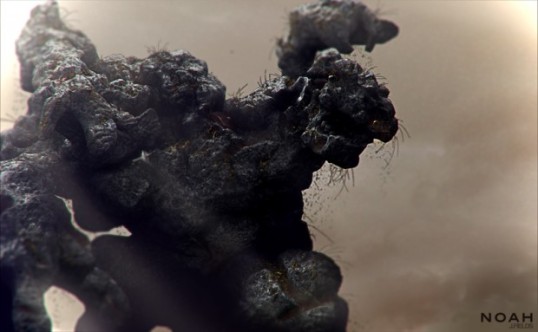
And, of course, there were the Watchers — fallen angels who had been turned into sentient piles of stone by a vengeful God.  I know that some people loved the Watchers but to me, they looked ludicrous…

NoahWatchers

And yet, that’s the reason why we love Darren Aronofsky, isn’t it?

Obviously, it was a risk to portray the fallen angels as being a bunch of talking rocks.  It was also a risk to take a character who is mentioned only once in the book of Genesis — in this case, Tubal-Cain — and then use that character as a representation of everything that’s wrong with the human race.  It was a risk to make a “biblical” film that openly questioned both the existence and wisdom of God.  We expect and demand that directors take risks but, at the same time, we also want to ridicule and judge when those risks don’t work out.  That’s the issue that we, as film lovers, often face.  Do we celebrate and perhaps excuse a director for his intentions or do we solely judge him based on the results?

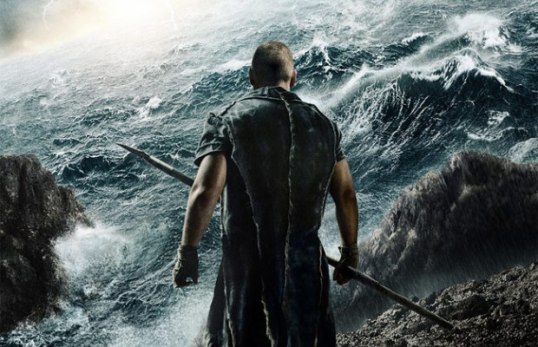
And the thing with Noah is that, as much as the movie did not work for me, it also did work for me.  For all of those flaws that I listed above, Noah is full of images that are so beautiful and so memorable that I can still visualize them as if I saw them yesterday:

Noah and his sons walk across a gray and blasted landscape, stopping just long enough to stare at a foreboding city in the distance.

Noah walks through a decadent settlement and briefly, this somber film is so full of bright colors and flamboyant characters that the viewer is almost as overwhelmed as Noah.

That Ark, looking small and isolated, floating across an endless blue ocean.

And finally, Noah talking about the horrors of humanity and briefly, we see that the shadows that he’s visualizing are dressed in modern clothing.

For all of my issues with Noah, it’s such a visually impressive film and takes so many risks that I can’t help but respect it.  I don’t consider it to be a great film but, after all this time, I can say that it’s a film that only a true artist could make.

And, considering the current state of American film, that’s one of the best compliments that one can give.

noah-banner222