Brad’s thoughts on KILL BILL: THE WHOLE BLOODY AFFAIR!


Anything new from Quentin Tarantino is a big deal at my house. When you consider that it’s been over six years since the auteur released his most recent film, ONCE UPON A TIME IN HOLLYWOOD (2019), I was understandably excited when I saw that the full “extended cut” version of the KILL BILL films, dubbed “The Whole Bloody Affair” was being released to theaters. Then, after seeing the trailer, I became really curious about the new scenes that were added, as well as the different presentations of the previous material. When I originally watched the separate volumes at the movie theater in 2003 and 2004, I enjoyed the first movie slightly more than the second based on the fact that it had more action. Now, I wanted to see how the two volumes flowed as one single film. My wife was working this weekend, so I had some time on my hands and decided to spend about four hours of that time watching KILL BILL: THE WHOLE BLOODY AFFAIR.

First, a quick summary of the film… on the eve of her wedding, a pregnant bride-to-be (Uma Thurman) and her entire wedding party is gunned down by the Deadly Viper Assassination Squad, commanded by her former lover, Bill (David Carradine). Somehow surviving the rehearsal massacre, the Bride, who was once a member of the same assassination squad, sets her sights for revenge on each of the members, beginning with O’Ren Ishii (Lucy Liu), and then moving on to Vernita Green (Vivica A. Fox), Budd (Michael Madsen), Elle Driver (Daryl Hannah), and finally Bill himself. It’s a simple premise, but Tarantino uses that premise as a springboard to share his love of kung fu movies, samurai cinema, spaghetti westerns and grind house fare and create something truly special. I loved the KILL BILL films when they were originally released, and the four hours seemed to go by very quickly today as I had a blast watching this definitive version with a relatively full theater of fans.

After watching KILL BILL: THE WHOLE BLOODY AFFAIR, my first thought is that it wouldn’t be that different if the theater just showed Volume One, had a 15-minute intermission, and then showed Volume Two. This isn’t putting down the new version in any way, but there are not a large number of changes that enhance the overall quality of the film itself, and screening the original volumes back-to-back would provide the context for the “big picture” of the story that was lacking when the movies were released in the separate years of 2003 and 2004. With that said, watching the film in this new version was a lot of fun for me, and it should become the norm moving forward as it is truly Tarantino’s vision. It does flow better, mainly by eliminating the unnecessary, late cliffhanger reveal of the daughter in Volume One, as well as the Bride’s “direct to the camera” update at the beginning of Volume Two.

For those who want to go see this new version, I did want to point out the significant differences I noticed while viewing KILL BILL: THE WHOLE BLOODY AFFAIR. The first sequence where I noticed obvious additions to the film occurred in the anime sequence that introduces the background of O’Ren Ishii. This extended version adds additional footage of the Yakuza assassin Pretty Riki to the sequence, and once O’Ren is a slightly older schoolgirl, we get to see her execute a plan of vengeance against him. I would guess somewhere between five and ten minutes of action was added to the sequence. I enjoyed it in Volume One, and I also enjoyed the extended anime sequence in this new version. Does the sequence really add to the overall quality of the film, though? Even though I enjoyed the new material and am glad it was added, I would say no. The next significant difference I noticed with this version concerns the addition of color to the fight sequence between the Bride and the crazy 88’s in the House of Blue Leaves, as compared to the sequence in Volume One that was shown largely in black and white. As a person who doesn’t enjoy a lot of gore in my movies, it never bothered me that the scene switched from color to black and white once the limbs and heads started getting lopped off. With that said, it was kind of fun watching all those limbs hacked off in glorious color this time around. Finally, there is a post-credits animated sequence called “The Lost Chapter: Yuki’s Revenge” where Gogo Yubari’s twin sister tries to get revenge on the Bride. It lasts about ten minutes or so, but honestly, it didn’t add much to the overall experience for me, and I doubt I’ll ever watch it again. As a completist though, I am glad that I stuck around and watched it. These are the only big changes I noticed while watching THE WHOLE BLOODY AFFAIR. I’m sure there had to be some more changes, but I don’t think they were significant. 

I did want to share some final thoughts I had while watching KILL BILL: THE WHOLE BLOODY AFFAIR this afternoon. I noticed on the opening title card that the movie is dedicated to the great Japanese director Kinji Fukasaku, and you can definitely see his influence all over this film. It also affected me more watching Michael Madsen’s excellent performance as Bill’s brother Budd. Tarantino just knows how to get the best out of Madsen, and considering that he passed away a few months ago, I just really appreciated his work while watching the film. I also enjoyed the multiple shoutouts to my movie hero Charles Bronson in the film. First, there’s a MR. MAJESTYK poster hanging on the wall in Budd’s trailer that is featured often throughout the various shenanigans and fights that take place in the trailer. Second, Charles Bronson passed away in 2003, the year that Volume One of KILL BILL was released. In the final credits of the film, Bronson receives an RIP credit. I’ve always loved the fact that Tarantino loves Charles Bronson, and that’s on full display in KILL BILL: THE WHOLE BLOODY AFFAIR. I would have given anything if Bronson had been in better health as Tarantino was coming into his own as a filmmaker. I have no doubt that he would have been offered a chance to appear in one of the director’s films.

At the end of the day, I had a great time watching KILL BILL: THE WHOLE BLOODY AFFAIR. The four hours flew by, and I truly appreciated seeing Tarantino’s full vision realized on screen. While I do think this should be the definitive version moving forward, I loved the KILL BILL films before today. THE WHOLE BLOODY AFFAIR improves the overall flow of the film and adds some fun new stuff, but my love for the film didn’t really change that much today… it just runs a tad bit deeper.
Who’s going to see KILL BILL: THE WHOLE BLOODY AFFAIR (2025) this weekend?


To answer my own question, “I am!” I was checking my local movie theater listings for this weekend and came across the showtimes for the release of KILL BILL: THE WHOLE BLOODY AFFAIR, and I must admit I’m pretty excited about it. My wife is working this weekend so I have all Sunday to myself, and watching this Quentin Tarantino classic in a whole new way sounds like a lot of fun.

Check out the trailer below, and if you’re in the Little Rock area, I just may see you there!

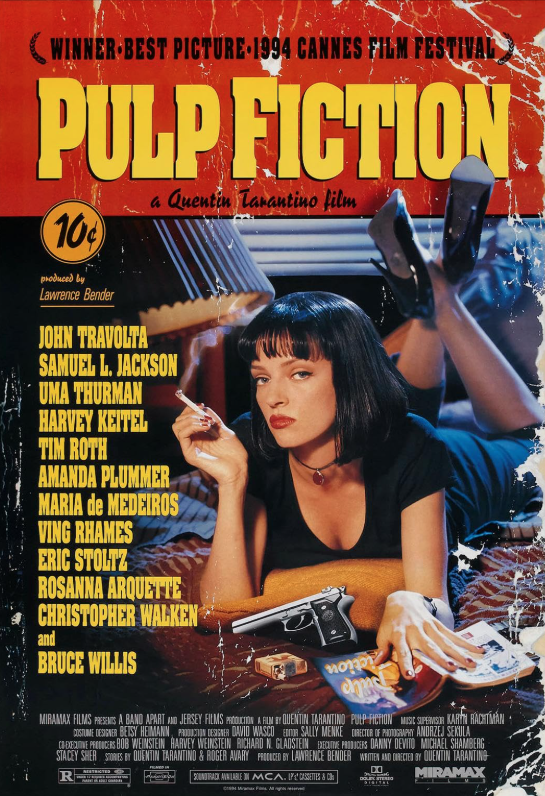
Pulp Fiction, (Written & Dir. Quentin Tarantino) Review by Case Wright


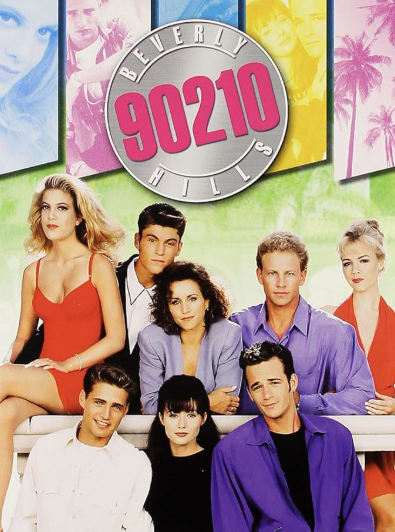
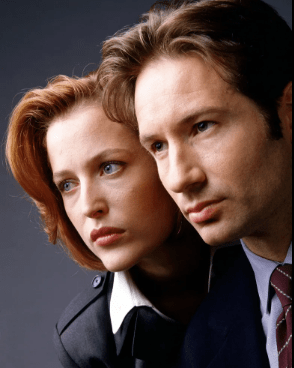
“Pulp Fiction” was as peak 1990s as much as these two:

Or this Archie’s Comic live action show

While “X-Files” attracted big audiences 60-40% male and the reverse for “90210”, “Pulp Fiction” captured 1994: Jocks, Nerds, Guys, Women, Girls, Boys, Boomers, X-ers, Older Millennials, you name it – Everyone was into Pulp Fiction. Tarantino described this art as a number of cliches: the mobster attracted to the mob wife, the boxer who tricks the mobsters into giving him money and NOT throwing the fight, and the killer who finds God. The cliches dig into DNA. WHY? Because they have the same motivations as our caveman ancestors: the unobtainable mate, a sense of honor, and redemption. These themes are the basic building blocks of what make us human beings and why these stories echo through the millennia – our ancestors fears are the same as ours today. Some might claim that “Reservoir Dogs’ was better- they are incorrect– Pulp Fiction was WAY more entertaining.

Even though this was released and written in the 1990s, it had an older feel to it. First, everyone smoked indoors. I remember the 1990s, smoking was on the OUTS big time! Second, man did he like to use a certain racial slur. OOF. But then again, I’m not from Los Angeles. Maybe, it’s like Alabama there? I have no idea! I can say that the film did hold up as re-watched it today. It was still relevant and maybe that’s because it was difficult to pin down the time period; in fact, the music was mostly from the 1970s and the story time jumped- A LOT! The Miramax producer who worked on the show also jumps a lot, but mostly in the shower.

The story begins with two mobsters Vincent Vega and Jules Winnfield murdering two guys to get a magical briefcase back to their boss Marsellus Wallace, which feeds into the next storyline of Butch an aging fighter who’s about to rip off the mob, which feeds into Mia Wallace – Marsellus Wallace’s wife overdosing on heroin, which feeds into Butch on a quest to retrieve his great-grandfather’s watch, which feeds into a pretty graphic man on man scene of sexual violence and revenge, which feeds into Jules finding God, which feeds into cleaning brains out of a car, and finally ending in a diner being robbed by Tim Roth. Yes, the film requires attention. It’s not “Dazed and Confused”. You gotta pay attention.

I recently watched a show with Lisa Marie that time jumped – oh no, were their Germans around who got too close at a family reunion off camera?!

I still believe this is Quentin’s Opus and you cannot convince me otherwise because it connected to everyone and launched and re-launched A LOT of careers. Pulp Fiction’s legacy was that it empowered a 1990s writers to work in humor with their grittiness like in Halloween H20, which I reviewed here

https://unobtainium13.com/2016/10/29/halloween-h20-alt-title-they-stab-baby-boomers-dont-they/
: Pulp Fiction, (Written & Dir. Quentin Tarantino) Review by Case Wright

I recommend to going on Hulu and checking Pulp Fiction out again.

The Alliance of Women Film Journalists Honor Nomadland


The Alliance of Women Film Journalists have announced that their pick for the best of 2020 is Nomadland.  Just as the AWFJ did with their nominations, they announced the winners in an exclusive for Variety.  Fear not, though — my picks for the best of 2020 will be released exclusively to this site.  Two can play at this game.

(I joke, of course.  Ever since Clayton Davis took over, Variety’s Oscar coverage has been wonderful and the AWFJ deserves a lot of credit for having categories that are a bit more interesting than the usual stuff.)

Anyway, here’s the winners!

AWFJ BEST OF AWARDS

(These awards are presented to women and/or men without gender consideration)

Best Film

  • “Minari” (A24)
  • “Never Rarely Sometimes Always” (Focus Features)
  • “Nomadland” (Searchlight Pictures) – WINNER
  • “One Night in Miami” (Amazon Studios)
  • “Promising Young Woman” (Focus Features)
  • “The Trial of the Chicago 7” (Netflix)

Best Director 

  • Emerald Fennell, “Promising Young Woman” (Focus Features)
  • Regina King, “One Night in Miami” (Amazon Studios)
  • Kelly Reichardt, “First Cow” (A24)
  • Aaron Sorkin, “The Trial of the Chicago 7” (Netflix)
  • Chloé Zhao, “Nomadland” (Searchlight Pictures) – WINNER

Best Actor

  • Riz Ahmed, “Sound of Metal” (Amazon Studios)
  • Chadwick Boseman, “Ma Rainey’s Black Bottom” (Netflix) – WINNER
  • Delroy Lindo, “Da 5 Bloods” (Netflix)

Best Actress 

  • Viola Davis, “Ma Rainey’s Black Bottom” (Netflix)
  • Vanessa Kirby, “Pieces of a Woman” (Netflix)
  • Frances McDormand, “Nomadland” (Searchlight Pictures) – WINNER
  • Carey Mulligan, “Promising Young Woman” (Focus Features)

Best Actor in a Supporting Role 

  • Sacha Baron Cohen, “The Trial of the Chicago 7” (Netflix)
  • Bill Murray, “On the Rocks” (A24/Apple TV Plus)
  • Leslie Odom Jr, “One Night in Miami” (Amazon Studios) – WINNER

Best Actress in a Supporting Role

  • Maria Bakalova, “Borat Subsequent Moviefilm” (Amazon Studios)
  • Ellen Burstyn, “Pieces of a Woman” (Netflix)
  • Amanda Seyfried, “Mank” (Netflix)
  • Yuh-Jung Youn, “Minari” (A24) – WINNER

Best Screenplay, Original 

  • “Mank” (Netflix) – Jack Fincher
  • “Promising Young Woman” (Focus Features) – Emerald Fennell – WINNER
  • “The Trial of the Chicago 7” (Netflix) – Aaron Sorkin

Best Screenplay, Adapted

  • “First Cow” (A24) – Kelly Reichardt and Jonathan Raymond
  • “Nomadland” (Searchlight Pictures) – Chloé Zhao – WINNER
  • “One Night in Miami” (Amazon Studios) – Kemp Powers

Best Animated Film

  • “Over the Moon” (Netflix)
  • “Soul” (Pixar) – WINNER
  • “Wolfwalkers” (Apple TV Plus/GKIDS)

Best Cinematography 

  • “Mank” (Netflix) – Erik Messerschmidt
  • “Nomadland” (Searchlight Pictures) – Joshua James Richards – WINNER
  • “One Night in Miami” (Amazon Studios) – Tami Reiker

Best Editing 

  • “One Night in Miami” (Amazon Studios) – Tariq Anwar
  • “Nomadland” (Searchlight Pictures) – Chloé Zhao – WINNER
  • “The Trial of the Chicago 7” (Netflix) – Alan Baumgarten

Best Documentary 

  • “All In: The Fight for Democracy” (Amazon Studios) – WINNER (tie)
  • “Athlete A” (Netflix)
  • “Crip Camp” (Netflix)
  • “The Painter and the Thief” (Neon) – WINNER (tie)
  • “Time” (Amazon Studios)

Best Non-English-Language Film

  • “Another Round” – Denmark – WINNER
  • “Beanpole” – Russia
  • “The Mole Agent” – Chile
  • “The Painted Bird” – Czech Republic

Best Ensemble Cast – Casting Director

  • “Da 5 Bloods” (Netflix) – Kim Coleman
  • “One Night in Miami” (Amazon Studios) – Kimberly Hardin – WINNER (tie)
  • “The Trial of the Chicago 7” (Netflix) – Francine Maisler – WINNER (tie)

EDA FEMALE FOCUS AWARDS

(These awards honor WOMEN only, excluding women who’ve won the category in the Best Of Awards.

Best Woman Director 

  • Emerald Fennell, “Promising Young Woman” (Focus Features) – WINNER
  • Eliza Hittman, “Never Rarely Sometimes Always” (Focus Features)
  • Regina King, “One Night in Miami” (Amazon Studios)
  • Channing Godfrey Peoples, “Miss Juneteenth” (Vertical Entertainment)
  • Kelly Reichardt, “First Cow” (A24)
  • Chloé Zhao, “Nomadland” (Searchlight Pictures)

Best Woman Screenwriter 

  • Radha Blank, “The Forty-Year-Old Version” (Netflix) – WINNER
  • Emerald Fennell, “Promising Young Woman” (Focus Features)
  • Eliza Hittman, “Never Rarely Sometimes Always” (Focus Features)
  • Chloé Zhao, “Nomadland” (Searchlight Pictures)

Best Animated Female 

  • “22” in “Soul” (Pixar) – portrayed by Tina Fey – WINNER
  • “Mebh Óg MacTíre” in “Wolfwalkers” (Apple TV Plus/GKIDS) – portrayed by Eva Whittaker
  • “Robyn Goodfellowe” in “Wolfwalkers” (Apple TV Plus/GKIDS) – portrayed by Honor Kneafsey

Best Woman’s Breakthrough Performance 

  • Radha Blank, “The Forty-Year-Old Version” (Netflix)
  • Sidney Flanigan, “Never Rarely Sometimes Always” (Focus Features) – WINNER
  • Helena Zengel, “News of the World” (Universal Pictures)

Outstanding Achievement by a Woman in the Film Industry 

  • All female heads of film festivals who successfully transitioned from live to online events to sustain festival culture through the pandemic.
  • All indie female writers and directors who normalized abortion as a vital element in the cultural conversation in films such as “Saint Frances,” “Never Rarely Sometimes Always,” “Sister of the Groom,” “Once Upon a River,” The Glorias” and others. – WINNER
  • Emerald Fennell for creating a film that forces empathy to put an end to the toxic sexist rape culture pervasive through modern history.
  • Sophia Loren for a brilliant comeback at age 86 in “The Life Ahead,” the latest in her record-setting career. Loren won a Best Actress Oscar in 1962 for “Two Women” and was the first actor to win for a foreign language movie. She was also nominated in 1965 for “Marriage Italian Style.” If she’s nominated in 2021, it will be a 56-year span between her two most recent nominations – the current record is held by Henry Fonda, who had a 41-year gap between nominations.

EDA SPECIAL MENTION AWARDS

Grand Dame Award for defying ageism.

  • Ellen Burstyn, “Pieces of a Woman” (Netflix)
  • Tsai Chin, “Lucky Grandma” (Good Deed Entertainment)
  • Sophia Loren, “The Life Ahead” (Netflix) – WINNER
  • Frances McDormand, “Nomadland” (Searchlight Pictures)

Most Egregious Lovers’ Age Difference Award 

  • “The Burnt Orange Heresy” (Sony Pictures Classics) – Elizabeth Debicki and Claes Bang (23 years)
  • “Devil All the Time” (Netflix) – Riley Keough and Jason Clarke (20 years)
  • “Mank” – Amanda Seyfried and Charles Dance (39 years), Gary Oldman (27 years)
  • “Tenet” – Elizabeth Debicki and Kenneth Branagh (30 years) – WINNER

She Deserves A New Agent Award 

  • Rose Byrne, “Like a Boss” (Paramount Pictures)
  • Tiffany Haddish, “Like a Boss” (Paramount Pictures)
  • Katie Holmes, “Dare to Dream” (Gravitas Ventures)
  • Uma Thurman, “The War with Grandpa” (101 Studios) – WINNER

Most Daring Performance Award 

  • Maria Bakalova, “Borat Subsequent Moviefilm’ (Amazon Studios) – WINNER
  • Haley Bennett, “Swallow” (IFC Films)
  • Vanessa Kirby, “Pieces of a Woman” (Netflix)
  • Elisabeth Moss, “The Invisible Man” (Universal Pictures)
  • Carey Mulligan, “Promising Young Woman” (Focus Features)

Time Waster Remake or Sequel Award 

  • “The Croods: A New Age” (DreamWorks Animation)
  • “Doolittle” (Universal Pictures) – WINNER
  • “Rebecca” (Netflix)

Here Are The 2020 Nominations of the Alliance of Women Film Journalists!


Earlier on Wednesday, the Alliance of Women Film Journalists announced their nominations for the best and the worst of 2020.  The nominations were announced in the pages of Variety and you can read more about them by clicking here.

Nomadland led with the most nominations which seems to be the way that the awards season is going to go.  Personally, when it comes to the AWFJ, I’m always more interested in the snarky nominations than in the serious ones.  For instance, the nominees for the She Deserves A New Agent award always leave me thinking.

The nominations are below.  The winners will be announced on January 4th.

AWFJ BEST OF AWARDS
(These awards are presented to women and/or men without gender consideration)

Best Film
“Minari” (A24)
“Never Rarely Sometimes Always” (Focus Features)
“Nomadland” (Searchlight Pictures)
“One Night in Miami” (Amazon Studios)
“Promising Young Woman” (Focus Features)
“The Trial of the Chicago 7” (Netflix)

Best Director
Emerald Fennell, “Promising Young Woman” (Focus Features)
Regina King, “One Night in Miami” (Amazon Studios)
Kelly Reichardt, “First Cow” (A24)
Aaron Sorkin, “The Trial of the Chicago 7” (Netflix)
Chloé Zhao, “Nomadland” (Searchlight Pictures)

Best Actor
Riz Ahmed, “Sound of Metal” (Amazon Studios)
Chadwick Boseman, “Ma Rainey’s Black Bottom” (Netflix)
Delroy Lindo, “Da 5 Bloods” (Netflix)

Best Actress
Viola Davis, “Ma Rainey’s Black Bottom” (Netflix)
Vanessa Kirby, “Pieces of a Woman” (Netflix)
Frances McDormand, “Nomadland” (Searchlight Pictures)
Carey Mulligan, “Promising Young Woman” (Focus Features)

Best Actor in a Supporting Role
Sacha Baron Cohen, “The Trial of the Chicago 7” (Netflix)
Bill Murray, “On the Rocks” (A24/Apple TV Plus)
Leslie Odom Jr, “One Night in Miami” (Amazon Studios)

Best Actress in a Supporting Role
Maria Bakalova, “Borat Subsequent Moviefilm” (Amazon Studios)
Ellen Burstyn, “Pieces of a Woman” (Netflix)
Amanda Seyfried, “Mank” (Netflix)
Yuh-Jung Youn, “Minari” (A24)

Best Screenplay, Original
“Mank” (Netflix) – Jack Fincher
“Promising Young Woman” (Focus Features) – Emerald Fennell
“The Trial of the Chicago 7” (Netflix) – Aaron Sorkin

Best Screenplay, Adapted
“First Cow” (A24) – Kelly Reichardt and Jonathan Raymond
“Nomadland” (Searchlight Pictures) – Chloé Zhao
“One Night in Miami” (Amazon Studios) – Kemp Powers

Best Animated Film
“Over the Moon” (Netflix)
“Soul” (Pixar)
“Wolfwalkers” (Apple TV Plus/GKIDS)

Best Cinematography
“Mank” (Netflix) – Erik Messerschmidt
“Nomadland” (Searchlight Pictures) – Joshua James Richards
“One Night in Miami” (Amazon Studios) – Tami Reiker

Best Editing
“One Night in Miami” (Amazon Studios) – Tariq Anwar
“Nomadland” (Searchlight Pictures) – Chloé Zhao
“The Trial of the Chicago 7” (Netflix) – Alan Baumgarten

Best Documentary
“All In: The Fight for Democracy” (Amazon Studios)
“Athlete A” (Netflix)
“Crip Camp” (Netflix)
“The Painter and the Thief” (Neon)
“Time” (Amazon Studios)

Best Non-English-Language Film
“Another Round” – Denmark
“Beanpole” – Russia
“The Mole Agent” – Chile
“The Painted Bird” – Czech Republic

Best Ensemble Cast – Casting Director
“Da 5 Bloods” (Netflix) – Kim Coleman
“One Night in Miami” (Amazon Studios) – Kimberly Hardin
“The Trial of the Chicago 7” (Netflix) – Francine Maisler

EDA FEMALE FOCUS AWARDS
(These awards honor WOMEN only)

Best Woman Director
Emerald Fennell, “Promising Young Woman” (Focus Features)
Eliza Hittman, “Never Rarely Sometimes Always” (Focus Features)
Regina King, “One Night in Miami” (Amazon Studios)
Channing Godfrey Peoples, “Miss Juneteenth” (Vertical Entertainment)
Kelly Reichardt, “First Cow” (A24)
Chloé Zhao, “Nomadland” (Searchlight Pictures)

Best Woman Screenwriter
Radha Blank, “The Forty-Year-Old Version” (Netflix)
Emerald Fennell, “Promising Young Woman” (Focus Features)
Eliza Hittman, “Never Rarely Sometimes Always” (Focus Features)
Chloé Zhao, “Nomadland” (Searchlight Pictures)

Best Animated Female
“22” in “Soul” (Pixar) – portrayed by Tina Fey
“Mebh Óg MacTíre” in “Wolfwalkers” (Apple TV Plus/GKIDS) – portrayed by Eva Whittaker
“Robyn Goodfellowe” in “Wolfwalkers” (Apple TV Plus/GKIDS) – portrayed by Honor Kneafsey

Best Woman’s Breakthrough Performance
Radha Blank, “The Forty-Year-Old Version” (Netflix)
Sidney Flanigan, “Never Rarely Sometimes Always” (Focus Features)
Helena Zengel, “News of the World” (Universal Pictures)

Outstanding Achievement by a Woman in the Film Industry
All female heads of film festivals who successfully transitioned from live to online events to sustain festival culture through the pandemic.
All indie female writers and directors who normalized abortion as a vital element in the cultural conversation in films such as “Saint Frances,” “Never Rarely Sometimes Always,” “Sister of the Groom,” “Once Upon a River,” “The Glorias” and others.
Emerald Fennell for creating a film that forces empathy to put an end to the toxic sexist rape culture pervasive through modern history.
Sophia Loren for a brilliant comeback at age 86 in “The Life Ahead,” the latest in her record-setting career. Loren won a Best Actress Oscar in 1962 for “Two Women” and was the first actor to win for a foreign language movie. She was also nominated in 1965 for “Marriage Italian Style.” If she’s nominated in 2021, it will be a 56-year span between her two most recent nominations – the current record is held by Henry Fonda, who had a 41-year gap between nominations.

EDA SPECIAL MENTION AWARDS

Grand Dame Award for defying ageism.
Ellen Burstyn, “Pieces of a Woman” (Netflix)
Tsai Chin, “Lucky Grandma” (Good Deed Entertainment)
Sophia Loren, “The Life Ahead” (Netflix)
Frances McDormand, “Nomadland” (Searchlight Pictures)

Most Egregious Lovers’ Age Difference Award
“The Burnt Orange Heresy” (Sony Pictures Classics) – Elizabeth Debicki and Claes Bang (23 years)
“The Devil All the Time” (Netflix) – Riley Keough and Jason Clarke (20 years)
“Mank” – Amanda Seyfried and Charles Dance (39 years), Gary Oldman (27 years)
“Tenet” – Elizabeth Debicki and Kenneth Branagh (30 years)

She Deserves A New Agent Award
Rose Byrne, “Like a Boss” (Paramount Pictures)
Tiffany Haddish, “Like a Boss” (Paramount Pictures)
Katie Holmes, “Dare to Dream” (Gravitas Ventures)
Uma Thurman, “The War with Grandpa” (101 Studios)

Most Daring Performance Award
Maria Bakalova, “Borat Subsequent Moviefilm” (Amazon Studios)
Haley Bennett, “Swallow” (IFC Films)
Vanessa Kirby, “Pieces of a Woman” (Netflix)
Elisabeth Moss, “The Invisible Man” (Universal Pictures)
Carey Mulligan, “Promising Young Woman” (Focus Features)

Time Waster Remake or Sequel Award
“The Croods: A New Age” (DreamWorks Animation)
“Dolittle” (Universal Pictures)
“Rebecca” (Netflix)

AWFJ Hall of Shame Award
Shia LeBoeuf for his ongoing abusive behavior
Christopher Nolan for insisting that “Tenet” be screened exclusively in theaters during a pandemic.
Dallas Sonnier and Adam Donaghey at Cinestate for sexual harassment, abuse and cover-up.

Film Review: The House That Jack Built (dir by Lars von Trier)


(SPOILERS BELOW)

The other night, I watched 2018’s The House That Jack Built on Showtime and I have to say that, sitting here the morning afterwards, I kind of wish that I hadn’t.  It’s a well-made film and there’s a bit more going on underneath the surface that some other reviews might lead you to suspect but, at the same time, it’s also deeply unsettling and, even by the standards of Lars von Trier, disturbing.  It’s not a film to watch right before you go to bed, nor is it a film to watch at the beginning of a long week.  I’m still feeling the after effects of having watched this movie and I imagine I’ll probably be jumpy for the next few days.

The title character, Jack (Matt Dillon), is someone who loves to talk about himself.  He’s an engineer but he wishes he was an architect.  He thinks of himself as being an artist and an intellectual and he has no hesitation about informing you that he’s smarter than just about everyone else on the planet.  He’s annoyed that he’s not better-known.  He feels that his work is underappreciated.

The House that Jack Built runs two and a half hours and, as a result, we spent a lot of time listening to Jack talk.  One thing that quickly becomes apparent is that Jack knows a lot but he understand very little.  He spends a lot of time talking about Glenn Gould, Goethe, and Nazi architecture but his thoughts on them are rather shallow and predictable.  When we see flashbacks to Jack’s youth, we don’t see any signs of the intelligence that he claims to possess as an adult.  Instead, we just see a scowling country boy who used to abuse animals.  Jack may insist on calling himself “Mr. Sophistication” but there’s really nothing sophisticated about him and one gets the feeling that his faux intellectualism is something that he developed to justify the fact that he’s a sociopath and a serial killer.  Jack claims to have murdered at least 60 people and he also says that each murder was a work of art.  If art reflects the time and place in which it was made than how can we condemn Jack for reflecting the soullessness and cruelty of the real world in his own creations?  The answer, of course, is that we can very easily condemn Jack.  Jack uses the state of the world to justify his actions but that doesn’t mean we have to buy what he’s selling.

The House That Jack Built is built around a lengthy conversation between Jack and an enigmatic character named Verge (Bruno Ganz).  Jack shows Verge the “five incidents” that, over the course of 12 years, have defined who Jack is as a person and a serial killer.  The five incidents feature Jack killing everyone from a stranded motorist (Uma Thurman) and a grieving widow (Siobhan Fallon Hogan) to a terrified mother and her two sons.  Jack has a brief and toxic relationship with one of his victims (heart-breakingly played by Riley Keough) and it leads to an act of violence that’s so disturbing that I don’t even want to relive it long enough to write about it.  Throughout it all, Jack tries to justify himself while Verge continually calls him out on his bullshit.  Watching the film, I found myself very thankful for Verge.  The film would have been unbearable if it has just been Jack bragging on himself, unchallenged.  Verge not only calls out Jack but also anyone who would idolize someone like Jack.  At times, the film itself seems to be ridiculing the whole idea of the Hannibal Lecter-style serial killer.  There’s nothing suave or witty about Jack.  He’s just a loser with no soul.

Even though I was watching the R-rated version (as opposed to the unrated director’s cut), the murders were still disturbingly graphic.  But what really made the film unsettling was its peek into Jack’s nihilistic worldview.  As much as he may try to convince you otherwise, it soon becomes clear that there’s nothing going on inside of Jack’s head.  When Jack isn’t suffering from delusions of grandeur, he’s mired in self-pity.  (Listening to Jack, one is reminded of the infamous BTK Killer, who spent hours in court describing his murders without a hit of emotion but who later broke into tears when informed that he would be spending the rest of his life in prison.)  Unlike most movie serial killers, Jack doesn’t have a flamboyant origin story or any sort of trauma-related motive for his crimes.  He kills because he wants to.  Jack is capable of being superficially charming.  As a sociopath, he’s learned how to put people at ease.  But there’s nothing behind that charm.  When he performs some post-mortem surgery to give one of his victims a permanent smile, the results are grotesque because Jack has no idea what a real emotion looks like.  (Jack weakly waves at the body, as if he’s trying to teach himself how to act like a normal person.)

Throughout the film, we get a lot of stock footage.  (It’s justified by the fact that Jack is talking about art and history, two subjects about which he only has a surface knowledge.)  Interestingly enough, we also get several clips that were lifted from Von Trier’s previous films.  At one point, Jack passes a cabin that some viewers will recognize from Antichrist.  While Jack tries to dispose of a body, David Bowie’s Fame plays on the soundtrack and it’s hard not to be reminded of how Bowie’s Young Americans played over the closing credits of both Dogville and Manderlay.  We’re left to wonder if Jack is meant to be, in some way, a stand-in for Von Trier.  Much like Jack, Von Trier is often accused of using his own artistic pretensions to justify a nihilistic and misogynistic worldview.  It’s easy to imagine Verge as a stand-in for some of Von Trier’s fiercest critics.  What then are we to make of the fact that the film also portrays Verge as being correct and Jack as being (literally) bound for Hell?  Is Von Trier telling us that, as much as some people may dislike him and his work, at least he’s not a serial killer like Jack?  Is Von Trier attacking himself?  Or is Von Trier perhaps satirizing his own controversial persona?  Perhaps all three are correct.

By the film’s end, Jack is in Hell.  Interestingly enough, the portal to Hell is found in a house that’s made up of the bodies of Jack’s many victims.  Verge — short for Virgil, of course — gives him a tour.  When Jack sees a broken bridge, Virgil informs him that it once led to Heaven but it can’t be crossed now.  However, Jack is convinced that he can climb over a cliff and make his way to Heaven.  Virgil assures Jack that many have tried but none have succeeded.  Jack, of course, tries and, needless to say, he doesn’t make it.  In the end, redemption is impossible and yet you wonder how, in a world with Heaven and, one assumes, God, Jack even came to exist in the first place.  If Jack had channeled his sociopathic nature into something more productive than murder, would he have been allowed into Heaven?

As I said, it’s a well-made film but it’s also deeply unsettling.  I’m probably going to be jumping at my own shadow for at least a week or two.  At the very least, I’m not answering the door for anyone….


A Movie A Day #228: Johnny Be Good (1988, directed by Bud Smith)


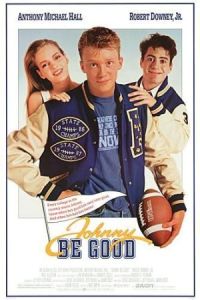
Johnny Walker (Anthony Michael Hall) may be the best high school quarterback in the country but he has a difficult choice to make.  He promised his girlfriend, Georgia (Uma Thurman), that he would go to the local state college with her but every other university in the country wants him.  (Even legendary sportscaster Howard Cosell calls Johnny and advises him to go to an Ivy League college.)  As Johnny tours universities across the country, he faces every temptation.  By the time he makes his decision, will Johnny still be good?
The main problem with Johnny Be Good can be found in the first sentence of the above synopsis.  Anthony Michael Hall plays the best high school quarterback in the country.  By taking on the role of Johnny Walker, Hall was obviously attempting to prove that he was capable of more than just playing nerds for John Hughes.  But Hall is never convincing as a quarterback, much less the best in the country.  Though he bulked up for the role, it is impossible to imagine Hall in a huddle, coming up with the big play that wins the game.  It’s easier to imagine Johnny getting shoved in a locker and left there until the school year ends.  Hall seems to be lost in the role and the movie never seems to be sure who Johnny Walker is supposed to be.  (Two years later, Hall would again play a jock and give a far better performance in Edward Scissorhands.)

As for the rest of the cast, Robert Downey, Jr., who plays Johnny’s teammate and best friend, is even less convincing as a football player than Hall.  In the 1980s, Downey could play a quirky sidekick in his sleep but not a wide receiver.  Paul Gleason also shows up in the movie, basically playing the same role that he played in The Breakfast Club.  Uma Thurman is sweet and pretty in her film debut but it’s a nothing role.  Fans of Cannon Picture will want to keep an eye out for Steve James, in a small role as a coach.

Poorly written and slackly directed with few laughs, Johnny Be Good fails to take its own advice.

Musical Sequence of the Day: “You Never Can Tell” from Pulp Fiction


With the passing of Chuck Berry, today’s musical sequence of the day is a bit of a no-brainer.  This scene, from 1994’s Pulp Fiction, is already one of my favorite dance scenes and, today, it takes on a special poignance.

It’s funny.  Whenever there’s a montage of classic dance scenes, we always get at least a few seconds of John Travolta and Uma Thurman dancing at Jack Rabbits Slim.  In fact, I’ve seen this dance featured in so many montages that it’s easy to forget which song they were originally dancing to.  I’ve seen this scene scored with everything from Sinatra to punk to Britney Spears to EDM.  And, every time, it’s worked beautifully.

But really, “You Never Can Tell” is the perfect song for this scene.  Pulp Fiction is so many thing that I think people sometimes forget that, at heart, it’s truly a celebration of Americana.  Seeing John Travolta and Uma Thurman dancing to Chuck Berry serves to remind us of this fact.

Film Review: Nymphomaniac Vol. I & II (2013, dir. Lars Von Trier)


IMG_9689

I’ll try and keep this short, unlike the movie, which if you watch the director’s cut as I did, comes out to about five and a half hours. Once you’ve sat through something like Jacques Rivette’s Out 1 (1971), which comes out to a little over twelve hours, this isn’t much. Also, despite what I’m going to say about it, it’s problems don’t come from it’s length. A lot of movies damage themselves by going past two hours, but not this one. The length really wasn’t an issue for me.

I’m also not going to pick out all the little stupid things like you see me do with Hallmark movies. Yes, Stellan Skarsgard says the Christian church split up in 1054 into Roman Catholic and Orthodox, but it actually fractured a long time before that break. Or the onscreen text, which you would expect in a Godard film. Especially when Skarsgard brings up Fibonacci numbers. That probably only ticked me off because I went through about nine years of college level computer science and really don’t want to hear about Fibonacci numbers ever again. Also, there’s a scene where she makes one attempt to have sex with black guys. It kind of reminded me of that “documentary” from the early 1970’s called Black Love. It’s there to mention that men are homophobic, but she is implicitly homophobic since sex with a woman is never brought up in this sex addict film. Von Trier also whips out the Two Kinds Of People In The World cliche, but it only makes sense if everyone is right handed. Well, let’s talk about the movie.

First, if you’re a fan of Lars Von Trier, then it’s a no brainer. This movie is for you. Don’t hesitate to watch it. If you are like me and love Breaking The Waves (1996), then this has similar material, but it’s not even remotely as moving. If you were offended by Dogville (2003) like I was, then don’t worry, this isn’t offensive stuff. It’s just boring.

The movie is about a girl named Joe (Charlotte Gainsbourg) who recounts her life as a self proclaimed nymphomaniac to Seligman (Stellan Skarsgad). The movie cuts back and forth between the actual story and then Seligman’s thoughts on it. Kind of like sitting in on a therapy session if it were being conducted by college students in a debate class. And that’s where this film’s biggest issue is for me. A lot of the analysis feels pedestrian or the kind of thing you would expect in a college paper written by a student who hopes the teacher will be impressed. And at times its almost like argument for arguments sake. Like when you’re in a class and a topic is tossed out for discussion. The topic may actually be rather simple, but people keep trying to throw things in to pad out the conversation to fill the class time. A lot of the dialogue feels like that sort of thing.

The story begins when she is a little girl and takes us up to the events that led Seligman to find her in the alley outside of his place at the beginning of the film. Her father is played by Christian Slater who I think does a good job. His British accent may be a problem for you, but it wasn’t for me. Neither was it a problem for me with Shia LaBeouf’s character who is a male presence in Joe’s life pretty much throughout the film. The accent was a problem for me with Uma Thurman’s character though.

There’s a point where Joe just starts referring to the men in her life by letters. She casually tosses them around. During one of these scenes, Uma Thurman shows up as the wife of one of the guys who’s there with Joe along with their kids in tow. The scene is supposed to start a little funny, then get really uncomfortable as it keeps going. Like when Thurman asks if she can show her kids the “whoring bed”. The problem for me was the accent. If they had just let her speak normally, then it would have worked, but it was a voice that at this point in her career is obviously not her’s and I can’t suspend disbelief. So the scene was just hilarious to me. Especially when she actually screams. That made me think of Julianne Moore in Map To The Stars (2014), which also had me laughing.

This film has been dismissed as porn or on the flip side, played up for showing so much. People especially like to mention that the sex is unsimulated. Well, it really doesn’t count in my book if that isn’t Shia LeBeouf’s penis, which it isn’t. They use CGI to graft porn actors genitalia onto some of the actors. So it’s not anything to brag about. Is it porn? Far from it. Anybody who tells you that has no idea what they are talking about. It probably comes closest to an exploitation movie at best in that department.

I said I wouldn’t pick out little flaws, but there’s a big one I have with the title and her consistently referring to herself as either a nymphomaniac or being addicted to sex. She’s not really addicted to sex. She’s addicted to sex like someone who only smokes Marlboro is addicted to cigarettes, but won’t smoke any other brand. She’s like that. She’ll take penetration by a penis, give a blow job, and poorly dabbles in S&M. That’s really it. She’s rather discriminating about what she’ll do. Another analogy is like when someone says they’re a cinephile, but that means to them that they love watching highly acclaimed foreign films. An addiction to something broad like movies or sex means you’re indiscriminate. However, I get why Von Trier sticks with the term nymphomaniac because the movie does have a reason to make sure the apparent love of sex and guilt about it is explicitly associated with a female character. The ending depends on it.

The only thing that was kind of noteworthy to me was how the way the movie is shot changes in the final part of the film. It’s divided into chapters and in the last one Von Trier either shot it to get film grain and over exposed lights or did it in post processing. I think it was probably a reference to a movement in film he was involved in back in the 1990’s called Dogme 95. You can watch something like Thomas Vinterberg’s The Celebration (1998) and it will look similar.

Honestly, it’s not a bad movie, but it’s really for people who like Von Trier stuff. If you like his stuff, see it. If you don’t, definitely skip it. If you’re totally new, then don’t start here. Begin with Breaking The Waves and Europa (1991) before wading into films like The Idiots (1998), Dancer In The Dark (2000), Dogville, and beyond.

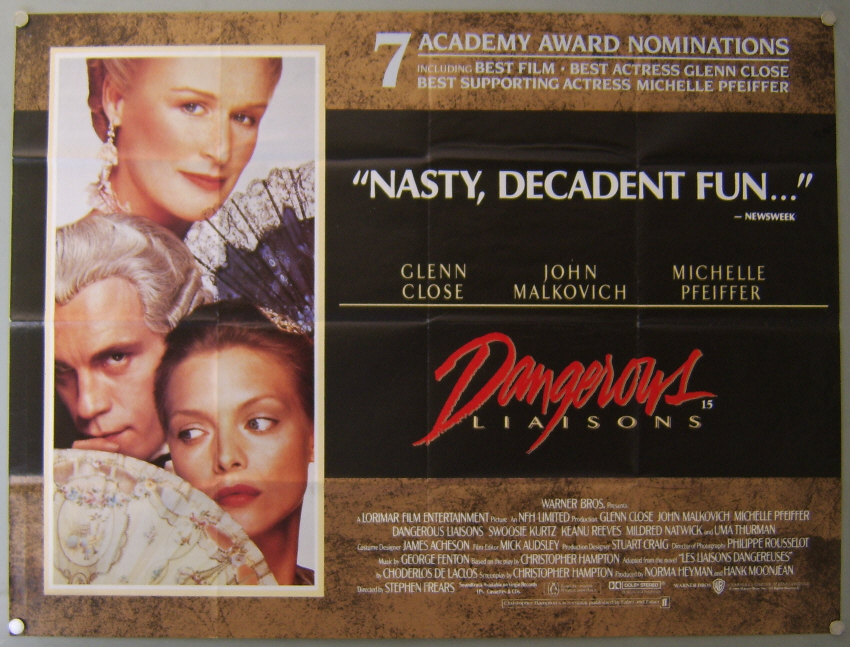
Embracing the Melodrama #37: Dangerous Liaisons (dir by Stephen Frears)


When watching a film like the 1988 best picture nominee Dangerous Liaisons, it helps to know something about history.  The film takes place in 18th century France and, even though it’s never specifically stated in the film, I watched it very much aware that the story was taking place just a few years before the French Revolution.  Even the aristocratic libertines who survive until the end of the film are probably destined to end up losing their lives at the guillotine.  Even though you don’t see anyone losing their head during Dangerous Liaisons (nor do you hear anyone say, “Let them eat cake.”), the film offers up such an atmosphere of decadence and manipulation that it leaves the viewer with little doubt as to why the people occasionally feel the need to rise up and destroy their social betters.

Dangerous Liaisons tells the story of the Vicomte de Valmont (John Malkovich) and the Marquise de Mertuil (Glenn Close), two amoral members of the aristocracy who deal with their boredom by playing games with the emotions of others.  Valmont is a notorious womanizer while Mertuil is obsessed with “dominating” the male sex and “avenging my own.”  At the start of the film, Mertuil has discovered that a former lover is planning on marrying the innocent Cecile (18 year-old Uma Thurman, stealing every scene that she appears in), who has basically spent her entire life in a convent.  Mertuil asks Valmont to seduce and take Cecile’s virginity before the wedding.  At first, Valmont says that Cecile is to easy of a challenge and declines.  Instead, Valmont has decided that he wants to seduce Madame de Tourvel (Michelle Phieffer), a married woman who is renowned for both her strong religious feelings and her virtuous character.  Mertuil agrees that she will sleep with Valmont if he can provide her with written proof that he’s managed to seduce Tourvel.

Tourvel is staying with Valmont’s aunt (Mildred Natwick), which gives Valmont — with the help of his servant, Azolan (Peter Capaldi) — several chances to try to trick Tourvel into believing that he’s a better man than everyone assumes him to be.  (With Azolan’s help, Valmont finds a poor family and donates money to them.  Of course, he makes sure that word of this gets back to Tourvel.)  However, Valmont then discovers that Cecile’s mother (Swoosie Kurtz) has been writing letters to Tourvel, warning her about Valmont’s lack of character.  To get revenge, Valmont agrees to seduce Cecile.

Dangerous Liaisons, which is based on a play that was based on a novel, is sumptuous costume drama.  If you’re like me and you love seeing how the rich and famous lived in past centuries, you’ll find a lot to enjoy in Dangerous Liaisons.  With the elaborate costumes and the ornate sets, the film is a real visual feast.

The film is also a feast for those of us who enjoy good acting as well.  With the exception of a very young Keanu Reeves (who is oddly miscast as the poor music teacher who falls in love with Cecile), the entire film is perfectly cast, right down to the most minor of characters.  (I particularly enjoyed listening to Peter Capaldi, even if his Scottish accent occasionally did seem rather out-of-place in a film about the pre-Revolution France.)  For me, the biggest shock was John Malkovich.  Don’t get me wrong — I’ve always felt that Malkovich was a good character actor but he’s never been someone that I would think of as being sexy.  However, he gives close to a perfect performance as Valmont and, oddly enough, the fact that he’s not really conventionally handsome only serves to make Valmont all the more seductive.  Purring out his cynical dialogue and openly leering at every single woman in Paris, Malkovich turns Valmont into a familiar but all too appealing devil.

Dangerous Liaisons was later remade as Cruel Intentions, which is a film that I’ll be taking a look at very soon.

liaisons