Battleship is going to be the latest film to come out of that film blockbuster factory called Hasbro Studios. Like them or hate them their Transformers franchise by way of Michael Bay has been anything but flops. They’ve made truckloads of money for all involve despite each successive film in the franchise getting worse and worse. The latest Hasbro property to make it’s way onto the bigscreen will be a big-budget production of that classic naval war boardgame kids of all eras just simply called Battleship.
We’ve seen several trailers of the film now and this Super Bowl Sunday we see a new tv spot trailer which shows more of the alien invasion aspect of the film with more aliens in scifi-looking battle armor being seen. We still don’t know what causes this invasion to occur, but then again most of those who will see this film may not really care as long as the action comes fast and furious with enough of a story to keep things from becoming a huge jumbled mess.
Battleship is still set for a May 18, 2012 release date.
“Found footage” films have become all the rage of late. Many attribute this to the extreme popularity of the Paranormal Activity films of the last couple years, but I like to think it goes even farther than that. Even before the aforementioned horror series we got the found footage horror of both the Spanish horror series [Rec] and it’s Americanized version with Quarantine. One thing which we haven’t gotten to see use this style of storytelling is the superhero genre which still continues to go strong. Filmmaker Josh Trank and screenwriter Max Landis (Masters of Horror: Deer Woman) solve this lack of superhero/found footage film with their surprisingly well-made Chronicle.
The film begins with one of three high school seniors, the shy and troubled Andrew (played by Dane DeHaan), testing out his new video camera. We learn through this first ten or so minutes of the film that his only friend in school is his own cousin Matt (Alex Russell) and that his plans for the new camera is to videotape everything that goes on through his day at school and at home. We learn much about Andrew during these first minutes of the film. We see that his home life consists of him worrying about his very sick mother and trying to avoid the wrath of his drunken, abusive father. School life is not any much better as he’s bullied by other classmates and seen as a non-entity by the rest outside of his cousin Matt. It is his cousin who invites him to a rave party in one scene which will lead up to the two meeting up with a third high school senior, the very popular Steven (payed by Michael B. Jordan), and their discovery of something strange in deep in the woods.
We never get any full explanation as to the origin of the mysterious object the three teens find underground, but all we know afterwards is how it’s given Andrew, Matt and Steven the ability to move things with their minds. This new found ability is just the tip of the proverbial iceberg as all three learn more about their new found powers. Matt figures out that their power is like a muscle and constant use just strengthens and enhances what they’re able to do. All three react to having superpowers as all high school teenagers would when confronted with such a situation: they become giddy boys behaving badly.
They test out their powers on the unsuspecting public at the local mall parking lot and stores. It’s all pretty much harmless, teenage fun until an accident caused by Andrew shows all three the inherent dangers in their new abilities. Matt wants ground rules in how they use their powers with Steven following suit, but Andrew doesn’t understand why the need for them even though he’s remorseful of what he had caused. It’s the beginning of small cracks in the relationship between the three teens that would widen as the film moves into it’s second half with less joy and lighthearted fun and more darkness as one of the three begins to act out on his troubles both at home and in school.
Chronicle could almost be a coming-of-age story in addition to being an origins story that superhero films seem required to do. We see Matt, the cousin, grow from being the wannabe intellectual into someone genuinely caring about what is happening to his introverted cousin Andrew. Steven, the popular football captain and student body president, learns more about Andrew and how he his new friend’s troubled upbringing concerns him enough to try and bring Andrew out from his protective shell and make him more confident about himself. With Andrew we see a teenager who many would feel much sympathy for. He’s the kid who symbolizes the turmoil a growing teen must go through both emotionally and psychologically. Whether it’s rebelling from familial authority or trying to survive the dangerous waters of high school life. We can see ourselves in Andrew’s shoes and his reaction to finally having the ability to fight back against those who have made his life a living hell feed our own fantasies as teenagers to be able to do the same.
All of this would be moot if the film ended up being uninteresting, bland and boring. Fortunately the film doesn’t end up being any of those three. What we get is a fun and thrilling film which takes both the superhero genre and the found footage gimmick and adds some new wrinkles that combines towards a fresh new take on both. Found footage films have the unenviable task of convincing the audience that we’d believe someone would be lugging around a camera all the time and find ways to videotape every moment to create a believable narrative. It’s a leap in logic that will sink or swim these types of films. With Chronicle we see how their new abilities solves this particular dilemma in found footage stories. Being able to move things with one’s mind should make it easy to film yourself without having to hold the camera and instead have it floating and following one around.
The film also does a great job in building up these characters into believable ones with their own back stories and motivations. We’re not left with basic cutouts of what we think teenagers are in films. Max Landis’ screenplay goes a long way in turning these three into real teenagers and their reactions in their new powers were quite believable. How else would teen boys react to finding out they’re now superheroes, but behave badly and use them not for the benefit of others but to have fun.
The film could easily have gone the route of making them want to start helping others (though in Steven’s case he does try to help Andrew become more outgoing through the use of his abilities), but that would’ve felt disingenuous and unrealistic. Even the film’s dialogue seemed to flow naturally without having to resort to witty teen-speak that some writers think teen conversations are full of. It helps that the performances of the three actors playing the three teens came off as well-done. Dane DeHaan as the troubled Andrew comes off looking best of all three with his reactions to his own personal troubles coming off as real and not as some young actor trying too hard to try and impress.
For a found footage film Chronicle does a great job in recreating the look and feel of the three teens superpowers. Whether it’s moving things around with their mind or flying through the sky, the film makes each and every act look like something that could happen for real. The scenes of destruction which encompasses the climactic sequence of the film look very realistic and on the small-budget (when compared to most superhero films) come off as very impressive. The technique of each scene being part of video camera footage (whether they’re handheld HD cameras or smartphone footages) allowed for whatever CGI-effect used to look seemless and not artificial looking.
January and February have always been the dumping ground for films the studios either have little faith in or think don’t deserve the much more lucrative summer blockbuster and holiday season months. Chronicle manages to make its case that this would’ve been one film that could’ve done well playing around with the mega-budgeted blockbusters this summer and hold it’s own. It’s a film that takes a simple premise and creates something not just fun and exciting, but also takes a delve into the psyche of the teenage mind and all the pitfalls and dangers one can find themselves in navigating through it. Chronicle is one of the better films in these early months of the 2012 film season and overall probably one of the better one’s by year’s end.
BioWare’s Mass Effect scifi rpg series has been a hit right from the start. The first two titles in the planned trilogy for the series (some have been calling it the Cmdr. Shepard Trilogy) have been received with a near universal acclaim for gameplay and it’s unique way of storytelling. In my opinion, this series has been one of the few which has begun to bridge the gap between gaming and storytelling where both have become integral part in making the series a success.
The third game has been one of the most-anticipated titles by gaming fans everywhere and just months away from release. The trailer above shows all the cool extras for those who pre-order the very limited N7 Collector’s Edition which will ship with the regular version of Mass Effect 3. Some of the extras mentioned seem more like fun fluff, but the classified extra character and the mission attached to them will be one of the highlights not to mention the robotic Geth-looking dog and the extra exclusive weapons.
Mass Effect 3: N7 Collector’s Edition is set for a March 9, 2012 release date with a price of $80.00.
You can be damned skippy sure that I’ve gotten my pre-order all confirmed and paid off.
Lisa Marie Bowman had chosen her favorite scene from Dario Argento’s Suspiria as her latest “Scenes I Love” post and it’s quite the scene. I will match her choice with a horror scene which remains one of my favorite scenes in film history. It is also a scene from one of the best scifi-horror films ever made and, I would dare to even say, one of the best films ever created. The scene I speak of comes from Ridley Scott’s classic and iconic film Alien.
Anyone who has ever watched this classic scifi-horror will always gravitate towards talking about one particular scene. The scene is the first time the crew of the space tug Nostromo gets together to a meal as a group after the crisis which saw one of their own crew members attacked by an alien creature. This scene started off quite normal. Professionals enjoying food and good company. It’s through Ridley Scott’s direction and the exceptional performances of all involved which elevates the scene to one of the greatest. Through the scene’s depiction of normalcy we start to get a sense that something may not be right even before Kane begins to cough and have convulsions. For me it was a prolonged shot of crew member Ash during the banter around the table. His expression is all subdued smile then for just a split second we see him glance at Kane eating and being merry but he knows something is wrong and about to happen.
Even if people didn’t pick up that moment from Ash it still created a subconscious effect on the audience so that when Kane did begin to cough and convulse uncontrollably the audience was already on the razor’s edge. When the climactic event which punctuates this scene finally occurs the surprise on all the actors, especially that of actress Veronica Cartwright, has gone done as in film history as a classic. It helped that their reactions were quite genuine. Even knowing that the chestburster alien would pop out it was not being told that fake blood would squirt out that made their reaction of surprise and disgust so real. The extended version of this scene even had Cartwright slipping and falling as she screamed in horror at all the blood which had splashed on her.
One last thing which made this scene one I love and also one which I think makes it one of the greatest scenes in film history is that it was done in one take and that single take came out perfectly. This is a scene that has influenced many filmmakers since but its effect has never been fully replicated.
“[I am] a new superstition entering the unassailable fortress of forever. I am legend.” – Robert Neville
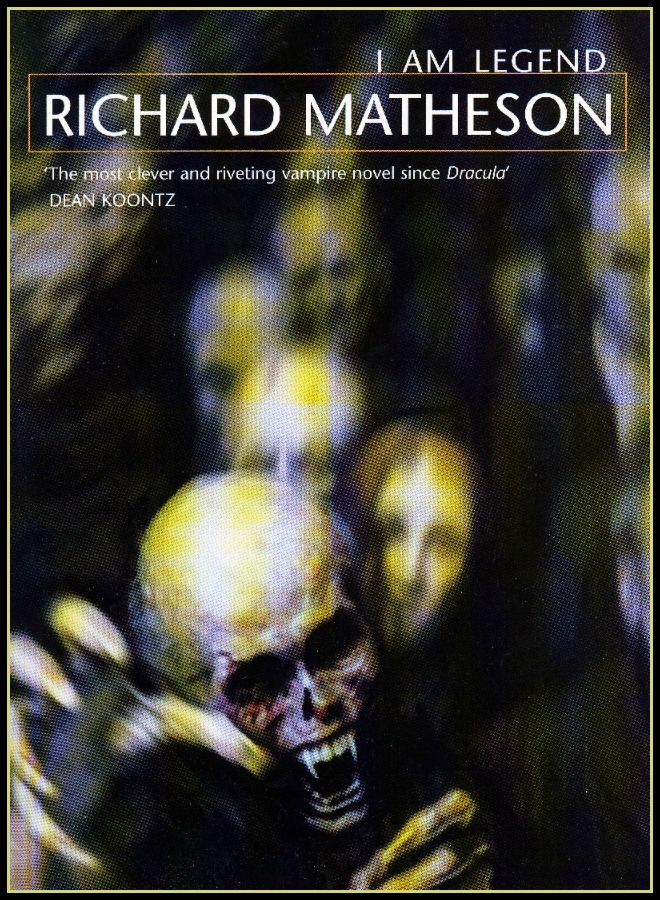
In 1954, Richard Matheson published a novel that would influence so many future generations of science-fiction and horror writers and film directors. Matheson’s body of work prior to 1954 could be summed up as good but nothing too exciting. His work thus far overlapped such pulp genres as horror, science-fiction and fantasy. This style would be the hallmark of his brand of story-telling. It would be in his novel I Am Legend that his unique style of combining different genres that Matheson would have his greatest and most epic work to date.
I Am Legend takes the vampire tale and brings it out of the shadows and darkness, so to speak. Set in the late 1970’s, I Am Legend begins its tale with humanity pretty much on the quick path to extinction due to a pandemic where the bacterium or virus involved caused symptoms very similar to what folklore had called vampirism. The protagonist of this tale was one Robert Neville. An unassuming man living in a Los Angeles suburban neighborhood who might just be the only living human being, or at least the only un-infected one, on the face of the planet. Neville’s been reduced to a day-to-day routine of defending his fortified home from the vampire-like infected humans who’ve tried attacking him and his home once night falls. This routine has become so ingrained in Neville that it starts him on a downward spiral to utter despair. He knows that he might just be the only human left and the prospect of such an idea almost becomes too much for his psyche. It’s this growing despair which gradually causes Neville to make little mistakes in his routine that puts him in greater levels of danger from those turned who see him as nothing but cattle.
His attempts to solve the mystery of why he’s the only one not affected by the disease becomes his way of keeping himself sane. Neville’s work in trying to find the answer leads him to take chances in keeping a vampire survivor alive and bound instead of just killing it outright. His experiments ranges from disproving the myths surrounding the vampire creature and acknowledging the scientific and/or psychological explanations to certain behavioral traits of these nocturnal creatures.
Neville’s studies on captured vampires tell him why certain things like garlic and sunlight causes such an extreme reaction on these creatures. Why do they have a certain invulnerability towards bullets but not a stake through the heart is one question he tries to answer through his research. He even surmises that the vampires aversion to crucifix was more psychological than anything supernatural. Neville arrives at this after observing a vampire’s reaction to a Star of David was similar to the reaction of another one towards the crucifix.
It’s events such as these which puts I Am Legend in a category all by itself. It still uses themes of horror which the vampires fulfill to great effect, but it also does a great job of taking the vampire tale out of the supernatural realm and into the scientific and logical. Neville’s attempts to keep himself sane, as his loneliness begin to weigh on his psyche and health, through these studies and experiments adds a level of the science-fiction to this tale. It’s the combination of these two genres which makes I Am Legend such an epic tale in scope yet it’s not that which gives the tale its heaviest impact. It’s Neville himself, more to the point, his desperate situation of being the last man on earth weighing on his mind. This tone gives this apocalyptic vampire tale such an intimate feel that the reader hopes and wishes for some sort of peaceful end to Neville; better yet, some hope that he might find clues that he might not be the last.
As the story moves forward, the line between who is human, who is monster and who is the true survivor become blurred as Neville’s forays into the city for supplies lead him to a community of others who have not succumbed to the monstrous effect of the pandemic. It’s this discovery that gives Neville a semblance of hope which momentarily lifts the heavy weight of inevitability from his mind. But not everything is at it seems at first glance. Neville finds this out as his encounters with this thriving community continue to give him more and more insight as to how they’ve survived. The climactic end to this tale has become such a classic ending that any other resolution wouldn’t have worked. The end worked as the best possible ending to Matheson’s tale. It also gives the books title a deeper and more profound meaning to it.
I Am Legend will continue to go down in literary history as one of the best examples of fantastic literature. It’s seemless blending of horror, science-fiction and the apocalyptic gives the tale both an epic and intimate feel and tone. It’s not wonder the very themes and premise of this story has influenced such horror writers and filmmakers as Stephen King (The Stand, Salem’s Lot) and George A. Romero (Night of the Living Dead, Dawn of the Dead, Day of the Dead). I Am Legend takes the vampire tale out of the shadows and darkness it usually in habits and brings it out to the light of science and logic with surprising results. A true classic piece of writing from Richard Matheson and one that still stands as the benchmark for apocalyptic tales.
For the latest “Scenes I Love” I had to pick one of the most powerful scenes in cinema in the past ten years. I happened to catch this scene once again while channel surfing and came across it just exactly where the scene in the clip begins. I speak of the Miracle Cease Fire scene in Alfonso Cuaron’s 2006 sci-fi dystopian (though the film does offer a glimmer of hope in the end) film, Children of Men.
This scene must be given some basic ground work to be understood why it was so powerful. In Children of Men the world hasn’t had a single birth for almost 18 years. In this mix is the only birth which has become the contention between a resistance group calling themselves the “Fishes” who are opposed to the government’s fascists policies concerning immigrants. So, with this in mind this scene comes across as powerful indeed.
The looks of everyone from the refugees, the armed “Fishes” to the government troops when they heard the baby crying in the arms of Kee as Clive Owen’s character escorted them from the battle-scarred tenement building was the pay-off that the film was building towards from the very first seconds of the film. Both sides intent on destroying each other stopped fighting just to be able to allow something which hasn’t happened in 18 years to find a safe haven from the fighting.
Cuaron’s direction of this scene also made it one of my favorite scenes ever in how he doesn’t try to preach that love and peace conquers everything. Once the baby’s cries were far enough from those who listened to it the fighting resumed in earnest. This scene had both hope and joy balanced with despair and futility all occurring in the same scene. It’s a shame this film wasn’t seen by many when it first came out during the 2006 Christmas season.
“End of the Road” is quite an apt title for the eight episode in the fourth season of Torchwood. We see the end of a couple characters during the episode and at the same time we finally get the final pieces to the question of who or what caused “Miracle Day”.
The episode begins with the Torchwood team arriving at the Colasanto estate and led by Olivia Colasanto to her grandfather and Jack’s former companion and lover from the late 1920’s. We find out that Angelo Colasanto has kept himself alive through natural means, but is now in a coma as Jack looks on. Angelo’s condition when revealed almost felt like a cop out, but in a major exposition info dump done by his granddaughter we find out who is behind “Miracle Day”. They’re called The Families and are made up of the descendants of the three men last seen in the previous episode forming an alliance to study Jack’s seeming immortality.
Angelo himself has been kept out of the alliance due to the three men’s discomfort over his homosexuality. Angelo has been observing not just the three families through the years, but Jack as well in an attempt to either stave off whatever plans The Families have in regards to the “Miracle” or, at the very least, give Jack the clues needed to fix the problem. But before Jack, Gwen, Esther and Rex can do their thing to save the day there’s the little obstacle of Rex’s old boss in the form of Wayne Knight interrupting the Jack/Colasanto reunion. The rest of the episode never lets go of the throttle once John De Lancie’s CIA head honcho Shapiro show’s up and we get closer to this season’s endgame.
The episode was well-written even with the major expositional scene involving Nana Visitor’s character. Each character in the Torchwood team got a chance to shine in their roles with Barrowman making Jack’s bittersweet reunion with Angelo a mixture of happiness and regret. If there was a weak point in the cast’s performance it would continue to be some of the side characters like Wayne Knight’s deputy director Friedkin and Bill Pullman’s Oswald Danes. While I can understand the role of Knight’s character in the overall scheme of things this season I still can’t quite grasp just exactly what Pullman’s Danes character is suppose to do other than be over-the-top creepy. Even Ambrose’s Kitzinger got a chance to own her scene as she finally unleashes what she truly feels about Oswald Danes despite having to be his publicist.
“End of the Road” ends on a major cliffhanger with one of the Torchwood team members shot and the team split apart as the CIA, The Families and everyone else seem to be pulling at them from all directions making their task about solving “Miracle Day” that much more difficult. With only two more episodes remaining this season what looked to be a show that seemed stuck on idle for most of the middle episodes has suddenly begun to speed ahead towards what could be an epic conclusion.
I didn’t think Russell T. Davies and his writers could pull off moving the story of Torchwood: Miracle Day towards a resolution that would be interesting, but it looks like they might just do it. The series is now on it’s final stretch run and fears that the show was spinning its wheels about not having any idea what the cause of “Miracle Day” was and what was the endgame looks to be easing somewhat with this 7th episode titled “Immortal Sins”.
The episode was mainly told through a flashback to the early 1920’s where we see Jack entering the U.S. through Ellis Island and befriending an Italian immigrant who also happened to have tried to steal his visa papers. We learn that this man is one Angelo Colasanto and his bright-eyed outlook on being in a new land has made quite an impact on the well-traveled Captain. Soon enough Jack and Angelo become companions and romantically involved, but as with everything involving Jack such happiness never last for long as we find out why Jack was entering the U.S. in the first place. It’s a consequence of Jack and Angelo’s attempted escape following Jack’s mission that his companion later learns of his inability to die.
In one of the more disturbing sequences throughout this series, so far, Jack’s immortality was tested time and time again. Angelo’s misguided betrayal of his lover leads to Jack being killed over and over only for him to return. It’s from this sequence we see what could be the birth of the shadowbrokers pulling the strings behind PhiCorp and the many others complicit in moving “Miracle Day” along.
While the bulk of the episode was taken up mostly by Jack’s flashback to his meeting with Angelo we still got enough time given over to Gwen as she attempted to save her family from the very people who also want Jack. Even with her loyalty to Jack we see that Gwen will be willing to turn him over to the very people holding her family hostage if it meant saving them. It’s only through a timely intervention by Esther and Rex that Gwen and Jack get out of another crisis. It’s the final moments of this sequence that we finally learn the name of the person who has the key to learning the true nature of “Miracle Day”. Sins of the past looks to have caught up to Jack this time around and it’ll be interesting to see if “Miracle Day” becomes the elaborate plan of a spurned lover and companion and whether Jack will be the key to unraveling the effect of the world’s current bout of “immortality”.
Overall, “Immortal Sins” was a good episode that gave us a nice look into a part of Jack’s past that has only been shown briefly in the past. The episode was actually stronger when it focused on Jack’s past with Angelo and the discoveries made by both men about each other that looks to color the current situation occurring on the planet right now. While the other half with Gwen had it’s exciting moments (mainly once Esther and Rex get involved) this section of the episode looked to be more of an expositional trigger to get Jack to recount his past. I did like how Jack and Gwen seemed to make-up and get back on track as partners once again when the danger had passed. The chest bump between the two was quite amusing. Only time will tell if Gwen’s attempt to save her family’s life by trying to turn Jack over to the very people opposing them would have any lingering effects as the season comes to a close and towards any potential future seasons.
The final three episodes of this season should make for some interesting tv watching.
Torchwood: Miracle Day is now into the second-half of it’s 10-episode latest season and something just occurred to me even while I was enjoying this 6th and latest episode. For a new season that’s just 10-episode the writers seem to be doing things as if there’s more than just the 10 episodes. For some people this slow pace has become an annoyance as the mystery of what is “Miracle Day” seem to be doing the glacial unveiling. I’m beginning to lean towards these individuals who thinks this season, as entertaining as it has been, looks to be wasting too much of of the season’s remaining episodes introducing new characters left and right to be nothing more than exposition mouthpieces to help add another clue to the mystery of the season.
While episode 6, perfectly titled as “The Middle Men”, was entertaining as we see Rex, Esther and Gwen deal with their part in exposing the government “Outflow Camps” (aka extermination camps for those deemed braindead but still alive), the episode seemed to spin it’s wheels in place once Jack met with one of PhiCorp’s executive who may or may not know the company’s role in “Miracle Day”. Ernie Hudson plays PhiCorp’s COO, Stuart Owens, who also has begun to investigate on the true nature of the Outflow Camps. One of Owens’ operatives in Shanghai tasked with investigating that country’s Outflow Camps relays an ominous and cryptic message to Owens in the form of jumping off of the roof of the tallest building in the city after what he had uncovered. It looks like the burn units in the Outflow Camps’ module might not be the only way to get around the forced upon “immortality” everyone now has.
The episode actually takes place pretty much where the last one ended and it spends most of it’s time with Rex and Esther finding out who was responsible for Vera Juarez’s “death”. This part of the episode was actually quite frustrating to watch. Some of it was very difficult to watch in a good way as Rex goes through a form of torture that had even me averting my eyes. But it was also a part of the episode where both Rex and Esther make one stupid mistake after the other. Esther I can understand as she’s become almost useless as a Torchwood member outside of her hacking skills. Rex on the other hand I thought would’ve been more wary of his surroundings and those in the Camp he interacted with. The fact that it took a bumbling idiot to save the two put this whole part of the episode into the realm of the absurd.
Gwen’s time in the Cardiff Outflow Camp was a bit more successful though this leads to consequences which puts her in a no-win situation as the episode draws to a cliffhanger close. We did get to see her get into badass mode as she figures out in her own way to put a temporary stop to the burn modules. She does this all the while playfully bantering back and forth with Jack back in LA. This past of the episode was actually the best of the three concurrent story plot threads which has been running for the past couple episodes.
The third part of the episode is more of an exposition dump than anything else. For some reason this season has seen Jack in less of badass role while at the same time the one member of the team who seems to run across people who do nothing but act as exposition dump devices. While Ernie Hudson’s character unloading information on Jack was good and all most of it was something that audiences probably have figured out by now and that PhiCorp is just a link to the those in the shadows pulling the strings on “Miracle Day”. He did give a little tidbit about what might be the endgame for those behind-the-scenes of this worldwide event: The Blessing.
All in all, episode 6 (“The Middle Men”) was a good episode but definitely a step back from some strong ones previous to this one. With only four more episodes remaining in the season I’d be really interested in how Davies and his writers will be able to wrap things up without rushing things. Part of me thinks they may not be able to pull it off and another part of me suspect that there won’t be a true resolution and that a follow-up season may be what’s in store.
While I find my thoughts on how to continue my review on one of my favorite films of all-time I began to listen to it’s soundtrack for inspiration. So, while listening to the Vangelis composed score for Blade Runner I came across what has to be my favorite track from the many different editions of this film’s soundtrack. This track I picked to be my latest “Song of the Day”.
The track I chose is simply the “End Titles” which plays during the film’s end credits sequence. This version of the Vangelis ambient score comes directly from the Esper Edition of the soundtrack which was a bootleg edition that made the rounds in 2002. More specifically, this version of the “End Titles” track is a demo version of what would finally end up in the film.
Vangelis was one of my favorite film composers growing up and it’s saddening that he hasn’t done as much work in the last decade or so. But then his work on Ridley Scott’s Blade Runner was his best and it’s been difficult to top since. Everything about the “End Titles” track was able to convey each and every genre influence the film would mash together to make it into the masterpiece it has become. It’s ambient and electronic synthesizer melody has hints of film noir and, of course, the very science-fiction the film’s foundation has it’s origins in. This was a soundtrack that was one-of-a-kind and as much as others have tried to copy and emulate it they’ve never succeeded.