Cleaning Out The DVR, Again #28: The Turning Point (dir by Herbert Ross)


(Lisa is currently in the process of trying to clean out her DVR by watching and reviewing all 40 of the movies that she recorded from the start of March to the end of June.  She’s trying to get it all done by July 11th!  Will she make it!?  Keep visiting the site to find out!)

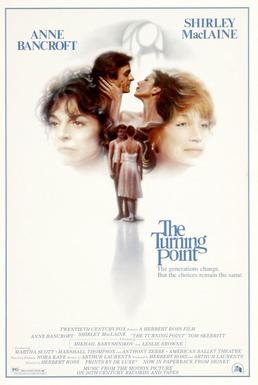
The 28th film on my DVR was the 1977 film The Turning Point.  I recorded it off Indieplex on June 3rd.

I guess I should start this review by admitting that I really have no excuse.  As someone who grew up dreaming of being a prima ballerina and who unknowingly caused her mother to spend an incalculable amount of money of dance classes, dance outfits, dance shoes, dance trips, and all the medical bills that go along with having a klutzy daughter who is obsessed with ballet and as someone who continues to love to dance today, I really have no excuse for not having seen The Turning Point before last night.  Along with The Red Shoes and my beloved Black Swan, The Turning Point is one of three ballet movies to have been nominated for best picture.  It’s a film that, as a result of its box office success, established many of the clichés that continue to show up in dance movies to this day.

Seriously, how had I not seen it before?

And make no mistake about it — The Turning Point is a dance movie.  Don’t get me wrong.  There’s a plot.  Actually, there’s several plots and it’s not incorrect to describe The Turning Point as being something of a soap opera.  But ultimately, all the plots are just window dressing.  Director Herbert Ross started his career as a choreographer with the American Ballet Theater and the characters in The Turning Point are fictionalized portraits of people that he actually knew.  Ross’s love for both ballet and the dancers comes through every frame of The Turning Point and the film’s best moments are when the melodrama takes a backseat to the performances onstage.

But I guess we actually should talk about the melodrama.  Okay, here goes:

Many years ago, DeeDee (Shirley MacClaine) and Emma (Anne Bancroft) both belonged to the same New York ballet company.  DeeDee was the star of the company and was set to play the lead in Anna Karenina when another dancer with the company, Wayne (Tom Skerritt), got her pregnant.  DeeDee not only dropped out of the company but she married Wayne and moved back to his home state of Oklahoma.  (The film suggests, in an oddly regressive moment, that Wayne only slept with DeeDee in order to prove that, despite being a male dancer, he wasn’t gay.)  DeeDee and Wayne opened a dance studio in Oklahoma City while Emma got the lead in Anna Karenina and went on to become a prima ballerina.

18 years later, Wayne and DeeDee’s daughter, Emilia (Leslie Browne), is invited to join the company.  Because Emilia is shy and somewhat naive, DeeDee accompanies her to New York while Wayne stays behind in Oklahoma with their younger children.

Once in New York, DeeDee starts to wonder if she made the right decision when gave up ballet for domesticity.  She run into an old friend, conductor Joe Rosenberg (Anthony Zerbe, not playing a villain for once) and has an affair with him.  Meanwhile, Emma is having an affair with a married man named Carter (Marshall Thompson) and is struggling to accept that she’s getting older and will soon have to retire.  Just as DeeDee regrets giving up dancing, Emma regrets never having children.

Meanwhile, Emilia slowly starts to come into her own and blossom as a dancer.  She even ends up having an affair with the self-centered and womanizing Yuri (Mikhail Baryshnikov), one of the stars of the company.  Emilia and Emma start to grow close, with Emma treating Emilia like her own daughter.  DeeDee finds herself growing jealous of both her daughter and her former best friend.

Needless to say, it all leads to Emma throwing a drink in DeeDee’s face and the two of them having a cat fight on the streets of New York…

The Turning Point is no Black Swan or Red Shoes.  Leslie Browne (who was playing a character based on herself) was a great dancer but not much of an actress so you never care about her the way that you do Natalie Portman in Black Swan.  The dancers are amazing in both films but Darren Aronofsky literally put the audience in Portman’s ballet slippers while Herbert Ross keeps the audience at a distance, allowing them to watch and appreciate the dancers’s passion but not necessarily to experience it with them.

But, with all that in mind, I still enjoyed The Turning Point.  What can I say?  I love dance movies!  Both Shirley MacClaine and Anne Bancroft give excellent performances.  Bancroft apparently had no dance experience before shooting The Turning Point (and it’s hard not to notice that, whenever Emma is performing, the camera focuses on those moving around her as opposed to Emma herself) but she still does a good job of poignantly capturing Emma’s fear of getting older and her joy when she realizes that Emilia looks up to her.  MacClaine, meanwhile, has an amazing scene where she watches her screen daughter perform and, in just a matter of seconds, we watch as every emotion — pride, envy, regret, and finally happiness — flashes across her face.

And, of course, there’s that cat fight.  It’s a silly scene, to be honest.  But seriously, if there was any actress who could convincingly throw a drink in someone else’s face, it was Anne Bancroft.

The Turning Point was nominated for 11 Oscars and it ended up setting a somewhat dubious record when it managed to win exactly zero.  (This perhaps shouldn’t be surprising when you consider its competition included Annie Hall and the first Star Wars.)

Well — no matter!

Though the film may not be perfect, I liked it!
The Turning Point

Cleaning Out The DVR, Again #27: Running For Her Life (dir by Philippe Gagnon)


(Lisa is currently in the process of trying to clean out her DVR by watching and reviewing all 40 of the movies that she recorded from the start of March to the end of June.  She’s trying to get it all done by July 11th!  Will she make it!?  Keep visiting the site to find out!)

Stevens-closeup-620x374

The 27th film on my DVR was Running For Life, which originally aired on Lifetime on May 29th.

Running For Her Life has a very simple and yet very important message: if you’re going to take part in hypnotherapy, make sure that your therapist isn’t a fucking psycho who is obsessed with you.  Really, that seems like it should be common sense but I’ve seen enough Lifetime films to know that people of a certain age and socio-economic background are often way too quick to enter into co-dependent relationships with people that they barely know!

For instance, Alison Wynn (Claire Forlani) wants to be an Olympic-winning triathlete, despite the fact that she’s still recovering from a major accident, one that caused many doctors to tell her that she would never walk again.  Alison proved them wrong then and she wants to prove them wrong now!  The only problem is that something is holding her back from giving it her all in competition.  Could it be a childhood trauma of some sort?  Could it be her own insecurity over her husband’s attractive new assistant?

What better way to find out than to convince the famous and controversial Dr. Laura Stevens (Michelle Nolden) to take her on as a client!  At first, Laura says that she only works with professional athletes and suggests that Alison just read her book.  But Alison continues to beg and eventually, Laura relents.

It turns out that Laura is a demanding coach.  She pushes Alison to the limit and then demands even more, all the while screaming at her that her mother was right and that Alison is worthless.  But, despite the harsh treatment, Alison starts to get better.  It especially helps when Laura hyponotizes her and implant psychic suggestions in her brain.  Of course, there is a nosy reporter (Arnold Pinnock) who claims that Laura is less of a coach and more of a brainwasher but at least Laura is getting results!

Of course, that’s not all Laura is doing.  It quickly becomes apparent that she has grown obsessed with Alison.  Soon, Laura is breaking into Alison’s apartment and hiding panties behind the cushions of the living room couch.  “THESE AREN’T MINE!” Alison later yells at her husband.

It all leads to a scene in which Alison’s husband confronts Laura and Laura literally smashes a bottle over her head.  Seriously, it’s one of the most batshit crazy scenes to ever show up in a Lifetime film and it makes the entire film required viewing.

Anyway, I rather liked Running For Her Life.  Yes, it’s predictable but it’s also fun.  As well, this is one of the rare Lifetime films where the victims are just as interesting as villains.  Claire Forlani really throws herself into the role of Alison and you actually find yourself hoping that things actually do work out for her (though I have to admit that I’m still not totally sure I understand what a triathlon is).  Meanwhile, Michelle Nolden turns Dr. Laura into a truly classic Lifetime villain.

Keep an eye out for Running For Her Life!

Cleaning Out The DVR, Again #26: The Maid (dir by Darin Scott)


(Lisa is currently in the process of trying to clean out her DVR by watching and reviewing all 40 of the movies that she recorded from the start of March to the end of June.  She’s trying to get it all done by July 11th!  Will she make it!?  Keep visiting the site to find out!)

The-Maid-window-620x369

The 26th film on my DVR was The Maid, which I recorded off of Lifetime on May 28th.

According to the imdb, The Maid is also known as A Housekeeper’s Revenge.  Regardless of which one you go with, both titles reveal this to be a Lifetime film.  That’s one thing that I always find interesting about Lifetime films — everyone always has a beautiful house and, naturally, everyone always has either a maid or a housekeeper.  I guess I find it interesting because very few of the people I know can afford to have a full-time maid, though I did once date this guy who was going to SMU where the school’s motto might as well be, “Our maid went to UT.”  When you get down to it, there are very few Lifetime films about poor people, unless the film is about somebody overcoming poverty so that they can go to Harvard or marry a professional athlete.

And I’m not complaining!  Lifetime is all about crowd-pleasing entertainment and, for the most part, we would all love to live in a big house with a great kitchen.  I know that most people would want to have a housekeeper or a maid.  Not me, though.  I like cleaning.

Anyway, in the case of this film, the maid is Colleen (Fay Masterson).  Colleen has just been hired to work for the Blackwell family!  Paul Blackwell (Lance Irwin) has just married a woman who is several years younger than him and, while they’re on their honeymoon, Paul’s angry, college student daughter, Laura (Kathryn Newton), has been left alone in the house with Colleen.  What could go wrong, right?

Well, a lot could go wrong.  If nothing went wrong, it would be a very boring movie.  Laura has had some trouble back at college.  Her boyfriend apparently got really possessive and then Laura started to receive threatening emails.  Even after returning home after her father’s wedding, strange things continue to happen.  Someone hacks into Laura’s Facerange (to use the Degrassi equivalent of Facebook) account and changes her password.  Someone is passing out flyers that announce that Laura’s a slut.  Her dog mysteriously disappears…

Could it be Laura’s ex or it could be … THE MAID!?

It turns out that Colleen has secrets of her own.  Her developmentally disabled son committed suicide, shortly after one of his high school classmates stood him up on a date.  Is it possible that Colleen is trying to destroy Laura?

Of course, it’s possible…

The Maid is pretty much a standard Lifetime film but that’s why I enjoyed it.  This is one of those totally over-the-top films where everyone is either bitter or crazy or both.  You won’t believe the plot for a second but you’ll be having so much fun with all the melodramatic twists and turns that it won’t matter.  Fay Masterson especially deserves a lot of credit for fully committing herself to playing the title character.  When she glares at the rich people that she’s planning on destroying, you never forget it.

And don’t worry,  It’s a made-for-TV movie so you know the dog’s going to be okay.

574c96e639ced_283985n


Cleaning Out The DVR, Again #25: Chang (dir by Merian C. Cooper and Ernest Schoedsack)


(Lisa is currently in the process of trying to clean out her DVR by watching and reviewing all 40 of the movies that she recorded from the start of March to the end of June.  She’s trying to get it all done by July 11th!  Will she make it!?  Keep visiting the site to find out!)

Chang_poster

Before I talk about the 1927 oddity Chang (which also happened to be the 25th film on DVR), here’s a little Oscar history.  If this sounds familiar, it’s probably because I already talked about all this in my review of Sunrise but there’s nothing wrong with repeating a history lesson, right?

At the first Oscar ceremony, two awards were given for Best Picture of the year.  The first award — for Outstanding Production — went to Wings, a big budget action spectacular about World War I.  The other award — for Unique And Artistic Presentation — went to Sunrise.  I’ve read a lot of speculation about which film the Academy meant to name the best of the year but, to me, it’s fairly obvious that the Academy meant for Outstanding Production to honor the year’s big blockbusters while Unique and Artistic Presentation would honor the “art” films.

And, to be honest, I think that, way back in 1928, the Academy had the right idea.  Why should they only give out one award for best picture, as if all films can be judged by only one standard?  Why not give out separate awards for the best comedy or the best thriller or the best film made for a certain amount of money?  Why not bring back the Oscar for Unique and Artistic Presentation?

For whatever reason, the Academy discontinued the Unique and Artistic Presentation Award after the 1st ceremony and, in the future, only one film would be named best of the year.  Since Outstanding Production eventually become known as Best Picture, Wings has been immortalized as the first film to win best picture.

One of the films that Sunrise defeated was Chang.  If, like me, you accept the idea that the Unique and Artistic Presentation Award was meant to be a second award for best picture, then that means that Chang might possibly be the only documentary ever nominated for the top prize.  I say possibly because 1) some people would probably argue that Hollywood Revue should be considered a documentary as well and 2) it’s debatable whether or not Chang actually qualifies as a documentary.

Clocking in at only 67 minutes, Chang is a nearly plotless look at the life of a farmer in what is now Thailand and what was then called Siam.  Kru the farmer plays himself and the film follows him as he takes care of his family, builds a house, and deals with the constant threat of wild animals.  The animals are really the main stars of Chang and, all these years later, some of the footage is still impressive.  (There’s a scene in which a tiger literally bumps his nose against the camera lens, which I imagine was a huge deal for audiences in the pre-YouTube, pre-television days of 1927.)  However, despite the use of real wild animals and all the villagers playing themselves, it’s also obvious that several of the scenes have been staged.   Chang itself never claims to be a documentary and, in fact, one of the title cards even announces that Chang is “a drama of the wilderness.”

Yes, there are title cards.  Chang is a silent film and, to really appreciate it, modern viewers have to be willing to adjust.  That said, I actually enjoyed the fact that it was silent.  The title cards were all either endearingly portentous or surprisingly witty.  I especially enjoyed the “ROAR!” title card that popped up whenever a tiger appeared.

In many ways, Chang serves as a precursor for the original King Kong, which was directed by the same team behind Chang, Merian C. Cooper and Ernest Schoedsack.  If it can be argued that King Kong forever changed the course of American filmmaking, it can also be argued that, without the success of Chang, there would have been no King Kong.

(Another interesting bit of trivia: Chang reportedly only cost $60 to shoot.  Apparently, neither Kru nor any of the other villagers were paid for starring in a movie.)

Chang is something of an oddity but I’d still recommend seeing it.  It is a piece of history after all!

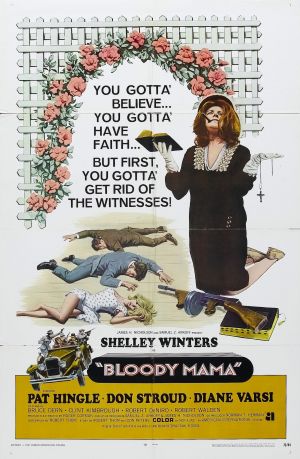
Cleaning Out The DVR, Again #24: Bloody Mama (dir by Roger Corman)


(Lisa is currently in the process of trying to clean out her DVR by watching and reviewing all 40 of the movies that she recorded from the start of March to the end of June.  She’s trying to get it all done by July 11th!  Will she make it!?  Keep visiting the site to find out!)

BloodyMama

The 24th film on my DVR was the 1970 Roger Corman-directed gangster film, Bloody Mama.  I recorded it off of TCM on May 27th.

Bloody Mama opens with a cheerful song that goes, “Maaaaaama…Bloody maaaaama….” and it’s such an unapolegetically over the top song that it perfectly sets the tone for what’s to follow.  Bloody Mama is violent, occasionally perverse, and totally unashamed.  It doesn’t pretend to be anything that it isn’t.  It’s bloody and it’s about a mother and, in the best Corman tradition, it makes no apologies!

The film tells the heavily fictionalized story of the Barkers, a group of brothers who robbed banks and killed people in the 1920s and 30s.  The majority of them were killed in a gunfight with the FBI.  Also killed in the gunfight was their mother, Kate Barker.  Always aware of the danger of bad publicity, the director of the FBI, J. Edgar Hoover, announced that Ma Barker was actually the mastermind of the Barker gang and that she was even more dangerous than her sons.  Ever since, historians have debated whether Ma Barker was the criminal mastermind described by Hoover or if she was just the innocent woman described by … well, by everyone who actually knew her.

Bloody Mama, of course, leaves no doubt.  From the minute that we discover that Shelley Winters will be playing Ma Barker, we know that she’s the most dangerous woman alive.  As played by Winters, Ma Barker is a ruthless bank robber, one who has no fear of gunning down innocent bystanders and who never lets her love for her sons get in the way of ordering them to kill a witness.  As opposed to a lot of gangster films made in the late 60s and early 70s, the film never attempts to portray its title character as being a heroic or particularly sympathetic character.  Instead, what makes the character compelling is just how thoroughly Winters commits to the role.  It doesn’t matter what Ma Barker is doing or saying, Shelley Winters totally sells it.  When the gang is cornered by the police and one associate makes the mistake of yelling that he’s not a Barker, Ma reacts by gunning him down herself and you can’t help but appreciate the lengths that Ma will go to defend her family’s name.

As for her sons, they are an interesting group of perverts and drug addicts and they’re played some of the best character actors of the 1970s.

Herman Barker (Don Stroud) is a sadist but he’s also one of Ma’s favorites.  He travels with a prostitute (played by Diane Varsi), who quickly tires of the Barkers’s violent way of life.

Arthur Barker (Clint Kimbrough) is the most practical of the Barkers and therefore, he’s also the least interesting.

Fred Barker (Robert Walden) is bisexual, which is a fact that the film handles with all the sensitivity that we’ve come to expect from a film made in 1970 (which is to say, not much at all).  Fortunately, Fred’s lover is Kevin and Kevin is played by Bruce Dern and Bruce Dern is always a lot of fun to watch, especially when he’s appearing in a Corman film.

And then there’s Lloyd who sniffs glue and shoots heroin and who is played by an obscure young actor named Robert De Niro and … wait, Robert De Niro!  That’s right!  One of the pleasures of Bloody Mama is getting to see De Niro at the start of his career.  Unfortunately, he doesn’t really get to do much, though he does occasionally flash the same unhinged smile that would later show up in Taxi Driver.

Roger Corman has repeatedly cited Bloody Mama as being one of his favorites of the many movies that he directed over the course of his long career.  I don’t blame him.  It’s a thoroughly shameless and totally entertaining film!

Keep an eye out for Bloody Mama!

Just remember, the real-life Ma Barker was probably innocent.

Cleaning Out The DVR, Again #23: A Wife’s Suspicion (dir by Jesse James Miller)


(Lisa is currently in the process of trying to clean out her DVR by watching and reviewing all 40 of the movies that she recorded from the start of March to the end of June.  She’s trying to get it all done by July 11th!  Will she make it!?  Keep visiting the site to find out!)

Andrea-620x370

The 23rd film on my DVR was A Wife’s Suspicion.

I recorded this on May 23rd and, just like with Broken Promise, you can probably guess by the title alone that I recorded this off of Lifetime.  In fact, when I first saw that I had recorded this movie, I went back and checked to make sure that I hadn’t already reviewed a Lifetime film called A Wife’s Suspicion.  Seriously, you have to wonder how it could possibly taken until 2016 for Lifetime to use this title.

(In all fairness, before Lifetime picked it up, the movie’s title was Evidence of Truth.  I’m actually glad that they changed the title, just because Evidence of Truth makes it sound like one of those tedious climate change documentaries that you sometimes come across on Netflix.)

Anyway, A Wife’s Suspicion is a mix of CSI procedural and Lifetime melodrama.  Renee Murphy (Andrea Roth) is the type of forensic examiner who talks to corpses while she examines them.  She’s stubborn but she gets results, dammit!  She once dated Detective Kyle Ferguson (Sebastian Spence) but, after they broke up, she ended up married to Jack Murphy (Woody Jeffreys).  Jack seems like he’s a great guy and he’s got impressive hair but women are being murdered and Renee has reason to suspect that Jack might be the murderer.

It doesn’t help, of course, that Jack has been keeping secrets from her.  When she decides to follow him, Renee spots Jack talking to a younger woman.  Could Jack be having an affair or is he telling the truth when he says that he’s simply the woman’s sponsor?  It turns out that Jack has had issues with addiction in the past.  That’s one of those things that he didn’t tell his wife because he wanted “a second chance” at life.

Does Renee give Jack that second chance or does she work with her ex-boyfriend to put him in prison?  Decisions, decision….

When I mentioned that I was watching A Wife’s Suspicion, my Lifetime-watching friend Trevor asked me if the movie had bored me to tears yet.  Well, the movie never quite brought tears to my eyes but I still quickly discovered what he was talking about.  A Wife’s Suspicion moves slowly, largely because there’s barely enough plot for an hour-long cop show, much less a 90 minute movie.  You’ll be able to guess whether Jack is guilty or not fairly early and the fact that you figured it out but Renee didn’t only serves to make Renee an annoying character.

Sadly, A Wife’s Suspicion is a film that I would recommend skipping.

Cleaning Out the DVR, Again #22: Broken Promise (dir by Nadeem Soumah)


(Lisa is currently in the process of trying to clean out her DVR by watching and reviewing all 40 of the movies that she recorded from the start of March to the end of June.  She’s trying to get it all done by July 11th!  Will she make it!?  Keep visiting the site to find out!)

bp

The 22nd film on the DVR was Broken Promise, which I recorded off of Lifetime on May 22nd.

Before I get into the film itself, let me just say this about the title: Broken Promise is the perfect generic Lifetime title.  I mean, it tells you absolutely nothing and yet it somehow tells you everything as well. If I hadn’t told you that I recorded this movie off of Lifetime, you would have guessed it just from the title, wouldn’t you?  There’s an art to coming up with perfectly generic titles and Lifetime has mastered it.

Anyway, Broken Promise opens in 1992!  Two high school seniors — Mina (Angeline Appel) and her boyfriend, Reese (Mickey River) — are driving around in Reese’s canary yellow car.  If you watch that movie, pay attention to the car because you’ll be seeing it again.  It’s like the canary yellow harbinger of death and doom.  Anyway, Mina and Reese are young and in love so, naturally, they decide to break into a house for a romantic evening.  However, the romance is interrupted when the owner of the house shows up with a shotgun.   There’s a struggle.  The homeowner is killed.  Reese tells Mina that she needs to leave and that he’ll take the blame when the cops show up.  Mina promises to wait for him to get out of prison.

However, promises were made to be broken…

Jump forward 25 years!  Reese Sinclair (now played by Louis Mandylor) is finally being released from prison.  However, no one is waiting to greet him on the outside.  While he manages to get back his yellow car, his girlfriend is nowhere to be seen.

That’s right — Mina broke her promise!  No only did she not wait for him but she also got married and now has a sullen teenage daughter, Hali (Lauren York).  Making matters even worse, Mina not only got married but she married a cop!  Ben Gardner (Nick Baillie) may be a nice guy and a good cop but that doesn’t stop Reese from fantasizing about murdering him.

Well, you can probably guess what happens.  Reese tracks down Mina and her family.  Reese tries to ingratiate himself with the family.  Rebellious Hali starts to get too close to her mom’s ex-boyfriend.  It’s really pretty much a typical Lifetime film, with all that implies.  It’s well-made and well-acted and it won’t surprise you one bit.

In fact, to me, the most interesting thing about the film was looking at the cast and remembering all the other Lifetime films that they’ve appeared in.  Ashley Scott was in 16 and Missing.   Nick Baillie was in Full Out, which I will be reviewing soon.  Lauren York was not only in The Perfect Daughter but also co-starred in Babysitter’s Black Book with Angelina Appel, who plays the younger version of her mom in this movie!  According the imdb, York will also be appearing in the sequel to Lavalantula.  They all do a pretty good job in this movie and so does Louis Madylor.

Let’s put it like this: if you like Lifetime movies, you’ll like this.  If you don’t, you won’t.

Cleaning Out The DVR, Again #21: I Am Watching You (dir by Maureen Bharoocha)


(Lisa is currently in the process of trying to clean out her DVR by watching and reviewing all 40 of the movies that she recorded from the start of March to the end of June.  She’s trying to get it all done by July 11th!  Will she make it!?  Keep visiting the site to find out!)

iamwatchingyou_300x290

I was originally planning on reviewing the 21st film on my DVR yesterday evening but that was before my hometown of Dallas, Texas turned into a war zone after a sniper opened fire on a Black Lives Matter protest that was being held downtown.  From 9 pm to 5 in the morning, I was watching the news and following the story on twitter.  10 police officers and 1 protester were shot by a gunman who later blown up in the parking garage of El Centro College.    Sadly, as of this writing, five of the wounded officers have lost their lives.  It was tragic and terrifying to watch this situation unfold, especially with the knowledge that it was all happening just a few miles away from me.  Needless to say, at that moment, reviewing a Lifetime film was the last thing on my mind.  I was just happy knowing that my family, friends, and loved ones were all safe.

As I sit here writing this, the city is still in shock and large portions of Dallas are currently shut down.  (Fortunately, I was already off work for this week.)  And, oddly enough, I’m suddenly finding myself very happy that I still have 19 films left to review.  When the world gets too crazy and scary, movies can provide a needed escape and right now, I need that escape.

So, with all that in mind, let’s take a look at I Am Watching You!

There’s a scene in Joe Swanberg’s 2014 holiday film, Happy Christmas, in which Anna Kendrick encourages novelist Melanie Lynesky to abandon her pretentious and stalled literary project and instead just try to make a quick buck by writing a “mom sex” book.  “Mom sex” books (like 50 Shades of Grey, to cite the most obvious example) might not qualify as great literature but they’re full of sex and middle-aged women like to read them on the beach.  I Am Watching You tells the story of Nora Nichols (Madline Zima), a writer who specializes in writing “mom sex” books.

Nora, however, is suffering from writer’s block!  Could it be because, like all Lifetime heroines, she has recently broken up with her boyfriend and is no longer having sex?  Of course, it is!  Fortunately, Nora’s office window provides her with a perfect view of her neighbor, photographer Lucas Wheeler (Brian Ames).  Nora spends her time watching Lucas dress and undress but what Nora doesn’t suspect is that Lucas might be watching her as well.

Anyway, eventually, Nora and Lucas actually run into each other in real life and soon, they’re exploring their own 50 Shades of Grey-style melodrama.  It helps with Nora’s writing, too.  For instance, when she has to write a bondage scene, she has Lucas tie her up.

And, at first, it looks like everything is perfect!  He’s hot, he’s into bondage, he likes to watch — what could go wrong?  Well, he’s also obsessed with her and Nora soon discovers that she’s being stalked by him.  Will all of this help Nora to write a best seller?  How couldn’t it!?

Anyway, I Am Watching You is pretty much your typical Lifetime sex film.  All of the scenes are gauzy and Lucas looks good without a shirt on but otherwise, it’s pretty tame.  Even the very brief bondage scene felt more like a Chanel commercial than anything else.

But I guess my main problem with I Am Watching You is that, from what we heard in the film, Nora didn’t appear to be a very good writer.  If anything, her writing sounded like second-rate 50 Shades of Grey fanfic (which is pretty bad when you consider that 50 Shades itself is second-rate fanfic).  Considering all that she goes through to get her book written, it would be nice if the book at least sounded like it was worth reading.

I Am Watching You originally aired on Lifetime on May 15th and I’m sure it’ll probably air again many times over the upcoming year.  They usually do.

Cleaning Out The DVR, Again #20: I Didn’t Kill My Sister (dir by Jason Bourque)


(Lisa is currently in the process of trying to clean out her DVR by watching and reviewing all 40 of the movies that she recorded from the start of March to the end of June.  She’s trying to get it all done by July 10th!  Will she make it!?  Keep visiting the site to find out!)

i-didnt-kill-my-sister-murder-unresolved-lifetime-movie-

“And now, for tonight’s top story, we go to Lois Summer, on assignment in Richardson, Texas.”

“Thank you, Mason.  For the past week and a half, one red-haired film critic has been attempting what some people would call the impossible.  Lisa Marie Bowman is trying to clean out her DVR by watching the 40 movies that she recorded between March and June.  She just finished rewatching the 20th film on her DVR, I Didn’t Kill My Sister.”

“Now, Lois, for our viewers who may not know, what exactly is a DVR?”

“Get with the times, Mason.  According to Ms. Bowman, she watched I Didn’t Kill My Sister when it originally premiered on Lifetime.  The date was May 14th and she says that she specifically watched the film with her sister, Erin.  Ms. Bowman says that both she and her sister enjoyed the film the first that they watched it.”

“Did she say how she felt about the film the second time she saw it…?”

“Dammit, I’m getting there, Mason.  Ms. Bowman says that I Didn’t Kill My Sister was just as enjoyable the second time that she watched it.  In fact, she said that it is a very entertaining murder mystery, one that almost feels like an old-fashioned whodunit.  She described the film as being stylish without being gaudy and melodramatic in the best possible way.”

“Is there really a good way to be melodramatic?”

“According to Ms. Bowman, there is.  For the rest of her review, we now go directly to Lisa Marie Bowman…”

Hi, everyone!  Lisa here.  Anyway, as Lois was just saying, I enjoyed I Didn’t Kill My Sister both times that I watched it.  It’s a fun Lifetime murder mystery, one of those things that works best when you just relax, sit back, and let yourself be entertained.  If you like Lifetime movies, you’ll like this one!

The film tells the story of two sisters.  Carmen Pearson (Gina Holden) is a publicly beloved and privately loathed local celebrity.  She co-anchors City View with her husband, Mason (Chris William Martin).  She has a beautiful house, a nice pool, and great hair.  She also has a rebellious teenage daughter (Sarah Desjardins) and a sister named Heather (Nicholle Tom).  Heather would love to have Carmen’s life but, instead, she’s stuck working as her sister’s private assistant.

(One of the best things about the film is the way that it contrasts Carmen’s mansion — complete with luxurious pool — with Heather’s cluttered, one-story house.)

However, Carmen’s life is not perfect.  She’s in the middle of a nasty divorce and Mason even seems to be flirting with her sister.  When her daughter screams, “I HATE YOU!!!,” she sounds like she actually means it.  And, of course, there’s the ambitious reporter (Dominika Jullet) who wants her job and the lawyer (Ona Grauer) who may have an agenda of her own.  When Carmen is discovered floating face down in her pool, everyone’s a suspect!

Including Heather!

Heather knows she’s innocent but the detective (Sharon Taylor) in charge of the case seems to feel otherwise.  Can Heather solve her sister’s murder before she ends up getting arrested!?

I Didn’t Kill My Sister is a fun, little whodunit.  Gina Holden has a lot of fun being bitchy during the first 15 minutes of the film and Chris William Martin is brilliantly sleazy in the role of Mason.  Watch it the next time that it’s on and see if you can solve the mystery before Heather does!

Back to you, Lois.

“Back to you, Mason.”

“Thank you, Lois.  How much fun is a barrel of monkeys?  That’s what a truck driver discovered today while making a delivery to the San Diego Zoo.  That story and Newy Scruggs with sports, next…”


Cleaning Out The DVR, Again #19: Jack of the Red Hearts (dir by Janet Grillo)


(Lisa is currently in the process of trying to clean out her DVR by watching and reviewing all 40 of the movies that she recorded from the start of March to the end of June.  She’s trying to get it all done by July 10th!  Will she make it!?  Keep visiting the site to find out!)

JackRedHeartsPoster

The 19th film on my DVR was Jack of The Red Hearts, which I recorded off of the Lifetime Movie Network on April 27th.

I have to admit that I was a little bit surprised as I watched Jack of the Red Hearts.  While it seemed to have a typical Lifetime premise — a runaway fakes her identity and moves in with a troubled family — it didn’t feel like a typical Lifetime film.  For one thing, the cast was made up of actors like Soul Surfer‘s AnnaSophia Robb, The Bling Ring‘s Israel Broussard, and the X-Men‘s Famke Janssen.  None of these people are exactly big stars but they’re still not Lifetime regulars.  While the premise may have been Lifetime-friendly, the portrayal of an 11 year-old autistic girl (played by Taylor Richardson) definitely seemed a bit more realistic than one would usually expect from a made-for-TV movie.  Finally, there were more than a few occasions when it was obvious that some of the dialogue had been overdubbed, in order to make the language more appropriate for television.

So, I did some research and I discovered that Jack of the Red Hearts was not originally made for Lifetime.  Instead, it’s an indie film that was directed by Janet Grillo and written by Jennifer Deaton, both of whom drew on their own experiences of raising an autistic child.  Jack of the Red Hearts did the festival circuit in 2015 and even got a very limited theatrical release back in February.

Jack of the Red Hearts tells the story of Jack (AnnaSophia Robb), an 18 year-old high school drop out who is on probation.  When we first meet Jack, she’s helping her younger sister, Coke (Sophia Anna Caruso), break out of foster care.  AnnaSophia and Sophia Anna are both totally believable as sisters and their scenes together are so believable that you even forgive the fact that they’re named Jack and Coke.  Jack wants to take care of her sister but she’s broke and she’s homeless.  In order to rescue Coke from the foster home, Jack has to get a job and enough money to rent an apartment.

And what better way to get a job than by stealing someone else’s identity!  After Jack sees some flyers asking “Are you good with children?,” she shows up at the home of Kay (Famke Janssen) and Mark (Scott Cohen).  Jack claims that her name is Donna and that she’s the nanny that Kay previously hired over the telephone.  Despite having neither training nor a high school degree, Jack is soon taking care of autistic Glory (Taylor Richardson).

Glory is nonverbal and sometimes violent and her family, while loving, struggles to adjust to not only her behavior but also their inability to understand what the world is like for her.  (The film occasionally tries to show us the world through Glory’s eyes and it works a lot better than you might expect.)  When Jack initially reacts to Glory’s behavior by snapping at her and occasionally getting rough (at one point, she slaps away Glory’s hand when Glory suddenly tries to grab food off her plate), you wince but at the same time, you understand Jack’s frustration.  Richardson, who is not autistic in real life, fully commits herself to the role and the film deserves a lot of credit for not sentimentalizing her condition or its effect on her family.  Unlike most Lifetime films, this one takes place in a frequently cluttered and chaotic house and Kay is portrayed as literally being on the verge of a neurotic meltdown.

Though it takes a while, Jack starts to care about Glory and finally, she even starts to make some progress with Glory.  And again, it should be pointed out that the film does not portray Jack as a miracle worker, though Jack does watch The Miracle Worker on television at one point.  The progress is slow but, the film says, it is progress and that’s the important thing.  Jack also develops an attraction to Glory’s brother, Robert (Israel Broussard).  Robert, however, is the only member of the family to suspect that Jack may not be telling the truth about who she is…

Because Jack of the Red Hearts was on the Lifetime Movie Network, I kept waiting for the scene in which Jack would either seduce Kay’s husband or try to kidnap Glory.  Thankfully, that scene never came, though the film still has its share of melodramatic moments.  Jack of the Red Hearts is, in many ways, a predictable film but it’s also an achingly sincere film and Robb, Broussard, Janssen, and especially Taylor Richardson all give excellent and empathetic performances.

This is a sweetly well-intentioned and bravely unsentimental film and definitely one to keep an eye out for.