Retro Television Review: Miami Vice 4.1 “Contempt of Court”


Welcome to Retro Television Reviews, a feature where we review some of our favorite and least favorite shows of the past!  On Mondays, I will be reviewing Miami Vice, which ran on NBC from 1984 to 1989.  The entire show can be purchased on Prime!

This week, the fourth season begins with a whimper.

Episode 4.1 “Contempt of Court”

(Dir by Jan Eliasberg, originally aired on September 25th, 1987)

It’s time for season 4!  Crockett has longer hair!  Tubbs has a beard!  Otherwise, they’re still somehow doing the undercover thing, despite making no effort to maintain their undercover identities.  This episode finds them both in court and, later on, pulling their guns on a mob boss in broad daylight.  How exactly there is anybody in Miami who does not know that Burnett and Cooper are actually Crockett and Tubbs, I do not know.

This was kind of a boring episode, which does not bode well for the rest of the fourth season.  Mob boss Frank Mosca (Stanley Tucci) is on trial but, because the case hinges on information supplied by an informant, Crockett is faced with making the decision about whether or not to name Jack Rivers (Steven Keats) as the informer.  For Jack’s own safety, Crockett refuses but Mosca figures it out anyway.  Jack is stabbed to death while a helpless Crockett watches.  (Crockett’s in jail on a contempt of court charge.)  Later, Jack’s teenage son, Terry (Richard Panebianco), tells Crockett, “I had no idea you were a cop.”  Really?  What a stupid kid.

Anyway, after Mosca frames a juror for taking bribes and a mistrial is declared, Terry pulls a gun on Mosca as he and his men are walking out of the courthouse.  For once, Crockett and Tubbs are able to convince someone not to open fire.  I think this is the first time, in Miami Vice history, that Crockett and Tubbs have managed to prevent an assassination.  Still, Terry does fire his gun in the air.  Mosca smirks and leaves.  What’s weird is that no one else reacts to Terry shooting he gun.  I mean, he’s on the steps of the courthouse.  Why are there no guards rushing out?  Why are Crockett and Tubbs the only cops around?  Seriously, it makes absolutely no sense.

This episode had some worthy guest stars.  Stanley Tucci appeared to be having fun as the cartoonishly evil Mosca.  Meg Foster played the district attorney.  Philip Baker Hall was the judged who ordered Crockett to name the informant.  That said, the episode itself got bogged down in all of the legal wrangling going on inside the courtroom.  For the past three seasons, Miami Vice is a downbeat cop show, not a show about lawyers objecting and debating the point of law.  The fourth season premiere felt off.

I’ve read bad things about this upcoming season and this episode did little to generate any feeling of optimism or hope.  Both Don Johnson and Philip Michael Thomas looked bored and even Edward James Olmos’s Castillo is starting to get a little …. I guess annoying would be the world.  Seriously, make eye contact with someone!

Well, we’ve got a long season ahead of us.  Let’s hope for the best.
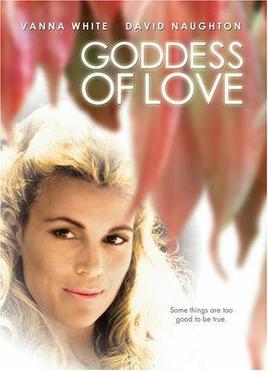
Goddess of Love (1988, directed by Jim Drake)


On Mount Olympus, “ages ago” according to a title card, Zeus (John Rhys Davies) is displeased with his daughter Aphrodite (Wheel of Fortune letter turner Vanna White).  Aphrodite, who insists on being called Venus, has refused to marry every man or God that Zeus has found for her and she even started the Trojan War.  Zeus says that Venus must learn what love means before she can rejoin the Gods.  He then turns her into a statue (!) and sends her down to Earth.

How is she going to learn what love means as a statue?  It’s obviously a pertinent question because, thousands of years later, she’s still set in marble and standing in a museum.  Two thieves wheel her out to a courtyard and leave her there so they can pick her up later.  Before the thieves return, Ted Beckman (David Naughton) and his womanizing friend, Jimmy (David Leisure), wander by.  For some reason, Ted slides an engagement ring on Venus’s finger.  Venus comes to life.  She and Ted must now fall in love for real in order for Venus to return to Mount Olympus.  The only problem is that Ted is a hairdresser and he’s already engaged to marry Cathy (Amanda Bearse).

A made-for-TV movie that unsuccessfully tried to revive the acting career that Vanna White abandoned for Wheel of Fortune, Goddess of Love is a spectacularly stupid movie that attempts to disguises its threadbare plot by being extremely busy.  Not only do Ted and Venus have to overcome a lack of romantic chemistry and fall in love but the two thieves are also still looking for Venus and even Little Richard shows up as one of Ted’s employees.  Venus not only accidentally burns down Ted’s business but also maxes out his credit cards.  Philip Baker Hall plays the detective investigating the theft of the statue and gives a performance reminiscent of his classic Bookman turn from Seinfeld.  It’s dumb but Vanna herself gives a far more engaging performance than the material requires or deserves.  Some of her line deliveries are a little wooden but she still radiates the natural likability that made her an unlikely celebrity in the 80s.  Goddess of Love should have cast Pat Sajak as Ted.  Then it would have been a classic.

Lisa Marie Reviews An Oscar Nominee: The Insider (dir by Michael Mann)


In the 1999 Best Picture Nominee, The Insider, the American media takes a beating.

Al Pacino plays Lowell Bergman.  Bergman is a veteran newsman who, for several years, has been employed as a producer at 60 Minutes.  He is a strong believer in the importance of the free press and he’s proud to be associated with both 60 Minutes and CBS News.  He’s one of the few people who can manage the famously prickly correspondent, Mike Wallace (Christopher Plummer).  When we first see Bergman, he and Wallace are in the Middle East and arranging a tense interview with the head of Hezbollah.  It’s easy to see that Bergman is someone who will go anywhere and take any risk to get a story.  It’s also apparent that Bergman thinks that the people that he works with feel the same way.

That all changes when Bergman meets Jeffery Wigand (Russell Crowe), a recently fired tobacco company executive who initially agrees to serve as a consultant for one of Bergman’s story but who leaves Bergman intrigued when he reveals that, due to a strict confidentiality agreement, he’s not allowed to discuss anything about his time as an executive.  As the tobacco companies are currently being sued by ambitious state attorney generals like Mississippi’s Mike Moore (who plays himself in the film), Bergman suspects that Wigand knows something that the companies don’t want revealed.

And, of course, Bergman is right.  Wigand was fired for specifically objecting to his company’s effort to make cigarettes more addictive, something that the tobacco industry had long claimed it wasn’t doing.  Wigand’s pride was hurt when he was fired but he knows that breaking the confidentiality agreement will mean losing his severance package and also possibly losing his marriage to Liane (Diane Venora) as well.  However, Wigand is angered by the heavy-handed techniques that his former employer uses to try to intimidate him.  He suspects that he’s being followed and he can’t even work out his frustrations by hitting a few golf balls without someone watching him.  When Wigand starts to get threats and even receives a bullet in the mail, he decides to both testify in court and give an interview to Wallace and 60 Minutes.

The only problem is that CBS, after being pressured by their lawyers and facing the risk of taking a financial loss in an upcoming sell, decides not to run the interview.  Bergman is outraged and assumes that both Mike Wallace and veteran 60 Minutes producer Don Hewitt (Philip Baker Hall) will support him.  Instead, both Wallace and Hewitt side with CBS.  Left out in the cold is Jeffrey Wigand, who has sacrificed almost everything and now finds himself being attacked as merely a disgruntled employee.

Directed by Michael Mann and based on a true story, The Insider is what is usually described as being “a movie for adults.”  Instead of dealing with car chases and super villains and huge action set pieces, The Insider is a film about ethics and what happens when a major media outlet like CBS News fails to live up to those ethics.  (No one is surprised when the tobacco company tries to intimidate and silence Wigand but the film makes clear that people — or at least people in the 90s — expected and hoped for more from the American press.)  Wigand puts his trust in Bergman and 60 Minutes largely because he believed Bergman’s promise that he would be allowed to tell his story.  It’s a promise that Bergman made in good faith but, in the end, everyone from the CBS executives to the tobacco companies is more interested in protecting their own financial future than actually telling the truth.  Wigand loses his family and his comfortable lifestyle and Bergman loses his faith in the network of Edward R. Murrow.  It’s not a particularly happy film but it is a well-made and thought-provoking one.

Pacino and Crowe both give excellent performances in the two lead roles.  Pacino, because he spends most of the film outraged, has the flashier role while Crowe plays Wigand as a rather mild-mannered man who suddenly finds himself in the middle of a national news story.  (Crowe’s performance here is one of his best, precisely because it really is the opposite of what most people expect from him.)  Crowe does not play Wigand as being a crusader but instead, as an ordinary guy who at times resents being put in the position of a whistleblower.  (Director Mann does not shy away from showing how Bergman manipulates, the reluctant Wigand into finally testifying, even if Bergman’s motives were ultimately not malicious.)  That said, the strongest performance comes from Christopher Plummer, who at first seems to be playing Mike Wallace as being the epitome of the pompous television newsman but who eventually reveals the truth underneath Wallace’s sometimes fearsome exterior.

The Insider was nominated for Best Picture.  Somehow, it lost to American Beauty.

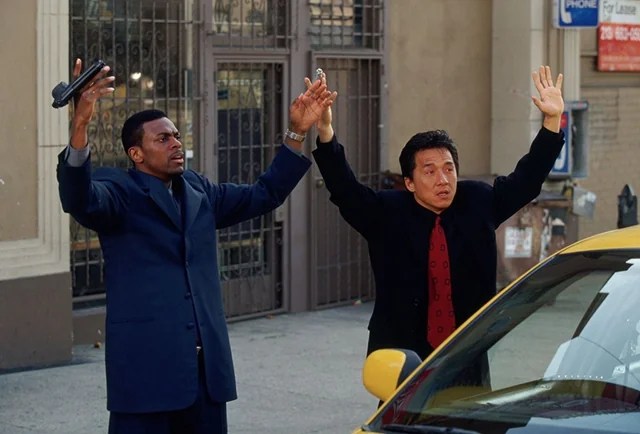
RUSH HOUR – 1998, a special year for this fan of Hong Kong action cinema!


1998 was certainly a special year for me as a fan of Hong Kong cinema but first let me provide a little context… After 150 years of British rule, Hong Kong was being handed over to communist China on July 1, 1997. This left a lot of uncertainty in Hong Kong’s local film industry. Because of that uncertainty, many of Hong Kong’s most popular filmmakers decided it was time to take their talents abroad. Director John Woo had already left for America in the early 90’s and had made successful films like HARD TARGET, BROKEN ARROW and FACE/OFF. This gets us to 1998, the year that many of Hong Kong’s biggest action stars would release their first American films. Chow Yun-fat would reprise his popular, honorable hitman role in his first American film, THE REPLACEMENT KILLERS, which was produced by John Woo and directed by Antoine Fuqua. Jet Li would make a strong impact as the badass villain in the 4th installment of the LETHAL WEAPON franchise. And then there’s Jackie Chan, probably the biggest of all the Hong Kong movie stars. Jackie had been banging around Hollywood as early as 1980 without a lot of fanfare in the west. But in 1996 Chan had a solid American box office hit when his Hong Kong production RUMBLE IN THE BRONX was dubbed and released in America. Armed with that success and a sizable budget provided by an American studio, Chan would get his own big release in 1998, the action-comedy RUSH HOUR!

In RUSH HOUR, Jackie Chan plays inspector Lee, a Hong Kong police detective who’s also a friend to Chinese Consul Han (Tzi Ma), currently serving in Los Angeles. When Consul Han’s daughter Soo Yung is kidnapped, he asks Lee to come to America to assist him and the FBI in rescuing her. The FBI doesn’t really want Lee’s help so they ask the Los Angeles police department to assign someone, anyone, to stay with Lee and keep an eye on him so he doesn’t get in the way of their investigation. Enter fast-talking, LAPD Detective James Carter. After some initial clashes and disagreements, the mismatched duo eventually begins working together to find the criminal mastermind behind the kidnapping, Juntao.

I watched RUSH HOUR at the movie theater on my birthday in 1998. I loved every second of it. A few weeks later I was on a business trip in Chicago, I told my boss how good the film was, and we went to see it as well. I enjoyed it just as much the 2nd time. I’m a big fan of “buddy cop” films like LETHAL WEAPON and BAD BOYS, and RUSH HOUR is an excellent addition to that sub-genre of action films. Jackie Chan and Chris Tucker have an excellent chemistry together. Their comedic interplay is hilarious and entertaining. It’s one of the main reasons I enjoy the movie so much. Jackie Chan was 44 years old when RUSH HOUR was released, but he was still extremely athletic so his brand of martial arts action and comedy still worked. The movie would go on to gross just short of $250 million at the worldwide box office and establish Jackie Chan as a bonafide star in the American film market. 2001’s RUSH HOUR 2 would be an even bigger hit, making almost $350 million worldwide. No one works harder or gives more of himself to his film productions than Jackie Chan, and it was nice seeing him achieve the truly worldwide success that he had earned! 

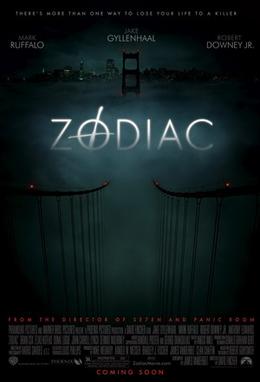
October True Crime: Zodiac (dir by David Fincher)


Who was the Zodiac Killer?

That is a question that has haunted journalists, cops, and true crime fans since the late 60s.  It is known that the Zodiac Killer murdered at least five people in Northern California in 1968 and 1969.  He targeted young couples, though he is also thought to have murdered on taxi driver as well.  What set Zodiac apart from other killers is that he was a prolific letter writer, who sent cards and ciphers to the police and the journalists who were reporting on his crimes.  In one of his ciphers, Zodiac claimed that he had killed 37 people.  Cartoonist Robert Graysmith later wrote two books about his personal obsession with the case.  He estimated that the Zodiac may have been responsible for hundred of murders, up through the 80s.  Of course, reading Graysmith’s first Zodiac book, it’s also easy to suspect that Graysmith reached a point where he saw the Zodiac’s hand in every unsolved murder in the San Francisco area.  Of all the unidentified serial killers in American history, Zodiac is one that most haunts us.  Zodiac was a serial killer who operated in an era when such things were still considered to be uncommon.  Much as Jack the Ripper did during the Victorian Age, Zodiac announced the arrival of a new age of evil.

Zodiac wrote about being a film fan and he was probably happy about the fact that he inspired quite a few films.  1971’s The Zodiac Killer came out while Zodiac was still sending letters to the police and cops actually staked out the theaters showing the film just to see if he  would show up.  Dirty Harry‘s Scorpio Killer was also based on Zodiac, right down to the taunting letters that he sent the mayor and again, one has to wonder if Zodiac ever showed up to watch Clint Eastwood take him down.

And, if Zodiac survived into the 21st Century, one has to wonder if he showed up in the theaters for 2007’s Zodiac.

One of the best true crime films ever made, Zodiac not only recreates the crimes of the Zodiac but it also examines the mental price of obsessing over the one unknown force of evil.  Mark Ruffalo plays Dave Toschi, the celebrity cop who nearly sacrificed his professional reputation in his search for the identity of the killer.  Jake Gyllenhaal plays cartoonist Robert Graysmith, who spends over a decade searching for the Zodiac’s identity and who loses his wife (Chloe Sevigny) in the process.  And Robert Downey, Jr. plays Paul Avery, the crime reporter to whom the Zodiac wrote and who sunk into paranoia and addiction as a result.  This is a film that is less about the Zodiac’s crime and more about how this unknown killer seemed to unleash a darkness that would come to envelope first a city and eventually an entire nation.

As one might expect from a film directed by David Fincher, Zodiac plays out like a filmed nightmare with the starkly portrayed murders being all the more disturbing because they often take place outside, where people would think they would be safe.  (The second murder is especially terrifying, as it plays out without even the sound of background music to allow us the escape of remembering that it’s only a movie.)  Fincher heightens our paranoia but having a different actor play the killer in each scene, reminding us that the Zodiac could literally be anyone.  Indeed, one of the scarier things about Zodiac is that, in the course of his investigation, Graysmith meets so many different people who seem like they could be the killer.  Even if they aren’t the Zodiac, the viewer is left with the feeling that the world is full of people who are capable of committing the same crimes.  The film becomes a journey into the heart of darkness, with the Zodiac becoming both a malevolent force and potentially your next door neighbor.  And with the film’s detailed recreation of the 60s and the 70s, the film becomes a portrait of a country on the verge of changing forever with the Zodaic and his crimes representing all the fear waiting in the future.

Again, as one might expect from a Fincher film, it’s a well-acted film, especially by Robert Downey, Jr.  Zodiac came out a year before Iron Man, when Downey was still better known for his personal troubles than for his talent.  Downey perfect captures his character’s descent into self-destruction, as he goes from being cocky and self-assured to being so paranoid that he’s carrying a gun.  (Paul Avery’s actual colleagues have disputed the film’s portrayal of Avery being mentally destroyed by the Zodiac.)  Ruffalo and Gyllenhaal also do a good job of portraying Toschi and Graysmith’s growing obsession with the case while Charles Fleischer and John Carroll Lynch both make strong (and creepy) impressions as two men who might (or might not) be the killer.

Though the film was not a success at the box office and it was totally ignored by the Academy, Zodiac has built up a strong reputation in the years since its released.  It’s inspired a whole new generation of web sleuths to search for the killer’s identity.  Personally, my favored suspect is Robert Ivan Nichols, an enigmatic engineer who abandoned his former life and changed his name to Joseph Newton Chandler III in the 70s and who committed suicide in 2002.  I think much like Jack the Ripper, the Zodiac’s identity will never be definitely known.  There have been many compelling suspects but most of the evidence seems to be circumstantial.  (That’s certainly the case when it comes to Nichols.)  The Zodiac was thought to be in his 30s or even his early 40s in 1969 so it’s doubtful that he’s still alive today.  In all probability, his identity and his motive will forever remain an unsolvable mystery.

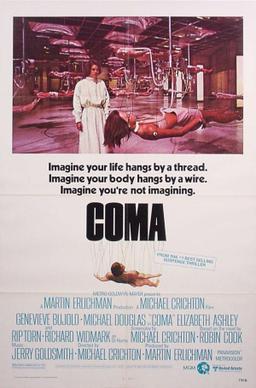
Film Review: Coma (dir by Michael Crichton)


Michael Crichton’s 1978 film, Coma, tells the story of strange things happening at a Boston hospital.

Seemingly healthy patients are having complications during routine surgery, complications that leave them brain dead.  Dr. Susan Wheeler (Genevieve Bujold) thinks that there’s something bigger going on than just routine medical complications.  First, her best friend (Lois Chiles) falls into a coma while undergoing an abortion.  Then, Tom Selleck falls into a coma while having knee surgery.  Dr. Wheeler investigates and discovers that all of the patients were operated on in the same operating room and that all of them were shipped to a mysterious facility after their surgery.

Yep, it sounds like a conspiracy.  However, no one is willing to listen to Dr. Wheeler.  Not her boyfriend (Michael Douglas).  Not Dr. George (Rip Torn), the chief anetheisologist.  Not Dr. George Harris (Richard Widmark), the chief of surgery.  Dr. Wheeler thinks that it’s all a conspiracy!

And, of course, it is.  As the old saying goes, the only thing that a conspiracy needs to succeed is for people to be remarkably stupid and almost everyone in Coma is remarkably stupid.  Admittedly, some of them are in on the conspiracy but it’s still rather odd how many people apparently don’t see anything strange about healthy people going into a comas and then being shipped to a mystery facility.

Coma is probably best known for the scene where Susan manages to sneak into the mystery facility and she finds herself in a room full of suspended bodies.  Visually, it’s an impressive scene.  It’s truly creepy and it also captures the detached sterility that most people hate about medical facilities.  At the same time, it’s also the only visually striking moment in the entire film.  Every other scene in Coma feels flat.  Whenever I’ve watched this film, I’m always a little bit shocked whenever anyone curses because Coma looks more like an old made-for-TV film than anything you would ever expect to see in a theater.

My point is that Coma is a remarkably boring film.  It has a potentially interesting story but my God, is this movie ever a slog.  It’s pretty easy to guess what’s going on at the institute so there’s not a whole lot of suspense to watching Susan try to figure it all out.  When the truth is revealed, it’s not exactly a shocking moment.  For that matter, you’ll also be able to guess which doctor is actually going to turn out to be the villain.  There’s really no surprises to be found.

Coma was the second feature film to be directed by Michael Crichton.  With the exception of the scenes in the institute, the visual flair that Crichton showed in Westworld is nowhere to be found in Coma.  The film moves at a tortuously slow place.  A part of me suspects that, as a doctor, Crichton related so much to the film’s characters that he didn’t realize how dull they would be for those us who don’t look at a character like Rip Torn’s Dr. George and automatically think, “He’s just like that arrogant bastard I worked under during my residency!”  Call it the Scrubs syndrome.

For some reason, Coma is a film that people often recommend to me.  I don’t know why.  Trying to sit through it nearly put me in a coma.

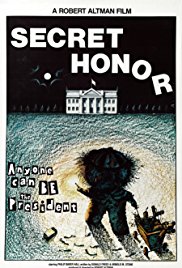
A Movie A Day #233: Secret Honor (1984, directed by Robert Altman)


Disgraced former President Richard M. Nixon (Philip Baker Hall) sits alone in his study.  He has a bottle of Scotch, a loaded gun, and a tape recorder.  He is surrounded by security monitors and paintings.  All but one of the paintings are portraits of former presidents, all of whom are destined to be more fondly remembered than Nixon.  The only non-presidential painting is a portrait of Henry Kissinger.  Over the course of one long night, Nixon drinks and talks.  He talks about his Quaker upbringing and his early political campaigns.  He rails against all of his perceived enemies: Eishenhower, the Kennedys, the liberals, the conservatives, and everyone in between.  As he gets drunker, he starts to talk about the real story behind Watergate and why his resignation actually shielded the country from a greater scandal.  As Nixon explains it, his resignation was his greatest act of patriotism, his secret honor.
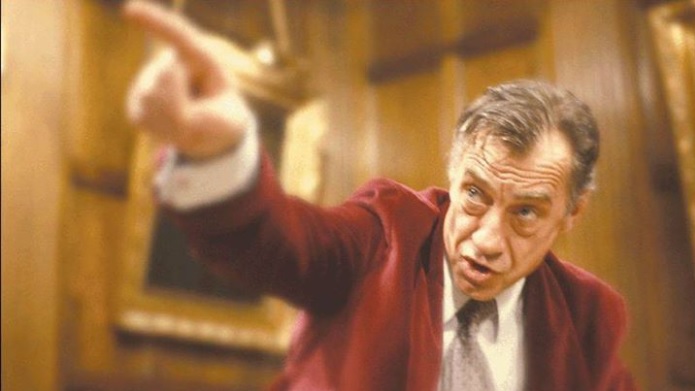
A mix of historical fact and speculation, Secret Honor was one of the filmed plays that Robert Altman directed in between the flop of Popeye and his comeback with The Player.  Secret Honor is a one-man show, with Philip Baker Hall and only Philip Baker Hall on screen for the entire movie.  Though he looks nothing like Nixon, Hall gives an amazing performance.  Hall’s Nixon is bitter, angry, full of self-pity, and occasionally even sympathetic.  Altman’s stagey direction makes no attempt to hide Secret Honor‘s theatrical origins but it is impossible to look away from Hall’s mesmerizing performance.

(Secret Honor was made long before Hall found fame as a character actor.  It was his fourth feature film and his first major role.)

Secret Honor will probably not change anyone’s opinion on Nixon.  Nixon haters will find more to hate and Nixon defenders will find more to defend.  But everyone will agree that Philip Baker Hall gives a great performance as one of America’s most controversial presidents.

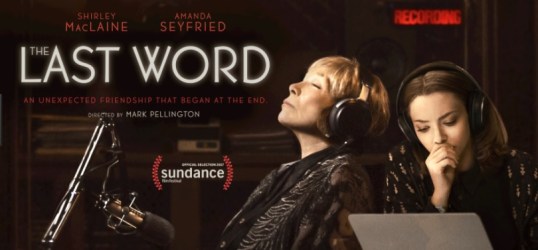
Film Review: The Last Word (dir by Mark Pellington)


So, I watched The Last Word tonight.

It’s a film that premiered, earlier this year, at Sundance and then it got a very brief theatrical run.  It was directed by Mark Pellington, who is one of those odd directors who, for some reason, I always assume is more talented than he is.  Seriously, when I saw this was directed by Mark Pellington, I actually got excited.  I was like, “Mark Pellington!?  He’s great!”  Then I realized that I wasn’t really sure who Mark Pellington was.  I looked him up on Wikipedia and I realized that I was mistaking him for actor Mark Pellegrino.  Mark Pellegrino played Jacob on Lost and is an outspoken Libertarian.  Mark Pellington is some guy who started out in music videos and then eventually moved up to directing pedestrian films.

Anyway, the film stars Shirley MacClaine as this annoying old busybody who demands that Amanda Seyfried write her obituary because MacClaine wants to know what people are going to say about her after she’s dead.  When Seyfried discovers that everyone hates MacClaine, she writes a boring and very short obit.  “Everyone hates you,” she helpfully explains.  So, MacClaine sets out to do some great things so that her obituary will have a little more spark.  She’s going to set a fire of quirkiness, she is!  Of course, this leads to MacClaine adopting a little black orphan, getting a job as a DJ at the local radio station (she plays boring adult contemporary music, of course.  No EDM), and helping Seyfriend get a boyfriend.

To be honest, this film would probably be a lot more bearable if it was a prequel to Bernie, because then you would at least know that you could look forward to Jack Black showing up with a hunting rifle and putting everyone out of their misery.  Unfortunately, that doesn’t happen.  Instead, this is another one of those movies where a cranky old tyrant teaches all of us young folks how to better appreciate life.

Y’see, Shirley MacClaine is playing an oldster so she has a sharp tongue and she’s always putting people in their place.  Because she had to struggle, we’re supposed to ignore the fact that she spends most of her time making everyone around her miserable.

Amanda Seyfried, on the other hand, is a millennial so she puts her feet on her boss’s desk and has no direction in her life.  Why, she just needs some annoying, elderly busybody to come into her life and make her listen to smooth jazz.  She might even get a hipster boyfriend out of the deal!  (Of course, her potential hipster boyfriend is a 2008-style hipster as opposed to a 2017-style hipster.)

Meanwhile, AnnJewel Lee Dixon (as the little girl that MacClaine adopts) is a plot device so she doesn’t do anything unless the script specifically needs her to humanize the other characters.  She gets to dance towards the end of the film.

Oh, and then there’s Anne Heche.  She plays MacClaine’s estranged daughter.  The reunion between her and MacClaine is so overwritten and overperformed that some viewers will probably be inspired to rip out their hair while watching it.

Hey, did I mention that there’s a scene where MacClaine does something quirky and all of the supporting characters break out into applause?  I think we’re supposed to clap to but I think most members of the audience will be too busy ripping out their hair by the handful.

Fortunately, I really love my hair so I resisted the temptation to start plucking strands out of my head while watching the film.  It wasn’t easy, though.  To be honest, the pain of plucking a strand of hair is nothing compared to the pain of watching the first fifteen minutes of this film and realizing that you already know every thing that’s going to happen.  By the time that the priest showed up and started to cry while talking about a time that MacClaine’s character had been rude to him, I imagine that viewers with less self-control were halfway bald.  But, as I said, I love my hair too much to take my frustration out on it.  Instead, I just kicked the coffee table a few times.  Now, my foot hurts.  Ow.

Seeing as how Shirley MacClaine is one of the last of the truly great actresses from Hollywood’s Golden Age and she actually does give a pretty good performance (when the script allows her), it’s a shame that the rest of the movie is such a let down.  Then again, this film is full of talented people who are let down by an overwritten script and Mark Pellington’s painfully obvious direction.  This is one of those films that tries to hard to be profound that it forgets the importance of being entertaining.

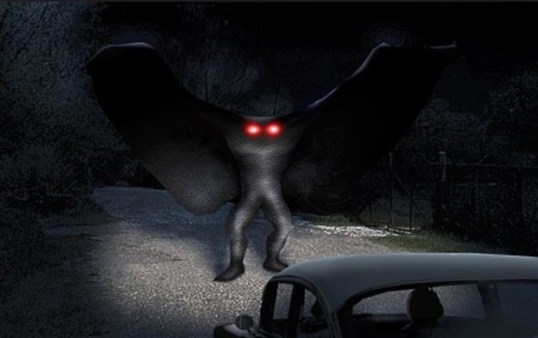
As I watched this movie, I took a glance at Mark Pellington’s filmography.  Did you know that he directed The Mothman Prophecies?  The Last Word really could have used a visit from the Mothman.  Seriously, this film was crying out for a scene of MacClaine putting Mothman in his place.  The fact that Mothman did not appear leads me to wonder what exactly this film was hiding.

Seriously, why are the people behind The Last Word protecting the Mothman?

Back to School Part II #22: Three O’Clock High (dir by Phil Joanou)


Three_o_clock_high_p

For the next entry in my back to school series of reviews, I want to say a few words about the 1987 comedy, Three O’Clock High.

I have no idea how Three O’Clock High did when it was originally released into theaters.  I know, I know — I could just look it up on Wikipedia or the imdb but I’m lazy and, besides, I hate that whole idea that box office success is somehow synonymous with quality.  That said, Three O’Clock High is one of those films that seems to be in a permanent cable rotation (seriously, it always seems to be playing somewhere and there’s always a few people on twitter talking about how excited they are about coming across it) and I kind of hope that it did well when it was originally released.  It’s an entertaining and genuinely funny little high school comedy.

Three O’Clock High tells the story of Jerry (Casey Siemaszko).  Jerry is a high school student, one of those kids who is a bit anonymous.  He’s kind of a nerd but so much of a nerd that he painfully sticks out of the crowd at this school.

You know who does stick out of the crowd?  Buddy Revell (Richard Tyson).  Buddy is the new kid at school.  He’s a big, hulking, and rather intimidating figure and he comes with quite a fearsome repuations.  All anyone can talk about are the stories that they’ve heard about Buddy’s dangerous past.  The one thing that the rumors all have in common is that Buddy does not like to be touched.  In fact, it appears that his aversion to being touched has made him the most dangerous high school student in the country.

The first hour of Jerry’s school day is spent working at the school newspaper and, of course, his teacher has a bright idea.  Why not welcome Buddy to the school by interviewing him!?  Sure, why not!?  Everyone loves to be interviewed!  And why not get Jerry to do the interview?

The problem is that Buddy doesn’t want to be interviewed.  And, once he realizes that Buddy not only doesn’t want to talk to him but is actually getting rather annoyed with him (this may be because Jerry chooses to approach Buddy in the boy’s bathroom), Jerry asks Buddy to forget that he even bothered him and then reaches over and punches him on the arm.

Of course, this leads to Buddy announcing that he and Jerry are going to have a fight.  At 3 pm.  In the school parking lot…

The rest of the film plays out like a surrealistic, teen-centered parody of High Noon, with Jerry desperately trying to figure out a way to avoid the fight.  He tries to frame Buddy by placing a switchblade in his locker, just to have Buddy use the knife to disable his car, effectively trapping Jerry at the school.  He tries to help Buddy cheat on a test.  He tries to get the principal to kick him out of school.  He even tries bribery!

But ultimately, three o’clock arrives and Jerry must face his destiny…

Three O’Clock High is cheerfully cartoonish and rather entertaining little film.  Director Phil Joanou pays homage to a countless number of other films, often framing the high school action like a Spaghetti western stand-off and, when the final fight arrives, it’s just as wonderfully over-the-top and silly as you could hope for.  Casey Siemaszko, who was also in Secret Admirer, is perfectly cast as Jerry and Richard Tyson is both funny and intimidating as Buddy.  Meanwhile, ineffectual adults are played by everyone from Philip Baker Hall to Jeffrey Tambor to Mitch Pileggi.  There’s a not a subtle moment to be found in Three O’Clock High but the relentless stylization definitely works to the film’s advantage.

I’d keep an eye out for the next time that Three O’Clock High shows up on Showtime.  It’s an entertaining film about teens doing what teens have to do.

Insomnia File #10: Eye For An Eye (dir by John Schlesinger)


What’s an Insomnia File? You know how some times you just can’t get any sleep and, at about three in the morning, you’ll find yourself watching whatever you can find on cable? This feature is all about those insomnia-inspired discoveries!

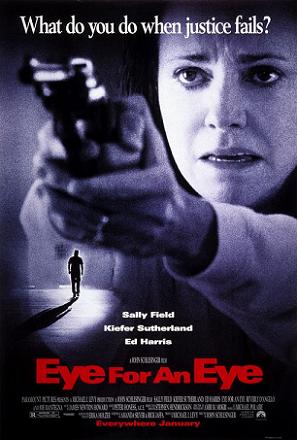
Eye_for_an_Eye_(1996_film)_poster

If you were awake at midnight and trying to get some sleep, you could have turned over to ThillerMax and watched the 1996 revenge thriller, Eye For An Eye.  However, the film wouldn’t have helped you get to sleep.  Eye For An Eye is not a film that you sleep through.

Eye For An Eye opens with Karen McCann (Sally Field) comforting her youngest daughter, Megan (Alexandra Kyle).  Megan is terrified of a moth that has flown into her bedroom.  “Kill it, mommy, kill it!” Megan shouts.  Instead, Karen gently takes the moth in her hand and allows it to escape through an open window.  In those first few minutes, the film tells us everything that it feels to be important about Karen.  She’s a mother.  She lives in a big house in the suburbs.  And she wouldn’t kill a moth…

But — the name of the title is Eye For An Eye and that would seem to promise killing so we know that something terrible is going to happen to change Karen’s outlook on life.

And it does!  The next afternoon, Karen is stuck in traffic and calls her oldest daughter, 17 year-old Julie (Olivia Burnette).  In an extremely harrowing sequence that is pure nightmare fuel, Karen helplessly listens as Julie is raped and murdered.

A white trash deliveryman named Robert Doob is arrested for the crime and we immediately know that he’s guilty.  First off, his name is Robert Doob and that’s a serial killer name if I’ve ever heard one.  Secondly, he smirks at Karen and her husband (Ed Harris) and, in a particularly cruel moment that was especially upsetting to this former stutterer, he imitates Julie’s stammer.  Third, Robert has tattoos and Satanic facial hair.  And finally, Robert Doob is played by Keifer Sutherland.  And usually, I find Keifer and his growl of a voice to be kinda sexy in a dangerous sorta way but in Eye For An Eye, he was so icky that he just made my skin crawl.

Robert Doob is obviously guilty but an evil liberal judge throws the case out on a technicality.  After Karen gets over the shock of seeing justice perverted, she decides to take the law into her own hands.  After meeting a professional vigilante (Philip Baker Hall, looking slightly amused no matter how grim he tries to act), Karen decides to learn how to use a gun so that she can get her revenge…

There’s not a single subtle moment in Eye For An Eye but that’s actually the main reason I enjoyed the film.  Everything — from the performances to the script to the direction to the music to … well, everything — is completely and totally over-the-top.  The symbolism is so heavy-handed and the film is so heavily stacked in favor of vigilante justice that the whole thing becomes oddly fascinating.  It may not be a great film but it’s always watchable.  It may not be subtle and it may even be borderline irresponsible in its portrayal of the American justice system but who cares?  By the end of the movie, I was over whatever real world concerns I may have had about the film’s premise and I was totally  cheering Karen on in her quest for vengeance.  I imagine I’m not alone in that.  Eye For An Eye is the type of film that elitist movie snobs tend to dismiss, even while secretly knowing that it’s actually kinda awesome.

Previous Insomnia Files:

  1. Story of Mankind
  2. Stag
  3. Love Is A Gun
  4. Nina Takes A Lover
  5. Black Ice
  6. Frogs For Snakes
  7. Fair Game
  8. From The Hip
  9. Born Killers