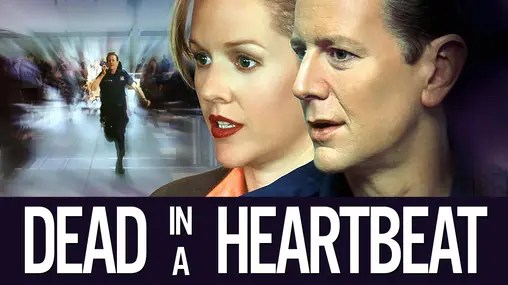
Brad reviews DEAD IN A HEARTBEAT (2002)!


DEAD IN A HEARTBEAT is a 2002 TV movie that stars Judge Reinhold as Tom Royko, the head of Seattle bomb squad, as he finds himself trying to stop a mad bomber named Zachary Franklin (Timothy Busfield). Franklin blames heart surgeon Gillian Hayes (Penelope Ann Miller) for the death of his son and makes it his mission in life to make her suffer like he has. His plan… volunteer at the hospital where Dr. Hayes works, rig their supply of pacemakers with explosives, and then implement a plan to begin blowing up her patients on the anniversary of his son’s death. When Royko figures out what’s going on, he enlists the help of Dr. Hayes to identify the next potential victims and stop the deranged Franklin before another innocent person’s chest explodes!

DEAD IN A HEARTBEAT is an entertaining TV movie. If you like Hallmark mysteries and Lifetime movies, it’s my guess that you will enjoy this film. The plot is a lot of fun… I love the movie SPEED and the “madman setting off ticking human time bombs while taunting the police” reminded me of that excellent thriller on multiple occasions. While I’m not suggesting this movie is in the same league as the Keanu Reeves / Sandra Bullock action classic, I am saying that I did feel genuine tension and excitement at times as some of the scenes played out, and I wasn’t really expecting that. As far as the performances, I must admit I really enjoyed watching Judge Reinhold in the lead. He’s not tough at all, but he does have a likable, sarcastic charm that appeals to me. After loving him in 80’s movies like BEVERLY HILLS COP and RUTHLESS PEOPLE, it was nice seeing him in this role. I only give Penelope Ann Miller average marks for her performance as the heart doctor who starts off really arrogant before having a crisis of conscience when the bad guy starts offing her former patients. She has a couple of solid moments, but for the most part I just found her competent in the role. Timothy Busfield is definitely good as the villain, but this movie’s TV roots left his character somewhat underdeveloped. I think the part could have worked better if more time had been devoted to the details that lead to him losing his grip on reality.

While not a must-see, DEAD ON A HEARTBEAT turned out to be an enjoyable, undemanding watch as I was scrolling through Amazon Prime. If you don’t mind a little absurdity with your early 2000’s, TV action movies, you’ll probably like this one. 

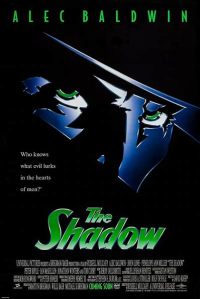
Guilty Pleasure No. 82: The Shadow (dir. by Russell Mulcahy)


As Guilty Pleasures go, The Shadow is a movie that has absolutely everything you need for a fun, campy ride. An Al Leong cameo, alongside James Hong? Check. Heroes and Villains taking time out to discuss their wicked plans (and how they’ll be stopped) over a glass of fine American Bourbon? Check. Early 90s Era CGI? Mark it down. Duel Wielding Pistol shooting action? Got it. Tim Curry just being there? Sweet.

After the wild success of Tim Burton’s Batman in 1989, Hollywood was scrambling to squeeze what they could out of the Superhero Movie. The Punisher, with Dolph Lundgren, would come out the same year. We’d end up with The Rocketeer (one of my personal favorites), BarbWire, Dick Tracy,The Crow, The Mask, and The Phantom, among others leading into the mid-90s. Among these was 1994’s The Shadow, based off the 1930’s character from Walter B. Gibson. Pre-dating all of the before mentioned characters (including DC’s Batman by almost a decade), The Shadow started as a series of radio stories before moving on to other forms of media. The movie didn’t do very well on it’s original release. Much like the magic that clouds men’s minds, audiences were more enraptured with The Crow months before and The Lion King. Some may remember a Shadow movie was made, but it was eclipsed by more popular films at the time.

At the same time, there were major advances happening in audio technology, thanks to a tiny Universal film called Jurassic Park. Jurassic Park helped to usher in an update in sound quality known as The Digital Experience (which we now know as DTS for short). As theatres coverted to the new sound system, various films in the early to mid nineties would make use of it, such as The Crow, The Mask, Timecop and The Shadow. By the time my family picked up their first Laserdisc player, DTS quality sound was available at home. My dad had a series of speakers lined around the living room of our house so that regardless of where you sat, the sound would move around you. One of the best tests of it was with John Carpenter’s The Thing, where Blair is standing off against the crew. The gunfire from his pistol would richochet from the front to the rear speakers, making the kids duck down.

The Shadow also made of use of this in certain areas, particularly with the way voices carried in a room. The part with Shiwan Khan’s voice moving over the city at night was amazing to hear with the right sound system. Just about any scene where The Shadow spoke had this sweet spatial effect that I loved.

The Shadow is the tale of Ying Ko (Alec Baldwin, The Getaway), a.k.a. Lamont Cranston. Living high in the Opium Fields of Tibet, he is a man of darkness, having inflicted great evil over time. Kidnapped and brought to a Tulku (a wise man) who has decided it’s time for redemption, Cranston is taught to cloud men’s minds, bending people to his will and to hide every aspect of himself save for one thing, his Shadow. He then returns seven years later to that “most wretched lair of villainy we know as” New York City, for we all know that the weed of crime bears bitter fruit.

Cranston spends most of his nights at The Cobalt Club with his Uncle Wainwright (Jonathan Winters, It’s a Mad, Mad, Mad, Mad World), who also happens to be the Police Commissioner. It allows him to keep up appearances while making sure the police don’t put The Shadow in their spotlight. When he meets the beautiful Margot Lane (Penelope Ann Miller, The Relic), he’s not only smitten, but finds her ability to read minds a dangerous threat to him.

When a metal casket from Tibet arrives at the New York Museum of Natural History, it reveals Shiwan Khan (John Lone, The Last Emperor), the last descendant of Genghis Khan. Gifted with the same abilities as Cranston, Khan has plans for the city and the world. He would rather have Cranston join him than to kill him. This turns the story into a classic Bond-like cliche where the hero and villain spend the bulk of the movie explaining their plans.

Enjoying the successes of Death Becomes Her and Jurassic Park, writer David Koepp was on a roll. The Shadow doesn’t take itself too seriously. Koepp and director Russell Mulcahy (Highander) splash moments of light comedy at just about every turn, mostly through the witty banter between characters. Some are over the top, particularly with Tim Curry’s character, while others are more subtle, like with Ian McKellan (The Lord of the Rings). If you’re looking for a serious drama in your superhero film, this isn’t it. Additionally, there are one or two elements that make no sense whatever. Mongol warriors walking around in full armor that no one ever seems to notice and taking rides in taxicabs (unless we assume they’re masked by Khan’s magic).

Most of the movie was filmed on the Universal Studios New York backlot, which explains why some scenes look like they were borrowed from Walter Hill’s Streets of Fire (that also used it years before). The mystical Tibetan Phurba dagger that echoes the disposition of its owner was a variant of the one used in Eddie Murphy’s The Golden Child in the late 80s.

if the movie’s climax between The Shadow and Khan feels a bit abbreviated, it’s because of a last minute change in filming. The original plan for the ending involved a series of mirrors, but an earthquake earlier in the year caused damage to the props the production team planned to use. So, what we get is a quicker scene, still falling in line with Mulcahy’s penchant for glass shattering, but leaving the audience to partially wonder what we could have had if everything worked out.

Finally, the real gem in all this is Jerry Goldsmith’s score. Although out of print, you can still find most of the tracks on YouTube, and the songs keep the immersion flowing. While I don’t see the film getting any kind of remakes in the near future, it’s nice to know everything came together (as well as it could) for this entry. Then again, who knows?

Previous Guilty Pleasures

  1. Half-Baked
  2. Save The Last Dance
  3. Every Rose Has Its Thorns
  4. The Jeremy Kyle Show
  5. Invasion USA
  6. The Golden Child
  7. Final Destination 2
  8. Paparazzi
  9. The Principal
  10. The Substitute
  11. Terror In The Family
  12. Pandorum
  13. Lambada
  14. Fear
  15. Cocktail
  16. Keep Off The Grass
  17. Girls, Girls, Girls
  18. Class
  19. Tart
  20. King Kong vs. Godzilla
  21. Hawk the Slayer
  22. Battle Beyond the Stars
  23. Meridian
  24. Walk of Shame
  25. From Justin To Kelly
  26. Project Greenlight
  27. Sex Decoy: Love Stings
  28. Swimfan
  29. On the Line
  30. Wolfen
  31. Hail Caesar!
  32. It’s So Cold In The D
  33. In the Mix
  34. Healed By Grace
  35. Valley of the Dolls
  36. The Legend of Billie Jean
  37. Death Wish
  38. Shipping Wars
  39. Ghost Whisperer
  40. Parking Wars
  41. The Dead Are After Me
  42. Harper’s Island
  43. The Resurrection of Gavin Stone
  44. Paranormal State
  45. Utopia
  46. Bar Rescue
  47. The Powers of Matthew Star
  48. Spiker
  49. Heavenly Bodies
  50. Maid in Manhattan
  51. Rage and Honor
  52. Saved By The Bell 3. 21 “No Hope With Dope”
  53. Happy Gilmore
  54. Solarbabies
  55. The Dawn of Correction
  56. Once You Understand
  57. The Voyeurs 
  58. Robot Jox
  59. Teen Wolf
  60. The Running Man
  61. Double Dragon
  62. Backtrack
  63. Julie and Jack
  64. Karate Warrior
  65. Invaders From Mars
  66. Cloverfield
  67. Aerobicide 
  68. Blood Harvest
  69. Shocking Dark
  70. Face The Truth
  71. Submerged
  72. The Canyons
  73. Days of Thunder
  74. Van Helsing
  75. The Night Comes for Us
  76. Code of Silence
  77. Captain Ron
  78. Armageddon
  79. Kate’s Secret
  80. Point Break
  81. The Replacements

Retro Television Review: Miami Vice 4.3 “Death and the Lady”


Welcome to Retro Television Reviews, a feature where we review some of our favorite and least favorite shows of the past!  On Mondays, I will be reviewing Miami Vice, which ran on NBC from 1984 to 1989.  The entire show can be purchased on Prime!

This week, the Vice Squad investigates the “other Hollywood” and some notable guest stars pop up.

Episode 4.3 “Death and the Lady”

(Dir by Colin Bucksey, originally aired on October 16th, 1987)

Painter-turned-filmmaker Milton Glantz (Paul Guilfoyle) is very proud to have received an Erotic Film Award for his latest movie, Death and the Lady.  However, when Glantz receives his award, a man named Tulane Knox (Michael David Morrison) shouts that the violent murder that ends the film was real and that Glantz is a killer.

Knox is taken into custody by Gina and Trudy.  Crockett doesn’t believe a word that Knox is saying.  He’s convinced that it’s all just a publicity stunt to get people interested in the film.  Crockett doesn’t have much use for all that art film mumbo jumbo.  He lives on a boat with a crocodile named Elvis, after all.  Actually, it’s been a while since we’ve seen Elvis.  I hope he’s okay.

Still, Crockett investigates.  He and Tubbs discover that the actress from the film — Lori Swann (Kelly Lynch) — is still alive and working in the movies.  However, he also discovers that Lori and Glantz made another film, called Twins.  That film featured Lori and a woman named Amy Ryder, who looked just like her.  A conversation with Amy’s sister (Penelope Ann Miller) reveals that Amy hasn’t been seen for a while.  Plus, Amy has terminal cancer….

Especially when compared to the previous two episodes, this episode felt more like classic Miami Vice, dark, moody, and fatalistic.  It doesn’t take long for both the audience and Crockett to realize that Glantz murdered Amy for his film.  (Amy’s dead eyes appear in Glantz’s film.)  But the problem is that there’s no way for Crockett to prove it.  The District Attorney (Miguel Ferrer, making an early appearance) refuses to bring charges without hard evidence.  When Glantz taunts Crockett with the fact that he committed the perfect murder, Crockett snaps.  He beats up Glantz but he doesn’t kill him.  Crockett hasn’t crossed that line but, watching this episode, you get the feeling that it’s only a matter of time.  But it doesn’t matter how many times Crockett throws a punch, Milton Glantz gets away with murder.

This was the Miami Vice of old, depressing, distressing, and very, very stylish.

(Plus, there’s a kitty in this episode!  He is discovered in a cocaine dealer’s home and he’s given to Gina as a present.  Even Castillo smiles when looks at the kitty.  Awwww!)

Funny Money (2006, directed by Leslie Greif)


Henry Perkins (Chevy Chase), the most boring man alive, has a job making wax fruit while his wife (Penelope Ann Miller) wants to make a living through drawing naked men.  (I guess that’s fair considering how many men make their living by drawing naked women.)  On Henry’s birthday, Henry spots a briefcase just like his and decides to swap them.  At home, Henry discovers that his new briefcase contains five million dollars!

Henry wants to move to Europe immediately.  But every time he and his wife try to leave their home, something occurs.  A menacing cop (Armanda Assante) shows up.  Henry’s friends drop by to celebrate his birthday.  The Romanian mob makes an appearance, looking for their money.  All Henry and his wife want to do is steal the money but instead, they spend a night dealing with false identities, physical comedy, and slapstick humor.

Funny Money was based on a stage play and it seems like the sort of thing that would have been hilarious if viewed live, with everyone running on and off the stage and some genuine suspense about who was going to show up next.  It does not translate well to film.  This would have been a good vehicle for Chase in the 80s or even the 90s but, by the time the movie was made, Chase seemed old and tired.  Penelope Ann Miller is never convincing as Chase’s wife.  (Someone should have tried to reunite Chase with Beverly D’Angelo or even Goldie Hawn for this movie.)  The main problem is that the supporting characters are never as funny or as quick-on-their-feet as the film needs them to be.  Armand Assante doesn’t seem to know he’s in a comedy.  Even a reliable actor like Christopher McDonald is let down by the film’s script and direction.  That’s too bad because the material had potential.  While it’s not a disaster like Cops and Robbersons, Funny Money is still never funny enough.

The Films of 2024: Reagan (dir by Sean McNamara)


In Reagan, Dennis Quaid stars at the 40th President of the United States.

Framed as a story being told by a former KGB agent (Jon Voight) who is attempting to make a younger politician understand why Russia lost the Cold War, Reagan starts with Reagan’s childhood, includes his time as an actor and as the anti-communist head of the SAG, and then gets into his political career.  Along the way, several familiar faces pop up.  Robert Davi plays a thuggish Russian leader.  Mena Suvari plays Reagan’s first wife while Penelope Ann Miller plays his second.  Xander Berekely plays George Schultz (who was just previously played by Sam Waterston in The Dropout miniseries.)  C. Thomas Howell, Kevin Dillon, Dan Lauria, and Lesley-Anne Down all have small but important roles.  And the usual suspects when it comes to conservative filmmaking — Nick Searcy, Kevin Sorbo, and Pat Boone — are there to compliment Voight and Davi.  I was a little surprised to see that Dean Cain was not present.

As usually happens to films that feature sympathetic Republicans, Reagan was slammed by critic but better-appreciated by the audience for which the film was made.  I wasn’t particularly surprised.  Movie critics tend to be liberal and Reagan is very much not that.  For a professional film critic, a film like Reagan must be met with snark and derision because otherwise, one would risk cancellation.  Don’t get me wrong.  I’m not saying that there aren’t things to criticize about Reagan the film.  I’m just saying that one should always keep in mind that critics have their own individual biases.  One reason why the Rotten Tomatoes score is such an unfortunate development is because it ignores the fact that most films have things that work and things that don’t work and that quality is often in the eye of the beholder.  Instead, it just tells us that a film is either a 90% or a 10%.

As for Reagan, it’s definitely a bit on the heavy-handed side but, then again, I think the same can be said for just about every political film that’s come out over the last few decades.  For those who claim Reagan is somehow more heavy-handed than most, I invite them to sit through Rob Reiner’s LBJ.  Indeed, the only director who has really shown a willingness to admit that a President can be both good and bad was Oliver Stone and when was the last time anyone watched NixonReagan is at its weakness when it tries to recreate Reagan’s time as an actor.  Dennis Quaid gives a good and charming performance throughout the film but he’s also 70 years old and, in the scenes where he plays the youngish Ronald Reagan, all of the soft-lighting and Vaseline on the lens ends up making him look like a wax figure.  Once Reagan gets older, Quaid is allowed to act his age and both he and the film become much more convincing.  I enjoyed the film once Reagan became President, though you should understand that I have biases of my own.  I’m a fan of low taxes and individual freedom, which is why I’m also not a fan of communism or, for that matter, any extreme ideology that attempts to tell people how to live or think.  “Tear down this wall!” Regan says while standing in front of the Berlin Wall and it’s a rousing moment, both in reality and on film.

In the end, Reagan is a film that will be best appreciated by people who already like Ronald Reagan.  Yes, the film is heavy-handed and the framing device is a bit awkward.  But Dennis Quaid’s heartfelt (and, towards the end, heartbreaking) performance carries the film.  The film is not at all subtle but you know what?  I’ve seen a countless number of mediocre films that have portrayed Reagan negatively, often with as little nuance and just as heavy-handed an approach as Reagan uses in its positive portrayal of the man.  I sat through The Butler, for God’s sake.  There’s nothing wrong with having a film that looks at the man from the other side.  Those who like Ronald Reagan will feel vindicated.  Those who don’t will say, “What was up with that Pat Boone scene?”

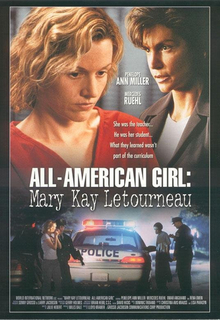
Retro Television Review: All-American Girl: The Mary Kay Letourneau Story (dir by Lloyd Kramer)


Welcome to Retro Television Reviews, a feature where we review some of our favorite and least favorite shows of the past!  On Sundays, I will be reviewing the made-for-television movies that used to be a primetime mainstay.  Today’s film is 2000’s All-American Girl: The Mary Kay Letourneau Story!  It  can be viewed on YouTube.

In 1996, a 34 year-old teacher named Mary Kay Letourneau decided that she had fallen in love with someone who was not her husband.

A 34 year-old deciding that they are no longer happy in their marriage and subsequently deciding that that they’ve found love with someone else is hardly an unusual or even surprising occurrence.  What made Mary Kay Letourneau’s case a national scandal was that the person that she decided that she was in love with was a 12 year-old student named Vili Fualaau.  Mary Kay started her affair with Vili when she was his sixth grade teacher.  When she was arrested and charged with two counts of second-degree rape of a child, Letourneau was pregnant with Vili’s child.  Even after being arrested, Letourneau insisted that she and Vili were soulmates.  After giving birth to Vili’s child, Letourneau was sentenced to six months of prison and somehow managed to avoid having to register as a sex offender.  After serving her sentence, Letourneau was promptly arrested again with Vili and was sent back to jail, where she gave birth to Vili’s second child.

All-American Girl opens with Mary Kay Letourneau (Penelope Ann Miller) in jail, insisting that everything that happened between her and Vili was consensual and that their love is real.  The majority of the film is shown in flashbacks.  Some of those flashbacks deal with Mary Kay, her husband (Greg Spottiswood), and Vili (Omar Anguiano).  Watching the flashbacks, I couldn’t help but notice that the film really did seem to be on Mary Kay’s side, to an almost ludicrous extent.  Her husband is portrayed as being a soulless sociopath, even before Mary Kay starts sneaking around with Vili.  As for Vili, he is presented as being the one who initiated his relationship with Mary Kay, flirting with her in class and comforting her when she starts crying in a school hallway.  The actor playing Vili looked, acted, and sounded considerably older than just 12 years old.  At times, he appeared to be nearly as old as Penelope Ann Miller.  And I’ll admit that it’s totally possible that Vili could have looked older than his age and maybe he did have a surprisingly mature vocabulary.  But still …. he was 12 years old!  Apparently, Letourneau cooperated with the film’s producers and that’s pretty obvious from the first minute we see Vili giving Letourneau a wolfish smile in the 6th grade.

The flashbacks dealing with Letourneau’s childhood are a bit more interesting, if just because Letourneau was the daughter of a congressman who ran for president in 1972.  (One of her brothers served in the first Bush White House.  Another served as an advisor to the 2016 Trump campaign.)  At one point, she taunts a group of protestors that have gathered outside of her family’s home and her father praises her courage.  The film hints that it was the twin traumas of her brother’s death and the discovery that her beloved father had fathered two children with a mistress that led to Letourneau’s subsequent instability.  Perhaps that’s true, though I think the film is a bit too eager to accept that as an all-purpose explanation.

You may have guessed that I had mixed feelings about this film.  Penelope Ann Miller gave an excellent performance as Mary Kay but the film’s attempts to portray May Kay as being even more of a victim that Vili were undeniably icky.  

As for the real Mary Kay, she married Vili four years after being released from prison.  They separated a year before Mary Kay died in 2020.  Their relationship inspired several films, most recently May/December.

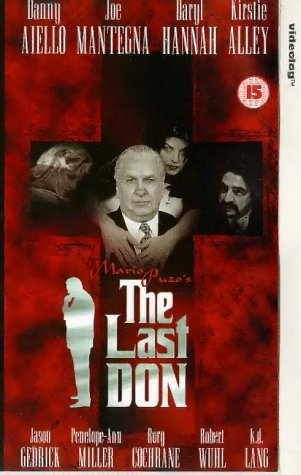
Miniseries Review: Mario Puzo’s The Last Don (dir by Graeme Clifford)


First broadcast over three nights in 1997, The Last Don tells the story of a powerful and respected Mafia family. They control politicians across the country and they own casinos in Vegas and their power even extends all the way to Hollywood. Despite having many enemies, the family has thrived due to the leadership of a wise but ruthless Don.  This Don remembers the old ways and imparts lessons about honor to the members of his own family.  Never let anyone know what you’re thinking.  Never side against the family.  If someone like you were to make enemies, they would become the Don’s enemies and then they would fear you …. you know, stuff like that.

However, times are changing and America is changing with it.  The underworld is no longer run by men of honor.  On top that, the Don is aging and in ill-health. Who will succeed him? One possible successor is respected by all but he’s stayed out of the dirtier aspects of the family’s business and, in fact, he seems to have no desire to be a feared man.  Another possible successor is ruthless and has a terrible temper.  He sometimes speaks out of turn, because the Don has a sentimental weakness for his children.  This possible successor’s anger is feared but perhaps fear is the future of the organized crime in America.  The old ways are changing but one thing remains the same.  The Don believes in America and he believes in family and….

Wait.

Okay, is it just me or does this all sound just a little bit familiar?

If it does, that’s probably because The Last Don is based on a novel by The Godfather‘s Mario Puzo.  Though the family may be called The Clerichuzios and the action may have been moved fro the 40s and the 50s to the 60s, 70s, and 80, the story is still the same basic one that was told in The Godfather.  Don Clerichuzio (Danny Aiello) is an honorable man whose time is coming to an end.  His grandnephew, Cross (Jason Gedrick), is the possible successor who isn’t crazy.  His grandson, Dante (Rory Cochrane), is the possible successor who is violent and doesn’t know how to negotiate.  Don Clerichuzio’s dream is for the family to become completely legitimate but good luck with that when the film business and the political world are just as corrupt as the Mafia.  I supposed one could argue that The Last Don is narrated by Don Clerichuzio while The Godfather has no narration at all but, seriously, once you have to add a voice-over to explain what’s going on, you have pretty much already last the war.

And yes, I did mention the film business.  When Francis Ford Coppola first read The Godfather, he famously hated the Hollywood sections of the book and, with the exception of Tom Hagen’s visit to Jack Woltz (and Woltz’s subsequent discovery of a horse’s head in his bed the next morning), Coppola refused to include them in the movie.  The second half of The Last Don, however, goes full Hollywood and, more or less, proves Coppola’s point.  Cross’s sister, Claudia (Michelle Burke, who also co-starred with Cochrane in Dazed and Confused), gets a job as an agent and one of her clients is the world’s most famous actress, the ludicrously named Athena Aquataine (Daryl Hannah).  When Athena has trouble with her crazy ex-husband (Chris Meloni, bringing a spark of genuine danger to the production), Cross helps her out, falls in love, and gets involved in the production of her next film.  This brings him into conflict with a studio exec named Bobby Bantz (Robert Wuhl).  Unfortunately, all of the Hollywood stuff is pretty dull.  One gets the feeling that Puzo was perhaps settling some old scores with the character of Bobby but Robert Wuhl is one of those goofy actors who belongs nowhere near a Mafia drama.  And don’t even get me started on country singer k.d. lang, who is bizarrely cast as a film director.

(Add to that, how can anyone take a character named Athena Aquataine seriously?  I never miss an Athena Aquataine movie!))

The Hollywood stuff distracts from the Mafia stuff, which is unfortunate because the Mafia stuff is at least occasionally interesting and it’s certainly better-acted than the Hollywood scenes.  Joe Mantegna plays Pippi, who is Cross’s father and who, years earlier, killed Dante’s father.  (Mantegna’s always good but it’s a struggle to take any character named Pippi seriously.)  Kirstie Alley plays Rose Marie, who is Dante’s mentally unstable mother and the Don’s only daughter.  Aiello, Mantegna, and Alley all give good performances, as do Burt Young and Seymour Cassel in the roles of family associates.  As for the “younger generation” of Clerichuzios, Gedrick is a bit dull but then again, Cross isn’t a very interesting character.  The slightly-built Cochrane is miscast as Dante but ultimately, that miscasting kind of works in that it reminds us that, due to his father being the scion of a rival family, Dante is destined to always be viewed as being an outsider.

As I said earlier, The Last Don was originally broadcast over three nights.  I watched the whole thing — all five hours of it — in one sitting and, yes, it was a bit of an endurance test.  It’s not just that it’s long but also that it keeps getting bogged down in all of the Hollywood stuff.  You don’t watch a film like this because you want to spend five hours watching Robert Wuhl mug for the camera.  You watch a film like this for the Mafia action and, for a film called The Last Don, there really wasn’t enough Mafia action.  It has its moments but it never feels as authentic as The Godfather, Casino, Goodfellas, The Irishman, The Sopranos or any of the other classic films and shows about the Mafia..  The Last Don needed to be extremely Italian but instead, it was only slightly Italian.  Robert Evans famously said that Coppola was selected to direct The Godfather because Coppola would make audiences “smell the pasta.”  There’s very little pasta in The Last Don.

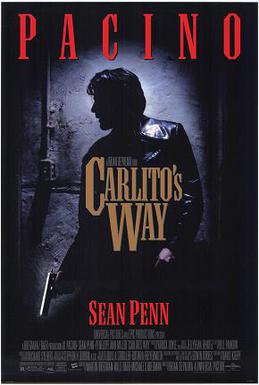
An Offer You Can Do Whatever You Want With #21: Carlito’s Way (dir by Brian De Palma)


It’s been a week so I guess it’s time for me to get back to reviewing mob movies, right?  Usually, I do my best not to take such a long break in-between reviewing films — especially when it’s a themed-series of reviews — but I just got busy this week.  It happens.  Luckily, even when we get busy, the movie’s remain ready to be watched and reviewed.

Last week, I reviewed Scarface and The Untouchables, two gangster films from Brian De Palma.  It only seems right to return to my look at the gangster genre by considering another Brian De Palma film.  Released in 1993, Carlito’s Way reunites De Palma with Scarface’s Al Pacino.  In Scarface, Pacino played a Cuban named Tony who was determined to get into the drug trade.  In Carlito’s Way, Pacino plays a Puerto Rican named Carlito who is desperate to escape the drug trade.

Carlito’s Way opens with Carlito getting released from prison in 1975.  He’s spent the past five years serving time on a drug conviction.  Originally, Carlito was sentenced to 30 years but his friend and attorney, David Kleinfeld (Sean Penn), managed to get the conviction thrown out on a technicality.  Now a free man, Carlito finds himself torn between two options.  He can either get involved, once again, in the drug trade or he can go straight.  Returning to his life of crime will mean once again doing something that he’s good at but it will also require him to deal with people who he can’t stand, like the sleazy Benny Blanco (John Leguizamo).  Going straight will mean escaping from New York with his girlfriend, a dancer named Gail (Penelope Ann Miller).  The problem is that it takes money to start a new life and there are people in New York who have no intention of allowing Carlito to leave.

Of the three De Palma-directed gangster films that I’ve recently watched, Carlito’s Way is probably the weakest.  De Palma has always been a frustratingly uneven director and Carlito’s Way contains some of his worst work and some of his best.  For instance, there’s a brilliant sequence where Carlito goes to a hospital to get revenge on someone who betrayed him and it is perhaps one of DePalma’s best set pieces.  But then there’s other scenes where DePalma’s trademark style feels rather empty and counterproductive.  Just when you’re starting to sympathize with Carlito’s predicament, DePalma will suddenly toss in a fancy camera trick and remind you that you’re just watching a film and that Carlito Brigante is just a character in that film.  That technique worked well in the satiric Scarface and the mythological Untouchables but it often feels unnecessary in Carlito’s Way.  

Al Pacino plays Carlito and, like DePalma’s direction, the end result is a bit uneven.  On the one hand, Pacino and Penelope Ann Miller have a likable chemistry, even if Carlito and Gail don’t really make sense as a couple.  On the other hand, this is one of those films where Pacino does a lot of yelling.  Sometimes it works and sometimes, it’s just too theatrical to be effective.  It’s hard not to compare Pacino’s performance here with his slyly humorous work in Scarface.  Tony Montana yelled because he genuinely enjoyed getting on people’s nerves.  The way that Tony expressed himself told us everything that we needed to know about the character.  Carlito yells because that was Al Pacino’s trademark at the time the film was made.

The best thing about the film is Sean Penn’s performance as David Kleinfeld.  Kleinfeld is one of the sleaziest character to ever appear in a movie and Penn seems to be having a good time playing him.  (Watching the film, I found myself wishing that Penn was willing to have that much fun with all of his roles.)  Penn doesn’t make Kleinfeld into a straight-out villain.  Instead, he portrays Kleinfeld as being a somewhat nerdy guy who thought it would be fun to pretend to be a gangster and who has snorted too much cocaine to understand the amount of trouble that he’s brought upon himself.  Just check out Penn in the scene where he’s dancing at a disco.  There’s a joy to Penn’s performance in Carlito’s Way that you typically don’t see from him as an actor.  He’s actually fun to watch in Carlito’s Way.

It’s a flawed film but fortunately, the movie’s good moments are strong enough to help carry the audience over the weaker moments.  The movie often threatens to collapse under the weight of its own style but it seems like whenever you’re on the verge of giving up on the film, De Palma’s kinetic camerawork will calm down enough to allow you to get at least mildly invested in Carlito’s predicament or Sean Penn’s amoral dorkiness will create an amusing moment and you’ll think to yourself, “Okay, let’s keep giving this a chance.”  Carlito’s Way may not be an offer that you can’t refuse but it’s still fairly diverting.

Previous Offers You Can’t (or Can) Refuse:

  1. The Public Enemy
  2. Scarface (1932)
  3. The Purple Gang
  4. The Gang That Could’t Shoot Straight
  5. The Happening
  6. King of the Roaring Twenties: The Story of Arnold Rothstein 
  7. The Roaring Twenties
  8. Force of Evil
  9. Rob the Mob
  10. Gambling House
  11. Race Street
  12. Racket Girls
  13. Hoffa
  14. Contraband
  15. Bugsy Malone
  16. Love Me or Leave Me
  17. Murder, Inc.
  18. The St. Valentine’s Day Massacre
  19. Scarface (1983)
  20. The Untouchables

What Lisa Watched Last Night #200: The College Admissions Scandal (dir by Adam Salky)


Last night, like all good Americans, I watched The College Admissions Scandal on Lifetime!

Why Was I Watching It?

How could I not watch it!?

Seriously, Lifetime has been advertising the Hell out of this thing for the past few months.  I haven’t been able to turn on the channel without seeing a few hundred commercials for The College Admissions Scandal.

Add to that, I have to admit that this is the rare national scandal that I’ve actually been following.  When the news first broke that certain rich people had cheated and broken the rules to get their child into a good college, my initial reaction was, “Well, isn’t that what a parent’s supposed to do?”  Of course, I made the mistake of saying that on twitter and I immediately ended up with a bunch of finger-wagging nags screaming at me about how it wasn’t something to make a joke about and how it wasn’t fair and blah blah blah.  They sure told me!  Of course, it didn’t really change my mind or anything but at least everyone else got to feel like they had stuck up for truth and justice.  That said, I think my point remains valid.  Don’t get mad at the parents for taking advantage of the system.  They’re just trying to look after their kids.  Instead, get mad at the colleges that were willing to be bribed.  Get mad at a system that’s been specifically set up to be corrupted.  The solution is reform, not necessarily imprisonment.

Perhaps not surprisingly, I kinda love the fact that, while Felicity Huffman basically begged everyone to forgive her, Lori Loughlin pretty much said, “Fuck you, I’m not apologizing for anything.” That’s the spirit!

What Was It About?

Penelope Ann Miller plays a character who is definitely not Felicity Huffman, just as Mia Kirshner is playing someone who is definitely not Lori Loughlin.  That said, like Miller and Loughlin, they’re two wealthy mothers who are concerned about getting their children into the right school.  Fortunately, Rick Singer (Michael Shanks) is willing to sell his services as an admissions consultant.  Pay him enough money and he’ll fix your child’s grades, improve their test scores, and even make them look like athletes!

It sounds like a great plan!  Of course, it’s also illegal and, even as the parents are looking forward to sending their kids to Stanford and Harvard, the FBI is looking forward to sending the parents to prison!

What Worked?

Miller and Kirshner were both well-cast and Kirshner was especially good as the mother who definitely was not Lori Loughlin.  Michael Shanks was also wonderfully repellent in the role of Rick Singer.

It was fascinating to watch the lengths that Singer and the families went to remaking their children.  My main memory of this film will probably always be Sarah Dugdale standing in front of a blue screen and kicking a soccer ball so that she can later be photoshopped into a picture of an actual soccer game.

What Did Not Work?

Where were the real people!?  Yes, Rick Singer is a real person but why were all the parents fictional?  I assume for legal reasons.  For instance, Lori Loughlin has yet to be convicted of anything and I imagine that Lifetime didn’t want to get on the bad side of either Felicity Huffman or William H. Macy by portraying them in the movie.  But seriously, it was hard not to be disappointed by the lack of real world gossip.

“Oh my God!  Just like me!” Moments

Hmmmm …. I got into college legally but then again, I also didn’t go to an Ivy League school, nor did I ever particularly want to.  To be honest, it didn’t really occur to me that college was actually that important until my senior year.  That’s when I was like, “Oh, I’m actually supposed to do something with this art history degree….”

Lessons Learned

If you want to send your child to a good college, get them interested in soccer early.

2017 in Review: The Best of Lifetime


Today, I continue my look back at the previous year with my picks for the best of Lifetime in 2017!  Below, you’ll find my nominations for the best Lifetime films and performances of 2017!  Winners are starred and listed in bold!

(As a guide, I used the credits for the imdb.  If anyone has been miscredited or let out, please feel free to let me know and I’ll fix the error both here and, if I can, on the imdb as well.)

Best Picture

Drink Slay Love, produced by Tina Pehme, Kim Roberts, Sheri Singer, Bella Thorne

From Straight A’s to XXX, produced by Austin Andrews, John Bolton, Anne-Marie Hess, Tina Pehme, Kim Roberts, Sheri Singer

Four Christmases and a Wedding

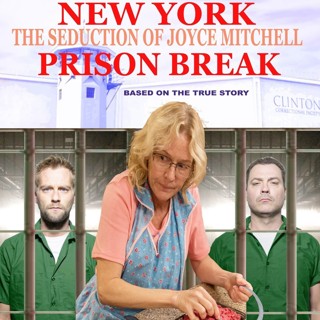
New York Prison Break: The Seduction of Joyce Mitchell, produced by Deen Dioria, David Manzanares, Ron Schmidt, Judith Verno, Frank von Zerneck.

The Rachels, produced by Paige Lauren Billot, Margaret H. Huddleston, Maggie McFarren, Hannah Pillemer, Rebecca G. Stone.

Running Away, produced by Dureyshevar, Jeff Faehnle, Jack Nasser, Jacob Nasser, Joseph Nasser, Bri Noble.

Sea Change. Produced by Sharon Bordas, Alec Chorches, Adam Fratto, Steven Gilder, David MacLeod, A.J. Mendez, Shawn Piller, Lloyd Segan, Stephanie Slack, Fernando Szew

Secrets in Suburbia, produced by Kristopher McNeeley, Jacobo Rispa, Damian Romay, Stephanie Slack, Fernando Szew.

The Watcher in the Woods, produced by Simon Barnes, Alexandra Bentley, Andrew Gernhard, Jennifer Handorf, Paula Hart.

* Web Cam Girls, produced by Tom Berry, Pierre David, Hank Grover, Sheri Reeves, Ken Sanders, Noel Zanitsch* 

Best Director

* Doug Campbell for Web Cam Girls

Michael Civille for The Rachels

Vanessa Parise for From Straight A’s to XXX

Damian Romay for Secrets in Suburbia

Brian Skiba for Running Away

Stephen Tolkin for New York Prison Break: The Seduction of Joyce Mitchell

Best Actor

James Franco in High School Lover

Zack Gold in Psycho Brother-in-Law

Stephen Graybill in Web Cam Girls

Timothy Granderos in The Twin

Ted McGinley in Fatherly Obsession

* Ryan Patrick Shanahan in Sinister Minister
Best Actress

Barbie Castro in Boyfriend Killer

Holly Deveaux in Running Away

Sedonna Legge in Web Cam Girls

* Penelope Ann Miller in New York Prison Break: The Seduction of Joyce Mitchell

Heather Morris in Psycho Wedding Crasher

Haley Pullos in From Straight A’s to XXX

Best Supporting Actor

Francois Arnaud in High School Lover

Joe Hackett in Web Cam Girls

William McNamara in Running Away

Patrick Muldoon in Boyfriend Killer

Judd Nelson in From Straight A’s to XXX

* Daniel Roebuck in New York Prison Break: The Seduction of Joyce Mitchell

Best Supporting Actress

Madison Iseman in The Rachels

Anjelica Huston in The Watcher in the Woods

* Tonya Kay in Web Cam Girls

Paula Trickey in Running Away

Ashley Wood in Wicked Mom’s Club

Lorynn York in Web Cam Girs
Best Screenplay

From Straight A’s to XXX. Anne-Marie Hess.

New York Prison Break: The Seduction of Joyce Mitchell. Stephen Tolkin.

The Rachels. Ellen Huggins.

* Running Away. Sheri McGuinn.

Secrets in Suburbia. Damian Romay.

Web Cam Girls. Stephen Romano.

Best Cinematography

Drink Slay Love. Vic Sarin.

Four Christmases and a Wedding. Mike Kam.

Off the Rails. Denis Maloney.

Running Away. Patrice Lucien Cochet.

* Sea Change. Jackson Parrell.

Ten: Murder Island. Richard Clabaugh.

Best Costuming

* Drink Slay Love. Liene Dobraja.

From Straight A’s to XXX. Liene Dobraja.

The Lost Wife of Robert Durst. Tina Fiorda.

New York Prison Break: The Seduction of Joyce Mitchell. Maria Bentfield.

The Rachels. Courtney Stern.

Stage Fright. Monique Hyman.

Best Editing

* From Straight A’s to XXX. Rob Grant.

Four Christmases and a Wedding. Paul Ziller.

New York Prison Break: The Seduction of Joyce Mitchell. Mark Stevens.

The Rachels. Brett Solem.

Sea Change. Matthew Anas.

Web Cam Girls. Jordan Jensen.

Best Makeup and Hairstyling

Drink Slay Love. Jessica Green, Catherine Long, Alysha McLoughlin, Sahar Sharelo.

The Lost Wife of Robert Durst. Lorna Bravo, Kelly Grange, Shelly Jensen, Mary Renvall, Melissa Sahlstrom.

* New York Prison Break: The Seduction of Joyce Mitchell. Claudia Breckenridge, Daniel Casillas, Nicole Gabaldon, Pepper J. Gallegos, Madeline McCue, L. Taylor Roberts

The Rachels. Taylor Bennett, Austin Cuccia.

Secrets in Suburbia. Andrea Ahl, Trevor Thompson

The Watcher in the Woods. Chloe Edwards.

Best Score

Drink Slay Love. Justin R. Durban

Fatherly Obsession. Aiko Fukushima.

Sea Change. Shawn Pierce.

* Story of a Girl. Travis Bacon.

Ten: Murder Island. Ceiri Torjussen.

The Watcher in the Woods. Felix Bird.

Best Production Design

New York Prison Break: The Seduction of Joyce Mitchell. Will Albarz, Anthony Medina.

Running Away.   Vincent Albo, Rose Beltran

Secrets in Suburbia. Brendan Turrill.

Ten: Murder Island. Eric Whitney, Caley Bisson.

Tiny House of Terror

* Web Cam Girls. Catch Henson, James W. Thompson Jr., Katherine Bulovic, Valerie Munguia

Best Sound

Britney Ever After

Drink Slay Love

From Straight A’s to XXX

Sea Change.

Under the Bed

* The Watcher in the Woods

Best Visual Effects

* Drink Slay Love

Fatherly Obsession

Sea Change

Stalker’s Prey

Ten: Murder Island

The Watcher in the Woods

And there you have it!  Those are my picks for the best of Lifetime in 2017!  Thank you for your indulgence!  On Friday, I’ll be concluding my look back at 2017 with my picks for the 26 best films of the year!

Previous entries in the TSL’s Look Back at 2017:

  1. 2017 in Review: Top Ten Single Issues by Ryan C
  2. 2017 in Review: Top Ten Series by Ryan C
  3. 2017 In Review: Top Ten Collected Edition (Contemporary) by Ryan C
  4. 2017 In Review: Top Ten Collected Editions (Vintage) by Ryan C
  5. 2017 in Review: Top Ten Graphic Novels By Ryan C
  6. 25 Best, Worst, and Gems I saw in 2017 by Valerie Troutman
  7. My Top 15 Albums of 2017 by Necromoonyeti
  8. 2017 In Review: Lisa Marie’s Picks For the 16 Worst Films of 2017
  9. 2017 In Review: Lisa Marie’s Final Post About Twin Peaks: The Return (for now)
  10. 2017 in Review: Lisa Marie’s 14 Favorite Songs of 2017
  11. 2017 in Review: The Best of SyFy by Lisa Marie Bowman
  12. 2017 in Review: 10 Good Things that Lisa Marie Saw On Television in 2017
  13. 2017 in Review: Lisa Marie’s 12 Favorite Novels of 2017
  14. 2017 in Review: Lia Marie’s 10 Favorite Non-Fiction Books of 2017