10 Oscar Snubs From the 1980s


Ah, the 80s! Ronald Reagan was president. America was strong. Russia was weak. The economy was booming. The music was wonderful. Many great movies were released, though most of them were not nominated for any Oscars. This is the decade that tends to drive most Oscar fanatics batty. So many good films that went unnominated. So many good performers that were overlooked.  Let’s dive on in!

1980: The Shining Is Totally Ignored

Admittedly, The Shining was not immediately embraced by critics when it was first released.  Stephen King is still whining about the movie and once he went as far as to joke about being happy that he outlived Stanley Kubrick.  (Not cool, Steve.)  Well, none of that matters.  The Shining should have been nominated across the board.  “Come and play with us, Danny …. AT THE OSCARS!”

1981: Harrison Ford Is Not Nominated For Best Actor For Raiders of the Lost Ark

Raiders received a lot of nominations.  Steven Spielberg was nominated for Best Director.  The film itself was nominated for Best Picture.  (It lost to Chariots of Fire.)  But the man who helped to hold the film together, Harrison Ford, was not nominated for his performance as Indiana Jones.  Despite totally changing the way that people looked at archeologists and also making glasses sexy, Harrison Ford was overlooked.  I think this was yet another case of the Academy taking a reliable actor for granted.

1982: Brian Dennehy Is Not Nominated For Best Supporting Actor For First Blood

First Blood didn’t receive any Oscar nominations, not even in the technical categories.  Personally, I think you could argue that the film, which was much more than just an action film, deserved to be considered for everything from Best Actor to Best Director to Best Picture.  But, in the end, if anyone was truly snubbed, it was Brian Dennehy.  Dennehy turned Will Teasle into a classic villain.  Wisely, neither the film nor Dennehy made the mistake of portraying Sheriff Teasle as being evil.  Instead, he was just a very stubborn man who couldn’t admit that he made a mistake in the way he treated John Rambo.  Dennehy gave an excellent performance that elevated the entire film.

1984: Once Upon A Time In America Is Totally Ignored

It’s not a huge shock that Once Upon A Time In America didn’t receive any Oscar nominations.  Warner Bros. took Sergio Leone’s gangster epic and recut it before giving it a wide release in America.  Among other things, scenes were rearranged so that they played out in chronological order, the studio took 90 minutes off of the run time, and the film’s surrealistic and challenging ending was altered.  Leone disowned the Warner Bros. edit of the film.  Unfortunately, in 1984, most people only saw the edited version of Once Upon A Time In America and Leone was so disillusioned by the experience that he would never direct another film.  (That said, even the edited version featured Ennio Morricone’s haunting score, which certainly deserved not just a nomination but also the Oscar.)  The original cut of Once Upon A Time In America is one of the greatest gangster films ever made, though one gets the feeling that it might have still been too violent, thematically dark, and narratively complex for the tastes of the Academy in 1984.  At a time when the Academy was going out of its way to honor good-for-you films like Gandhi, it’s probable that a film featuring Robert De Niro floating through time in an Opium-induced haze might have been a bridge too far.

1985: The Breakfast Club Is Totally Ignored

Not even a nomination for Best Screenplay!  It’s a shame.  I’m going to guess that the Academy assumed that The Breakfast Club was just another teen flick.  Personally, if nothing else, I would have given the film the Oscar for Best Original Song.  Seriously, don’t you forget about me.

1986: Alan Ruck Is Not Nominated For Best Supporting Actor For Ferris Bueller’s Day Off

Poor Cameron!

1986: Blue Velvet Is Not Nominated For Best Picture

Considering the type of films that the Academy typically nominated in the 80s, it’s something of a shock that David Lynch even managed to get a Best Director nomination for a film as surreal and subversive as Blue Velvet.  Unfortunately, that was the only recognition that the Academy was willing to give to the film.  It can also be argued that Kyle MacLachlan, Laura Dern, Isabella Rossellini, and Dean Stockwell were overlooked by the Academy.  Dennis Hopper did receive a Supporting Actor nomination in 1986, though it was for Hoosiers and not Blue Velvet.

1987: R. Lee Ermey Is Not Nominated For Best Supporting Actor For Full Metal Jacket

One of the biggest misconceptions about Full Metal Jacket is that R. Lee Ermey was just playing himself.  While Ermey was a former drill instructor and he did improvise the majority of his lines (which made him unique among actors who have appeared in Kubrick films), Ermey specifically set out to play Sgt. Hartmann as being a bad drill instructor, one who pushed his recruits too hard, forgot the importance of building them back up, and was so busy being a bully that he failed to notice that Pvt. Pyle had gone off the deep end.  Because Ermey was, by most accounts, a good drill instructor, he knew how to portray a bad one and the end result was an award-worthy performance.

1988: Die Hard Is Not Nominated For Best Picture, Actor, Supporting Actor, or Director

Die Hard did receive some technical nominations but, when you consider how influential the film would go on to be, it’s hard not to feel that it deserved more.  Almost every action movie villain owes a debt to Alan Rickman’s performance as Hans Gruber.  And Bruce Willis …. well, all I can say is that people really took Bruce for granted.

1989: Do The Right Thing Is Not Nominated For Best Picture

Indeed, it would take another 30 years for a film directed by Spike Lee to finally be nominated for Best Picture.

Agree?  Disagree?  Do you have an Oscar snub that you think is even worse than the 10 listed here?  Let us know in the comments!

Up next: It’s the 90s!

10 Oscar Snubs From the 1970s


Ah, the 70s. The decade started with the collapse of the studio system and the rise of the so-called movie brats. For the first half of the decade, Hollywood was producing the type of challenging films on which they would never again be willing to take the risk. The 70s were indeed a second cinematic golden age, full of anti-heroes and dark endings. Then, in 1977, Star Wars changed all of that and ushered in the era of the blockbuster. The 1970s gave the world disco, The Godfather, and some of the best Oscar winners ever.  It also gave us more than a few snubs.

1971: Dirty Harry Is Totally Ignored

Dirty Harry may be one of the most influential films ever made but the Academy totally snubbed it.  My guess is that, with The French Connection coming out that same year, the Academy only had room for one morally amibiguous cop film in its heart.  Still, Dirty Harry has certainly held up better than the nominated Nicholas and Alexandra.  Both Clint Eastwood and Andrew Robinson gave performances that were award-worthy as well.  Say what you will about Eastwood’s range, I defy anyone not to smile at the way Harry snarls when he discovers that the man he’s talking to teaches a constitutional law course at Berkley.

1971: Gimme Shelter Is Not Nominated For Best Documentary Feature

Considering that Woodstock won the Documentary Oscar the previous year, it only seems appropriate the Gimme Shelter should have won the following year.  In the end, the Academy decided to celebrate the best of the 60s while snubbing the worst of it.

1972: Burt Reynolds Is Not Nominated For Deliverance

If you’ve ever seen Deliverance, you know how important a character Lewis Medlock (played by Burt Reynolds) was.  Not only was he the one who persuaded everyone to spend the weekend risking their lives on a canoeing trip but he also set the standard for “manlinness” that the rest of his friends tried to live up to.  When Lewis ends up getting a compound fracture and is forced to spend the rest of the film deliriously lying in a canoe, it’s a reminder that nature and fate don’t care how confident or outspoken you are.  Reynolds was perfectly cast.  1972 was a strong year with a lot of worthwhile nominations and, to be honest, there’s really not a bad or an unworthy performance to be found among the acting nominees.  Still, it’s hard not to feel that the Academy should have found some room for Burt Reynolds.

1974: John Huston Is Not Nominated For Chinatown

In the role of Chinatown‘s Noah Cross, John Huston gave one of the great villainous performances.  Cross represented pure avarice and moral decay, a man who committed terrible crimes but who, the film suggested, was also responsible for creating not only modern Los Angeles but also providing a home for Hollywood.  Admittedly, there were a lot of good performances to choose from and I certainly can’t complain that the Academy awarded the Oscar for Best Supporting Actor to Robert De Niro, who deserved it.  Still, in retrospect, John Huston’s evil turn was at least as strong as Fred Astaire’s likable (and nominated) turn in The Towering Inferno.

1974 and 1975: John Cazale Is Not Nominated For Best Supporting Actor

John Cazale had a brief but legendary career.  A noted stage actor, Cazale made his film debut in 1972 with The Godfather.  He played Fredo, the Corleone son who couldn’t get any respect.  He final film, released after his early death from cancer, was 1978’s The Deer Hunter.  Cazale appeared in a total of five films, every one of which was nominated for Best Picture.  That this talented actor was never nominated for an Oscar just doesn’t seem right.  But for which film should he have been nominated?

Godfather Part II received three nominations for Best Supporting Actor: Robert De Niro, Lee Strasberg, and Michael V. Gazzo.  Personally, I would probably replace Gazzo with Cazale.  Cazale’s performance as Fredo was one of the strongest parts of Godfather Part II.  Who can forget Fredo’s legendary meltdown about always being overlooked?  I would also say that Cazale deserved a nomination for his performance in Dog Day Afternoon, in which he played Sal and provided the film with some of its saddest and funniest moments.  Neither Fredo nor Sal survive their films and, in both cases, it’s impossible not to feel that they deserved better than the world gave them.

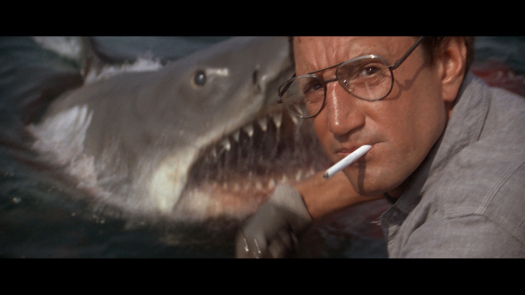
1975: Steven Spielberg Is Not Nominated For Jaws

Seriously, what the Heck?  Jaws totally reinvented the movies.  It received a deserved nomination for Best Picture but the true star of the film, Steven Spielberg, was somehow not nominated.

1976: Martin Scorsese is Not Nominates For Taxi Driver

Seriously, what the Heck?  Taxi Driver totally reinvented the movies.  It received a deserved nomination for Best Picture but the true star of the film, Martin Scorsese, was somehow not nominated.

1977: Harrison Ford Is Not Nominates For Star Wars

Harrison Ford, despite having had the type of career for which most actors would sacrifice their soul, has never had much success with the Oscars.  He’s been nominated exactly once, for Witness.  That he’s never won an Oscar just feels wrong.  The fact that he wasn’t even nominated for playing either Han Solo or Indiana Jones feels even more wrong.  In the role of Solo, Ford bring some much needed cynicism to Star Wars.  His decision to return and help the Rebels destroy the Death Star is one of the best moments in the film.

1978: National Lampoon’s Animal House Is Totally Ignored

This film deserved a nomination just for the scene in which John Belushi destroyed that annoying folk singer’s guitar.  Seriously, though, this is another film that, more or less, defined an era.  I’m not saying it deserved to win but it at least deserved a few nominations.

1979: Dawn of the Dead Is Not Nominated For Best Picture

Considering the Academy’s general resistance to honoring horror, it’s not really a shock that Dawn of the Dead was not nominated for Best Picture but still, it would have been nice if it had happened.

Agree?  Disagree?  Do you have an Oscar snub that you think is even worse than the 10 listed here?  Let us know in the comments!

Up next: The 80s arrive and the snubs continue!

Dawn of the Dead (1978, dir by George Romero)

10 Oscar Snubs From The 1960s


Ah, the 60s. Both the studio system and the production code collapsed as Hollywood struggled to remain relevant during a time of great social upheaval. The Academy alternated between nominating films that took chances and nominating films that cost a lot of money. It led to some odd best picture lineups and some notable snubs!

1960: Psycho Is Not Nominated For Best Picture and Anthony Perkins Is Not Nominated For Best Actor

To be honest, considering that the Academy has never really embraced horror as a genre and spent most of the 60s nominating big budget prestige pictures, it’s a bit surprising that Psycho was actually nominated for four Oscars.  Along with being nominated for its production design and its cinematography, Psycho also won nominations for Alfred Hitchcock and Janet Leigh.  However, Anthony Perkins was not nominated for Best Actor, despite giving one of the most memorable performances of all time.  The film literally would not work without Perkins’s performance and, considering that Perkins pretty much spent the rest of his career in the shadow of Norman Bates, it’s a shame that he didn’t at least get a nomination for his trouble.  Psycho was also not nominated for Best Picture, despite being better remembered and certainly more influential than most of the films that were.

1962: The Man Who Shot Liberty Valance Is Almost Totally Snubbed

The Man Who Shot Liberty Valance was not totally snubbed by the Academy.  It received a nomination for Best Costume Design.  But still, it deserved so much more!  John Ford, James Stewart, John Wayne, Lee Marvin, Vera Miles, and the picture itself were all worthy of nominations.  Admittedly, 1962 was a year full of great American films and there was a lot of competition when it came to the Oscars.  Still, The Man Who Shot Liberty Valance definitely deserved a best picture nomination over the bloated remake of Mutiny on the Bounty.  Today, if the first Mutiny on the Bounty remake is known for anything, it’s for Marlon Brando being difficult on the set.  But The Man Who Shot Liberty Valance is still remembered for telling us to always print the legend.

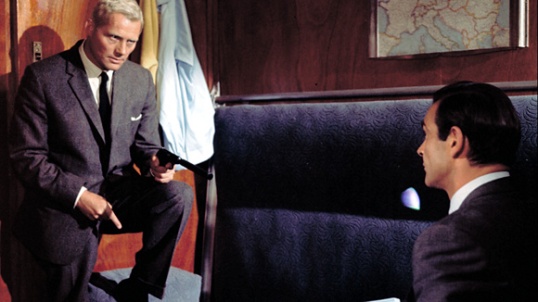
1964: From Russia With Love Is Totally Snubbed

The same year that the Academy honored George Cukor’s creaky adaptation of My Fair Lady, it totally ignored my favorite James Bond film.  From Russia With Love is a Bond film that works wonderfully as both a love story and a thriller.  Sean Connery, Lotte Lenya, Robert Shaw, and Terence Young all deserved some award consideration.  From Russia With Love was released in the UK in 1963.  In a perfect world, it would have also been released concurrently in the U.S., allowing From Russia With Love to be the film that gave the the Academy the chance to recognize the British invasion.  Instead, Tom Jones was named the Best Picture of 1963 and From Russia With Love had to wait until 1964 to premiere in the U.S.  It was snubbed in favor of one of old Hollywood’s last grasps at relevance.

1964: Slim Pickens Is Not Nominated For Best Supporting Actor

Playing three separate roles, Peter Sellers dominates Dr. Strangelove: Or How I Learned To Stop Worrying And Love The Bomb.  But, as good as Sellers is, the film’s most memorable image is definitely Slim Pickens whooping it up as he rides the bomb down to Earth.  George C. Scott and Sterling Hyaden also undoubtedly deserved some award consideration but, in the end, Pickens is the one who brings the film to life even as he helps to bring society to an end.

1967: In Cold Blood Is Not Nominated For Best Picture

In Cold Blood, though not a perfect film, certainly deserved a nomination over Dr. Doolittle.  In Cold Blood is a film that still has the power to disturb and haunt viewers today.  Dr. Doolittle was a box office debacle that was nominated in an attempt to help 20th Century Fox make back some of their money.

1967: Sidney Poitier Is Not Nominated For Best Actor For In The Heat Of The Night

In 1967, Sidney Poitier starred in two of the films that were nominated for Best Picture but somehow, he did not pick up a nomination himself.  His restrained but fiercely intelligent performance in In The Heat Of The Night provided a powerful contrast to Rod Steiger’s more blustery turn.  That Poitier was not nominated for his performance as Virgil Tibbs truly is one of the stranger snubs in Academy history.  (If I had to guess, I’d say that the Actors Branch was split on whether to honor him for In The Heat of the Night or Guess Who’s Coming To Dinner or even for To Sir With Love and, as a result, he ended up getting nominated for none of them.)

1968: 2001: A Space Odyssey and Planet of the Apes Are Not Nominated For Best Picture

Neither one of these classic science fiction films were nominated for Best Picture, despite the fact that both of them are far superior and far more influential than Oliver!, the film that won that year.

1968: The Good, The Bad, and the Ugly Is Totally Ignored

Not even Ennio Morricone’s score received a nomination!

1968: Petulia Is Totally Snubbed

Seriously, I don’t know what was going on with the Academy in 1968 but it seems they went out of their way to ignore the best films of the year.  Richard Lester’s Petulia is usually cited as one of the definitive films of the 60s but it received not a single Oscar nomination.  Not only did the film fail to receive a nomination for Best Picture but Richard Lester, George C. Scott, Julie Christie, Shirley Knight, Richard Chamberlain, and the film’s screenwriters were snubbed as well.

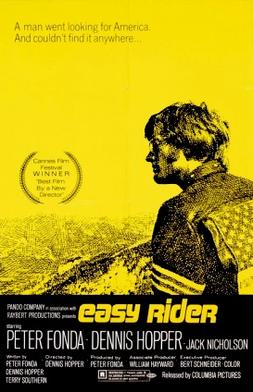
1969: Easy Rider Is Not Nominated For Best Picture

Yes, I know.  Easy Rider is a flawed film and there are certain moments that are just incredibly pretentious.  That said, Easy Rider defined an era and it also presented a portrait of everything that was and is good, bad, and timeless about America.  The film may have been produced, directed, and acted in a drug-razed haze but it’s also an important historical document and it was also a film whose success permanently changed Hollywood.  Certainly, Easy Rider’s legacy is superior to that of Hello, Dolly!

Agree? Disagree? Do you have an Oscar snub that you think is even worse than the 10 listed here? Let us know in the comments!

Up next: It’s the 70s!

12 Oscar Snubs From the 1950s


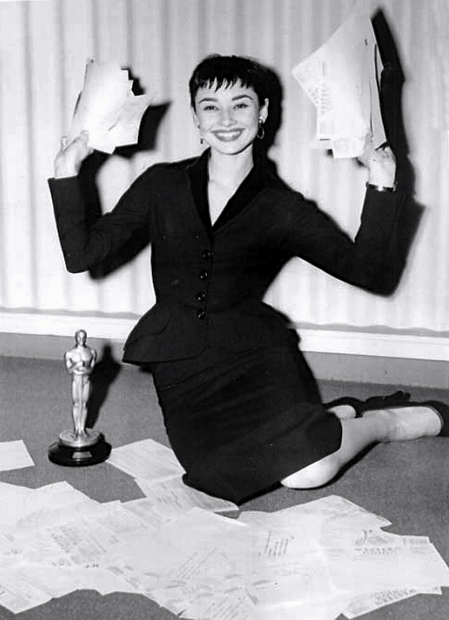
Audrey Hepburn and her Oscar.  At least the Academy didn’t snub her!

Continuing our look at the Oscar snubs of the past, it’s now time to enter the 50s!

World War II was over. Eisenhower was President. Everyone was worried about communist spies. And the Hollywood studios still reigned supreme, even while actors like Marlon Brando and James Dean challenged the establishment.  There were a lot great film released in the 50s.  There were also some glaring snubs on the part of the Academy.  Here’s twelve of them.

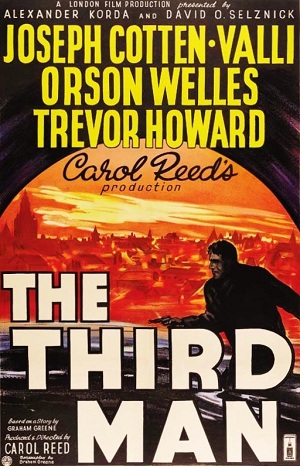
1950: The Third Man Is Not Nominated For Best Picture

….and Orson Welles was not nominated for Best Supporting Actor!  The Third Man received three Oscar nominations, for Director, Cinematography, and Editing.  The fact that Welles, Joseph Cotten, Alida Valli, and the film’s score were not nominated (and that King Solomon’s Mines was nominated for Best Picture instead of The Third Man) remains one of the more surprising snubs in Oscar history.

1952: Singin’ In The Rain Is Not Nominated For Best Picture

What the Heck, Academy!?  This was the year that The Greatest Show On Earth won the Best Picture Oscar.  Personally, I don’t think The Greatest Show On Earth is as bad as its reputation but still, Singin’ In The Rain is a hundred times better.

1953: Alan Ladd Is Not Nominated For Best Actor For Shane

How could Shane score a nomination for Best Picture without Shane himself receiving a nomination?

1954: Rear Window Is Not Nominated For Best Picture

Rear Window was not totally ignored by the Academy.  Alfred Hitchcock received a nomination for directing.  It also received nominations for Best Adapted Screenplay, Cinematography, and Sound.  However, Rear Window was not nominated for Best Picture and James Stewart, Grace Kelly, Raymond Burr, and Thelma Ritter all went unnominated as well.  Today, Rear Window is definitely better-remembered than the majority of 1954’s Best Picture nominees.  Certainly, it deserved a nomination more than Seven Brides For Seven Brothers and Three Coins in The Fountain.

1955: Ralph Meeker Is Not Nominated For Best Actor For Kiss Me Deadly

I guess I shouldn’t be surprised.  If the Academy wasn’t going to nominate Rear Window for Best Picture, there was no way that they would have nominated Ralph Meeker for playing a sociopathic private detective who, even if inadvetedly, helps to bring about the end of the world.

1955: Rebel Without A Cause Is Not Nominated For Best Picture or Best Actor

The 1955 Best Picture lineup was a remarkably weak one.  The eventual winner was Marty, a likeable film that never quite escapes its TV roots.  Picnic has that great dance scene but is otherwise flawed.  Mister Roberts was overlong.  Love Is A Many-Splendored Thing and The Rose Tattoo are really only remembered by those of us who have occasionally come across them on TCM.  Perhaps the best-remembered film of 1955, Rebel Without A Cause, received quite a few nominations but it was not nominated for Best Picture.  And while the Rebel himself, James Dean, was nominated for Best Actor, it was for his performance in East of Eden.  1955 was a strange year.

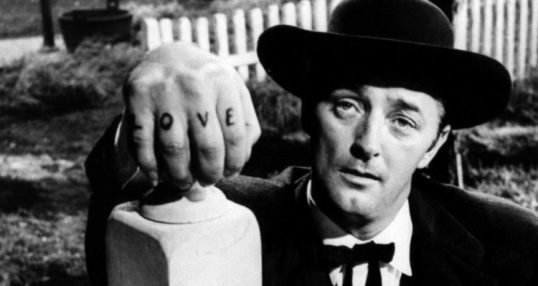
1955: Robert Mitchum Is Not Nominated For Best Actor For The Night of the Hunter

Robert Mitchum only received one Oscar nomination over the course of his entire career, for 1945’s The Story of G.I. Joe.  He deserved several more.  His performance as the villainous preacher in The Night of Hunter made Reverend Harry Powell into one of the most iconic film characters of all time.

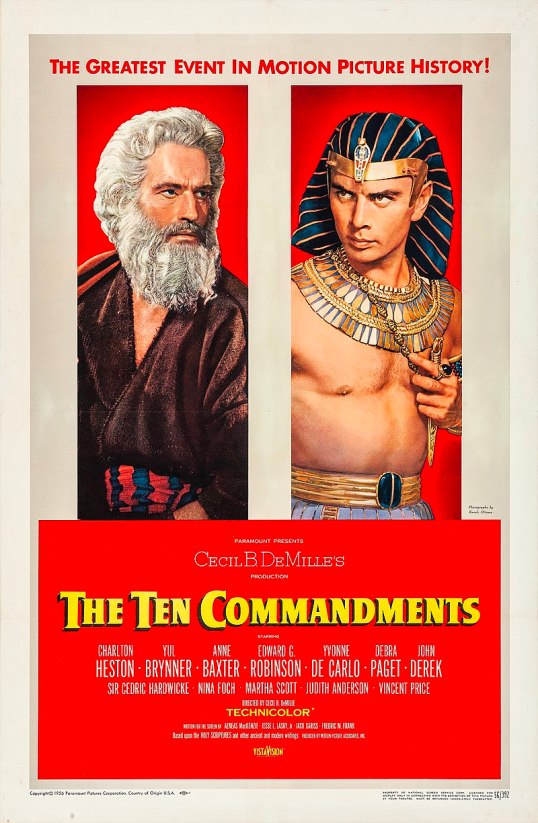
1956: Cecil B. DeMille Is Not Nominated For Best Director For The Ten Commandments

Cecil B. DeMille was only nominated once for Best Director, for 1952’s The Greatest Show On Earth.  DeMille, however, deserved to be nominated for The Ten Commandments.  As campy as DeMille’s films can seem today, he was an expert storyteller and that’s certainly evident when one watches The Ten Commandments, a film that holds the viewer’s attention for nearly four hours.  DeMille deserved a nomination for the Angel of Death scene alone.  The screams in the night are haunting.

1957: Henry Fonda Is Not Nominated For Best Actor For 12 Angry Men

With 12 Angry Men, Fonda did something that very few actors can.  He made human decency compelling.  One gets the feeling that, much like Tom Hanks in Captain Phillips, Fonda made it look so easy that the Academy took him for granted.

1958: Touch Of Evil Is Totally Ignored

Anyone who had researched the history of the Academy knows that there was no way that the 1950s membership would have ever honored Orson Welles’s pulp masterpiece, Touch of Evil.  That said, it still would have been nice if they had.  Touch of Evil has certainly go on to have a greater legacy than Gigi, the film that won Best Picture that year.

1958: Vertigo Is Almost Totally Ignored

Vertigo did receive nominations for Art Direction and Sound but Alfred Hitchcock, James Stewart, and the film itself were snubbed.

1959: Some Like It Hot Is Not Nominated For Best Picture or Best Actress

Some Like It Hot received 6 Oscar nominations, including nominations for Best Director, Best Actor, and Best Adapted Screenplay.  It did not receive a nomination for Best Picture and, sadly, Marilyn Monroe did not receive a nomination for Best Actress.  Much as with Henry Fonda in 12 Angry Men, one gets the feeling that the Academy took Monroe for granted.  It’s sad to realize that, while two actresses have been nominated for playing Marilyn Monroe, Monroe herself would never be nominated.

Agree?  Disagree?  Do you have an Oscar snub that you think is even worse than the 12 listed here?  Let us know in the comments!

Up next: Things get wild with the 6os!

Night of the Hunter (United Artists 1955; D: Charles Laughton)

10 Oscar Snubs From the 1940s


Ah, the 40s! For most of the decade, the world was at war and the Academy’s nominations reflected that fact. The best picture lineups alternated between patriotic films that encouraged the battle against evil and darker films that contemplated both the mistakes of the past and what threats might be waiting in the future.  With the Academy being even more aware than usual that films and awards could be used to send a message, the snubs continued.

1940: John Carradine Is Not Nominated For The Grapes of Wrath

John Carradine’s first credited film appearance was in 1930 but Carradine himself claimed that he had appeared as an uncredited extra in over 70 films before getting that first credit.  Carradine would continue to work until his death 58 years later.  John Carradine did so many films that he was still appearing in new releases in the 90s, years after his death.  He appeared in over 234 films and in countless television shows.  He was a favorite of not only Fred Olen Ray’s but also John Ford’s.

Unfortunately, Carradine was never nominated for an Oscar, despite the fact that he did appear in some classic films.  (He also appeared in a lot of B-movies, which is perhaps one reason why the Academy was hesitant to honor him.)  Personally, I think Carradine most deserved a nomination for playing “Pastor” Jim Casy in John Ford’s The Grapes of Wrath.  Carradine is ideally cast as the former preacher turned labor activist.  When he’s alive, he gives the Joads hope.  When he dies, both the Joads and the audience start to realize how difficult things are truly going to be.

1942: Ronald Reagan Is Not Nominated For Best Supporting Actor For Kings Row

Kings Row is an enjoyably over-the-top small town melodrama and future President Ronald Reagan is fantastic in the film, with his natural optimism providing a nice contrast to the truly terrible things that happen to him and his loved ones over the course of the film.  Reagan was not nominated for this performance, the one that both he and the most of the critics agreed was his best, but he should have been.

1943: Hangmen Also Die Is Not Nominated For Best Picture

Fritz Lang’s anti-Nazi classic was not nominated for Best Picture and only received two nominations (for Sound and Score).  That year, the Best Picture winner was another anti-Nazi classic, Casablanca.

1943: Shadow Of A Doubt Is Ignored

Today, it is recognized as one of Hitchcock’s best but, in 1943, Shadow of a Doubt couldn’t even score a nomination for Joseph Cotten’s wonderfully diabolical turn as Uncle Charlie.  One gets the feeling that the film’s satirical jibes at small town America and its theme of evil hiding behind a normal façade were not what the Academy was looking for at the height of World War II.  It’s a shame because, in many ways, Cotten’s Uncle Charlie was the perfect symbol of the enemy that the Allies were fighting.

1944: Tallulah Bankhead In Not Nominated For Best Actress For Lifeboat

Unlike Shadow of a Doubt, Hitchcock’s Lifeboat received several Oscar nominations.  However, Tallulah Bankhead was not nominated for Best Actress.  Perhaps the Academy was scared of what she might say if she won.

1944: Fred MacMurray and Edward G. Robinson Are Not Nominated For Double Indemnity

For all the nominations that this classic noir received, somehow neither Fred MacMurray nor Edward G. Robinson were nominated for their roles.  Both actors are brilliantly cast against type in this film.  MacMurray uses his trademark casual glibness to portray Walter Neff as being an arrogant man who is hardly as clever as he thinks that he is.  Meanwhile, Robinson’s more introspective performance leaves you with little doubt that, if anyone can solve this case, it’s him.  While Barbara Stanwyck was (rightfully) nominated, it’s had to believe that both MacMurray and Robinson were snubbed.

1946: Thomas Mitchell and Lionel Barrymore Are Not Nominated For Best Supporting Actor For It’s A Wonderful Life

As wonderful as James Stewart and Donna Reed are, it just wouldn’t be Bedford Falls without Uncle Billy and Mr. Potter!  Thomas Mitchell breaks your heart in the scene where he tries to remember what he did with the lost money.  And, for audiences who had just lived through the Great Depression, Lionel Barrymore represented every businessman who cared more about money than people.  It’s impossible to imagine the film without them …. or without Henry Travers, for that matter!  Seriously, very few films have received three best supporting actor nominations but It’s A Wonderful Life deserved to be one of them.

1948: Humphrey Bogart Is Not Nominated For Best Actor For The Treasure of the Sierra Madre

The Treasure of the Sierra Madre received four Oscar nominations.  Somehow, not one of those nominations was not for Humphrey Bogart.

1948 and 1949: Red River, Fort Apache, and She Wore A Yellow Ribbon Are Not Nominated For Best Picture

The public may have loved Westerns but the Academy largely shied away from them, with a few notable exceptions.  Howard Hawks’s Red River and John Ford’s Fort Apache and She Wore A Yellow Ribbon are today all recognized as being classic Hollywood films.  However, the Academy, then at the height of its bias towards “genre” films, didn’t honor any of them.

1949: James Cagney Is Not Nominated For Best Actor For White Heat

“Top of the world, ma!”  Maybe so, but not top of the Oscars.  The Academy was always more interested in honoring Cagney for being a song-and-dance man than for honoring him for his iconic gangster roles.

Agree?  Disagree?  Do you have an Oscar snub that you think is even worse than the 10 listed here?  Let us know in the comments!

Up next: Get ready to hate the commies and to love Ike because the 50s are coming!

10 Oscar Snubs From The 1930s


Ah, the 1930s. America was mired in the Great Depression. FDR was plotting to pack the courts.  The American public, sick of playing by the rules and getting little in return, began to admire gangsters and outlaws.  The horror genre became the new way to vent about societal insecurity. In Europe, leaders were trying to ignore what was happening in Italy, Spain, and Germany. As for the Academy, it was still growing and developing and finding itself. With people flocking to the movies and the promise of an escape from reality, the Academy Awards went from being an afterthought to a major cultural event.

And, of course, the snubs continued.

1930 — 1931: Crime Doesn’t Pay For Little Caesar and The Public Enemy 

When people think about the 1930s, gangsters are probably one of the first things that come to mind.  In the 30s, audiences flocked to movies about tough and streetwise criminals who did what they had to do in order to survive during the Depression.  Unfortunately, the Academy was not always as quick to embrace the gangster genre.  Though The Public Enemy did pick up a nomination for its screenplay, both it and Little Caesar were largely ignored by the Academy.  Not only did the films fail to score nominations for Best Picture but neither James Cagney nor Edward G. Robinson would be nominated for bringing their title characters to life.  It’s a crime, I tells ya.

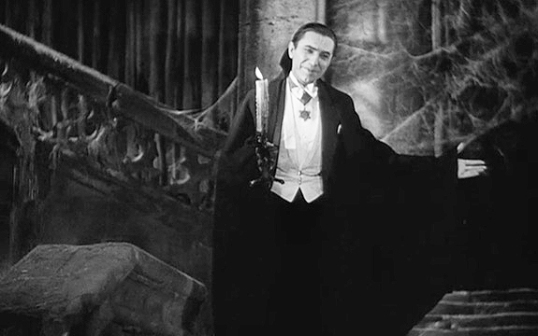
1930 — 1931: Bela Lugosi Is Not Nominated For Best Actor For Dracula

Admittedly, the 1931 version of Dracula is a bit of a creaky affair, one that feels quite stagey to modern audiences.  But Bela Lugosi’s performance in the title role holds up well, despite the number of times that it has been parodied.  Unfortunately, from the start, the Academy was hesitant about honoring the horror genre.

Frankenstein (1931, dir by James Whale)

1931 — 1932: Boris Karloff Is Not Nominated For Best Actor For Frankenstein

Again, the Academy snubbed an iconic horror star.  Not only was Boris Karloff not nominated for Frankenstein but the film itself was not nominated for Best Picture, despite being infinitely better than at least one of the 8 films that were nominated.  (That film, by the way, was Bad Girl.  When is the last time that anyone watched that one?)  In fairness to the Academy, they did honor one horror film at that year’s awards.  Fredric March won Best Actor for Dr. Jekyll and Mr. Hyde.  Of course, he also tied with Wallace Beery, who was nominated for The Champ.  Obviously, the Academy still had to work out its feelings towards the horror genre, a process that continues to this very day.

1932 — 1933: King Kong Is Not Nominated For Best Picture

Oh, poor King Kong.  Film audiences loved him but the Academy totally ignored both him and his film.  Unfortunately, back in 1933, the Academy had yet to introduce a category for special effects.

1932 — 1933: Duck Soup Is Ignored By The Academy

King Kong was not the only worthy film to be ignored at the 1932-1933 Oscars.  The Marx Brothers’s greatest film also went unnominated.

1934: The Scarlet Empress Is Not Nominated For Best Picture

Josef von Sternberg’s surreal historical epic was totally ignored by the Academy.  Not only did it miss out on being nominated for Best Picture but the sterling work of Marlene Dietrich and Sam Jaffe was ignored as well.  How was the opulent set design ignored?  How did it not even pick up a nomination for costume design?  My guess is that Paramount chose to promote Cleopatra at expense of The Scarlet Empress.  Either the way, the Best Picture Oscar was won by one of my favorite films, It Happened One Night.

1935: Fred Astaire and Ginger Rogers Are Not Nominated For Top Hat

Top Hat scored a best picture nomination but the film’s two stars went unnominated.

1936: My Man Godfrey Is Nominated For Everything But Best Picture

My Man Godfrey, a classic screwball comedy, was nominated for Best Actor, Best Actress, Best Supporting Actor, Best Supporting Actress, Best Director, and Best Screenplay but somehow, it was not nominated for Best Picture.  It’s a shame because My Man Godfrey, along being a very funny movie, is also a film that epitomizes an era.  Certainly, it’s far more entertaining today than the film that won Best Picture that year, The Great Ziegfeld.  (Interestingly enough, William Powell played the title role in both Godfrey and Ziegfeld.)

1937: Humphrey Bogart Is Not Nominated For Best Supporting Actor in Dead End

Dead End featured one of Bogart’s best gangster roles.  As a gangster who returns to his old neighborhood and is rejected by his own mother, Bogart was both menacing and, at times, sympathetic.  Like Cagney and Robinson, Bogart definitely deserved a nomination for his portrayal of what it was like to live a life of crime.  Unfortunately, Bogart was an actor who was taken for granted for much of his career.  It wasn’t until he played Rick Blaine in Casablanca that the Academy would finally nominate him.

The Adventures of Robin Hood (1938, dir by Michael Curtiz)

1938: Errol Flynn Is Not Nominated For Best Actor In The Adventures of Robin Hood

This is truly one of the more shocking snubs in Academy history.  Errol Flynn’s performance as Robin Hood pretty much set the standard for every actor who followed him.  Russell Crowe is undoubtedly a better actor than Flynn was but Crowe’s dour interpretation of Robin could in no way compete with the joie de vivre that Flynn brought to the role.

Agree?  Disagree?  Do you have an Oscar snub that you think is even worse than the 10 listed here?  Let us know in the comments!

Up next: 1940s, in which Hollywood joins the war effort and the snubs continue!

Dead End (1937, dir by William Wyler)

4 Oscar Snubs From the 1920s


The Oscars started out as an afterthought.

When Louis B. Mayer first proposed setting up what would become the Academy of Motion Picture Arts and Sciences in 1927, he wasn’t really that interested in giving out awards. Instead, he saw the Academy as an organization that would mediate labor disputes between the studios and the unions. He also felt that the Academy could basically be used to improve the film industry’s image, which had taken a hit from the rape trial of Fatty Arbuckle, the overdose of Wallace Reid, and the murder of William Desmond Taylor. When he and the other 35 founders of the Academy met to draw up the organization’s charter, the idea of giving out awards was mentioned only in passing. A committee would be set up to give out yearly awards to honor the best that Hollywood had to offer.

The first Academy Awards ceremony was held in a hotel ballroom in 1928. It occurred at the end of a private dinner and the awards were handed out in 15 minutes. The 2nd ceremony was the first to be broadcast on the radio. It was only when the Academy got around to the third ceremony that the Oscars started to transform into the spectacle that we know today. It was only then that people started to really pay attention to what was and was not nominated for Best Picture.  And, as people started to pay attention, they also started to notice and talk about which films and performers were snubbed by the Academy.

Today, for Oscar Sunday, we’re taking a a decade-by-decade look at some notable Oscar snubs. We will start with those first three ceremonies.

1927 — 1928: The General Receives Zero Nominations

For the very first Oscar ceremony, two Best Picture awards were handed out.  Wings won the Oscar for Best Production.  Sunrise, meanwhile, won the Oscar for Unique and Artistic Production.  Today, Sunrise is better remembered than Wings.  Personally, I like both films.  Thought it’s nearly a hundred years old, Sunrise remains visually stunning.  Wings, meanwhile, features some thrilling aerial footage and a performance from the wonderful Clara Bow.

That said, it’s still a bit unfortunate that Buster Keaton’s The General received not a single nomination, despite being eligible for the Oscars.  Today, The General is recognized as being a comedic masterpiece.  However, when it was initially released, it struggled at the box office and many in Hollywood resented Keaton’s independent streak.  As a result, The General became one of the first films to be snubbed by the Academy.

Metropolis (1927, dir by Fritz Lang, DP: Karl Freund and Gunther Rittau)

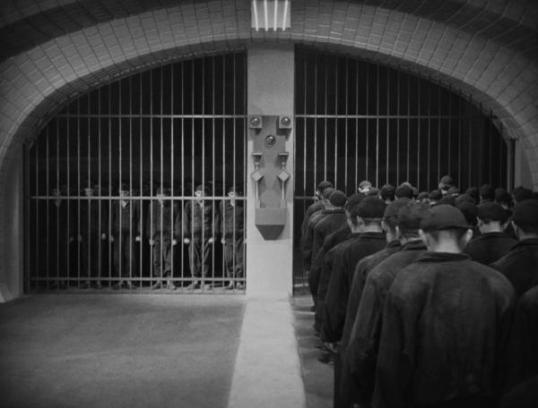
1927 — 1928: The Academy Ignores Metropolis

The very first Best Actor winner was Emil Jannings.  Jannings was German and struggled with English but, during the Silent Era, that wasn’t a problem.  However, the coming of sound petty much ended Jannings’s Hollywood career.  He returned to Germany, where he remained a star.  He would go on to star in several Nazi propaganda films and was reportedly one of Hitler’s favorite actors.  When the war came to an end, Jannings took to carrying his Oscar statuette around with him in the hopes that it would win him favor with the Allies and allow him to avoid having to go through the denazification process.  It didn’t work and Jannings retired from acting.  He died in Austria in 1950.

Personally, I think it would have been nice if the first Oscars hadn’t honored someone who would later star in Nazi propaganda films.  And the Academy had the option to do just that, as Fritz Lang’s Metropolis was released in the United States in 1927.  Metropolis was not only one of the first great science fiction films but Lang was one of the many German directors who would come to Hollywood after the Nazis came to power,  Honoring Metropolis would have allowed the Academy to honor someone who refused to compromise with the Ministry of Propaganda.  Unfortunately, neither Metropolis nor Lang were nominated.

1927 — 1928 and 1928 — 1929: Lon Chaney Is Not Nominated For Best Actor

Poor Lon Chaney.  Widely considered to be one of the best actors of the silent era, Lon Chaney, Sr. was never nominated for an Oscar.  London After Midnight is a lost film and West of Zanzibar is only partially complete but, speaking as a horror fan, I would have loved it if the Academy could have nominated him for either one of those films.  If nothing else, it would have opened the door for the horror genre.

1929 — 1930: The Cocoanuts Is Ignored

Imagine how different Oscar history would have been if the Academy had early on started a tradition of honoring comedy?  The Marx Brothers were not fans of their first released film but audiences loved The Cocoanuts.  Unfortunately, the Academy was not quite ready to embrace comedy and, as such, this became the first (but not the last) Marx Brothers film to be snubbed.

Agree?  Disagree?  Do you have an Oscar snub that you think is even worse than the 4 listed here?  Let us know in the comments!

Up next: The 1930s brings a depression and a lot more snubs!

The Shattered Lens Live Tweets Oscar Sunday


Oscar Sunday started like any other Sunday.

Some members of the TSL Team were less concerned with the Oscars than others:

That said, when the ceremony did start, we had some opinions:

6 Actresses Who I Hope Will Win An Oscar In The Next Ten Years


Continuing the theme from my previous post, here are 6 actresses who I sincerely hope will have won their first competitive Oscar by the time that the 2033 ceremony rolls around.

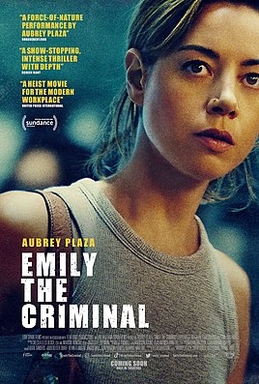
  1. Aubrey Plaza

With her recent performances in Emily the Criminal, Black Bear, and Ingrid Goes West, Plaza has established herself as one of the most interesting actresses working today.  She’s willing to take risks that other performers are not and, in a perfect world, she would have been rewarded with several nominations to her name.

2. Anna Kendrick

I guarantee that Anna Kendrick would give one of the best acceptance speeches ever.  Add to that, we already know that Anna Kendrick deserved to win for Pitch Perfect so, at this point, the Academy owes her an Oscar.  Get with it, Academy!

3. Thomasin McKenzie

Thomasin McKeznie deserved to be nominated for her poignant performance in Leave No Trace and she seems destined to win an Oscar someday, perhaps for one of her two upcoming films, Eileen and Perfect.  Because of her role in Leave No Trace, a lot of critics have compared McKenzie to Jennifer Lawrence.  Personally, I think she has more in common with Saoirse Ronan.  Like Ronan, McKenzie is one of those performers who seems to disappear into each role she plays and who brings a lot of conviction to each part, even when she’s appearing in something as silly as M. Night Shyamalan’s Old.  When you can give an award-worthy performance in something like Old, that means they’re going to have to give you an Oscar at some point.

4. Kirsten Dunst

Kirsten received her first Oscar nomination for Power of the Dog and, if the film had been a bit stronger, I imagine she probably would have won.  Hopefully, both she and Jesse Plemons will get a second chance to take home an Oscar.  It’s hard to think of another actress who plays depression with as much honesty as Kirsten Dunst.

5. Emily Blunt

Every year, I put Emily Blunt on this list.  I’m kind of amazed that she has yet to even be nominated, not even for Looper or A Quiet Place.  (Okay, neither one of those films were traditional Oscar films but she was brilliant in both of them.) She seems destined to be recognized eventually.  It’s just a question of when.

6. Lindsay Lohan

I hear you laughing but listen, everyone loves a good comeback story.  That’s especially true when it come to bloggers who spend all of their time trying to figure out a way to make the Oscars seem more exciting than they are.  Obviously, Lindsay’s not going to win an Oscar for appearing in a Netflix Christmas film but who knows?  Maybe someone will take a chance on her like the Safdies did when they cast Robert Pattison in Good Time and Adam Sandler in Uncut Gems.  Add to that, with Rachel McAdams and Amanda Seyfried having been recently nominated, it’s time for the Academy to show some love to the rest of the cast of Mean Girls.  

6 Actors Who I Hope Will Win An Oscar In The Next Ten Years


We talk a lot about which performers and directors have been snubbed at Oscar time.

For movie lovers, that’s an important subject. We all know that great actors like Peter O’Toole, Cary Grant, Albert Finney, and far too many others all went to their graves with several nominations but not a single competitive Oscar to their name. Just a few years ago, Kirk Douglas died at the age of 103 without having ever won a competitive Oscar.  We always talk about how certain actors are overdue for their first Oscar but sometimes we forget that being overdue doesn’t always translate into an eventual win. Sometimes, it translates into people watching a movie on TCM and saying, “How did that person never win an Oscar in their lifetime?”

With that in mind, here are 6 actors who I sincerely hope will have won their first Oscar by the time that 2033 rolls around:

  1. Caleb Landry Jones

Caleb Landry Jones is one of the masters of playing the type of eccentric characters who can be both dangerous and yet oddly sympathetic.  (One always get the feeling that Jonses’s characters are haunted by demons that they simply cannot control.)  He’s like a Texas-version of Ben Foster.  This year, he deserved a nomination for his devastating work in Nitram.  Hopefully, he’ll get that first nomination and his first Oscar in the years to come.

2. Steve Carell

Steve Carell was nominated for Best Actor for playing against type in Foxcatcher.  I’m always a little bit surprised to be reminded that Foxcatcher is, to date, Carell’s only Oscar nomination.  Part of the problem for Carell is that he’s so well-known for being a comedic actor that it’s easy to forget that he can handle dramatic roles as well.  (The Academy still has a bias against comedy.)  Another part of the problem is that some of Carell’s best performances have been in films that were otherwise underwhelming, like Beautiful Boy.  Here’s hoping that Carell finally finds the right role and the Academy takes notice.  By most accounts, he is one of the nicest guys in the business and I’m sure his acceptance speech would bring us all to tears.

3. Jesse Plemons

The heir to Philip Seymour Hoffman received his first Oscar nomination for The Power of the Dog.  He didn’t win but at least the Academy acknowledged that Plemons is one of the best character actors around.  This year, he has a starring role in Martin Scorsese’s Killers of the Flower Moon.  Though most of the early publicity has focused on Leonardo DiCaprio and Robert De Niro, it’s said that Plemons is actually the film’s main character so it will be interesting to see if the Academy again takes notice.

4. Matt Damon

Matt Damon actually does have an Oscar, for co-writing Good Will Hunting.  Still, it seems odd that Damon has yet to pick up an Oscar for acting.  It seems even stranger that he’s only been nominated three times, for Good Will Hunting, Invictus, and The Martian.  (I will still always be amazed that Damon wasn’t even nominated for Steven Soderbergh’s last truly good film, The Informant.)   There’s strong buzz around Air, though the film’s April release might mean that it’ll be out of the awards conversation by the time the precursor season starts in December.

5. Paul Dano

Paul Dano’s another really good actor who has somehow never been nominated, not even for The Fabelmans!  That said, it’s hard not to believe that Dano will be honored more sooner than later.

6. Brendan Gleeson

Gleeson actually could be an Oscar winner by the end of tonight.  If not, I hope he gets another chance soon.  He’s one of the best character actors around and it’s somewhat amazing that his nomination for The Banshees of Inisherin, while being very deserved, was also the first of his career.