The Eternally Frustrating Nicolas Cage


actor-nicolas-cage-discusses-his-2014-movie-left-behind

Just put yourself in my 4 inch heels for a moment.

You’re a film blogger who, though her tastes may be quirky, can usually defend her opinions fairly well.  You make an effort to see films that others may have missed and you pride yourself on your willingness to take and defend unpopular positions.

And let’s say that you’ve defied the conventional wisdom of so many of your fellow bloggers by declaring that Nicolas Cage is still a good actor and he still has something to offer the film world, beyond bad movies and weird performances.  You’ve even reviewed a film called Joe and triumphantly declared that this film proves that Nicolas Cage is a “great actor.”

And maybe, when certain people on Facebook laughed at you for using the terms “great” and “Nicolas Cage” in the same sentence, you argued that Cage is about to make a Matthew McConaughey-style comeback.  How?  By playing challenging roles in intelligent indie films.  You might have even said, “McConaughey had his Killer Joe and Nicolas Cage has Joe.”

And then this trailer for an upcoming film is released:

Nic, I still believe in you but, oh my God, you do test me sometimes.


Trailer: The Book of Life


The trailer for The Book of Life, an animated film produced by Guillermo Del Toro, was released earlier today and oh my God, I am in love with it.

I love this trailer so much that I’m not even going to waste your time trying to be clever about it.  Instead, I’m just going to invite you to watch.

Trailer: Kill the Messenger


Here’s the official trailer for Kill The Messenger, a film that has been getting some early Oscar buzz.

Apparently based on a true story, Kill The Messenger is about a reporter (played by Jeremy Renner) who writes a story accusing the government of selling cocaine in order to fund right-wing guerillas in Central America.  Some awards bloggers have predicted that Jeremy Renner will be nominated for best actor, largely because he’s Jeremy Renner.   Judging from the trailer, it looks like Renner gets to be intense and deliver a lot of passionate monologues, which is usually a pretty good strategy as far as getting Academy recognition is concerned.

That said, the trailer feels just a little bit generic.  In fact, as I watched it, I was reminded of last year’s ill-fated box office bomb, The Fifth Estate.  Every year, there’s an overtly political film that’s expected to change the world and win a lot of awards that then ends up sinking into obscurity because most people don’t go to the movies to learn a lesson.  They go in order to escape from the very world being detailed in films like The Fifth Estate and, possibly, Kill The Messenger.

Will Kill The Messenger be this year’s Fifth Estate?

We’ll find out in October.

Film Review: Burn! (dir by Gillo Pontecorvo)


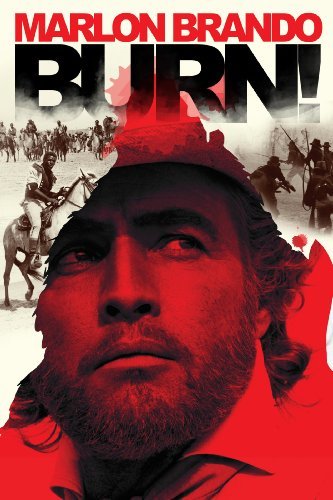
Burn!Earlier, I criticized Otto Preminger’s Hurry Sundown for taking a rather timid approach to the politics of race and class.  To see just how politically safe Hurry Sundown was, one need only compare it to 1969’s Burn, an Italian film that is perhaps one of the most politically radical films ever made.

Though the story told in Burn is a fictional one, it will still be familiar to anyone who has studied the history of South America.  Set in the 19th century, Burn takes place on the island of Quiemada, a colony of Portugal that is largely populated with black slaves who are forced to work on sugar plantations.  As the film makes clear, sugar was as economically valuable in the 19th century as oil is today.  So, it really shouldn’t be surprising that, as the film opens, Sir William Walker (Marlon Brando) has been sent to the island on a mission to overthrow the colonial government and replace it with one that will be friendly to British sugar companies.

Walker does this by inspiring the slaves to revolt.  To serve as a figurehead leader for the revolution, he selects a porter named Jose Delores (played by Evaristo Marquez, a nonactor who was both illiterate and working as a herder when he was selected for the role and who made up for his lack of experience and training by bringing a raw authenticity to the role).  Under Walker’s direction, Jose quickly becomes known as a fearsome and great leader.  Along the way, the two of them develop a paternalistic relationship with Jose looking up to Walker and Walker openly taking pride in Jose’s transformation from slave to general.

When the Portuguese eventually leave the island, the British set up a corrupt puppet government.  When Jose argues for more of a role in the new government, Walker explains that none of the former slaves have the education necessary to lead a country.  As Jose quickly realizes, the entire revolution was actually fought to benefit the British.  Walker leaves the island and Jose and the former slaves return to working on the sugar plantations.  They may no longer be slaves but they’re definitely not free.  (Or, as Jose puts it towards the end of the film, one cannot be given freedom.  Instead, freedom has to be grabbed.)

10 years later, Jose is leading another revolution, this time against the British-backed government.  Walker is sent back to the island with a new mission, to track down and defeat Jose.  When Walker first arrives back at the island, he assumes that, despite his earlier betrayal, he and Jose are still friends.  As quickly becomes obvious, Jose doesn’t feel the same way…

Now, I have to admit that I didn’t see Burn under the best of circumstances.  Not only did I see it on TV with regular commercial interruptions for that Risperdal lawsuit but, upon doing some online research, it also became obvious that I had watched a version of the film that was heavily edited prior to its American release.  20 minutes of footage was crudely taken out of Burn before it played in American theaters.  As a result, the version of Burn that I saw had a jagged and rather crude feel to it.  It was obvious that important scenes had been dropped and the end result felt disjointed.

And yet, despite all of this, Burn was still a powerful and memorable film.  I say this despite the fact that rigidly political films (which this one definitely is) usually tend to bore me to tears.  Even in its crudely edited form, Burn was full of powerful scenes that both made a political point and also displayed enough humanity to transcend the limits of ideology.  Consider the scene where, after having just learned that his revolution has accomplished nothing, Jose is hailed as a hero by his fellow revolutionaries.  In a matter of minutes, Jose goes from feeling like a failure to feeling triumphant to again feeling like a failure as he realizes that their freedom is going to be short-lived.  Or how about the scene where William Wallace crudely but effectively explains how the economy works by comparing a housewife to a prostitute?  And finally, there’s the film’s final scene, which is one of the most powerful that I’ve ever seen.

And then there’s Brando.

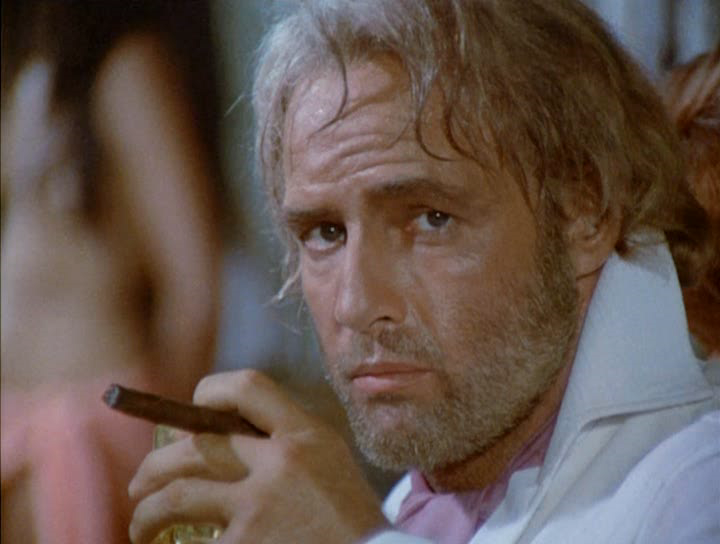
As played by Marlon Brando, William Walker comes to epitomize both cynicism and self-loathing.  Reportedly, director Gillo Pontecorvo wanted to portray Walker as being a much more obvious villain and Brando fought for a more ambiguous approach to the character.  What’s interesting is that, by hinting that Walker does what he does despite his guilty conscience, Brando makes the character into a much more loathsome monster than he would have been if he had been played as an unrepentant villain.  Brando’s best moments come towards the end of the film, when Walker struggles to understand how Jose could be willing to sacrifice himself for a greater cause.

Whenever we discuss Brando nowadays, its to talk about his eccentricities and his weight.  We talk about the fact that he was known for being difficult and that he eventually reached the point where he openly boasted about no longer caring.  What should be discussed is that, regardless of what he became later in his life, Marlon Brando was a great actor.  A film like Burn reminds us of that fact.

Marlon

Scenes That I Love: William Shatner Deals With The Explosive Generation


101440_1020_A

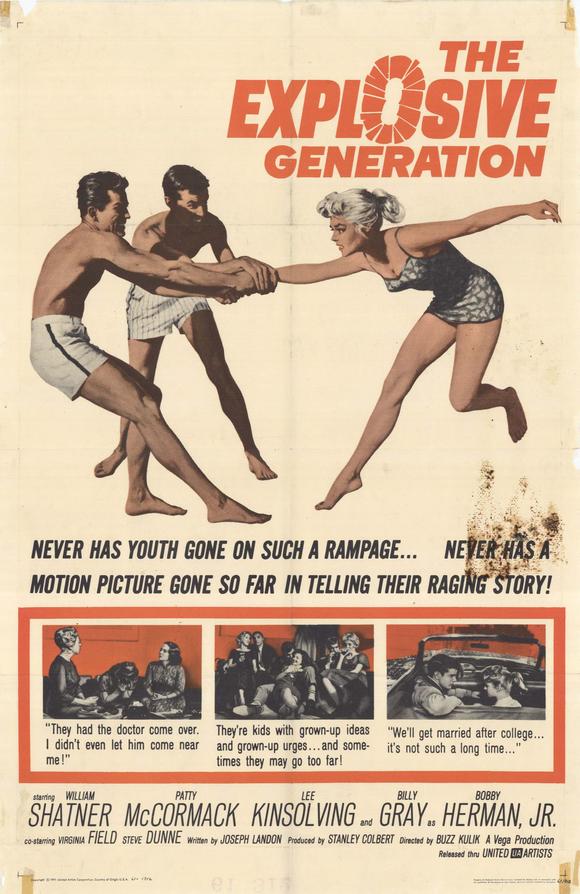
Ever since I first saw it on TCM last year, The Explosive Generation has been a favorite of mine.

This 1961 film deals with sex, peer pressure, censorship, juvenile delinquency, and civil disobedience.  The Explosive Generation is one of those films that was made to try to understand the wild and crazy youth of the early 60s, with their crazy rock and roll music, hip way of talking, and their habit of occasionally showing up for high school in a coat and tie.  As is typical of low-budget youth films of the period, the film is occasionally clueless and occasionally insightful.  In short, it’s a lot of fun and, if you’re a history nerd like I am, it’s a valuable time capsule for the way the world used to be (or, at the very least, the way that people used to think the world was).

Even better, it stars a youngish, intense, and slim William Shatner as an idealistic high school teacher who encourages his students to have a frank and honest discussion about sex.  If The Intruder (which was made roughly around the same time) is a film that proves that Shatner was capable of being an intelligent and insightful actor, The Explosive Generation is all about Shatner being Shatner.  This performance is everything that you’ve probably come to expect from William Shatner and, as a result, it transcends mundane concepts like good and bad.

Below are two scenes of William Shatner dealing with the Explosive Generation.  Be sure to keep an eye out because I’m sure The Explosive Generation will show up on TCM again at some point in the near future!

Were the critics right? A Review of Otto Preminger’s Hurry Sundown


It seems like whenever film bloggers and reviewers are making out a list of the worst films of all time, somebody always mentions Hurry Sundown.

Now, don’t get me wrong.  It doesn’t get mentioned as often as Battlefield Earth or Adam Sandler’s latest comedy.  And, when it does get mentioned, it’s done with little of the warmth that’s given to Troll 2, The Room, or Birdemic.  Instead, one gets the impression that Hurry Sundown is a film so bad that even those of us who appreciate bad films would find little to love about it.

But y’all know me.  I’m the type that prefers to judge for herself and I’m also someone who rather enjoys being a contrarian.  There’s a reason why one of my most read posts on this site is entitled 10 Reasons Why I Hated Avatar.  Add to that, Hurry Sundown was directed by Otto Preminger who also directed one of my favorite films of all time, Anatomy of a Murder.  How, I asked myself, could the man who made Anatomy of a Murder possibly also direct one of the worst films of all time?  As a result, every time that I saw someone claiming that Hurry Sundown was one of the worst films of all time, I grew more and more determined to someday see the film and judge for myself.

Well, I finally got my chance this weekend.  Hurry Sundown was on one of my newest favorite channels, The MOVIES! TV Network.  And I proceeded to watch it.  I sat through all four hours of this film (that’s including commercials and, oh my God, was I thankful for the distraction that those commercials provided).  I watched Hurry Sundown and …. wow.  Was it ever bad.

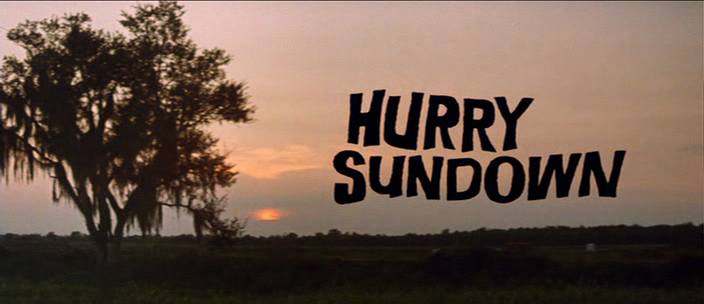
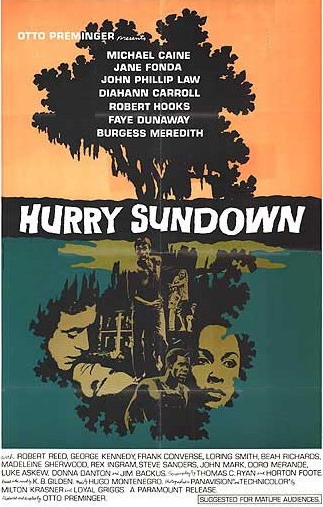
Hurry SundownReleased in 1967, Hurry Sundown was Otto Preminger’s attempt to take a look at race relations in the deep south.  It’s a film full of good, liberal intentions and an apparent lack of knowledge about — well, about everything.  As I watched this slow, almost formless blob of a film, I found myself wondering how the director who gave us Laura and Anatomy of a Murder could have possibly directed a film with a gigantic cast but absolutely no interesting characters.  I wondered how the director who had been willing to challenge the racist assumptions of 1950s Hollywood by directing Carmen Jones could have been responsible for the corny and subtly condescending look at race relations that was Hurry Sundown.

Hurry Sundown takes place in 1946 and is set in rural Georgia.  The war is over, the soldiers are coming home, and nobody in the film can maintain a convincing Southern accent for more than a line or two.  (Seriously — I’ve heard a lot of really bad Southern accents in a lot of really bad films but none of those accents were as bad as what I heard in Hurry Sundown.)  It’s a brand new world but the South is clinging to the old ways of racism and classism.

Preminger slowly (and clumsily) introduces us to the huge cast of characters who populate the slice of Hollywood Georgia.

There’s the sheriff (George Kennedy) who is so stupid that he can be distracted by an offer of fried chicken.  Kennedy actually gives a good comedic performance but his character seems like he belongs in another movie and you have to wonder how civil rights activists in 1967 — many of whom had undoubtedly been arrested and harassed by Southern sheriffs much like this one — reacted to Kenendy’s character being presented as harmless comic relief.

There’s the racist judge (Burgess Meredith) who, much like the sheriff, is presented as being a comedic buffoon as opposed to an actual threat.  The judge uses the n-word in every other sentence, which should be shocking and infuriating but, as a result of Meredith’s over-the-top delivery, instead simply comes across as being gratuitous and tasteless.

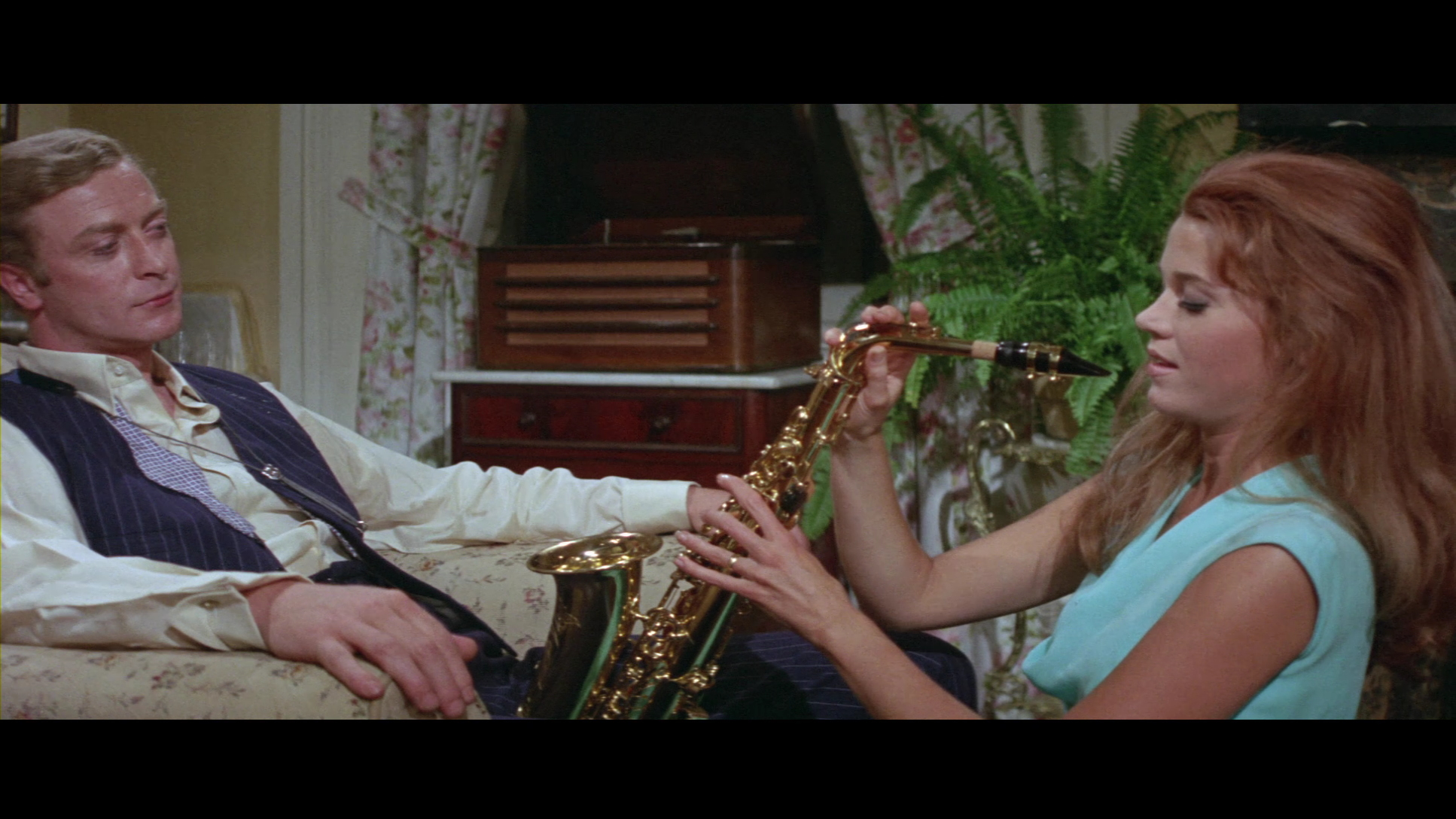
Then there’s Henry.  Henry is a businessman who dodged the draft, cheats on his wife, and who has a son who literally spends the entire movie screaming at the top of his lungs.  (Whenever that kid was on-screen, I imagined Preminger standing behind the camera and going, “More!  More!  Scream more!”)  Henry is also a racist, though for some reason he loves jazz and often plays the saxophone.  I kept waiting for someone in the movie to point out to him that jazz was created by black musicians but nobody did.  (If Henry had appeared in Anatomy of a Murder, someone would have.)

Did I mention that Henry is played by Michael Caine?  And did I also mention that Caine is the most cockney-sounding Southerner that I’ve ever heard?  Because he totally is.

Henry’s wife is named Julie and is played by Jane Fonda.  At one point, she suggestively blows on Henry’s saxophone.  One can only imagine how audiences in the 60s reacted to that.  (Actually, they probably didn’t.  They probably just said, “Good thing she’s pretty because she ain’t no musician…”)

Michael Caine and Jane FondaAnyway, Harry wants to buy up some farmland but half of that land is owned by Henry’s poor cousin Rad (John Phillip Law) and Rad doesn’t want to move.  Rad has just returned from fighting in the war and he views Harry as being a cowardly draft dodger.  Rad is married to Lou (Faye Dunaway) and wow, are they ever a boring couple!  Dunaway was under a five-picture contract to Preminger when she made this film and apparently, she had such a terrible time on the set of Hurry Sundown that she sued to get out of ever having to make another movie with Otto.  Dunaway’s misery comes through in every scene.

The other half of the farmland is owned by Reeve (Robert Hooks), a black farmer whose mother (played by Beah Richards) is Julie’s former mammy.  Julie goes down to the farmhouse to convince Reeve to sell and Reeve’s mother responds by having the most (over)dramatic heart attack in the history of cinema.  Saddened by death of his mother, Reeve is definitely not going to sell.  When he’s not chastely romancing the local teacher (played by Diahann Carroll, who appears to have wandered over from a different, far more glamorous movie), Reeve is singing sprituals and working out in the fields.

One of the things that Reeve does not do — no matter how many times he gets called the n-word or is treated unfairly — is get mad.  Rad gets mad.  Julie gets mad.  A liberal white preacher (Frank Converse) gets mad.  But Reeve and the other black characters in the film are never really allowed to get mad or do anything that might make the film’s white audience feel nervous.  Watching a film like Hurry Sundown, you can understand why — in just a few more years — Blaxploitation films would suddenly become so popular.  It was probably the first time that black film characters were actually allowed to not only get angry over the way they were being treated but to fight back, as opposed to reacting in the Hurry Sundown-way of passive acceptance.

Anyway, Rad and Reeve come together to protect their land and Henry and the evil judge conspire to cheat them out of their land and — well, let’s just say that Hurry Sundown is one of those films that has a lot of plot and very little action.  Preminger directs with a stunning lack of pace or grace, the actors deal with a poorly written script by either engaging in histrionics or going catatonic, and Michael Caine’s attempt at a Southern accent will amuse anyone who has ever been south of the Mason-Dixon.

I have to admit that I was really hoping that Hurry Sundown would turn out to be a sordid and tawdry little masterpiece, the type of overheated misfire that you love despite your better instincts.  But, no.  Hurry Sundown is just boring.  The film is such a misfire that it doesn’t even work as a piece of history.  The critics were right.  Hurry Sundown sucks.

Hurry_sundown_moviep


Teaser: Big Hero 6


I really can’t claim to have the slightest idea what’s going on in this trailer but I still think it’s adorable, nonetheless.  This film is scheduled to be released in November and it’ll be interesting to see how it compares to its potential Oscar rivals, The Lego Movie and How To Train Your Dragon 2.

Denzel Washington Will Kill People In September


I love Denzel Washington.

Not only is he a great actor who can seemingly play just about any role but, by all reports, he’s also apparently a pretty nice guy off-screen as well.  He has such a natural and likable screen presence that he can even make a potentially problematic film, like last year’s Flight, compelling and watchable.  My friend Jake Moore once said that Denzel was the closest thing that we have to a modern-day Jimmy Stewart and I happen to agree.

Yes, I love Denzel.  I just wish he wasn’t always killing people in the movies.

Don’t get me wrong.  Denzel makes for a believable action hero and it makes sense that, if your hero is going to be killing everyone he meets, you would want him to be played by an actor who can actually be likable while murdering.

It’s just that Denzel Washington is such a good actor that sometimes, it’s a shame to see him in generic action films where he often seems to be playing characters that could be played by just about any actor.  Washington always gives a good performance and brings a lot of charm to the proceedings but that doesn’t change the fact that his role in Safe House could have just as easily been played by Jason Statham.

Add to that, I’m growing bored with film violence.  Whenever I see a trailer for a new action film, I often have the same reaction that I had when I first saw the trailer for Jack Reacher.  “Really?” I think to myself, “Am I supposed to pretend to be excited about this?”

My feelings aside, it doesn’t look like things are going to change anytime soon.  And perhaps as proof, here’s the trailer for Denzel Washington’s new film, The Equalizer.  Don’t get me wrong.  I’m sure Denzel gives a great performance here and the film might even be entertaining when taken on its own terms.

It’s just that it all feels so generic.

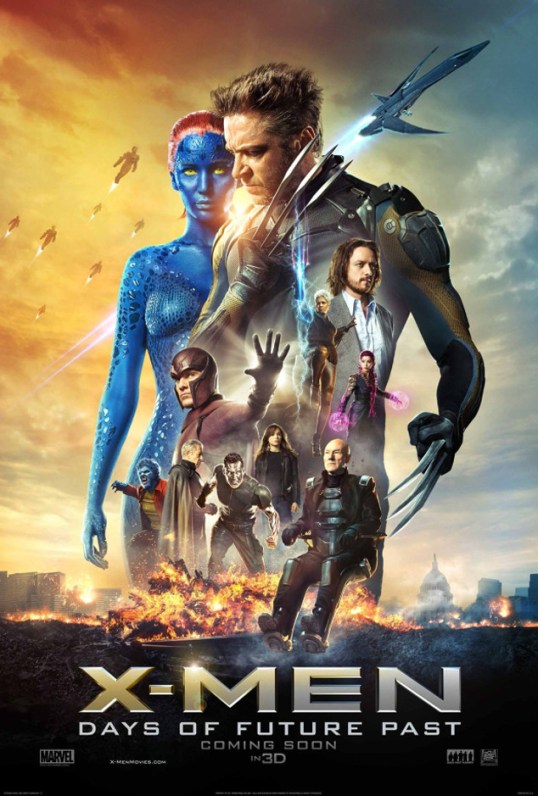
Trash Film Guru Vs. The Summer Blockbusters : “X-Men : Days Of Future Past”


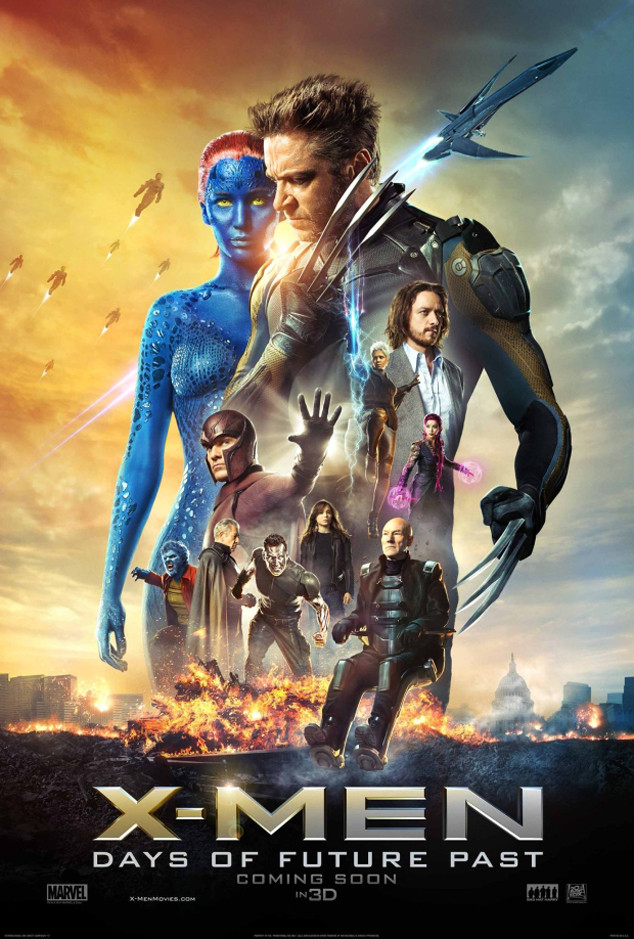
rs_634x939-140324091106-634.jennifer-lawrence-x-men.ls.32414

At this point, I freely admit to being a little bit confused : X-Men : Days Of Future Past opens to a somewhat lower box office take than The Amazing Spider-Man 2 did, which was only slightly behind the opening-frame receipts generated for Captain America : The Winter Soldier, and yet Cap and the X-Men are both considered “successes,” while Spidey’s considered a “disappointment” — even though, last I checked, its’ total gross ticket sales were only about $50 million behind Cap’s despite the fact that it opened a full month later?    Chances are probably good  that it will even end up closing the gap here at some point, but no matter — the die appears to have  already been cast. The stench of that rat I mentioned smelling in my Spider-Man review a couple weeks back? It’s getting a lot stronger now.

Needless to say, I’ve got a theory as to what’s going on here, and it builds upon my theory already expounded upon in that just-mentioned prior review : Disney/Marvel actively wants the Spider-Man franchise back, but the X-Men? Not so much. At least not yet.

How else to explain this clearly-orchestrated PR campaign? Look, internet movie critics are an easy bunch to buy off : for a free ticket, or even the promise of some kind of other free swag in the future, you can get thousands of people to say whatever you want them to. And from there, you can get thousands of others to mimic the already-established meme of whether a given flick is “successful” or not, because gosh, who would dare contradict the well-established critics and box-office analysts who have already passed judgment on the merits of a particular work? For the price of probably less than $10,000 in either payments or promises, DisMar has the movie-going public right where they want us, echoing their nonsensical party line and unsupported-by-the-facts pronouncements.

Needless to say, I don’t feel like playing along — for the most part. But there’s one area where I do agree with the general consensus, even if the fix is in : X-Men : Days Of Future Past is a really good superhero flick. And that might just throw a wrench in Marvel’s “this one’s dying on the vine, let’s just wait it out and see what happens” game plan.
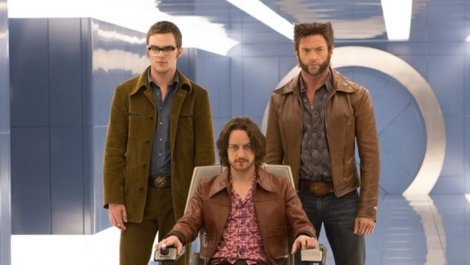
hugh-jackman-stars-in-final-trailer-for-x-men-days-of-future-past-watch-now-161013-a-1397628564


Seriously, friends, this one has everything and the kitchen sink going on, but somehow returning director Bryan Singer (more on him in a minute) juggles every ball thrown in the air and makes it work : the “divergent timelines” conceit that forms the core of the plot never gets confusing even though it easily could; the action sequences are brisk and spectacular; the characters are uniformly believable and compelling; and the performances, from perhaps the most star-studded cast ever assembled for a comic-book film, are all first rate. When you’ve got Hugh Jackman, James McAvoy, Patrick Stewart, Ian McKellen, Ellen Page, Jennifer Lawrence, Michael Fassbender, Nicholas Hoult, Peter Dinklage, Shawn Ashmore, Halle Berry, Michael Lerner, Booboo Stewart, Omar Sy, Kelsey Grammer, Anna Paquin, James Marsden and Famke Janssen all punching the same time clock, it goes without saying that  some are going to have more to do than others, but nobody seems intent on stealing the show for themselves, which is no mean feat considering the sheer number of sizable egos that must be involved here. Sure, the script puts most of the onus of Wolverine, the young Professor Xavier, the young Magneto, the young Beast, the young Mystique,  and the villainous Dr. Bolivar Trask, but that doesn’t mean everybody else doesn’t give their admittedly smaller parts at least a reasonable effort. Shit, I’m not sure how you even get stars of the stature of Page, Berry and Paquin to even accept what are essentially tertiary-at-best roles (does Paquin even have a line of dialogue?), but somehow they keep showing up for X-Men flicks, and in this case the place doesn’t even seem that crowded. Shit, Singer even manages to sneak in quick cameo for Wolverine co-creator Len Wein.
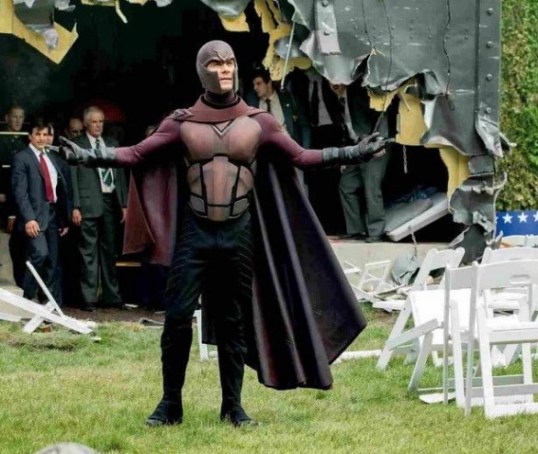
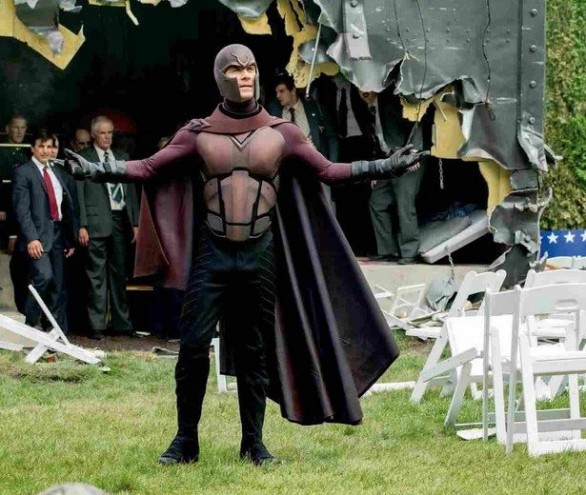
X-Men-Days-Of-Future-Past-Magneto3-586x495

In many ways what makes  Days Of Future Past so successful is that fact that it’s actually more a direct sequel to First Class (which I also thoroughly enjoyed) than it is the initial X-trilogy, and some of the continuity changes that the end results of this film apparently seal into place even seem to undo how those first three films “wound up,” but whatever — the end result here is a franchise that feels like it’s been given a new lease on life after treading water for a good half-decade or so. I mentioned just a moment ago that I really dug First Class, but you can’t get by on prequels forever. At some point a movie needed to come along that propelled the X-Men franchise forward, and this does so with plenty of style and flair.

Plus, the whole thing’s a lot of fun — sure, some of the dialogue is overly- verbose and clunky and painfully expository, but those instances are rare, and actually stand out in contrast to the general ease and flow of the rest of the film. And while the premise itself requires a heavy dose of suspension of disbelief, let’s be honest here — what super-hero movie doesn’t? At least this one rewards your willingness to go with the flow in ways that even highly-touted fare like Joss Whedon’s The Avengers (a favorite target of my ire, I admit, but only because it really does suck, no matter what anyone else thinks) could never hope to manage. Plus, audiences get a chance so see Dinklage prove that he can” bring it”  in each and every role he takes on, not just on Game Of Thrones — something those of us who have been fans of his work ever since The Station Agent have long maintained.
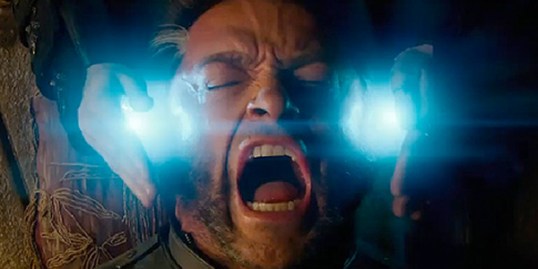
x-men-days-of-future-past-trailer

In case it weren’t painfully obvious already, I thoroughly enjoyed X-Men : Days Of Future Past, and after appearing to flounder in the wake of the risible Valkyrie, my faith in Bryan Singer as a director has probably never been higher — unfortunately (here’s where that “more on him in a minute” comes in), I can’t say the same in regards to my faith in Bryan Singer as a human being. I won’t kid you — the sexual abuse allegations that have been leveled against him really bother the shit out of me. And no, it has nothing to do with Singer’s sexual orientation : I don’t care if a person is straight, gay, or somewhere in between, any and all relationships — whether serious, casual, or less than casual — between consenting adults are fine by me. Everybody likes to get laid, have at it. But age of consent laws are there for a reason, and kids and teens are, and should be, off limits to grown adults. The fact that  the “fan” community seems so eager to point out that Singer’s accuser has filed civil rather than criminal charges and that he’s apparently done so in the past is both irrelevant to the reality of what may or may not have occurred,  and represents a clear case of reprehensible victim-shaming of the highest order. Sure, everyone’s innocent until proven guilty, but assuming, or even implying, that somebody who’s been brave enough to come forward with claims this serious just has to be a liar because they’re choosing to address this issue in ways that others either don’t understand or approve of is beneath contempt. Maybe we’ll never know the whole truth of this matter, but if Singer did what’s he’s been accused of, then he’s got some serious issues and needs some serious help and sure,  I feel some amount if sympathy for whatever turmoil is boiling away inside his mind — but not half as much as I do for the teen boy (s) that he’s victimized (if he has). I don’t want to see him condemned in the court of public opinion if he’s completely innocent, but I don’t want to see his accuser condemned, either, and that’s what’s been happening. Sex between adults and those not legally deemed to be adults (in most states that’s 18, in some 16) is against the law, period, and if Singer did, in fact, engage in the sort of behavior that’s been alleged,   then I’m done with him from here on out. End of rant.

Regardless of what’s he’s done in his off-hours, though, the perhaps-tragic fact (depending on how legal proceedings play out) remains that what he’s done while on company time just can’t be denied in this case. I wish I could love X-Men : Days Of Future Past with a totally clean conscience, sure, but I can’t deny that I loved it just because it may have been directed by a guy whose personal behavior is both sleazy and illegal. It’s a complex set of circumstances to weigh in one’s mind, to be sure, but so goes life. I wish its murky waters were easier to navigate, but they never have been, and they’re never going to be.

As for the future of all things X-Men, I’ll make one easy prediction right now : when this thing hits home viewing “platforms” in a few months’ time, look for a bevy of reviews along the lines of “ya know, maybe this this isn’t quite as good as we thought at first” and “on second viewing, the flaws in this one are obvious” — not because such sentiments will be true, but because Days Of Future Past is so well-done, and opens up so many possible avenues for the franchise going forward, that Marvel’s gonna want to start one of their infamous “whisper campaigns” to try to undermine the public’s confidence in having it in “other hands” and get it back in their own  grubby, greedy paws.

Here’s The Trailer For Magic In The Moonlight


Here’s the trailer for Woody Allen’s latest film Magic In The Moonlight.

For the longest time, a lot of film bloggers (myself included) have been predicting that Emma Stone might be Oscar-nominated for this film.  This was largely because actresses who appear in Woody Allen films always seem to end up getting nominated and we all know that Emma Stone is going to be nominated at some point in her career.

(She deserved a nomination for Easy A.)

(Oh, she so totally did!)

However, having now seen the trailer, I’m no longer quite as sure.  It looks like it’s going to be a perfectly charming little comedy and the trailer is gorgeous to look at but the film itself doesn’t look like it’s going to be the type to resonate as strongly as Blue Jasmine or Midnight In Paris.

On the plus side, it doesn’t look like it’s going to be another To Rome With Love, either.