Review: Chicken Run (dir. by Peter Lord & Nick Park)


“I don’t want to be a pie. I don’t like gravy.” — Babs

Chicken Run is one of those animated films that seems simple at first glance: a bunch of chickens want to escape a farm before they become pies. That basic premise could have easily turned into a lightweight family comedy full of barnyard jokes and little else. Instead, the 2000 DreamWorks and Aardman production, directed by Peter Lord and Nick Park, plays like a miniature war movie, prison-break thriller, romance, survival adventure, and pitch-black satire all at once. It is consistently funny, but its comedy works because the stakes feel real. These chickens are not merely trying to get away from an annoying farmer; they are trying to survive an industrial system that sees them as disposable raw material.

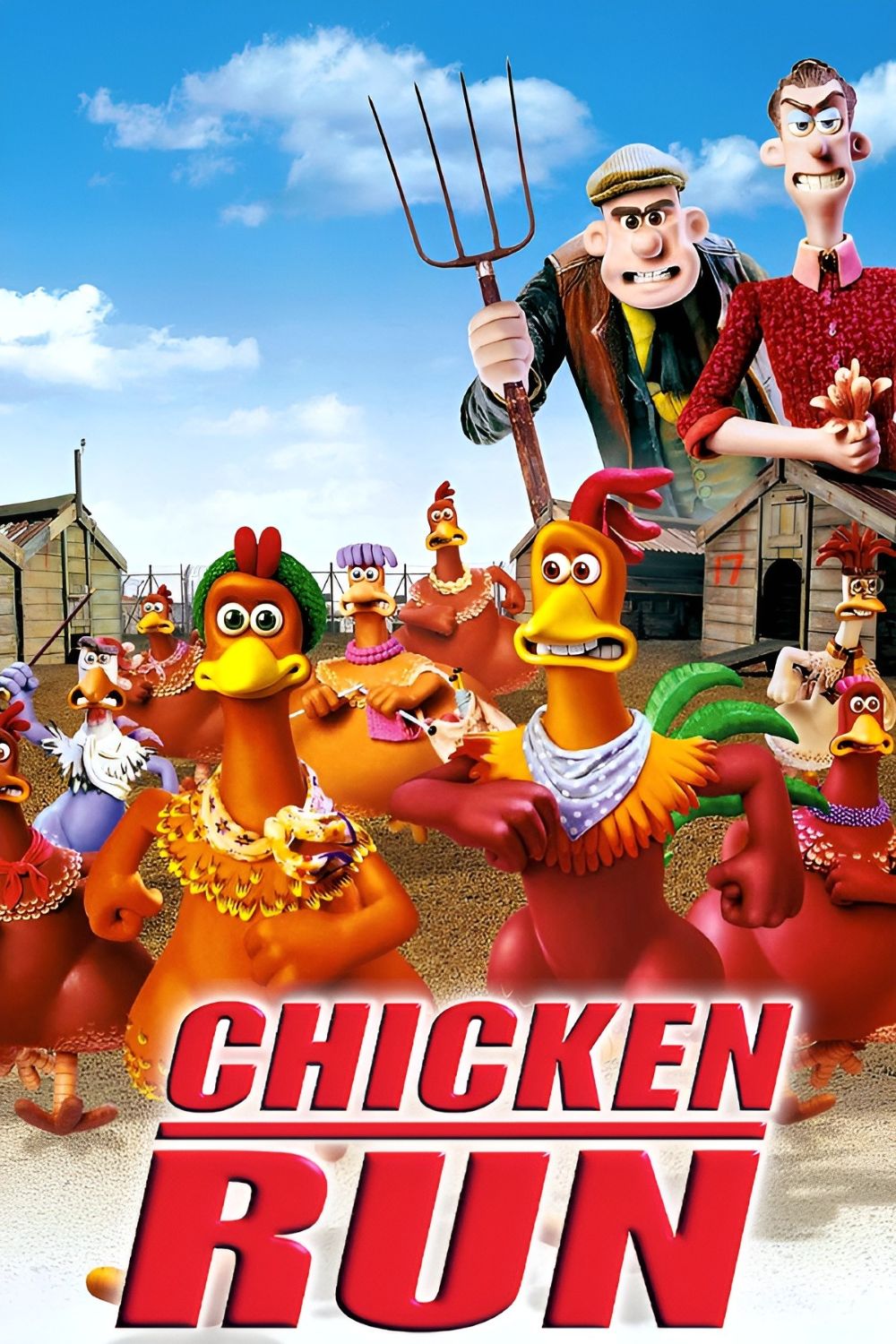
The first thing that makes Chicken Run so memorable is how completely it commits to its central influence: John Sturges’s The Great Escape. Ginger, voiced with determined energy by Julia Sawalha, is essentially the Steve McQueen-like mastermind of a prisoner-of-war escape film, only without the motorcycle. She has attempted escape after escape from the Tweedys’ chicken farm, and every failure has made her more experienced, more stubborn, and more isolated from the flock. The farm itself is built and filmed like a prison camp: there are fences, watchtowers, guards, roll calls, surveillance, punishments, and a constant feeling that someone is always being watched. The chickens dig tunnels, build plans, assign tasks, debate leadership, and struggle with morale in a way that directly echoes the Allied prisoners in The Great Escape.

That influence is not just a clever parody. It gives the movie a real sense of structure and urgency. Ginger is not a character who simply wishes for freedom; she is obsessed with earning it. Every failed attempt lands her in the punishment shed, a tiny isolated box that is funny in its exaggerated stop-motion form but also genuinely unpleasant. The sight of Ginger sitting alone in darkness, listening to the rain and realizing that another escape has failed, establishes that the movie is willing to make her suffering count. She is not invincible, and the other chickens do not always believe in her. That gives her eventual success much more weight than it would have had in a more conventional cartoon.

The Tweedys are also far more sinister than the average animated villains. Mr. Tweedy, voiced by Tony Haygarth, is the bumbling half of the pair: nervous, confused, increasingly paranoid, and convinced that “the chickens are organizing.” It is one of the best-running jokes in the movie because he is absolutely right, but his wife refuses to take him seriously. Melisha Tweedy, voiced by Miranda Richardson, is the truly frightening one. She is cold, practical, greedy, and almost entirely without sentiment. When egg production drops, she does not consider improving conditions for the chickens. She decides to turn them into chicken pies.

That is where Chicken Run goes into much darker territory than its cheerful clay-animation style initially suggests. The film’s narrative is built around factory farming, confinement, exploitation, and mass slaughter. The chickens know that when one of them stops laying eggs, she is not being taken somewhere safe. She is taken away to die. The scene involving the elderly hen Edwina is particularly unsettling because it is handled with restraint. The audience never sees explicit violence, but the implication is unmistakable. The sound of the axe, the sudden absence, and the reactions of the other chickens tell the whole story. It is dark material for a family film, but it is never treated as a joke. The humor comes from character behavior and British deadpan timing, not from dismissing the fear these animals feel.

That balance is one of the movie’s greatest achievements. Chicken Run is undeniably an animated comedy, filled with visual gags, eccentric voices, and absurdly specific bits of dialogue, yet its themes remain surprisingly grim. The Tweedys’ new pie machine is not just a goofy invention. It is a huge, mechanized symbol of industrialized cruelty, a machine designed to turn living creatures into products at maximum efficiency. Once it appears, the farm stops feeling merely like a prison camp and starts feeling like something even more horrifying: a production line where the inmates are literally the merchandise. The comedy makes the movie accessible, but the darker ideas give it teeth.

Aardman’s stop-motion animation is essential to that effect. The chickens are expressive in a way that never makes them overly cute or polished. Their handmade look gives them texture and personality. You can see the fingerprints of the animators in the characters’ surfaces, the uneven little details of the farm, and the tangible construction of the machinery. Modern computer animation can create smoother movement and more elaborate spectacle, but Chicken Run has a physical presence that is hard to replicate digitally. The fences feel like real fences. The mud feels like real mud. The pie machine feels enormous and dangerous because it is a real object built in miniature and photographed frame by frame.

The design also helps sell the film’s strange mix of bleakness and whimsy. The Tweedys’ farm is gray, muddy, cramped, and oppressive, a place where every chicken coop resembles a barracks. Beyond the fence is a bright green countryside that feels almost mythic to the trapped flock. Freedom is not some vague emotional idea; it is visible right there, just beyond reach. That visual contrast makes Ginger’s desperation easy to understand. She is not asking for luxury. She wants sunlight, open space, and the ability to live without being counted, confined, or killed for failing to produce enough eggs.

Mel Gibson’s Rocky Rhodes enters the story as the possible answer to Ginger’s problem. He is introduced as a flying American rooster who crashes into the farm like a larger-than-life war hero. His nickname, “the Lone Free Ranger,” and his exaggerated confidence make him feel like a parody of classic American movie masculinity. Rocky is all swagger, charm, and improvised survival instinct, which makes him a good contrast to Ginger’s disciplined, strategic personality. He tells the chickens he can teach them to fly, and the entire farm becomes invested in the idea even when the plan seems impossible.

Rocky works because the film does not make him a flawless hero. He is entertaining and ultimately brave, but he is also a fraud. His supposed ability to fly is part of a circus act, and he has escaped captivity before by using a human-operated catapult rather than his own wings. When the truth comes out, it hurts because the chickens have placed their hope in him. Ginger especially feels betrayed, not only because Rocky lied but because she allowed herself to believe that someone else might finally have the answer. Their relationship has a nice edge to it; it is not a sweeping romance so much as a reluctant partnership between two strong-willed survivors who approach freedom in completely different ways.

The sequences built around the escape plan show how much fun Lord and Park have with action-adventure movie language. While The Great Escape is the most obvious inspiration, certain moments have an energy reminiscent of Indiana Jones and the Raiders of the Lost Ark. There are close calls with traps, rapid-fire improvisation, looming mechanical threats, and escapes that depend on inches of timing. The climax inside and around the pie machine especially has that pulpy serial-adventure tension. Characters are dragged toward blades and conveyor belts, machinery rattles and groans, and plans collapse only for someone to invent another solution at the last possible second.

The final act also brings in a strong resemblance to The Flight of the Phoenix, particularly in the way the chickens turn desperation into engineering. The flock has to build a flying machine out of whatever materials they can gather, and the project depends on cooperation between characters with very different skills. Fowler, the elderly rooster voiced by Benjamin Whitrow, becomes crucial here. At first he seems like a pompous relic, forever talking about his days in the Royal Air Force and resisting Ginger’s modern plans. But his knowledge and experience eventually become useful. He gives the group the language, confidence, and organizational spark needed to turn their makeshift aircraft from a dream into something that might actually leave the ground.

Fowler is also one of the funniest parts of the film because he represents a specific kind of old British pride: stubborn, ceremonial, and deeply attached to the past. His stories about serving under “the old RAF” seem ridiculous until the moment the chickens actually need someone who understands the basic principles of flying. The film never makes him into a conventional action hero, but it allows him to reclaim some dignity. Like many of the supporting characters, he gets a small but satisfying arc.

The rest of the flock is memorable because they are not interchangeable background animals. Babs is sweet, distracted, and constantly knitting, but her innocent manner hides an ability to contribute when it matters. Bunty is blunt, cynical, and always ready to question Ginger’s plans. Mac, with her Scottish accent and technical expertise, is the group’s engineer and probably the person most likely to explain why a wild idea will not work. Fetcher, the rat, is opportunistic and cowardly, but he is useful in the way only a black-market scavenger can be. Even the two dimwitted farm dogs have personality, serving as comic obstacles while still making the farm feel guarded and dangerous.

What makes Chicken Run endure is that it never treats its characters’ freedom as a trivial goal. The story has jokes about eggs, knitting, chicken behavior, British class attitudes, and American bravado, but beneath all of that is a serious belief that a community can refuse to accept the role assigned to it. Ginger’s greatest strength is not that she has the perfect plan. It is that she refuses to surrender when every plan fails. Her determination eventually spreads to the other chickens, who stop seeing themselves as helpless inmates and start acting like participants in their own rescue.

The ending is satisfying because it feels earned. The chickens do not escape through luck alone, and they do not wait for a human to save them. They escape because they organize, take risks, use their talents, forgive one another’s failures, and choose action over resignation. That is a surprisingly powerful message for a film about clay chickens escaping a pie factory.

More than two decades later, Chicken Run still stands as one of the strongest animated films of its era. Its stop-motion craft remains beautiful, its jokes still land, and its references to The Great Escape, Indiana Jones and the Raiders of the Lost Ark, and The Flight of the Phoenix add an extra layer of fun for viewers familiar with those films. But it is the movie’s willingness to acknowledge fear, exploitation, and death beneath the comedy that makes it more than a clever genre spoof. Chicken Run is funny because it is inventive, but it is memorable because it understands that freedom means the most when it is hardest to achieve.
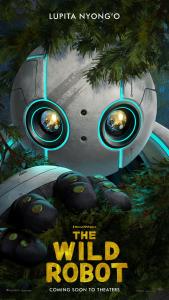
Film Review: The Wild Robot (dir. by Chris Sanders)


I don’t know if we fully recognize all the sacrifices parents make for their kids. A person takes on ownership of a whole little being (be it through birth, adoption or the Cat Distribution System) and somehow tries their best to keep it fed, protected, educated and loved, all while still trying to figure out their own lives. It doesn’t always work out. Some parents evade the responsibility, leaving their kids to horrible fates, while others rise to the challenge, often without fully knowing what they need to do. They’re not perfect, but parents can be pretty awesome at times, especially the ones who didn’t have to do the job. 

Dreamworks The Wild Robot may very well be the best Animated Feature this year. Nothing against Disney/Pixar’s Inside Out 2 (which was also wonderful) or Flow (which looks wonderful and took the Golden Globe for Best Animated Feature), but I spent a good part of this film sniffling. It’s a very simple, yet sweet story that moves at a very rapid pace. That’s understandable, given that it’s for children, but the story is accessible for just about any adult.

When a robot named Roz (Lupita N’yongo, A Quiet Place: Day One) crash lands in a forest, she studies her environment and tries to get to know the local habitat. The animals are naturally fearful of Roz, but she eventually begins to understand their dialects. While trying to phone home, Roz runs into some raccoon thieves and a rather large bear. The resulting chase causes her to accidentally crash into and destroy a goose nest, save for one egg. When the egg hatches, she finds herself having to take on a parent role for the gosling, though she’s not fully alone. Helping Roz out is a fox named Fink (Pedro Pascal, Gladiator II), who lives by his wits and provides some wildlife know-how for survival, while keeping himself well fed. Also along to assist is Pinktail, a possum who has a litter of her own to handle. As she adjusts to her new sense of motherhood, Roz meets tons of other animals that warm up to her. She finds a new task in taking care of Brightbill (Kit Connor, Ready Player One) and preparing him to fly South for the winter.

Directed by Chris Sanders (How to Train Your DragonLilo & Stitch), The Wild Robot has elements for both kids and adults. The wilderness is a dangerous place, and the Circle of Life is rougher here than it ever was in Disney’s The Lion King (which Sanders also had a hand in). There are predators and prey, and the audience is made to understand this pretty quickly (though not as harshly as say, Watership Down). There’s a great deal of tenderness as well, focusing on Storytelling (which Roz learns), the friends and family we make along the way and some hardship in the way that Brightbill suffers some insensibilities with from other geese that he doesn’t quite fit in with. 

I feel The Wild Robot‘s strongest points are the music and the art direction. The film looks like an actual watercolor painting, especially when viewed in the largest format possible. The pacing for the plot moved a little quicker than I expected, particularly in the lead up to meeting Brightbill. Musically, Kris Bowers (Netflix’s BridgertonThe Haunted Mansion) has a great soundtrack that adds some weight to the scenes. With Trent Reznor and Atticus Ross out of the running for Challengers, Bowers is my hopeful pick for the Best Soundtrack Oscar. 

At the time of this writing, The Wild Robot is available to watch on Universal’s Peacock service. Just make sure you bring a box of tissues and if at all possible, call or thank your Mom afterwards.

Behold the Live Action How to Train Your Dragon Teaser!


It’s been almost 15 years since the original How to Train Your Dragon was released. Taking a page out of Disney’s playbook, it looks like Dreamworks’ & Universal Pictures have decided a Live Action version was in order. Whether it was just to keep the story fresh in the minds of audiences, or to refresh the copyrights, here we have it. This was wild surprise on the big screen for me, because at first I thought it was a commercial for a possible theme ride at Universal Studios or something. It wasn’t until Gerard Butler showed up (reprising his role as Stoick the Vast) that it hit me – this is an actual movie. I have mixed feelings about this. With director Dean Deblois returning to the helm, there’s no way they can mess this up. I’ll be there for this. I’m totally sold. Then again, if it’s a shot-for-shot remake like Gus Van Sant’s Psycho or Jon Favreau’s The Lion King, would it still be entertaining? To Universal’s credit, Toothless and the other dragons look pretty good.

Universal/Dreamworks’ How to Train Your Dragon, starring Mason Thames (The Black Phone), Nico Parker (The Last of Us), Nick Frost (Hot Fuzz) and Julian Dennison (Deadpool 2) will be released next year in Cinemas.

The team is back in The Bad Guys 2 Trailer!


It looks like the 2nd greatest heist team (after the Crimson Paw) is back for another go around in The Bad Guys 2! Director Pierre Perifel and the cast have returned and the story finds our newly released & reformed thieves trying to do good. Of course, it doesn’t help that a heist team of admirers have asked The Bad Guys for assistance on a caper. Will the team stay reformed? Will the movie finally use Billie Eillish’s “Bad Guy” in the film, for a change?

We’ll find out when the movie releases next summer.

The Bad Guys (dir by Pierre Perifel)


I’ve always loved movies about heists, and The Bad Guys hits the mark on so many levels. Based on the Scholastic books by Aaron Blabey, The Bad Guys focuses on a group of thieves known for their dastardly deeds. They also happen to be some of the scariest animals around. We have Mr. Wolf (Sam Rockwell, Moon), the charismatic leader of the group. Mr. Shark (Craig Robinson, This is the End) is a master of disguise. Mr. Snake (Marc Maron, Netflix’s Glow) can slither through any vent and doubles as rope when necessary. Mr. Piranha (Anthony Ramos, In the Heights) is the brute force / muscle of the team. And finally, my favorite is Ms. Tarantula, a.k.a. “Webs” (Awkwafina, Jumanji: The Next Level), who can hack into any computer system. They are the 2nd most wanted thieves in the city (the top spot going to the elusive jewel thief , The Crimson Paw) and Officer Misty Luggins (Alex Bornstein, Amazon’s The Marvelous Mrs. Maisel) is doing her best to apprehend them.

After a cool opening that introduces us to the team, they’re challenged by Mayor Diane Foxington (Zazie Beetz, Deadpool 2) as being off their game. This turns the crew’s attention to Professor Marmalade (Richard Ayoade, The Watch) and his Golden Dolphin as a possible trophy. When their plot fails and they are arrested, Professor Marmalade strikes a deal with the Mayor to help turn The Bad Guys into The Good Guys. Will the team put their thieving ways behind them or are they incapable of change?

Pierre Perifel previously worked on Kung Fu Panda 2 and directed the animated short film Bilby, the latter of which is closer in style to The Bad Guys. It’s almost a comic book style that reminds me of Spider-Man: Into the Spider Verse, mostly. I liked it overall, but there are some moments where it seems like the anthropomorphic characters have better designs to them than their human counterparts. It’s not terrible (It’s not even truly noticeable unless you’re really paying attention), but just a nitpick.

Where The Bad Guys shines is the cast. Each main character has a good match with the voice actor behind it. Robinson’s Shark is a huggable bear at heart. The only one who threw me off in the cast was Ayoade’s Marmalade, who reminded me a lot of Rhys Darby (Jumanji). He’s still great, though, trying to help the group turn over a new leaf. It’s Rockwell and Maron’s performances that are the strongest here, even from the start of the film. Rockwell’s Wolf is charismatic and smooth (and is a great dancer). Maron’s gruff and grumbly, unless the moment brings a guinea pig in view. I couldn’t imagine anyone else for these roles.

Ms. Tarantula (Akwafina) is an expert hacker and a member of The Bad Guys.

The pacing for the film is pretty quick, for a movie that runs an hour and 40 minutes. I would have preferred a few more heists in the film, but the story we are given works. Although the last 3rd of the film is a little over the top and I would have liked to have seen more with the ending, The Bad Guys comes with a number of twists and surprises that had me laughing and cheering on the team. Much of the dialog and style seems like it could have come from films like Tarantino’s Pulp Fiction, Mann’s Thief or Soderbergh’s Out of Sight, but set in such a way that it’s tailored to younger audiences. While the story does have some morals to it, the film never really reaches early Pixar levels of emotion. Only the youngest of fans may want to reach for a tissue or two at some point, if that. I wouldn’t mind seeing this get a sequel at some point.

Daniel Pemberton (Spider-Man: Into the Spider Verse) brings a blues/jazzy tone to the score of The Bad Guys. It almost channels David Holmes’ Ocean’s 11 in some ways, but again, that just the genre. Additionally, tracks like “Brand New Day” by The Heavy, “Good Tonight” by Anthony Ramos, and “Stop Drop Roll” by Can’t Stop Won’t Stop help are great touches to the movie. One nitpick I did have was that the trailer used Billie Eilish’s “Bad Guy” to promote the film, but it wasn’t actually used in the movie. I thought it would have made a perfect fit.

Overall, The Bad Guys is a great little heist film for kids (and adults alike), with a great set of characters. The redemption arc isn’t a heavy hitting one, but it does offer the notion that even the scariest of characters aren’t as bad as they appear.

Quick Review: How to Train Your Dragon 2 (dir. by Dean Dublois)


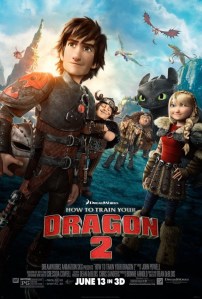
how-to-train-your-dragon-2-poster1-690x1024Ah, Berk. That fictional far away land where Dragons once plagued humans, until a young boy made friends with a Night Fury and changed everything.

How I’ve missed this place.

Fox & Dreamworks’ How to Train Your Dragon 2 brings us back to its dragon riding fun, taking place 5 years after the events of the first film. While the story doesn’t have the same level of depth as say, Kung Fu Panda 2, it still manages to be an enjoyable thrill ride when the dragons are taking flight.

Since this is an animated feature, let’s do visuals first. The animation is roughly the same as the original, with a bit of aging here and there for the main characters, but both the colors and the depth of field are a major standout. Cinematographer Roger Deakins (Skyfall) was brought back on board as  a consultant for the lighting, focus and color tones and it definitely shows. If at all possible, this film should be seen in its 3D format. The flight sequences are a joy to behold and when they’re not flying, you shouldn’t find yourself squinting and pinching your nose too much. Chris Sanders wasn’t on hand this time for the writing and directing, although you can still see his designs all over the film.

Additionally, there were a number of technical changes that improved the process. Just as Pixar did with Renderman, Dreamworks ended up creating their own software, Apollo. Apollo uses two tools – Premo, which allowed the animators better control of characters through the use of Wacom tablets. Even more magical is Torch, a lighting system developed with Deakins’ assistance that allowed for more natural setups in animation. One of the best uses of this is when Hiccup is surrounded in a dark room and needs to use his sword to illuminate the area. It’ll be interesting to see how it’s used in other Dreamworks projects.

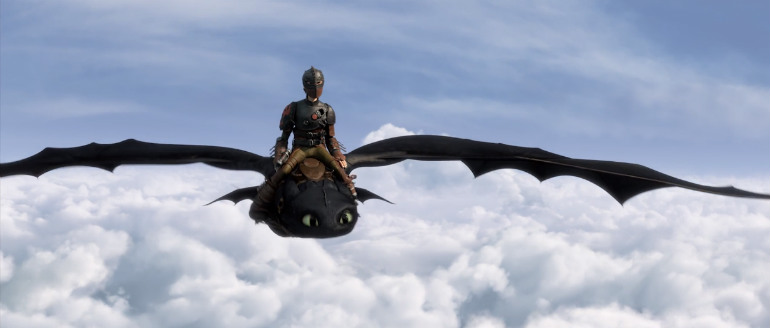
All of the familiar characters are back – Jay Baruchel’s Hiccup is a little older, and much wiser than in the original, with he and Toothless mapping the lands around Berk during their flights. Hiccup’s flair for gadgetry hasn’t left him, as in this film, the character is introduced almost as a medieval Batman. Between he, his father Stoic (Gerald Butler) and his girlfriend / Dragon Racing Champion Astrid (America Ferrera), they get the bulk of the screen time. His friends, played by Jonah Hill, Christopher Mintz-Plasse,  and Kristen Wiig, felt more like cameos than anything else here. Then again, they really didn’t have that great a part in the first film. Toothless, the Unholy Offspring of fire and darkness itself, is still as cuddly and emotive as ever, despite not being able to actually speak. Through the film, both Toothless and Hiccup find themselves growing up in different ways and their relationship is at the heart of everything here. Hiccup and Stoic still have family issues, this time centering around Hiccup preparation for becoming Chief of the town after Stoic steps down.

When Astrid and Hiccup discover dragon hunters (Lead by Game of Thrones’ Kit Harrington, whose character here still knows nothing), they find a new evil on the horizon in the form of Drago (Guardians of the Galaxy and Blood Diamond’s Djimon Hounsou), who is building a dragon army to do some harm.

Where the movie may stumble is in its last act. It felt abbreviated to me, but as this is meant for children, I suppose it’s not meant to be that long of a film. Clocking in at 102 minutes, it moves fast. For a kid’s film, Dragon 2 rises to some interesting heights that even adults would appreciate. The film doesn’t assume you need to be retold everything you may have missed in the first film, though it does reference some elements of it. The themes of the story are coexistence (between humans & dragons), leadership, friendship and family, and they’re done well.

Teasers & Trailers: Dreamworks’ How to Train Your Dragon 2


It’s been 3 years since Dreamworks’ How to Train Your Dragon was released. Though Chris Sanders has moved on to The Croods and that sequel, his animation style is in good hands. It looks like How to Train Your Dragon 2 has Hiccup (Jay Baruchel), Toothless and all of Berk adjusting very well. All appears to be well, but you wouldn’t have a story without a new threat, and maybe some new revelations. Part of me thinks that the setup for this story may also be similar to what could happen for Kung Fu Panda 3 (if done), with regards to family reunions.

Below are both the teaser, which has Hiccup and Toothless showing off a few improvements, and the trailer, which showcases more of the story.

How to Train Your Dragon 2 comes out June of 2014.

Trailer: How to Train Your Dragon 2 (Teaser)


how-to-train-your-dragon-2

Dreamworks Animation’s How to Train Your Dragon was one of those films for 2010 that caught me completely off-guard. I had dismissed it as another Dreamworks attempt to try and take the crown from Pixar. So, it was quite a surprise when I finally saw it and realized that Dreamworks had out-Pixared Pixar with this latest offering.

The film did great in the box-office and made the names Hiccup and Toothless names to remember fondly. So, it was a given that a sequel was going to be made and now it is 2013 and we finally have the first teaser trailer for How to Train Your Dragon 2 which will splash across all big-screen theaters around 2014.

To say that this teaser trailer evoked all the fun of the original would be an understatement. I would say that this simple teaser showing Toothless just flying around with Hiccup gave a better sense of the joy of flying than this year’s Man of Steel.

Review: Kung Fu Panda 2 (dir. by Jennifer Yuh Nelson)


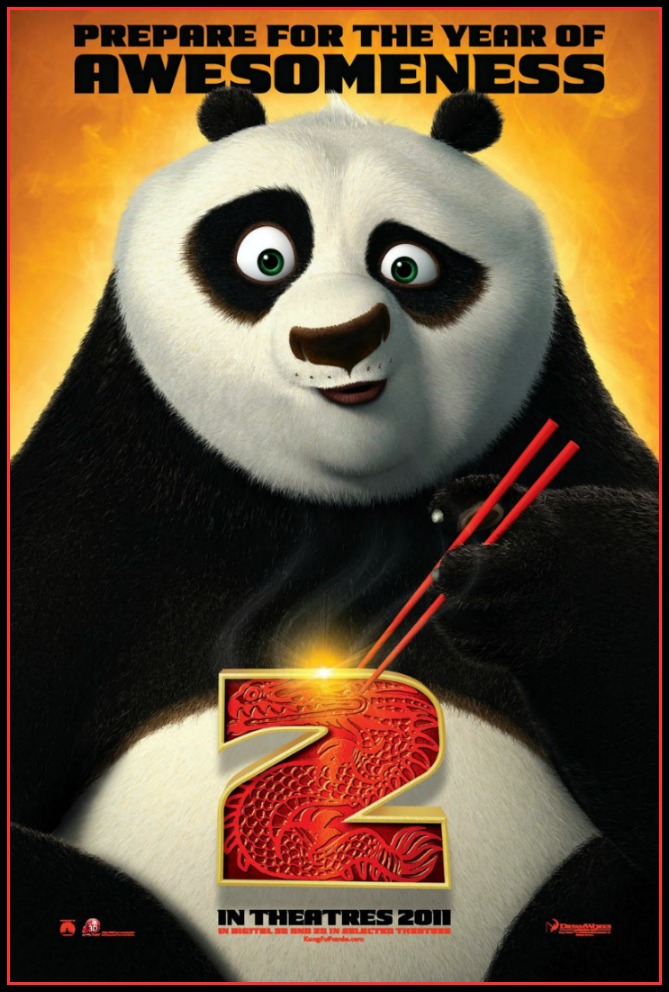
In 2008, Dreamworks Animation released what many had thought was one of their animated films. Some even went so far as to consider it on the same level as many of the Pixar animated offerings. This was high praise indeed and the praises from critics was awarded by public acclaim as Kung Fu Panda became an instant classic for Dreamworks Animation. It wasn’t a huge surprise that a sequel was quickly greenlit by the studio and now three years has passed and that sequel has finally come out. Kung Fu Panda 2 does one of those rare feats in film-making where it surpasses it’s original predecessor in all things. This was a sequel that was able to take what made the first one so fun and thrilling and build on it without losing the charm that made it so beloved in the first place.

Kung Fu Panda 2 brings back the Dragon Warrior Po (Jack Black returning in the role of the big fat panda) as he continues to live his dream of having become the Dragon Warrior and fighting evil, bandits and criminals with his fellow kung fu masters, the Furious Five. Instead of the film highlighting Po’s size as a detriment and keeping him a buffoonish character like in the beginning of the first film this sequel actually makes him an equal of his heroes, if not, surpassing them. This is a refreshing change since the writers could’ve easily banked on Po as a character who bungled and stumbled his way through most of the film.

This film was a continuation of Po’s journey as a hero which the first film was just the first step. Despite being a kung fu master in his own right his culture becomes threatened by a villain even more devious than the first film’s Tai Lung. Lord Shen (voiced by Gary Oldman) is the mad peacock heir to Gongmen City who has found an ultimate weapon through fireworks that he plans to defeat kung fu and conquer all of China. Kung fu is everything to Po and he journeys with the Furious Five to confront Lord Shen and stop his plans before it’s too late.

It’s during this journey that Po learns more about his true past and where he truly comes from. The sequences where Po’s adopted goose father tells of Po’s past was some of the best animations Dreamworks has done and I’d say surpasses some of Pixar’s own work. After seeing this film I’m sure many kids and some adults would want themselves their very own baby panda. Who would’ve thought that baby pandas sounded like human babies when they cried. It’s knowing his past that Po must now learn to find his inner peace if he’s to ever go beyond just being a kung fu master.

Kung Fu Panda 2 was actually quite a dark film in places as themes of genocide, destructive march of technology against nature, difficulties of adopted children finding their true origins and many others. That’s not to say that this sequel wasn’t fun to watch. The action took the kung fu fight scenes from the first film to a whole new level, but without turning it into all flash and no substance. It’s during some of the thrilling fight sequences that we see Po truly become part of the Furious Five and even affection from some of it’s members. It would be interesting to see how a third film would explore the growing relationship between Po and certain striped-feline.

The story gets a much needed infusion of creative help from one Guillermo Del Toro who served as creative producer. His inclusion in the film’s development was probably why the film had a much darker and serious tone in addition to the charm it continued from the first film. If there was anyone in Hollywood who knows how to further develop a character through a Campbellian hero’s journey then it’s Del Toro. If Dreamworks Animation is able to keep Del Toro on hand to further treat their other projects then it will be quite a coup for the studio.

The animation in this film is a step above the first film and anything Dreamworks Animation has ever done. With each passing year and release it looks like Dreamworks Animation has been able to come to the same level of animated work Pixar has set with their own projects. While I’m sure there’s no animosity between animators fo the two houses there probably is some sort of friendly rivalry which helps push both studios to improve on their animation work. All this means is that the public wins out in the end as we’re treated to better animated features from both Dreamworks and Pixar. It’s a good thing that Dreamworks Animation has also improved their storytelling with each new film that they’re not being called the weaker films when compared to Pixar’s latest.

In the end, Kung Fu Panda 2 more than lives up to it’s predecessor and actually surpasses it in every way. This sequel’s animation and use of stereoscopic 3D was some of the best in CG animation to date. It had a story that continued to explore and build the characters from the first film that they’ve gone beyond simple, basic animated characters but fully realized and complex individuals. Even the ending scene in the film which definitely sets-up a third film doesn’t seem tacked on but looks like something that would further continue Po’s hero’s journey. Sequels and milking of a franchise usually don’t sit well with serious film fans, but this franchise seems to be doing it correctly and using each new film to further an epic tale. Here’s to hoping we see Po and his Furious Five friends back for more in the coming years.

Kung Fu Panda 2 (Super Bowl TV Spot)


Here’s another tv spot to air during Super Bowl XLV and this time around it’s the one for the upcoming sequel to Dreamworks Animations very popular and successful Kung Fu Panda.

This one using that Queen arena anthem chant from “We Will Rock You”. The 30-second ty spot shows more action with the requisite panda shenanigans from Jack Black’s character.

Kung Fu Panda 2 is one sequel I’m definitely hyped to see as the first film I ended up watching over and over and over and over and over again. The film comes out on May 26, 2011.