The Blues Brothers! They’re on a mission from God.
Jake (John Belushi) and Elwood Blues (Dan Aykroyd) are two Chicago orphans who love the blues and committing crime. After Jake is paroled from Joliet Prison, he’s picked up by Elwood in an old police car. Elwood traded the original Bluesmobile for a microphone. Jake understands, even if he still doesn’t like being seen in a police car. When they visit the orphanage where they were raised, Sister Mary Stigmata (Kathleen Freeman) beats them with a ruler and tells them that the orphanage is going to close if she can’t pay a $5,000 tax bill. Jake and Elwood set out to reform their band, raise $5,000, and save the orphanage. Jake and Elwood may be two career criminals who never take off their dark glasses but they’re on a mission from God.
Along the way to putting the band together and raising $5,000, Jake and Elwood meet characters played by everyone from James Brown to Ray Charles to Aretha Franklin. You never know when a big production number might break out. Jake and Elwood also step on a few toes. Soon, the Blues Brothers being chased by the police, the national guard, Jake’s parole officer (John Candy), Charles Napier’s country-western band, and a group of Illinois Nazis (led by Henry Gibson). There’s also a mysterious woman (Carrie Fisher) who wants to kill them. She has an impressive array of weapons but terrible aim.
The Blues Brothers was the first comedy to be based on a Saturday Night Live bit. Unlike most other SNL movies, The Blue Brothers develops its plot far beyond what was originally seen on television. Jake and Elwood get a full backstory and they also get personalities that go beyond the black suits and the dark eyewear. The Blues Brothers features Belushi at his most energetic but it’s also one of the few films to actually know what to do with Dan Aykroyd’s eccentric screen presence. If Belushi’s Jake is all about earthly pleasures, Aykroyd’s Elwood almost seems like a visitor for another world. Aykroyd’s performance of the Rawhide theme song is one of the film’s highlight.
The Blues Brothers has its share of funny lines and its famous for the amount of pointless destruction that it manages to fit into its storyline (with the “unnecessary violence” being authorized by the Chicago police to stop the Blues Brothers) but it’s also as surprisingly sincere tribute to the blues. It’s a movie that can balance Ray Charles shooting at a shoplifter and a massively destructive car chase in a suburban mall with Cab Calloway playfully performing Minnie the Moocher and Aretha Franklin bringing down the house (or diner, as the case may be). The movie can feature both a jump over an open drawbridge and Steven Spielberg as the clerk at the tax office. It’s one of the strangest comedies ever made and it features all the excesses that would bring an end to 70s Hollywood but when Jake and Elwood say they’re on a mission from God, you believe them.
Publisher Chris Thorne (Chevy Chase) is eager to get to know lawyer Diane Lightson (Demi Moore) so he agrees to drive her and two Brazilian hangers-on from Manhattan to New Jersey. The Brazilians encourage Chris to take a detour, which leads to him running a stop sign, getting into a high-speed chase with chief of police Dennis Valkenheiser (John Candy), and being detained in the dilapidated village of Valkhenheiser. Dennis decides to leave town with the Brazilians, leaving Chris and Diane to face the wrath of 106 year-old Judge Alvin “J.P” Valkenheiser (Dan Aykroyd). Judge Valkenheiser has spent decades killing anyone who breaks the law in his village, though he also kills anyone who he just dislikes. The Judge assumes Chris is a banker (and he hates bankers) and is prepared to kill him unless he marries the Judge’s granddaughter, Eldona (John Candy, in drag). This town is nothing but trouble and Chris and Diane have to escape.
Nothing But Trouble was both the directorial debut and swan song for Dan Aykroyd. (Aykroyd also wrote the script, from a story that was written by his brother, Peter.) The film was an notorious box office bomb and watching, it’s easy to see why. The story is all over the place, awkwardly mixing humor and horror. Anyone who has seen the early seasons of Saturday Night Live knows that young Dan Aykroyd was one of the funniest people around but, when it comes to the movies, he’s always worked better with a collaborator than on his own. As a director, Aykroyd throws a little bit of everything into Nothing But Trouble and the movie feels overstuffed.
As an actor, though, Aykroyd is funny. Whatever laughs are to be found in Nothing But Trouble are largely the result of his performance as the Judge. Chevy Chase seems bored. Demi Moore actually gives a decent performance but she plays her role straight. John Candy is likable as Dennis but too cartoonish as Eldona. Aykroyd, however, so commits himself to playing the 106 year-old judge that he wrings laughs from even the weakest of lines. Criticize Aykroyd the director all you want, Aykroyd the actor delivers.
One final note: The rap group Digital Underground makes a cameo appearance as themselves, performing in the Judge’s courtroom after getting arrested for speeding. When I was watching Chevy Chase mugging for the camera and Dan Aykroyd walking around hunched over, I hardly expected to see a young Tupac Shakur suddenly show up but he did. Digital Underground’s cameo is one of the film’s better moments, even if they don’t perform The Humpty Dance.
In the year 1979, a young Steven Spielberg attempted to conquer comedy in the same way that he previously conquered horror with Jaws and science fiction with Close Encounters of The Third Kind. Working from a script written by Robert Zemeckis and Bob Gale, Spielberg made a film about the days immediately following Japan’s attack on Pearl Harbor. The name of the film was 1941 and it remains Steven Spielberg’s only attempt to direct a full-out comedy. There’s a reason for that.
The film follows a large group of characters over the course of one day and night in 1941. It’s been six days since Pearl Harbor was attacked and the streets of Los Angeles are full of young men who are preparing to ship out and older man who are paranoid about when the next attack is going to come. However, Major General Joseph Stilwell (Robert Stack) just wants to see Dumbo at the local theater. Meanwhile, his womanizing aide (Tim Matheson, giving the same performance here that he did in National Lampoon’s Animal House) just wants to get Stillwell’s aviation-lusting secretary (Nancy Allen) into an airplane.
Elsewhere, Ward Douglas (Ned Beatty) is happy to allow Sgt. Tree (Dan Aykroyd) and his men (including John Candy) to set up on an anti-aircraft gun in his front yard. Ward’s daughter, Betty (Dianne Kay), is only concerned about entering a dance contest with her friend, Maxine (Wendie Jo Sperber). Cpl. Sitarski (Treat Williams) and dishwasher Wally Stephens (Bobby D iCicco) both hope to be Betty’s partner and their rivalry leads to a massive (and seemingly never-ending) brawl.
While Ward deals with the gun in his front yard, another concerned citizen — Claude Crumm (Murray Hamilton) — keeps watch from atop of Ferris wheel, along with amateur ventriloquist Herbie Kazlminsky (Eddie Deezen).
But that’s not all! Susan Backilinie recreates her role from a previous Spielberg film, skinny dipping while the Jaws theme plays in the background and running straight into a submarine that is commanded by Commander Akiro Mitamura (Toshiro Mifune, trying to maintain his dignity). Mifune decides to attack Hollywood but no one on the submarine is sure where that is. Christopher Lee appears as an arrogant German who is along for the ride. Slim Pickens shows up as a lumberjack who is temporarily captured by the Japanese. John Belushi plays Wild Bill Kelso, who flies his airplane through Los Angeles. Warren Oates yells and laughs. Dick Miller, Elijah Cook Jr. and Lionel Stander show up in small roles.
“Since when is Steven funny?” According to Peter Biskind’s Easy Riders, Raging Bulls, this was the reaction that most of Spielberg’s friends had when he announced that his next film would be a screwball comedy set during World War II. Watching the film, one gets their point. The majority of the film’s humor comes from people looking at the camera and screaming. There’s a lot physical comedy, which would undoubtedly work in small amounts but which grows rather tiring when it’s dragged out to the extent that Spielberg’s drags it out. (A brawl at a USO show seems like it should be funny but Spielberg allows it to go on for too long and the careful choreography takes away any element of spontaneity.) The film attempts to duplicate the style of Animal House (and it’s probably not a coincidence that Matheson, Belushi, and director John Landis all have roles in the film) but Spielberg often seems as if he’s trying too hard. There’s nothing subversive about the humor. It’s more antic than funny.
A huge problem is that there really isn’t much of a story here. Spielberg, who is normally one of Hollywood’s best storytellers, attempts to do a loose, Altman-style ensemble film and the result is that none of the characters feel alive and there’s never any sense of narrative momentum. There are a few performers who manage to make an impression amongst all the explosions and the yelling. John Belushi has the advantage of not having to share the majority of his scenes with anyone else. Warren Oates’s manic energy is more than welcome. Wendie Jo Sperber deserved more screentime. Murray Hamilton and Eddie Deezen frequently made me laugh. There’s a wonderful moment where Robert Stack’s intense general cries while watching Dumbo. But, for the most part, the film never comes together.
That said, 1941 is definitely a Steven Spielberg film. It received three Academy Award nominations, for Cinematography, Sound, and Visual Effects. (All three of those categories, not surprisingly, are more associated with spectacle than with comedy.) The film looks great! Spielberg’s attention to detail is there in the production design and the costumes. Watching 1941, you can see Spielberg’s talent while also seeing why he never directed another comedy.
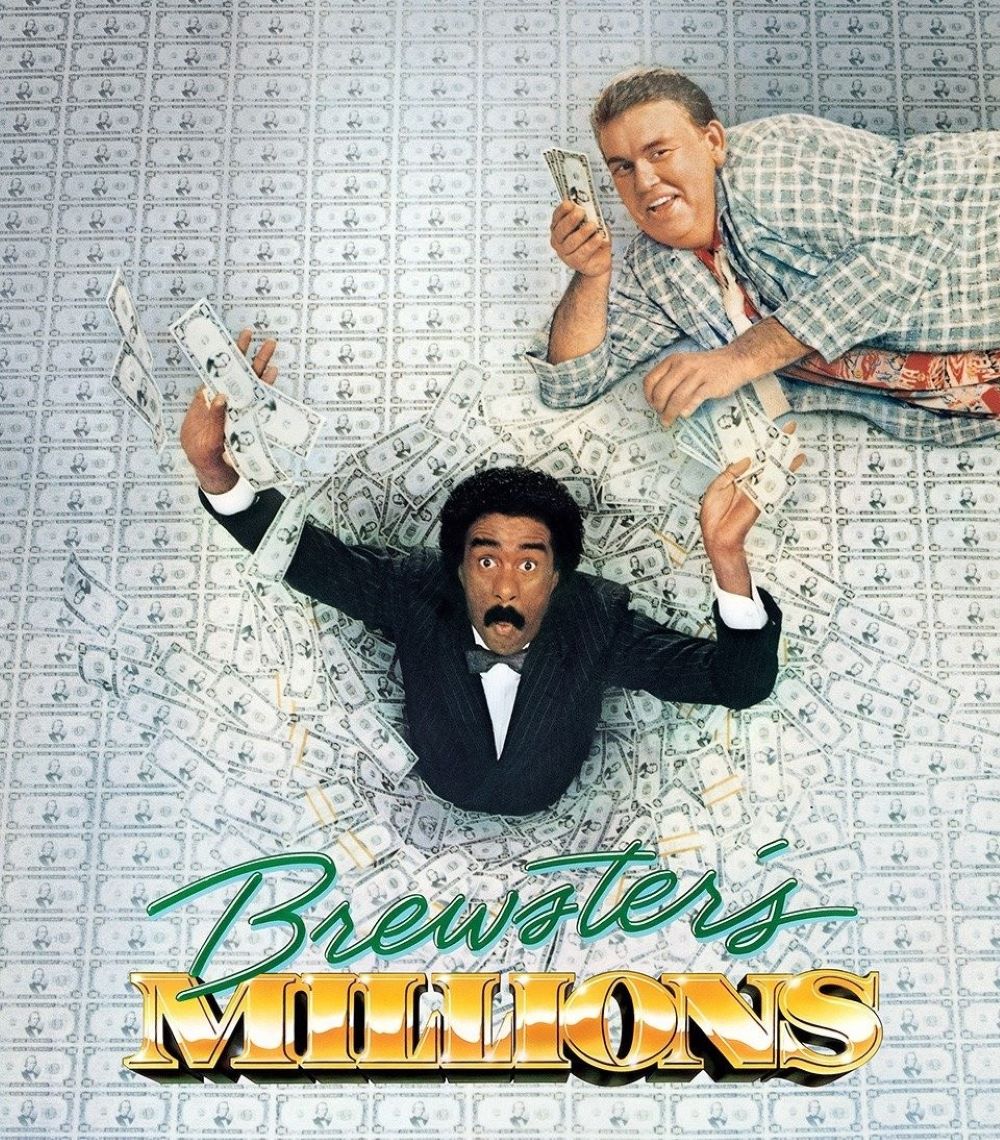
Walter Hill’s Brewster’s Millions (1985) isn’t a perfect movie by any stretch, but it’s the kind of film that sneaks up on you. It may not be sharp enough to qualify as great satire or consistent enough to hit every comedic note, but it has an undeniable charm that pulls you in regardless. It’s loud, uneven, and often ridiculous, yet few comedies from the 1980s are as weirdly entertaining when they’re firing on all cylinders. For many movie fans, it’s that quintessential “guilty pleasure”—a film you know has problems, but that somehow feels impossible to turn off once it starts. And in many ways, that’s exactly where Brewster’s Millions finds its lasting appeal.
The setup alone is too fun to resist. Richard Pryor stars as Montgomery Brewster, a minor league baseball pitcher who unexpectedly inherits the opportunity of a lifetime—to claim a $300 million fortune from a distant relative. The catch? Before he can get it, he has to spend $30 million in 30 days under a bizarre set of conditions that make financial ruin easier said than done. He can’t give the money away, can’t destroy it, can’t buy assets or investments that retain value, and can’t tell anyone why he’s doing it. Fail, and he gets nothing. Succeed, and he becomes one of the richest men alive. It’s the sort of gleefully absurd premise that could only have come from Hollywood in the 1980s, and it’s immediately clear that the film wants audiences to sit back, grab some popcorn, and watch Pryor tear through cash in increasingly funny and desperate ways.
Richard Pryor is, without doubt, the heart and soul of the movie. He imbues Montgomery Brewster with equal parts manic energy and human frustration, giving the character a real emotional arc beneath all the comic spectacle. Pryor’s talent for blending humor with exasperation makes Brewster’s predicament believable, even when it’s insane. Watching him scramble to lose money while the world keeps rewarding him is strangely satisfying. Pryor understood how to play ordinary men caught in extraordinary circumstances, and that quality grounds the film when it could have easily spiraled into total silliness. In scenes where he loses his patience with accountants, schemes wild spending sprees, or watches his good intentions backfire, Pryor’s comic timing keeps the chaos enjoyable.
John Candy adds another layer of charm as Brewster’s best friend and teammate, Spike Nolan. Candy brings warmth, loyalty, and that unmistakable good-heartedness that made him one of the decade’s most beloved comedic actors. The chemistry between Pryor and Candy keeps the film buoyant even through its weaker stretches. Their friendship defines the film’s tone—it’s loose, goofy, and full of bro-ish camaraderie. Without Candy’s infectious energy, the movie’s more hollow comedic beats might have hit the floor with a thud. Together, they create a dynamic that feels real, even inside a premise that’s totally absurd.
As a director, Walter Hill feels like an odd fit for this kind of broad comedy, but that’s part of what makes Brewster’s Millions interesting. Hill, better known for tough, kinetic action films like The Warriors and 48 Hrs., approaches this farce with a surprising amount of structure and visual precision. The film looks slicker and sharper than most comedies of its kind, which gives the excess on-screen an unintentionally epic flair. Hill’s direction keeps the story moving, and though he’s not naturally a comedic filmmaker, his grounded style adds a peculiar edge to all the craziness. It’s chaos with discipline—an aesthetic that somehow works in the movie’s favor.
Still, Brewster’s Millions can’t quite escape its shortcomings. The pacing is uneven, especially in the middle, where the film loses some steam as Brewster cycles through increasingly repetitive spending gimmicks. The story flirts with satire but rarely commits, brushing up against deeper commentary on wealth, politics, and capitalism before retreating to the comfort of broad comedy. The “Vote None of the Above” subplot, where Brewster’s money-wasting political campaign taps into voter cynicism, is one of the smartest parts of the film—but it’s introduced and resolved too quickly to leave a mark. And while the movie is full of lively energy, not every gag lands; a few supporting performances veer into caricature, and some jokes feel very much of their time.
Yet these flaws are partly what make Brewster’s Millions such a delightful guilty pleasure. It’s the cinematic equivalent of junk food—high on calories, low on nutritional value, but deeply enjoyable all the same. Pryor’s constant exasperation, the sheer absurdity of trying to “waste” money legally, and the exaggerated set pieces (like the overblown parties or his failed attempts to lose at gambling) make for irresistible entertainment. Even when the humor dips into predictable territory, the concept keeps pulling you back in. There’s a giddy satisfaction in watching Brewster try—and fail—to lose money, especially because the universe just won’t let him.
The romance subplot with Lonette McKee’s character, Angela Drake, adds just enough heart to balance the absurdity. McKee gives a grounded, intelligent performance that prevents the love story from feeling tacked on, even if it never fully takes center stage. Her presence keeps Brewster tethered to some kind of reality, and the moral through-line—learning that not everything valuable can be bought—lands gently rather than preachily. It’s not profound, but it fits the breezy tone perfectly.
As a comedy of excess, Brewster’s Millions is very much a product of its time. The slick suits, the gaudy parties, the blind faith in wealth, and the Reagan-era optimism about money’s moral neutrality all ooze from every frame. That time-capsule quality is part of its modern appeal. Watching it today, you can’t help but smile at how on-the-nose it feels—a movie from the “greed is good” decade that accidentally ends up mocking the very mindset it sprang from. It’s self-aware only in flashes, but those flashes are enough to make you recognize the movie’s satirical edge hiding beneath its loud surface.
In the end, that’s what makes Brewster’s Millions endure as a lovable guilty pleasure. It has flaws you can’t ignore—uneven pacing, scattershot tone, underdeveloped ideas—but none of them outweigh its charm. Pryor’s comic genius makes even the weakest joke land better than it should. Candy’s warmth keeps the film light. And Hill’s straightforward direction infuses the lunacy with just enough realism to make it believable. The result is a movie that’s too silly to take seriously but too fun to dismiss. You watch it, laugh at its audacity, shake your head at the logic gaps, and yet somehow come away smiling.
Brewster’s Millions may not be a comedy classic, but it’s easy to see why people keep revisiting it. It’s comfort food cinema—lighthearted, clumsy, and endlessly watchable. And like all the best guilty pleasures, it doesn’t need to be perfect to make you happy. Sometimes, seeing Richard Pryor outsmart the meaning of money for two hours is more than enough.
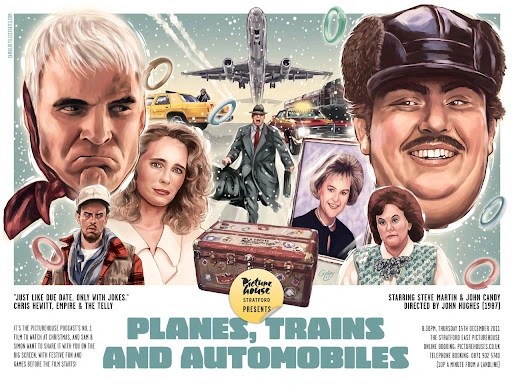
This scene, from Planes, Train, & Automobiles, epitomizes everything that I love about Thanksgiving. It’s a reminder that home can be anywhere that is welcoming and that family doesn’t just include those with whom you share a common ancestor.
When John Candy finally admits the truth, that Marie is dead and that he hasn’t had a home for years, it brings tears to my eyes. That’s great acting. After everything that has happened, he finally gets to spend Thanksgiving with someone who cares about him.
I hope everyone is having a good Thanksgiving today. Enjoy it however you celebrate.
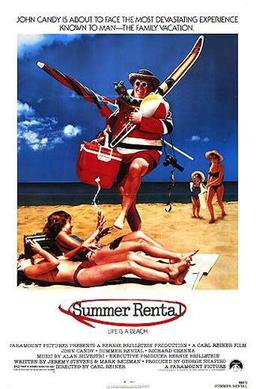
After a blow-up at work, air traffic controller John Chester (John Candy) is given five weeks of paid leave. He takes his family to Florida, where they rent a beach house and discover that their summer town is controlled by snobbish sailing champion Al Pellett (Richard Crenna). It’s the snobs vs slobs as Pellett tries to kick John and his family out of their summer rental and John tries to prove himself to his son and daughter (Joey Lawrence and Kerri Green) by winning the local sailing championship. Luckily, John has Sully (Rip Torn), a modern-day pirate captain, on his side.
John Candy was a remarkable talent. It’s just a shame that he didn’t appear in more good films. He will always be remembered for films like Splash, Uncle Buck, Planes, Train, and Automobiles, and Only The Lonely but unfortunately, most of his starring roles were in lightweight, forgettable far like Summer Rental. Candy is likable as John Chester and sympathetic even when he’s losing his temper over every minor inconvenience. But the film itself never really does much to distinguish itself from all of the other 80s comedies about middle class outsiders taking on the richest man in town. Candy is stuck playing a role that really could have been played by any comedic actor in 1985. It’s just as easy to imagine Dan Aykroyd or even Henry Winkler in the role. It feels like a waste of Candy.
The best thing about the film is Rip Torn’s performance as Sully. Torn’s performance here feels like a dry run for his award-winning work as Artie on The Larry Sanders Show. I would have watched an entire movie about Sully. As it is, Summer Rental is inoffensive and forgettable.
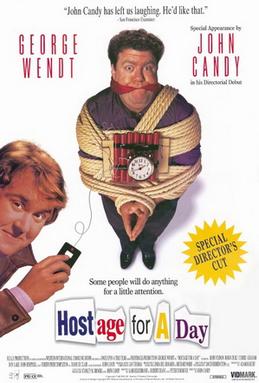
HostageForADay is the only film that the much-missed John Candy ever directed. (It premiered on Canadian television, a few months after his death.) It’s also one of the only films to feature George Wendt in a leading role, as opposed to being a supporting player. The film is full of funny people like Don Lake and Robin Duke. John Vernon plays Candy’s father-in-law. A lot of talent went into this movie. It’s too bad that it’s not very good.
Wendt does give a good performance in the lead role. He plays Warren Kooey, who is depressed on his 41st birthday. His wife (Robin Duke) has drained their bank account to remodel their house and apparently shag their interior decorator, Hondo (Currie Graham). No one respects him at work. Warren’s reflection in the mirror tells Warren that he needs to do something with his life. Warren decides to fake a hostage situation so that he can collect the ransom. The problem is that the SWAT team has recently had their budget cut and can’t afford to pay the amount that Warren comes up with. Then some real kidnappers (led by John Candy, making a very brief appearance) hold him hostage for real. While this goes on, Wendt continues to talk to his reflection in the mirror and there are a few sweet but out-of-place scenes featuring him reuniting with his childhood sweetheart, Diane St. Clair (Christopher Templeton).
As a director, Candy never seems to be sure what type of film he’s trying to make. The comedy is broad but Candy also tries to sneak in some sentimental moments and the end results just doesn’t mix well. He gets some good performances for his cast but the film itself never really comes together. This was George Wendt’s only starring role and he does a good enough job that I regret he didn’t get bigger roles once Cheers went off the air because, judging by this film, he could have handled them I just wish this movie was better.
John Bourgignon (John Candy) is a man of many talents. He’s a limo driver. He’s a drummer. He is an occasional actor, having starred in Kung Fu U. for his friend, director Sal DiPasquale (Eugene Levy). John is also improbably engaged to Nancy Reece (Alley Mills), the daughter of Congressman and presidential candidate Ed Reese (Pat Hingle). As the wedding approaches, John deals with a number of things. He chauffeurs around a group of Spanish Beatles impersonators. He finds himself handcuffed to a fugitive (Ernie Hudson) who dies at an inopportune time. A cult leader (Richard Libertini) attempts to brainwash John into assassinating Ed, though the process might just turn John into a “schmuck.”
Going Berserk was John Candy’s first lead feature role and it was obviously designed to play to Candy’s popularity as one of the stars of SCTV. Going Berserk doesn’t gave a plot as much as it’s a collection of skits, some of which work better than others but all of which are held together by Candy’s comedic timing and amiable presence. Going Berserk is disjointed and wildly uneven but it’s also frequently funny and that is a testament to Candy’s talent. Even an overlong parody of The Blue Lagoon raises a smile because John Candy is just so committed to playing out the joke.
Going Berserk also features several familiar faces, like Richard Libertini, Pat Hingle, Ernie Hudson, Dixie Carter, Kurtwood Smith, Paul Dooley, and two of Candy’s SCTV co-stars, Eugene Levy and Joe Flaherty. I especially liked Levy’s performance as the sleazy director who blackmails his way into filming the wedding. Going Berserk was frequently stupid but, more often than not, it made me laugh.
Wait, that can’t be right, can it? Bill Murray and Harold Ramis were cinematic anarchists. Early in his career, Bill Murray was the ultimate smart aleck slacker who did not have any respect for authority. Harold Ramis was hardly a slacker but he came across as someone more likely to be marching on the Pentagon than guarding it. Stripes is one of the ultimate examples of a comedy where the laughs come from things that don’t seem to go together suddenly going together.
John Winger (Murray) at least has a reason to join the army. He has a dead end job. He has just broken up with his girlfriend. The country appears to be at peace so why not spend four years in the Army? It’s harder to understand why John’s friend, Russell (Ramis), also decides to enlist, other than to hang out with John. Along with Ox (John Candy), Cruiser (John Diehl), Psycho (Conrad Dunn), and Elm0 (Judge Reinhold), they enlist and go through basic training under the watchful eye of Sgt. Hulka (Warren Oates). John and Russell go from treating everything like a joke to invading East Germany in a tank that’s disguised as an RV. They also meet the two sexiest and friendliest MPs in the service, Stella (P.J. Soles) and Louise (Sean Young). Russell goes from being an proto-hippie who teaches ESL to asking John if he thinks he would make a good officer. John goes from not taking anything seriously to picking up a machine gun and rescuing his fellow soldiers.
It’s a comedy that shouldn’t work but it does. It’s actually one of my favorite comedies, full of memorable lines (“Lighten up, Frances.”), and stupidly funny situations. The cast is full of future comedy legends and P.J. Soles shows that she deserved to be a bigger star. This was early in Bill Murray’s film career and he was still largely getting by on his SNL persona but, in his confrontations with Hulka, Murray got a chance to show that he could handle drama. With all the comedic talent in the film, it’s Warren Oates who gets the biggest laughs because he largely plays his role straight. Sgt. Hulka is a drill sergeant who cares about his men and who knows how to inspire and teach but that doesn’t mean he’s happy about having to deal with a collection of misfits. (Watch his face when Cruiser says he enlisted so he wouldn’t get drafted.)
The movie does get strange when the action goes from the U.S. to Germany. What starts out as Animal-House-In-The-Army instead becomes an almost straight action movie and the movie itself sometimes feels like a recruiting video. Join the Army and maybe you’ll get to steal an RV with PJ Soles. That would have been enough to get me to enlist back in the day. But the combination of Murray, Ramis, and Oates makes Stripes a comedy that can be watched over and over again.
I love Thanksgiving because I love spending time with my family. My Mom is one of 15 kids from a large Catholic family in central Arkansas, so this is the time of year that I get to see a big part of that extended family. A lot of people are spread out across the state and country so we don’t get to see everyone at Thanksgiving, but we do get to see a lot of people. We go to my aunt Jo Ellen’s house, and I get to hang out with a bunch of my aunts, uncles and cousins. We’ll have a giant feast from a potluck of items we’ve grown to love over the years…Aunt Jo Ellen’s turkey and dressing, Mom’s candied yams, Aunt Connie’s deviled eggs, the giant table of desserts, etc. Our family is all about traditions, and this is the time of year we share those with each other. I just love it!
One of our movie-watching traditions is watching PLANES, TRAINS AND AUTOMOBILES together. And we do it every year. We still laugh at all the right parts…Kevin Bacon getting Steve Martin’s cab thanks to a mysteriously large trunk on the curb, John Candy reading The Canadian Mounted, Doobie’s Taxiola, “Those Aren’t Pillows,” Owen’s strange facial expressions and throat noises, “a couple of balls and an extra set of fingers,” the runway crossing, the car rental counter meltdown, “you’re going the wrong way,” the hotel destruction getaway, and the indestructible car radio. Odds are many of you are smiling as you read this quick summary of some of my favorite parts. We’ll watch the movie together while we’re settling in back at Dad and Mom’s house after a wonderful Thanksgiving lunch. It’s a guarantee that Dad will be snoring at some point.
As much as I love to eat, to me, Thanksgiving is all about spending time with the ones I love. We’ll tell a lot of the same stories that we’ve told many times over the years, and we’ll laugh at them all over again. We’ll truly enjoy our time together. Our family is not perfect, and we don’t always see eye to eye on everything, but we love each other and that is more important than just about anything else. That’s a Crain family tradition passed down from my parents. One of the best things about PLANES, TRAINS AND AUTOMOBILES is that there are times when the laughs die completely down, and that’s when the movie reveals its heart. The same can be said for my family, and that’s something I’m truly thankful for.
 The Blues Brothers! They’re on a mission from God.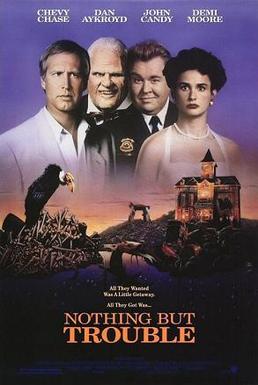



 Through the Shattered Lens