An Offer You Can’t Refuse #3: The Purple Gang (dir by Frank McDonald)


The 1960 gangster film, The Purple Gang, really took me by surprise.

The film opens with U.S. Rep. James Roosevelt standing in front of his desk.  James Roosevelt was the son of President Franklin D. Roosevelt.  He was a notoriously shady businessman who, before entering politics, dabbled a bit in Hollywood.  That probably explains how he eventually came to be standing in his congressional office, filming the introduction for a low-budget B-movie about Detroit gangsters.  Roosevelt tells us that he’s already watched the movie that we’re about to see and that he can assure us that it is an accurate portrayal of not just the history of The Purple Gang but also of how 1920s bootlegging led to a host of other crimes.  Roosevelt goes on to compare bootleggers to modern day drug pushers.  The most interesting thing about the speech is that it almost sounds like a defense of prohibition, the law that FDR famously opposed.

To use a term from the film’s era, it’s kind of a square opening.  James Roosevelt comes across as being so vacuously earnest that it’s almost as if Beto O’Rourke got his hands on a time machine and went back to 1960.  At the same time, there’s something oddly charming about how awkward it is.  One can only imagine how audiences would react if a film today opened with a speech from a congressperson.  I guess some parts of the country would love it.  Down here in Texas, the theater would probably get set on fire.

Now, based on that less than edgy opening, you might be justified in expecting that The Purple Gang will just be your standard 1960s crime thriller but it most definitely is not.  The Purple Gang is a tough and violet movie, one that is full of shadowy and sometimes disturbing imagery.  A very young Robert Blake plays Honeyboy Willard, a teenage hoodlum who, through pure sociopathic ruthlessness, takes over the rackets in Detroit.  Barry Sullivan is Lt. Harley, the police detective whose quest to bring down the Purple Gang leads to him losing almost everything that was important to him.

Our first impression of Lt. Harley comes when he skeptically listens to a liberal social worker, Joan McNamara (Jody Lawrance), explain that criminals are not born but are instead made by their circumstances.  Harley obviously doesn’t agree.  Later, while Joan is walking around Detroit at night, she is attacked, rape,d and then murdered by the same criminals that she was earlier defending.  With the city outraged over Joan’s murder, Lt. Harley steps up his efforts to bring down the gang so Honeyboy murders Harley’s pregnant wife.

While Harley seeks revenge, Honeyboy is busy making deals with Canadian liquor distributors and building the Purple Gang into the biggest criminal enterprise in the northern midwest.  When a group of distraught businessmen, upset at being extorted by the Purple Gang, turns to the Mafia for help, Honeyboy declares war….

Of course, despite James Roosevelt’s assurance at the start of the film and the semi-documentary approach that director Frank McDonald takes to the material, the truth is far different from the movie.   In real life, The Purple Gang was predominantly made up of the children of recent immigrants from Russia and Poland.  It was run not by Honeyboy Willard but by the four Bernstein brothers.  The Purple Gang did not go to war with the Mafia but instead, they were allied with Lucky Luciano and Meyer Lansky in their attempts to create a national crime syndicate.  They were also closely allied with Al Capone, to the extent that it’s been suggested that Capone used Purple Gang gunmen to carry out the St. Valentine’s Day Massacre.  The Purple Gang eventually fell apart due to infighting and the end of prohibition, with the majority of the members who weren’t in jail simply joining other gangs.

So, no, The Purple Gang is not historically accurate but it’s still an effective and surprisingly brutal gangster film.  The noirish photography makes certain scenes seem almost as if they’ve been lifted straight out of a nightmare and, historically accurate or not, the film does do a good job of showing how organized crime came to exist in the United States.  It’s a quick-paced and energetic film and it features a great performance from Robert Blake as the chillingly sociopathic Honeyboy.  The Purple Gang is a low-budget B-movie that packs a punch.

Plus, James Roosevelt did ask you to watch.  Are you going to say no to James Roosevelt?
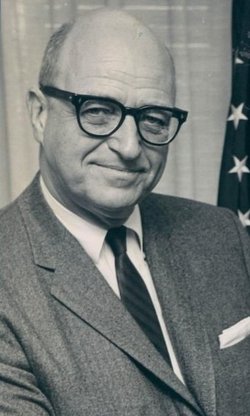
James Roosevelt, film critic

Previous Offers You Can’t Refuse:
  1. The Public Enemy
  2. Scarface

Horror Scenes That I Love: Jack Meets Lloyd in The Shining


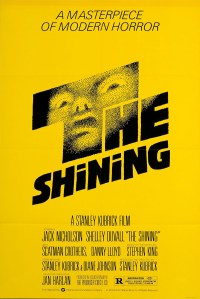
The scene below is, of course, from Stanley Kubrick’s 1980 masterpiece, The Shining.

In this scene, Jack Torrance (Jack Nicholson) stumbles into the Overlook Hotel’s ballroom, still fuming over having been accused of abusing his son.  A recovering alcoholic, Jack sits at the bar and thinks about how he would give up his soul for just one one drink.  And, on cue, Lloyd (Joe Turkel) appears.

As I was watching this scene, it occurred to me that, way back in 1980, there probably was some guy named Lloyd who saw this movie in a theater and was probably totally shocked when Jack suddenly stared straight at him and said, “Hey, Lloyd.”

The brilliance of this scene is that we never actually see Lloyd materialize.  We see him only after Jack has seen him.  So, yes, Lloyd could be a ghost.  But he could also just be a figment of Jack’s imagination.  Jack very well could just be suffering from cabin fever.  Of course, by the end of the movie, we learn the truth.

Everyone always talks about Jack Nicholson’s performance as Jack.  Some people love it and some people hate it.  (I’m in the first camp.)  However, let’s take a minute to appreciate just how totally creepy Joe Turkel is in this scene.  Turkel was a veteran character actor and had appeared in two previous Kubrick films, The Killing and Paths of Glory.  Two years after appearing in The Shining, Turkel played what may be his best-known role, Dr. Eldon Tyrell in Blade Runner.

From Stanley Kubrick’s The Shining, here’s Jack Nicholson and Joe Turkel:

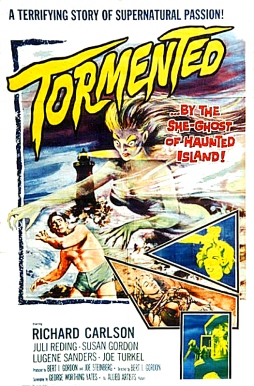
Horror on the Lens: Tormented (dir by Bert I. Gordon)


Halloween is the perfect time for a good ghost story and, with that in mind, here is today’s movie.

Released in 1960 and directed by Bert I. Gordon, Tormented tells the sad story of Tom Stewart (Richard Carlson).  Now, Tom might look like a pretty regular guy but we know that he’s a little bit crazy because he’s a jazz pianist and you know how dangerous those beatnik-types are.  Tom is happily engaged to Meg but one day, his ex-girlfriend Vi shows up.  Vi is obsessed with Tom and swear that she’s going to end his engagement.

So, naturally enough, Tom throws her off of a lighthouse.

Problem solved, right?

Not quite.  Vi may be dead but she’s not out of Tom’s life.  Instead, her disembodied head tends to pop up at random moments and taunt Tom.  Meanwhile, Tom is having to deal with Meg’s suspicious sister and a beatnik (Joe Turkel, who years later played Lloyd the Bartender in The Shining) who is determined to collect the $5 that he claims Vi owes him.

Between the beatniks and the raging ocean and the disembodied head popping up whenever it’s least convenient, Tormented is a lot of fun and the perfect film for some retro Halloween fun.

A Movie A Day #87: Free Grass (1969, directed by Bill Brame)


As everyone surely knows, before they appeared as Dr. Lawrence Jacoby and Benjamin Horne on Twin Peaks, Russ Tamblyn and Richard Beymer co-starred in West Side Story.  Tamblyn played Riff, the leader of the Jets.  Beymer played his best friend, Tony, who fell in love with Natalie Wood.  West Side Story is a classic that won several Oscars.  What is not as well known is that, in between West Side Story and Twin Peaks, Beymer and Tamblyn co-starred in one other movie, a hunk of psychedelic cheese called Free Grass.

By the late 60s, both Beymer and Tamblyn had tired of their clean-cut images and, like their characters in Free Grass, had become card-carrying members of the Hollywood counter-culture.  Beymer plays Dean, a motorcycle-riding drop-out from conventional society.  Dean meets and falls in love with buxom, mini-skirted Karen (played by Lana Wood, younger sister of Natalie).  When a riot breaks out on the sunset strip, Dean punches a cop.  With the Man now looking for him, Dean needs some quick cash so that he and Karen can escape to Dayton, Ohio.

(Dayton, Ohio?)

That’s where Russ Tamblyn comes in.  Tamblyn plays Dean’s friend, Link.  Link works for a drug kingpin named Phil (played not very convincingly by Casey Kasem, of all people).  Phil is willing to pay Dean $10,000 if he smuggles several pounds worth of grass across the Mexican border.  Dean agrees but soon finds himself being pursued by two narcotics agents, played by Jody McCrea and Lindsay Crosby (sons of Joel McCrea and Bing Crosby, respectively).  Because Dean is not willing to commit murder, Link plots to kill him.  But first, Link doses Dean with LSD, which leads to the de rigueur psychedelic 60s light show.

Slow-moving and ineptly directed, Free Grass is for fans of the 1960s counterculture only.  Russ Tamblyn provides the movie with what little energy it has but Richard Beymer apppears to be just as uncomfortable here as he was in West Side Story and Casey Kasem shows why he was better known as a DJ than an actor.  Lana Wood does look good in a miniskirt, though.  Otherwise, Free Grass shows why both Tamblyn and Beymer grew so frustrated with Hollywood that they were both in semi-retirement when David Lynch revitalized their careers by casting them on Twin Peaks.

Lisa Watches An Oscar Nominee: The Sand Pebbles (dir by Robert Wise)


The_Sand_Pebbles_film_posterAfter watching Witness For The Prosecution, I continued TCM’s 31 Days of Oscar by watching the 1966 Best Picture nominee, The Sand Pebbles.

Considering that The Sand Pebbles is close to four hours long, it’s interesting how little there is to really say about it.  Taking place in 1926, The Sand Pebbles follows the crew of the USS San Pablo, a gunboat that patrols the Yangtze River in China.  The San Pablo is there to protect American business interests, which are in particular danger because China is caught up in a communist revolution.  For the most part, the crew of the San Pablo are portrayed as being lazy and racist.  They have little interest in understanding the culture of the people around them and they use Chinese laborer to do the work on the boat.

When Jake Holman (Steve McQueen) is transferred to the San Pablo, he upsets his fellow crewmen by insisting on working in the ship’s engine room himself, the fear being that if Holman is willing to work then the rest of them will be expected to work as well.  The ship’s commander, Lt. Collins (Richard Crenna), views Holman as being a threat to morale and starts to make plans to get Holman off of his boat.  But, first, the boat is going to have to get out of China…

The Sand Pebbles is an episodic film and some of those episodes are more interesting than others.  Typically, an episode will start out positively and then end with some sudden tragedy.  For instance, Holman trains one laborer (Mako) to be a boxer and then watches as he beats the most racist crewman on the ship.  However, just a few minutes later, the laborer is captured and savagely tortured by the communists and Holman is forced to perform a mercy killing.

In another subplot, Holman’s only friend, Frenchy (Richard Attenborough), marries a local prostitute (Emmanuelle Arsan, who would later write an autobiography that would serve as the basis for a very different type of film).  However, in order to see his wife, Frenchy has to continually swim to shore in the middle of the night.  Frenchy soon develops pneumonia and dies while his wife is dragged off and apparently executed.

And finally, Holman strikes up a romance with Shirley Eckert (Candice Bergen), an innocent missionary.  However, when her arrogant and naive boss, Jameson (Larry Gates), refuses to leave the country despite the revolution, the San Pablo is ordered to rescue them.  This, of course, leads to a final battle with the communists which leaves a good deal of the cast dead.

As I watched The Sand Pebbles, my main impression was that it was an extremely long movie.  The film’s climatic battle was exciting and Steve McQueen (not to be confused with the director of 12 Years A Slave and Shame) gave a good performance but otherwise, the film often seemed to drag.  While the movie’s theme of Americans struggling (and failing) to understand another country’s culture had a definite resonance, The Sand Pebbles did not seem to be quite sure what it truly wanted to say about it.

Let’s face it — over 500 films have been nominated for best picture.  And, while a good deal of them hold up surprisingly well and are still entertaining to watch, there’s also a handful like The Sand Pebbles, ambitious films that never quite reached their potential but were probably nominated because they seemed like the type of epic film that should be nominated.  Many of these films were nominated and a few even won.

However, in the case of The Sand Pebbles, a nomination would have to be enough.  That year, the Oscar for Best Picture was won by A Man For All Seasons.