Horror Film Review: Cape Fear (dir by J. Lee Thompson)


There are two versions of Cape Fear out there.

The one that most people seem to know and which regularly shows up on cable is the 1991 version.  This version was directed by Martin Scorsese and features Oscar-nominated performances from Robert De Niro and Juliette Lewis.  This is the version that has De Niro speaking in a broad Southern accent and attacking people while speaking in tongues.  If you’ve ever watched a rerun of an old sitcom and wondered why the laugh track was going wild at the sight of a tattooed prisoner lifting weights in a cell while portentous music boomed in the background, it’s because you were watching a parody of Scorsese’s Cape Fear.

That, however, is not the first version of Cape Fear.

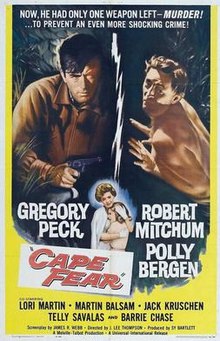
The first version of Cape Fear came out in 1962.  It was a black-and-white film that was directed by J. Lee Thompson.  In this version, the recently released rapist, Max Cady, is played by Robert Mitchum.  Sam Bowden, the attorney that Cady blames for his incarceration, is played by Gregory Peck.  Whereas the Scorsese version was highly stylized, the original Cape Fear is brutally straight forward.  (While Scorsese’s Cape Fear goes on for over two hours, the original Cape Fear tells its story in a brisk 100 minutes.)  While I think that Scorsese’s Cape Fear has its strong points, the original Cape Fear is superior in almost every way.

The original is certainly far more frightening than the remake.  What the original may lack in stylization, it makes up for in plausibility.  It’s scary because you can imagine everything in the film actually happening.  Robert Mitchum and Gregory Peck may both be iconic film stars but they’re also believable as human beings.

For modern audiences, it’s easy to smirk at Peck with his upright image and his sonorous voice but what made Peck a great actor was his ability to make it all seem natural.  Peck never seemed like he was acting like an honest man who always tried to do the right thing.  Instead, he simply was that man.  It’s perhaps significant that Peck played Sam Bowden the same year that he played another honest lawyer, Atticus Finch, in To Kill A Mockingbird.  The only real difference between them is that, whereas Atticus was always confident and sure of himself, Sam is frequently helpless.  He knows that Max is stalking him and his family and he’s just as aware that there’s nothing he can do about it.  When Max rapes a woman (Barrie Chase) that he meets at a bar, she refuses to testify against him.  When Sam’s dog turns up dead, everyone knows that Max killed him but there’s no way to prove it.  When Sam hires three men to intimidate Max, Max beats them up and promptly tries to get Sam disbarred.  When Sam finally resorts to plotting Max’s murder, we’re seeing Atticus Finch pushed beyond his limit.

As for Robert Mitchum, his animalistic performance is frightening precisely because it feels very real.  Everyone has known a Max Cady, even if they didn’t realize it at the time.  Max gives a fiercely physical performance, often appearing shirtless and strutting through his scenes with a sexual arrogance that’s both frightening and, at times, far more tempting than anyone would want to admit.  The scenes in which Max attacks Barrie Chase and Polly Bergen (who plays Peck’s wife) are absolutely terrifying but, for me, the most disturbing moments in Cape Fear are the moments when Max is silent.  Even when he’s not speaking, Mitchum allows you to see every depraved thought going through is head.

What’s the scariest moment for me?  When the camera catches Max watching Sam’s teenage daughter (Lori Martin).  It’s not just that I know what’s going on in Mitchum’s mind as he stares at her.  It’s because I know what it’s like to be watched.  It’s a scene that’s unsettling because it makes me consider just how many Max Cadys are out there right now.

The battle between Max and Sam is a fascinating one.  In prison, Max studied enough law to become as knowledgeable about how to manipulate it as Sam.  Under pressure, Sam grows more violent and more willing to circumvent his oath to uphold the same law that Max is now using against him.  It makes for a frightening  film, one that will stick with you long after you watch it.
Movie A Day #178: Kinjite: Forbidden Subjects (1989, directed by J. Lee Thompson)


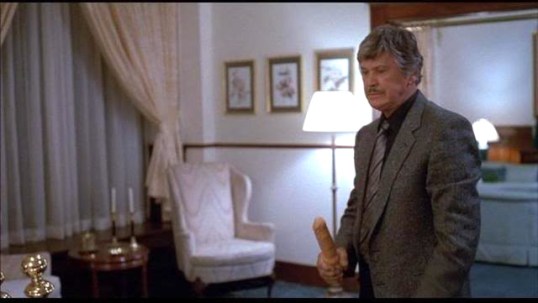
This is the one where Charles Bronson sodomizes a guy with a dildo.

Don’t worry, though.  Bronson does it off-screen and the guy was abusing Nicole Eggert so he had it coming.

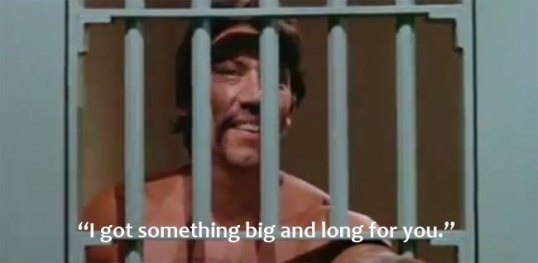
In Kinjite, Bronson plays Lt. Crowe, a tough LAPD vice cop who hates two groups of people: pedophiles (which is cool, who doesn’t hate them?) and the Japanese (which is not cool).  Not only does Crowe sodomize a pervert but he also forces a pimp to eat a gold watch and later, with the help of his partner, he holds another man over the edge of a balcony, just to have that man accidentally slip out of his shoes and plunge to his death.  Finally, Crowe tosses a convict into a prison cell, where another prisoner (played by Danny Trejo, in what may have been his film debut) announces that he’s “got something big and long for you.”  Crowe chuckles, “That’s justice” and then walks away.

Danny Trejo in Kinjite

Of the many strange films that Bronson made for Cannon Films, Kinjite may be the strangest.  The main plot involves Crowe searching for and rescuing the kidnapped daughter of a Japanese businessman (James Pax).  Before his daughter was kidnapped, the businessman groped Crowe’s fifteen year-old daughter on a city bus.  The entire movie seems to be building up to the moment that Crowe, who is portrayed as being overprotective of his daughter, discovers what the businessman did but that moment never comes.  There are numerous scenes of the businessman in Japan but they do not have anything to do with the rest of the plot.  Strangely, neither Crowe’s daughter nor his wife (played by Peggy Lipton) are ever menaced by the bad guys.  What type of Charles Bronson movie is this?

In Bronson’s defense, he was 71 year-old when he made this movie and, off screen, his wife Jill Ireland was battling the cancer that would eventually take her life.  Bronson can be excused for not appearing to be overly invested in Kinjite: Forbidden Subjects.  (Since Kinjite means Forbidden Subjects in Japanese, the actual title of this movie is Forbidden Subjects: Forbidden Subjects.)  No one appears to have made much of an effort on Kinjite, though Bronson’s stunt double gets a good work out.  Kinjite is full of scenes where Bronson throws a punch in close-up but his first in never actually shown connecting with anyone.  Most of the action scenes are clumsily filmed so that Crowe keeps his back to the camera.   All Kinjite needs is a supporting turn from Troy McClure and a cameo from McGarnagle and it would be perfect viewing for The Simpsons.

Kinjite would be the final film that Bronson made for Cannon Films.  It would also be the last Bronson film to be directed by J. Lee Thompson.  After Kinjite, Bronson appeared in two more feature films: Sean Penn’s The Indian Runner (which, if not for Penn’s pretentious direction, could have launched Bronson on a second career as a first-rate character actor) and a final Death Wish film.  Bronson returned to television, appearing in three made-for-TV movies before retiring in 1999.  Bronson died in 2003 but, as long as there are people who enjoy a good action movie, he will never be forgotten.

This scene is not from Kinjite but it’s still pretty fucking cool.

A Movie A Day #177: Murphy’s Law (1986, directed by J. Lee Thompson)


What is Murphy’s Law?

Let’s ask LAPD Detective Jack Murphy.

“Don’t fuck with Jack Murphy.”

Normally, having a law named after you would be pretty cool but it appears that this is just a law that Jack came up with himself.  Having to come up with your own law is kind of like having to come up with your own nickname.  Dude, it’s just lame.  Since Jack Murphy is played Charles Bronson, we can cut him some slack.

Murphy’s Law was one of the many film that, towards the end of his career, Bronson made for Cannon Films.  He played a detective in almost all of them.  Jack Murphy is Dirty Harry without the fashion sense.  He is also an alcoholic who cannot get over his ex-wife (Angel Tompkins) and her decision to become a stripper.  Not only has Murphy managed to piss off his superiors with his bad attitude but the mob is out to get him.  Everyone has forgotten Murphy’s Law.  Everyone is fucking with Jack Murphy.

Jack’s main problem, though, is Joan Freeman (Carrie Snodgress).  Years ago, Murphy sent Joan to prison for murder but, because it’s California and Jerry Brown appointed all of the judges, Joan gets out after just a few years.  Joan starts to systematically murder everyone that Murphy knows, framing Murphy for the murders.  Murphy’s arrested by his fellow cops, all of whom need a refresher on Murphy’s Law.  Though handcuffed to a young thief (Kathleen Wilhoite), Murphy escapes from jail and set off to remind everyone why you don’t fuck with Jack Murphy.

Murphy’s Law is a typical Cannon Bronson film: low-budget, ludicrously violent, borderline incoherent, so reactionary than it makes the Dirty Harry films look liberal, and, if you’re a fan of Charles Bronson, wildly entertaining.  Bronson was 65 years old when he played Jack Murphy so he cannot be blamed for letting his stunt double do most of the work in this movie.  What’s interesting is that, for once, Bronson is not the one doing most of the killing.  Instead, it is Carrie Snodgress, in the role of Joan Freeman, who gets to murder nearly the entire cast.  There is nothing subtle about Snodgress’s demonic performance, which makes it perfect for a Cannon-era Bronson film.  In fact, Carrie Snodgress gives one of the best villainous performances in the entire Bronson filmography.  There is never any doubt that Snodgress is capable of killing even the mighty Charles Bronson, which makes Murphy’s Law a little more suspenseful than most of the movies that Bronson made in the 80s.

Whatever else can be said about Murphy’s Law, it does feature one of Bronson’s best one liners.  When Joan threatens to send him to Hell, Murphy replies, without missing a beat, “Ladies first.”  Only Bronson could make a line like that sound cool.  That’s Bronson’s Law.

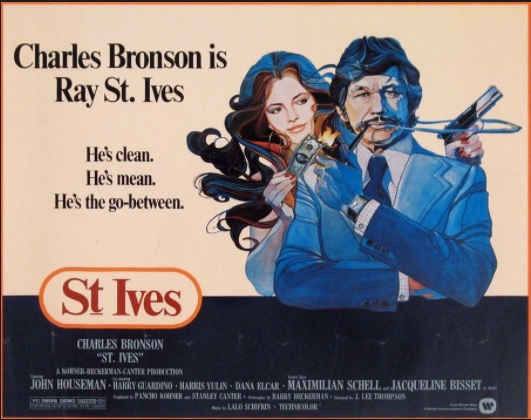
A Movie A Day #174: St. Ives (1976, directed by J. Lee Thompson)


Raymond St. Ives (Charles Bronson) is a former cop-turned-writer who desperately needs money.  Abner Procane (John Houseman) is a wealthy and cultured burglar who needs someone to serve as a go-between.  Five of Procane’s ledgers have been stolen.  The thieves are demanding a ransom and Procane believes that St. Ives is just the man to deliver the money.  But every time that St. Ives tries to deliver the money, another person ends up getting murdered and St. Ives ends up looking more and more like a suspect.  Who is the murderer?  Is it Janet (Jacqueline Bisset), the seductive woman who lives in Procane’s mansion?  Is it Procane’s eccentric psychiatrist (Maximillian Schell)?  Could it be the two cops (Harry Guardino and Harris Yulin) who somehow show up at every murder scene?  Only Ray St. Ives can solve the case!

Charles Bronson is best remembered for playing men of few words, the type who never hesitated to pull the trigger and do what they had to do.  St. Ives was one of the few films in which Bronson got to play a cerebral character.  Ray St. Ives may get into his share of fights but he spends most of the film examining clues and trying to solve a mystery.  The mystery itself is not as important as the quirky people who St. Ives meets while solving it.  St. Ives has a great, only in the 70s type of cast.  Along with those already mentioned, keep an eye out for Robert Englund, Jeff Goldblum, Dana Elcar, Dick O’Neill, Daniel J. Travanti, Micheal Lerner, and Elisha Cook, Jr.  It’s definitely different from the stereotypical Charles Bronson film, which is why it is also one of my favorites of his films.  As this film shows, Bronson was an underrated actor.  In St. Ives, Bronson proves that, not only could he have played Mike Hammer, he could have played Philip Marlowe a well.

St. Ives is historically significant because it was the first Bronson film to be directed by J. Lee Thompson.  Thompson would go on to direct the majority of the films Bronson made for Cannon in 1980s, eventually even taking over the Death Wish franchise from Michael Winner.

A Movie A Day #56: The White Buffalo (1977, directed by J. Lee Thompson)


whitebuffalo1977The year is 1874 and James Otis (Charles Bronson) is traveling through the Dakota Territory.  Everywhere that James Otis goes, someone tries to shoot him.  This is because James Otis is actually the infamous Wild Bill Hickcock and everyone this side of Deadwood has a reason to want him dead.  Hickcock has returned to the territory because he is losing his eyesight and he fears that he may be dying.  Hickcock has been having nightmares about a giant albino buffalo and believes that it is his destiny to either kill it or be killed himself.

Meanwhile, a young indian chief (Will Sampson) is also seeking the White Buffalo.  The buffalo previously attacked his village and killed his son.  The chief must now get revenge or lose his power in the tribe.  He is now known as Worm.  Before the buffalo attack, his name was Crazy Horse.

Crazy Horse eventually teams up with Hickcock and a one-eyed hunter named Charlie Zane (Jack Warden).  They work out an uneasy alliance but who, of the three, will finally get the chance to kill the buffalo?

When Dino De Laurentiis produced The White Buffalo, he was hoping to combine the popularity of Jaws with the star power of Charles Bronson.  It should have been a hit but instead, The White Buffalo was one of the many flops that temporarily killed the western as a commercial genre.  (Before there was Heaven’s Gate, there was The White Buffalo.)  The reason why is obvious: while audiences loved to watch Bronson shoot muggers in New York, they were less willing to sit through a pseudo-intellectual western version of Moby Dick that featured more conversation than gunplay.  The obviously fake buffalo did not help matters.

I still like The White Buffalo, though.  Because of the movie’s cheap sets, fake snow, and some inconsistent rear projection work, The White Buffalo is sometimes so surreal that it could pass for a Spaghetti Western.  (When I saw Bronson, Sampson, and Warden huddled in a cardboard cave while it fake snowed outside, I immediately thought of Sergio Corbucci’s The Great Silence.)  Charles Bronson, always an underrated actor, gave one of his best performances as the haunted Hickcock.  The White Buffalo was, up until his small role in Sean Penn’s The Indian Runner, the last time that Bronson would allow himself to appear as anyone other than Charles Bronson on-screen.

When watching The White Buffalo, keep an eye out for several Hollywood veterans in minor roles.  Kim Novak plays a prostitute.  Stuart Whitman is a thief.  Slim Pickens drives a stagecoach.  Clint Walker’s an outlaw and Ed Lauter plays the younger brother of Gen. Custer.  The town’s undertaker is John Carradine.  The cameos don’t add up too much but it’s still good to see everyone.

A Movie A Day #22: Messenger of Death (1988, directed by J. Lee Thompson)


messenger_of_deathIn rural Colorado, the three wives and all the children of Orville Beecham (Charlie Dierkop) have been murdered.  Veteran journalist Garret Smith (Charles Bronson) discovers that Orville is the son of an excommunicated Mormon fundamentalist named Willis Beecham (Jeff Corey).  Willis, who lives on a heavily armed compound, practices polygamy and wants nothing to do with the outside world.  However, Willis’s brother, Zenas (John Ireland), long ago split with Willis and set up a compound of his own.  At first, Garret suspects that Orville’s family was killed by Zenas.  As Zenas and Willis go to war, Garret discovers that there’s actually a bigger conspiracy at work, one dealing with corporate greed and water rights.  (Forget it, Bronson, it’s Chinatown.)
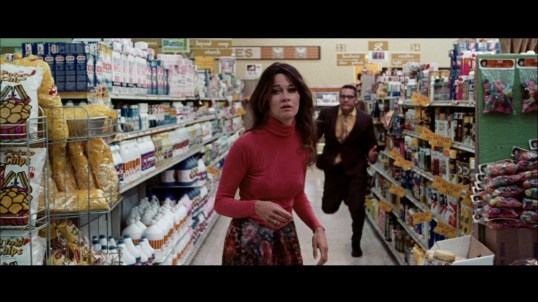
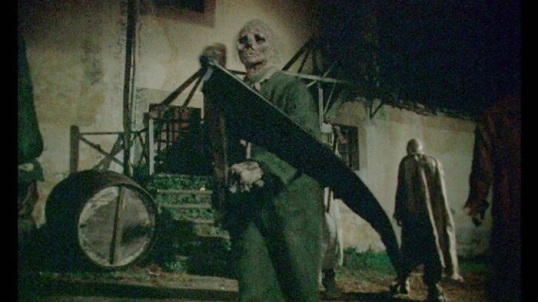
Messenger of Death was the 2nd to last film that veteran tough guy Charles Bronson made for Cannon Films.  Especially when compared to the other films that he made for Cannon (10 To Midnight, Kinjite, Murphy’s Law, three Death Wish sequels), Messenger of Death features Bronson in a surprisingly cerebral role.  While there is violence, very little of it is actually the result of anything that Bronson does.  For once, Charles Bronson isn’t running around with a gun and blowing away bad guys. If Death Wish‘s Paul Kersey ever did start blowing away muggers in Colorado, Garret would probably be the first to condemn him in a carefully written editorial.  The only time he fights is in self-defense and even then, it’s hand-to-hand combat.  Instead, he spends most of the film doing research and asking questions.  As a result, Messenger of Death is never as much fun as the other films that Bronson made for Cannon but it’s still interesting to see him playing a regular guy.

4 Shots From 4 Films: Messiah of Evil, Burial Ground, Happy Birthday To Me, Zombie Lake


4 Shots From 4 Films is just what it says it is, 4 shots from 4 of our favorite films.  As opposed to the reviews and recaps that we usually post, 4 Shots From 4 Films is all about letting the visuals do the talking.

4 Shots From 4 Films

Messiah of Evil (1973, directed by Willard Huyck and Gloria Katz)

Messiah of Evil (1973, directed by Willard Huyck and Gloria Katz)

Burial Ground (1981, directed by Andrea Bianchi)

Burial Ground (1981, directed by Andrea Bianchi)

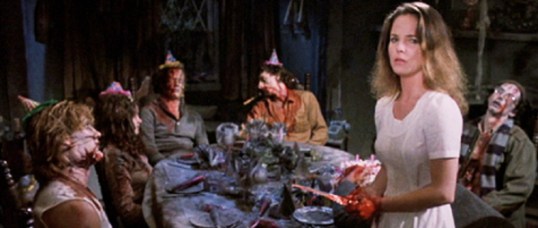
Happy Birthday To Me (1981, directed by J. Lee Thompson)

Happy Birthday To Me (1981, directed by J. Lee Thompson)

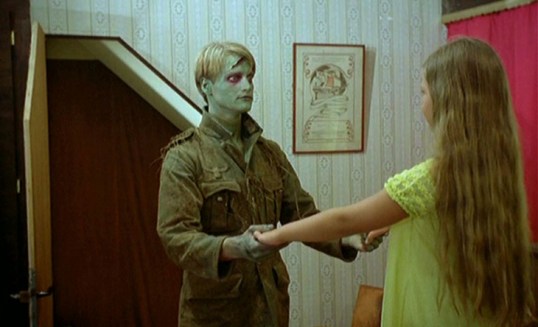
Zombie Lake (1981, directed by Jean Rollin)

Zombie Lake (1981, directed by Jean Rollin)

4 Shots From 4 Films: Omar Sharif Edition


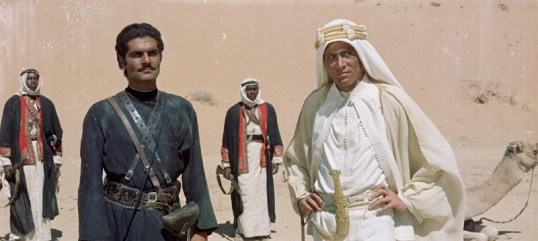
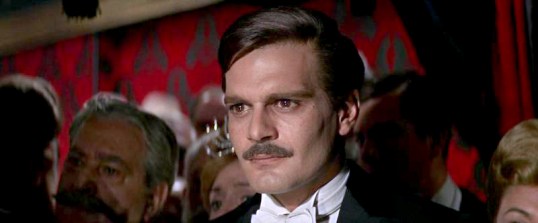
Today the film world received news that legendary actor Omar Sharif passed away at the age of 83. The acclaimed Egyptian actor would make quite an entrance with his very first English-language film: David Lean’s epic Lawrence of Arabia.

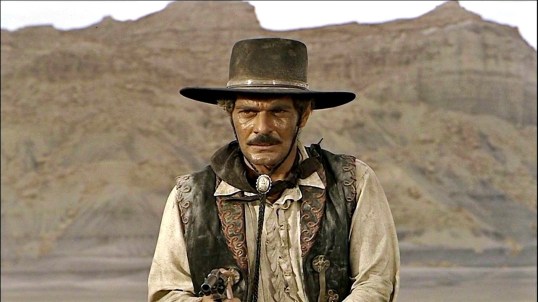
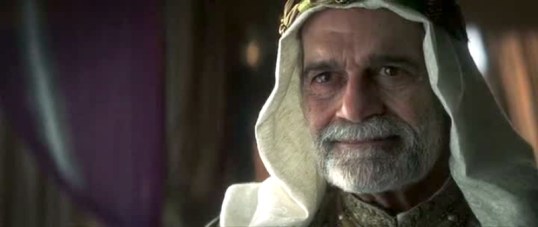
Omar Sharif would go on to star in such film as Dr. Zhivago, MacKenna’s Gold, Funny Girl and Behold a Pale Horse to name a few. He might be recognized by the younger generation in such films as The 13th Warrior and Hidalgo. He would be the vision of the noble romantic whether it was as a warrior, a poet or a leader. He would bring a bearing on-screen that exuded steadfast nobility yet still with a streak of roguish charm.

With each passing year we lose more and more of our classic performers. Now Omar Sharif joins the others who have gone before him but will always live on in our memories of him up on the screen.

4 SHOTS FROM 4 FILMS

Lawrence of Arabia (dir. by David Lean)

Lawrence of Arabia (dir. by David Lean)

Dr. Zhivago (dir. by David Lean)

Dr. Zhivago (dir. by David Lean)

MacKenna'sGold

MacKenna’s Gold (dir. by J. Lee Thompson)

Hidalgo (dir. by Joe Johnston)

Hidalgo (dir. by Joe Johnston)

A Quickie With Lisa Marie: Battle for the Planet of the Apes (dir. by J. Lee Thompson)


And so, we reach the end of the original series of Planet of the Apes films.  Battle for the Planet of the Apes was the cheapest of the Apes films and most critics agree that it’s also the worst.  Sad to say, I happen to agree with them.  If nothing else, Battle For The Planet of the Apes is the only one of the original Apes films that fails to even reach the meager level of quality of Tim Burton’s remake.

The film begins a decade after the end of Conquest of the Planet of the Apes.  A nuclear war has destroyed what was left of human society.  It’s never made clear if that war was between apes and human or between humans and humans.  All that is clear is that the Apes are now firmly in charge of the world.  Caesar (Roddy McDowall) leads the Apes civilization.  Humans, while clearly second class citizens, are treated relatively well by the Apes.  Early on in the film, Caesar views archival footage of his parents and learns of what the future holds.  He immediately makes move to try to prevent that future from occurring.

However, all is not well.  Gorilla general Aldo (Claude Akins) hates humans and is secretly plotting a military coup to overthrow Caesar.  Meanwhile, over in the Forbidden City (a.k.a. New York), there’s a tribe of radiation-scarred humans who are being led by Kolp (Severn Darden), the sadistic torturer from Conquest of The Planet of the Apes.  Driven mad by the ravages of war, Kolp and his followers are plotting to launch their own last-ditch attack on Caesar and the apes.

So much of this film can be legitimately criticized, from the cheap look (the apes are no longer characters but instead just actors in rubber masks) to the predictable storyline.  So, instead of focusing on what’s wrong with this film, I’m going to highlight the handful things that actually did work.  While few of the performers make any effort to invest their characters with any sort of life, both McDowall and Darden give strong performances.  Darden, in particular, makes a great villain and it’s a shame that he didn’t get a better film in which to show off.  Predictable as the film is, there’s a few memorable touches, my favorite being Kolp and his followers converting a bunch of school busses into armored attack vehicules.

As well, Battle for the Planet of the Apes may ultimately feel like an unnecessary chapter in the whole Planet of the Apes saga but the film, at the very least, makes the effort to provide some sort of continuity with the other films in the series.  Kolp and his followers are obviously meant to be the ancestors of the bomb-worshipping mutants from Beneath the Planet of the Apes and, in one of my favorite little touches, Kolp’s assistant is named Mendez.  If you’ll remember, the leader of the mutants in Beneath was named Mendez the Tenth. 

It’s those little touches that show that the filmmakers, at the very least, respected their viewers enough to maintain the continuity of the series.  As bad a film as Battle is (and it’s definitely not very good), it can still teach a valuable lesson to today’s filmmakers.