John Wick: Chapter 3 – Parabellum (dir. by Chad Stahelski) Review


“Nothing’s ever just a conversation with you, John.” — Sofia Al-Azwar

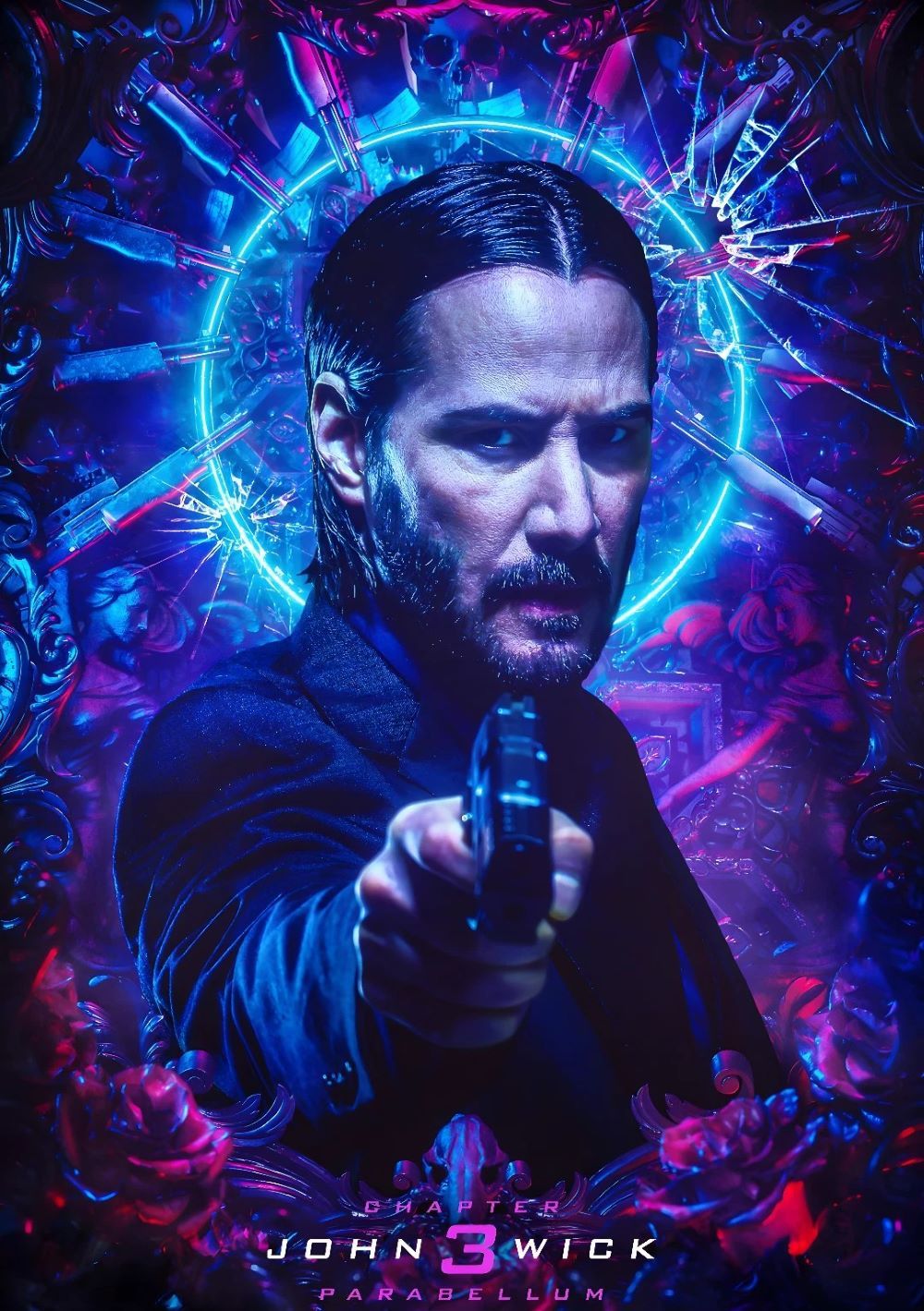
John Wick: Chapter 3 – Parabellum launches straight from the previous installment’s shocking finale, hurling John into a frantic dash through New York’s underbelly as a $14 million bounty turns every shadow into a threat. This chapter dials the franchise’s signature intensity even higher, plunging you into an assassin underworld bound by ironclad rules that start to fracture under pressure. The action explodes with creative savagery, though the storyline sometimes buckles beneath its ambitions, offering a pulse-pounding yet slightly bloated addition to the saga.

The movie opens with John scrambling through New York streets, his excommunicado status ticking down like a bomb. He’s got one hour before every killer in the city turns on him, and boy, do they. Keanu Reeves is back in top form, looking battered but unbreakable, his puppy-dog eyes conveying more grief and determination than any monologue could. The film’s Latin subtitle, Parabellum—meaning “prepare for war”—sets the tone perfectly as John grabs weapons from the oddest places, like a horse stable or a knife shop where he gets to use blades almost like guns with each throw.

What makes this entry stand out is how it expands the Wick-verse without losing that gritty intimacy. We dive deeper into the High Table’s bureaucracy, with the Adjudicator (Asia Kate Dillon) showing up as this cold, efficient enforcer who judges allies like Winston (Ian McShane) and Charon (Lance Reddick) for helping John. It’s a smart addition, adding layers to the rules that have always governed this world—markers, blood oaths, no business on Continental grounds. Halle Berry pops in as Sofia, an old flame running a Moroccan palace full of attack dogs, leading to one of the film’s wildest sequences where pooches tear into bad guys alongside John. Mark Dacascos as Zero, the sushi-loving villain who’s bald and sports a penchant for movie quotes, brings some quirky charm, even if he’s no Santino from Chapter 2.

Director Chad Stahelski, a former stuntman himself, continues to treat action like high art, and man, does Chapter 3 flex its muscles here harder than ever. The choreography is balletic and brutal, blending gun fu with knives, swords, and even books—there’s a library fight where John uses a volume as a shield and club, then politely reshelves it, which is peak Wick weirdness. Fights escalate from motorcycle sword duels slicing through rainy streets to hall-of-mirrors mayhem that nods to Enter the Dragon, with reflections multiplying the chaos into a dizzying ballet of blades. Indonesian martial arts legends Cecep Arif Rahman and Yayan Ruhian, The Raid 2 alumni who make their franchise debut here, light up the massive finale melee, trading blows with John in a flurry of fists, elbows, and blades that feels like a love letter to silat and caps the chaos perfectly.

Every sequence feels meticulously planned, relying on practical stunts that make CGI-heavy blockbusters look lazy and fake—think real falls, real crashes, real bone-crunching impacts that leave you wincing. The gun fu style—precise headshots amid flips, slides, and reloads—never gets old, evolving with fresh twists like pencil kills upgraded to book barrages or horse-mounted shootouts. The film’s true strength lies in these set pieces: they’re not just fights, they’re symphony-like spectacles where camera work syncs breathlessly with the violence, spatial awareness stays razor-sharp so you track every bullet and block, and the escalation feels organic, building from claustrophobic knife scraps to epic rooftop brawls. It’s the kind of action that honors the genre’s legends while pushing boundaries, making you forget any plot gripes amid the sheer kinetic joy.

That said, it’s not all flawless, and one drawback from Chapter 2 creeps back in here: the film leans heavily into more world-building of its universe, which puts character development on the back burner. John’s arc—fighting to earn back his freedom—repeats beats from the previous entry, and some twists, like Winston’s apparent betrayal, land more as fan service than emotional gut-punches. At 131 minutes, it drags in spots, especially during quieter moments that try to humanize John but end up repetitive, while the dialogue stays sparse and stylized, leaving characters like the Elder (Saïd Taghmaoui) feeling underdeveloped. But then again, the franchise has staked its claim on being action-focused from the jump, so if fans are bought into this wild ride by now, they’re probably here for the balletic bloodshed over deep psychology anyway—it’s like the film loves its assassins’ code more than fleshing out motivations beyond revenge.

Visually, it’s a stunner. Dan Laustsen’s cinematography turns New York into a neon-soaked hellscape, with rain-slicked streets and ornate Continental lobbies popping in crisp 2.40:1. The Morocco desert scenes add exotic flair, though they borrow heavily from The Good, the Bad and the Ugly. Tyler Bates and Joel J. Richard’s score pounds with industrial electronica, syncing perfectly to the violence, while select tracks like Team Rezo’s “Pray for Kaeo” amp up horse chases. Sound design is Oscar-worthy—the thud of fists, crack of gunfire, all mixed to immerse you in the carnage.

Keanu Reeves carries it all, 54 at release but moving like a man half his age thanks to rigorous training. His physical commitment sells John’s exhaustion; you see the toll in every limp and gasp. Supporting cast shines too—McShane’s suave Winston steals scenes with dry wit, Reddick’s Charon is unflappably loyal, and Berry holds her own in dog-assisted fury. Dacascos adds levity, slicing foes with a sunny disposition, but Dillon’s Adjudicator is more menacing presence than fleshed-out foe. It’s ensemble work in service of spectacle, not drama.

For fans of the series, John Wick: Chapter 3 delivers bigger, bolder chaos that honors stunt performers as the real stars. It celebrates cinema history with nods to Buster Keaton (a horse chase echoes The General) and Hong Kong action flicks, all while pushing practical effects. Critics raved about the thrills, calling it “blissfully brutal” entertainment that shames neighbors like generic superhero fare. Audiences loved the over-the-top kills and Reeves’ stoic heroics.

To keep it fair, though, this isn’t exactly groundbreaking stuff. The simplicity that charmed in the original—a widower’s rampage—has bloated into a globe-trotting saga chasing its own tail. Female characters, while badass like Sofia, still orbit John’s story, and the violence, though stylish, borders on cartoonish excess. Some felt it lost narrative steam, prioritizing set pieces over heart, turning Wick from grieving everyman to invincible machine. Compared to Chapter 2‘s operatic betrayal, this one’s more procedural, like a video game level grind.

Ultimately, John Wick: Chapter 3 – Parabellum is a love letter to action cinema, casual fun if you’re in for the mayhem. It’s not deep, but damn if it doesn’t make you cheer as John unleashes hell. Grab popcorn, dim the lights, and prepare for war—you won’t regret it, unless you’re after Oscar bait. Solid 8/10 for pure, delirious popcorn thrills.

Weapons used by John Wick throughout the film

  • TTI STI 2011 Combat Master: Iconic pistol from the armory scene—John’s “2011” choice with optics, extended mags, and flawless reliability for extended shootouts.
  • Glock 19 / 19X / 17: Multiple pickups during mint guard fights in Casablanca and Continental siege; versatile Glocks he commandeers mid-battle.
  • Walther PPQ / CCP: Snagged from assassins during the motorcycle chase; quick-use comped models for on-the-run defense.
  • TTI SIG-Sauer MPX Carbine: Siege standout with Trijicon MRO sight, Streamlight laser, and +11 mags—John’s signature stance shines in hallway clears.
  • SIG-Sauer MPX / MPX Copperhead: Casablanca mint raid grabs; compact 9mm shredders with red dots and grips for close-quarters fury.
  • Benelli M4 Super 90: Climactic Continental siege with Charon; armor-piercing slugs, extended tubes, ghost rings—devastating hallway blasts.
  • Benelli M2 Super 90 (TTI Ultimate package, implied variants): Siege support; Charon favors these, John grabs similar for enforcer waves.

John Wick Franchise (spinoffs)
Film Review: Executive Decision (dir by Stuart Baird)


In 1996’s Executive Decision, terrorists hijack an airplane.  Their leader, Nagi Hassan (David Suchet) demands that the U.S. government not only give him and his men safe passage but that they also release Hassan’s commander, Jaffa (Andreas Katsulas).

In Washington D.C., it is decide to use a stealth plane to transport Col. Austin Travis (Steven Seagal) and his men into the passenger plane.  Accompanying them will be Dr. David Grant (Kurt Russell), a consultant for U.S. Intelligence.  Dr. Grant is the world’s leading expert on Hassan, even though neither he nor anyone else is even sure what Hassan looks like.  Travis distrusts Grant because he’s a civilian and also because he holds Grant responsible for a botched raid on a Russian safehouse in Italy.  Dr. Grant is going to have to prove himself to Col. Travis because Travis doesn’t have any time for people who can’t get the job done.  And Travis is determined to get on that plane and save all those passengers.

In other words, Travis is a typical Steven Seagal character and, for the first fourth of this movie, Seagal gives a typical Steven Seagal performance.  He delivers his line in his trademark intimidating whisper, he glares at everyone else in the film, and essentially comes across as being a total douchebag who can still handle himself in a fight..  However, when it’s time to board the airplane through a docking tunnel, something goes wrong.  Everyone — even nervous engineer Dennis Cahill (Oliver Platt) is able to slip through the stealth plane’s docking tunnel and get into the hijacked airplane cargo hold without being detected.  But the two planes are hit by severe turbulence.  Suddenly, it becomes apparent the one man is going to have to sacrifice his life and close the hatch before the docking tunnel decompresses.

David, already in the cargo hold, looks down at Austin in the tunnel.  “We’re not going to make it!”

“You are!” Austin replies before slamming the hatch shut and getting sucked out of the tunnel.  (There’s your Oscar Cheers Moment of 1996!)  After all that build-up, Steven Seagal exits the film early and now, it’s up to Kurt Russell and what’s left of Austin Travis’s men to somehow stop the terrorists.  Not only do they have to stop Hassan but they also have to do it before the Air Force — which has no way of knowing whether or not any of their men were able to get on the plane before the tunnel fell apart — shoots down the airliner.

(If the airplane looks familiar, that’s because Lost used the same stock footage whenever it flashed back to the plane crash that started the show.)

It’s actually a rather brilliant twist.  When this film came out, Seagal was still a film star.  He played characters who always got the job done and who were basically infallible.  He wasn’t a very good actor but he did manage to perfect an intimidating stare and that stare carried him through a lot of movies.  No one would have expected Seagal to die within the first 30 minutes of one of his movies and when Col. Travis, who the film has gone out of its way to portray as being the consummate warrior, is suddenly killed, there really is a moment where you find yourself wondering, “What are they going to do now?”  In just a matter of minutes, Executive Decision goes from being a predictable Steven Seagal action film to a genuinely exciting and clever Kurt Russell thriller.  For once, Russell is not playing a man of action.  He’s an analyst, a thinker.  And, to the film’s credit, he uses his mind more than his brawn to battle Hassan’s terrorists.  With excellent support from Halle Berry (as a flight attendant who discreetly helps out David and the soldiers), Oliver Platt, B.D. Wong, Whip Hubley,  David Suchet, Joe Morton, and even John Leguizamo (as Travis’s second-in-command), Executive Decision reveals itself to be an exciting and ultimately rewarding thrill ride.

And to think, all it took was sacrificing Steven Seagal.

Holiday Film Review: The Last Boy Scout (dir by Tony Scott)


My God, what a violent holiday season!

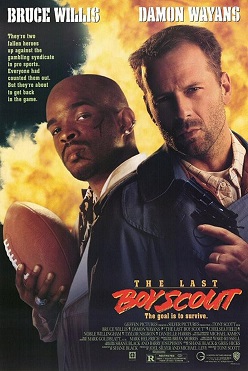
Like the majority of the films that have been written and/or directed by Shane Black, The Last Boy Scout takes place in December.  It’s not quite as Christmas-y as some of Black’s other films.  I think that I may have spotted a few decorations in the background of some of the scenes.  And there’s a scene where private investigator Joe Hallenbeck (Bruce Willis) discovers that his daughter (played by a very young Danielle Harris) has been drawing pictures of “Satan Claus.”  Otherwise, there’s not a lot of Christmas to be found in this December-set film and perhaps that’s for the best.  Seriously, this movie is violent!  Not even the comedic relief characters are safe from getting a bullet to the head.  This is a film that actually begins with a football player shooting three other players during a game and then saying, “Ain’t life a bitch,” before shooting himself in the head.

The film’s plot isn’t always easy to follow.  Joe is a private investigator who drinks too much and whose partner has just been blown up in front of his house.  (His partner was also sleeping with Joe’s wife so guess who is now a suspect!)  Joe is also hired to act as a bodyguard for a stripper named Cory (Halle Berry).  Cory is dating Jimmy Dix (Damon Wayans), a former quarterback who used to be Joe’s hero.  Then Jimmy got kicked out of the league for gambling and Joe stopped watching football.  Cory says that she has a tape recording that will get Joe back into the NFL.  But then, Cory is brutally gunned down in the middle of the street and the tape is accidentally destroyed by Joe’s crappy tape player.  It’s time for Jimmy and Joe to team up, trade one liners, and uncover the conspiracy.

It all links back to the efforts of football team owner Shelley Marcuse (Noble Willingham) to legalize gambling.  Senator Calvin Baynard (Chelcie Ross) is standing in Marcuse’s way because Marcuse didn’t offer him a big enough bribe.  Marcuse is planning to assassinate the senator and he’s going to frame Joe for the crime because, in an amazing coincidence, Joe used to be a secret service agent until he caught Senator Baynard torturing a sex worker.  Of course, the actual assassination will be carried out by Marcuse’s chief henchman, Milo (Taylor Negron, who is absolutely chilling in the role).  Milo rarely shows emotion and always refers to everyone by their formal name.  (Joe is called Joseph.  Jimmy is called James.)  Milo is also a total sociopath, one who will shoot anyone in the head without a second thought.

Shane Black, who is a genius regardless of what I may think of this particular film, has said that he wrote The Last Boy Scout after he broke up with a longtime girlfriend and he was suffering from depression.  Disillusionment hangs over almost every frame of the movie.  Joe did the right thing and lost his career.  Jimmy lost his family on the same night that he played the best game of his career.  The Senator is opposed to Marcuse’s scheme solely because he’s not getting enough of a cut.  Marcuse is a respected businessman who thinks little of killing strangers.  Jimmy and Joe are heroes not because they’re particularly good but because everyone else around them is just so bad.  This is also very much a movie about guys doing guy things.  I watched it with my brother-in-law and I have to say that I think he got a bit more out of the film than I did.  Then again, I also think my sister Megan also got more out of it than I did so maybe I just wasn’t in the mood to watch so many people get shot in the head.  It happens.

The Last Boy Scout was directed by Tony Scott so, no matter what else you might want to say about it, the movie looks great.  Willis seems a bit bored with the film and Wayans sometimes struggles with the more dramatic moments.  In many ways, the film feels like a precursor to Shane Black’s The New Guys, though Willis and Wayans never have the same chemistry as Russell Crowe and Ryan Gosling did in that underrated film.  However, The Last Boy Scout’s action moves quickly and the screen is always full of neon lights.  It’s a well-made action movie though, unlike Lethal Weapon, Die Hard, and The Nice Guys, it’s not one that really sticks around in your head after the end credits roll.  Personally, I think it needed a little more holiday spirit.

“Going All Kanye On You”: New Year’s Eve (dir by Garry Marshall)


“New Year’s Eve is the worst, people who don’t drink or party all year suddenly going all Kanye on you.”

That line was delivered by Ashton Kutcher in the 2011 film, New Year’s Eve.  Seven years ago, when the film was first released, I thought it was an awkward line, partially because Ashton Kutcher sounded like he was drowning in self-loathing when he said it and partially because the sudden reference to Kanye West felt like something that would be considered clever by 60-something screenwriter who had just spent a few hours scanning twitter to see “what the kids are into nowadays.”

(Of course, hearing the line in 2018 was an even stranger experience.  People who don’t drink or party all year suddenly going all Kanye on you?  So, they’re putting on red MAGA caps and spending New Year’s Eve tweeting about prison reform?  True, that’s the way a lot of people celebrated in my part of the world but I’m not sure how exactly that would play out in Times Square.)

In New Year’s Eve, Kutcher plays a character named Randy.  Randy is a comic book artist, which means that he’s snarky and cynical and doesn’t really see the point of celebrating anything.  Fortunately, he gets trapped in an elevator with Elise (Lea Michele) and, with her help, he comes to learn that New Year’s Eve is not the worst.  Instead, it’s the most important holiday ever created and, if you don’t think so, you’re worse than the devil.

Fortunately, Hillary Swank is present to make sure that we all get the point.  Swank plays Claire Morgan, who is in charge of making sure that the ball drops at exactly the right moment at Times Square and who gets a monologue where she explains that the purpose of the ball is to make you think about both the past and the future.  As she explains it, the world comes together one night a year, all so everyone can watch that ball drop.  Apparently, if the ball doesn’t drop, the new year doesn’t actually start and everyone is trapped in a timeless limbo, kind of like Iron Man at the end of Avengers: Infinity War.

Of course, there’s more going on in New Year’s Eve than just Randy taking Kanye’s name in vain and Claire refusing the accept that Times Square is not the center of the universe.  There’s also an old man (Robert De Niro) who wants to time his death so he passes right at the start of the new year.  Sarah Jessica Parker plays the mother of frustrated teenager Abigail Breslin and gets to make a “girls gone wild” joke.  (A Kanye reference and a girls gone wild joke in the same film?  It’s like a pop culture tsunami!)  Michelle Pfeiffer tries to accomplish all of her new year’s resolutions with the help of Zac Efron.  Halle Berry worries about her husband (Common) , who is serving overseas.  Josh Duhamel searches for a woman who once told him that his heart was more important than his business.  Seth Meyers and Jessica Biel compete with Til Schweiger and Sarah Paulson to see who can be the family of the first child born in the new year.  Jon Bon Jovi thinks about the woman that he nearly married and Katherine Heigl wonders if she’s ever going to have a career again.  In other words, New Year’s Eve is an ensemble piece, one in which a bunch of slumming Oscar winners and overachieving TV actors step into small roles.  It leads to some odd pairings.  De Niro, for instance, shares scenes with Alyssa Milano while Sofia Vergara and Ludacris are both relegated to playing sidekicks.  Michael Bloomberg, New York’s then-mayor and general threat to civil liberties everywhere, also shows up, playing himself with the type of smarminess that already has many people dreading the prospect of his 2020 presidential campaign.  This is one of those films where everyone has a familiar face but no one makes much of an impression.

New Year’s Eve was directed by the late Garry Marshall and it’s the second film in his so-called holiday trilogy, sitting right between Valentine’s Day and Mother’s Day.  By most accounts, Garry Marshall was a nice guy and popular in the industry, which perhaps explains why so many familiar faces were willing to sign up to appear in New Year’s Eve.  Though the film is ruthlessly mediocre, it’s actually the best of the holiday trilogy.  For all the schmaltz and forced sentiment, one gets the feeling that the film actually is sincere in its belief in the importance of that ball dropping in Times Square.

I remember that, when New Year’s Eve was first released, a lot of people joked that Marshall was going to make an ensemble romantic comedy about every single holiday, all with the hope that at least one of them would eventually become a television perennial in the style of It’s A Wonderful Life or The Ten Commandments.  Interestingly, that’s exactly what happened with New Year’s Eve.  Yesterday, E! aired New Year’s Eve three times, back-to-back!  For better or worse, this film is probably going to outlive us all, ensuring that, in the far future, viewers will spend New Year’s Eve asking themselves, “What’s a kanye?”

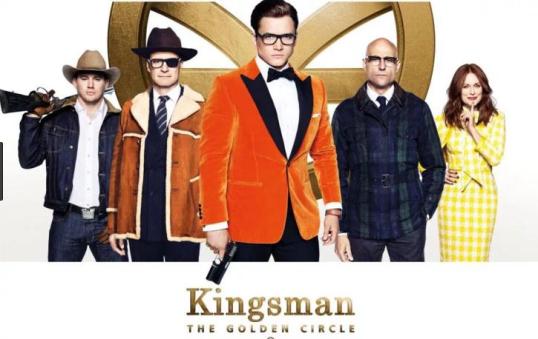
Film Review: Kingsman: The Golden Circle (dir by Matthew Vaughn)


Before I say too much about Kingsman: The Golden Circle, I do want to acknowledge a few good things about the movie.

First off, it doesn’t take long for the film to reveal that Harry (Colin Firth) didn’t actually die when Samuel L. Jackson shot him in the head in the first movie.  Undoubtedly, that diminishes the power of that scene but, at the same time, it also means that Colin Firth gets to come back.

Secondly, Taron Egerton returns as Eggsy.  The script really doesn’t give him too many opportunities to show what he’s capable of as an actor, largely because the character of Eggsy was fully developed by the end of the first movie.  Now that Eggsy is a fully trained and competent Kingsman, there’s not really much for him to do other than trade a few quips and take a few lives.  That said, Egerton is a likable actor and he’s fun to watch.

Third, Julianne Moore has a few fun scenes as the film’s main villain, Poppy Adams.  Poppy is the head of an international drug cartel.  She’s also obsessed with the 1950s and always amazingly cheerful.

Fourth, all of the Kingsmen still wear suits and Michael Caine-style glasses.  Colin Firth gets to use his umbrella as a shield.

Finally, Mark Strong is back as Merlin.

So, that’s five good things about Kingsman: The Golden Circle.  Unfortunately, all five of those things are somewhat obscured by the fact that the movie really, really sucks.

Admittedly, I had really high hopes for the movie.  I loved the first Kingsman film, which was a stylish satire that featured one of the greatest action set pieces of all time.  And I was excited to see that not only was Firth returning but Matthew Vaughn would also be directing the sequel.

But no.  This movie just doesn’t work.

Kingsman: The Golden Circle attempts to do everything on a larger scale than the first Kingsman.  That means more violence, more betrayals, and a longer running time.  This time, the movie not only features the Kingsmen but also the Statesmen, which is the American equivalent of the Kingsmen.  (The Statesmen all dress like cowboys and speak in exaggerated Southern drawls, which I got kind of sick of listening to after about three minutes.)  Along with the returning stars of the first film, Jeff Bridges, Emily Watson, Bruce Greenwood, Halle Berry, and Channing Tatum all have small roles.  Pedro Pascal (best known for playing Oberyn Martell on Game of Thrones) has a much larger role as a Statesman codenamed Whiskey.

Unfortunately, bigger is not always better.  The Golden Circle never comes close to matching the lunatic heights of the first movie.  There are a lot of action scenes but none of them match the church fight from the first film.  There’s a surprise death but it’s nowhere near as shocking or effective as Firth’s “death” in the first film.  Even the required barroom brawl falls flat.  Nowhere does The Golden Circle match the audacity of the first film.  The first film ended with exploding heads.  This film ends with the promise of more sequels.

But really, I think what really doomed The Golden Circle was that extended running time.  There’s really no good reason for The Golden Circle to last for 2 hours and 21 minutes.  Quite a bit of the film, especially during the first hour, felt padded out and, as a result, it seemed like took forever for the film’s story to actually get started.  Probably 40 minutes to an hour could have been cut from The Golden Circle without anyone missing it.

Ultimately, I think the main problem is that the first Kingsman felt like it was made by people who truly did love the material.  This film feels contractually obligated.  The Golden Circle has a lot of action but it’s just not very fun.

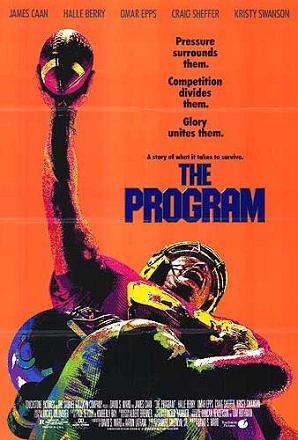
A Movie A Day #171: The Program (1993, directed by David S. Ward)


There’s not a single sports cliché that goes untouched in The Program.
A veteran college football coach who, after two disappointing seasons, is now being told that he must get wins at any cost?  Check!

A cocky senior quarterback who is trying to live up to his father’s expectations?  Check!

A cocky freshman who matures during the season?  Check!

A cocky NFL prospect who suffers a career ending injury?  Check!

Corrupt rich backers?  Check!

Beer?  Check!

Steroids?  Check!

Hazing?  Check!

Football groupies?  Check!

Halle Berry wasted in a one-note role?  Check!

Kristy Swanson as the one girl on campus who is not impressed by football?  Check!  Check!  Check!

The Program has its good points.  James Caan does a good job as the coach and Andrew Bryniarski, playing a player who is always on the verge of flying into roid rage, dominates every scene in which he appears.  Kristy Swanson looks good in a tennis outfit, so it’s not all bad.  But Craig Sheffer is neither credible nor likable as the star quarterback and there is not a single scene that won’t be seen coming.

When The Program came out in 1993, it included a scene where the team bonded by laying down in the middle of a busy street, while cars zoomed by on either side of them.  Things turned out alright for the people in the movie but, for the idiots who tried to imitate the stunt in real life, it was a different story.  It turns out that, in real life, drivers don’t always stay in their lane and, if you lay down in the middle of the street, there is a good chance that you are going to get run over.  After several deaths, the scene was taken out of the film.  If you’re going to die for a movie, do it for a movie better than The Program.

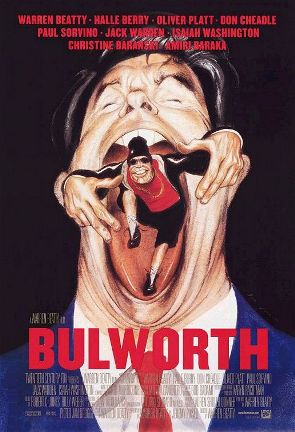
Shattered Politics #62: Bulworth (dir by Warren Beatty)


BulworthSo, if you’ve ever wondered what happened to Robert Redford’s Bill McKay after he was elected to the U.S. Senate at the end of The Candidate, I imagine that he probably ended up becoming something like the protagonist of 1998’s Bulworth, U.S. Sen. Jay Bulworth.

As played by Warren Beatty, Bulworth is a veteran senator.  A former liberal firebrand, he may still decorate his office with pictures of him meeting Bobby Kennedy and Martin Luther King but Bulworth sold out a long time ago.  Now, he just says whatever has to say in order to get elected, including pretending to have a happy marriage. He has become a part of everything that’s wrong with Washington.

Sick of both politics and life in general, Bulworth decides that he’d rather be dead.  But, in order to make sure that his daughter collects on his $10,000,000 life insurance policy, Bulworth cannot commit suicide.  Instead, he arranges for a contract to be taken out on his life.  In two days, Bulworth will be assassinated.

Returning to California for his campaign, Bulworth gets drunk and suddenly starts to say what he actually believes.  He attacks the Washington establishment.  He attacks the voters.  He attacks the insurance companies and comes out for single payer health insurance.  With his desperate press secretary (Oliver Platt) chasing behind him, Bulworth spends the night dancing at a club where he discovers marijuana and meets a girl named Nina (Halle Berry).

(Platt, meanwhile, discovers that he really, really likes cocaine.)

Soon, Nina and Bulworth are hiding out in the ghetto, where Bulworth meets both Nina’s brother (Isiah Washington) and local drug dealer, L.D. (Don Cheadle), and gets a lesson about how economics actually work in the ghetto.  Soon, Bulworth is appearing on CNN where he raps his new political platform and suggests that the solutions for all of America’s problems would be for everyone to just keep having sex until eventually everyone is the same color.

Of course, what Bulworth doesn’t know is that Nina also happens to be the assassin who has been contracted to kill him…

I have mixed feelings about Bulworth.  On the one hand, the film starts out strong.  You don’t have to agree with the film’s politics in order to appreciate the film’s passion,  Bulworth is an angry film and one that’s willing to say some potentially unpopular things.  It’s a film about politics that doesn’t resort to the easy solutions that were proposed by some of the other films that I’ve reviewed for Shattered Politics.  Warren Beatty does a pretty good job of portraying Bulworth’s initial mental breakdown and Oliver Platt is a manic wonder as he consumes more and more cocaine.

But, once Warren Beatty starts rapping, the film starts to fall apart and becomes a bit too cartoonish for its own good.  You get the feeling that Warren Beatty, at this point, is just trying to live out the liberal fantasy of being the only wealthy white man in America to understand what it’s like to be poor and black in America.

Bulworth starts out well but ultimately, it begins better than it ends.

Icarus Files No. 1: Cloud Atlas (dir. by The Wachowskis and Tom Tykwer)


CloudAtlas

“My life amounts to no more than one drop in a limitless ocean. Yet, what is any ocean, but a multitude of drops?” — David Mitchell

Let me tell you about Icarus. He took flight with wings of feather and wax. Warned not to fly too low so as not to have the sea’s dampness clog his wings or to climb too high to have the sun melt the wax. Icarus heeded not the latter and tried to fly as close to the sun. Just as his father had warned him the wax in his wings melted as he flew too close to the sun and soon fell back to earth and into the sea.

A tale from Greek mythology that taught has taught us about ambition reaching so high that it’s bound to fail. One such ambitious failure of recent times has been the epic science fiction film Cloud Atlas directed by The Wachowskis and Tom Tykwer.

The film was adapted from the novel of the same name by author David Mitchell which looked to take six stories set in 19th-century South Pacific and right up to a distant, post-apocalyptic future. Each story’s characters and actions would connect with each other through the six different time and space. The film attempts to do what Mitchell’s novel did through several hundred dense and detailed pages.

CLOUD ATLAS

Just like Icarus The Wachowski and Tom Tykwer’s attempt to connect the lives and actions of all six stories amounts for what admirers and detractors can only agree on as an admirable and ambitious failure.

The film boasts a large ensemble cast led by Tom Hanks, Halle Berry, Jim Broadbent, Hugh Grant and Hugo Weaving. More than one of the actors in the cast would perform characters in each and every six interconnecting stories in the film which added a sense of rhythmic continuity to the whole affair, but also made for some very awkward and uncomfortable scenes of what could only amount to as “yellowface”. This was most evident in the story set in 22nd-century Neo Seoul, South Korea where actors such as James D’Arcy, Jim Sturgess, Keith David and Hugo Weaving have been heavily made-up to look Asian.

Cloud Atlas was and is a sprawling film that attempts to explore the theme that everything and everyone is connected through time and space. It’s how the action of one could ripple through time to have a profound effect on others which in turn would create more ripples going forward through time. The film both succeeds and fails in portraying this theme.

cloud_atlas_hd_movie_trailer_stills_cinemavine_144.png.scaled1000

It’s the film’s narrative style to tell the six stories not in a linear fashion from 19th-century to the post-apocalyptic future, but instead allow all six tales to weave in and out of each other. At times this weaving style and how it would seamlessly go from one time location to another without missing a beat made for some very powerful and emotional moments. But then it would also make these transitions in such a clunky manner that it brings one out of the very magical tale the three directors were attempting to weave and tell.

Yet, even through some of it’s many faults and failings the film does succeed in some way due to the performances of the ensemble cast. Even despite the awkwardness of the “yellowface” of the Neo Seoul sequence the actors in the scenes perform their roles such admirable fashion. One would think that someone like Tom Hanks who has become such a recognizable presence in every film he appears in wouldn’t be able to blend into each tale being shown and told, but he does so in Cloud Atlas and so does everyone else.

It helps that the film was held up from a very hard landing after reaching so high with an exquisite and beautiful symphonic score composed by Tom Tykwer, Reinhold Heil and Johnny Klimek. It’s a score that manages to accentuate the film’s exploration of emotions and actions rippling through time without ever becoming too maudlin and pandering to the audiences emotions.

o0800045112460141324

Cloud Atlas was hyped as the next epic science fiction film from The Wachowskis and Tom Tykwer leading up to it’s release. This hype was further built-up with thundering standing ovation during it’s screening at the 37th Toronto International Film Festival. But once the film finally was released and more critics and the general public were able to see it for themselves the reaction have been divisive. This was a film that brooked no middle-ground. One either loved it flaws and all or hated it despite what it did succeed in accomplishing amongst the failures.

Just like Icarus, Cloud Atlas and it’s three directors had high ambitions for the film. It was a goal that not many filmmakers seem to want to put themselves out on the limb for nowadays because of how monumental the failure can be if their ambitions are just too high. It’s been the reputation of The Wachowskis since they burst into the scene with their Matrix trilogy. Their eclectic and, somewhat esoteric, storytelling style have made all their films an exercise in high-risk, high reward affairs that makes no apologies whether they succeed or fail. Each of their films have a unique vision that they want to share with the world and they make no compromises in how this vision is achieved.

One could call Cloud Atlas an ambitious failure. It could also be pop, New Age psychobabble wrapped up in so-called high-art. Yet, what the two siblings and Tom Tykwer were able to achieve with the film has been nothing less by brave and daring. If more filmmakers were willing to allow their inner Icarus to fly then complaints of Hollywood and the film industry not having anymore fresh new ideas would fade.

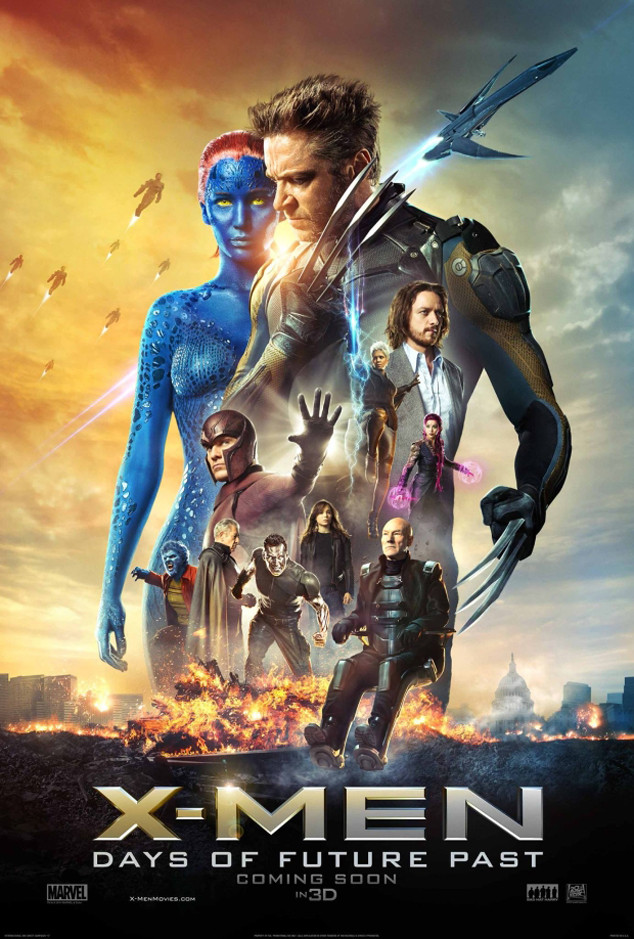
Trash Film Guru Vs. The Summer Blockbusters : “X-Men : Days Of Future Past”


rs_634x939-140324091106-634.jennifer-lawrence-x-men.ls.32414

At this point, I freely admit to being a little bit confused : X-Men : Days Of Future Past opens to a somewhat lower box office take than The Amazing Spider-Man 2 did, which was only slightly behind the opening-frame receipts generated for Captain America : The Winter Soldier, and yet Cap and the X-Men are both considered “successes,” while Spidey’s considered a “disappointment” — even though, last I checked, its’ total gross ticket sales were only about $50 million behind Cap’s despite the fact that it opened a full month later?    Chances are probably good  that it will even end up closing the gap here at some point, but no matter — the die appears to have  already been cast. The stench of that rat I mentioned smelling in my Spider-Man review a couple weeks back? It’s getting a lot stronger now.

Needless to say, I’ve got a theory as to what’s going on here, and it builds upon my theory already expounded upon in that just-mentioned prior review : Disney/Marvel actively wants the Spider-Man franchise back, but the X-Men? Not so much. At least not yet.

How else to explain this clearly-orchestrated PR campaign? Look, internet movie critics are an easy bunch to buy off : for a free ticket, or even the promise of some kind of other free swag in the future, you can get thousands of people to say whatever you want them to. And from there, you can get thousands of others to mimic the already-established meme of whether a given flick is “successful” or not, because gosh, who would dare contradict the well-established critics and box-office analysts who have already passed judgment on the merits of a particular work? For the price of probably less than $10,000 in either payments or promises, DisMar has the movie-going public right where they want us, echoing their nonsensical party line and unsupported-by-the-facts pronouncements.

Needless to say, I don’t feel like playing along — for the most part. But there’s one area where I do agree with the general consensus, even if the fix is in : X-Men : Days Of Future Past is a really good superhero flick. And that might just throw a wrench in Marvel’s “this one’s dying on the vine, let’s just wait it out and see what happens” game plan.

hugh-jackman-stars-in-final-trailer-for-x-men-days-of-future-past-watch-now-161013-a-1397628564


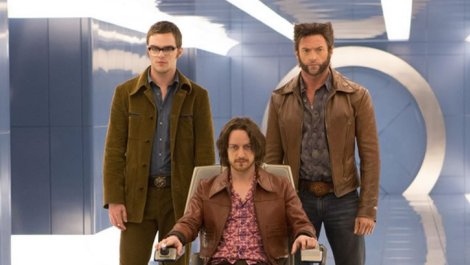
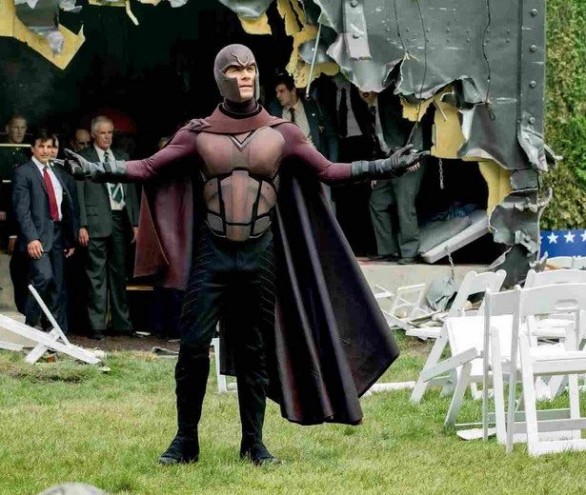
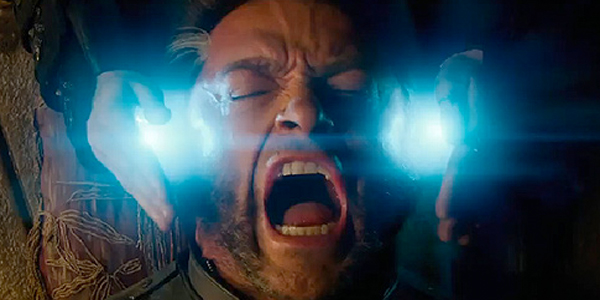
Seriously, friends, this one has everything and the kitchen sink going on, but somehow returning director Bryan Singer (more on him in a minute) juggles every ball thrown in the air and makes it work : the “divergent timelines” conceit that forms the core of the plot never gets confusing even though it easily could; the action sequences are brisk and spectacular; the characters are uniformly believable and compelling; and the performances, from perhaps the most star-studded cast ever assembled for a comic-book film, are all first rate. When you’ve got Hugh Jackman, James McAvoy, Patrick Stewart, Ian McKellen, Ellen Page, Jennifer Lawrence, Michael Fassbender, Nicholas Hoult, Peter Dinklage, Shawn Ashmore, Halle Berry, Michael Lerner, Booboo Stewart, Omar Sy, Kelsey Grammer, Anna Paquin, James Marsden and Famke Janssen all punching the same time clock, it goes without saying that  some are going to have more to do than others, but nobody seems intent on stealing the show for themselves, which is no mean feat considering the sheer number of sizable egos that must be involved here. Sure, the script puts most of the onus of Wolverine, the young Professor Xavier, the young Magneto, the young Beast, the young Mystique,  and the villainous Dr. Bolivar Trask, but that doesn’t mean everybody else doesn’t give their admittedly smaller parts at least a reasonable effort. Shit, I’m not sure how you even get stars of the stature of Page, Berry and Paquin to even accept what are essentially tertiary-at-best roles (does Paquin even have a line of dialogue?), but somehow they keep showing up for X-Men flicks, and in this case the place doesn’t even seem that crowded. Shit, Singer even manages to sneak in quick cameo for Wolverine co-creator Len Wein.

X-Men-Days-Of-Future-Past-Magneto3-586x495

In many ways what makes  Days Of Future Past so successful is that fact that it’s actually more a direct sequel to First Class (which I also thoroughly enjoyed) than it is the initial X-trilogy, and some of the continuity changes that the end results of this film apparently seal into place even seem to undo how those first three films “wound up,” but whatever — the end result here is a franchise that feels like it’s been given a new lease on life after treading water for a good half-decade or so. I mentioned just a moment ago that I really dug First Class, but you can’t get by on prequels forever. At some point a movie needed to come along that propelled the X-Men franchise forward, and this does so with plenty of style and flair.

Plus, the whole thing’s a lot of fun — sure, some of the dialogue is overly- verbose and clunky and painfully expository, but those instances are rare, and actually stand out in contrast to the general ease and flow of the rest of the film. And while the premise itself requires a heavy dose of suspension of disbelief, let’s be honest here — what super-hero movie doesn’t? At least this one rewards your willingness to go with the flow in ways that even highly-touted fare like Joss Whedon’s The Avengers (a favorite target of my ire, I admit, but only because it really does suck, no matter what anyone else thinks) could never hope to manage. Plus, audiences get a chance so see Dinklage prove that he can” bring it”  in each and every role he takes on, not just on Game Of Thrones — something those of us who have been fans of his work ever since The Station Agent have long maintained.

x-men-days-of-future-past-trailer

In case it weren’t painfully obvious already, I thoroughly enjoyed X-Men : Days Of Future Past, and after appearing to flounder in the wake of the risible Valkyrie, my faith in Bryan Singer as a director has probably never been higher — unfortunately (here’s where that “more on him in a minute” comes in), I can’t say the same in regards to my faith in Bryan Singer as a human being. I won’t kid you — the sexual abuse allegations that have been leveled against him really bother the shit out of me. And no, it has nothing to do with Singer’s sexual orientation : I don’t care if a person is straight, gay, or somewhere in between, any and all relationships — whether serious, casual, or less than casual — between consenting adults are fine by me. Everybody likes to get laid, have at it. But age of consent laws are there for a reason, and kids and teens are, and should be, off limits to grown adults. The fact that  the “fan” community seems so eager to point out that Singer’s accuser has filed civil rather than criminal charges and that he’s apparently done so in the past is both irrelevant to the reality of what may or may not have occurred,  and represents a clear case of reprehensible victim-shaming of the highest order. Sure, everyone’s innocent until proven guilty, but assuming, or even implying, that somebody who’s been brave enough to come forward with claims this serious just has to be a liar because they’re choosing to address this issue in ways that others either don’t understand or approve of is beneath contempt. Maybe we’ll never know the whole truth of this matter, but if Singer did what’s he’s been accused of, then he’s got some serious issues and needs some serious help and sure,  I feel some amount if sympathy for whatever turmoil is boiling away inside his mind — but not half as much as I do for the teen boy (s) that he’s victimized (if he has). I don’t want to see him condemned in the court of public opinion if he’s completely innocent, but I don’t want to see his accuser condemned, either, and that’s what’s been happening. Sex between adults and those not legally deemed to be adults (in most states that’s 18, in some 16) is against the law, period, and if Singer did, in fact, engage in the sort of behavior that’s been alleged,   then I’m done with him from here on out. End of rant.

Regardless of what’s he’s done in his off-hours, though, the perhaps-tragic fact (depending on how legal proceedings play out) remains that what he’s done while on company time just can’t be denied in this case. I wish I could love X-Men : Days Of Future Past with a totally clean conscience, sure, but I can’t deny that I loved it just because it may have been directed by a guy whose personal behavior is both sleazy and illegal. It’s a complex set of circumstances to weigh in one’s mind, to be sure, but so goes life. I wish its murky waters were easier to navigate, but they never have been, and they’re never going to be.

As for the future of all things X-Men, I’ll make one easy prediction right now : when this thing hits home viewing “platforms” in a few months’ time, look for a bevy of reviews along the lines of “ya know, maybe this this isn’t quite as good as we thought at first” and “on second viewing, the flaws in this one are obvious” — not because such sentiments will be true, but because Days Of Future Past is so well-done, and opens up so many possible avenues for the franchise going forward, that Marvel’s gonna want to start one of their infamous “whisper campaigns” to try to undermine the public’s confidence in having it in “other hands” and get it back in their own  grubby, greedy paws.

6 Obscure Films Of 2013: The Call, Copperhead, It’s A Disaster, See Girl Run, UnHung Hero, Would You Rather


Well, it’s that time of year when I look at the list of the films that I’ve seen over the past 12 months and I realize that there’s quite a few that I haven’t gotten around to reviewing yet.  Here are my thoughts on six of them.

The Call (dir by Brad Anderson)

Abigail Breslin is kidnapped by a serial killer.  While trapped in the trunk of the killer’s car, Breslin manages to call 911.  Breslin’s call is answered by Halle Berry, a veteran operator who is recovering from a trauma that — by an amazing and totally implausible coincidence — was caused by the same guy who has just kidnapped Breslin.

Before it became a feature film, The Call was originally developed as a weekly TV series and, as I watched, it was easy to imagine weekly episodes that would all feature a different guest star calling 911 and needing help.  For the first hour or so, The Call is well-made and acted but undistinguished.  However, during the final 30 minutes, the entire film suddenly goes crazy with Breslin running around in her bra, Berry turning into a blood thirsty vigilante, and the killer suddenly getting very verbose.  However, those 30 minutes of pure insanity were just what The Call needed to be memorable.  There are some films that definitely benefit from going over-the-top and The Call is one of them.

Copperhead (dir by Ronald Maxwell)

Copperhead is a historical drama that takes place during the Civil War.  In upstate New York, farmer Abner Breech (Billy Campbell) is ardently opposed to both the Civil War and the union cause.  In most movies, this would make Abner the villain but, in Copperhead, he’s portrayed as being a man of principle who, by refusing to compromise on his views, is ostracized and ultimately persecuted by the rest of his village.  Abner’s views also bring him into conflict with his own son, who is pro-Union.

Copperhead is a slow-moving film that features some rather good performances along with some fairly bad ones.  However, I’m a history nerd so I enjoyed it.  It certainly tells a different story from what we’ve come to expect from American films about the Civil War.

It’s A Disaster (dir by Todd Berger)

Of the six films reviewed in this post, It’s A Disaster is the one to see.  In this darker than dark comedy, Julia Stiles brings her new boyfriend (David Cross) to Sunday brunch with 6 of her closest friends.  During the brunch, terrorists explode a dirty bomb in the city.  With everyone trapped inside the house and waiting for the world to either end or somehow revert back to normal, long-simmering resentments come to the forefront.

To say anything else about It’s a Disaster would be unfair so I’ll just say that it’s a very funny film, featuring excellent work from both Stiles and Cross.  If Jean-Paul Sartre was alive and writing today, he would probably end up writing something very similar to It’s a Disaster.

See Girl Run (dir by Nate Meyer)

Bleh!  That’s probably the best description I can give you of this film.  It’s just a whole lot of bleh.

Emmie (Robin Tunney) is unhappy with her boring marriage so she runs back to her Maine hometown, stops wearing makeup and washing her hair, and pines for her high school boyfriend, Jason (Adam Scott), who works at a sea food restaurant.  Jason also happens to be friends with Emmie’s depressed brother, Brandon (Jeremy Strong).  It’s the same basic plot as Young Adult, just with no humor and a lot more talking.  In Young Adult, it was hard not to admire Charlize Theron’s wonderfully misguided character.  In See Girl Run, you just want to tell Robin Tunny to take a shower, put on some clothes that don’t look like they were stolen from a hospital storage closet, and stop whining all the time.

It’s difficult to put into words just how much I hated this movie.  This is one of those films that critics tend to describe as being “a film for adults.”  I have to agree — this is a movie for really boring, depressing adults who like to talk and talk about how their lives haven’t worked out.  If See Girl Run is what being an adult is like, I’ll just continue to be an immature brat, thank you very much.

UnHung Hero (dir by Brian Spitz)

So, this is not only the worst documentary of 2013 but it’s also quite probably one of the worst documentaries ever made.  The film opens with footage of Patrick Moote (who claims to be a comedian) asking his girlfriend to marry him.  As Moote goes on (and on) to tell us, she turns down his proposal and then dumps him because, according to her, his penis is too small.  Moote spends the rest of the film talking to various people and asking them whether size really matters.

Well, he could have just asked me and saved a lot of time.  I’m sorry if this endangers any fragile male egos but yes, size does matter.  If Moote’s penis really is as tiny as he claims it is, I probably would have turned down his proposal as well.  Then again, Moote could be hung like Jamie Foxx and I’d probably still refuse to marry him because, quite frankly, he’s the whiniest and most annoying person that I’ve ever seen.  He’s like an even less charming version of Morgan Spurlock.  What Patrick Moote never seems to understand is that size matters but personality matters even more.

Would You Rather (dir by David Guy Levy)

Would you rather have a root canal or sit through this piece of crap?  Having seen Would You Rather, I can tell you that it’s not an easy question to answer.

Jeffrey Combs plays a sadistic millionaire who invited a bunch of strangers (including Brittany Snow, John Heard, June Squibb, and Sasha Grey) to his mansion and forces them to play an elaborate and deadly game of Would You Rather.  Unfortunately, none of the characters are interesting, the film’s sadism is more boring than shocking, and talented actor Combs is totally wasted as the one-note villain.