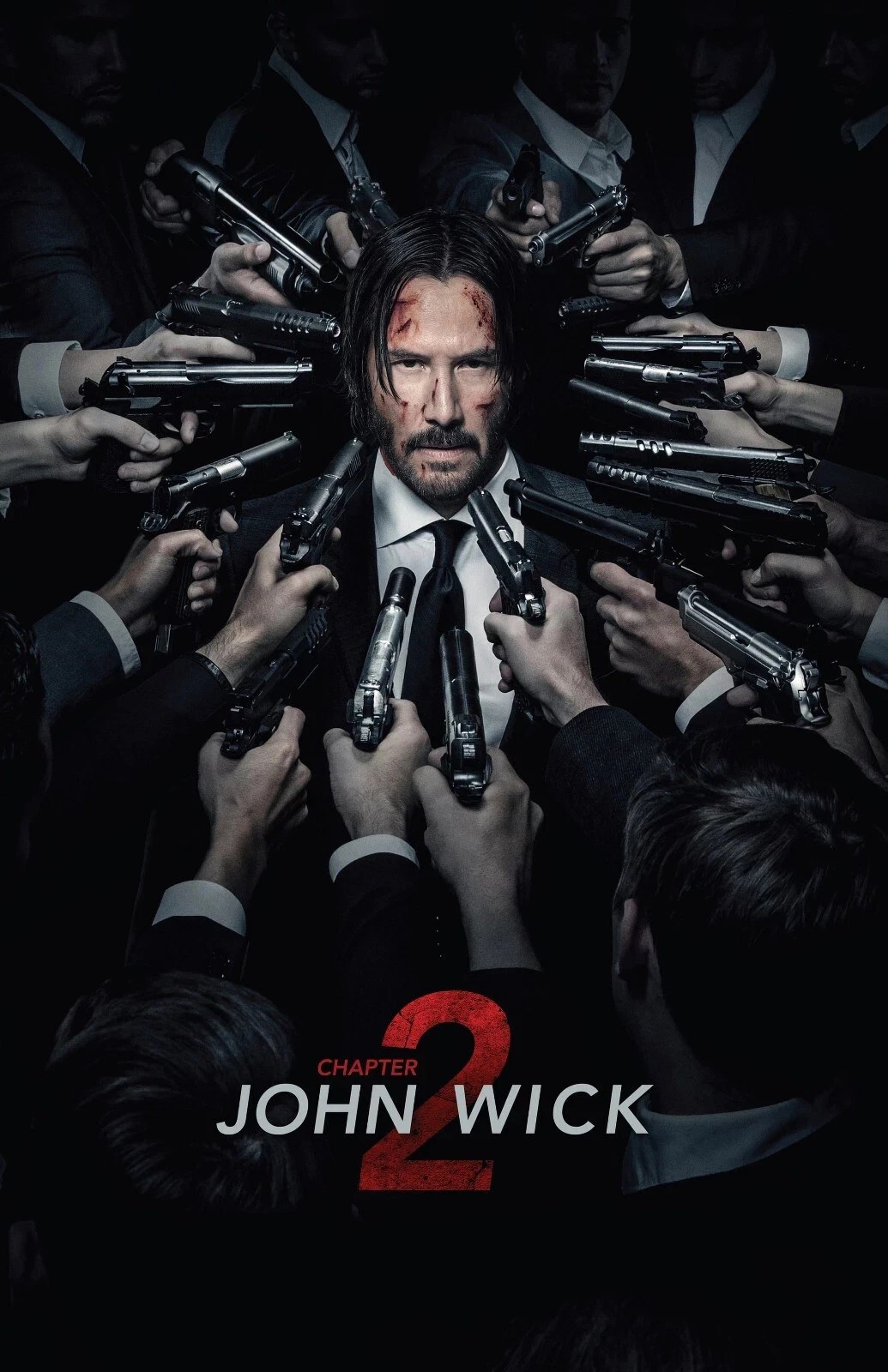
John Wick: Chapter 2 (dir. by Chad Stahelski) Review


“You stabbed the devil in the back and forced him back into the life that he had just left. You incinerated the priest’s temple, burned it to the ground. Now he’s free… What do you think he’ll do?” — Winston Scott

John Wick: Chapter 2 picks up right where the first film left off, diving headfirst into a world of high-stakes assassinations and stylish revenge with Keanu Reeves back as the grieving, unstoppable hitman. It’s a sequel that doubles down on the balletic action and expands the mythology without losing that raw, personal edge from the original. Directed by Chad Stahelski, it delivers non-stop thrills but occasionally stumbles with its sprawling plot and relentless pace.

John Wick is trying to lay low after avenging his dog’s death and reclaiming his car, but fate—or more specifically, a blood oath called a “marker”—drags him back into the game. An Italian crime lord named Santino D’Antonio cashes in that marker, forcing Wick to assassinate his own sister so Santino can take over the family empire. What starts as a reluctant job spirals into a city-wide manhunt, with Wick racking up bodies across New York and Rome while navigating the Continental Hotel’s strict no-kill rules and the politics of a shadowy assassin network. The story is still simple at its core—do a job, get betrayed, fight your way out—but it peels back more layers of this underworld, introducing gold coins as currency, tailors who outfit killers like runway models, and sommeliers who pair firearms with clients like fine wine.

Keanu Reeves owns the role here, his stoic intensity and physical commitment making every punch and headshot feel earned. He’s not exactly stretching himself as an actor—his deadpan delivery borders on monotone—but in this context, that restraint works, turning Wick into a mythic figure who’s equal parts broken widower and relentless killing machine. The supporting cast adds plenty of flavor: Common shines as Cassian, Santino’s loyal bodyguard and Wick’s equal in a fight, with their subway duel using silenced pistols becoming an instant standout for its mix of tension and dark humor. Ian McShane returns as Winston, the Continental’s suave manager, bringing a dry, almost amused detachment to the chaos, while Ruby Rose makes an impression as Ares, Santino’s mute enforcer whose sign-language threats and sharp physicality speak louder than words. Laurence Fishburne appears as the Bowery King, chewing scenery and hinting at deeper rivalries to come. Not every character is fully fleshed out—Santino himself sometimes veers into cartoonish villain territory—but the ensemble keeps the film lively and fun to watch.

The action is where John Wick: Chapter 2 truly shines, cranking the first film’s gun-fu into something close to operatic. Much of the authenticity in the gunplay choreography stems from Keanu Reeves’ legendary dedication to his craft—he trained extensively with celebrity gun trainer Taran Butler and Taran Tactical Innovations, becoming an expert 3-gun practitioner in the process. Taran Tactical not only provided the custom guns for this film and its subsequent sequels but also helped craft the realistic, fluid shooting sequences that feel like a masterclass in tactical movement. The opening car chase and warehouse brawl set the tone, with Wick dismantling goons using everything from knives to close-quarters takedowns. Later comes the much-teased moment where he turns a humble pencil into a lethally precise weapon. The Rome sequence is a highlight: Wick moves through catacombs and nightclubs like a walking arsenal, turning ancient corridors into a bullet-riddled maze, then facing a relentless wave of assassins amid concert lights and stone arches. The stairwell brawl with Cassian is brutal and almost slapstick in its escalation, as the two tumble down step after step, refusing to quit. A hall-of-mirrors shootout plays with reflection and distortion, turning gunfights into something visually playful as well as deadly. The camera stays steady and clear, letting you appreciate the choreography instead of hiding it behind shaky cam and quick cuts, which makes the violence feel both visceral and strangely elegant.

Visually, the film is a neon-soaked feast, trading the first movie’s moody blues for more varied, vibrant palettes. Cinematography leans into bold colors and strong compositions: the Continental’s warm golds, Rome’s stony greys and rich reds, New York’s cold night streets lit by harsh white and electric signage. The production design sells the assassin world as both stylish and slightly surreal. You get bespoke atelier shops that sell tactical suits lined with experimental ballistic-resistant fabric, underground vaults where every weapon looks museum-ready, and Continental sommeliers who double as gun experts, recommending the best weapons for whatever task is at hand. The score and sound design lean heavily into pulsing electronic beats and percussive hits that sync with the rhythm of gunshots and blows, giving big set pieces a musical, almost dance-like quality.

That said, the film is not without its flaws. At a little over two hours, it sometimes feels like it’s indulging its world-building at the expense of pacing. The explanation of markers, excommunication rules, and the High Table is cool in theory, but the movie occasionally pauses too long to explain its own lore when you’d rather keep the momentum going. Compared to the raw emotional drive of the first film—where a dead dog and stolen car were more than enough to get you fully on Wick’s side—this one’s central motivation feels more mechanical. He’s bound by honor and obligation here, which makes sense for the character, but doesn’t hit with the same gut-level impact. There’s also less room for genuine character development; Wick mostly shifts between “tired” and “angry,” and the supporting cast, as entertaining as they are, tend to orbit him rather than grow in their own right.

Tone-wise, John Wick: Chapter 2 leans even harder into heightened, borderline comic-book absurdity. The idea that there are assassins on every street corner, all answering the same call, is fun but pushes the world toward parody if you think too hard about it. The body count is enormous, the kill shots are almost always headshots, and the film rarely slows down to let the gravity of that register. There are moments of humor—deadpan exchanges, visual gags, Wick’s resigned reactions to yet another betrayal—that keep it from feeling grim, but they’re more like pressure valves than fully integrated wit. If you’re looking for commentary on violence or a deconstruction of the hitman myth, this isn’t that movie. It’s more interested in giving you the cleanest, slickest version of the fantasy and trusting you to go along for the ride.

On representation and subtext, the movie is pretty standard action fare: mostly male, mostly focused on coolness over any deeper exploration of gender, race, or class. Characters like Ares and Gianna D’Antonio hint at more interesting female perspectives within this world, but they’re quickly sidelined or removed from play. The Bowery King’s network suggests a class-conscious angle—homeless people as invisible eyes and ears of the city—but the film doesn’t dwell on it beyond the “secret army in plain sight” trope. None of this ruins the film, but it does keep it from feeling particularly fresh outside of its choreography and design.

Where the movie really succeeds is in firmly establishing John Wick as an ongoing franchise rather than a one-off surprise hit. The ending pushes Wick into even more precarious territory and sets up a larger arc without feeling like pure sequel bait. It expands the playground, raises the stakes, and leaves him in a place where you genuinely want to see what comes next. If the first film was a tightly contained revenge story, John Wick: Chapter 2 is the moment the series decides to become a full-blown saga.

Overall, John Wick: Chapter 2 is a stylish, hyper-violent, and extremely entertaining sequel that leans into its strengths—choreography, world-building, and Keanu Reeves’ physical presence—while showing a few growing pains in pacing and emotional weight. It may not have the purity or surprise factor of the original, but it compensates by embracing a larger, crazier canvas and delivering some of the most memorable action set pieces of the last decade. If you’re on board with the idea of a grief-stricken assassin turning his pain into an art form of meticulously staged carnage, this chapter absolutely delivers.

Weapons used by John Wick throughout the film

  • Glock 34 (TTI Combat Master Package): His go-to sidearm early on, customized by Taran Tactical Innovations (TTI); dual-wielded in the catacombs and against Gianna’s guards in Rome.​​
  • Heckler & Koch P30L (compensator-fitted): Opens the film disarming a henchman; buried post-use along with first-film gear.
  • Kimber Super Carry Custom (reverse two-tone, compensator): Provided by the Bowery King and used chasing Santino.
  • TTI TR-1 Ultralight (AR-15 carbine build): Iconic Rome rifle from the sommelier, with BCM mods, Trijicon scope, and PRI compensator; catacombs massacre shootout.
  • Benelli M4 Super 90 (TTI customized): Sommelier special in Rome; shredded through catacombs enemies.

John Wick Franchise (spinoffs)
January True Crime: The Versace Murder (dir by Menahem Golan)


In 1997, a 27 year-old man named Andrew Cunanan went on a killing spree, one that took him from San Diego to Miami Beach.  Though the FBI were already looking for him, Cunanan did not receive national attention until July 15th, 1997.  That was the day that Cunanan shot and killed fashion designer Gianni Versace in front of Versace’s mansion.  By that time, Cunanan had already killed at least four other people.  A week after killing Versace, Cunanan would take his own life, shooting himself on a houseboat that he had broken into.

Andrew Cunanan’s motives have remained a mystery.  It is known that at least two of the victims, Jeff Trail and David Madson, was acquainted with Cunanan.  Madson had a long-distance relationship with Cunanan that he ended a year before he was murdered.  Cunanan reportedly described Madson as being “the love of his life,” though Cunanan also apparently had a history of lying.  Whether Cunanan knew Chicago businessman Lee Miglin before killing him is a matter of some controversy.  It’s agreed that cemetery caretaker William Reese was only killed because he came across Cunanan stealing his truck.  Whether or not Cunanan had ever met Versace before in not known.  Cunanan claimed he had but, again, Cunanan had a history of lying.

In 2018, Cunanan and his crimes were the focus of the second season of Ryan Murphy’s American Crime Story.  Darren Criss won an Emmy for playing Cunanan and the series itself was critically acclaimed.  Personally, I thought the series started out strong but ran out of gas about halfway through as it became clear that Andrew Cunanan, much like the Menendez brothers, wasn’t really that interesting of a character.  Indeed, watching the show, I got the feeling that Cunanan’s main motivation was bitterness over the fact that he was essentially a fairly boring and uninteresting person.  He didn’t have much of a personality so he tried to fill that void by going after people who did.

American Crime Story may be the best-known dramatization of Cunanan’s crimes but it was hardly the first.  In 1998, less-than-a-year after Cunanan’s suicide, Menahem Golan’s The Versace Murder was released on video.  Shane Perdue played Andrew Cunanan.  A sad-eyed Franco Nero played Gianni Versace.  Steven Bauer and Renny Roker played the two FBI agents who pursued Cunanan across the country.  The film was shot in 20 days and watching it, it’s easy to see that it was a rush job.  Some scenes run too long, some scenes run too short.  Occasionally, the background music is so overwhelming that it’s a struggle to hear what anyone’s saying.  It’s definitely an exploitation film, made quickly as to capitalize on the interest in the case before everyone moved on.

And yet, it’s a strangely effective film.  A lot of that is due to the performance of Franco Nero, who doesn’t get a lot of screen time but who still makes a definite and even poignant impression as Versace.  The film’s strongest moments come towards the end, when the two FBI agents come across as a vigil being held in front of Versace’s mansion and they realize just how much Versace meant to the people of Miami Beach.  Matt Servitto and David Wolfson are also sympathetic as David Madson and Jeff Trail.  These three performances capture the tragedy of Cunanan’s crimes.  In the end, the fact that Shane Perdue is a bit bland in the role of Andrew Cunanan feels almost appropriate.  Whether it was intentional or not, Menahem Golan’s The Versace Murder reminds us that Andrew Cunanan’s victims deserve to be remembered far more than the man who killed them.

Scenes That I Love: Franco Nero Opens The Coffin in Django


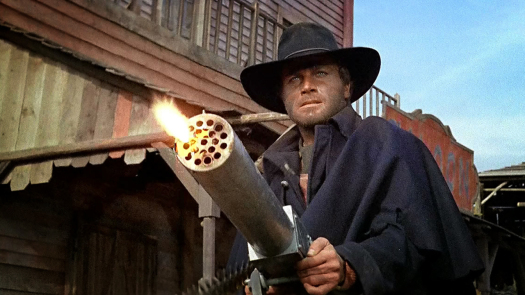
In this scene, from Sergio Corbucci’s Django, the film’s title character (played by my man, Franco Nero) reveals what’s actually in the coffin that he’s been dragging from town to town.

6 Trailers For The Tuesday Before Halloween


It’s a holiday and you know what that means!

Or maybe you don’t.  Sometimes, I forget that not everyone can read my mind.  Anyway, I used to do a weekly post of my favorite grindhouse trailers.  Eventually, it went from being a weekly thing to being an occasional thing, largely due to the fact that there’s only so many trailers available on YouTube.  Now, Lisa Marie’s Favorite Grindhouse and Exploitation Film Trailers is something that I usually only bring out on a holiday.

Like today!

So, here are 6 trailers for the last week of October!

  1. Last House On The Left (1972)

“Two girls from the suburbs.  Going to the city to have …. good time….”  Wow, thanks for explaining that, Mr. Creepy Narrator Dude.  That classic tag line about how to avoid fainting would be imitated time and again for …. well, actually, it’s still being imitated.  This was Wes Craven’s 1st film and also one of the most influential horror films of all time.

2. The Texas Chainsaw Massacre (1974)

Speaking of influential horror movies, the trailer for The Texas Chainsaw Massacre is almost scarier than the film itself!

3. Lisa Lisa (1977)

I love this trailer!  Can you guess why?

4. Ruby (1977)

Ruby, starring Piper Laurie!  I’m going to assume this was after Piper Laurie played Margaret White in Carrie.  Don’t take your love to town, Ruby.

5. Jennifer (1978)

Jennifer was another film that pretty obviously inspired by Carrie.  In this one, Jennifer has psychic control over snakes.  So, don’t mess with Jennifer.

6. The Visitor (1979)

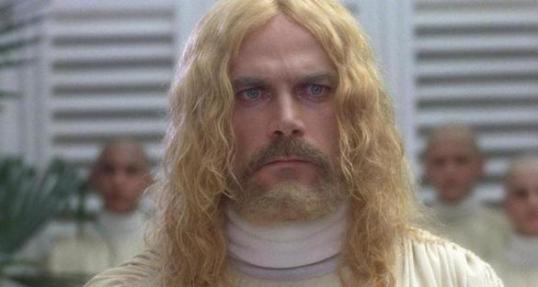
Finally, this Italian Omen rip-off features Franco Nero as Jesus, so it’s automatically the greatest film ever made.

Happy Weekend Before Halloween!

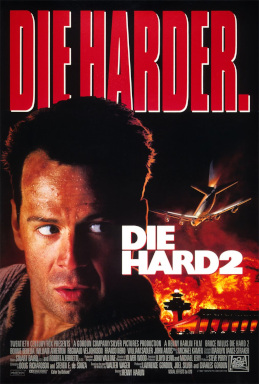
Holiday Film Review: Die Hard 2: Die Harder (dir by Renny Harlin)


During 1990’s Die Hard 2, John McClane (Bruce Willis) asks himself, “How can the same shit happen to the same person twice?” and he does have a point.

I mean, consider the situation.  In 1988, McClane spent his Christmas sneaking around a skyscraper and saving his wife from a group of sadistic mercenaries.  Two years later, John McClane spends his Christmas sneaking around an airport and saving his wife from a group of sadistic mercenaries.

There are a few differences of course.  In 1988, the mercenaries were only interested in stealing as much money as they could and each mercenary had his own properly ghoulish personality.  In 1990, the mercenaries are really more of a cult, led by the fanatical Col. Stuart (William Sadler).  And, along with trying to make some money, they are also trying to free General Ramon Esperanza (Franco Nero), a Central American drug lord and former CIA asset.  Despite the fact that the mercenaries are played by familiar actors (like Robert Patrick, John Leguizamo, Tony Ganois, and Vondie Curtis-Hall), none of them are quite as memorable as the henchmen that Alan Rickman commanded in the first film.  And while Sadler has charisma and makes a big impression during his first scene, his character is nowhere near as interesting or entertaining as Hans Gruber.  Franco Nero, it must be said, is as dashing as ever.  He really seems to be having fun in this movie.

A lot more people die in Die Hard 2 than died in the first Die Hard and the majority of them are innocent bystanders.  This isn’t like the first film, where Harry Ellis died because his coke-addled mind led him to believe that he could outsmart Gruber.  The victims in Die Hard 2 include a friendly church caretaker and over 200 passengers of an airplane that Stuart tricks into crashing on an airport runway.  The scene where the plane crashes remains disturbing no matter how many times that you see it and it truly makes you hate Colonel Stuart.  When the plane crashes, despite McClane’s futile efforts to warn the pilots, McClane sobs and it’s a powerful scene because it’s the first scene in which McClane has not had a quip or a one-liner ready to go.  In this scene, McClane fails to save the day and, for a few minutes, he’s helpless.  I usually end up crying with McClane.  Today, those tears are also a reminder of what a good actor Bruce Willis truly could be whenever he let down his defenses and allowed himself to be vulnerable on screen.

Die Hard 2 is usually dismissed as not being as good as the first movie and …. well, that’s correct.  It’s not as good but then again, few actions films are.  There’s a reason why Die Hard continues to be held in such high regard.  That said, Die Hard 2 is not bad.  The stakes are a bit higher and the action scenes a bit more elaborate, as you would expect from a film directed by Renny Harlin.  Bruce Willis plays McClane with the blue collar swagger that made his such an awesome hero in the first film.  Bonnie Bedelia and William Atherton also return from the first film and Atherton once again gets his comeuppance in a crowd-pleasing moment.  The cast is full of character actors, all of whom get a chance to make an impression.  Dennis Franz is the profane head of security who eventually turns out to be not such a bad guy.  John Amos is the major who eventually turns out to be not such a good guy.  Colm Meaney has a few heart-breaking moments as the pilot of the doomed airplane.  My favorite supporting performance is given by Fred Thompson, bringing his quiet authority to the role of tough but fair-minded Air Traffic Control director.  Watching Die Hard 2, it does feel as if the viewer has been dropped in the middle of these people’s lives.  Everyone seems real.  No one seems like a mere plot device.

Is Die Hard a Christmas movie?  You bet it is!  But so is Die Hard 2 and it’s not a bad one.

6 Classic Trailers For May 31st, 2022


The Delta Force (1986, directed by Menahem Golan)

93 years ago, on this date, Menahem Golan was born in Israel.  After serving in the Israeli Air Force, Golan would attend the Old Vic Theater School in London before returning to Israel and launching his legendary career in film.  With his cousin, Yoram Globus, and using Roger Corman as both a mentor and a inspiration, Golan would go on to producer and direct some of the most successful films in Israeli history.  Eventually, Golan and Globus would purchase Cannon Films and would be responsible for some of the greatest (in a fashion) films of the 80s.

Though Golan was best-known as a producer, he never stopped directing.  Today, on what would have been his birthday, Lisa Marie’s Favorite Grindhouse Trailers presents 6 trailers for 6 Golan films!

  1. Lepke (1975)

After finding great success in Israel, Golan first attempted to break into the American market with this biopic about the head of the Mafia’s Murder, Inc., Louis “Lepke” Buchalter.  Though the budget was low, Golan managed to get a name — in this case, Tony Curtis — to play the lead role.  As you can tell, the trailer wanted to make sure that you knew that this film was about Lepke.

2. Enter the Ninja (1981)

This was, I think, the first film that Golan directed after buying Cannon Films.  How great is Enter the Ninja?  It stars Franco Nero as a ninja!  Seriously, you don’t get much greater than that.  Anyway, as I think I’ve stared on this site before, Enter the Ninja is a lot of fun and Franco Nero was the sexiest ninja of the 80s.

3. The Delta Force (1986)

Chuck Norris was a Cannon mainstay and it seems appropriate that he starred in The Delta Force, a film that was very important to Golan.  The Delta Force was essentially a remake of an 1977’s Operation Thunderbolt, an Israeli film that earned Golan his only Oscar nominations when it was nominated for Best Foreign Language Film.  The Delta Force did not receive any Oscar nominations but it has a legion of fans.  Our own Jedediah Leland has frequently described this film as being the greatest ever made.  I don’t know if I’d go that far but still, it is always satisfying to see Chuck blow up the bad guys at the end of the movie.

4. Mack the Knife (1989)

Menahem Golan directs a musical!  Unfortunately, this film has never received a proper DVD or Blu-ray release.  Though it was a Cannon production, Golan and Globus had a falling out (one that was, at least partially, caused by Golan spending money on films like Mack The Knife) and Golan ended up distributing this film himself.  I find the trailer to be intriguing.  The film itself is on YouTube so I’ll watch it someday …. maybe.

5. Hit The Dutchman (1992)

Much like Lepke, this film is about a real-life gangster.  In this case, the gangster was Dutch Schultz.  Interestingly enough, the trailer suggest that Al Capone was active in New York whereas everyone knows that, though Capone did get his start in New York, he didn’t become a prominent gangster until he relocated to Chicago.

6. Crime and Punishment (2002)

Finally, this adaptation of the great novel was a bit of passion project for Golan.  He filmed it in Russia in 1993 but, because of financial difficulties, it was not given a release until 2002.

Insomnia File #46: Enter the Ninja (dir by Menahem Golan)


What’s an Insomnia File? You know how some times you just can’t get any sleep and, at about three in the morning, you’ll find yourself watching whatever you can find on cable or Netflix? This feature is all about those insomnia-inspired discoveries!

It’s been nearly a year since I did my last Insomnia File.  To be honest, as much as I enjoy writing these posts, I feel like the idea behind the Insomnia File format has become obsolete.  The days of people dealing with insomnia by randomly flipping through movies and infomercials have pretty much come to an end.  Now, if someone has insomnia, they’re more likely to binge an old show on Netflix.

That said, if you had insomnia at one in the morning last night and you didn’t feel like binging The Office for the hundredth time, you could have turned over to TCM and watched the 1981 film, Enter the Ninja.

What would you have gotten out of Enter the Ninja?  Five words: France Nero as a ninja.  Seriously, what more do you need?  Nero plays Cole, a former mercenary who goes off to Japan, trains to become a ninja, and then heads off for the Philippines, where his old mercenary friend, Frank (Alex Courtney), owns a farm.  Frank and his wife, Mary-Ann (Susan George) are having problems because evil businessman Charles Venarius (Christopher George, chewing up the scenery as the bad guy) is determined to force them off of their land.  Add to that, Frank is a pathetic drunk.

Soon, Cole is putting on his white ninja suit and fighting to protect the farm and also dealing with Venarius’s ninja, who just happens to be an old rival of Cole’s.  Cole is also carrying on an affair with Mary-Ann but that’s not big deal because Frank isn’t much of a man.  One of the most interesting things about Enter the Ninja is that it may be a martial arts film but it’s also a modern western and a domestic drama.  Cole could just as easily be a gunslinger, protecting the homesteaders.  Frank and Mary-Ann could just as easily be a couple on a daytime drama.  Instead, they’re all in a ninja film.

The main appeal of Enter the Ninja is Franco Nero, an actor who — in his prime — was one of the sexiest men to ever appear in the movies.  He spends a good deal of the film with his face covered but the important thing is that you can still see those beautiful blue eyes.  As usual, Nero gives a good performance with so-so material.  Nero brings his trademark intensity to the role and he does actually seem to care about whether or not his friends lose their farm.

Enter the Ninja was directed by the legendary Menahem Golan, a filmmaker who understood the importance of never letting the action slow down.  Enter the Ninja is dumb, over the top, and entertaining.  Plus, it’s got Franco Nero!  What else do you need at one in the morning?

Previous Insomnia Files:

  1. Story of Mankind
  2. Stag
  3. Love Is A Gun
  4. Nina Takes A Lover
  5. Black Ice
  6. Frogs For Snakes
  7. Fair Game
  8. From The Hip
  9. Born Killers
  10. Eye For An Eye
  11. Summer Catch
  12. Beyond the Law
  13. Spring Broke
  14. Promise
  15. George Wallace
  16. Kill The Messenger
  17. The Suburbans
  18. Only The Strong
  19. Great Expectations
  20. Casual Sex?
  21. Truth
  22. Insomina
  23. Death Do Us Part
  24. A Star is Born
  25. The Winning Season
  26. Rabbit Run
  27. Remember My Name
  28. The Arrangement
  29. Day of the Animals
  30. Still of The Night
  31. Arsenal
  32. Smooth Talk
  33. The Comedian
  34. The Minus Man
  35. Donnie Brasco
  36. Punchline
  37. Evita
  38. Six: The Mark Unleashed
  39. Disclosure
  40. The Spanish Prisoner
  41. Elektra
  42. Revenge
  43. Legend
  44. Cat Run
  45. The Pyramid

6 Trailers For The Sunday Before Halloween


It’s a holiday and you know what that means!

Or maybe you don’t.  Sometimes, I forget that not everyone can read my mind.  Anyway, I used to do a weekly post of my favorite grindhouse trailers.  Eventually, it went from being a weekly thing to being an occasional thing, largely due to the fact that there’s only so many trailers available on YouTube.  Now, Lisa Marie’s Favorite Grindhouse and Exploitation Film Trailers is something that I usually only bring out on a holiday.

Like today!

So, here are 6 trailers for the last week of October!

  1. Last House On The Left (1972)

“Two girls from the suburbs.  Going to the city to have …. good time….”  Wow, thanks for explaining that, Mr. Creepy Narrator Dude.  That classic tag line about how to avoid fainting would be imitated time and again for …. well, actually, it’s still being imitated.  This was Wes Craven’s 1st film and also one of the most influential horror films of all time.

2. The Texas Chainsaw Massacre (1974)

Speaking of influential horror movies, the trailer for The Texas Chainsaw Massacre is almost scarier than the film itself!

3. Lisa Lisa (1977)

I  have actually never watched this film but I love the trailer.  Can you guess why?

4. Ruby (1977)

Ruby, starring Piper Laurie!  I’m going to assume this was after Piper Laurie played Margaret White in Carrie.  Don’t take your love to town, Ruby.

5. Jennifer (1978)

Jennifer was another film that pretty obviously inspired by Carrie.  In this one, Jennifer has psychic control over snakes.  So, don’t mess with Jennifer.

6. The Visitor (1979)

Finally, this Italian Omen rip-off features Franco Nero as Jesus, so it’s automatically the greatest film ever made.

Happy Weekend Before Halloween!

Bloody Good Show: Franco Nero in DJANGO (Euro International 1966)


gary loggins's avatarcracked rear viewer

A solitary man is dragging a coffin through bleak, rocky terrain. He comes across a helpless female tied to posts, being whipped by a gang of banditos. A group of mercenaries, adorned in red scarves, shoot down the bandits. The group, members of ex-Confederate Major Jackson’s marauders, plan on burning the woman alive. The solitary man, watching all this, guns down her attackers with blinding speed, freeing her and offering protection. The man’s name is… DJANGO!

Any resemblance between Sergio Corbucci’s seminal 1966 Spaghetti Western and Sergio Leone’s 1964 A FISTFUL OF DOLLARS   is not strictly coincidental. Both movies are uncredited adaptations of Akira Kurosawa’s 1961 YOJIMBO, though Corbucci’s version of the tale takes more liberties and  he succeeds to out-Leone Leone with the brutal, unrelenting violence, making this a must-see film for fans of the genre.

Django takes the woman, a half-Mexican named Maria, to a desolate ghost town inhabited only by saloon proprietor Nathaniel…

View original post 635 more words

Never Nominated: 16 Actors Who Have Never Been Nominated For An Oscar


Along with being one of the greatest actors who ever lived, the late Peter O’Toole had another, far more dubious achievement.  He holds the record for being nominated the most times for Best Actor without actually winning.  Over the course of his long career, Peter O’Toole was nominated 8 times without winning.

But, at least O’Toole was nominated!

Below are 16 excellent actors who have NEVER been nominated for an Oscar.  10 of these actors still have a chance to get that first nomination.  For the rest, the opportunity has sadly past.

Quicksilver-photo_625px_8col

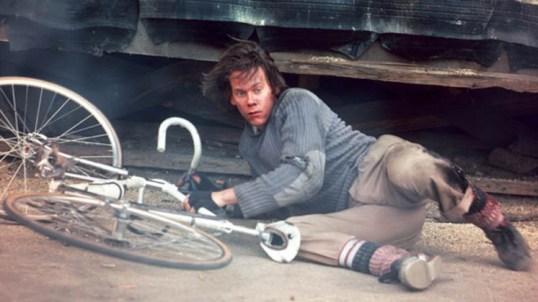
  1. Kevin Bacon

Is there anyone out there who doesn’t like Kevin Bacon?  Amazingly, despite several decades of good performances in good films, Kevin Bacon has yet to be nominated.  That said, he seems destined to be nominated some day.  If nothing else, he deserved some sort of award for being the most successful cast member of the original Friday the 13th.  (As well, 40 years after the fact, his cry of “All is well!” from Animal House has become one of the most popular memes around.)

2. Brendan Gleeson

This brilliant Irish actor deserved a nomination (and probably the win) for his brave performance in Calvary.  But, even if you ignore Calvary, his filmography is full of award-worthy performances.  From The General to Gangs of New York to 28 Days Later to In Bruges to The Guard, Gleeson is overdue for some recognition.

3. John Goodman

John Goodman deserved to be nominated this year, for his performance in 10 Cloverfield Lane.  He brought warmth to both Argo and Inside Llewyn Davis.  And he was absolutely terrifying in Barton Fink.  John Goodman is one of the most underrated actors working today.

4. Malcolm McDowell

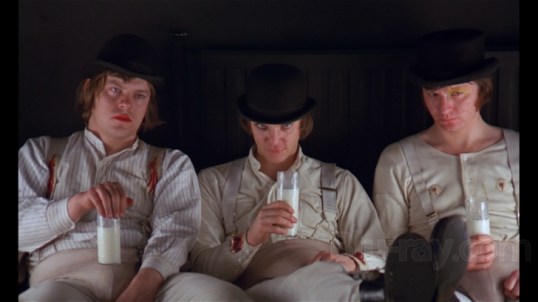
It’s obviously been a while since Malcolm McDowell had a truly great role.  But who could forget his amazing performance in A Clockwork Orange?  For that matter, I liked his sweetly gentle performance in Time After Time.  Someone give this man the great role that he deserves!

5. Ewan McGregor

Ewan McGregor is an actor who is oddly taken for granted.  His performance in Trainspotting remains his best known work.  But, really, he’s been consistently giving wonderful performances for twenty years now.  Sometimes — as in the case of the Star Wars prequels — the films have not been worthy of his talent but McGregor has always been an engaging and compelling screen presence.  When it comes to playing someone who is falling in love, few actors are as convincing as Ewan McGregor.

6) Franco Nero

Franco!  If for nothing else, he deserved a nomination for playing not only Lancelot in Camelot and not only the original Django but also for playing Intergalactic Space Jesus in The Visitor.  I also loved his work in a little-known Italian thriller called Hitchhike.  Nero is still active — look for him in John Wick 2 — and hopefully, he’ll get at least one more truly great role in his lifetime.

7) Sam Rockwell

Let’s just get this out of the way.  In a perfect world, Sam Rockwell would already have an Oscar.  He would have won for his performance in 2009’s Moon.  He also would have received nominations for The Way, Way Back and Seven Psychopaths.  Sadly, Sam’s still waiting for his first nomination.  Again, the problem may be that he’s such a natural that he just makes it look easy.

Andy Serkis

8) Andy Serkis

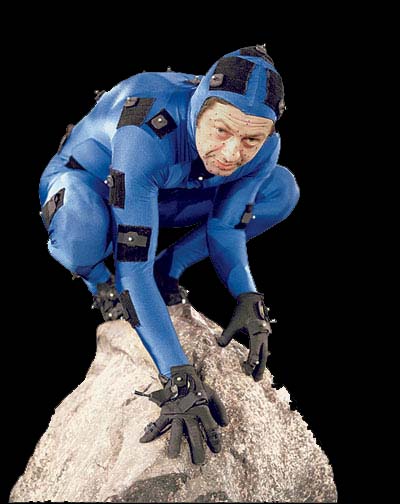
Andy Serkis has never been nominated, despite giving some of the best performances of this century.  He should have been nominated for Lord of the Rings: The Return of the King.  He should have won for Rise of the Planet of the Apes.

9) Harry Dean Stanton

Harry Dean Stanton has been around forever and he’ll probably outlive everyone else on the planet.  He often seems to be indestructible.  Harry Dean is the epitome of a great character actor.  He’s a modern-day John Carradine.  And, just as John Carradine was never nominated, Harry Dean seems to destined to suffer the same fate.  Oscar may have forgotten him but film lovers never will.

10) Donald Sutherland

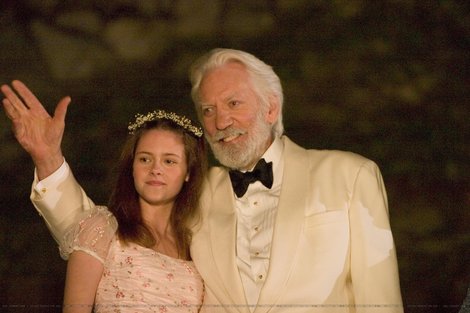
It’s hard to believe that Donald Sutherland has never been nominated for an Oscar but it’s true.  He probably should have been nominated for his work in Ordinary People and JFK.  Even his work in The Hunger Games franchise was an absolute delight to watch.  I imagine that Sutherland will be nominated someday.

Donald Sutherland and Kristen Stewart

Finally, here are 6 actors who sadly were never honored by the Academy and who are no longer with us:

  1. John Carradine

I mentioned John Carradine earlier.  Carradine was a favorite of many directors and he brought his considerable (and rather eccentric) talents to a countless number of films.  Among his best performances: Stagecoach and The Man Who Shot Liberty Valance.

2. John Cazale

Before his untimely death, John Cazale acted in 5 films: The Godfather, Godfather Part II, The Conversation, Dog Day Afternoon, and The Deer Hunter.  All five of them were nominated for best picture.  12 years after his death, archival footage of him was used in The Godfather Part III.  It was also nominated for Best Picture.  Not only is Cazale alone in having spent his entire career in films nominated for best picture but, in each film, Cazale gave a performance that, arguably, deserved to be considered for a Best Supporting Actor nomination.  Cazale was an amazing actor and it’s a shame that he wasn’t able to give us more great performances.

3. Oliver Reed

Oliver Reed was a legendary drinker but he was also an amazingly entertaining actor.  I’m not a huge fan of Gladiator but his final performance was more than worthy of a posthumous nomination.

Alan Rickman

4. Alan Rickman

When it comes to the late Alan Rickman, it’s not a question of whether he should have been nominated.  It’s a question of for which film.  I know a lot of people would say Rickman deserved a nomination for redefining cinematic villainy in Die Hard.  Personally, I loved his performance in Sense and Sensibility.  And, of course, you can’t overlook any of the times that he played Snape.

5. Edward G. Robinson

Edward G. Robinson was never nominated for an Oscar!?  Not even for Double Indemnity?  Or his final performance in Soylent Green?  Horrors!

6) Anton Yelchin

It’s debatable whether or not Anton Yelchin ever got a chance to give a truly award-worthy performance during his lifetime.  I would argue that his work in both Green Room and Like Crazy were pretty close.  But, if Yelchnin had lived, I’m confident he would have eventually been nominated.  We lost a wonderful talent when we lost him.

like-crazy-still02