Well, it’s that time again! It’s time for me to post my very early Oscar predictions. I do this on a monthly basis. I always make it a point to acknowledge that, this early in the year, this is something of a pointless exercise. We’re still not far into 2018 and but, surprisingly, several excellent films have already been released. Who knows what the rest of the year will be like!
So, as always, the predictions below are a combination of instinct and random guesses. This month, I’ve kind of let my imagination run wild. And you know what? That’s the way it should be. What’s the point of trying to predict stuff if you can’t have fun?
So, without further ado, here are my predictions for April!
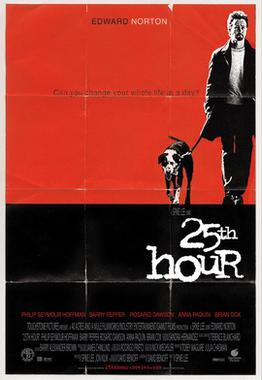
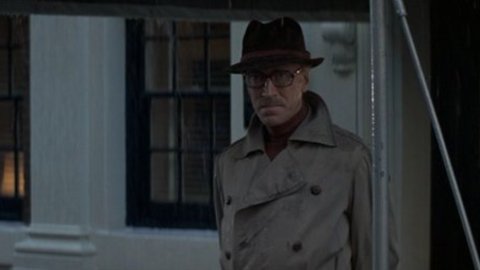
First released in 2003, 25th Hour is one of those films that gets better and better with each subsequent viewing.
Monty Brogan (Edward Norton) may have done some very bad things in the past but nearly everyone has benefited. His childhood friends, a trader named Frank (Barry Pepper) and a teacher named Jacob (Philip Seymour Hoffman), both get to live vicariously through their friend, even if neither one of them is quite willing to admit it. Monty’s father (Brian Cox) is a retired fireman who now owns a bar that was largely purchased with the money that Monty made from dealing drugs. Monty’s girlfriend, Naturelle (Rosario Dawson), is “living high” off of the profits of Monty’s drug deals. For that matter, so is Monty. Monty has a nice apartment, a loyal dog, and a supportive boss named Uncle Nikolai (Levan Uchaneishvili).
Of course, Monty understands that he’s in the business of destroying lives. When Monty first met Naturelle, he had just completed a transaction with a well-dressed businessman. Years later, when Monty is sitting on a bench with his dog, that same man approaches him and begs for more drugs. The man’s no longer wearing a suit. Now, he’s apparently homeless and so addicted that he takes it personally when Monty informs him that he’s no longer in the drug-selling business.
Why is Monty no longer selling? Someone told on Monty. When the DEA showed up at his apartment, it didn’t take long for them to find the packages that he had hidden in the cushions of the couch. For all of his swagger and confidence, it would appear that Monty wasn’t quite as clever as he thought he was. Monty was arrested and subsequently sentenced to seven years in prison.
The majority of 25th Hour takes place during Monty’s final night of freedom, a night that he’s planning on spending it with Frank and Jacob, both of whom could have made the same mistakes that he did but, for whatever reason, they didn’t. Needless to say, Monty’s got a lot on his mind. For all of his attempts to hide it, Monty isn’t as tough as he pretends to be. He knows that it’s not going to be easy for him to do seven years in confinement. He’s terrified of getting raped in prison and he worries that he’s going to be locked in a holding cell with 200 other criminals. Both he and his friends know that, even if he does survive, he’ll be a different man when he gets out. Frank suggests that he and Monty could open a bar when Monty is released but they both know this is an empty promise. Not only is Monty is scared of the future but he’s haunted by the past. Is he getting what he deserves? What if he had made different choices? Will Nautrelle wait for him or, as some of his associates suggest, is she the one who betrayed him in the first place?
Over the course of the night, both Frank and Jacob are also forced to deal with their feelings towards Monty. Frank is a Type A personality, the one who spends his day screaming into telephones and who eagerly looks forward to exploiting bad economic news for his own financial gain. Frank says that Monty is getting what he deserves but, as the film progresses, it becomes obvious that Frank knows that he has more in common with Monty than he wants to admit. Jacob, on the other hand, is a socially awkward teacher who is struggling to deal with a crush that he’s developed on one of his students (Anna Paquin). If Frank fears that he’s more like Monty than he wants to admit, Jacob wishes he could be more like him. At first, it’s hard to imagine that these three men could ever have been close friends but, as soon as you see them together, it all makes sense.
As directed by Spike Lee, one of American cinema’s greatest provocateurs, 25th Hour is more than just the story of one man’s last night of freedom. Over the course of the film, Monty becomes a symbol of not just New York City but of America itself. Driven by self-interest, Monty has spent his life ignoring the consequences of his actions and, now that he has no choice but to confront them, it’s too late. During the film’s most famous scene, Monty stares in a mirror while his reflection rants against every single neighborhood and ethnic group in New York City. The rant is such a powerful scene that it’s easy to miss the most important point. Only at the end of the rant does Monty’s reflection admit that he’s as much to blame for his life as any of them.
Oh yes, the Rant. The Rant is so famous that I was almost tempted to not mention it in this review, just because it doesn’t seem as if there’s much left to be said about it. Even people who dislike the film seem to be in agreement that the Rant is one of the most powerful and incendiary moments in early 21st century cinema. The Rant gives us a portrait of a divided and angry society in collapse and it’s a portrait that is probably even more relevant today than it was when the film was first released. The Rant feels like such a classic Spike Lee moment that it’s surprising to discover that the Rant was included in the script even before Lee was attached to the film.
A few things about the Rant:
The film deliberately leaves it ambiguous as to whether or not Monty is actually speaking. We see the back of his head and his reflection but the movement of his head rarely seems to match the movement of his reflection. Regardless of whether Monty is actually speaking or just imagining the rant, the scene does make clear that, even on his way to prison, Monty can only truly express himself while alone. Of course, once he’s locked up, Monty’s not going to be alone for at least seven years.
“Enron!” I have to admit that, when I recently rewatched film, I laughed when Monty started ranting about Enron. I can vaguely remember a time when everyone was obsessed with Enron and Halliburton and all that other stuff so I found it funny that I briefly had to struggle to recall just what exactly Enron was. 16 years from now, I wonder if people will watch old movies and TV shows and say, “Why are they all so obsessed with Russia?”
As well-done and brilliantly acted as it may be, the Rant has tended overshadow an even better moment. It has been said that the key to a successful work of art is a good ending. As a writer, I can tell you that endings are a hundred times more difficult than beginnings. Fortunately, 25th Hour has an absolutely brilliant ending.
After having finally convincing Frank to beat him up (in an effort to make himself look tougher once he arrives in prison), Monty is being driven to the prison by his father. As they leave New York City, Monty takes one final look at the city and it’s citizens enjoying freedom that he’ll never again have. (This is such a New York City that you can’t help but feel that it’s adding insult to injury that Monty’s going to have to serve his time upstate.) As he drives, Monty’s father begins to talk…
It’s all about decisions and consequences. Monty made his decisions years ago. Over the course of Monty’s last night of freedom, Frank, Jacob, Naturelle, and even Uncle Nikolai made their decisions. And now, as he drives his son to prison, Monty’s father is forced to make a decision of his own. There’s so much great acting to be found in 25th Hour but, during that final soliloquy, Brian Cox upstages all of them. Brian Cox is one of those character actors who seems as if he’s been around forever. He’s the type of dependable actor who, much like Monty’s father, is often taken for granted. If nothing else, you have to be thankful for a film like 25th Hour because it gives everyone a chance to be reminded of just how brilliant an actor Brian Cox truly is.
(Here’s a random bit of a Brian Cox trivia. While everyone knows that, in Manhunter, Brian Cox was the first actor to play Hannibal Lecter, he also played Winton Churchill the same year that Gary Oldman won an Oscar for playing the same role in Darkest Hour.)
25th Hour is not an easy film to watch. At times, it’s one of the most depressing films ever made. It’s tempting to say that, as bad as things ultimately turn out for him, you’re glad that Monty has his father and his friends but that’s really not true. No matter how much his friends care about him or how much Naturelle and his father love him, Monty’s going to prison and his story is simply not going to have a happy ending.
And yet, 25th Hour is one of those films that you can’t look away from and, after you watch it, you simply can’t forget. Every time I watch 25th Hour, I find new details to appreciate. With each subsequent viewing, the pungent dialogue becomes even more multi-layered. With each subsequent viewing, Monty becomes even more of an intriguing and tragic figure. This is a film that makes you appreciate the brilliance of Edward Norton and mourn the fact that Barry Pepper rarely gets roles as good as his role here. With each viewing, 25th Hour reminds you of what a great talent we lost when we lost Philip Seymour Hoffman. It’s film that gets better with each viewing.
Assuming that Monty survived and managed to stay out of trouble, he should be out of prison by now. Hopefully, wherever he is, he’s doing okay.
The Seventh Seal (1957, directed by Ingmar Bergman)
I had a bit of a panic attack earlier today when I logged onto twitter and I discovered that everyone was both sharing picture of the great actor Max Von Sydow and debating which one of his many roles was his best.
“Oh my God!” I thought, “Max von Sydow must have died! 2018 sucks now!”
I looked over at the trending topics and, to my shock, Max von Sydow was not trending. However, Mark Zuckerberg was.
“Goddammit,” I thought, “Mark Zuckerberg is totally overshadowing the legendary career of one of the most important actors of all time!”
I was prepared to take advantage of the no-filter atmosphere of twitter and start screaming at people for not showing the proper respect to the life and legacy of Max von Sydow. Fortunately, before I totally lost my temper, I decided to make sure that my assumptions were correct. That’s something that I rarely do but I’m certainly glad that I did it this time because, by doing so, I discovered that Max von Sydow was not dead.
Instead, today was his 89th birthday!
Happy birthday, Max von Sydow!
What is Max von Sydow’s greatest role? There’s so many to choose from. He’s got a whole new legion of fans as a result of his appearances in last two Star Wars films. Considering that he’s been an outspoken agnostic, it’s somewhat ironic that his first English-language role was as Jesus Christ in The Greatest Story Ever Told and that he epitomized everyone’s idea of the ideal priest in The Exorcist. He’s played assassins, saints, and intellectuals. He’s twice been nominated for an Oscar. When I asked my boyfriend for his pick for Max von Sydow’s greatest performance, he picked the Emperor Ming in Flash Gordon. Speaking of famous villains, von Sydow also played Blofield in Never Say Never Againand let’s not forget the assassin he played in Three Days of the Condor or his role in Minority Report or his performance as Leland Gualt in Needful Things! And what about his performance in The Diving Bell and the Butterfly or his Emmy-nominated turn in Game of Thrones…
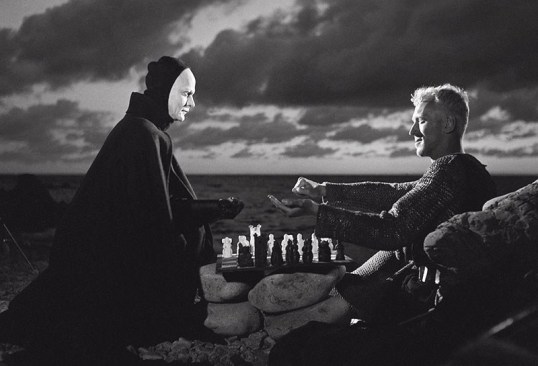
Well, I could sit here and spend hours listing great Max von Sydow performances. But, when talking about the career of Max von Sydow, you have to start with the films of Ingmar Bergman. And when you talk about Bergman and von Sydow, you have to start with 1957’s The Seventh Seal.
(Some sites claim that The Seventh Seal was von Sydow’s film debut but that’s not true. It may have been his first film for Bergman but von Sydow actually made his screen debut in 1949. Before finding film stardom, von Sydow dominated the Swedish stage.)
In honor of both Max von Sydow’s 89th birthday and his amazing career, today’s scene that I love is from The Seventh Seal. This haunting and atmospheric film is one that you definitely should see if you haven’t see it already. Here von Sydow’s knight first meets Death (Bengt Ekerot*) and settles in for a game of chess.
Happy birthday, Max von Sydow!
—-
*While Bengt Ekerot never went on to achieve the type of international fame that von Sydow did, his performance here set the archetype of how Death, as a character, continues to be portrayed in books and films to this day.
On Sunday night, immediately after watching Twin Betrayal, I watched and, working with TSL contributor Case Wright, live tweeted a film called Evil Doctor!
Why Was I Watching It?
The first reason was an obvious one. It was a Lifetime movie and, as our regular readers know, there’s no way that I would ever miss the chance to watch a Lifetime film.
The other reason was that the film was named Evil Doctor, which made it sound like the origin story of perhaps the greatest MCU villain of all time. As a general rule, any Lifetime film that has the word “evil” in the title is going to turn out to be good. Evil is right up there with “Bad,” “Confessions,” and “…at 17” as far as words in Lifetime movie titles are concerned.
What Was It About?
Everyone wants something.
Aubrey Lewis (Jen Lilley) just wants to have her baby in peace.
Aubrey’s husband, Matt (Corin Nemec), wants to be a respected television writer, even if he is stuck writing for a sitcom called Family Phun.
And what does Dr. Natalie Barnes (Dina Meyer) want? She wants to have a baby and she wants a baby now! She also wants to deal with all of the unresolved issues that she had with her dead father, who happened to look just like Matt! What better solution to Natalie’s problems than seduce Matt, steal Aubrey’s baby, and kill anyone who gets in her way?
Seriously, she’s not called an evil doctor for nothing.
What Worked?
Obviously, with a film like this, success is going to depend on how effectively the title character is played. Fortunately, Dina Meyer really threw herself into the role of the evil doctor, kidnapping babies, seducing starlets, and murdering anyone who looked at her the wrong way. Dina Meyer has always done a good job when she’s been cast as a Lifetime movie psycho and Evil Doctor was no different. As well, Corin Nemec and Jen Lilley were likable as the objects of her obsession.
Evil Doctor was one of those Lifetime films that showed no hesitation about going totally and completely over-the-top. Between the evil doctor plotting and the wayward husband trying not to get caught and the poor wife just trying to have her baby in peace, there was not one ounce of drama that this film did not explore. It was outlandish, flamboyant, silly, and a hell of a lot fun!
What Did Not Work?
I think that the film missed a huge opportunity by not recruiting Eric Roberts to reprise his character from Stalked By My Doctor in a cameo appearance. I would have ended the film with Matt and Aubrey going to see their new doctor and discovering Dr. Beck waiting for them in his office. That would have been a legendary ending!
(For the record, according to the imdb, Eric Roberts currently has 57 films that are either currently filming or in post-production. That has nothing to do with Evil Doctor but it is a fun piece of trivia.)
Other than the glaring lack of Eric Roberts, everything worked in Evil Doctor. I mean, let’s be honest. When you watch a film with a title like Evil Doctor, you know what you’re going to get. You watch a film like this because you want to embrace the melodrama and you’re looking forward to trying to predict every outlandish twist. Evil Doctor delivered exactly what it promised.
“Oh my God! Just Like Me!” Moments
I totally related to Janelle (Kelsey Griswold), who was Aubrey’s sister and who moved in to help around the house while Aubrey was pregnant. Janelle had this wonderfully sarcastic, no-bullshit approach to life, to which I totally related. Janelle disliked almost everyone who came by the house and never made any attempt to hide that fact.
On Sunday night, I watched the latest Lifetime premiere, Twin Betrayal!
Why Was I Watching It?
The obvious answer is that it was on Lifetime. However, I also have a weakness for films about evil twins. Don’t ask me why, I just do.
What Was It About?
Poor Jessica Klint (Jen Lilley)! Not only is she struggling financially but her estranged husband (Peter Douglas) wants custody of their daughter. We know her husband is a bad guy because he wears a suit even when he’s at home and his name is Lars. Never in a Lifetime film has anyone good been named Lars. (Before anyone mentions Lars and the Real Girl, allow me to point out that 1) that’s not a Lifetime film and 2) even if it was, it would be the exception to the rule.)
However, following a business trip to Dallas, Jessica’s problems get even worse! After having a one-night stand with a cowboy named Henry (Nick Ballard), Jessica finds herself being blackmailed! Where can she get the money? Her wealthy father isn’t going to be much help. How about from her twin sister, Alessandra (Jen Lilley)? Sure, Jessica and Alessandra have a strained relationship and haven’t spoken in years but surely one twin will help the other, right?
And surely, no matter what personal issues there may be, one twin would definitely never try to frame the other for murder, right?
Right?
Watch the film to find out!
What Worked?
I enjoyed this one because, as any film about a twin betrayal should be, it was totally melodramatic, over-the-top, and very self-aware. Whenever I give a film like this a good review, I always seem to get at least one comment from someone complaining that the film was too silly or implausible but I think those people are missing the point. You don’t watch a film like Twin Betrayal because you want to see a serious exploration of what it’s like to be a twin. You watch a movie like this because you want to have fun! Twin Betrayal promised twisty entertainment and it delivered and, in the end, that’s all that really matters.
Jen Lilley obviously had a blast playing the twins, especially the wonderfully decadent Alessandra. Alessandra had obviously been waiting for years for the chance to make her sister uncomfortable and she did not let the opportunity pass her by.
What Did Not Work?
On the one hand, I was really happy that part of the film took place in Dallas. I don’t know if they actually filmed in Dallas but, at the very least, they at least included a shot of the Dallas skyline. (Whenever a movie spends any time in Dallas, you always know that you’re going to get at least one shot of Reunion Tower and one shot of Bank of America Plaza.) However, in reality, it’s doubtful that Jessica would have met any cowboys in Dallas. Football aside, cowboys are really more of a Fort Worth thing.
“Oh my God! Just like me!” Moments
Much like Jessica Klint, I have a weakness for cowboys. Seriously, who doesn’t? I’m also close to my sisters but, fortunately, none of us are twins. If there’s anything that I’ve learned from watching Lifetime films, it’s that you can always depend on your sister unless she’s your twin sister. Sadly, there’s always one evil twin and it seems like the good twin always ends up getting framed. Hopefully, Lifetime will continue to explore this theme whenever they get around to making the inevitable Mary-Kate and Ashley biopic.
Actually, I guess if I was a twin, I probably would end up being the evil one. Seriously, it just seems like it would be too much of a temptation to resist…
Lessons Learned
As I stated above, one twin will always be evil. The trick is figuring out which one.
So, the second trailer for Solo dropped on Sunday and here it is!
Y’know, compared to the other contributors here at the Shattered Lens, I’m not a huge Star Wars fan but I really have to say that this trailer looks really, really, really, really cool. It has a totally different feel to it than any of the other Star Wars trailers that I’ve seen. It has a sort of Ocean’s 11/Snowpiercer/Baby Driver-in-space kind of feel to it.
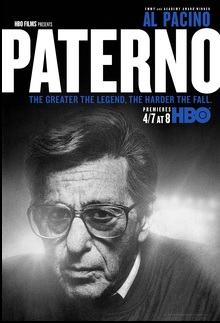
There’s a great scene that occurs about an hour into HBO’s latest original film, Paterno.
Joe Paterno (Al Pacino), the legendary and aging Penn State football coach, has been accused of knowing and failing to report that one of his former assistant coaches, Jerry Sandusky (Jim Johnson), was a pedophile. With Paterno and his family plotting out strategy behind closed doors, a group of Penn State students gather outside of the Paterno home. Instead of being angry that children were molested at their college, they’ve come to show their support for Paterno.
“JOE PATERNO!” they chant.
Scott Paterno (Greg Grunberg) hears the chants. Scott is a lawyer and appears to be the only member of the Paterno family to truly understand the seriousness of the accusations. Scott steps outside.
“JOE PATERNO!” the crowd continues to chant.
Scott thanks them for their support but then says that they also need to show the same support to all of Sandusky’s victims…
“JOE PATERNO!” the chant continues.
Struggling to be heard, Scott again asks them to remember that the children molested by Sandusky are the ones who need the most support…
Suddenly, the chant changes. “SCOTT PATERNO!” the crowd starts to chant. It’s not because they’ve heard anything that Scott’s said. Instead, it’s because Scott’s a Paterno and, in the eyes of the crowd, that makes him royalty. As the crowd continues to chant his name, Scott gives up and reenters the house.
Paterno could have used more scenes like that, scenes that explicitly showed the danger of blind hero worship as opposed to just telling us about it. For the most part, Paterno feels like a well-written Wikipedia article. You can’t deny the skill with which the film was made but, at the same time, it’s difficult not to get frustrated by Paterno‘s refusal to really dig too far underneath the surface of the story.
Some of the problem is with the film’s structure. The film primarily takes place over the final six days of Paterno’s career. Paterno spends the majority of the film locked away in his house, passive aggressively avoiding the question of what he knew and when he knew it. His wife (Kathy Baker) and his other son, buffoonish Jay (Larry Mitchell), make excuses for him while Scott tries to get everyone to understand that the accusations aren’t just going to go away. This is the part of the Paterno story that, in most films, would be summed up by an end credits title card.
As a result, Paterno never really deals with why Joe Paterno not only didn’t report Sandusky but also apparently protected him and that, to be honest, is the most important and troubling part of the story. Since Sandusky is only briefly seen, we never get any insight into his relationship with Paterno and we never understand why Paterno would go to bat for an assistant who he, at one point, refers to as being “a pain in the ass.” Was Paterno truly clueless about what was happening or did he just think he could sweep it under the rug and nobody would say anything because he was Joe Paterno? Were Paterno’s actions the result of willful blindness or hubris? It’s not so much a problem that the film leaves certain questions unanswered as much as it’s a problem that the film itself doesn’t seem to be all that concerned with the answers.
When the film isn’t concentrating on the Paternos, it’s concentrating on the reporter, Sara Ganim (Riley Keough), who originally broke the story. However, these scenes are never quite as compelling as the film seems to think they are. Riley Keough, who was so great in American Honey, seems miscast here. For the most part. Sara seems to be there so that she can witness the Penn State students rioting and chanting, “Fuck the Media” after Paterno loses his job.
The best thing that Paterno has going for it is the lead performance of Al Pacino. Pacino plays Paterno as a man who is very comfortable with the routine that he’s built up for himself. His life revolves around Penn State, his team, and finally his own legend. When the Sandusky story first breaks, Paterno can’t understand why he even has to be concerned about it. He’s got a game against Nebraska coming up! Awkward even around his adoring family, Paterno only seems to be truly comfortable when he’s coaching. Pacino plays Paterno as a fragile and sickly man, a once ferocious lion brought down by a combination of cancer and scandal. When we first see him, Paterno is coaching his team to a record-setting victory and he seems like a larger-than-life figure. By the end of the movie, Paterno seems much smaller, a confused man who still can’t seem to bring himself to deal with why everyone is getting so upset. It’s a great performance in an uneven film.
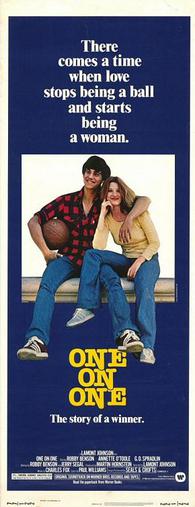
Sometimes, I come across things on my DVR that I not only have no memory of recording but which I also cannot, for the life of me, figure out why I decided to record it in the first place. I recorded the 1977 film One On One off of TCM on January 17th and I’m not really sure why.
It’s not that One On One is a terrible movie or anything like that. It’s an extremely predictable film and it’s got one of those soundtracks that is extremely 70s but not cool disco-style 70s. No, instead this film is full of the type of soft rock music that your grandmother listens to while driving to the local CVS Pharmacy. (The majority of the songs are performed by a group called Seals and Croft and are painfully undanceable.) But, even with that in mind, it’s not really a bad movie. If I’m confused about why I recorded it, it’s because One on One is a movie about basketball, which is a sport that holds absolutely zero interest for me.
(My main issue with basketball has to do with the sound of all of those squeaky shoes on the court.)
But, before going any further, let’s watch a commercial:
One on One tells the story of Henry Steele (Robby Benson), a high school basketball star. Henry is from Colorado, which this film seems to suggest is the equivalent of coming from Siberia. When Moreland Smith (G.D. Spradlin). the renowned coach of Western University’s basketball team, offers Henry a full athletic scholarship, Henry negotiates a pretty good deal for himself. Not only is his education going to be paid for but he also wins a guarantee that he’ll never be cut from the team and that his father will get a car. All Henry has to do is keep his grades up but that shouldn’t be a problem. Sure, Henry appears to be an idiot but the athletic department will set him up with a tutor and, as long as the coach is happy with him, it’s not like Henry’s actually going to have to go to class.
Upon arriving in Los Angeles, Henry picks up a hitchhiker (a very young Melanie Griffith) who promptly robs him of all of his money. Once he arrives at the university, he discovers that Coach Smith is not going to be the surrogate father figure that he was expecting. Instead, Coach Smith is a rather cold and ruthless taskmaster, whose main concern is winning. When Henry, who is by far the shortest player on the team, struggles, Smith tells Henry that he needs to renounce his scholarship and return home. When Henry refuses to do so, Smith becomes obsessed with trying to break him.
As Henry’s roommate, Tom (Cory Faucher), points out, Henry’s head is not in the game. Instead, Henry can’t stop thinking about his tutor, Janet (Annette O’Toole). At first, Janet assumes that Henry is just a dumb jock, largely because Henry’s a jock and he spends the first half of the movie acting really, really dumb. Then, out of nowhere, Henry reveals that he’s not only read Moby Dick but he can quote passages from memory. In fact, Henry even understands that Ahab was — wait for it — obsessed! Oh my God, Janet realizes, Henry’s literate! In fact, Janet exclaims that Henry is the first person she’s met who has actually read Moby Dick! (Really?) Janet and Henry fall in love but, unfortunately, Janet is already dating her psychology professor.
(The professor has got a beard that looks like it reeks of stale weed and he says stuff like, “Have you seen my sandals?,” so we know better than to take him seriously when he compares the popularity of college athletics to the rise of fascism. When Henry accuses him of being a hippie, the professor just smirks and says something condescending. Stupid hippie.)
Will Janet and Henry fall in love? Will Janet dump her unattractive and unappealing boyfriend so she can date Henry? Will Henry manage to pass his classes? Will Henry ever get a chance to prove himself on the court? Will … oh, why even ask these questions? You already know what’s going to happen in this movie. There’s really not a single unexpected moment to be found in One on One. Everything about the film, from the coach’s ruthlessness to Henry’s transformation from idiot to savvy player, feels pre-ordained. It’s a predictable movie but, at the same time, it’s a likable movie. At the start of the film, Benson overplays Henry’s stupidity and O’Toole overplays Janet’s brittleness but, at the film progresses, both performers seem to relax and, by the time the end credits role, they’re actually a fairly likable couple. Benson even gets a killer final line, one that I imagine made audiences in 1977 applaud.
That said, the film is pretty much stolen by G.D. Spradlin. Spradlin was a former Oklahoma oilman who reinvented himself as a politician and then as a character actor. Best known for playing Senator Pat Geary in The Godfather, Part II, Spradlin had a flair for bringing casually corrupt authority figures to life. In One on One, Spradlin turns Coach Smith into a Mephistophelean figure, offering Henry success at the cost of his soul. Coach Smith is arrogant, oily, casually racist, and an all-around jerk but, at the same time, it is also obvious that he knows how to lead a team to victory. The great thing about Spradlin’s performance is to be found in not just how menacing he is but in how charismatic he is. You never doubt that Coach Smith is both a lousy human being and an absolutely brilliant coach. If nothing else, he’s good at his job.
As I said at the start of this review, I am not really sure why I recorded One on One but it turned out to be better than I was expecting. It is a flawed and uneven film but worth watching for Spradlin’s intriguingly villainous turn.
It took a while but Terry Gilliam has finally made his Don Quixote film.
How long is a while? Try 19 years. That’s right. When pre-production started on The Man Who Killed Don Quixtoe, Bill Clinton was President, George W. Bush was governor of Texas, Barack Obama was starting his first team in the Illinois State House, and Donald Trump was a real estate developer. Shooting started in 2000 with Jean Rochefort and Johnny Depp in the starring roles but was suspended when the production ran out of money. In 2002, Lost in La Mancha, a documentary about Gilliam’s then-unfinished film, was released.
Gilliam didn’t give up on the film Over the next couple of years, production was started and stalled a number of times. Everyone from Robert Duvall to John Hurt to Ewan McGregor was cast in the film at one time or another. I think most people assumed that the film would never be finished.
Well, those people were wrong. Gilliam’s dream project has finally be completed, with Jonathan Pryce and Adam Driver in the leading roles. It would seem now that the film’s biggest challenge is to live up to all the hype and expectation that comes along with having a 19-year pre-production period.
As for right now, the film does not have an American release date but, yesterday, the first trailer for the French market was released. And here it is!
Earlier this year, I read Ray Bradbury’s original novel so I hope the upcoming HBO film version of Fahrenheit 451 will do justice to the book’s themes. The trailer below feels a bit more like Blade Runner than Bradbury but Michael B. Jordan and Michael Shannon both seem to be ideally cast.