Film Review: Guerrilla: The Taking of Patty Hearst (dir by Robert Stone)


“Death to the fascist insect that preys upon the life of the people!”

— Patty “Tania” Hearst

2004’s Guerrilla is not the first movie that I’ve reviewed about the kidnapping of heiress Patty Hearst.  Previously, I took a look at Abduction, a grindhouse film that was released while Hearst was still missing, and 1988’s Patty Hearst, which was based on Hearst’s own book about her ordeal.  However, Guerrilla is different from those two films in that it’s a documentary and it features interviews with people who actually knew Patty and her kidnappers.

It’s a strange and complicated story, the type that you would probably be dismissed as implausible if not for the fact that it actually happened.  In 1973, Oakland school superintendent Marcus Foster was gunned down in a parking lot.  Because Foster was the first black man to held the position of superintendent, it was originally assumed that he had been gunned down by a racist paramilitary group.  However, a neo-Marxist group known as the Symbionese Liberation Army (SLA) soon took responsibility for the murder, claiming that Foster had been tried in a people’s court and sentenced to death for his crimes.  (Foster’s “crime” was apparently trying to introduce ID cards in Oakland schools.)

Who were the SLA?  They were a small group of self-styled revolutionaries.  Though their leader was a black, escaped convict named Donald DeFreeze, the other members of the SLA were white and largely middle class.  They enjoyed sending out portentous political announcements and they went out of their way to try to portray themselves as being a highly disciplined and regimented military organization.  Donald DeFreeze changed his name to “Field Marshal Cinque.”  According to the interviews in Guerrilla, most of their fellow radicals viewed the SLA as being a joke.  (One contemporary expresses his disappointment in meeting the SLA and discovering that they were all very boring and middle class.)  No one could understand the logic behind murdering Foster, who was viewed as being a progressive educator.

If not for what happened in the months after Foster’s murder, the SLA probably would have faded into the same obscurity that has swallowed up so many activist groups.  After two members of the group were arrested, the SLA retaliated by kidnapping Patty Hearst.

At the time that she was abducted, Patty Hearst was a nineteen year-old student at Berkeley.  She was also the granddaughter of William Randolph Hearst, the publishing magnate whose life famously inspired the film Citizen Kane.  With the entire world now watching, the SLA announced that Patty would be executed unless the Hearst family arranged for every poor person in California to receive $70 worth of food.  As is portrayed in cringe-inducing detail in the documentary, the Hearst family actually attempted to meet the SLA’s demands, just to watch the food distribution program descend into chaos.  As for the SLA, they were not impressed by the Hearst family’s effort.  Even more tellingly, Patty was not impressed.  In a recording sent to the press, Patty complained that her family hadn’t made enough of an effort and assured everyone that the SLA was treating her in accordance to international law.

Shortly afterwards, the SLA released another recording.  In this recording, Patty announced that she had been given the option of either returning to her family or joining the SLA.  She had decided to join the SLA and take the new name of Tania.  Soon, Patty Hearst was robbing banks and declaring “death to the fascist insect.”

Was Patty sincere in her conversion or was she brainwashed?  That’s the question that Guerrilla explores, while leaving it to the audience to decide for themselves what was actually going on in Patty’s mind.  Though Patty is not interviewed in the film, we do get to hear the recordings that she made during her time with the SLA.  We listen as she goes from being a sacred abductee to a self-declared “urban guerrilla.”  Listening to her dull, flat voice, you get the feeling that she didn’t have much of an individual identity before she was kidnapped and she had even less of one after she converts to the SLA cause.  When she talks about how much she loves the other members of the SLA, she sounds like an actress giving a bad audition.  Before she was kidnapped, she was a Hearst.  After she was kidnapped, she was a revolutionary.  At no point do you get the feeling that she was ever just Patty.

It’s an interesting story and Guerrilla is a fascinating documentary, one that explores how idealism can sometimes be just as dangerous as cynicism.  It’s also a film that explores how the kidnapping of an heiress received more attention than the murder of a teacher.  It’s interesting to note that, while the other members of the SLA eventually ended up either dead or in prison, Patty Hearst ended up getting a full pardon from Bill Clinton.  It’s hard not to feel that the story would have been much different if the SLA had kidnapped Jane Smith instead of Patty Hearst.

Film Review: Gimme Shelter (dir by Albert and David Mayles and Charlotte Zwerin)


After you watch Woodstock, you owe it to yourself to watch another documentary from 1970.  This one is called Gimme Shelter and it deals with the infamous Altamont Free Concert.  Taking place a few months after Woodstock, Altamont was originally envisioned as being Woodstock West but, as Gimme Shelter illustrates in disturbing detail, it ultimately became something far different.

Here are a few images from both Gimme Shelter and the Altamont Free Concert:

This is Mick Jagger, the lead singer of The Rolling Stones.  The Rolling Stones were the final act to perform at the Altamont Free Concert and their performance was meant to be the conclusion of their 1969 American tour.  Gimme Shelter was originally meant to be a documentary about the final days of the tour and clips of a confident and charismatic Jagger performing in Madison Square Garden are sprinkled throughout the first 40 minutes of the film.  They provide a striking contrast to the chaos of the second half of the film, in which Jagger finds himself ineffectually trying to maintain order as fights break out in front of the stage.

This is Charlie Watts, the Rolling Stones’s drummer.  Though Gimme Shelter is usually referred to as being a documentary about the Rolling Stones, the film pretty much centers around Mick and Charlie.  Gimme Shelter‘s framing device involves Mick and Charlie watching a rough cut of the documentary itself.  While Mick always seems to maintain an air of deliberate detachment, Charlie seems to be visibly disturbed by what happened during their performance at Altamont.

(In another memorable scene, the group is shown listening to their latest recording.  While this rest of the group plays up to the filmmakers, Charlie quietly takes in the music and appears to be surprised when he notices that he’s being filmed.)

This is the Melvin Belli.  An attorney, Belli appears throughout the first half of Gimme Shelter, making the arrangements for the Altamont Free Concert and obviously having a great time showing off for the camera.  At one point, Belli makes a comment about opening for the Stones.  While Belli’s joking, it’s obvious from the tone of his voice that he’d love nothing more than to do so.  In fact, Belli is so busy being entertaining that he really doesn’t seem to notice that, even during the planning stages, the Altamont Free Concert doesn’t sound like a good idea.

This is Sonny Barger, a founding member of the Hell’s Angels.  He’s standing on the Altamont stage, watching Mick Jagger perform.  Why is Barger on stage?  He’s there because, for some reason, someone thought it would be a good idea to hire the Hell’s Angels to handle security at the concert.  (Barger is heard, in the film, saying that he was told that he could sit on the stage and drink beer and all he had to do was keep anyone else from approaching the musicians.)

What is Barger thinking as he watches Jagger perform?  This is a question that I think anyone who has ever watched Gimme Shelter has asked themselves.  Is he annoyed with or menacing Jagger or is he just doing his job and making sure that no one rushes the singer?  Perhaps it’s all of the above.

The man in green is Meredith Hunter.  This shot is the first time that Hunter appears in the film.  The second time is when he’s getting stabbed to death by a member of the Hell’s Angels security force.  Watching the documentary, Jagger asks to rewatch the scene of Hunter’s murder.  The filmmakers slow down the scene and show him both the knife being held by the Hell’s Angel and the gun being held by Hunter.

Even before Hunter’s death, Gimme Shelter has already shown us enough to convince us that the counter culture dream of Woodstock was the exception as opposed to the rule.  The final hour of Gimme Shelter takes place at the Altamont Free Concert and almost every scene feels like an angry rebuke to the positivity of Woodstock.  The crowds were angrier.  The scenery was far less aesthetically pleasing.  (Woodstock took place on a farm.  Altamont took place on a cement race track.)  Whereas Woodstock famously featured warnings about the “brown acid,” Gimme Shelter features one of the concert promoters reacting to concerns about the bad acid circulating in the crowd by saying, “Tough shit.”  Even the naked people at Altamont were far less attractive than the naked people at Woodstock.  Jefferson Airplane played at both festivals.  At Woodstock, they apparently had sound issues but otherwise, there were no problems.  At Altamont, as the cameras rolled, lead singer Marty Balin was knocked unconscious by a Hell’s Angel with a pool cue.

(“I’d like to mention that the Hell’s Angels just smashed Marty Balin in the face and knocked him out for a bit. I’d like to thank you for that,” one of the members of the band announced.)

A few more images from Altamont:

Before the concert starts, this man cheerfully yelled “LSD!  Mescaline!” at everyone walking by.  I’m not sure if that was his dog or not.  But speaking of dogs…

…this dog casually wandered across the stage during the Rolling Stones’s performance.  It’s never clear where he came from or where he went after he left the stage.

Even with the Hell’s Angels beating up everyone in sight, a few people still enjoyed the concert.  This is who I relate to in the film because she was determined to enjoy herself no matter how weird things got.

But then there’s this guy, who was standing only a few feet away from Jagger when he started to freak out:

If Woodstock is ultimately all about peace and life, Gimme Shelter is a film that is suffused with conflict and death.  If you’re going to watch one, you owe it to yourself to watch the other.  In the end, the two documentaries together provide us with a view of a counterculture that had so much potential but which couldn’t escape the darkness that hid behind the light.

(Interestingly enough, future director George Lucas was one of the cameramen at Altamont that day.  Just as how Altamont was often cited as the end of the 60s, the blockbuster success of Lucas’s Star Wars would often be cited as the beginning of the 80s.)

I’ll end this review with a quote from Grace Slick, one that is still relevant today.  As she said as she watched Altamont descend into chaos: “You don’t hassle with anybody in particular. You gotta keep your bodies off each other unless you intend love. People get weird, and you need people like the Angels to keep people in line. But the Angels also – you know, you don’t bust people in the head – for nothing. So both sides are fucking up temporarily; let’s not keep FUCKING UP!”

Film Review: Woodstock (dir by Michael Wadleigh)


A few nights ago, as I watched the 1970 documentary Woodstock, I thought to myself, “Goddamn, this is a long movie…”

Just how long Woodstock is depends on which version that you watch.  The original version, which won an Oscar for Best Documentary and which was also nominated for Best Editing (the first nomination ever for the legendary Thelma Schoonmaker), had a running time of little over three hours.  The version that I watched was the “director’s cut,” which clocks in at close to four hours.  Of course, since Woodstock was shot over the course of a three-day music festival, it could have been even longer.  32 acts performed at Woodstock but only 14 of them appeared in the original version of the film.  (By including footage of Jefferson Airplane, Janis Joplin, and Canned Heat, the director’s cut increases that number to 17.)

As for the music that does appear in the film, your reaction is going to depend on how much you like the music of the late 60s.  Jimi Hendrix, Sly and the Family Stone, and Ten Years After are all brilliant but, at the same time, you also have to deal with Joan Baez rambling about her imprisoned husband and singing perhaps the smuggest version of Swing Low Sweet Chariot ever recorded.  Watching Crosby Stills & Nash perform, I was reminded of every boring grad student that I’ve ever known while John Sebastian’s stage patter sounded almost like a parody of hippie shallowness.  I would say that Woodstock was a perfect example of why the rockers are better remembered than the folk singers, except for the fact that my favorite musical performance in the film comes from Arlo Guthrie:

That said, Woodstock really isn’t about the music.  That may sound like a strange thing to say, considering that almost every concert film made since owes a debt to Woodstock but really, the most interesting parts of the film aren’t the performances.  Instead, it’s the interviews with the people involved, not only the concertgoers themselves but also the citizens of the nearby town of Bethel, New York.  Some of the people interviewed as very positive about the sudden hippie invasion.  Quite a few others are not.  One older man seems to be more concerned with working on his car than anything else.  Like any good documentary, Woodstock provides a record of the time when it was made.  As much as I like music, I absolutely love history and, to me, that’s the main appeal of Woodstock.  Watching the film is like getting a chance to step into a time machine and experience an age that I would otherwise never get a chance to know.

Whenever I watch Woodstock, I’m always struck by the fact that I probably would not have enjoyed it as much as some of the people who attended.  I have a feeling that I’d be like that poor girl who is spotted about halfway through the film, crying about how it’s too muddy and crowded.  I always cringe a little when I see everyone bathing in the same dirty pond.  (A young Martin Scorsese worked on the film and reportedly spent the entire festival wearing an immaculate white suit.  That’s something that I would have liked to have seen.)  And yet, at the same time, I just find the documentary fascinating to watch.  I always find myself wondering what became of the people who were interviewed in the film.  How many of the hippies are still hippies and how many of them eventually ended up working on Wall Street?  Did the cranky guy working on his car even bother to see the film?  (It wouldn’t surprise me if he didn’t.  Movies, especially movies about a bunch of stoned hippies, really didn’t seem to be his thing.)  To me, questions like those are what makes a movie like this fascinating.

As an event, the original Woodstock is often cited as being the best moment of the 60s counterculture.  (30 years later, the 1999 Woodstock would be remembered as one of the worst moments in the history of both music and American popular culture.)  As a film, Woodstock is undeniably optimistic that the people who braved the rain and the mud so that they could see Joan Baez would somehow manage to build a new society.  Still, sharp-eyed viewers will note a hint of what was to come.  One of the first people interviewed in the documentary is a local shopkeeper.  As he speaks, a newspaper can be seen over his shoulder.

The headline reads: “Sharon’s Pals Balk At Probe,” a reference to the investigation into the murder of Sharon Tate by Charles Manson and his followers.  Seen today, that headline serves as a reminder that, even at the time it was occurring, the peaceful promise of the original Woodstock would be short lived.


A Blast From The Past: I Just Don’t Dig Him (produced by The Department Of Mental Health, State of Connecticut)


The haunting opening scene of I Just Don’t Dig Him…

Ah, parents and their children!

It doesn’t matter what year it is or where they live or who they are.  Parents never understand their children and children never understand their parents and, ultimately, there’s always that one friend who ends up nearly chopping his finger off.

At least, that’s the message that I got from watching the 1970 educational film, I Just Don’t Dig Him.

This film was produced by the state of Connecticut’s Department of Mental Health and apparently, it was designed to show that adults and teenagers actually had more in common than they realized.  For instance, in this film, both groups share an intense loathing for each other.

The film is about a father and his son.  The father spends all of his time complaining about his son.  The son spends all of his time complaining about his father.  For some reason, we’re treated to a really gross close-up of the son’s bare feet.  Meanwhile, the father applies aftershave as if the fate of the world depended upon it.  The son’s best friend assures him that his father isn’t so bad.  The father’s best friend assures him that his son isn’t so bad.  And then the son’s friend accidentally chops off his finger while fooling around with a car engine.  The father helps to stop the bleeding while his son stares at him resentfully.  The message appears to be that adults and children need to communicate better but, ultimately, you want an adult around if anyone starts bleeding.

I like films like this, largely because I’m an unapologetic history nerd and I Just Don’t Dig Him is such a product of its time that it might as well be wearing bell bottoms and dropping brown acid.  Watching the film today, it’s hard not to be amused by how intense both the father and the son are about … well, everything.  When the father shaves, you’re first thought is, “That man should not be allowed to handle anything sharp.”  When the son talks on the phone, you feel bad for whoever’s having to listen to him whine.  Generations are at war, this film seems to say, and there’s no hope until the younger generation realizes that they have no business working on cars.

With this being 4/20 and the world currently being caught up in its own increasingly tedious generational war, today seems like the perfect time to share I Just Don’t Dig Him!

Insomnia File #34: The Minus Man (dir by Hampton Fancher)


What’s an Insomnia File? You know how some times you just can’t get any sleep and, at about three in the morning, you’ll find yourself watching whatever you can find on cable? This feature is all about those insomnia-inspired discoveries!

Last night, if you were unable to sleep at one in the morning, you could have turned over to Starz and watched the 1999 film, The Minus Man!

The Minus Man is a strange little film about a rather odd man.  Vann (Owen Wilson) is a drifter.  He avoids questions about his past with the skill of someone who specializes in being whatever he needs to be at the moment.  When he rents a room from Doug and Jane Durwin (Brian Cox and Mercedes Ruehl), he tells them that he’s only drunk one beer over the course of his entire life, he always works, he always pays his rent on time, and that he’s never smoked “the dope.”  He says it so earnestly that it’s difficult to know whether you should take him seriously or not.  And yet, Vann is so likable and so charmingly spacey that you can’t help but understand why people automatically trust him.  Vann succeeds not because people believe him but because they want to believe him.

Vann’s new in town.  As he explains to a cop who pulls him over, he’s just interested in seeing the countryside.  From the minute that Vann shows up, he’s accepted by the community.  He goes to a high school football game and befriends the local star athlete (Eric Mabius).  He tries to help repair Doug and Jane’s marriage, which has been strained ever since the disappearance of their daughter.  With Doug’s aid, Vann gets a job at the post office and proves that he wasn’t lying when he said he was a hard worker.  Vann even pursues a tentative romance with the poignantly shy and insecure Ferrin (Janeane Garofalo).

In fact, it’s easy to imagine this film as being a sweet-natured dramedy where a drifter comes into town for the holidays and helps all of the townspeople deal with their problems.  However, from the first time we see him, we know that Vann has some issues.  As Detective Graves (Dennis Haysbert) puts it, Vann is a “cipher, a zero.”  There’s nothing underneath the pleasant surface.  Of course, Graves doesn’t really exist.  Neither does his partner, Detective Blair (Dwight Yoakam).  They’re two figments of Vann’s imagination.  They appear whenever Vann is doing something that he doesn’t want the world to find out about.

Whenever the urge hits him, Vann kills people.  When we first meet him, he’s picking up and subsequently murdering a heroin addict named Casper (Sheryl Crow).  Vann makes it a point to use poison because he says that it’s a painless death.  Vann also says that he’s doing his victims a favor, as he feels that the majority of them no longer want to live.  Vann is the type of killer who, after having committed his latest murder, sees nothing strange about volunteering to help search for the missing victim.

Like a lot of serial killer films, The Minus Man cheats by giving all of the best lines to the killer.  In real life, most serial killers are impotent, uneducated losers who usually end up getting caught as a result of their own stupidity.  In the movies, they’re always surprisingly loquacious and clever.  While Vann may not be a well-spoken as Hannibal Lecter, he’s still a lot more articulate than the majority of real-life serial killers.  As I watched the film, it bothered me that we didn’t really learn more about Vann’s victims.  (It would have been a far different film if someone had mentioned that Vann’s third, unnamed victim was “Randy, who was just having a bite to eat while shopping for a present for his little girl’s birthday.”)  Too often, The Minus Man seemed to be letting Vann off the hook in a way that a film like Henry: Portrait of a Serial Killer or even American Psycho never would.

That said, The Minus Man may be occasionally uneven but it’s still an intriguing and sometimes genuinely creepy film.  The Minus Man makes good use of Owen Wilson’s eccentric screen persona and Wilson gives a very good performance as a man who has become very skilled at hiding just how empty he actually is.  Much like everyone else in the film, you want to believe that there’s more to Vann than meets the eye because, as played by Wilson, he’s just so damn likable.  Over the course of the film, Vann and Doug develop this weird little bromance and, as good as Wilson is, Brian Cox’s performance is even more unsettling because we’re never quite sure what Doug may or may not be capable of doing.  Even Janeane Garofalo gives a touching and believable performance as a character who you find yourself sincerely hoping will not end up getting poisoned.

With all that in mind, I wouldn’t suggest watching this film if you’re trying to get over insomnia.  This is the type of unsettling film that will keep you awake and watching the shadows long after the final credits roll.

Previous Insomnia Files:

  1. Story of Mankind
  2. Stag
  3. Love Is A Gun
  4. Nina Takes A Lover
  5. Black Ice
  6. Frogs For Snakes
  7. Fair Game
  8. From The Hip
  9. Born Killers
  10. Eye For An Eye
  11. Summer Catch
  12. Beyond the Law
  13. Spring Broke
  14. Promise
  15. George Wallace
  16. Kill The Messenger
  17. The Suburbans
  18. Only The Strong
  19. Great Expectations
  20. Casual Sex?
  21. Truth
  22. Insomina
  23. Death Do Us Part
  24. A Star is Born
  25. The Winning Season
  26. Rabbit Run
  27. Remember My Name
  28. The Arrangement
  29. Day of the Animals
  30. Still of The Night
  31. Arsenal
  32. Smooth Talk
  33. The Comedian

4 Shots From 4 Films: Beauty #2, Poor Little Rich Girl, Outer and Inner Space, Lupe


4 Shots from 4 Films is just what it says it is, 4 shots from 4 of our favorite films. As opposed to the reviews and recaps that we usually post, 4 Shots from 4 Films lets the visuals do the talking!

75 years ago today, Edie Sedgwick was born in Santa Barbara, California.

While at a party in 1970, Edie ran into a palm reader who grabbed her hand and then stepped away, shocked at just how short her lifeline was.  “It’s okay,” Edie sweetly told him, “I know.”  One year later Edie Sedgwick would pass away, with the cause of death officially being an overdose of barbiturates.  She only lived 27 years but, for a brief few years, she was one of the most famous women in America.  She was a model and an actress and, in her way, a revolutionary.  She died before she had a chance to play the roles that she truly deserved.  Instead, we have only a few films that she made with Andy Warhol and a lot of speculation about what could have been.

This post is dedicated to Edie on her birthday.

These are…

4 Shots From 4 Films

Beauty #2 (1965, dir by Andy Warhol)

Poor Little Rich Girl (1965, dir by Andy Warhol)

Outer and Inner Space (1966, dir by Andy Warhol)

Lupe (1966, dir by Andy Warhol)

4 Shots From 4 Films: Star 80, Doctor Who, The Dark Knight, Stalked By My Doctor: The Return


4 Shots from 4 Films is just what it says it is, 4 shots from 4 of our favorite films. As opposed to the reviews and recaps that we usually post, 4 Shots from 4 Films lets the visuals do the talking!

Eric Roberts, who turned 62 years old today, has appeared in over 500 movies since 1978.  Here are 4 shots from 4 of them.

4 Shots From 4 Films

Star 80 (1983, dir by Bob Fosse)

Doctor Who: The Movie (1996, dir by Geoffrey Sax)

The Dark Knight (2008, dir by Christopher Nolan)

Stalked By My Doctor: The Return (2016, dir by Doug Campbell)

Celebrating The Individual: Milos Forman, R.I.P.


Milos Forman passed away yesterday in Danbury, Connecticut.  He was 83 years old.

When the news of Forman’s passing first broke, many commentators focused on the fact that, over the course of his career, Forman accomplished something that few other directors have.  Forman not only directed two movies that won the Academy Award for Best Picture but he also won two directing Oscars.  On the surface level, One Flew Over the Cuckoo’s Nest and Amadeus may have looked like two very different films but both of them dealt with a nonconformist and the people who sought to destroy him.  Time and again, that was a theme to which Forman would return.

Loves of a Blonde (1965)

Even before Forman won his first Oscar, he had established himself as an important director.  As a young man, Forman survived the two greatest evils of the 20th Century, Nazism and Communism.  Both his mother and the man who he originally believed to be his father died in concentration camps during World War II.  After the war ended, Forman would discover that his real father was Otto Kohn, a Jewish architect who was also a survivor of the Holocaust.

The Fireman’s Ball (1967)

Forman started his film career working in the Czech Republic, which at that time was communist-controlled and known as Czechoslovakia.  Forman was one of the leading directors of the Czech New Wave, making films that took a satirical look at life under the communist regime.  It was during this time when he received his first two Oscar nominations, both for Best Foreign Language Film.  In 1968, Forman was fortunate enough to be in Paris when the Russians decided to invade Prague and put an end to all that subversive individual freedom.  While the new Czech goverment kept itself busy by banning all of his films, Forman moved to the United States.

Taking Off (1971)

Forman’s first film in the States was a satire called Taking Off, which failed at the box office but has since developed a cult following.  Despite the box office failure of Taking Off, Forman was hired to direct 1975’s One Flew Over The Cuckoo’s Nest, a film in which an authoritarian institution reacts to a nonconformist by ripping out part of his brain.  Not only did this film win the Academy Awards for picture and director but it also won awards for actor, actress, and screenplay.  One Flew Over The Cuckoo’s Nest was the first film to win the big five awards since It Happened One Night.

One Flew Over The Cuckoo’s Nest (1975)

Forman continued to make films about nonconformists.  Hair was a film adaptation of the famous hippie musical.  Ragtime looked at early 20th century America through the eyes of a proud black man who refused to bow under the prejudice of the time.  Amadeus portrayed Mozart as a rock star and Salieri as a man who declared war on God, all the while trying to please a culturally illiterate ruler.  Later films like Valmont, The People vs. Larry Flynt, and The Man In The Moon were a bit more uneven but all of them featured moments that celebrated the right of the individual to refuse to go along with the crowd.

Ragtime (1981)

A master director of actors, Forman directed Jack Nicholson, Louise Fletcher, and F. Murray Abraham to Oscar wins while Brad Dourif, Howard Rollins, Eizabeth McGovern, Tom Hulce, and Woody Harrelson were all nominated for performances that they gave in Forman films.

Milos Forman may be gone but his films will live on.

Amadeus (1984)

4 Shots From 4 Films: Savage Messiah, All The Vermeers in New York, The Stendhal Syndrome, Mr. Turner


4 Shots from 4 Films is just what it says it is, 4 shots from 4 of our favorite films. As opposed to the reviews and recaps that we usually post, 4 Shots from 4 Films lets the visuals do the talking!

In honor of Slow Art Day, here are…

4 Shots From 4 Films

Savage Messiah (1972, dir by Ken Russell)

All The Vermeers in New York (1990, dir by Jon Jost)

The Stendhal Syndrome (1996, dir by Dario Argento)

Mr. Turner (2014, dir by Mike Leigh)

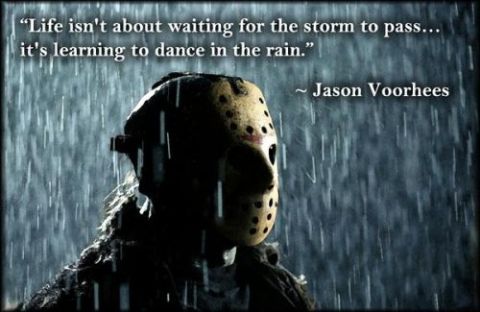
12 Things You May Or May Not Have Known About Friday the 13th!


As we all know, with one notable exception, the majority of the cast of the original Friday the 13th didn’t exactly go on to greater heights of stardom.  The movie may have made a lot of money but it didn’t lead to bigger roles for Laurie Bartram and Mark Nelson.  When the movie was released in 1980, Betsy Palmer was the best known member of the cast and, according to the book Crystal Lake Memories, the cast of Friday the 13th Part 2 used to joke that maybe the cast of the first film actually had been murdered in the woods because no one ever saw them again.

Of course, today, no one can watch Friday the 13th without saying, “Oh my God, Kevin Bacon’s wearing a speedo!” but, at the time he was cast as doomed Jack, he was just another struggling actor.  However, if things had gone as originally planned, today Bacon would not be the only respected actor with Friday the 13th on his resume.  When the film was in pre-production, director Sean Cunningham originally tried to get a star to play the role of Alice, the only camp counselor to make it out of Camp Crystal Lake alive.

Who was that star?

Sally Field.

The future multiple Oscar-winner was seriously pursued for the role of Alice.  She did not, as some sources claim, audition for the role.  Instead, she merely turned it down and went on to win her first Oscar for Norma Rae.  Once it became obvious that Field had no interest in going to Camp Crystal Lake, Cunningham decided to go with a cast of unknowns and Adrienne King was given the role of Alice.

Personally, I think that worked out for the best.  Not only was Adrienne King perfect for the role but the use of unknowns undoubtedly made the film more effective when it was released.  After all, everyone knows that a star is going to survive.  (That’s one reason why, when seen today, it’s still jarring to see Kevin Bacon get dispatched.)

Here’s a few more bits of trivia to make your Friday the 13th a good one:

2. After the success of Friday the 13th, Adrienne King was stalked by an obsessed fan and, when she was asked to return for 1981’s Friday the 13th Part 2, she requested that her role be as small as possible.  As a result, Alice showed up just long enough to be killed off.  Amy Steel replaced King as the film’s heroine.  Steel would later go on to star in another classic slasher film, April Fool’s Day.

3. Originally, 1982’s Friday the 13th Part 3 was envisioned with Steel returning to play Ginny.  However, Steel turned down the chance to return, leading to the filmmakers instead simply remaking the first film (in 3D!).  After being cast in the lead role, Dana Kimmel requested that the sex and drugs featured in the original script be toned down.  That’s just one of many reasons why many consider Friday the 13th Part 3 to be the worst film in the series.

4. Even if she didn’t return for Part 3, Amy Steel was instrumental in convincing her friend, actor Peter Barton, to appear in 1984’s Friday the 13th — The Final Chapter.  Barton’s likable performance as the handsome but definitely doomed Doug was a highlight of the film.  Another highlight was Ted White’s performance as Jason.  As opposed to the character he played, White once threatened to quit the film because he didn’t like the way the director was treating the film’s cast.

5. The working title for 1985’s Friday the 13th: A New Beginning was Repitition.  Having killed Jason at the end of The Final Chapter, Corey Feldman returned for a cameo that he shot at the same time that he was filming The Goonies for Richard Donner.  Along with the first film, this is the only one to not feature Jason Voorhees committing any murders (unless you count the ones that he committed in Tommy’s nightmare) and the film’s ending was specifically set up so that Tommy could take over Jason’s murderous ways.  However, the film’s disappointing box office reception led to Jason returning as a zombie in the next film.

6. With its intentional comedy and its emphasis on action over blood, 1986’s Friday the 13th: Jason’s Lives is a rarity in that it was a Friday the 13th film that actually got somewhat good reviews.  John Shepherd, who played Tommy in a New Beginning, was offered a chance to return to the role but turned it down, saying that the film’s went against his religious beliefs.  As a result, Thom Matthews was cast as Tommy.  Matthews also played the lead in another horror comedy, Return of the Living Dead.

7. 1988’s Friday the 13th Part VII: The New Blood was originally envisioned as being a cross-over with A Nightmare on Elm Street.  However, when Paramount (who held the rights to Jason) and New Line Cinema (who held the rights to Freddy) could not come to an agreement, the project was temporarily abandoned.  According to Crystal Lake Memories, the film’s executive producer, Barbara Sachs, wanted Friday the 13th Part VII to be the first Friday the 13th to win an Academy Award and came with an extremely ambitious storyline that she envisioned being directed by none other than Federico Fellini.  Cooler heads prevailed and, instead, The New Blood found Jason battling a young woman with psychic powers.

8. The initial working script for 1989’s Friday the 13th Part VIII: Jason Takes Manhattan was entitled “Ashes to Ashes.”  The film’s anemic box office convinced Paramount to sell the franchise to New Line Cinema.

9. After New Line purchased the franchise, the first film’s director, Sean S. Cunningham, returned to produce 1993’s Jason Goes To Hell: The Final Friday.  Much like The New Blood, this was originally envisioned as being a Freddy vs. Jason film but that plan was, again, abandoned.  Freddy Krueger does make one brief appearance, when his clawed hand appears and drags Jason’s hockey mask to Hell.  Director Adam Marcus also included a shot of a book that was meant to be the Necronomicon as an attempt to link Jason to the Evil Dead universe as well.  Because New Line did not own the rights to Evil Dead, Marcus did not tell them what he was planning to do and instead asked Sam Raimi if he could borrow the prop.  Raimi thought it was a great idea.  Less amused was Tom Sullivan, the man who actually created the prop and who received no money for its use in Jason Goes To Hell.

10. The 8 year gap between the release of Jason Goes To Hell and 2001’s Jason X was a result of Freddy vs. Jason being stuck in development Hell.  Jason X was largely produced to keep audiences from forgetting about Jason.  Screenwriter Todd Farmer appeared in Jason X, playing a character named Dallas (a nod to the original Alien).

11. After spending two decades in development, 2003’s Freddy vs Jason finally brought the two infamous serial killers together.  Kane Hodder, who had played Jason in every film since New Blood, was not asked to return for Freddy vs. Jason, supposedly because the film’s director wanted Jason to tower over Freddy and it was felt that Hodder was not tall enough.  At one point, Freddy vs. Jason was envisioned as ending with Pinhead appearing and defeating both of them but New Line could not secure the rights to the Hellraiser character.

12. 2009’s Friday the 13th was meant to reboot the series.  Perhaps the less said about it, the better.  Plans for a sequel to the reboot are currently trapped in the same development Hell that once imprisoned Freddy vs. Jason.

Happy Friday the 13th!