96 years ago today, Marlon Brando was born in Omaha, Nebraska.
Unfortunately, Brando is one of those actors who, later in his life, became better known for his eccentricities than for his performances. Though Brando never stopped being a good actor, it’s undeniable that some of his later performances reveal an actor who often did seem to be a bit bored with the films that he was making. It’s sad to think that there’s people out there who might only know Brando because they stumbled across The Island of Dr. Moreau on Starz at like 3 in the morning.
Regardless of the reputation that he developed in his later years, Marlon Brando was one of the best actors of all time. His early performances are still exciting to watch and, even when his work was becoming progressively more eccentric in the 70s and 80s, he still continued to give performances that could grab your attention and leave you surprised by their power.
Of course, my favorite Brando film remains The Godfather so it only makes sense to share a scene from that film on Brando’s birthday. In this beautifully acted scene, Tom Hagen (Robert Duvall) informs Don Vito (Brando) that Sonny has been killed. Of course, first, Tom has to have a drink. This scene might not be as iconic as some of the other scenes in The Godfather but it’s wonderfully performed by both actors and it reminds us that The Godfather is powerful not because it’s a crime film but because it’s a film about family.
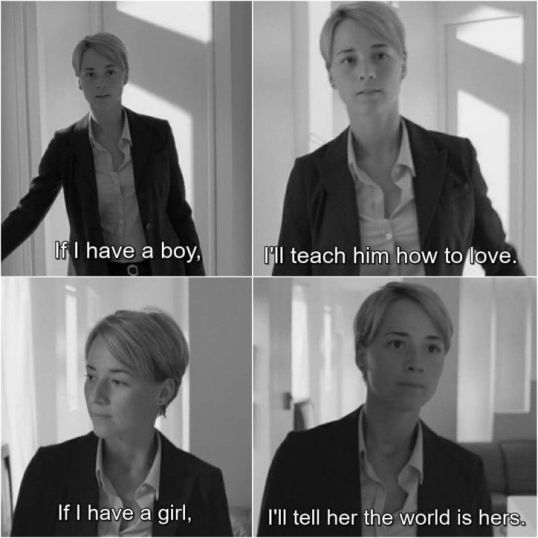
On a snowy day in Montreal, a nameless young man (Maxim Gaudette) wanders about a cramped apartment. He loads a rifle. He drives to his mother’s house and leaves a note in her mailbox. He goes to École Polytechnique, the engineering school where he’s a student. Leaving the rifle in his car, he walks around the school. He stares at the students in the cafeteria, observing them with a hatred that they might not notice but which we’ll never forget. He goes back outside. He sits in his car while the snow continues to fall.
As we watch him, we hear him reading the suicide note that he’s written for the authorities. He talks about his belief that the world has been destroyed by feminists. He writes that he’s offended that he is expected to compete with women and that women have an unfair advantage in both the academic and the professional world. He brags about the good grades that he gets, despite the fact that he rarely attends school. He says that he’s never fit in with the world and that woman are to blame. He complains about women competing at the Olympics, showing that he views everything through the filter of his own misogyny. At one point, he apologizes for not being as eloquent as he believes he could be. He explains that he only had 15 minutes to put down his thoughts.
Inside the school, another engineering student, Jean-Francois (Sébastien Huberdeau ) struggles to complete an assignment before his next class begin. He sits in the cafeteria with open books scattered across the table in front of him. Later, we’ll see Jean-Francois running through the hallways of the school, trying to warn the other students that something terrible is happening. He’ll run to a security officer and ask him to call the police, just to be given a somewhat confused look in response. Later still, we’ll see Jean-Francois outside of the school, visiting his family and haunted by guilt.
One of Jean-Francois’s classmates, Valerie (Karine Vanasse), goes to a job interview where the older male interviewer states that he’s shocked that Valerie wants to go into engineering after graduation. Most women, he says, don’t do that. It’s a profession that requires a lot of hard work and it’s not ideal for someone who wants to start a family. Stunned, Valerie lies and says that she doesn’t have any desire to start a family. Throughout the film, we watch as Valerie stop several times at her locker so that she can switch shoes. When she has to deal with stuff like her job interview, she puts on high heels that are obviously very uncomfortable for her. When she just wants to go to class, she has to stop and switch to shoes that she can actually walk in and, at that moment, I knew exactly what she was feeling. Every woman watching will instantly know what she’s going through. Later, she complains to her friend and roommate, Stephanie (Evelyn Brouchu), about how condescending the interview was. Stephanie tells her not to obsess on it.
Outside, the snow continues to fall in the night, creating a bleakly cold landscape and making Montreal look like a barren and bombed-out wasteland.
Later, we’ll see Jean-Francois arriving late for a class. Valerie and Stephanie are already in the class, listening to the lecture. Not long after Jean-Francois claims his seat, the unnamed man steps into the room, carrying his rifle. He orders the males to gather on one side of the room and the women on the other….
These are the moments and images that stick with you, long after the 2009 Canadian film, Polytechnique, concludes it’s brief 77-minute run time. It’s a haunting film, definitely not one to watch if you’re already feeling depressed. What makes it especially disturbing is that it’s based on a true story. On December 8, 1989, an Algerian-Canadian student opened fire at École Polytechnique in Montreal. (The film does not name the killer and I won’t either, because to name him without naming his victims does a disservice to their memory. Those who really want to know his name are free to look it up on Wikipedia.) As seen in the film, the gunman specifically targeted women and even ordered all of the males in the classroom to leave before he opened fire. Also, as seen in the movie, the men did just that, with not a single one trying to stop the gunman or warn others until they were already out of the classroom. The character of Jean-Francois stands in for all of the men who were haunted by their decision to leave. As I watched the film, I had mixed feelings about the men who left that classroom. Yes, the gunman was armed but there were enough men in that classroom that it’s hard to justify the fact that not a single one attempted to intervene.
Before shooting himself in the head, the gunman killed 14 women and wounded 10 women and 4 men. It remains the deadliest mass shooting in Canada’s history. When the police found his body, they also found a suicide note in his pocket, the same note that we hear read at the beginning of this film. In memory of the lives lost, the anniversary of the massacre has been commemorated as the National Day of Remembrance and Action on Violence Against Women.
Poltytechnique, which is dedicated to those who died, was directed by Denis Villeneuve, long before he would come to America and make a name for himself with films like Sicario, Arrival, and Blade Runner 2049. Polytechnique is filmed in harsh black-and-white and Villeneuve skips around in time, often showing us the consequences of the killer’s actions before showing us the actions themselves. It’s an approach that reminds us that the Montreal Massacre and all other acts of violence are events that will forever haunt us. The past will always cast a shadow over both the present and the future.
As I said, it’s not a happy film but perhaps not every film needs to happy. With Polytechnique, Villeneuve mourns for the lives lost on that day in 1989 and he encourages us all to try to create a better world for the future.
If there’s anything that I’ve discovered over the years, it’s that cinema is truly a universal language.
I’ve lost track of the number of film fans with whom I’ve bonded with over social media. Some of them live near me and some of them live very far away but the one thing that we all have in common is that we all love movies. For instance, I have a friend in India who loves Sofia Coppola almost as much as I do. Meanwhile, I’ve got friends in the UK who are as crazy about horror movies as I am and my friend Carlo in Italy shares my total disdain for Avatar. In short, films bring us together.
This month, I want to celebrate that fact here on the Shatered Lens. Along with my usual reviews, I’ll be taking a look at some films that were produced outside of the United States and far away from the Hollywood studios. Some of these films will be great and some of them probably won’t. Some of these films may be well-known and, again, some of them won’t be. What they all have in common is that they’re out there for discriminating viewers who aren’t scared of having to read a subtitle or two.
I want to start things off by looking at a French film, La fille au bracelet (The Girl With A Bracelet).
This low-key but thought-provoking courtroom drama opens with a family enjoying a day at the beach. We watch them from a distance and they seem almost like the perfect family unit. And yet, that perfection puts us ill at ease. We’ve seen enough movies to know that any family that appears to be perfect is going to be the exact opposite and, even more importantly, director Stéphane Demoustier knows this. Therefore, we’re not surprised when the police suddenly show up. We are perhaps a little bit more surprised when the police lead away not the mother or the father but instead, the teenage daughter, Lise (Melissa Guers).
The film jumps forward two years. Lise has been under house arrest ever since that day at the beach and is required to wear an ankle bracelet, so that the authorities can keep track of her. Lise has been charged with murdering her best friend, Floria. While her father (Rosdchy Zem) insists that Lise is innocent and gets involved in her defense, Lise’s mother, Celine (Chiara Mastroianni), has thrown herself into her work and says that she probably won’t even be able to attend her daughter’s trial.
As for Lise, she refuses to show remorse for a crime that she says she didn’t commit and she refuses to apologize for a lifestyle for which she feels no shame. As the proceedings begin, it becomes apparent that Lise is as much on trial for her perceived coldness and lack of conformity as for anything else. Much of the evidence against Lise seems weak. Lise and Flora had a fight shortly before the murder and Lise’s DNA was found on Flora’s body. Lise claims that she and Flora made up on the same night that Flora was found dead. While her parents listen, Lise’s sexual history is clinically dissected in the courtroom, suggesting that she is as much on trial for not conforming to society’s expectations as she is for any murder that she may have committed. Is Lise on trial because of the evidence or because she’s a member of generation that has been vilified by its elders? Is she on trial because she’s guilty or is she on trial because she’s a young woman who is not reacting the way that society expects women to react?
And yet, even though you want to be on Lise’s side, the film keeps you off-balance. Is it true that Lise is simply mourning her friend in her own way or is it possible that Lise is actually a remorseless murderer? At times, it seems like either one of the two could be true. The film ends on a deliberately ambiguous note, one that may leave some frustrated but which will also leave you thinking.
The Girl With A Bracelet requires some patience. The film plays out at a deliberate and methodical pace. However, your patience will be rewarded with a fascinating mystery that will keep you thinking. The cast is excellent, especially Anais Demoustier as the prosecutor. (Given the film’s theme of generational conflict, it’s interesting that the prosecutor is closer, in age, to Lise’s generation while Lise’s defense attorney is from her parent’s generation.) Melissa Guers makes her film debut in the role of Lise and gives an excellent and intriguing performance as an enigmatic character who always seems like she should be more sympathetic than she actually is.
I was fortunate enough to see The Girl With A Bracelet in Paris. (Two weeks later, and four days after Jeff & I returned home to the U.S., the entire world shut down. It’s strange to think about it now.) It’s a film that’s stuck with me and hopefully it’ll make it’s way over to the States sometime soon.
I know I’ve probably shared this scene in the past but I’m going to share it again because today is Lon Chaney’s birthday! 137 years ago, today, one of the greatest actors of all time was born in Colorado Springs, Colorado. He was the man of a thousand faces and he brought a lot of life to silent cinema.
This scene is from the 1925 version of Phantom of the Opera! That’s Lon as the phantom and Mary Philbin as Christine. In honor of the anniversary of Lon Chaney’s birth, we invited you to enjoy a scene that I love…..
This scene, incidentally, was originally planned to be shot in color. Unfortunately, the lights that were (back then) necessary to film in color were too hot and they caused Chaney’s makeup to melt. So, those plans were scrapped and then scene was shot in black-and-white but, personally, I find the black-and-white to be more effective. I’ve seen a colorized version of this film and it just wasn’t as effective.
I’ve been going back and forth on whether or not I should even bother to continue my monthly Oscar predictions. With the current Coronavirus pandemic, it’s not unreasonable to wonder if there will even be an Oscar ceremony next year. Many completed films have been taken off the schedule so that they can be released at a time when people aren’t scared to leave their house. Meanwhile, production on several other films — some of them expected to be Oscar contenders — has been suspended. New films are continuing to premiere on the streaming services but the Academy has always insisted that films also play in a theater if they want to contend for an Oscar. That’s going to be difficult with the majority of the country’s theaters currently being closed.
Unlike a lot of people, I’m not necessarily apocalyptic or even that pessimistic in my outlook. I think that, one way or another, we will eventually be able to leave our homes again and that at least some of the movie theaters will reopen. So, I think that we will be able to have some sort of Oscar ceremony. For that reason, I’m going to make my predictions for March but, needless to say, take all of these with an even bigger grain of salt than usual.
If you’re curious to see what my Oscar thinking was in the months before the world went crazy, check out my predictions for January and February!
(I’ve tried to take the fact that the Coronavirus led to the suspension of many ongoing productions while making out my list below. As far as I know, filming wrapped on all of the films listed below before the outbreak.)
Best Picture
Ammonite
Annette
Hillbilly Elegy
The Father
Minari
News of the World
Nomadland
On the Rocks
Tenet
West Side Story
Best Director
Isaac Lee Chung for Minari
Paul Greengrass for News of the World
Christopher Nolan for Tenet
Steven Spielberg for West Side Story
Florian Zeller for The Father
Best Actor
Tom Hanks in News of the World
Anthony Hopkins in The Father
Bill Murray in On the Rocks
Gary Oldman in Mank
Will Smith in King Richard
Best Actress
Amy Adams in Hillbilly Elegy
Clare Dunne in Herself
Jennifer Hudson in Respect
Frances McDormand in Nomadland
Kate Winslet in Ammonite
Best Supporting Actor
Tom Burke in Mank
Richard E. Grant in Everybody’s Talking About Jamie
Well, here we are at the end of both March and the 18 days of paranoia. We started things off with a review of The Flight That Disappeared and now, we end things with a look at the 1954 BBC production of Nineteen Eighty-Four.
“Orewllian” is a term that gets tossed around a lot nowadays, largely by people who the real George Orwell probably would have viewed rather dismissively. Ever since the election of Donald Trump, for instance, it’s become rather common for certain people of twitter to say that “Orwell was right” or that we’re living in an “Orwellian nightmare.” I remember after Trump’s press secretary blatantly lied about the size of the crowd at the inauguration, there was even a commercial that featured Zachary Quinto giving a hilariously overwrought reading of the final passage of George Orwell’s 1984. “He …. LOVED …. BIG …. BROTHER!” Quinto declared while staring grimly at the camera.
Interestingly enough, many of the same people who complain about Trump’s lies being Orwellian never used the term during the previous 8 years, when we were being constantly told that a permanent recession was actually a sign of a strong economy and that if people liked their doctor, they could keep them. The fact of the matter is that, for a lot of people, “Orwellian” is just a term that they use whenever a politician from the other side does something that they dislike. It makes you wonder how many of them have actually read 1984 because, if they had, they would surely know that — if we truly were living in the world depicted in Orwell’s novel — no one would be allowed to acknowledge it and, in fact, Orwell and his books would have vanished down the memory hole. Just the act of saying that we’re living in 1984 without getting sent to a reeducation camp is proof that we’re not (or, at least, we’re not just yet).
That’s not to say that 1984 isn’t an important work of literature. In fact, it’s probably one of the most important books ever written, which is why it does it such a disservice to glibly toss around the term Orwellian. Even if we aren’t living in Orwell’s world right now, it’s probably easier than ever to imagine a scenario where we eventually could. The Coronavirus pandemic, for example, is just the sort of thing that could lead to the people accepting the idea that the government is meant to be a Big Brother and that those who disagree deserve to be reported for the good of the people. It’s easy to imagine a future where people believe that history started with the Coranavirus and that everything that happened before the pandemic was just a hazy rumor, like Europe before the Renaissance. As such, even if the term Orwellian is overused, 1984 is still a book that needs to be read and understood.
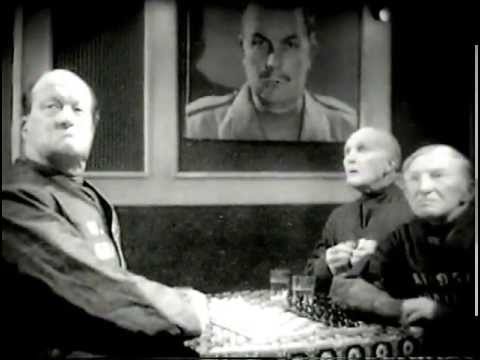
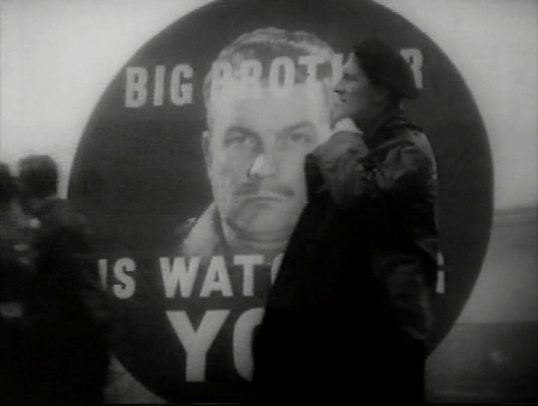
This version sticks closely to Orwell’s novel, though it downplays the book’s sexual themes. (This is not surprising considering that this version was made for 1950s television.) Though it condensed Orwell’s story, it hits all of the important points. Winston Smith (Peter Cushing) is a member of the Outer Party who works at the Ministry of Truth and who lives a rather drab existence in London, “the chief city of Airstrip One.” He is a citizen of Oceania, which has always been at war with Eurasia. Winston lives under a system of government called Ingsoc and every day, he spends two minutes hating a mysterious figure named Goldstein. All around him are posters of Big Brother, watching him and judging.
On the outside, Winston is a loyal party man but on the inside, he has questions and doubts. How can he not when he works for the Ministry of Truth? His job is to change history to reflect whatever the current version of it may be. Some of his co-workers, like Symes (Donald Pleaseance), are openly cynical about what they do. Others, like O’Brien (an imposing Andre Morell), seem as if they might be sympathetic to Winston’s doubts but Winston cannot be sure. Meanwhile, Winston has found himself obsessed with Julia (Yvonne Mitchell), who is a member of the Anti-Sex League but who might have doubts of her own. (Then again, she could also be a member of the Thought Police.)
When Winston is finally arrested for being a thoughtcriminal, it leads to a harrowing interrogation where he learns that truth doesn’t matter, the numbers add up to whatever the party says that they add up to, and that no one is strong enough to survive the ordeal of Room 101.
The BBC adaptation of Nineteen Eighty-Four was, for the most part, a live performance with a few filmed scenes inserted into the action. Still, the fact that the majority of the actors were delivering their lines lives brings a certain immediacy to the film. Everyone seem nervous and edgy. In real life, that could have been due to the fear that they would miss a line but it also feels appropriate for people who spend every day of their life being watched and judged by Big Brother. The entire production does an excellent job of creating a world where every minute is suffused in an atmosphere of dread and fear. From the minute we first see him, Winston seems to know that he’s doomed. The fact that Big Brother would rather torture and brainwash him rather than just make him disappear just makes things worse.
The production is full of actors — like Cushing, Morrell, and Pleasence — who would go on to become leading figures in the British horror industry and all of them do an excellent job bringing Orwell’s horror to life. Peter Cushing, with his mix of intelligent features and neurotic screen presence, makes for the perfect Winston Smith and Andre Morrell is just as perfectly cast as the fearsome O’Brien. The scene in which Winston is forced to confront Room 101 is still a harrowing one and this film perfectly nails the novel’s famous ending, doing so in a low-key manner that’s far more effective than the overwrought approach that other adaptations have brought to the final scene.
Nineteen Eighty-Four can currently be viewed on Prime. The print is a bit grainy but that only adds to the film’s power. It comes to us like a hazy vision of the future.
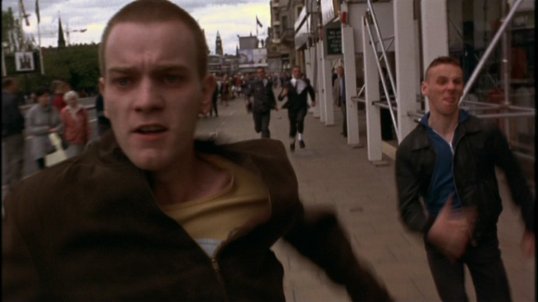
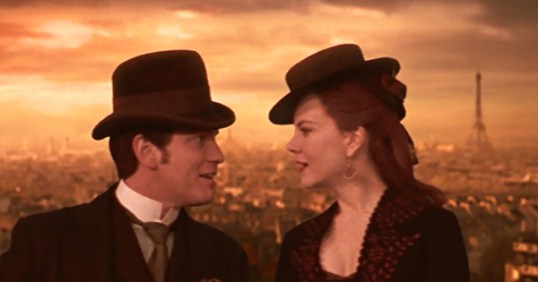
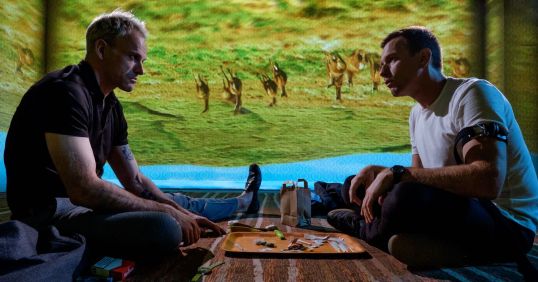
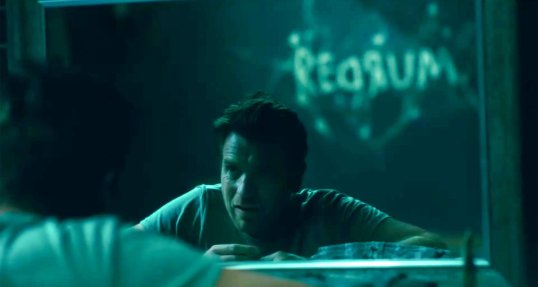
4 Shots From 4 Films is just what it says it is, 4 shots from 4 of our favorite films. As opposed to the reviews and recaps that we usually post, 4 Shots From 4 Films lets the visuals do the talking!
Today is not just Christoper Walken’s birthday! It’s also the birthday of another one of my favorite actors, the only and only Ewan McGregor! And you know what that means. It’s time for….
Today is Christopher Walken’s 77th birthday so it seems appropriate to share a Walken scene that I love. Without further ado, here is the classic gold watch speech from the 1994 film, Pulp Fiction:
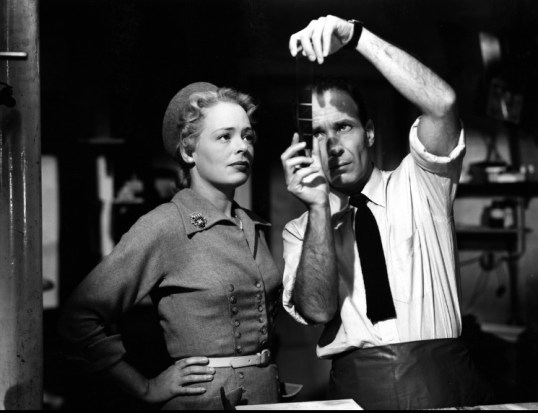
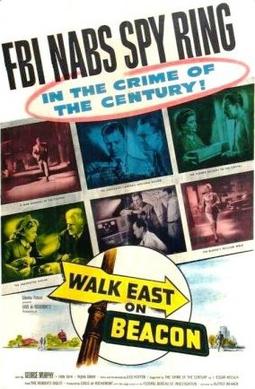
From 1952 comes Walk East On Beacon, a mix of spy thriller and film noir that highlights the efforts of the FBI to expose and take down a communist sleeper cell working right in the United States of America! (Cue the dramatic music.)
One need only check out the opening credits to see what type of film Walk East On Beacon is going to be. We’re told early on that the film was “suggested” by a Reader’s Digest article that was written by none other than the director of the FBI, J. Edgar Hoover. The title of that article was “The Crime of the Century: The Case of A-Bomb Spies” and it dealt with the FBI investigation that led to the arrest, conviction, and controversial execution of two Russian spies, Julius and Ethel Rosenberg. I haven’t read the article but judging by the fact that it was written by Hoover and published in Reader’s Digest, I think it’s fairly safe to guess that it wasn’t particularly concerned with things like protecting the First Amendment, civil rights, or the freedom to hold any ideological belief regardless of how unpopular it may be with the general public. (Of course, I would be remiss if I didn’t also point out that most historians now agree that, despite what many on the Left claimed over the decades, the Rosenbergs were indeed guilty of being spies and they played a very central role in the Russians discovering the secret to making atomic bombs.)
In the film, George Murphy plays an FBI agent named Jim Belden. According to J. Hoberman’s book, An Army of Phantoms, the FBI specifically requested that Murphy be cast in the lead role because Murphy was an outspoken anti-communist. (Murphy would also later be elected to the U.S. Senate.) Project Falcon, a super-secret U.S. program, has been infiltrated by spies and Belden has been assigned to track down and capture their ringleader. He does this by using a number of techniques that were probably considered pretty high tech back in 1952, stuff like hidden cameras and secret microphones. He even brings in a group of lip readers to watch silent footage of two possible spies speaking so that they can tell him what the spies are talking about. You don’t have to worry about a thing with Jim Belden on the case!
As for the members of the spy ring, they’re a mixed bunch. Some of them are just bad people who have betrayed their country just because it’s the evil thing to do. Others are people who idealistically joined the Communist Party years ago because they wanted to help their fellow man and, instead, they’ve now found themselves forced to spy against their country. Prof. Albert Kafer (Finlay Currie) doesn’t want to betray America but he’s been told that his son will be executed if he doesn’t cooperate. Kafer goes to the FBI.
As you can probably guess, this is not a particularly subtle film. The communists are all evil and the FBI is doing its best to protect the loyal citizens of America and, if you’re going to question the legality or the ethics of their methods …. well, why don’t you just move to Russia and tell Stalin about it, okay!? Interestingly enough, the film is shot like a film noir, with an emphasis on shadows and dark streets and desperate men trying to escape their fate. But it has none of the moral ambiguity that one usually expects to find in a film noir. Instead, it presents a thoroughly black-and-white view of the world. All of the communists are either neurotic or cruelly evil while the FBI is professional, bland, and rather humorless. There’s really only one moment — where a blackmailed spy admits to his wife that he’s been trapped into betraying his country — where the film seems to come to life. Otherwise, this is a rather dry film, one that even comes with officious voice over narration.
While the film may not work as a thriller, it is somewhat fascinating as a historical document. The film was shot on location in Boston and, while I realize this may just be the history nerd in me talking, it’s still somewhat interesting to see what an major American city looked like in 1952. (It looks remarkably clean.) As well, the film really delves into the minutia of stuff that today seems mundane but which probably took audiences by surprise in 1952, stuff like wiretapping, drop points, and how even a condolence card could be used to send a secret message. If nothing else, the film’s portrait of a world where anyone — from a cab driver to an atomic scientist — could be a spy certainly provides a interesting snapshot of 1950s paranoia.
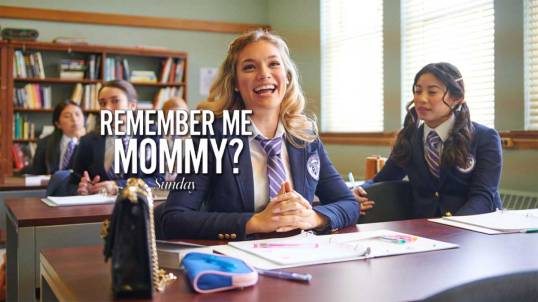
Last night, I watched the premiere of one of the greatest Lifetime films of all time, Remember Me, Mommy?
Why Was I Watching It?
It was on Lifetime. I’ve been ordered to shelter in place. What else could I do?
Then again, even if I wasn’t on lockdown, I probably still would have watched it because this is one of those Lifetime films that takes place at a private school and features a teacher with a secret in her past and those are typically my favorite Lifetime films. There’s just something irresistible about the mix of super snobs and dark secrets!
What Was It About?
Elena Walker (Sydney Meyer) is the newest student at Clark Academy! She’s a scholarship student, which means that she has to deal with a lot of hazing from all of the rich kids. It turns out that most of the students at Clark Academy have known each other for their entire lives so Elena is definitely an outsider.
However, fear not! Elena loves to write and the school’s creative writing teacher, Rebecca (Natalie Brown), is a former scholarship student herself. In fact, Rebecca is so impressed with Elena’s essays that she even arranges for Elena to meet with an Ivy League recruiter. So …. yay for the scholarship students, I guess.
Except …. well, Elena may not be who she claims. In fact, it turns out that Elena has a bad habit of killing people who get on her nerves. It also turns out that it’s not just a coincidence that Elena showed up at Clark Academy and immediately went out of her way to bond with Rebecca.
What is Elena’s plan? What is Rebecca’s secret? I’m not going to spoil anything, especially since the title of the film already does that.
What Worked?
It all worked!
Seriously, this is one of the best Lifetime films that I’ve seen in a while. Though you’ll probably guess Rebecca’s secret long before the film actually reveals it, Remember Me, Mommy? is still a lot of fun. In the tradition of the best Lifetime films, Remember Me, Mommy? fully embraces the melodrama. Elena never stops plotting, Rebecca never stops teaching, and the pace never slackens.
And I have to admit that, as evil as Elena was, it was hard not to like her. She was an agent of chaos, dropped in the middle of a bunch of complacent snobs and she reacted by disrupting the status quo. Of course, it would have been nice if she could have resisted the temptation to kill but still….
What Did Not Work?
It all worked!
“Oh my God! Just like me!” Moments
Like Elena, I always got along with my creative writing teachers. They were some of my favorite people.
At one point in the film, Elena is accused of plagiarism and I have to admit that brought back some memories of high school math class. I’ve always sucked at math. It’s just not my thing. Fortunately, I had an older sister who had taken the class a year before me and who had saved all of her tests so, whenever I had to take a test, I would just copy all the answers and …. well, technically, I guess I was cheating. My plan, if I was ever caught, was to argue that I wasn’t so much cheating as I was just plagiarizing my sister’s answers. Fortunately, I never got caught so I didn’t actually have to find out whether or not that argument would have worked.



 Through the Shattered Lens