4 Or More Shots From 4 Or More Films is just what it says it is, 4 shots from 4 of our favorite films. As opposed to the reviews and recaps that we usually post, 4 Shots From 4 Films lets the visuals do the talking!
In 2012’s Abel’s Field, Kevin Sorbo plays the role of Abel. He’s the new groundskeeper at a small town high school, one of those places where football is king. No one in town really seems to know much about Abel and that’s fine with Abel. He keeps to himself and he prefers not have long conversations with people. He works hard, he tries to stay out of trouble, and he spends a lot time writing in a notebook on which he keeps a very close eye.
And let’s give credit where credit is due. Kevin Sorbo actually gives a very good performance as Abel. I know that some people will snicker when they read that. At this point, Kevin Sorbo is so associated with a certain type of politics and a certain type of religion and a certain type of movie that merely mentioning his name will send some self-appointed cultural critics into a frothing rage. That said, Sorbo is one of the better actors to have found a niche in the faith-based film industry and he does a good job playing the role of Abel. He’s convincing as a man who doesn’t want to get close to anyone but who is still kind enough to reach out to people who need help.
Seth McArdle (Samuel Davis) is someone who could definitely use some help. A 17 year-old high school senior, Seth has had to step up and take on an enormous amount of responsibility. With his father having vanished and his mother having died, Seth is taking care of his two younger sisters. He attends high school, he works two jobs, and then when he finally returns home, he just hopes that he has enough money to pay the babysitter.
When Seth yells at the arrogant high school quarterback after the latter runs a stop sign and nearly hits Seth’s sisters, the entire football team starts to target Seth. The team is struggling on the field this season so they decide to take their frustrations out on Seth. Seth can’t even walk down the school hallway without the team attacking him. Because Seth fights back, he’s the one who ends up getting in trouble. Seth is told that he has two options. He can either help Abel install a new sprinkler system for the football field or he can just drop out of school.
(Wow, that’s harsh.)
You can guess where this is going. After an awkward beginning, Abel eventually becomes a mentor to Seth. Abel and Seth discover they have something in common. They’re both down-on-their luck and their both kind of miserable. When the bank threatens to foreclose on Seth’s house, Abel is there to try to keep Seth from breaking the law in order to pay. They share a lot of pain but they also share a common faith and, eventually, Abel even shares the dark secret from his past. How much that secret surprises you will depend on how much you know about the stories of the Biblical Cain and Abel and Seth.
Abel’s Field is a surprisingly effective film. Yes, it’s a religious film but it’s nowhere near as preachy as some of the other films of the genre that I’ve seen. The characters are portrayed as being flawed individuals who are trying to do their best in difficult situations. Both Davis and Sorbo give good strong performances. Believe it or not, it’s a good movie.
1957’s Final Curtain is a short, 22-minute film in which a mysterious man (Duke Moore) wanders around a creepy and seemingly abandoned theater. While Dudley Manlove (who played Eros the Alien in Plan Nine From Outer Space) provides narration, the man sees many strange things in the theater. What is real and what is merely a hallucination? Watch to find out!
Final Curtain was envisioned, by director Edward D. Wood, as being the pilot for a horror anthology series. Though none of the networks were interested in buying Wood’s proposed series, Wood considered Final Curtain to be his finest film and it certainly is a bit more atmospheric than the typical Wood film. The role of the mysterious man was written for Bela Lugosi but, after Lugosi passed away, Duke Moore was cast in the role instead.
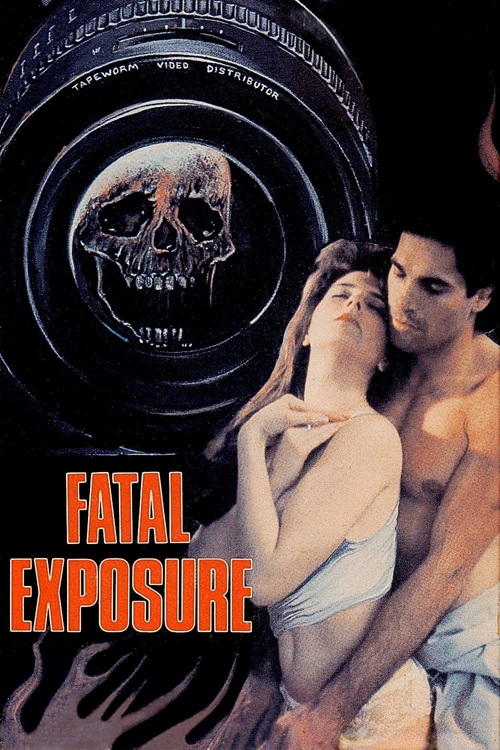
In his mansion in Alabama, fashion photographer Jack B. Rippington (Blake Bahner) kills people in ways that are cruel and grotesque. He does it with a smile on his face and a spring in his step, and he always remembers to take pictures first because, I guess, he really does take the whole fashion photographer thing seriously. He has standards. He’s a professional. When he meets and starts dating a model named Erica (Ena Henderson), she soon finds herself unwittingly leading victims to their doom.
Why is Jack B. Rippington so obsessed with murdering anyone who comes by his house? Well, you could say that it runs in the family. He’s the great-grandson of Jack the Ripper. He informs the audience of this. Myself, I have to wonder if Rippington is a family name or if it’s just his nom de meurtre. If Jack the Ripper’s last name really was Rippington, that would be a hell of a coincidence, and it would also show that Scotland Yard really wasn’t doing a very good job of investigating the crimes at Whitechapel. I mean, why did they devote so much time to investigating poor Montague John Druitt when there was a guy named Rippington wandering around?
Of course, it’s also possible that Jack the Ripper moved to the United States, had a daughter, and then she married someone named Rippington. Still, that seems like it would be an amazing coincidence.
(For the record, the real Jack the Ripper was some guy that you’ve never heard of and who probably died without ever telling anyone the truth. The fact that he was never captured would seem to indicate that the police were investigating the wrong suspects. And don’t start in with any of that royal conspiracy nonsense either. Honestly, that’s one of the silliest theories that I’ve ever heard.)
Anyway, where was I? Oh yeah, Fatal Exposure. Fatal Exposure is a shot-on-video epic that has some surprisingly effective gore effects. Between burning people with acid and chopping off their heads, Jack B. Rippington really gets into his work, and the results are often difficult to look at. If I were to compare this to any other film, it would probably be William Lustig’s Maniac, which featured Joe Spinell playing an equally homicidal photographer whose crimes seemed to owe more than a little to Jack the Ripper. Of course, Jack B. Rippington is much more handsome than Joe Spinell was in Maniac. If Maniac was a plunge into darkness and a trip to the realm of absolute zero, Fatal Exposure tries to be a bit of a comedic romp. Jack B. Rippington may be a murderer, but he also enjoys talking to the audience. In its use of dark humor and its breaking of the fourth wall, the film has quite a bit in common with Lucio Fulci’s Touch of Death.
There’s not really much of a plot to Fatal Exposure. Jack B. Rippington takes pictures of women in lingerie. He kills anyone who comes to the house. Erica eventually gets suspicious. But director Peter B. Good keeps the action moving, and it looks surprisingly good for a SOV film. (Good was best-known as a cinematographer.) Blake Bahner gives a good performance as Jack B. Rippington. It’s not a film for everyone, but, at the very least, it feels like a real movie. That puts it ahead of most SOV productions.
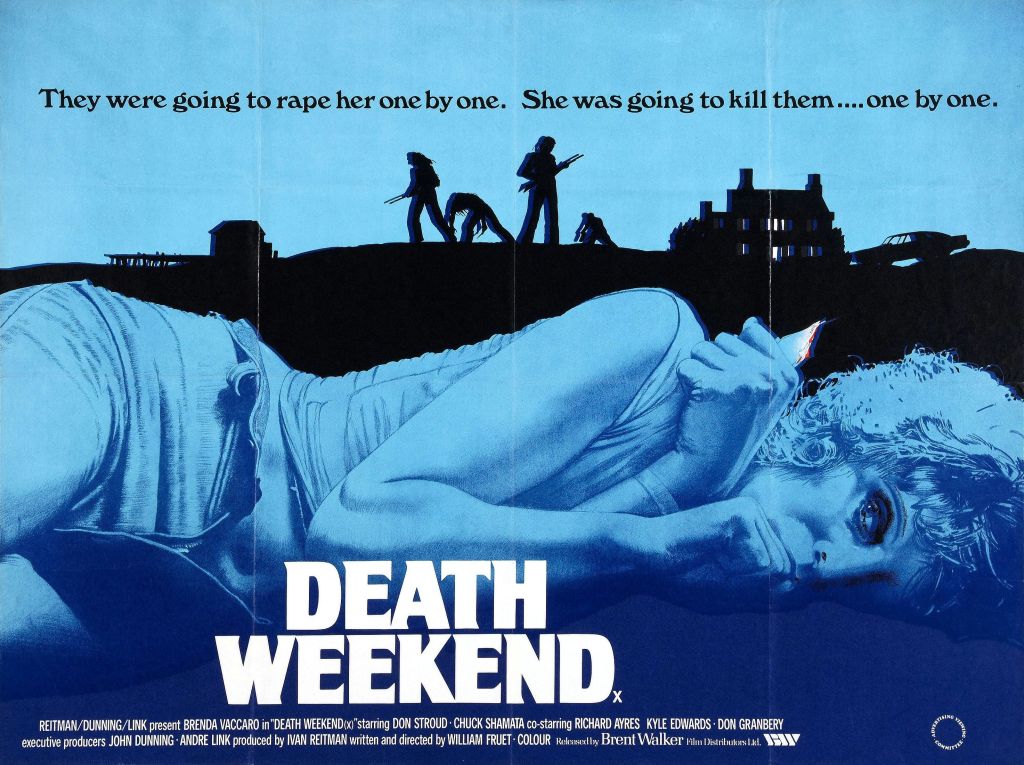
With October being a fun month for horror, I’ve been searching for some scary movies that I’ve never seen before. As I was browsing the horror genre on Tubi the other day, I came across this little Canadian movie called DEATH WEEKEND. Also known as “The House by the Lake,” I noticed it has a simple story, a solid cast and a short running time. I decided to give it a shot.
The movie opens with a playboy dentist named Harry (Chuck Shamata from DEATH WISH 5) and his fashion model girlfriend Diane (Brenda Vaccaro) driving out to his countryside home for a weekend getaway. While on the way, they cross paths with a group of crazy, drunk guys in a fast car, led by Lep (Don Stroud), and end up engaging in a dangerous game of road rage. They’re finally able to give them the slip, but they’ve made some enemies who are determined to find them and get even. When they track the couple to the home, the weekend is now set for death!
I have to admit I was very uncomfortable with this one from the very beginning. The guys are truly awful. Lep and the drunken thugs terrorize the couple on the road for no other reason than they can. And when the couple gets away, with a woman behind the wheel, no less, they use this as an excuse to track them to the home, and this is where things get really disturbing. They are cruel, vicious people, and the movie doesn’t give us any more information about them. They just seem to enjoy rape and murder. This nihilistic behavior seemed to go on and on and was hard for me to watch.
There’s no hope for Harry, either. He had lied to Diane about the entire weekend. They were supposed to be there with other couples, but Harry had set the whole thing up for them to be alone just so he could get laid. What a jerk! And when the thugs take over, he’s a perfect coward much more worried about his safety and his property than he is about Diane. I can understand being scared and wanting to survive, but he’s revealed as a completely selfish person and about as unlikable as it gets.
The only person who has a shred of humanity in this film is Diane. Of course, this being a 70’s movie, she’s terrorized, abused, and raped. I know I may be coming off as a hypocrite, because I love Charles Bronson and his DEATH WISH franchise notoriously features brutal scenes of rape. Well, those scenes are sickening to me, and I don’t like to watch them. And I didn’t like watching this one either. This movie seemed to revel in cruelty for the sake of cruelty and nothing else. I won’t say that I didn’t enjoy it when she finally gets a chance to get some revenge, but I wish the movie had given us more time to enjoy it. After everything she goes through, I wanted a little more satisfaction out of seeing her fight back. I will give the movie props for one impressive throat slash death, though.
I did think that the actors were fine in their various roles. Don Stroud was effectively crazy as the lead murderer / rapist, Chuck Shamata made me really dislike his lecherous liar, and you can’t help but pull for Brenda Vaccaro after what she goes through. But at the end of the day, I can’t say that I enjoyed the movie that surrounded them very much. This movie presented relentless cruelty for most of its run time before finally giving Diane a few minutes to try to get some payback. Not only did the movie make me uncomfortable, it also left me feeling unsatisfied.
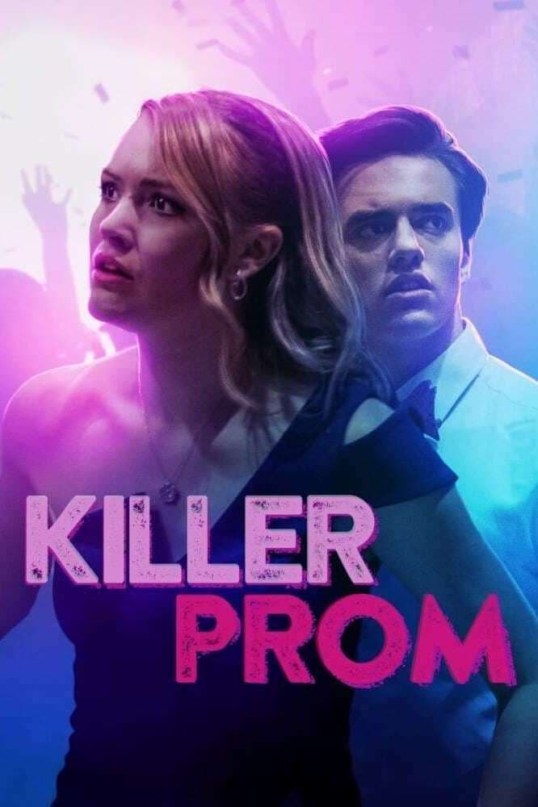
In 2020’s Killer Prom, Yvonne Zima plays Sienna. Poor Sienna is desperately struggling with her life. She has a cheap apartment that she still can’t really afford. Her mother wants nothing to do with her. She hasn’t had much of a romantic life since missing her high school prom. She’s very jealous of her distant cousin, Hannah (Megan Vincent). Hannah is married to Dr. Tony Wilson (Mark Lutz), a man on whom Sienna has always had a crush. So, Sienna drowns Hannah at the family reunion and then moves to Texas so she can be close to Tony and his family.
Sienna not only wants to marry Tony. She also wants to help Tony’s teenage daughter, Maya (Erica Anderson), have a great prom night! In fact, Sienna has it all perfectly planned out. While Maya is off at prom, Tony will be so moved by his love for Sienna that he’ll ask her to marry him. The only problem is that Maya instantly notices that something is off about Sienna and she really doesn’t want her anywhere near her prom or her date, Jake (Kyle Meagher). Meanwhile, Tony is too busy mourning his wife to fall in love with anyone. And even if Tony was going to fall in love with anyone, it would probably be his assistant, Lauren (Brianna Barnes).
Oh, Sienna hates Lauren. When Lauren shows up at a barbecue, Sienna has to duck into the bathroom so she can ask her reflection, “Who wears a red dress to a barbecue!?” Really, Sienna? Who wears a red dress to a barbecue? I WEAR A RED DRESS TO A BARBECUE! You have a problem with me!? That said, Lauren’s dress is a little bit too expensive for a barbecue. Barbecues can get messy as anyone who has seen that picture of James Talarico sinking his teeth into those ribs can tell you.
Anyway, it’s a Lifetime film so Sienna loses it. She goes from wanting to marry Tony and become Maya’s stepmother to wanting to kill them both and does it pretty quickly. Of course, it’s up to Maya to save the family, even if that means missing her own prom. Don’t count on Tony to do anything. Tony is bizarrely clueless, even though it’s pretty much obvious from the start that Sienna has some issues. Men in Lifetime films never stop to think that the attractive woman who was the last person to see their wife before her mysterious death could possibly be a troublemaker.
I really enjoyed Killer Prom, mostly because I went to prom every year that I was in high school and I had a blast each time. Movies like this pretty much live and die based on how effective the actress playing the psycho is and Yvonne Zima gives a wonderfully unhinged performance as Sienna. She’s just so incredibly excited about the prom! It’s hard not to feel bad for her when it becomes clear that she’s going to end up missing another one.
Fortunately, you can currently stream Brian De Palma’s Carrie (1976)and, if you haven’t seen it, you really do have an obligation to do so. Flanagan needs 8 hours to tell his story. De Palma only needed 98 minutes and a cast that could actually deliver their lines in something that wasn’t a robotic drone. The film works because De Palma never feels the need to apologize for making a horror film. It also works because it actually has a nicely macabre sense of humor, something that’s lacking in both King’s novel and Flanagan’s work in general. The film is currently on Prime.
The Rage: Carrie 2 (1999) doesn’t get much respect from a lot of horror fans but I’ve always liked it. Interestingly, The Rage actually covers some of the same thematic ground as Flanagan’s adaptation. The difference is that, once again, it only needs 105 minutes to make its point and it doesn’t apologize for being a horror film. The scene where the football players go crazy while getting their heads shaved (and, in the process, become indistinguishable from one another) is surprisingly disturbing. The finale, where Rachel goes on a rampage, is effectively violent and horrific, even if it can’t match the power of De Palma’s prom. I was scared to wear my reading glasses after watching this movie. Emily Bergl gives a good performance as Rachel. Jason London sells the film’s final scene. The oldest son from Home Improvement loses his testicles in closeup. Be careful with those spearguns! The film is on Prime.
Evilspeak (1981) is the film that asks, “What if Carrie was a guy and what if he was a student at a military academy and what if he got his powers from a personal computer and what if he was played by Clint Howard?” That’s a lot of questions but, for the most part, the answers are all entertaining in their own demented way. Evilspeak is interesting because Stanley Coopersmith (played by the great Clint Howard) is not particularly sympathetic but his tormentors are so much worse that you still feel Stanley deserved his revenge and you don’t mind when the cannibal pigs show up. This is also an example of one of my favorite mini-genres, the killer computer film. I guess that people in the early 80s though you could do anything with a computer, even summon the denizens of the damned. The film is on Prime.
The Fury (1979) was De Palma’s follow-up to Carrie and I have to admit that I’m not a huge fan of this film. That said, I know that the film does have its fans. The fact that I’m listing it here shows just how much I’m currently disliking Flanagan’s Carrie. I’d even rather rewatch The Fury then suffer another minute of the new Carrie! That said, The Fury is occasionally interesting. De Palma mashes up a lot of genres. Kirk Douglas grimaces as if the world depended upon it. Amy Irving takes the film a bit too seriously, as if she expected to follow in the footsteps of Sissy Spacek and receive an Oscar nomination for playing a telekinetic teen. Carrie Snodgress is annoying but then her character dies in slow motion. Never let “Here comes The Pony Express!” by your final words. John Cassavetes later said he did the film for the money. Bless him. The film is on Prime.
That’s the question posed to us by Ed Wood’s Plan 9 From Outer Space. The aliens have not only raised the dead and flown their saucers over Hollywood but they’ve also dared to lecture us just because we want to build a bomb that will blow up sunlight. Humanity has responded by trying to stop the zombies and also by trying to blow their flying saucers out of the sky. Those attempts failed.
But then Jeff Trent — a simple, hard-working airline pilot — announces that “that’s all I’m taking” and promptly punches the smug alien in the face. A few seconds later, the flying saucer explodes. Luckily, Jeff and the other humans were able to escape before it did. The aliens were less lucky.
And that’s how you save the world!
Gregory Walcott, who went on to appear in several mainstream productions and became a favorite of Clint Eastwood’s, was reportedly not a huge fan of Plan 9, at least not at first. He only agreed to appear in the film as a favor to his pastor, who was one of the people who helped to finance the film. Walcott probably gives the best performance in the film. When he punches that alien, you feel his frustration.
Later, in 2010, Walcott said, in regards of Plan 9, “It’s better to be remembered for something than nothing.” He even started to attend screenings and meet with fans of the film. I was glad to have learned that. It’s not everyday that you get to save humanity for the dead.
Jeff Trent was a true hero and Gregory Walcott was a hero for bringing him to life.
Today, we pay respect to Edward D. Wood, Jr. on the date of his birth. He was born 102 years ago today.
Some films need no introduction and that’s certainly the case with Wood’s 1957 masterpiece, Plan 9 From Outer Space.
Plan9 is a film like no other, a film that mixes UFOs with zombies and which ends with a rather sincere plea for world peace. When Eros the Alien explains that the Solarnite bomb could destroy the entire universe, the film’s hero, airline pilot Jeff, doesn’t point out that Eros’s logic doesn’t make sense. Instead, he just says that he’s glad that America is the one that has the bomb. “You’re stupid! Stupid minds!” Eros shouts before Jeff flattens him with one punch. Go Jeff! Don’t take any backtalk from that judgmental alien!
From Criswell’s introduction to Tor Johnson’s rise from the dead to Lyle Talbot casually standing with his hands in his pockets while a UFO explodes above him, Plan9 is a true classic of some sort.
Happy Horrorthon! We are in the thick of it! I’ve been really spoiled with talented filmmakers. This film is listed a dark comedy, but I put it closer to horror.
There is a Jazz DJ who has decided to take his life and he calls Lenny. Lenny sets you up with means to take your life that are quite creative and, in exchange, he takes your furniture after your death so he can sell it. I would argue that the furniture business is his real business and the suicidal people are his vendors.
When Lenny meets the Jazz DJ, he discovers that the DJ is really just bored and not facing the typical existential crises that lead one to taking their own life. The film switches to horror because Lenny can tell that the DJ is indifferent to the means of his death; so, he willing to do a “Combo”- multiple death methods at the same time. However, Lenny does not think enough about safety and focuses too much on rigging the death methods, leading to his own quite funny death!
“Last Call Lenny” takes the darkest subject that I can think of and makes it funny. I hope you enjoy it!